
Most advice about the best indica terpenes gets the job wrong. It treats indica character as if one dominant molecule decides the outcome, when formulation work usually depends on architecture. You're building an aroma and behavior stack: a bright opening, a structured middle, and a heavier finish that holds up in oil, hardware, and packaging.
That matters because the indica label itself is a weak shortcut. Independent coverage summarizing large-sample analysis notes that indica and sativa labels don't consistently match terpene or cannabinoid diversity, which is why product teams are better served by measurable terpene specs than by strain names alone (chemotype-first terpene guidance). In practice, the best indica terpenes for cannabis product formulation usually come from balancing myrcene-led weight with selected support notes, then validating the result in the actual SKU.
For strain-inspired terpene blend work, cart development, and distillate correction, that means more than picking a popular profile and pouring it in. Teams need isolate selection, sensory screening, documentation, lot review, and product-specific testing. Gold Coast Terpenes' Terpenes 101 education hub, Mixing Calculator, and terpene isolate catalog are useful starting points when you're translating an indica target into a repeatable formula.
1. Gold Coast Terpenes
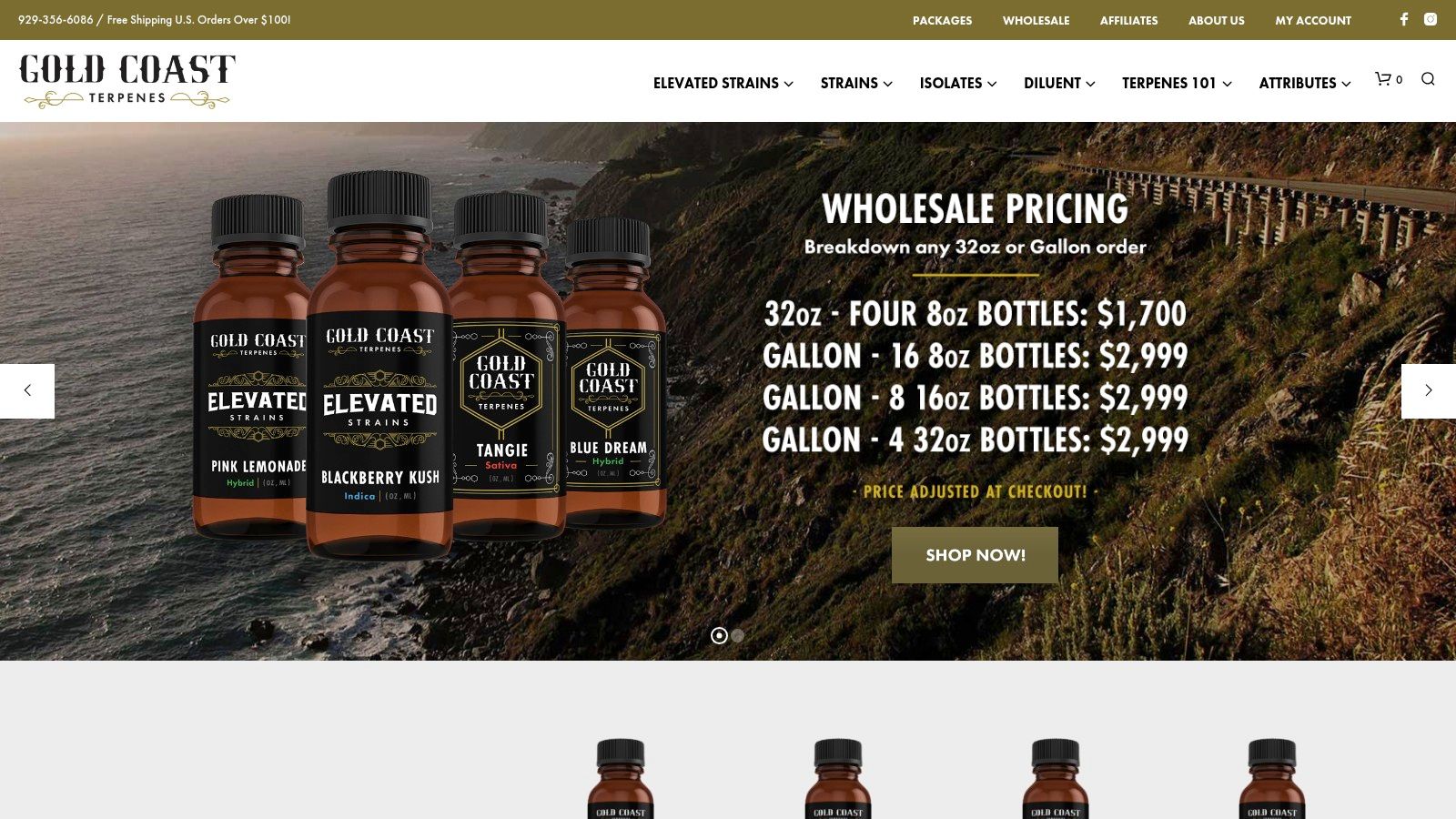
Gold Coast Terpenes fits teams that build indica-leaning profiles by formulation job instead of strain hype. The practical advantage is range. You can start with a ready-made profile for screening, then shift into isolate correction once the oil, hardware, and target finish start exposing weaknesses in the blend.
That matters because indica-style work usually breaks down into note behavior. Top notes decide whether the first pull reads citrus, floral, or solvent-sharp. Mid notes carry the recognizable strain character. Base notes decide whether the profile keeps its weight after dilution into distillate or after a cart sits for a few weeks. Gold Coast covers all three layers with strain blends, single isolates, packs, diluents, and production tools.
Best fit for top, mid, and base correction
For cartridge work, I would not treat myrcene alone as the answer. It gives body, but too much can flatten the opening and leave the profile muddy. Beta-caryophyllene helps anchor the base with dry spice and structure, while limonene can keep the top alive if the hardware suppresses brighter notes. Gold Coast is useful because you can screen a kush-style or dessert-style blend first, then correct specific note zones instead of rebuilding from zero.
A large commercial cannabis analysis found myrcene, beta-caryophyllene, and limonene among the most common high-level terpenes in U.S. samples, which matches the way many indica-leaning formulas are built in production (commercial terpene prevalence analysis).
Use the bottle in finished oil before judging it.
Raw aroma can mislead, especially with heavier indica profiles. A blend that smells rich in the bottle can lose definition in a distillate cart, while a profile that seems too bright at first can settle into a better mid-top balance after dilution. Gold Coast's product range supports that trial process well. If a standard earthy profile lands too flat, Elevated Strains gives you more room to test fruit-forward mids without dropping the heavier base entirely.
Where it fits in production
For strain-replication workflows, Gold Coast works best as a two-step supplier. First, use a finished profile to choose direction. Then move into isolate-level edits once you know whether the formula needs a cleaner top, more defined middle, or a base that lasts longer in packaged oil. That is a useful setup for distillate correction, live-resin-inspired replicas, and concentrate SKUs that need a heavier finish without excessive sweetness.
For cartridge and distillate formulation, their own examples of indica terpene flavor directions help frame the screening stage across earthy, spicy, citrus, and dessert-leaning builds before pilot batching.
A practical distillate-to-terpene range for vape cartridges is commonly cited at five percent to ten percent by weight, with narrower starting guidance at five percent to eight percent for highly refined distillate (distillate mixing range reference). Gold Coast's calculator is useful for load planning because terpene percentage affects more than flavor. It also shifts viscosity, wick rate, and how much of the top note survives the hardware.
Pros
- Useful across multiple workflows: Ready-made profiles and isolates support fast screening, cartridge correction, and strain-replication work.
- Good note-layer control: The catalog gives formulators options for adjusting top, mid, and base behavior instead of relying on one premade profile.
- Solid production support: Documentation, state information, and blending tools make revision control easier during R&D and scale-up.
Cons
- Requires disciplined sensory testing: A broad catalog helps only if your team evaluates blends in the final oil and device.
- Refinement can add cost: Niche profiles and repeated isolate adjustments can stretch budgets for smaller operators.
Website: Gold Coast Terpenes
2. Abstrax Tech
Strain names get too much attention. In production, the better question is what job the terpene profile has to do in the finished oil. Abstrax Tech is useful for teams that want a pre-mapped starting point for that job, especially when the brief calls for indica-leaning weight without building every profile from single isolates.
That matters because top, mid, and base behavior rarely stay balanced once the blend goes into hardware. A profile that smells rich in the bottle can lose its opening in a cartridge, or leave too much myrcene-heavy drag in the finish for concentrates. Abstrax gives formulators a quicker way to compare those behaviors across kush, gas, and dessert-fruit directions before spending too much time on custom correction.
Why formulators use it for structured screening
A recent classification study identified a relatively small set of recurring terpenes across cannabis samples, including beta-myrcene, beta-caryophyllene, limonene, linalool, alpha-humulene, alpha-pinene, beta-pinene, terpinolene, and fenchol. The same study also points to myrcene as an important differentiator in indica-type chemistry (cannabis classification and terpene composition study). That matches the practical reality of formulation work. Many commercial indica-style builds still depend on a familiar core, then rise or fall based on how that core is edited for opening, body, and dry-down.
Abstrax is strongest when used that way. For cartridge work, I would use it to screen for top-note retention first, then decide whether the mid needs more floral softness or the base needs less earthy density. For distillate blends, that can save a round of revisions. For concentrates, it helps separate profiles that smell pleasant in a jar from profiles that keep their shape under heat.
The same applies to strain-replication projects. One mapped profile may carry a cleaner pinene-limonene entry with a lighter kush base, while another lands heavier on caryophyllene, humulene, and myrcene for a more settled finish. For dessert-fruit variants where a standard kush build feels flat, those options are useful because the fix is often architectural, not just sweeter top notes.
Teams often overbuild the base, then wonder why every SKU finishes with the same muddy tail. Abstrax works best as a reference set you edit, not a final answer you copy unchanged.
Pros
- Good for formulation-by-function: Easier to compare profiles by opening, body, and finish instead of relying on strain name alone.
- Multiple product lines: Useful if the workflow shifts between cartridges, distillate correction, concentrates, and broader flavor-led concepts.
- Fast screening value: Helps R&D teams narrow direction quickly before committing to isolate-level refinement.
Cons
- Still needs bench correction: Premapped profiles save time, but serious replication work usually needs isolate edits for balance and hardware behavior.
- Procurement can be less convenient abroad: International teams may need more planning around shipping, lead times, and ordering logistics.
Website: Abstrax Tech
3. True Terpenes
Plenty of indica terpene catalogs sell the fantasy first and the formula second. True Terpenes tends to work better in the opposite direction. The practical advantage is control: broad profile coverage, easy document access, and a purchasing flow that suits teams building repeatable SKUs instead of one-off favorites.
I would put them in the "production profile" bucket. Their indica-leaning options are useful when the job is to build a stable aroma arc from first pull to finish without turning every cartridge into the same dense myrcene trail.
For top-note work, True Terpenes is a good screening source for formulas that need a restrained opening. That matters in cartridges and high-distillate blends, where too much limonene or pinene lift can make an otherwise heavy profile read thinner than intended. For mid-note structure, the catalog gives enough range to compare kush, sweet-earth, gas, and dessert directions without rebuilding from raw isolates every time. The base-note question is where teams need discipline. If the finish is already coming from the oil, hardware, or a heavier caryophyllene-myrcene load, adding more weight can blur the profile instead of improving it.
That makes True Terpenes especially workable for four common jobs:
- Cartridge formulas: Better for controlled openings and cleaner transitions between inhale and exhale.
- Distillate correction: Useful when neutral oil needs an indica frame without an overly loud top note.
- Concentrate support: Better as a light adjustment layer than a heavy-handed cover blend.
- Strain replication: Good starting material for mapped builds that still need isolate edits at the bench.
The trade-off is stylistic. Teams chasing sharp niche character, loud gas, or highly specific cultivar mimicry will usually outgrow stock blends and start correcting them component by component. Teams running regulated, document-heavy production often accept that compromise because speed, consistency, and traceable paperwork matter just as much as profile romance.
Website: True Terpenes
4. Floraplex (BuyTerpenesOnline)
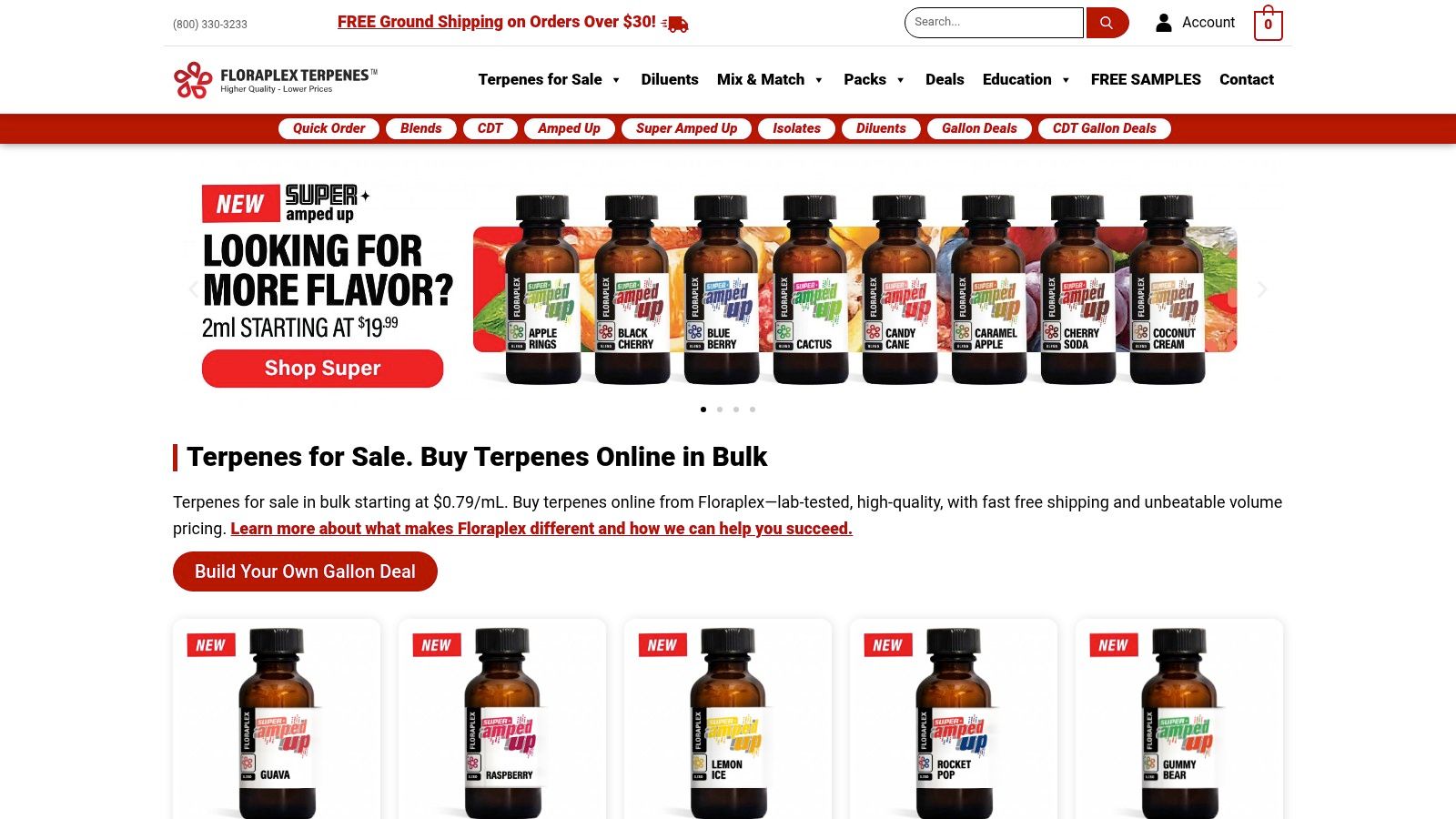
Floraplex is the value-and-scale pick. If you're formulating for a cost-sensitive line and need botanical profiles, isolates, diluents, and larger-volume options from one storefront, it deserves a close look. The appeal isn't that every profile is subtle. The appeal is that you can test, revise, and scale without turning procurement into a separate project.
That matters for operators running multiple SKU tiers. A flagship live-resin-adjacent concept and a high-volume distillate cart line rarely need the same terpene spend, even if both are aiming at indica-style positioning.
Strong for cost-controlled distillate correction
Floraplex works best when the job is mechanical and commercial. You have a distillate that needs body, a flavor brief that needs to hit on time, and a target margin that doesn't leave room for endless sensory rounds. In that context, broad SKU coverage and accessible ordering are a real advantage.
The trade-off is profile character. Some sweeter lines can drift toward confection or fruit-first territory more quickly than teams expect, which can be useful for dessert-inspired cartridges but less helpful for gas, earth, or spice-driven builds.
- Best for bulk pilots: Easier to move from small test runs into larger order sizes without changing suppliers.
- Best for mixed workflows: Useful if your operation buys blends, isolates, and support materials together.
- Best with a strict brief: Define whether the end point is kush, sweet-earth, or fruit-heavy body calm before screening.
Website: Floraplex at BuyTerpenesOnline
5. Synfinite Labs (The Terpene Store)
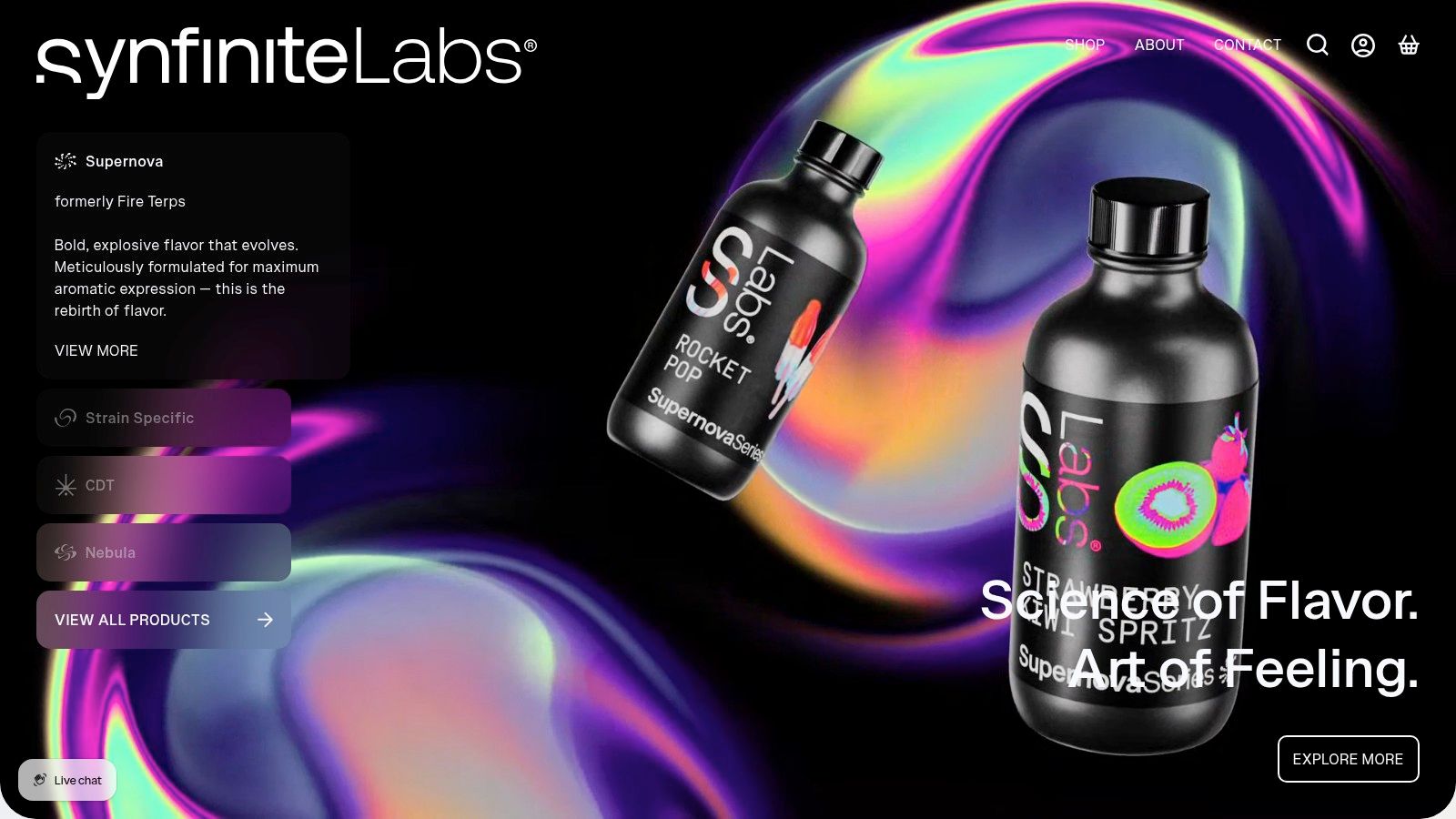
Synfinite is less interesting for a single hero profile than for the way it speeds up sorting work. If the brief is still loose and the team needs to separate sweet top-note indica concepts from earthier mid-heavy or denser base-note builds, the sampler format makes that process faster and cheaper.
That matters in early formulation.
For cartridge work, I would use this catalog to bracket the edges first. Screen one berry-forward kush reference for top-note lift, one softer dessert profile for mid-palate sweetness, and one heavier gas or earth direction for finish. In distillate correction, that side-by-side approach helps isolate what is missing in the oil instead of masking the problem with a louder blend. In strain-replication workflows, it gives the panel a practical reference set before isolate-level rebuilding starts.
The catalog depth is strongest as a sorting tool. Teams can compare familiar strain-style targets, log what flashes off first, what stays through the middle, and what still reads on the exhale. That is more useful than arguing about strain names. If you are comparing suppliers at the same time, Gold Coast's guide on where to buy terpenes for different sourcing needs is a useful parallel read.
A real trade-off shows up once the project leaves bench scale. Synfinite helps narrow a direction, but bulk-buying details and line-to-line comparison can take more digging than with vendors built around larger production accounts. Small R&D teams usually tolerate that. High-throughput operators may not.
One note from practice: sample packs only work if the panel uses the same language. “Indica” is too vague to score. Top-note fruit, mid-note spice, and base-note gas are concrete enough to turn comments into a production brief.
Where Synfinite fits best
- Bench screening for cartridges: Useful for deciding whether the profile should open sweet, sit earthy, or finish heavier before final dosing work.
- Distillate and concentrate comparison rounds: Good for elimination testing when the job is to diagnose aroma structure, not approve branding language.
- Early strain-replication mapping: Helpful for building a sensory reference library before choosing specific isolates or higher-authenticity source material.
Website: The Terpene Store by Synfinite Labs
6. Lab Effects
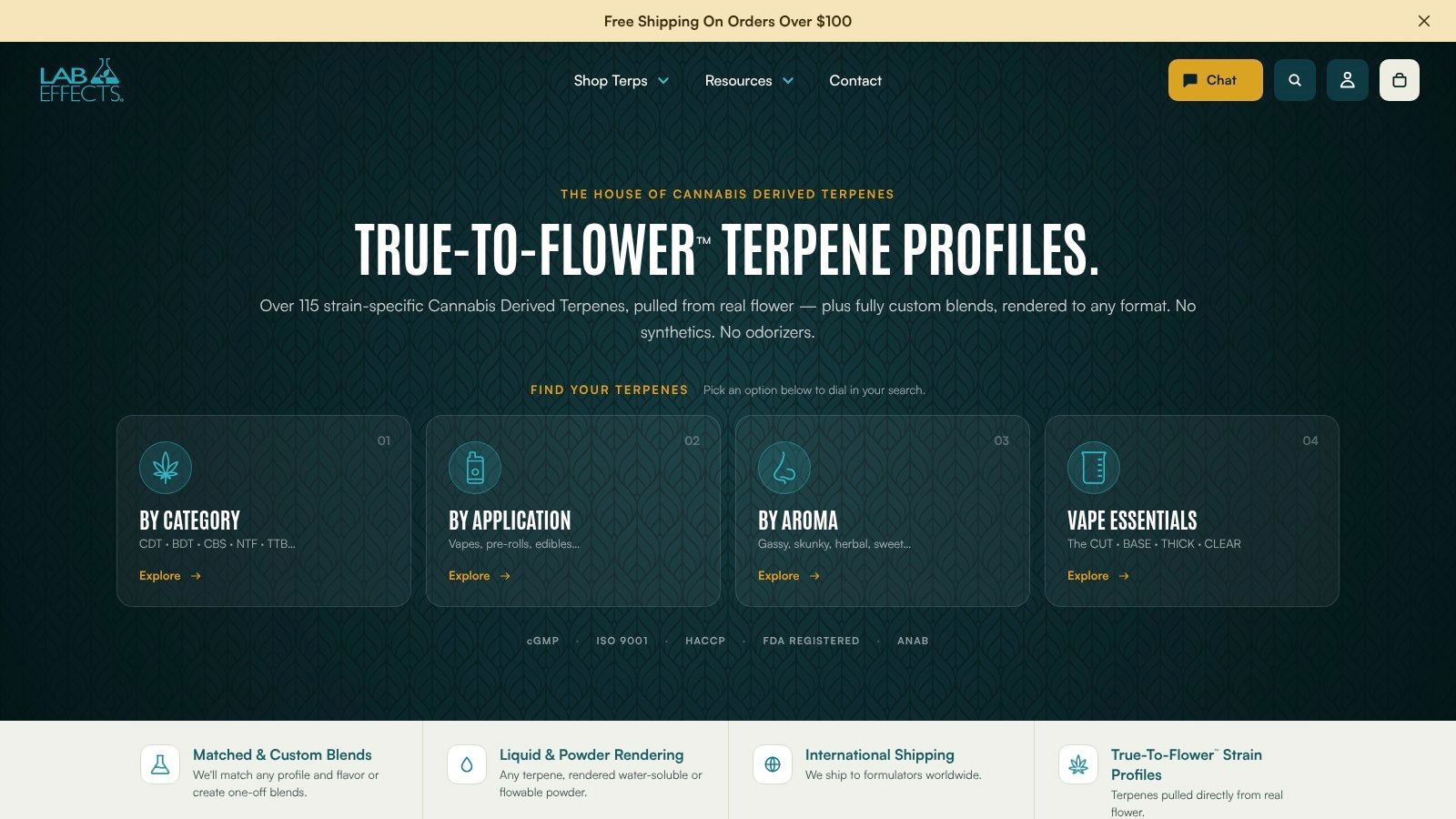
Lab Effects is useful when the brief starts with a production constraint, not a strain name. Some indica-leaning builds need a louder top note to survive distillate, a drier mid to keep sweetness in check, or a heavier base to carry through the exhale in a cartridge. A supplier that works across cannabis-derived, botanical, and blended inputs gives formulators more room to tune those jobs without locking into one sourcing philosophy too early.
The practical advantage shows up in aroma architecture.
For cartridge work, hybrid sourcing can help keep the opening from reading flat while still building a denser kush or gas foundation underneath. In distillate, that often means using brighter top-note material to restore lift, then anchoring the mid and base with earth, pepper, resin, or soft floral components that do not disappear after filling. In concentrate applications, the trade-off changes. Authenticity tends to matter more, so any hybrid profile has to be checked closely for transitions that feel too clean, too sweet, or disconnected from the finish.
A useful way to evaluate Lab Effects is by note behavior instead of indica branding:
- Top-note role: Helps if the formula needs a quick aromatic cue before the heavier base arrives. This matters in carts that otherwise open muted.
- Mid-note role: Useful for shaping the profile away from candy and toward spice, herb, or wood, especially in strain-replication projects.
- Base-note role: Strongest fit for dense evening-style builds where the exhale needs weight, persistence, and a slightly resinous tail.
That note-by-note flexibility makes Lab Effects more commercially useful than a simple "indica" label suggests. If the project is a broad distillate SKU, blended sourcing can improve cost control and lot consistency. If the project is a higher-authenticity replicate, the same flexibility creates more review work because small shifts in base-note character are easier to notice.
Gold Coast has a separate reference on terpenes often selected for relaxation-oriented aroma profiles that is worth using as a sensory briefing tool, not as a promise about effects.
Use Lab Effects if the team needs options across top, mid, and base construction, and is willing to evaluate each profile by application instead of assuming "indica" solves the formula.
Website: Lab Effects
7. Terpene Belt Farms (Cannabis-Derived Terpenes)
Indica roundups often flatten one important sourcing decision. Do you need a broad, familiar profile that blends easily, or do you need cannabis-native top notes and a truer resin finish, even if that makes the formula less forgiving? Terpene Belt Farms fits the second job.
For formulation work, that matters most in the base and late-mid range. Cannabis-derived material can carry sulfur-adjacent gas, damp resin, pepper, and kush weight in a way botanical systems usually approximate rather than reproduce. That gives Terpene Belt Farms real value in concentrate and premium cart builds where the exhale has to read as cannabis first, flavor system second.
A useful way to assess this supplier is by workflow.
For strain-replication projects, CDT can reduce the amount of compensating work needed in the back half of the profile. The trade-off is tighter sensory review, because small lot shifts and stronger base-note character are easier to notice in finished oil. For distillate SKUs aimed at broad retail appeal, that same authenticity can become friction if the brief calls for a cleaner open or a sweeter, more conventional top note. In those cases, CDT often works better as an anchor than as the entire aromatic system.
An ecological study on terpene categories and user-reported effects found that caryophyllene-dominant cultivars tracked with less favorable subjective reports than average in that dataset (ecological analysis of terpene categories and reported effects). The practical takeaway is simple. A pepper-heavy base may improve realism in an indica-leaning profile, but it should be framed as an aroma decision, not an effects shortcut.
Gold Coast also has a clear explainer on cannabis-derived terpenes for vape and concentrate formulation if you are comparing CDT against botanical or hybrid sourcing.
Where Terpene Belt Farms usually fits best
- Cartridges: Best in heavier evening-style carts where the finish needs resin, gas, or kush persistence.
- Distillate blends: Strong as a grounding layer, especially when paired with brighter top-note material to avoid a closed-in opening.
- Concentrates: Natural fit, because authenticity usually matters more than sweetness or easy mass-market readability.
- Strain replication: Useful when the target profile depends on cannabis-native base behavior that botanical isolates struggle to mimic cleanly.
What to watch before buying
- Top-note lift may still need help: CDT realism does not guarantee enough opening impact for carts.
- Cost and review burden can rise: Higher-authenticity material usually demands stricter lot evaluation and tighter formula control.
- Branding can get harder: Chemotype-first material supports better aroma architecture, but it gives marketing less room to rely on generic indica language.
Website: Terpene Belt Farms
Top 7 Indica Terpene Brands Comparison
| Vendor | Implementation Complexity 🔄 | Resource Requirements ⚡ | Expected Outcomes ⭐ / 📊 | Ideal Use Cases 💡 | Key Advantages ⭐ |
|---|---|---|---|---|---|
| Gold Coast Terpenes | Medium, technical blending; Mixing Calculator support | Moderate–High cost; samples & bulk tiers; US shipping perks | ⭐ High fidelity, lab-verified, repeatable flavor & entourage effect | Precision flavoring for cartridges, concentrates, finished SKUs | Extensive 50+ strain library, THC‑free lab-tested terpenes, strong compliance/docs |
| Abstrax Tech | Medium, in‑house analytics and formulation workflow | Moderate–High; tiered sizes; international shipping can be costly | ⭐ High analytical fidelity; effect-targeted profiles | R&D-driven brands needing analytically mapped strain profiles | In‑house analytics, Signature Series, strong market reputation |
| True Terpenes | Low–Medium, enterprise QA simplifies implementation | Moderate; premium positioning, easy COA access & sampling | ⭐ Reliable supply and QA; good for rapid prototyping 📊 | Enterprise formulation teams and rapid prototyping | Robust QA certifications (FSSC/ISO/GMP), COA/document finder |
| Floraplex (BuyTerpenesOnline) | Low, straightforward ordering and scaling | Low cost at scale; gallon deals; free US shipping | ⚡ Cost-efficient scaling; flavor-first outcomes may lean sweet | Cost-sensitive manufacturers scaling from pilot to gallons | Very competitive bulk pricing, fast domestic logistics |
| Synfinite Labs (The Terpene Store) | Low–Medium, sampler/master packs speed selection | Moderate; sample/master packs, some bulk pricing in PDFs | ⭐ Good for sensory screening and selection | Teams screening multiple kush/dessert variants quickly | Deep legacy catalog, convenient samplers, clear dosing FAQs |
| Lab Effects | Medium, selection among CDT/BDT/hybrid options | Moderate; custom/made-to-order options; vet lots advised | ⭐ Versatile aroma outcomes balancing authenticity & price | Brands seeking CDT character with pricing flexibility | Multiple sourcing options (CDT/BDT/hybrid), clear strain docs |
| Terpene Belt Farms | Medium–High, CDT sourcing needs extra QC/sensory mapping | Variable; farm-direct pricing ranges widely (small→large orders) | ⭐ Very authentic CDT aroma for gas/kush notes 📊 | Formulators prioritizing true cannabis-derived terpene character | Farm-direct CDTs, transparent spec sheets/COAs, strong formulator reputation |
Turn the Shortlist Into a Repeatable Formula
The best indica terpenes for vape cartridges, distillate correction, and strain-inspired terpene blend work aren't chosen by popularity. They're chosen by job. Start with the outcome you can describe clearly in sensory terms. Earthy and heavy. Peppery and grounded. Citrus-lifted but still body-forward. If the brief only says “make it indica,” the first round usually turns vague fast.
Then decide whether you need a strain-specific blend or an isolate-led build. A ready-made profile is faster when you're replicating flavor of a known cultivar style or screening several concepts at once. An isolate-led approach is better when the oil needs correction, the hardware changes the opening note, or the finish feels too thin. For cannabis product formulation, those are different workflows and they should be treated that way.
Once the direction is set, map the dominant compounds into top, mid, and base roles. Bright compounds handle the first impression. Mid notes carry the identity. Heavier notes anchor the finish and often determine whether the formula reads as body-forward or too airy. That structure is more useful than the indica label by itself, because “indica” is only shorthand for a style, not a guarantee of a physiological outcome.
Create small pilot batches and document them like process work, not tasting notes alone. Record load level, oil type, hardware, steep time, opening aroma, settle, and exhale character. Confirm compatibility in the final cartridge, distillate, or concentrate, because a profile that smells right in a bottle can still wick poorly, mute in ceramic, or overexpress top notes in a hotter device.
When you compare suppliers, check the basics that affect production. Review COAs, safety documents, lot consistency, sample formats, and volume economics before you scale. If your team is still dialing in isolate ratios, Gold Coast's terpene isolate selection, Mixing Calculator for formulation work, and Terpenes 101 resource library are practical places to tighten the process. If you already know the profile direction, their strain-specific terpene blends and bulk options make the move from pilot to production a lot more straightforward.
Gold Coast Terpenes gives formulators a practical path from concept to production with strain-specific profiles, isolates like myrcene and beta-caryophyllene, and tools that help dial in terpenes for distillate and vape cartridges. If you're building a heavier, indica-leaning profile and want better control over top, mid, and base-note behavior, visit Gold Coast Terpenes.