
Most advice about the best sativa terpenes starts in the wrong place. It starts with effect labels. For formulation work, that's backward. “Sativa” is more useful as a profile target than a universal outcome, because labels don't reliably map to terpene content or finished-product experience, and current coverage increasingly points formulators back to actual chemistry, dose, and blend design rather than marketing shorthand, as discussed in this review of terpene research and cannabis effects.
For cartridge development or a new distillate SKU, the profile has to survive more than a first sniff. Aroma architecture matters. Source type matters. Documentation matters. So do sample access and batch consistency.
That's the lens here. I'm not ranking suppliers like a dispensary menu. I'm looking at who helps a formulator move from concept to repeatable production through profile fidelity, botanical versus cannabis-derived sourcing, documentation quality, sampling workflow, scale-up support, and fit for cartridges or distillate. Before buying anything, verify current specs, safety documents, and local compliance requirements for your market and hardware.
1. Gold Coast Terpenes
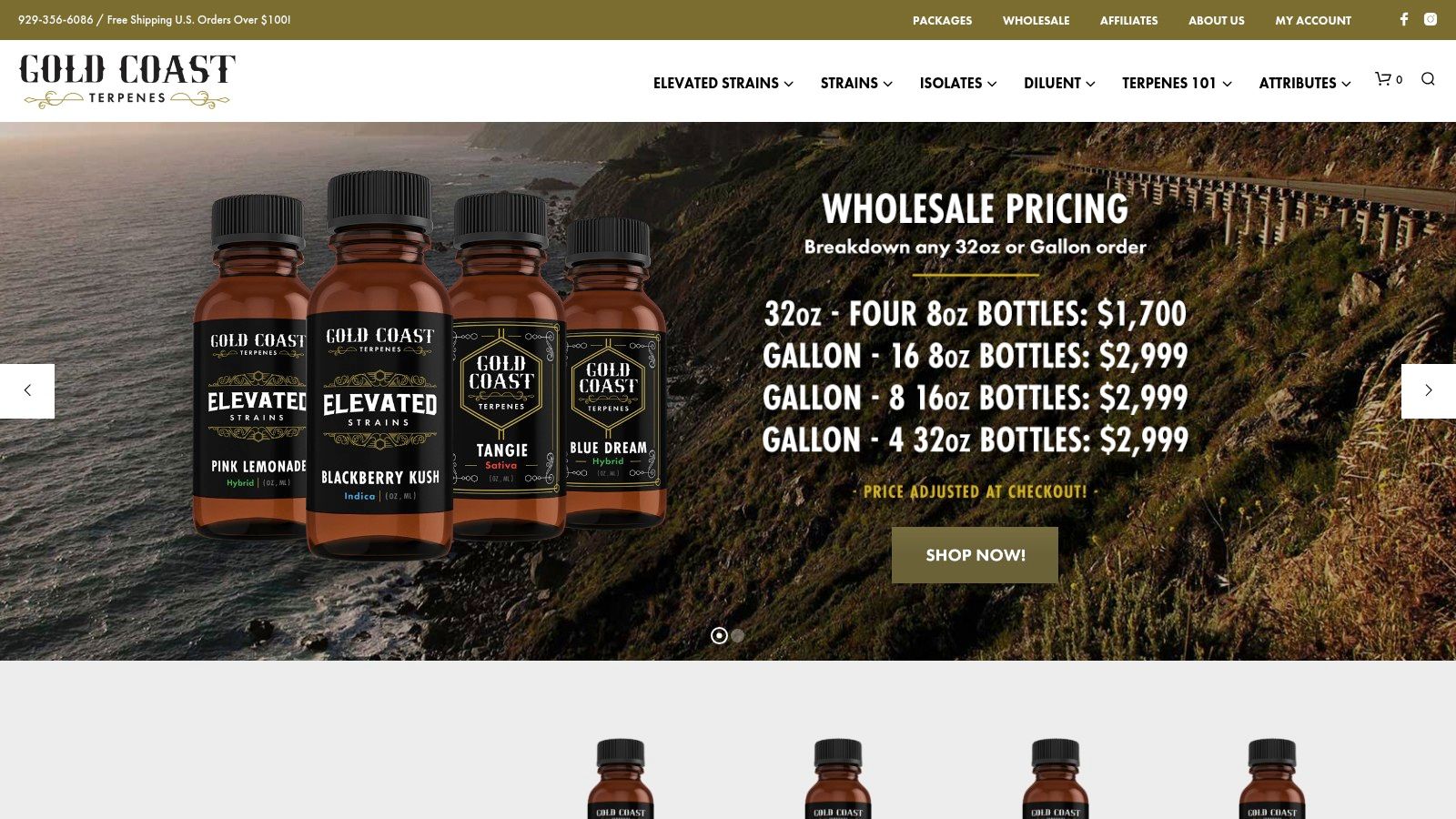
A large catalog does not help much if the workflow breaks at sampling, documentation, or scale-up. Gold Coast Terpenes stands out here because the product range is broad enough for early concept work and specific enough for revision control once a profile starts moving toward production.
For a sativa-leaning brief, that matters. The usual target is not a generic “uplifting” label. It is a profile shape: bright entry, identifiable top-note character, and enough base support that the blend still reads clearly after it sits in distillate or runs through hardware. Gold Coast gives formulators several ways to build toward that result, including named profiles, single isolates, sample-oriented formats, and bulk purchasing paths.
The strongest fit is profile iteration. A team can start with a strain-inspired blend, then adjust the formula with isolates if the mix needs more limonene-driven citrus, more pinene clarity, or less sweetness in the finish. That sounds basic, but it changes the R&D cycle. Suppliers that only offer prebuilt blends limit your correction options once the first cartridge run exposes harshness, muting, or poor top-note retention.
Why It Fits Formulators
Gold Coast supports more of the formulation process on-site than many smaller terpene vendors. Product selection is only part of the value. Calculators, technical context, and category-specific guidance make it easier to move from bench sample to a purchase decision that production can actually execute.
Its educational material is also more useful than the typical catalog filler. The terpene flavor chart gives a practical note framework for structuring blends, especially if you are balancing volatile top notes against heavier base components for cartridge applications. I would still treat any chart as a starting tool rather than a formula template, but it helps teams speak the same language during revisions.
Documentation and operational support are another reason to keep Gold Coast on the shortlist. Smaller brands often lose time between R&D, compliance review, and purchasing. Gold Coast appears set up to reduce that friction with wholesale access, safety-document pathways, and product segmentation that is easier to map to actual manufacturing decisions.
Trade-Offs and Best Use Cases
Gold Coast works best for teams that expect several test rounds before lock. That includes cartridge programs, distillate flavor systems, and line extensions built from a shared house style.
There are trade-offs. On-site customer validation appears lighter than what some larger suppliers publish, so I would not rely on marketing copy alone to judge fidelity or batch consistency. Request samples. Review current specifications. Confirm how the blend behaves in your base oil, your target terp load, and your hardware.
A practical use case is a formulator who needs to compare a ready-made cultivar profile against a custom-adjusted version without changing suppliers midstream. Gold Coast is set up for that kind of workflow. Its own article on understanding Gold Coast Terpenes products in Illinois is worth reading for context on how the company presents product categories, use cases, and compliance-facing considerations.
2. True Terpenes
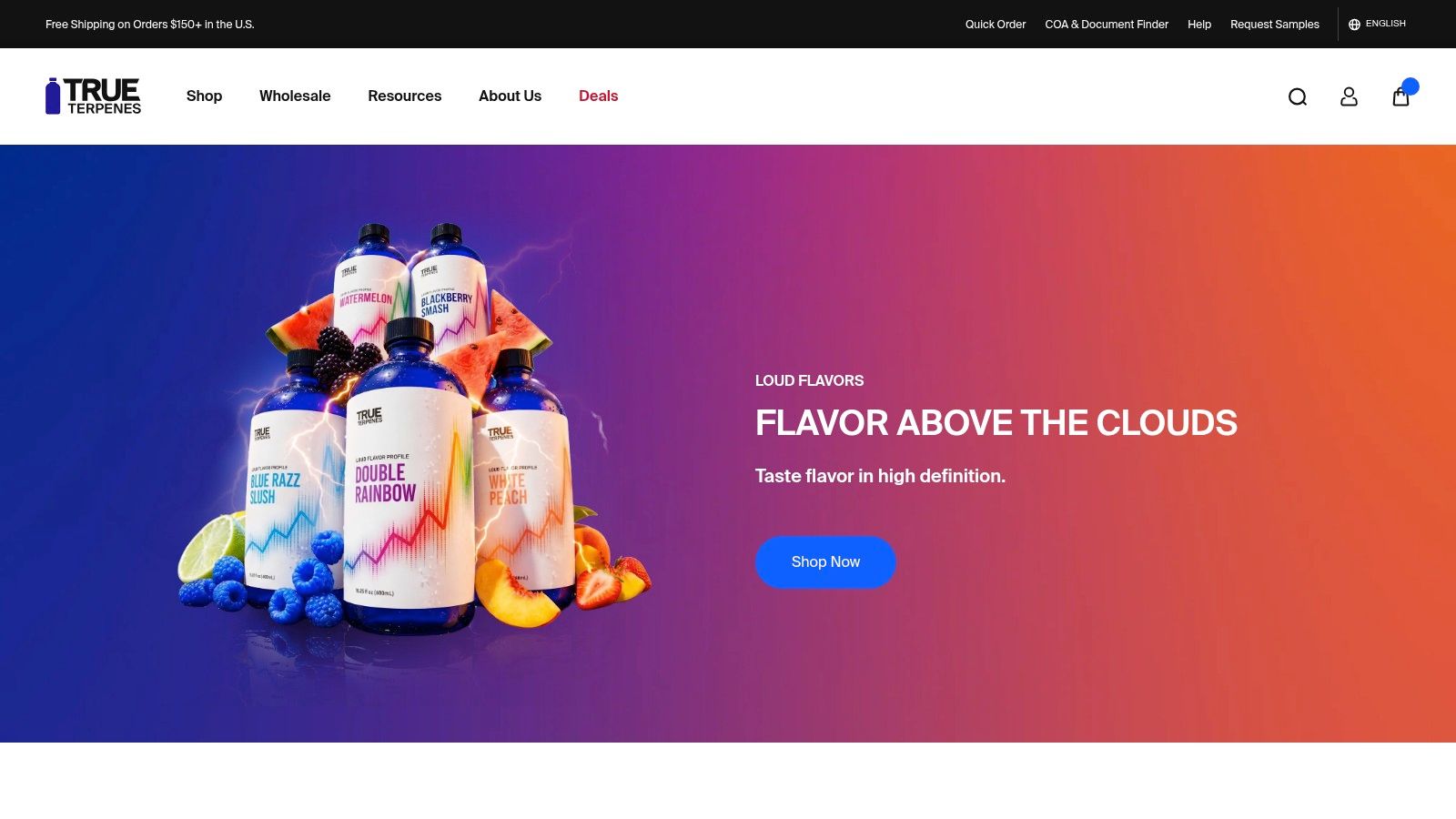
If your team cares most about manufacturing systems, True Terpenes belongs on the shortlist. It's one of the established names for brands that need broad botanical coverage, standardized documentation, and support for regulated workflows across multiple products.
The catalog is useful for long-tail work like a terpene profile for vape cartridges modeled after familiar sativa cultivars. It also helps if your brand strategy includes “effect” positioning, since the site offers more than just cultivar-inspired names. That said, formulators should keep the chemistry-first mindset. Sativa and indica labels don't map cleanly to terpene content or outcomes, which is exactly why this guide to indica vs. sativa terpenes is a useful internal reference point when reviewing supplier catalogs.
Where It Works Best
True Terpenes tends to fit larger operations that value consistency over romance. If you need repeatability, document control, and easier handoff between procurement, compliance, and production, this kind of supplier usually creates fewer surprises.
Its limitation is the same one many large botanical houses share. Some profiles read more as polished interpretations than flower-faithful replicas. That's not always a problem. For many cartridges, a stable and recognizable sensory identity matters more than perfect cultivar realism.
A stable botanical blend often wins in production even when a CDT sample smells more exciting in a jar.
- Strong fit for scale: Better for repeat purchasing and formal QA review.
- Strong fit for broad menu building: Useful when you need several sativa-leaning options quickly.
- Less ideal for ultra-faithful cultivar mimicry: Teams chasing live-flower nuance may want to compare against CDT-focused vendors.
3. Abstrax Tech
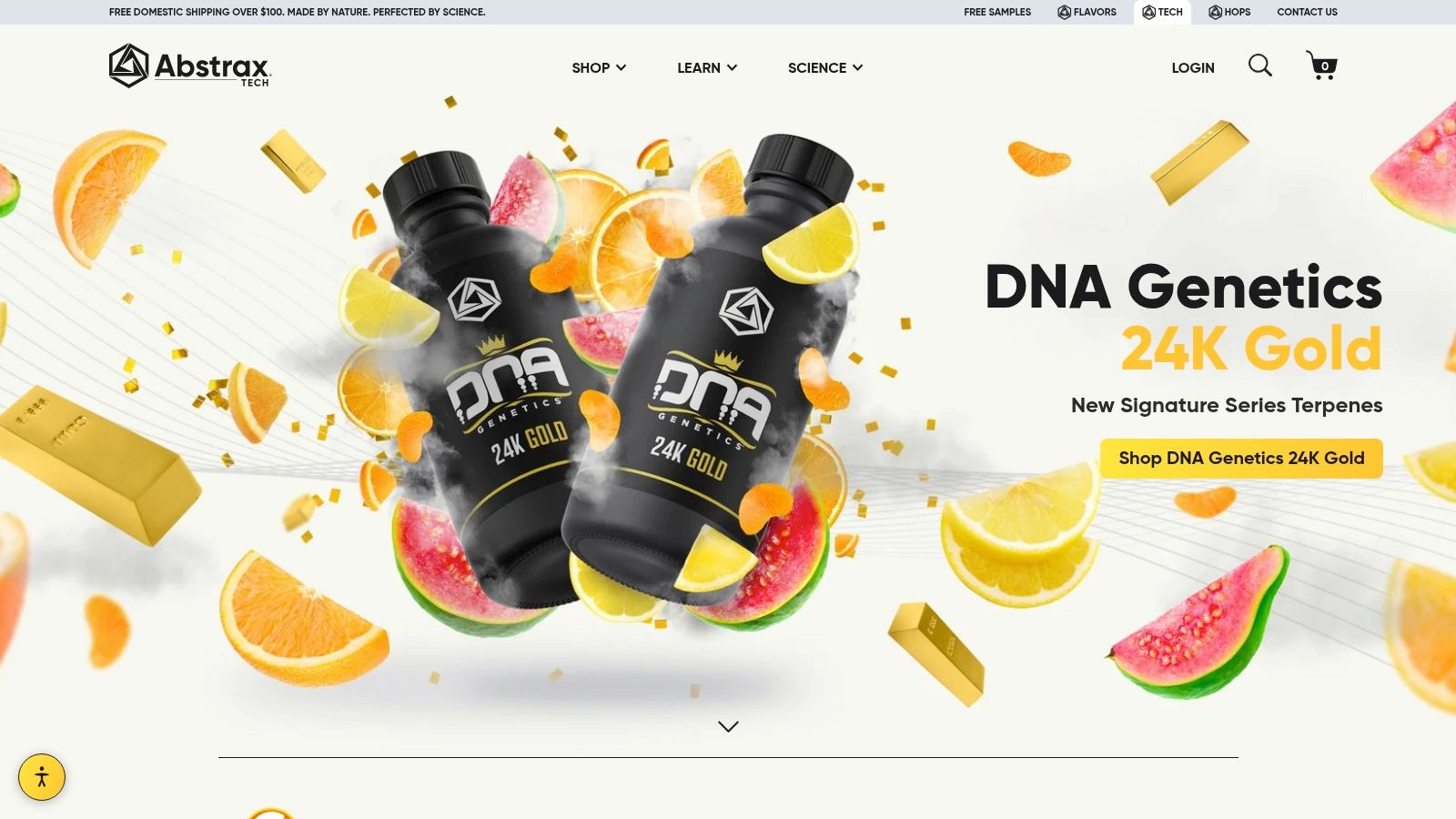
A flashy top note is easy to buy. A profile that still reads correctly after dilution into distillate, a hot fill, and two weeks in hardware is harder. Abstrax Tech earns attention at that stage of formulation.
I look at Abstrax less as a catalog vendor and more as a benchmark sample source. If the brief is cultivar fidelity, especially for sativa-leaning profiles with terpinolene, pinene, ocimene, or other volatile notes that can turn thin or generic, this is one of the suppliers worth putting through side-by-side trials early. Analysts in one peer-reviewed study of cannabis chemovars found that mostly sativa samples often carried broader terpene complexity, which helps explain why simplified citrus-pine blends can miss the mark when the goal is realism 11.2 terpenes above 1% of total terpene content and 5.4 above 5%.
The workflow question is whether your team can preserve what you are paying for.
Start with documentation and sample behavior, not branding. Review lot data, ask how the profile was built, and test the blend in the actual oil and hardware you plan to ship. High-definition aroma work can look impressive on paper and still lose its distinguishing notes once the cartridge, base oil, or process temperature compresses the profile.
For cartridges, Abstrax makes the most sense when the SKU can support iterative bench work. For distillate blends, that usually means checking first-hit aroma, mid-puff carry, and whether the brighter fraction burns off faster than the body of the profile. For teams using botanical profiles as a cost control tool, this level of nuance may be more chemistry than the finished product can retain.
That trade-off matters more than the marketing story.
If your formulation workflow includes controlled sampling, sensory review in finished hardware, and a realistic scale-up plan, Abstrax is a strong reference point for premium, fidelity-first SKUs. If procurement needs a wider margin for substitutions, simpler documentation flow, or faster cost-down decisions, the premium only pays off when the rest of the production system is equally disciplined.
4. Floraplex Terpenes (Buy Terpenes Online)
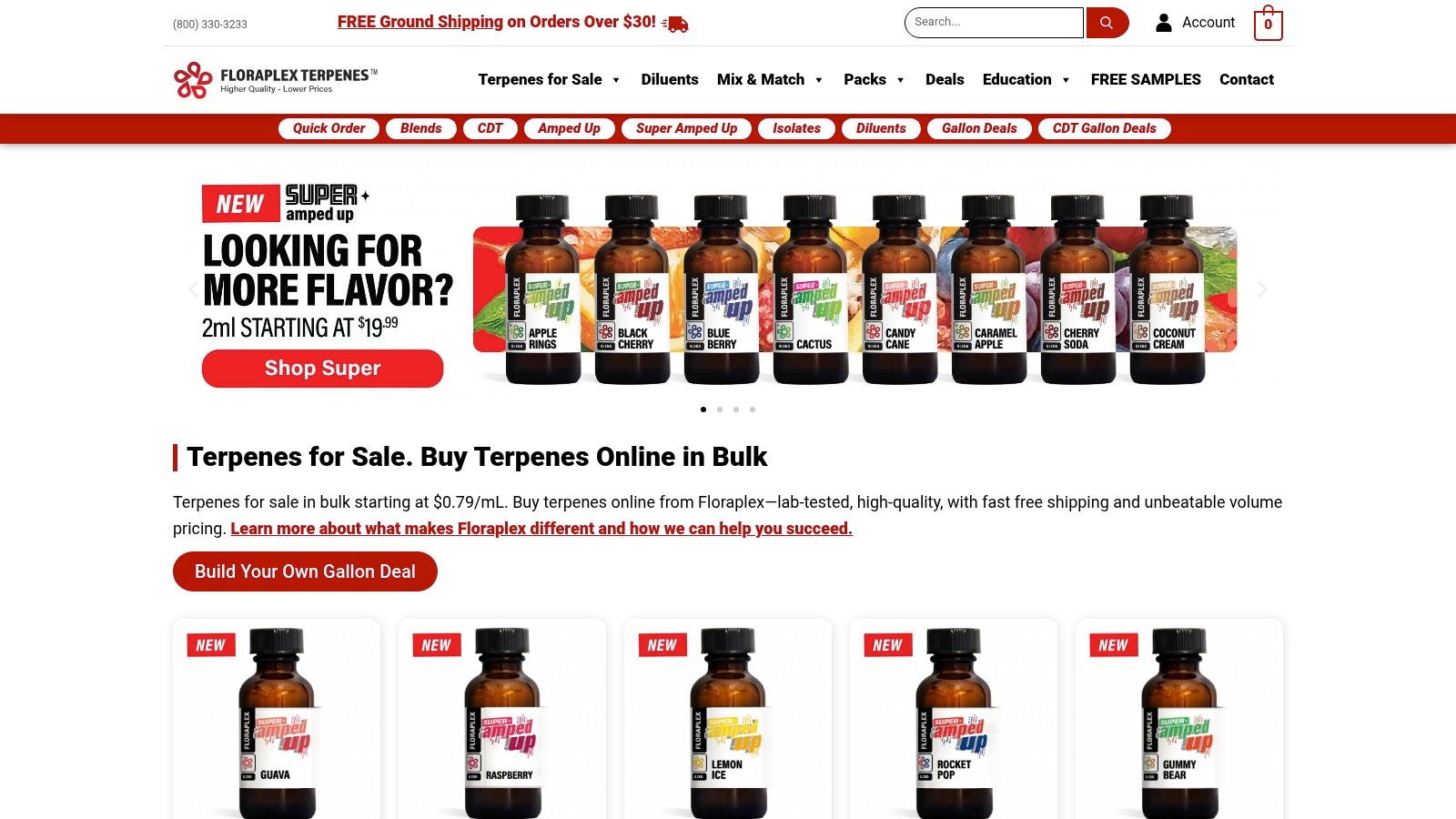
A low-cost terpene library can save a formulation cycle. That is the case for Floraplex Terpenes, especially when the brief is still loose and the team needs to screen several sativa-style directions before locking a target.
Floraplex fits early in the workflow, not at the end of it. For a formulator, the practical value is access to a broad set of botanical profiles that can answer first-order questions quickly. Does the oil want a dry terpinolene top note, a sweeter citrus opening, or a greener pine structure once it is diluted into distillate? Floraplex is useful for sorting that out without tying up premium-budget inputs.
The trade-off shows up once the project moves from concept screening to replication. Lower-cost botanical profiles often give a clear headline note but less internal detail, which matters if the finished SKU needs separation between first-hit brightness, mid-note body, and linger. In cartridges, that compression can become more obvious because the hardware already narrows the profile.
Procurement teams should also treat documentation and repeatability as part of the buy decision, not just price per bottle. Before scale-up, compare current specs, lot support, and reorder consistency against your release standard. For a practical checklist, review guidance on choosing the best place to buy terpenes online.
A simple bench rule helps here. Test the profile in the actual oil system, at your intended loading rate, in the hardware you plan to ship after a short hold period. Bottle aroma alone will overstate how much nuance survives.
Floraplex tends to work best in three cases:
- Early-stage screening of multiple sativa directions before the target profile is fixed
- Cost-controlled line extensions where a botanical profile is acceptable
- Distillate programs that need fast iteration more than cultivar-level fidelity
If the brief calls for exact strain character, this supplier works better as a filter than as the final answer. If the brief calls for speed, breadth, and budget discipline, Floraplex can shorten development time.
5. Mass Terpenes
Mass Terpenes is one of the suppliers I would use for a fork-in-the-road test, not a simple popularity pick.
The useful question here is whether a sativa concept still works once you move from a botanical approximation to a cannabis-derived or hemp-derived input. Mass Terpenes is set up for that comparison because it gives R&D teams access to those source types without forcing a large opening order. In practice, that matters most on bright profiles where the first draw carries the decision. Botanical versions can read louder in the bottle, while CDT or HDT options often hold a less flashy but more natural top note once they are diluted into distillate and pushed through a cartridge.
A practical way to use this supplier is side-by-side at the same terpene loading rate. I would not judge the profile from bottle aroma alone. Run the botanical control and the CDT or HDT candidate in the same oil, then check them after a short hold and again in the actual hardware. On this kind of comparison, the failure point is usually not intensity. It is whether the opening citrus, pine, or sweet herbal note collapses into a flatter middle after a few pulls.
That makes Mass Terpenes more useful as a workflow decision point than as a broad catalog play.
For teams planning bulk terpene purchasing for production runs, this is also where procurement needs to stay tied to formulation. Ask about current sample formats, reorder consistency, and lead-time ranges before a bench win turns into a launch SKU. Smaller-volume access is helpful early. It does not remove the need to confirm that the same profile can be supplied cleanly at scale.
Mass Terpenes fits best in three formulation situations:
- Comparing botanical versus CDT or HDT versions of the same sativa direction
- Screening strain-inspired profiles that need a more natural top-note texture in cartridges
- Building an R&D path from small samples to scale, while checking documentation and supply continuity before lock-in
The trade-off is straightforward. This supplier is stronger for authenticity checks and source comparison than for fast, low-cost iteration across a huge flavor set. If the brief is cartridge realism, that is a useful trade to make.
6. Terplandia
Terplandia is a supplier I would screen later in the workflow, not at the idea stage.
It makes more sense once the brief is already tight. If the target is a cultivar-style sativa profile for carts or distillate, and the team wants cannabis-derived character without cannabinoid carryover, Terplandia can be easier to qualify with manufacturing and compliance teams than less-defined CDT options. That changes the sourcing conversation. The question becomes less about aroma preference and more about whether the documentation package, input spec, and profile consistency support a real production handoff.
A practical way to assess Terplandia is to start at the back end of the process. Check the paperwork first. Confirm what is included for review, how batches are identified, and whether the supplied material stays consistent enough that a bench blend can become a release batch without reformulating around drift. Then test the profile in the actual use case, because a cultivar-faithful concentrate on paper can still feel top-heavy or thin after dilution into oil and repeated heating in hardware.
For formulation teams, that is the main advantage here. Terplandia fits programs where profile fidelity matters, but the material also has to pass through a stricter production filter.
The trade-off is catalog range. Teams that want broad botanical exploration across many sativa directions may find the selection narrower than larger houses with a more expansive flavor menu. Teams that already know the target, Durban-leaning, citrus-pine, sweet herbal, or another familiar lane, may prefer that narrower set because it shortens evaluation and keeps the work focused on cartridge performance, not endless sample sorting.
I would place Terplandia in a narrower but useful slot within R&D. It is a fit for late-stage profile confirmation, scale-up planning, and cartridge-directed SKUs where cannabis-derived sourcing and manufacturing clarity need to coexist. It is less useful for cheap early-stage exploration or building a wide sensory map from scratch.
7. The Terpene Store (Synfinite Labs)
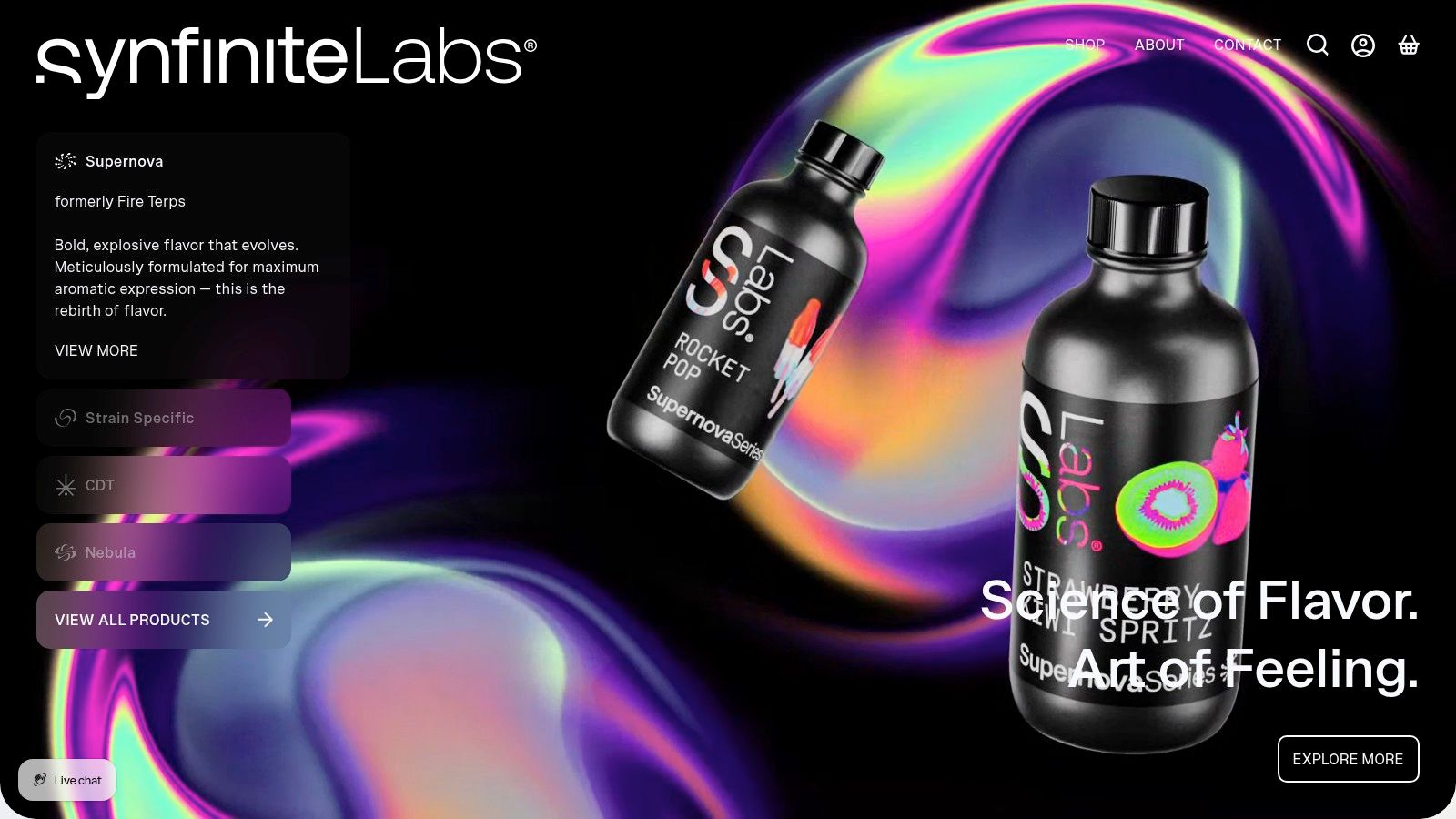
A large catalog is not always an advantage. For many formulation teams, it creates more bench work, more near-duplicates, and slower decisions. The Terpene Store is more useful if you treat it as a screening source with a disciplined workflow.
Start with profile fidelity at the sample stage. Pull a tight set of sativa-leaning candidates, then test them at real inclusion rates in the oil system you plan to ship. That matters because a profile that reads bright and complete in the bottle can turn sharp, hollow, or candy-like once diluted into distillate and pushed through hardware.
This supplier fits earlier in development than some of the more documentation-heavy options above. The value is speed of comparison. Teams can sort through multiple aromatic directions without committing too early to a single concept or paying for a highly specialized source before the target profile is clear.
I would evaluate Synfinite Labs on five practical questions:
- Does the profile stay coherent after dilution? Some blends win the first smell test but lose body in a cartridge.
- What is the sourcing story? For teams deciding between botanical flexibility and cannabis-derived specificity, that distinction affects both aroma and cost.
- How much documentation is available before scale-up? Early sampling is useful, but production teams still need batch clarity before approving a larger run.
- Can the sample winner survive hardware testing? Citrus-forward and high-note-heavy sativa profiles often need this check.
- Is the blend meant for broad flavor exploration or a cultivar-faithful SKU? The answer changes whether this vendor is the right fit.
That last point matters. The Terpene Store makes more sense for broad sensory mapping than for a program centered on strict cultivar replication. If the formulation brief is "find the right energetic citrus-herbal lane for a cartridge line," this kind of catalog can save time. If the brief is "match a specific flower reference and hold it through repeated purchasing," other suppliers may offer a tighter fit.
One practical caution: sample-pack convenience can hide scale-up risk. A profile that works in a 1 mL bench mix still needs confirmation on repeat ordering, paperwork, and lot consistency before it belongs in a production formula.
Used that way, Synfinite Labs serves a clear role. It helps R&D teams narrow the field quickly, identify which sativa directions hold up in cartridges or distillate, and reserve more expensive validation work for the finalists.
Top 7 Sativa Terpene Brands Comparison
| Supplier | Implementation Complexity 🔄 | Resource Requirements ⚡ | Expected Outcomes 📊⭐ | Ideal Use Cases 💡 | Key Advantages ⭐ |
|---|---|---|---|---|---|
| Gold Coast Terpenes | 🔄 Low, formulators-first tools | ⚡ Moderate (samples→bulk; free US ship >$100) | 📊 Consistent flavor/effects; ⭐⭐⭐⭐ | 💡 Vape/cartridge R&D, product dev, scaling | ⭐ Lab-verified THC-free blends; mixing tools; wide catalog |
| True Terpenes | 🔄 Medium, enterprise/regulatory workflows | ⚡ High (premium pricing; certification support) | 📊 Highly consistent for large runs; ⭐⭐⭐⭐⭐ | 💡 Regulated multi-state manufacturing, large-scale brands | ⭐ ISO/GMP/FSSC docs; robust QA and batch documentation |
| Abstrax Tech | 🔄 High, analytics-driven, co-development | ⚡ High (R&D-focused, premium SKUs) | 📊 Near‑flower fidelity; ⭐⭐⭐⭐⭐ | 💡 Premium brands chasing top-tier authenticity | ⭐ 400+ compound profiling; cultivator partnerships |
| Floraplex (Buy Terpenes Online) | 🔄 Low, straightforward e‑commerce ordering | ⚡ Low (budget-friendly, aggressive volume pricing) | 📊 Cost-effective prototyping; ⭐⭐⭐ | 💡 Cost-sensitive SKUs, fast sampling and prototyping | ⭐ Large strain menu; fast U.S. shipping and discounts |
| Mass Terpenes | 🔄 Medium, CDT vs HDT sourcing choices | ⚡ Moderate (CDT cost/availability variable) | 📊 Authentic CDT aroma for cultivars; ⭐⭐⭐⭐ | 💡 Hobbyists, small brands prioritizing authenticity | ⭐ CDT/HDT options; frequent small-size samplers |
| Terplandia | 🔄 Medium, in-house CDT distillation, B2B-ready | ⚡ Moderate (competitive wholesale; CDT price > botanical) | 📊 Authentic cultivar character w/ compliance; ⭐⭐⭐⭐ | 💡 Brands needing CDT authenticity with COA/SDS | ⭐ Vacuum steam CDTs (0% THC/CBD); full COA/SDS; sample pricing |
| The Terpene Store (Synfinite Labs) | 🔄 Low, curated sample-to-bulk workflow | ⚡ Moderate (published bulk tiers; wholesale support) | 📊 Rapid evaluation → scale; ⭐⭐⭐⭐ | 💡 R&D teams testing multiple Sativa profiles | ⭐ Large sample packs; clear bulk pricing and supply stability |
Turn the Shortlist Into a Repeatable Blend
The best sativa terpenes for formulation aren't a fixed list of molecules. They're the compounds and ratios that help you hit a repeatable sensory target in the actual product format you sell. That's why the right selection sequence matters more than chasing one “energizing” terpene.
Start by defining the target aroma and use case. Decide whether you're building a terpene profile for vape cartridges with a bright citrus entry, a pine-forward focus, a sweeter fruit top, or a more cultivar-specific strain-inspired terpene blend. Modern chemotyping shows recurring markers such as terpinolene, limonene, α-pinene, ocimene, and related compounds often help distinguish sativa-style profiles, while broader dominant-profile data from SC Labs places myrcene at about 43% of dominant-terpenoid cases, followed by β-caryophyllene at about 23%, limonene at about 16%, terpinolene at about 10%, and α-pinene at about 6.5%. That's useful for orientation, not as a recipe.
Next, choose the source strategy. Botanical blends usually give better cost control, easier logistics, and broad menu access. HDT and CDT options can offer more cultivar realism, but they can also raise cost, lead-time pressure, and batch-to-batch sourcing complexity.
Then request samples and current documentation. For distillate work, one formulation guide recommends a 6% to 10% total terpene load for balanced performance, then translating chemotype analysis into relative ratios before scaling. Another practical guide stresses that top notes are most volatile, middle notes provide depth, and base notes last longest, and it recommends testing finished oil by GC and validating the formula in the intended cartridge hardware before production. That validation step is where good ideas usually survive or fail.
Gold Coast Terpenes is especially useful in this workflow because the tools match decisions. The Mixing Calculator helps convert concept into ratio. Terpenes 101 and the formulation resources shorten the learning curve. Safety documents, samples, and bulk programs make it easier to move from benchtop tests to scale-up. Use those tools, but still verify current specifications, compatibility, and jurisdictional requirements before release.
Gold Coast Terpenes gives formulators a rare combination of strain-specific blends, isolate flexibility, and practical build tools that help with terpene profiles for distillate and cartridges. If you're refining the best sativa terpenes for a new SKU, comparing sample blends, or preparing for bulk production, visit Gold Coast Terpenes and work from the calculator, documentation, and product range instead of guessing from labels alone.