
Strains high in limonene and linalool are more useful to a formulator as aroma architecture references than as fixed effect labels. Limonene can open with a bright lemon or orange top note, while linalool can round the blend with floral, lavender, and herbal depth. In a large CannaGenie flower dataset, limonene appeared in 85.7% of samples historically and 93.1% during the last three years, with average concentration around 0.33% (CannaGenie flower profiles). That prevalence makes it a practical anchor for strain replication, not a niche ingredient.
For vape cartridges, distillate, and concentrates, the commercial question is how the pairing behaves in a finished product. Limonene is the more volatile opening note, with a normal boiling point of about 176–178°C, while linalool boils at about 198°C, placing it later in the release sequence (cannabis terpene volatility review). Supporting terpenes then provide mid and base structure, so the blend doesn't taste like a short citrus burst followed by an empty finish.
The seven profiles below organize strains high in limonene and linalool by formulation use case, from citrus cartridges and floral distillate to OG, tropical concentrates, herbal profiles, and premium full-spectrum applications. Use a strain-inspired terpene blend as a replication baseline, then refine it with isolated limonene and linalool and scale production through the Mixing Calculator.
1. Strain-inspired terpene blend for replicating Lemon Haze flavor in vape cartridges
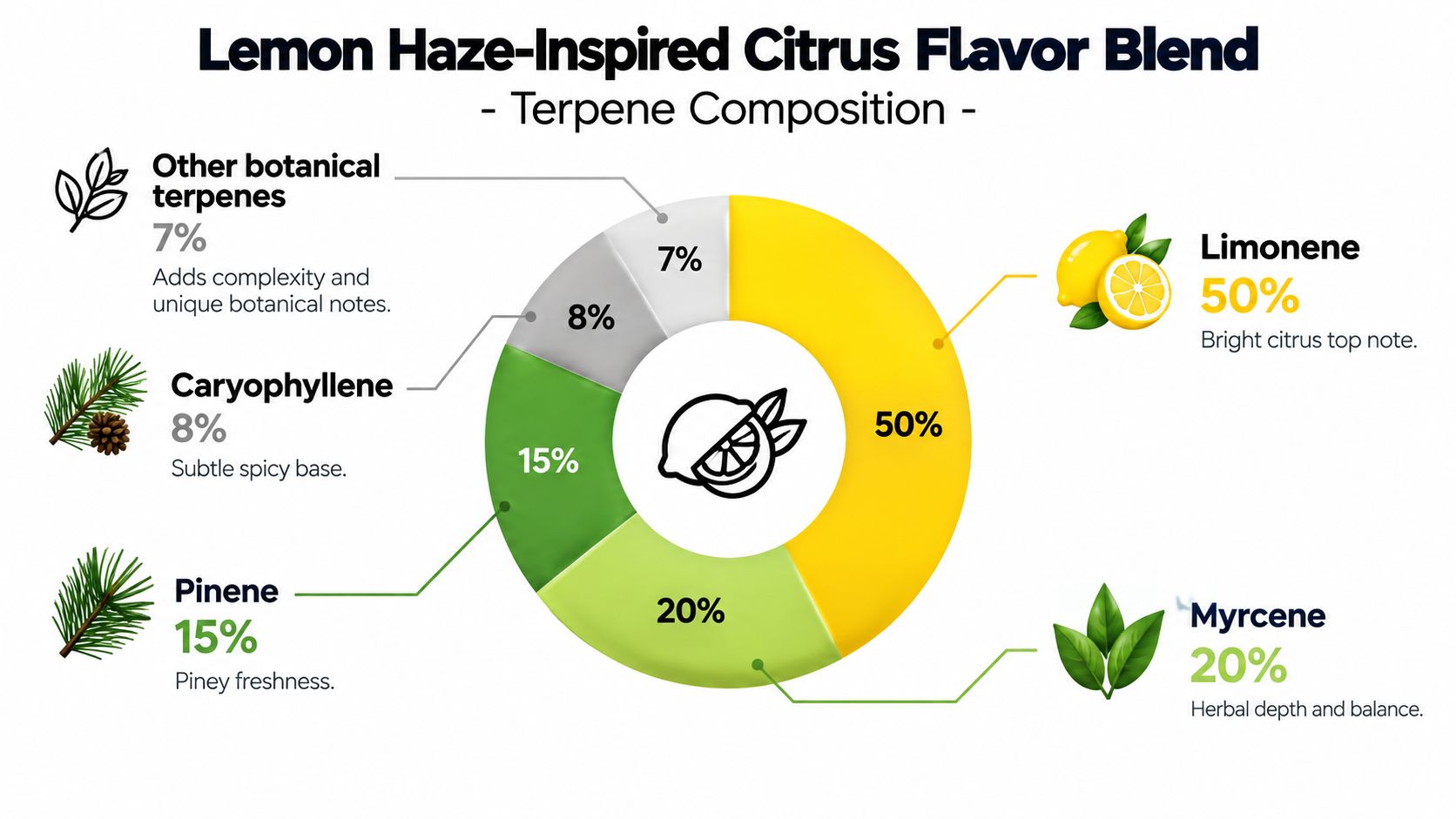
Lemon Haze-style replication starts with a clear commercial signal: bright citrus on the inhale, followed by herbal and pine complexity. Limonene should lead the opening aroma, while pinene and myrcene prevent the profile from becoming thin or candy-like. That structure works well for cartridge brands that need recognizable flavor across repeated production runs, especially when the source flower varies between batches.
A practical blend should be evaluated as a layered system rather than a single dominant terpene. Limonene supplies the top note, pinene gives the mid-palate a sharper green edge, and myrcene anchors the finish with earthy fruit. This follows the common formulation mapping of limonene as a top note, with supporting terpenes creating a more complete strain-inspired expression (formulation guide for sweet weed strains).
Cartridge decisions that protect the opening note
Start with a winterized, dewaxed distillate when clarity and vapor consistency matter. A clean carrier lets the citrus top note register without competing with residual fats or heavy background flavor. Test the blend in the actual cartridge hardware, because coil temperature and wick behavior can change how quickly limonene flashes forward.
- Begin with a controlled lab batch: Establish the sensory baseline before scaling to production.
- Check warm-storage behavior: Compare samples under the temperatures expected in distribution, then document aroma drift, haze, and separation.
- Use protective packaging: UV-protective or amber components can help limit light exposure during storage.
- Scale with precision: The limonene formulation guide is a useful reference when adjusting citrus-forward blends.
A product such as Elevated Strains can also serve as a catalog reference when comparing how a strain-inspired profile translates into a finished flavor system.
2. Strain-inspired terpene profile for formulating Lavender-forward cannabis distillate blends
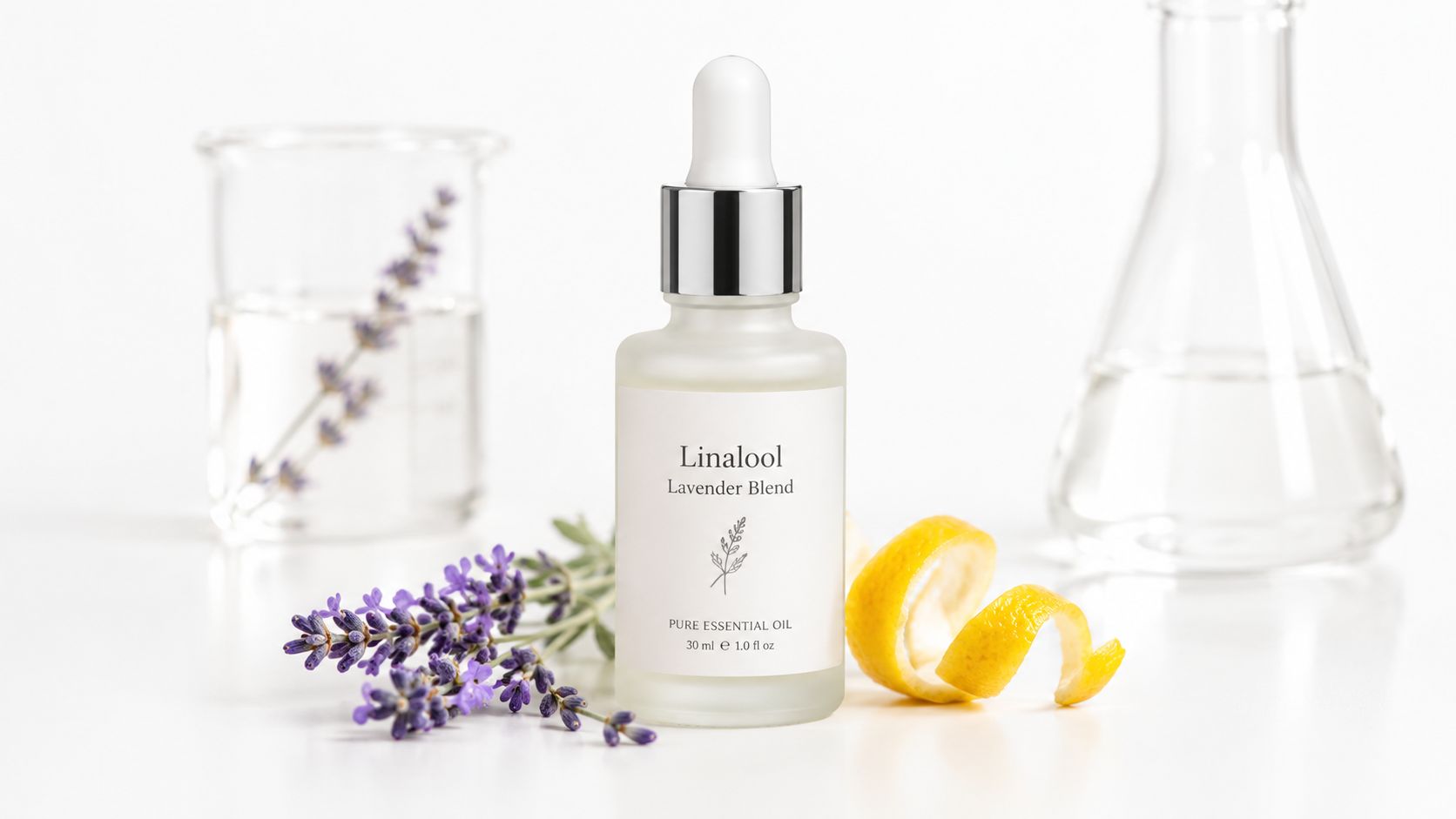
Floral profiles fail when linalool is allowed to dominate without a bright counterpoint. A Lavender-forward distillate blend needs linalool to establish the floral mid note, but limonene keeps the aroma open and prevents the blend from becoming dense, medicinal, or overly perfume-like. Myrcene can provide a soft base that connects the botanical character to cannabis authenticity.
Linalool and limonene should be treated as complementary rather than interchangeable. In a controlled in vitro assay, 1 µM limonene showed no direct cannabinoid-receptor functional activity at the tested concentration, while linalool produced measurable inhibitory kinetics in the same experimental system (controlled terpene assay). That result supports restrained product language. A floral terpene profile can support calm or wind-down positioning, but formulators shouldn't present terpene content alone as proof of a predictable receptor-level effect.
Make floral complexity part of the specification
Use a distillate carrier with a restrained background profile. Heavy live resin can obscure the lavender character, while an overly neutral carrier may make the blend taste detached from cannabis. Opaque or dark-tinted packaging is the safer direction for a light-sensitive floral profile, and sensory review should include both fresh and stored samples.
Formulation rule: If the first impression is floral but the finish is harsh or hollow, adjust the supporting base before increasing linalool.
Slight warming can improve handling during small-batch blending, but the finished product still needs evaluation under its intended storage conditions. Record the exact blend ratio, carrier lot, hardware, and packaging used in each sensory panel. For background on the ingredient itself, use this linalool essential oil guide.
3. Strain-inspired terpene profile for formulating Sweet Mango-Citrus cartridge blends
A Sweet Mango-Citrus cartridge succeeds when its aroma unfolds in layers, rather than delivering a single sharp fruit note. Limonene establishes the tart citrus top note, linalool rounds the floral-herbal middle, and myrcene supports a persistent tropical base. The pairing can create an upbeat opening with a calmer, softer finish, while keeping the profile strain-inspired.
Start with the carrier decision. A neutral distillate gives limonene and mango-style fruit notes clear definition. Strongly flavored live resin can add earth or fuel that competes with the target, although a restrained background may help the cartridge retain cannabis character. For production, confirm the intended balance in the actual oil instead of judging terpene components separately.
Build the mango impression without syrupy saturation
Use the Mojito to Sweet Mango terpene selection guide to compare bright citrus and sweeter fruit architectures before selecting a Gold Coast Terpenes blend or individual isolate components. Keep limonene in the top-note role, use linalool to connect the citrus and fruit layers, and let the base provide length without turning heavy.
Run a small sensory ladder across nearby blend levels. A high aroma load may make the first draw sharp, while a low load can leave mango disconnected from the carrier. Review the blend through the launch hardware, since ceramic and wick systems can release citrus differently.
Storage testing should cover aroma, color, clarity, and separation at expected distribution temperatures. Record carrier lot, blend ratio, hardware, and packaging for every panel. A first-in, first-out process also limits time outside the validated sensory window.
The production target is a recognizable mango-citrus opening, a smooth floral transition, and a stable finish that remains distinct after storage.
4. Strain-inspired terpene profile for replicating Premium OG Kush distillate formulations
OG Kush replication depends on restraint. Limonene can brighten the opening, but the finished profile needs caryophyllene and myrcene to create the earthy, peppery, fuel-like body associated with OG-style expressions. Linalool has a smaller but important role. It softens the transition between citrus and the heavier base, adding herbal complexity without turning the blend floral.
The profile should be built from the base upward during development. First establish the relationship between myrcene, caryophyllene, and the carrier. Then adjust limonene until the opening feels vivid but not lemon-forward. Linalool can be introduced as a rounding component after the main OG structure is stable.
Preserve the base without muddying the blend
Premium distillate is the most forgiving carrier for evaluating this kind of architecture because it allows individual notes to remain legible. Lower-quality oil can introduce bitterness or harshness that formulators may incorrectly attribute to caryophyllene or limonene. Run the blend through the same cartridge hardware intended for launch, since a warm coil can exaggerate the peppery and citrus notes.
The distillate mixing guide provides a practical reference for combining terpene components with oil. Keep the batch record detailed enough to reproduce the result, including order of addition, mixing time, carrier temperature, and resting period before evaluation.
OG-style accuracy comes from the finish. If the first draw is bright but the aftertaste lacks earth, pepper, and persistence, the blend is incomplete.
Avoid making price or margin assumptions before the profile is validated. Premium positioning only works when the sensory difference survives production, packaging, and storage. A small pilot that tastes right in a beaker but drifts in finished hardware isn't a usable commercial specification.
5. Strain-inspired terpene profile for formulating Tropical Punch flavor in concentrate blends
Tropical Punch needs an aroma architecture built for progression, not only an intense first hit. In sugar wax, budder, and rosin, limonene can establish citrus-tropical brightness, linalool can shape the floral middle, and myrcene can provide a softer, sweet-herbal base. That top, mid, and base-note sequence helps the flavor develop across the session instead of collapsing into a single fruit note.
Start by choosing the carrier. Neutral distillate can make the blend sound louder, while full-spectrum and rosin-derived carriers contribute their own aromatic material and may already contain substantial mid and base notes. Evaluate the formula at more than one background intensity, then set the limonene level so the opening stays tropical rather than lemon-dominant. Linalool should round the center without pushing the profile toward perfume.
Concentrate texture also changes delivery. A blend that reads clearly in a liquid oil may distribute unevenly through dense sugar or budder. Rosin can carry a richer base, but its native aroma may mask delicate floral notes. Record carrier type, blend order, mixing conditions, dab temperature, and device or application format before comparing samples.
Design for retention and repeatability
Protect the volatile top notes with opaque, tightly sealed packaging and a consistent filling process. Control headspace variation, then monitor clarity, separation, texture, and aroma through the planned test period. Check the finished jar rather than relying on a beaker evaluation.
Use this production sequence:
- Screen the carrier: Compare sugar, budder, and rosin independently.
- Tune the blend: Adjust limonene for lift, linalool for floral balance, and myrcene for persistence.
- Verify delivery: Review how dab temperature and application equipment change the note order.
- Keep a reference: 24k gold punch offers a catalog reference for a tropical punch direction.
The terpene flavor selection guide can suggest a starting direction, but carrier compatibility, packaging, and finished-product testing determine the usable specification.
6. Strain-inspired terpene profile for formulating Herbal-Minty cannabis distillate blends
Herbal-minty profiles serve a different commercial purpose from fruit cartridges. They appeal to brands that want botanical clarity, restrained sweetness, and a more grown-up sensory identity. Linalool establishes the floral-herbal foundation, pinene adds a cool green edge, and limonene keeps the blend bright enough to avoid a flat or medicinal impression.
Pinene and linalool need careful balancing. Too much pinene can make the profile sharp and resinous, while too much linalool can push it toward perfume. Limonene acts as the bridge, connecting the two and giving the opening enough lift for a distillate cartridge.
Keep the positioning sensory and compliant
Use language such as herbal-minty clarity, botanical freshness, or floral pine depth. Avoid promising focus, energy, sleep, pain relief, or other medical outcomes based on terpene composition. The evidence base for limonene and linalool remains largely preclinical and dose-dependent, with no well-established human cannabis-dose standardization in the supplied review material (terpene therapeutic benefits review).
Test the profile with the audience most likely to buy it, including mature wellness-oriented consumers, because taste expectations can differ from those of fruit-focused vape buyers. Distillate or full-spectrum carriers generally provide a clearer platform than strongly aromatic live resin, which may overpower the delicate herbal structure.
Warm-tinted or opaque packaging is preferable for a light-sensitive profile. Include hardware in the validation plan, and don't approve the formula solely from a smell strip or open vial. The cartridge is the product, so the cartridge must deliver the approved balance.
7. Strain-inspired terpene profile for formulating Berry-Forward blends for rosin and full-spectrum cartridges
Berry-forward formulations depend on the carrier's existing aroma. Myrcene establishes a fruity-sweet, earthy base, linalool supplies floral detail, and limonene adds citrus lift at the top. Together, they suit rosin cartridges and heritage-strain products positioned around layered aroma rather than a single fruit note.
Start with the oil alone. Live rosin and full-spectrum concentrates already contain native terpenes and resin character, so the added blend should fill gaps instead of masking them. Map the carrier's top, mid, and base notes first, then build the limonene-linalool structure around the myrcene already present.
Build the formula around the oil and device
Rosin, full-spectrum distillate, and hybrid concentrate formats require separate starting ratios. A myrcene-heavy carrier may also change texture during storage, including crystallization risk, so approve the blend only after testing the actual oil in its intended hardware.
- Match the carrier to the application: Record the format, native aroma, viscosity, and intended cartridge use before selecting a Gold Coast Terpenes blend or individual isolate.
- Check hardware performance: Compare draw resistance, vapor output, flavor progression, and residue across the selected device.
- Test storage behavior: Review appearance, texture, and aroma after the approved storage condition, then include that condition in the product specification for wholesale partners.
- Keep the positioning specific: Heritage berry and boutique rosin profile communicate layered aroma without reducing the product to a generic fruit cartridge.
Ceramic or quartz hardware operated at lower temperatures may retain softer berry and floral notes, but the device still needs validation with the final oil. A smell strip or open vial cannot replace cartridge testing.
Use the Mixing Calculator when scaling myrcene-linalool ratios. Confirm the finished blend by weight and sensory panel, and document the QA-approved tolerance range because small ratio changes can shift the balance from berry depth toward floral or citrus dominance.
Limonene & Linalool: 7-Strain Terpene Profile Comparison
| Item | 🔄 Implementation complexity | ⚡ Resource requirements | ⭐ Expected outcomes | 💡 Ideal use cases | 📊 Key advantages |
|---|---|---|---|---|---|
| Strain-inspired terpene blend for replicating Lemon Haze flavor in vape cartridges | Moderate, limonene-forward simplifies top-note but requires viscosity tuning and narrow tolerances | Winterized/live-resin distillate carriers, SC Lab CoA, storage testing (70–80°F), UV-protective packaging | ⭐⭐⭐⭐, immediate citrus recognition; 6–8 months shelf life (opaque, cool) | Daytime/ uplift cartridges; high-turnover retail SKUs | Strong market recognition; fast flavor onset; VG/PG-free blending |
| Strain-inspired terpene profile for formulating Lavender-forward cannabis distillate blends | Moderate–High, linalool handling and crystallization risk increase development time | Live-resin/solvent-free distillate, crystallization stability tests (45°F), opaque packaging, CoA | ⭐⭐⭐⭐, premium sustained floral character; 8–10 months (cool, opaque) | Premium distillates, tinctures, slow-release cartridges, wellness lines | Premium positioning; supports entourage narrative; justifies higher wholesale pricing |
| Strain-inspired terpene profile for formulating Sweet Mango-Citrus cartridge blends | Moderate, balance limonene-linalool-myrcene; monitor limonene volatility across batches | Winterized/live resin carriers, frequent sensory stability testing (70–85°F), precise mixing tools | ⭐⭐⭐⭐, broad mainstream appeal; 5–7 months shelf life (room temp) | Fruit-forward cartridges; seasonal/line-extension SKUs; mainstream retail | High consumer appeal and faster sell-through; smooth vapor perception |
| Strain-inspired terpene profile for replicating Premium OG Kush distillate formulations | High, multi-terpene precision, narrow tolerance windows, longer stability programs | Premium distillate (90%+), extended 12-week stability testing, precise dosing equipment, CoA | ⭐⭐⭐⭐⭐, connoisseur-grade authenticity; 10–12 months (cool) | Premium/craft distillates and flagship cartridge SKUs; connoisseur retail | High perceived authenticity; supports premium margins and craft positioning |
| Strain-inspired terpene profile for formulating Tropical Punch flavor in concentrate blends | Moderate–High, concentrate format requires terpene retention and separation control | Rosin/sugar wax/budder carriers, 10-week separation/crystallization tests, vacuum-sealed/opaque jars | ⭐⭐⭐⭐, evolving, fruit-punch complexity; 12–16 weeks sealed cool storage | Concentrates (rosin, sugar wax); dab-focused product lines and premium jars | Rich, evolving flavor for concentrate consumers; cross-format compatibility |
| Strain-inspired terpene profile for formulating Herbal-Minty cannabis distillate blends | Low–Moderate, simple 3-component blend but narrow pinene tolerance needs care | Distillate/full-spectrum carriers, demographic sensory testing, opaque cartridges | ⭐⭐⭐, stable herbal-minty profile; 10–14 months (cool) | Wellness/functional cartridges (focus, clarity); older or health-conscious demographics | Simple formulation; strong wellness positioning; cost-effective production |
| Strain-inspired terpene profile for formulating Berry-Forward blends for rosin and full-spectrum cartridges | Moderate–High, myrcene heat-sensitivity and crystallization require specific hardware and tests | Live rosin/full-spectrum carriers, low-temp hardware specs, 14-week stability tests, precise mixing | ⭐⭐⭐⭐, premium berry complexity; 12–16 weeks sealed cool storage | Rosin/full-spectrum cartridges and boutique rosin products | Complex, authentic berry flavor; supports premium pricing and entourage claims |
Turn the Profile Into a Repeatable SKU
The best formulation starts with a sensory direction, not a strain name. Decide whether the finished product should open with citrus, present a floral middle, finish with tropical fruit, or carry an earthy OG base. Then assign limonene and linalool to their actual jobs. Limonene generally works as the volatile top note, while linalool can occupy the mid-note or help round the transition toward the base. Supporting terpenes such as pinene, myrcene, and caryophyllene determine whether the result feels sharp, soft, earthy, peppery, or persistent.
Choose the carrier before approving the formula. Distillate gives you a relatively clean canvas, but full-spectrum oil, live resin, rosin, sugar wax, and budder each bring different native chemistry and release behavior. A blend that works in a clear distillate cartridge may taste unbalanced in rosin, while a profile that seems subtle in a concentrate can become excessive in a high-temperature vape.
Use a practical workflow:
- Select the dominant direction: Citrus, floral, fruit, OG, herbal, tropical, or berry.
- Build the note structure: Place limonene at the opening, linalool in the middle or rounding layer, and supporting terpenes in the base.
- Choose the carrier and hardware: Test the actual distillate, concentrate, cartridge, coil, and filling process.
- Validate packaging and storage: Review light exposure, temperature, clarity, separation, crystallization, and aroma drift.
- Document the approved specification: Record ratios, tolerances, batch numbers, mixing order, sensory criteria, and release conditions.
A strain-inspired baseline is usually faster than building every profile from isolated compounds. Gold Coast Terpenes offers strain-specific blends alongside isolates such as limonene and linalool, so a formulator can begin with recognizable architecture and make controlled adjustments afterward. The terpene education library can support ingredient selection, while the Mixing Calculator can help translate a lab formula into a production batch.
Sensory panels should compare fresh and stored samples, and every panel should use the same hardware, serving conditions, and evaluation language. Don't rely on effect claims to define success. The practical standard is whether the product delivers recognizable flavor, stable production behavior, consistent packaging performance, and a repeatable specification without medical claims.
Gold Coast Terpenes supplies strain-inspired blends and isolated compounds for cartridges, concentrates, distillate, and broader cannabis product formulation. Visit Gold Coast Terpenes to compare limonene and linalool options, review formulation resources, and build a repeatable starting point for your next flavor system.