
You've got a clean Orange Dreamsicle cart on the bench. At room temperature, it opens with fresh orange, settles into a soft cream note, and finishes without the gassy heaviness common to many modern hybrids. Then the lab report arrives. Limonene is modest, linalool is more noticeable than expected, and myrcene is nearly absent. The sensory result makes sense, but the numbers appear to tell a different story.
That mismatch is normal in cultivar replication. A strain name describes a target memory, not a guaranteed chemical formula. Published Orange Dreamsicle listings identify a THC-dominant hybrid, with reported THC around 16.9% to 17% in one lab-reported listing and near 19.0% THC with 1.0% CBD in another Hytiva's Orange Dreamsicle profile. The aroma can be led by beta-caryophyllene, limonene, and beta-myrcene, while another cut may lean more heavily toward myrcene or carry a different supporting terpene structure.
This guide treats the Orange Dreamsicle strain terpene profile for formulation as a flavor architecture problem. The goal isn't to recreate a menu description with orange oil. It's to build a cart-ready, concentrate-compatible profile from isolates, then verify how that profile behaves in the actual matrix and hardware.
Why Formulators Chase Orange Dreamsicle
A strong Orange Dreamsicle reference has a narrow sensory shape. The opening should suggest fresh orange juice or peel, not lemon cleaner. The middle needs a rounded, dairy-like softness that reads as vanilla cream without becoming candle-like. The finish should remain short and clean, with enough spice or earth to keep the citrus from floating away, but not so much that the profile turns into fuel, pine, or dark musk.
That's why a formulator can smell a convincing cart and still struggle to reproduce it from a certificate of analysis. Aroma perception reflects the interaction of major terpenes, minor volatiles, the cannabis matrix, oxidation state, and delivery temperature. A modest limonene result can still feel orange when valencene, terpinolene, and supporting floral compounds create the right contrast. Conversely, a high limonene number can smell harsh or detergent-like when the mid-note structure is missing.
The gap between sensory memory and a lab report
The name itself reinforces the problem. Dreamsicle-type profiles are commonly described as orange-forward on top with creamy, doughy, or floral support underneath. Independent technical coverage places limonene around 0.6% to 1.0% of dry weight in many batches, with some phenotypes exceeding 1.2% Joint Commerce's Dreamsicle terpene guide. Another analysis reports total terpene content around 1.5% to 3.0% by weight in well-grown flower, while live resin and rosin may reach roughly 5% to 10% terpene content by mass, depending on extraction method and starting material Joint Commerce's Dreamsicle extraction guide.
Those figures describe source material, not a finished formulation. A cart manufacturer may be rebuilding a stripped distillate with a selected isolate stack, while a solventless producer is trying to correct a live extract that already contains substantial native terpenes. The same target name needs a different intervention in each case.
Practical rule: Rebuild the sensory sequence, not the printed terpene ranking. Orange first, cream second, clean spice last.
Why orange oil alone fails
Many available flavor systems start with citrus essential oils or food-grade orange essence. That approach can smell excellent in a vial and fail inside a cartridge. Volatile citrus components may become sharp under repeated heating, and food flavorings can introduce carriers or materials that don't belong in an inhalation formulation. A limonene-only build often gives you immediate recognition but no believable dessert body.
The workable route is isolate-led formulation. Limonene supplies the recognizable orange lift, while linalool, myrcene or terpinolene, and restrained base compounds give the profile continuity. The formulation must also account for viscosity, coil exposure, fill temperature, and storage. A blend that smells balanced in a glass vial may present as aggressively citrus-forward after it moves through a wick-and-coil system.
This is the central commercial problem. You aren't just matching aroma. You're designing a strain-inspired terpene blend for vape cartridges that remains recognizable after dilution, heating, and repeated use.
Lineage and the Naming Drift Around Orange Dreamsicle
The Orange Dreamsicle label doesn't identify one universally fixed genetic line. Major strain references describe multiple versions, including at least one cross associated with Orange Crush and Juicy Fruit, while other market listings connect orange-cream variants to different parentage and potency ranges Joint Commerce's Orange Dreamsicle lineage guide. The shared name often points to a sensory direction, not a single breeder-controlled chemotype.
That distinction matters before you purchase isolates. Two batches sold under the same label can differ in their dominant terpene, cream impression, and base-note density. A myrcene-forward cut may feel heavier and rounder, while a limonene-led cut can present as brighter and more peel-like. One compiled analysis reports myrcene at roughly 50% to 60% of the terpene fraction in an Orange Dreamsicle-type profile, followed by pinene or caryophyllene depending on phenotype StrainWeaver's Orangesicle Dream analysis.
Use the COA before the menu name
For a commercial build, use a simple selection sequence:
- Collect the batch COA. Record the top three reported terpenes, total terpene content, cannabinoid profile, and test date.
- Read the aromatic direction. Limonene and valencene suggest a brighter orange target. Myrcene, caryophyllene, and linalool suggest more body and softness.
- Separate genetic claims from sensory claims. Breeder notes can help, but the lab report tells you what arrived in the material you're evaluating.
- Lock the target before buying isolates. Write down whether the finished profile should be peel-forward, juice-forward, cream-forward, or spice-supported.
The label can remain useful for merchandising, but it shouldn't control the formula. A good build sheet names the target cut, the source batch, the top-three terpene profile, and the sensory reference used by the panel.
Common cuts sold under the Orange Dreamsicle name
| Market Label | Reported Parent Cross | Typical Top Three Terpenes |
|---|---|---|
| Orange Dreamsicle | Orange Crush x Juicy Fruit in one documented version | Limonene, myrcene, beta-caryophyllene |
| Dreamsicle-type orange cream | Varies by breeder and producer | Limonene, linalool, beta-caryophyllene |
| Orangesicle Dream | Variant identity may differ by phenotype | Myrcene, pinene or beta-caryophyllene, limonene |
| Orange Creamsicle-style release | Often marketed as an orange-dessert hybrid | Limonene, terpinolene, caryophyllene |
Menu language frequently collapses Orange Creamsicle, Orange Dreamsicle, and other dessert names into one commercial family. A comparison of Orange Creamsicle naming and lineage is useful when auditing competitor labels, but the purchasing decision should still rest on the source COA and the sensory target.
Mapping the Terpene Architecture of Orange Dreamsicle
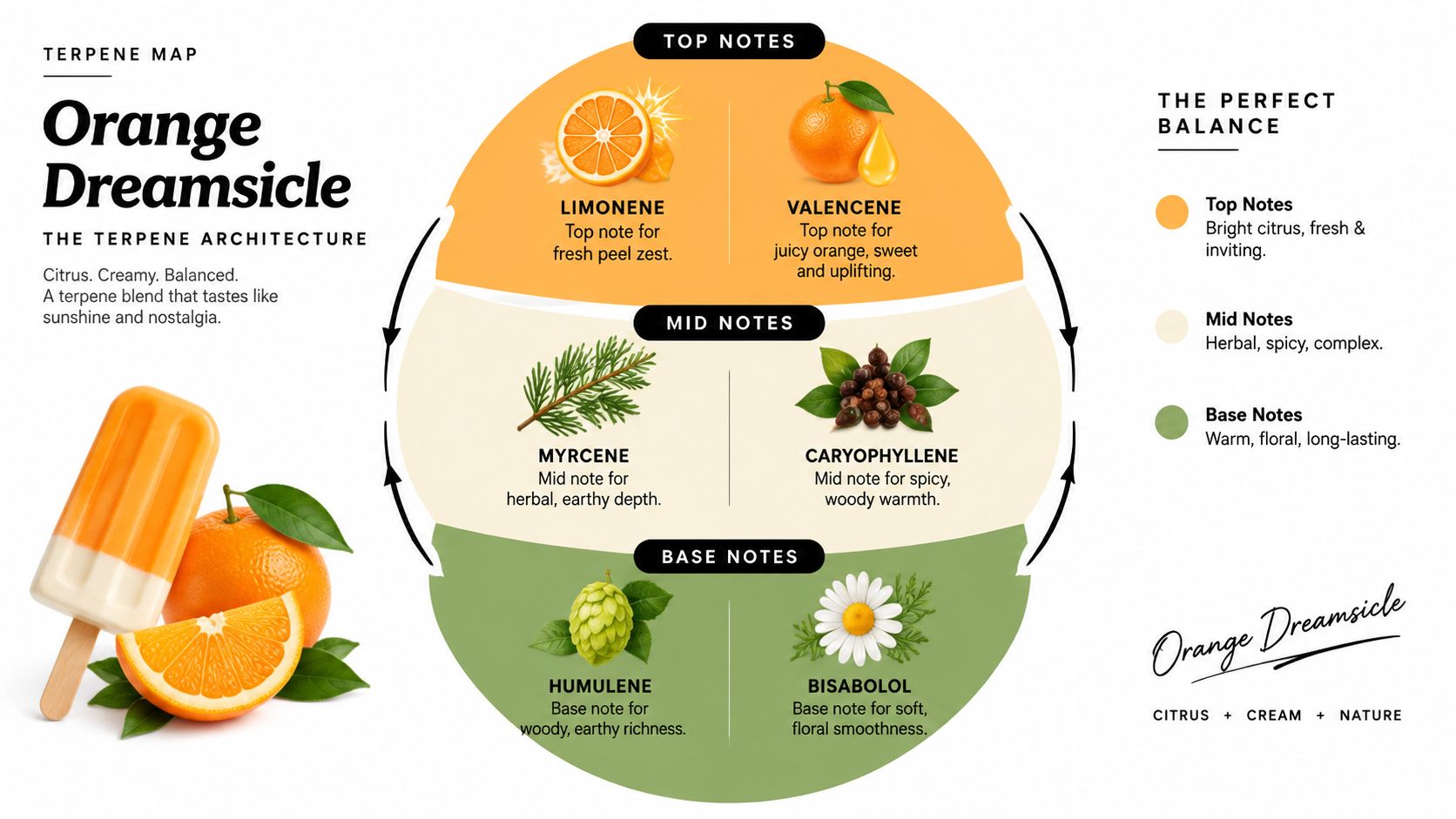
A formulator can read the profile more effectively as a top, mid, and base note system than as a flat list of compounds. The top supplies recognition. The mid creates the frozen-dessert impression. The base prevents the orange from becoming thin, synthetic, or one-dimensional.
The orange side generally draws from limonene, valencene, and terpinolene. Limonene gives peel zest and familiar citrus brightness. Valencene can make that citrus feel juicier and more orange-specific. Terpinolene adds lift, sweetness, and an airy fruit-bowl quality, but too much can move the blend toward green or herbal territory.
Top notes create recognition
Limonene is the obvious starting point, but it shouldn't carry the entire orange identity. Use it to establish the first sensory event, then allow valencene and a restrained terpinolene accent to make the orange feel rounded rather than generic.
The published Dreamsicle-type data supports this approach. Orange-side profiles commonly include limonene, terpinolene, and sometimes valencene, while dessert-associated profiles may include caryophyllene, linalool, and creamy or doughy volatile character Joint Commerce's technical Dreamsicle coverage. Those compounds don't reproduce dairy, but they can create the contrast that the nose interprets as orange cream.
Mid notes carry the dessert illusion
Linalool acts as a soft bridge between citrus and base. It can round sharp edges and add a floral sweetness that supports a cream interpretation. Myrcene adds a heavier, earthy-musky body, while terpinolene keeps the center more lifted and fruit-like. The choice depends on the reference. A myrcene-forward source should receive enough mid-body support to avoid a thin cart profile, while a bright, clean reference may need only a modest amount.
Minor accents can have disproportionate sensory impact. Cis-nerolidol and alpha-bisabolol can contribute a soft, rounded impression, while pinene can sharpen the upper edge. Beta-caryophyllene adds peppery depth and helps keep the blend from reading like confectionery syrup.
Base notes keep the finish short
Humulene, beta-caryophyllene, and carefully selected bisabolol belong in the low register. Their job isn't to announce themselves. They should give the finish shape, especially after the cartridge has warmed and the volatile citrus has become less dominant.
A common formulation error is to push limonene too high because the profile smells weak on the first blotter test. Once heated, that same blend may become abrasive and erase the cream note. A better correction is usually to strengthen the mid section or add a restrained orange-specific accent, not to keep increasing the brightest compound. The limonene formulation guide provides useful handling context for isolating the top note without allowing it to dominate the whole architecture.
Isolate Ratios for a Strain-Inspired Blend
The starting blend below is a practical screening framework, not a universal Orange Dreamsicle formula. It assumes you're building a strain-inspired terpene blend for distillate and want to compare the blend against a trusted flower, live resin, or finished reference cart. The ranges are deliberately broad because the name covers multiple genetic and analytical expressions.
Start with limonene as the largest single component, but don't let it become the entire identity. A useful first screen places limonene around 35% to 45% of the terpene blend, with linalool around 8% to 12% as the soft bridge. These formulation ranges are starting points for sensory work, not claims about the natural composition of every Orange Dreamsicle batch.
| Isolate | Note Role | Starting % of Blend | Sourcing Note |
|---|---|---|---|
| Limonene | Fresh orange peel and citrus opening | 35% to 45% | Use a clean, documented isolate rather than food-grade orange essence |
| Linalool | Floral cream bridge and softening mid note | 8% to 12% | Increase cautiously if the blend feels sharp |
| Myrcene | Juicy, earthy, rounded body | 8% to 18% | Useful for heavier phenotypes, but can darken the profile |
| Terpinolene | Airy fruit, green sweetness, lift | 4% to 10% | Choose this over more myrcene when the reference is bright |
| Beta-caryophyllene | Peppery depth and warm base | 3% to 6% | Keep restrained to avoid a spice-led finish |
| Humulene | Dry, woody, low-end structure | 1% to 3% | Use as a quiet base accent |
| Valencene | Orange peel and juicy citrus specificity | 2% to 4% | Harder to source consistently, so verify identity |
| Cis-nerolidol or alpha-bisabolol | Creamy, soft, rounded finish | 1% to 3% | Screen separately because the two accents behave differently |
| Trace supporting isolates | Balance and phenotype adjustment | Remainder | Use only after the primary accord is stable |
Compare the common substitutions
Limonene-only profiles are inexpensive to conceptualize but usually fail on finish. They smell like citrus concentrate, not orange dessert.
Distilled orange oil may provide a convincing natural opening, but it can complicate reproducibility and thermal behavior. It also doesn't give you clean control over the cream-side architecture.
Food-grade orange essence is the wrong shortcut for an inhalation product. Its intended application, carrier system, and documentation may not match the requirements of a cannabis vape formulation.
Terpinolene versus myrcene is a meaningful choice. Terpinolene keeps the profile buoyant and fruit-forward. Myrcene gives it weight and a more musky body. If the result becomes candy-sweet, reduce terpinolene first. If it feels hollow or too fuel-leaning, lower the darkest base notes and rebuild the soft middle with linalool or a carefully screened creamy accent.
For isolate handling, use a controlled dilution method, document lot numbers, and confirm that each material has appropriate technical and safety documentation. A practical guide to using terpene isolates can support weighing, blending, and staged evaluation.
Building a Starting Recipe for Distillate Carts
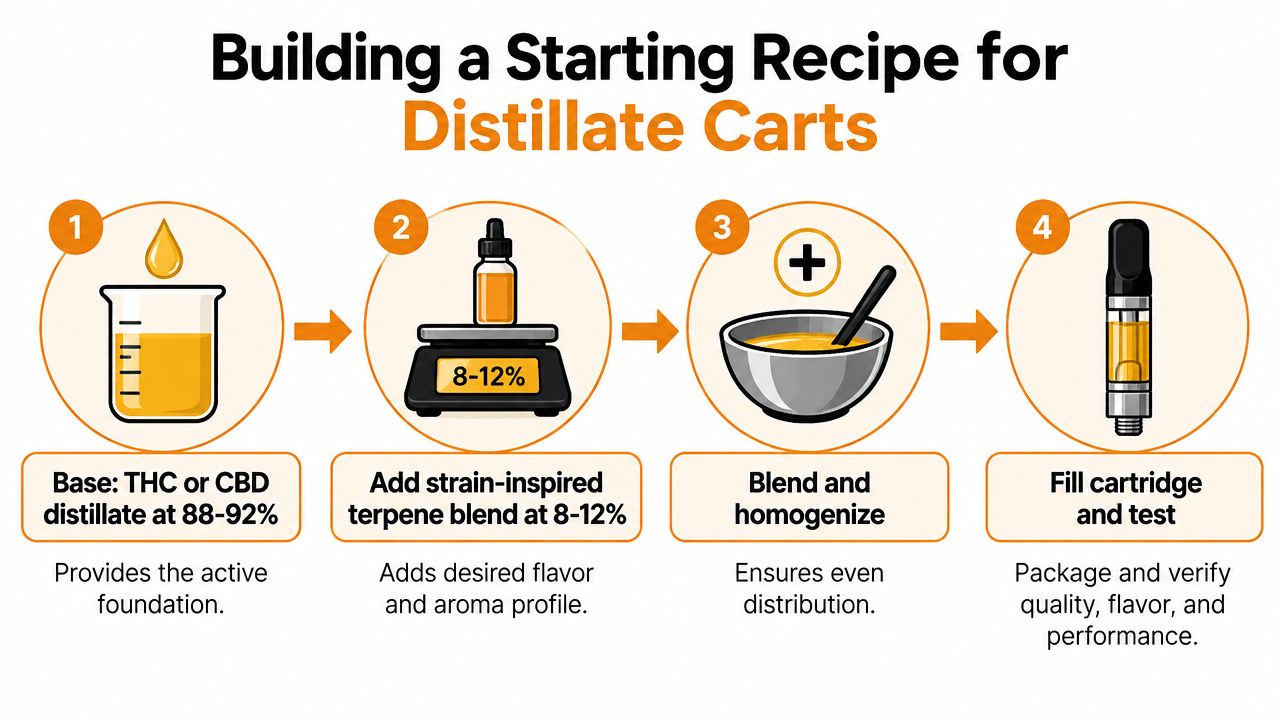
For a first-pass Orange Dreamsicle formulation for vape cartridges, work from a known distillate and keep the flavor load controlled. A practical starting architecture uses THC or CBD distillate at 88% to 92%, with the strain-inspired terpene blend at 8% to 12% total, based on the formulation plan in this guide. The remaining composition should be handled according to the distillate's viscosity and the selected cartridge hardware.
For a 1 g cartridge, a 10% terpene load gives you the following working split:
- Limonene, 4.0%
- Myrcene, 2.0%
- Linalool, 1.0%
- Beta-caryophyllene, 0.6%
- Terpinolene, 0.6%
- Valencene, 0.3%
- Trace isolates, 1.5%
The trace portion can carry a small amount of humulene, cis-nerolidol, alpha-bisabolol, or another documented supporting isolate. Don't force every available compound into the first trial. A smaller, legible formula makes sensory corrections easier.
Make the first bench batch readable
Warm the distillate only enough to achieve consistent transfer and mixing. Add the terpene blend gradually, homogenize without introducing unnecessary air, and hold a retained sample for comparison. Don't add MCT, PEG, or another viscosity modifier because the cart is difficult to fill. First determine whether the hardware, fill temperature, or base oil is causing the problem. A pure distillate adjustment is preferable where the system can support it.
A flavor load above 12% can create throat-feel problems, especially when the blend contains a high share of bright, volatile compounds. Ceramic 510 hardware may tolerate a broader viscosity window than a basic wick-and-coil design, but the final decision belongs to the hardware validation process, not the formula alone.
For a sharper orange-peel version, raise the valencene fraction within the blend and keep terpinolene present while holding myrcene steady. For a creamier dessert version, reduce the sharpest citrus emphasis and redirect part of the trace portion toward linalool, cis-nerolidol, or alpha-bisabolol. Keep the same isolate pool so the sensory change remains attributable.
Before filling a production run, hold the mixed oil, inspect it for separation or haze, and test a small number of cartridges through the intended device. Record initial aroma, first-draw flavor, warmed flavor, and late-use finish. The distillate terpene loading guide is a useful reference when setting the first dilution range.
A short video can help teams align their bench sequence before they begin:
Adapting the Blend for Concentrate and Live Resin Formats
The isolate stack changes when the carrier matrix already contains native terpenes. Stripped distillate gives you a blank canvas. Live resin, high-terpene extract, and rosin bring their own volatility, viscosity, color, and sensory artifacts, so adding the full distillate-style formula usually makes the result too loud.
| Format | Total Terpene Load | Limonene Adjustment | Key Compounds to Emphasize |
|---|---|---|---|
| Live resin cart | 25% to 35% strain-specific terpenes | Reduce the heavy limonene share by roughly a third | Myrcene and linalool for body |
| High-terpene extract rebuild | 12% to 18% | Reintroduce cautiously after tasting the native extract | Valencene and cis-nerolidol when peel or softness is missing |
| Rosin jar or hash-infused pre-roll | 3% to 7% terpene addition | Skip a limonene-heavy top when volatility is a concern | Humulene, beta-caryophyllene, and alpha-bisabolol |
The live resin case is the easiest place to overcorrect. If the native extract already provides a strong citrus opening, adding a distillate-style limonene load can flatten the profile into one-note orange. Reducing that heavy limonene share by roughly a third and moving the balance toward myrcene or linalool can preserve the creamy center.
High-terpene extract requires a different audit. Taste the native material before adding anything. If the extract has body but lacks orange peel, valencene may help restore specificity. If it smells bright but thin, cis-nerolidol or alpha-bisabolol can support the softer finish. Add changes in small, documented increments rather than rebuilding the full blend.
Rosin and hash-infused formats need the most restraint at the top. A limonene-heavy addition can flash off during pressing, warming, or curing, leaving behind a less balanced result than the original jar test suggested. For these formats, low-end compounds such as humulene, beta-caryophyllene, and alpha-bisabolol can reinforce the dessert architecture without trying to recreate the entire volatile opening.
Cold stability, visible separation, and water activity should be checked for the actual finished format. A blend that remains uniform in a vial may behave differently in a cartridge, jar, or infused pre-roll. Record the storage condition, container, and observation time for every retained sample.
Verifying Flavor Accuracy Before Scale-Up
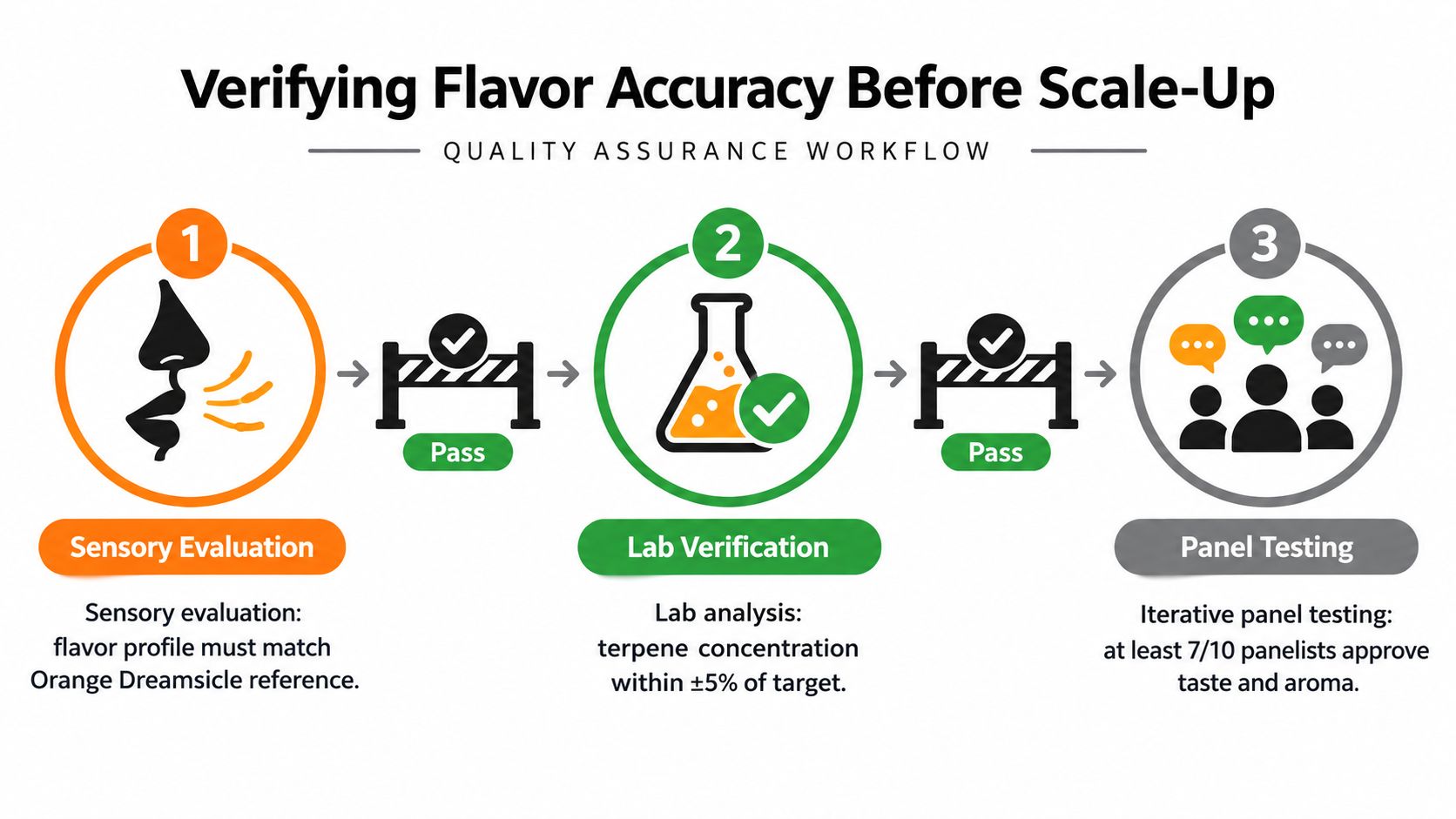
Flavor accuracy needs three gates: sensory comparison, analytical confirmation, and repeated panel review. No single gate can tell you whether an Orange Dreamsicle build is commercially ready.
Start with a reference sample that the team agrees to use. It can be a trusted flower, live resin, or retained cart, but it needs a documented source and storage condition. Evaluate the first draft at room temperature, then after the product has passed through the intended hardware or matrix.
Use a simple scoring sheet
Score each attempt from 1 to 5 for:
- Orange character, fresh peel, juice, or candy accuracy
- Creaminess, softness, dairy-like roundness, and mid-palate continuity
- Finish, balance, cleanliness, spice, and absence of harsh fuel
Use a blind triangle test when possible. Give panelists three coded samples, with two matching and one different, then ask them to identify the odd sample and describe the difference. Keep the reference and test samples at matched temperatures, and don't disclose whether the difference is expected to be brighter, creamier, or heavier.
Confirm the build analytically
Use GC-MS or a qualified third-party terpene analysis to compare the finished composition against the target isolate ratios. Check viscosity, fill behavior, leakage, clogging, and late-use flavor in the selected hardware. The laboratory result doesn't replace sensory work, but it can reveal whether a mixing error, volatile loss, or raw-material substitution caused the drift.
The first draft rarely lands perfectly. Two or three reformulation rounds are normal when the name covers multiple genetic expressions and the reference itself has a complex top-mid-base relationship. Log every adjustment, including isolate lot, blend percentage, matrix, hardware, storage condition, panel score, and the reason for the next change.
That record becomes the asset. Future teams can begin from a known-good Orange Dreamsicle formulation instead of rebuilding the profile from a menu label and a vague orange-cream memory.
Gold Coast Terpenes offers strain-specific terpene blends and individual isolates such as limonene, myrcene, and beta-caryophyllene for cartridge, concentrate, and product-formulation work. Visit Gold Coast Terpenes to review documented options for your next Orange Dreamsicle bench build and select the components that match your target matrix.