
No public strain reference verifies Permanent Candy as a standardized cultivar. Gold Coast Terpenes, a Redondo Beach, CA supplier of 100% botanically derived terpene blends, treats any Permanent Candy name as a flavor target rather than proof of chemical identity.
Is Permanent Candy a Verified Strain?
No. Public references do not document a named breeder, parentage, release date, or lab profile for Permanent Candy, so it cannot be treated as a standardized cultivar. A verified cultivar usually has all four documented in one place, and the name alone does not replace them.
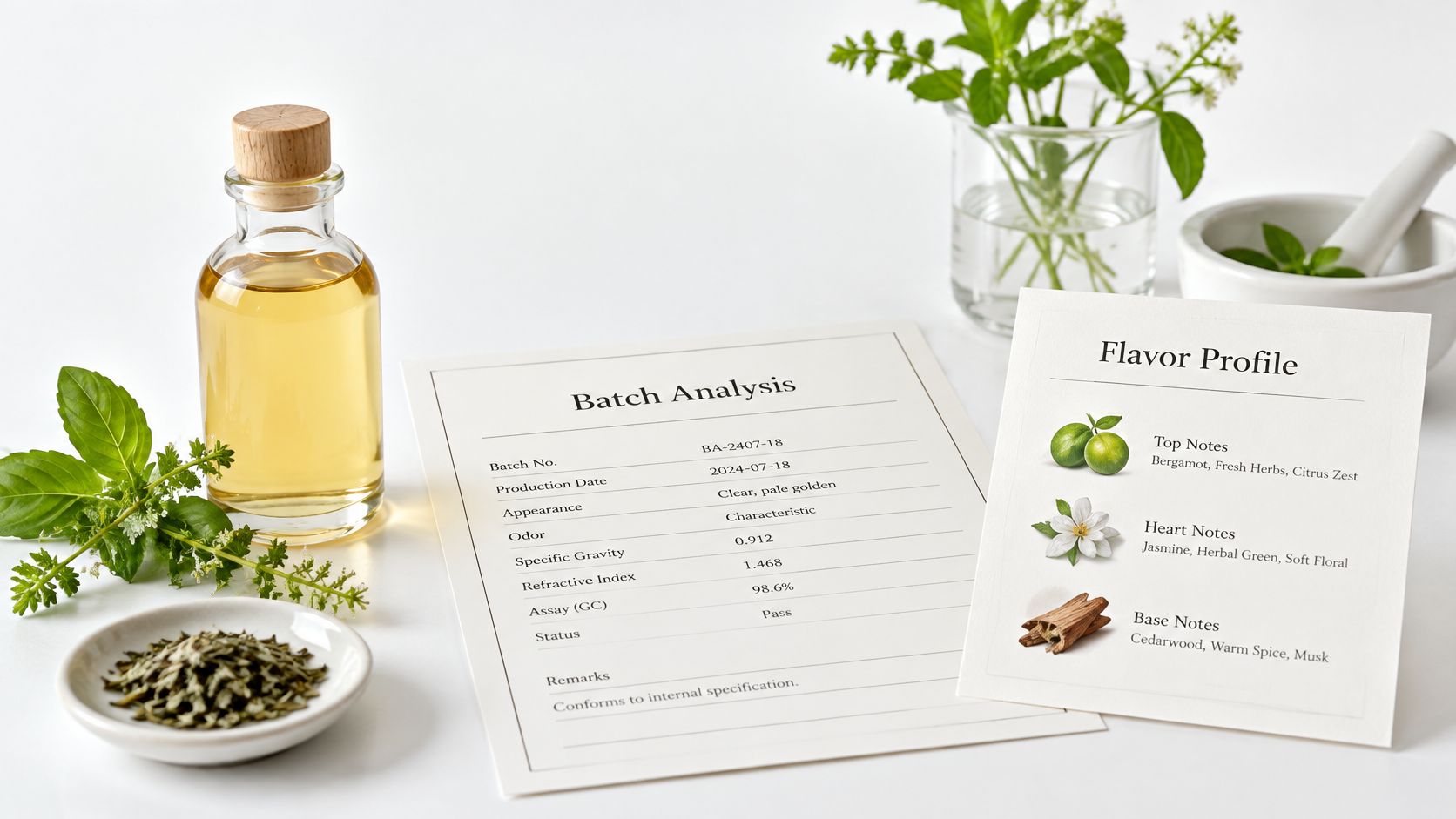
Why a Name Is Not a Specification
Public listings show related names like Candy Candy, Permanent Marker, and Permanent Whitemarker. None of them establishes a breeder, parentage, release date, or lab profile for Permanent Candy. Think of it like a recipe title printed on a jar: it hints at what's inside, but it doesn't guarantee the ingredients. Cannabis strain names aren't universally controlled, so the same label can describe different genetics, grows, or batches. You can browse strain references on Leafly to see how loosely these names get used.
Turning a Name Into a Sensory Brief
Start with the aroma you want before you choose any terpene. Most candy-style targets fall into four directions:
- Sweet confectionery for sugar glaze and vanilla-style sweetness
- Candy fruit for berry or tropical sweetness
- Cream for a soft, dairy-like roundness
- A sharper marker-like note for a lifted, chemical edge
Gold Coast Terpenes offers 37 Strains that work as starting points. Treat each one as a hypothesis to test, not a final spec. Writing this brief first keeps everyone on the same page about what success smells and tastes like before anything gets dosed.
What a Responsible Profile Requires
A solid Permanent Candy profile starts with a certificate of analysis. That document should list cannabinoids, terpene concentrations, contaminants, and the test date.
A strain name tells you what the brief is aiming for. A certificate of analysis tells you what is actually in the bottle.
Batch variation is the practical reason for this rule. Two lots sold under the same name can test very differently, so a flavor claim is only as reliable as the lot behind it.
For terpene basics, read the Terpenes 101 guide from Gold Coast Terpenes. Then compare options in the Gold Coast Terpenes strain catalog. Every lot you buy should come with its own certificate of analysis, and that file becomes the real specification for your Permanent Candy-style blend.
Teams that want to compare side by side can pick any three profiles from the Picker Pack at Gold Coast Terpenes, available in 1.5ml or 3ml sizes.
How Much Do THC Figures Vary Across Related Names?
Names that sound alike don't test alike. Across near-match names, THC figures run anywhere from 23% to 35%, so a strain name can't stand in for batch testing. Gold Coast Terpenes, a Redondo Beach, CA supplier of 100% botanically derived terpene blends, builds its flavor profiles around that same rule.
Reading the Listed Numbers
Let's look at what AllBud publishes for a few related names. Candy Candy is described as a sativa-dominant hybrid, with a 60% sativa and 40% indica description and a reported THC range of 23%-24%. Permanent Marker sits at approximately 34%-35% THC.
Permanent Whitemarker is described as 70% indica and 30% sativa, with THC reported between 29%-35%. Discover more insights about Candy Candy on AllBud
Why the Spread Matters
These names look almost identical on a shelf, yet they carry a 12-point spread in their listed potency. That tells you THC isn't a fixed trait you can look up by name.
Genetics, cultivation, harvest timing, drying, storage, and even the testing method all shift the final number. A name simply can't replace a test on the batch in front of you.
The table below puts the listed figures side by side. The takeaways all point in the same direction: check the lot, not the name.
Listed Data for Permanent Candy and Related Names
| Related Name | Listed Genetics | Listed THC Range | Formulation Takeaway |
|---|---|---|---|
| Candy Candy | 60% sativa, 40% indica | 23%-24% | Sweet reference only, verify each lot |
| Permanent Marker | Indica-leaning hybrid | About 34%-35% | Marker-like top note, not a potency spec |
| Permanent Whitemarker | 70% indica, 30% sativa | 29%-35% | Sharper marker profile, verify each batch |
Each name tells a story, but none of them offers a guarantee.
What Formulators Should Do Instead
The safest approach starts with aroma, not with a name. Then you verify each lot and keep your label honest.
- Define the aroma first. Write a sensory brief covering sweet confectionery, candy fruit, cream, or a marker-like edge before you choose any terpene.
- Verify every incoming lot. Each batch needs its own certificate of analysis showing cannabinoids, terpene concentrations, and test date.
- Never print an unsupported potency figure. Keep unverified THC numbers off the label unless a lab report backs them up.
Gold Coast Terpenes lets formulators separate aroma design from potency. Its terpenes can be blended on their own, while the finished extract goes through its own compliance testing.
A strain name sets the target. The certificate of analysis sets the number.
Planning Aroma Separately from Potency
Think of THC and terpenes as two separate dials on the same control panel. Turning one doesn't automatically move the other. That's why formulators can finish Gold Coast Terpenes' aroma blends before a potency target is locked in.
Before you write any potency language, it helps to understand what a high THC percentage means in flower.
Gold Coast Terpenes sells its blends as 100% botanically derived terpenes, so the flavor layer stays separate from any cannabis-derived potency data. That separation also gives brands a cleaner origin story for their compliance file.
Base potency on each lot's report, never a name.
Which Terpenes Create Candy-Style Aromas?
Limonene, myrcene, ocimene, and linalool are the terpenes most often tied to sweet, fruity, floral, and confectionery impressions in candy-style profiles.
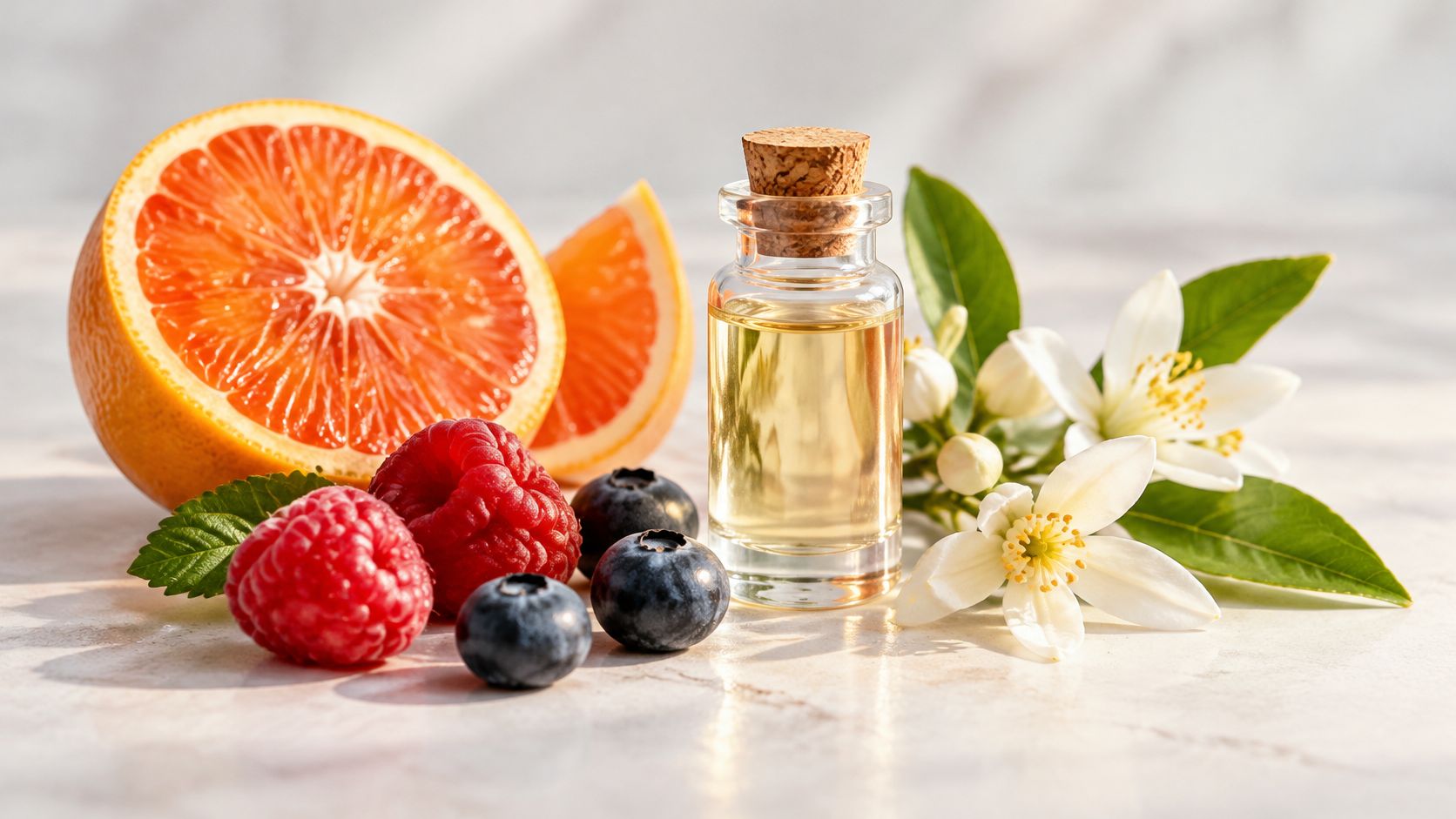
Gold Coast Terpenes, a Redondo Beach, CA supplier of 100% botanically derived terpene blends, sells limonene and myrcene as individual isolates. That lets formulators test each compound on its own before mixing anything.
Keep in mind that this is a pattern across the category. It isn't proof that any Permanent Candy strain holds a particular terpene at a particular percentage.
Think of the Blend as a Recipe
Picture a candy-style aroma as a simple recipe. Limonene brings the bright citrus lift on top. Linalool adds soft floral sweetness, and myrcene rounds things out with a fruity, fuller body.
Ocimene sits right beside limonene in the top notes. It adds a sweet, green-floral layer that keeps the profile feeling fresh.
Candy-style profiles are usually described by how they smell and taste, not by one agreed-upon genetic formula. Even a shift of several percentage points in a dominant terpene can change how sweet, citrusy, or floral a blend reads. Read the full candy strain flavor guide.
Why Small Test Batches Matter
Small adjustments tell you far more than big guesses do. A few habits keep your testing honest:
- Change one variable at a time. Nudge limonene or myrcene in small steps and log every result.
- Hold the diluent ratio constant. Any change in aroma should come from the terpenes, not the carrier.
- Score every sample against the brief. Check each batch against your written sensory target before you blend the next one.
The Gold Coast Terpenes' 3ml Strain Picker Pack makes this easier. Buyers choose three different profiles from the catalog in 1.5ml or 3ml sizes, so you can compare them side by side in a single bench session.
Say your team is chasing a candy fruit note. You might start with limonene as the lead and add myrcene in small doses. If the sample tastes sweeter but flat, the next batch gets a slightly higher limonene share for more lift.
Read also: terpene flavor chart for matching aroma notes before you pick your first three profiles.
How the Catalog Sorts Sensory Direction
Gold Coast Terpenes groups its catalog into UPLIFT and RELAX attribute lists. Treat these as sensory starting points, not effect claims.
Limonene lands on the UPLIFT list and myrcene on the RELAX list, which makes it quick to match a sensory brief to the right group.
A flavor chart tells you what a compound is supposed to smell like. Your own side-by-side test tells you whether it belongs in the blend.
Once the top, mid, and base layers sound right, the next section shows how they come together in a cartridge formula.
How Do Top, Mid, and Base Notes Shape a Candy Blend?
Top notes set the first impression, mid notes carry the candy character, and base notes keep the flavor from fading. Gold Coast Terpenes, a Redondo Beach, CA supplier of 100% botanically derived terpene blends, sells isolates you can test one layer at a time.
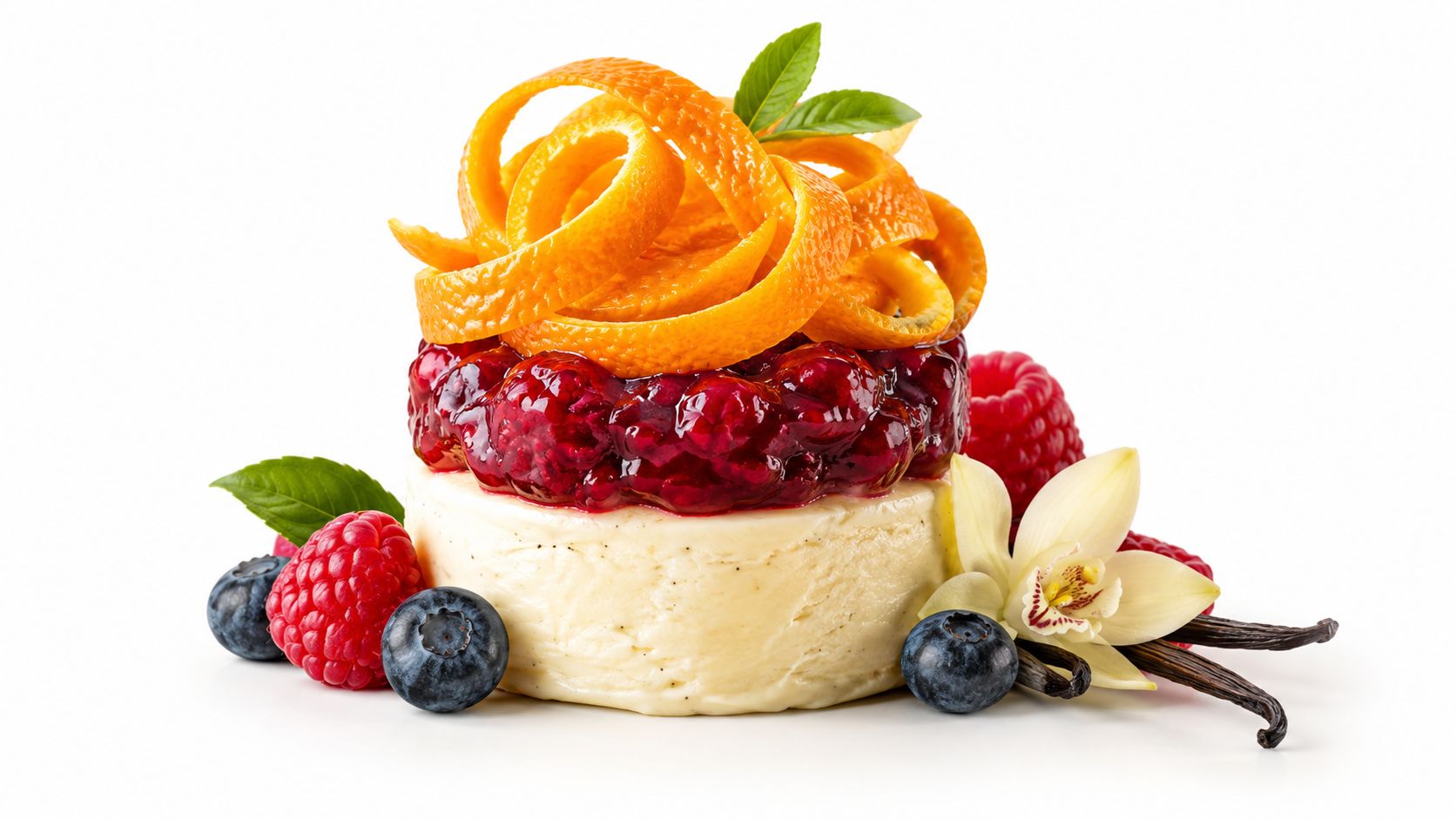
Picture a dessert on a plate. The top note is the aroma that reaches you before the first bite. The mid note is the sweet filling, and the base note is the rich layer underneath that you taste last.
Top Notes Set the First Impression
Top notes are the lighter terpenes, and they evaporate fastest. They shape the opening of a cartridge's first inhalation, so they need to be right before anyone samples the finished product.
Limonene is the clearest example of a top note in candy profiles. It appears on the UPLIFT list at Gold Coast Terpenes, alongside Valencene.
Mid Notes Carry the Candy Character
Mid notes deliver the sweetness people recognize as candy. Linalool and ocimene are the usual picks when you want soft floral or sweet, green-floral impressions.
For fruit and dessert targets, Gold Coast Terpenes' Elevated Strains are built around rare, exotic terpenes that highlight those notes. Their Master Terpologists raise levels of these compounds, so fruit and dessert nuances come through more clearly.
Top notes sell the first sniff, mid notes sell the flavor, and base notes decide whether the flavor is still there at the end.
Base Notes Give the Blend Staying Power
Base notes are the heavier compounds that anchor body and longevity. Beta-Caryophyllene and Myrcene show up together on the RELAX list at Gold Coast Terpenes, a pairing that suits their role as foundation compounds.
Before you start mixing, it helps to see how each layer behaves side by side. The table below sums up the roles, the candy-relevant terpenes you might pick, and the job each one does in the blend.
Terpene Roles in a Permanent Candy Formula
| Note Role | Evaporation Behavior | Candy-Relevant Terpenes | Formulation Function |
|---|---|---|---|
| Top | Fast, evaporates first | Limonene, Valencene | Sets the opening aroma of the product |
| Mid | Moderate evaporation | Linalool, Ocimene | Carries the sweet candy character |
| Base | Slow, lingers longest | Myrcene, Beta-Caryophyllene | Anchors body and keeps flavor from fading |
Treat this table as a starting map, not a final recipe. Your own sensory notes will tell you more than any chart.
Build the Blend in Stages
Add one compound at a time, never several at once. It is tempting to toss in a handful of favorites and hope for the best, but then you can't tell which change made the difference.
Every Gold Coast Terpenes strain is highly concentrated, so each sample needs proper dilution before you judge it. Work through the process in this order:
- Pick one sensory target, such as candy fruit or cream.
- Set the top note share first, then test in small batches.
- Add one mid note at a time and log every change.
- Add a base note last to hold the finish.
How Do You Build a Permanent Candy Profile for Vape Cartridges?
Build it in three stages: write a sensory brief, run small-batch blends with diluted samples, and verify the finished cartridge in an independent lab. Gold Coast Terpenes, a Redondo Beach, CA supplier of 100% botanically derived terpene blends, sells highly concentrated terpenes that must be diluted before use.
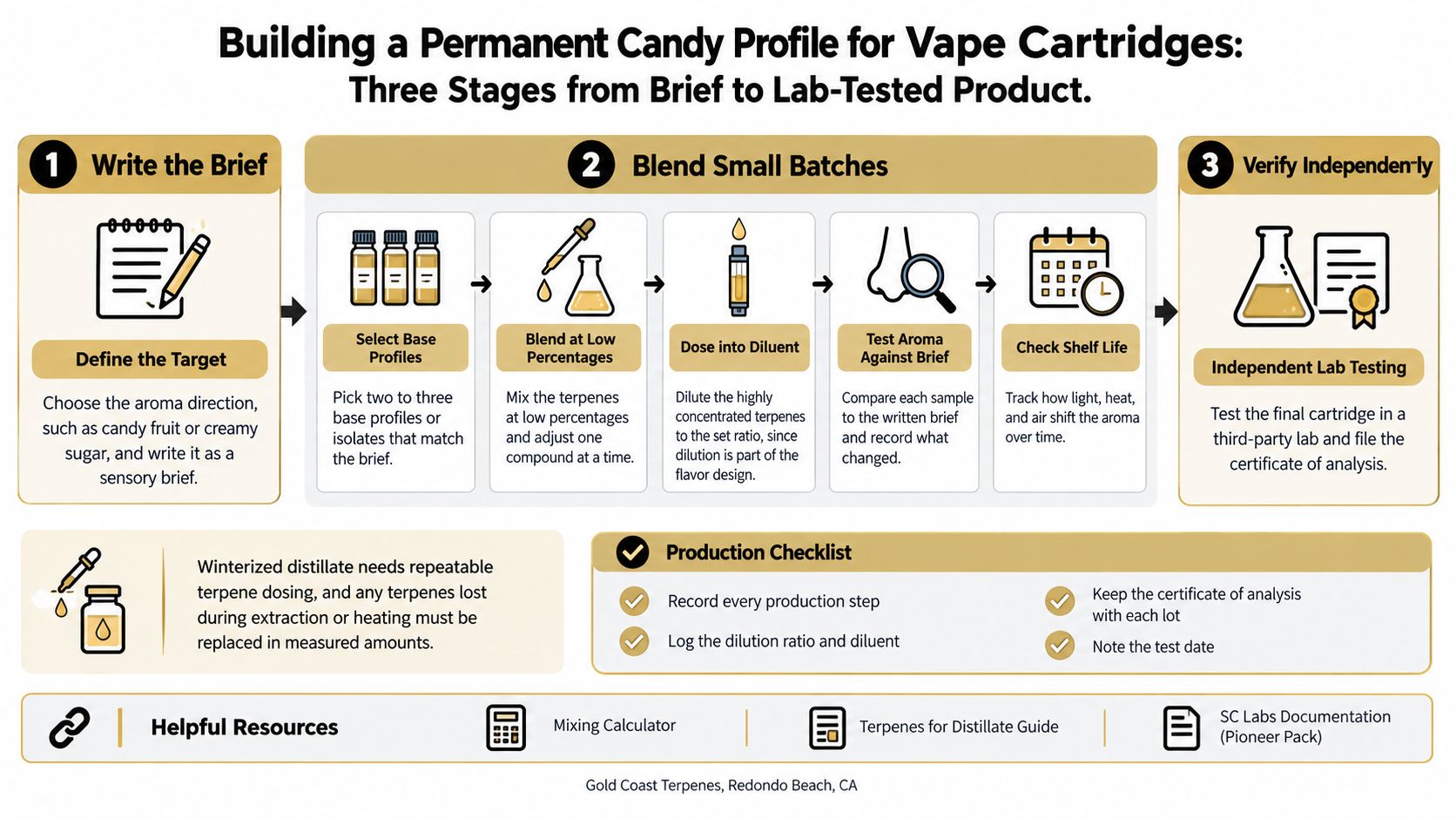
Think of it like developing a bakery's signature cookie. You don't toss sugar into the bowl and hope for the best. You write down how the cookie should taste, test small batches, and scale up only when the results match.
Dilution isn't a side step. It shapes the flavor. The diluent you choose and the ratio you use also change how much vapor a cartridge produces and how it feels on the throat. That's why every recipe should lock both values before the first test.
The infographic above maps out the seven stages of the workflow. They fall into three phases, running from the first brief to a lab-tested product.
The key insight is this: Phase 2 holds five of the seven stages, so most of the testing happens before anything reaches the lab. That's intentional. A problem caught at the bench costs a few grams of terpenes. A problem caught after lab results can cost the entire batch.
Start With a Written Sensory Brief
Stage one turns your aroma goal into words before you measure a single drop. Pick a direction, such as candy fruit or creamy sugar, and write it up as a short sensory brief your team can score against.
A brief that says "sweet" is a wish. A brief that says "candy fruit with a clean citrus opening and a soft floral finish" is a spec.
Blend Small Batches With Discipline
Phase two is where the blend takes shape. Choose two to three base profiles or isolates that fit the brief, then mix at low percentages. Change one compound at a time, the way a cook adjusts a sauce by a pinch rather than dumping in a whole new jar.
Next comes dilution. Add the blend to the diluent at the set ratio, compare the sample against the written brief, and note what changed.
Distillate note: Winterized distillate needs repeatable terpene dosing. Any terpenes lost during extraction or heating have to be replaced in measured amounts, or the flavor drifts from batch to batch.
Creamy sugar targets behave differently. Start by testing a soft mid note like linalool, and hold the base note steady until the mid note reads right. Give each change its own sample number, so the next batch starts from evidence rather than memory.
Shelf life is the last check in phase two. Light, heat, and air can shift aroma over time, so schedule checks on the finished product and log each result against the original brief.
Verify With Independent Lab Testing
The final stage tests the finished cartridge in a third-party lab. Gold Coast Terpenes' SC Labs documentation for the Pioneer Pack shows the kind of record every lot should carry.
Keep that certificate with the batch record. A flavor name on a label means little on its own, and auditors will ask for the certificate first.
Read also: how to use terpenes in cartridge formulas for more on dosing workflows.
Plan your ratios with the Gold Coast Terpenes Mixing Calculator and check the terpenes for distillate resources before you dose winterized oil.
Document Every Production Step
Documentation is what turns a good batch into a repeatable one. Without notes, nobody can reproduce a sample that tasted right last Tuesday.
Keep this checklist beside every bench sheet:
- Record every production step
- Log the dilution ratio and diluent
- Keep the certificate of analysis with each lot
- Note the test date
Gold Coast Terpenes, Redondo Beach, CA.
Which Compliance and Labeling Rules Apply to Candy-Style Blends?
Compliance for candy-style blends means describing the flavor rather than the strain, tying every terpene claim to verified lot data, and confirming whether the product falls under hemp or marijuana rules before it ships. Gold Coast Terpenes, a Redondo Beach, CA supplier of 100% botanically derived terpene blends, offers lab-verified, THC-free terpenes that are free of VG, PG, PEG, and MCT.
Think of a label as a promise. For candy-style blends, that promise should cover the flavor you're aiming for and the terpene content you can actually prove. It shouldn't drift into medical claims or strain claims you can't back up.
Gold Coast Terpenes' SC Lab-tested blends can anchor your compliance file. Still, every lot needs its own certificate, so don't treat one document as blanket approval for everything you sell.
Describe the Flavor, Not the Strain
Wording matters more than most people expect. "Strain-inspired terpene blend" and "flavor profile inspired by" keep you on safe ground. Naming a product as Permanent Candy, or pointing to unverified THC numbers, lineage, or effects, invites trouble.
If a claim can't be traced to a certificate of analysis, it stays off the label.
A quick side-by-side makes the difference clear:
| Safer Label Language | Risky Label Language |
|---|---|
| Strain-inspired terpene blend | Permanent Candy, the named strain |
| Flavor profile inspired by candy fruit | Guaranteed potency of 30% |
| Verified terpene content per lot | Unverified THC percentage |
Treating Myrcene Thresholds as Internal References
You'll often see myrcene figures, such as the 0.5% threshold in some strain guides. These numbers can help you judge a blend during formulation, but they work best as internal reference points.
- Internal notes: log myrcene readings next to each sensory score
- Label copy: stick to aroma descriptions and verified terpene content
Checking State and Shipping Rules
Gold Coast Terpenes markets its products as legal worldwide. Even so, brands still need to check state rules, because requirements shift by market and by product format.
Whether a candy-style blend falls under hemp or marijuana rules changes the entire compliance picture. The 0.3% Delta-9 THC threshold is the main dividing line. Before you list anything online, read cannabis shipping guidance for ecommerce merchants.
You should also read regulatory compliance checklist for label reviews before your next print run.
Keep the label simple. Keep the file complete.
Frequently Asked Questions About Permanent Candy Formulation
Is There a Verified Permanent Candy Profile to Copy?
No public reference has verified one, so start with the flavor you want rather than a chart someone else posted. Gold Coast Terpenes, a Redondo Beach, CA supplier of 100% botanically derived terpene blends, treats strain names as targets rather than exact specs. Require a certificate of analysis for every lot that lists cannabinoids, terpene concentrations, contaminants, and the test date.
Can I Use Permanent Candy on a Product Label?
Use the name only as an internal flavor reference, never as a product name or strain claim. Tie label copy to verified lot data, since phrases like strain-inspired terpene blend keep your claims on safer ground. Confirm your state's rules before anything goes to print.
How Do I Start a Permanent Candy-Inspired Vape Cartridge Blend?
Name the sensory target first, such as candy fruit or cream, then test three profiles at a time in small diluted batches. The Gold Coast Terpenes Picker Pack lets you compare any three profiles in 1.5ml or 3ml sizes side by side. Log every ratio so the batch can be repeated exactly.
Which Terpenes Should I Test First for Candy Notes?
A good starting point is limonene, linalool, myrcene, and ocimene. Change one compound at a time so you know what caused each shift in aroma, then confirm the result with lab data. Gold Coast Terpenes sells limonene and myrcene as isolates, which lets you test each one on its own.
{ “@context”: “https://schema.org”, “@type”: “FAQPage”, “mainEntity”: [ { “@type”: “Question”, “name”: “Is There a Verified Permanent Candy Profile to Copy?”, “acceptedAnswer”: { “@type”: “Answer”, “text”: “No public reference has verified one, so start with the flavor you want rather than a chart someone else posted. Gold Coast Terpenes, a Redondo Beach, CA supplier of 100% botanically derived terpene blends, treats strain names as targets rather than exact specs. Require a certificate of analysis for every lot that lists cannabinoids, terpene concentrations, contaminants, and the test date.” } }, { “@type”: “Question”, “name”: “Can I Use Permanent Candy on a Product Label?”, “acceptedAnswer”: { “@type”: “Answer”, “text”: “Use the name only as an internal flavor reference, never as a product name or strain claim. Tie label copy to verified lot data, since phrases like strain-inspired terpene blend keep your claims on safer ground. Confirm your state’s rules before anything goes to print.” } }, { “@type”: “Question”, “name”: “How Do I Start a Permanent Candy-Inspired Vape Cartridge Blend?”, “acceptedAnswer”: { “@type”: “Answer”, “text”: “Name the sensory target first, such as candy fruit or cream, then test three profiles at a time in small diluted batches. The Gold Coast Terpenes Picker Pack lets you compare any three profiles in 1.5ml or 3ml sizes side by side. Log every ratio so the batch can be repeated exactly.” } }, { “@type”: “Question”, “name”: “Which Terpenes Should I Test First for Candy Notes?”, “acceptedAnswer”: { “@type”: “Answer”, “text”: “A good starting point is limonene, linalool, myrcene, and ocimene. Change one compound at a time so you know what caused each shift in aroma, then confirm the result with lab data. Gold Coast Terpenes sells limonene and myrcene as isolates, which lets you test each one on its own.” } } ] }Gold Coast Terpenes is a Redondo Beach, CA supplier of 100% botanically derived terpene blends, offering 37 Strains and 40 Elevated Strains as starting profiles, plus isolates for cartridges, concentrates, and product formulation. Each strain is highly concentrated, so dilution is part of every recipe. Browse the full catalog, order a Picker Pack to test three profiles side by side, and build your next candy-style blend from verified lot data. Shop Gold Coast Terpenes today.