
You've got a clean distillate base, a shipment date, and a flavor brief that says lemon-berry. The citrus sample smells right on a blotter, but the filled cart reads more like perfume than fruit. Adding more flavor won't necessarily fix it. You need to know which ingredient supplies the bright top note, which adds body, and which is covering everything else.
That's the practical way to build cannabis vape flavors. Start with a flavor family, assign each botanically derived terpene a job, and test the blend in the oil and hardware you'll manufacture. A good aroma in a sample bottle isn't a finished cartridge specification.
Before you buy terpenes, separate blend composition from finished-oil loading. An ingredient's share of the terpene concentrate isn't its percentage in the filled cart. Record both by weight, including terpenes already present in the base.
Bench rule: Treat every starting dose as a development variable, not a universal production recipe. Set it within your ingredient documentation, hardware limits, and destination-market rules.
The families below give you a practical starting role, a matching strategy, and the mistake most likely to spoil the result. Use them to narrow sample orders before committing to bulk terpenes.
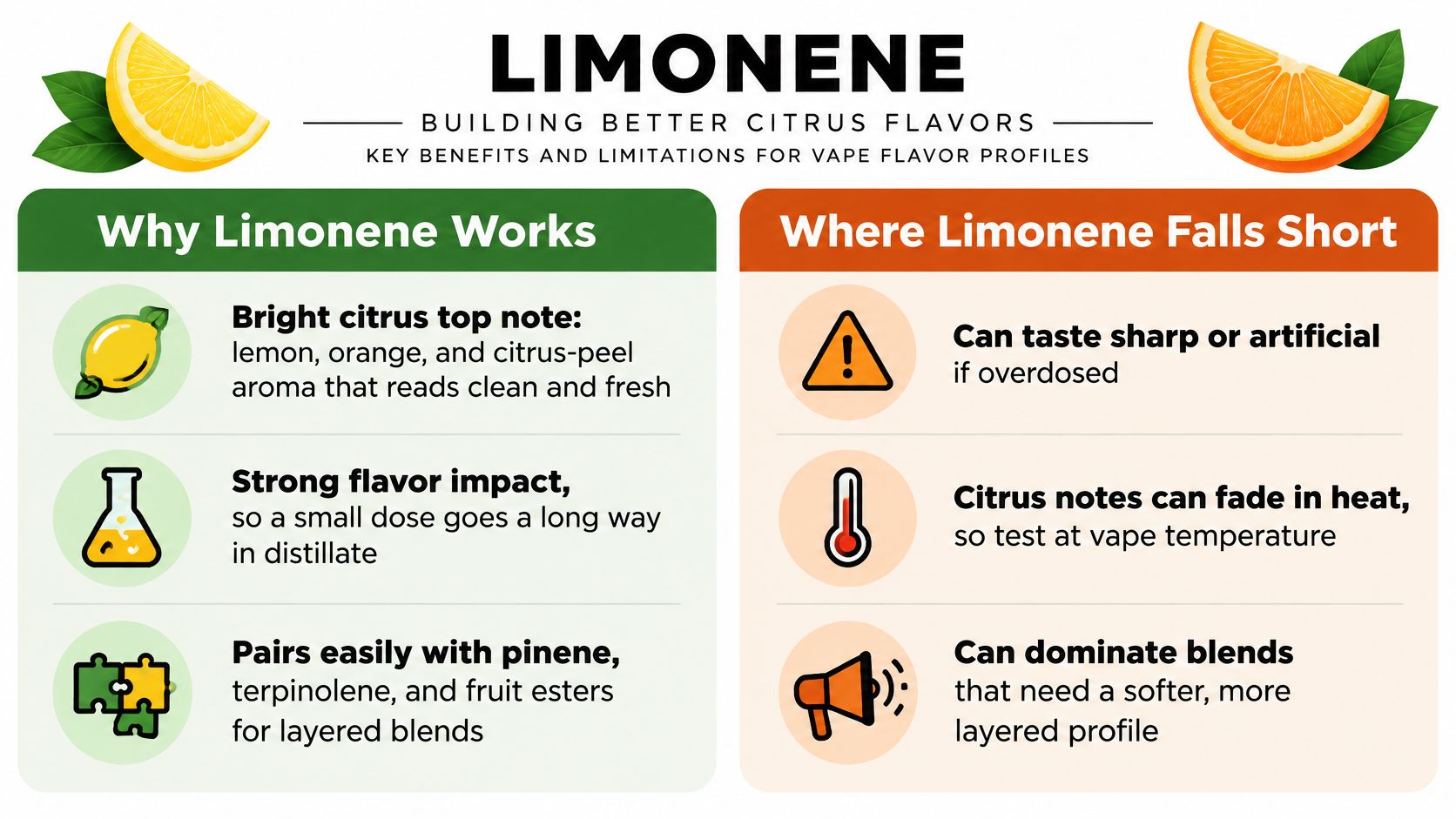
1. Limonene (Citrus Profile)
Limonene supplies the bright citrus top note. Botanically derived limonene can support lemon-peel, orange-peel, and broader citrus directions, but it won't create a complete fruit profile on its own. A strong citrus opening still needs a balanced middle and finish.
For a lemon-lime development brief, start with limonene as the lead aromatic ingredient and use pinene as a restrained accent. For an orange-cream concept, compare limonene over a rounded base with a version containing a small ocimene contribution. Don't assume either combination creates a finished lime or cream flavor without further matching.
Build Brightness Without Losing Balance
Start with a light limonene addition to the finished oil, then increase it in measured steps while keeping the supporting blend unchanged. Weigh additions rather than counting drops. Evaluate each version in your intended cartridge at the target operating setting.
- For a sharp finish: Reduce competing floral and herbal notes before increasing citrus.
- For a fuller center: Compare a myrcene-supported version against the same citrus blend without it.
- For repeat orders: Specify the analytical profile and approved reference sample, not just a lemon flavor name.
The mistake is chasing intensity instead of matching the brief. More limonene can make a blend louder without making it more recognizably lemon.
A review of cannabis aroma profiling methods identifies GC-MS as a tool for separating and identifying aroma compounds, including terpenes and esters. Use analytical comparison alongside sensory work when matching citrus inputs across supplier lots.
2. Myrcene (Earthy and Fruity Profile)
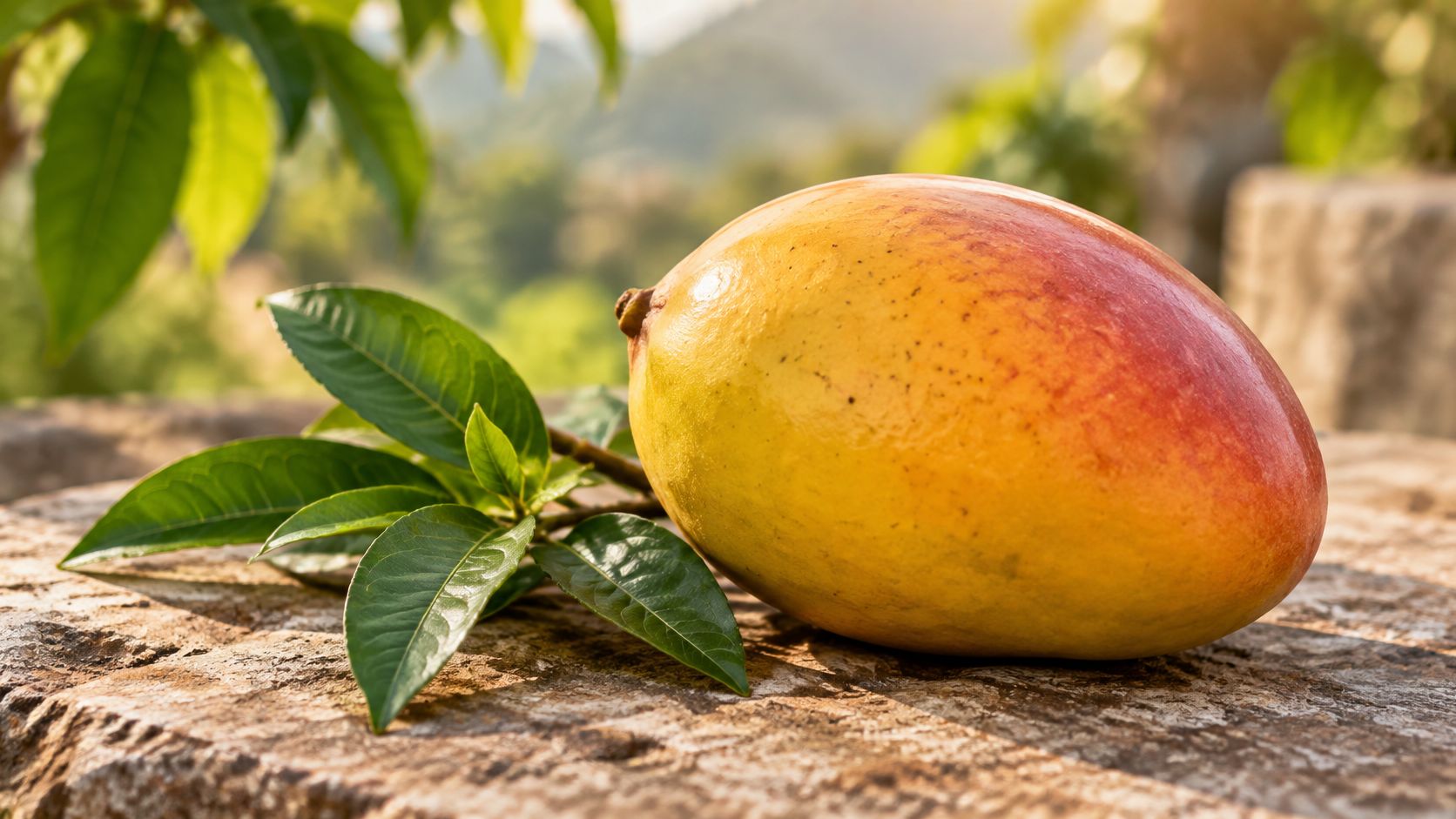
A tropical-fruit brief often needs body, not another bright top note. Botanically derived myrcene provides an earthy, herbal foundation with ripe-fruit associations. Use it to connect citrus, green, and floral ingredients rather than expecting it to reproduce mango by itself.
Say you're developing a tropical profile for a winterized distillate base. Make myrcene the main supporting ingredient, layer in limonene for brightness, and compare a version with restrained ocimene. Keep an approved control so you can tell whether each change improves the target or merely makes it different.
Start With Body, Then Add Lift
Use myrcene as a substantial share of the terpene blend, while starting the finished-oil loading conservatively. Those are separate decisions. If the result tastes heavy, change myrcene's share before increasing the overall terpene dose.
Evaluate the mixture after it returns to the same temperature as your reference. Warm samples and cool samples aren't a fair comparison. Our myrcene overview provides additional ingredient background; keep your manufacturing specification focused on composition and sensory performance.
The mistake is confusing rounded with muddy. Too much earthy body can hide the fruit identity you were trying to support.
Also separate an internal mango reference from a permitted finished-product claim. California's guidance for inhaled cannabis products rejects natural flavorings or terpenes that don't contribute to cannabis's natural flavor or aroma and names mango among prohibited flavor directions. Botanical origin alone doesn't establish compliance.
3. Beta-Caryophyllene (Peppery and Spicy Profile)
A sweet blend that tastes flat may need contrast rather than more sweetness. Botanically derived beta-caryophyllene adds peppery, woody, and clove-like character. It works best when you can describe exactly where that warmth belongs in the finished flavor.
For a spiced-fruit concept in a market that permits it, build the fruit body first. Add beta-caryophyllene as an accent, then compare against the unspiced control. For a savory herbal profile, place it over myrcene and keep citrus in a supporting role.
A spice accent should sharpen the identity of the blend. If every sample tastes mainly peppery, you've lost the comparison.
Keep the Starting Addition Small
Start below the level where pepper becomes the main descriptor. Increase only while the panel can still identify the intended base flavor. Write down whether the change adds useful warmth, an unwanted dry finish, or more aroma.
- Hold the base steady: Don't adjust sweetness and spice in the same trial.
- Recheck rested samples: Compare them under the same storage and evaluation conditions.
- Separate naming from formulation: An internal pie-style reference doesn't establish that a dessert claim is permitted.
The mistake is using spice to cover an unfinished base. Beta-caryophyllene can add contrast, but it won't supply missing fruit detail or turn a thin blend into a complete dessert profile.
Responsible positioning also matters. University of Michigan's discussion of flavored cannabis vaping highlights youth-use concerns and cautions that flavor restrictions may lead to substitution rather than eliminate use. Keep development language technical and adult-oriented, and avoid confectionery-style presentation.
4. Linalool (Floral and Lavender Profile)
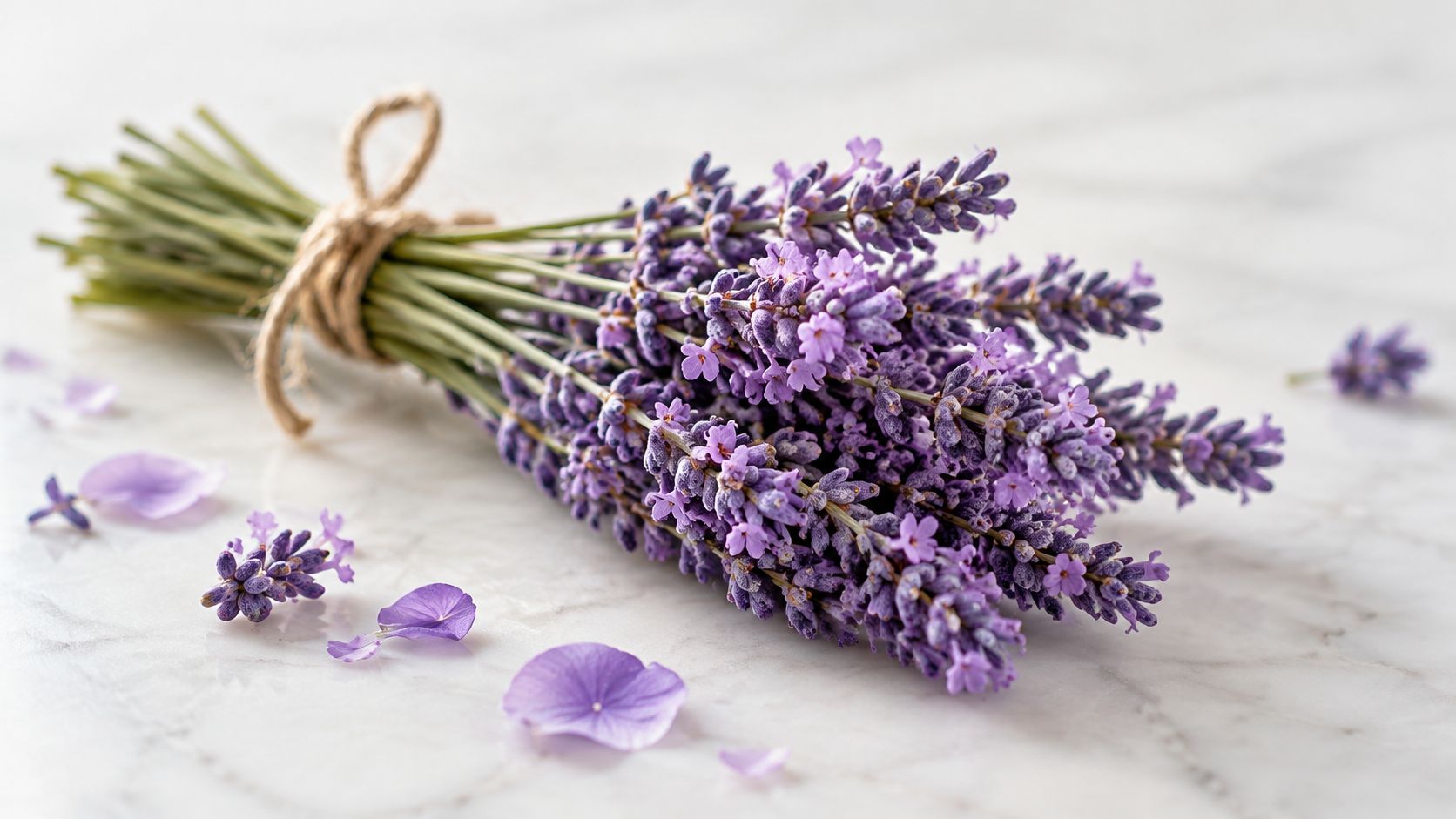
A blueberry-lavender cart fails when the flower note reads as soap. Botanically derived linalool can add lavender-like, floral, and soft citrus-floral notes. Use it as a thin aromatic layer over a fruit center, with a starting contribution small enough that the base strain still names the sample.
Build the comparison before you scale it. Keep total terpene loading steady, then run a lightly floral version against an otherwise identical control. For floral citrus, let limonene open the profile and use linalool to smooth the handoff into the body. Record where the panel stops hearing fruit and starts hearing perfume.
Specify the Floral Limit
Start with a trace contribution relative to the supporting terpenes. Increase in small steps, and stop at integration, where the floral note blends into the fruit center. Past that point the blend turns perfumed, then soapy, and the label promise becomes harder to defend.
Use clear panel terms such as floral, citrus-floral, perfumed, and soapy. These give the next formulator something actionable. Words such as elegant or clean may suit a creative brief, but they aren't enough for batch acceptance.
Our linalool ingredient overview offers background for ingredient selection. For purchasing, tie the approved sample to batch-specific identity and concentration records, keep a retained reference, and evaluate linalool in the finished matrix and intended hardware. Bottle aroma hides how the note behaves after the oil cools and the wick saturates.
The mistake is chasing a stronger lavender impression. Once floral separates, more linalool removes detail instead of adding polish.
5. Alpha-Pinene (Fresh Pine Profile)
Start a forest-style profile with the finish you want: crisp and woody, not aggressively resinous. Botanically derived alpha-pinene gives a clear pine direction and can add definition to heavier earthy blends. It also works as a secondary note in citrus formulations.
For a pine-citrus cart, compare a limonene-led version against a pine-led version while holding the total terpene loading steady. That comparison tells you whether the brief needs citrus with freshness or a true forest profile. They're different products, even if the ingredient list looks similar.
Use Pine as a Measured Accent
Begin with a low alpha-pinene contribution. Increase it only after the cooled mixture and filled cartridge both show that the supporting body remains clear. Our alpha-pinene overview provides ingredient background for this fresh-pine direction.
- For citrus blends: Keep pine behind the peel note unless the brief explicitly calls for forest character.
- For herbal blends: Use myrcene to supply body, then adjust pine independently.
- For supplier matching: Confirm whether the material is alpha-pinene, beta-pinene, or a documented mixture.
The mistake is ordering by the word pinene alone. Compound identity matters when you're trying to reproduce a signed-off formula.
A University of Mississippi GC-MS method measured alpha-pinene and beta-pinene separately among its target cannabis terpenes. That distinction belongs in incoming-material checks, not just in a technical file nobody uses.
Purchasing insight: An isolate name, lot identifier, analytical profile, and retained sample make a stronger reorder specification than a flavor description by itself.
6. Terpinolene (Fresh, Floral, and Herbal Profile)
Botanically derived terpinolene combines pine-like, floral, and herbal character in one material. That range is the appeal and the hazard. Give it a defined role, or its layered aroma will blur an already busy formula.
For a fresh herbal-citrus brief, build on a simple limonene and myrcene foundation and introduce terpinolene as the variable ingredient. For a floral-pine direction, compare a restrained linalool addition against it before increasing every other aromatic component.
Compare Against a Simple Control
Start with terpinolene as a supporting layer, then test whether it earns a larger share of the terpene concentrate. Keep finished-oil loading unchanged during that comparison. If loading drifts, you cannot tell whether the panel preferred the ingredient balance or the stronger sample.
The mistake is adding complexity before establishing the target. If the brief only says fresh, ask whether that means citrus peel, pine, green herbs, or floral lift. Choose a reference before buying a custom blend.
Run the video below as part of evaluator onboarding so the panel scores terpinolene's pine, floral, and herbal facets with shared vocabulary.
A preliminary cartridge life-cycle preprint reported relatively consistent chemical profiles and minimal terpene degradation across the tested distillates and batteries, a result tied to those specific formulations and hardware.
Qualification still belongs in your own system. Compare beginning-, middle-, and end-of-cartridge samples from the same fill lot. Record the device setting, draw protocol, and sensory changes so purchasing decisions reflect actual cartridge performance.
7. Ocimene (Sweet Tropical Profile)
A tropical brief can smell bright in the bottle and taste thin in the cart. Botanically derived ocimene supplies a sweet, green, fruity lift alongside myrcene and limonene. Use it as an aromatic accent inside a defined formula, with myrcene carrying body and limonene opening the top.
For a mango-passionfruit direction, keep ocimene as a restrained trial addition and increase in small steps only while the sample moves toward the named reference. If the result reads greener or more herbal, stop and rebalance the base before chasing more top note.
Protect the Note You're Trying to Match
Evaluate the filled cart, since a warm mixing-vessel sample can exaggerate lift and hide thinness. Store stock in sealed, compatible containers away from heat and light, and minimize unnecessary opening.
- Record stock handling: Include receipt, opening, and dispensing details in the lot record.
- Preserve the control: Retain the approved blend under documented conditions.
- Check the full formula: Include ocimene contributed by any premixed botanical blend.
The mistake is trying to repair a weak tropical profile with more top note. When body is missing, added ocimene pushes the blend toward leafiness and makes the target harder to recognize.
Fruit demand is broad, so treat the category as a brief to narrow rather than a formula to buy. A Canadian government study of flavored cannabis vaping found fruit had been tried by 57% of respondents and appealed to 55%. Use that signal to justify a pilot lane, then specify the exact fruit reference, ocimene contribution from every ingredient, analytical acceptance range, and signed-off sensory target before ordering.
8. Humulene (Woody and Hoppy Profile)
A blend that still reads flat after its sweet layers are in place often needs a dry contrast. Botanically derived humulene adds woody, earthy, and hoppy character, and alpha-humulene is part of what gives cannabis its hoppy aroma. It suits herbal or tea-like directions that need structure without another sweet or floral layer.
For an earthy herbal blend, build on a myrcene foundation and compare restrained humulene additions with and without beta-caryophyllene. For a tea-style development reference, place the dry wood note beneath a light citrus opening. Build the tea reference from a documented blend, not from humulene alone.
Build a Dry Finish, Not a Hollow Center
Start humulene at the low end of its 0.5–2% range by weight and let it work as a grounding accent. Evaluate whether it adds useful definition or pushes the blend toward austere. The humulene flavor guide gives further background on its woody and hoppy direction.
Keep the base stable while adjusting humulene, then recheck rested samples before deciding the balance holds. If the finish turns too dry, pull the accent back before adding more sweet-smelling ingredients. A dry profile still needs a complete middle, so keep enough body under the wood note.
Where blends go wrong is stacking woody and peppery notes without enough supporting body. Humulene and beta-caryophyllene can work together, but each should earn its place in the formula.
Dosing also carries a legal ceiling. New York's requirements for flavored vaporized or inhaled cannabis products cap total terpene content at 10%, allow botanically derived terpenes, prohibit synthetic terpenes, and require botanical-source records.
That ceiling is a compliance limit, not a recommended starting dose. Calculate the finished formula, account for terpenes already present in the base, and retain sourcing records for every input.
Starting Doses and Blend Roles for 8 Cannabis Vape Flavor Terpenes
Treat these ranges as development starting points for bench trials, drawn from the ingredient documentation for each terpene. Set every percentage against a defined ratio basis before weighing: terpene concentrate for inside-the-blend proportions, finished oil for the final vape formula.
| Item | Starting range | Ratio basis | Blend role |
|---|---|---|---|
| Limonene (Citrus Profile) | 1-3% | finished oil | Bright top note; raise slowly because it can thin a heavy base |
| Myrcene (Earthy and Fruity Profile) | 40-60% | terpene concentrate | Base or body note; start low and build body first |
| Beta-Caryophyllene (Peppery and Spicy Profile) | 0.5-2% | finished oil | Warm accent; keep below the point where pepper turns harsh |
| Linalool (Floral and Lavender Profile) | under 2% | finished oil | Delicate floral note; overdose reads perfumey |
| Alpha-Pinene (Fresh Pine Profile) | 0.5-2% | finished oil | Fresh secondary note; excess makes the top feel sharp |
| Terpinolene (Fresh, Floral, and Herbal Profile) | 1-3% | finished oil | Middle or top note; watch for a soapy edge in citrus blends |
| Ocimene (Sweet Tropical Profile) | 1-3% | finished oil | Sweet, juicy lift; protect it with enough body underneath |
| Humulene (Woody and Hoppy Profile) | 0.5-2% | finished oil | Grounding accent; add supporting body before more spice |
Change one variable per trial. Convert concentrate-basis rows to finished oil before production.
Build Your Flavor Family and Request a Sample
Start with a flavor family, test it at your target operating setting, and adjust in small steps. A citrus profile needs a different balance from a woody herbal profile. Don't force both through the same loading target just because production would prefer a single recipe.
Write a short sensory specification before ordering. Include the lead note, supporting body, acceptable finish, and descriptors that mean rejection. Lemon peel with a rounded herbal middle is actionable; premium citrus isn't.
Turn the Bench Blend Into a Purchase Specification
When you buy terpenes for distillate, connect the sample approval to the material you'll receive. Record ingredient identity, botanical origin, lot details, analytical results, and the approved reference. For custom blends, agree on how changes will be documented before the next production order.
- Define the ratio basis: State whether each percentage describes the terpene concentrate or finished oil.
- Use mass-based records: Weigh the base and additions with equipment suited to the batch size.
- Qualify the process: Document mixing conditions, cooling, filling, and hardware evaluation.
- Review the destination: Check ingredients, aroma claims, labeling, and sourcing records against the applicable rules.
Use the Mixing Calculator to plan your ratios before you order. A terpene calculator helps organize the arithmetic, but it doesn't select an appropriate loading or establish compliance. Your approved formulation and validation work must do that.
Keep the mixing process repeatable. Use a compatible vessel, controlled agitation, and only the heat needed for a workable mixture under your validated procedure. Take representative samples after mixing rather than judging the surface aroma above the vessel.
Order for Comparison Before Production
We offer botanically derived blends, isolates, and sample options across citrus, fruit, earthy, herbal, and dessert directions. Our cartridge terpenes are SC Lab-tested and contain no VG, PG, PEG, or MCT. Use samples to compare against your actual base and approved target before choosing a production quantity.
A successful sample order should answer a manufacturing question. Determine whether an isolate improves the existing formula, a prepared blend matches the brief, or a custom profile needs further work. Keep the winning reference and its records together.
Approve the complete system before scaling: botanical input, finished oil, mixing procedure, cartridge, and operating setting. That's how you turn cannabis vape flavors from a creative description into a repeatable purchasing and production decision.
Gold Coast Terpenes offers botanically derived terpene blends and isolates for flavor matching and cartridge formulation. Visit Gold Coast Terpenes to shop blends, request samples for bench testing, or contact our team about bulk and custom orders.