
Gold Coast Terpenes supplies 100% botanically derived, THC-free terpene blends, not cannabis-derived terpenes, for brands developing distillate products. But the popular advice that “more flavor is better” is incomplete: adding terpenes to distillate changes viscosity, aerosol chemistry, cannabinoid transfer, and cartridge behavior, so the correct loading depends on the hardware and operating conditions.
A strain-inspired terpene blend is therefore not a fixed recipe. It's an engineering input. A profile that performs well in one ceramic cartridge can leak, wick poorly, or produce a different aerosol in another device. The practical question for formulators is not which blend tastes closest to a reference oil. It's whether the final formulation remains consistent from batch mixing through heating, filling, storage, and use.
Why Terpene Percentage Is a Hardware Variable
Terpene percentage should be selected against cartridge power, temperature, airflow, geometry, and viscosity, not flavor intensity alone. Cannabis vape oils commonly contain approximately 10–20% terpenes by weight, while resulting aerosols have been estimated at roughly 2,500–5,000 parts per million total terpenes, according to a review of cannabis vaping chemistry.
That difference matters because aerosolization concentrates volatile compounds. A percentage that looks moderate in the bottle can create substantially higher inhalation exposure after heating and atomization. Environmental terpene studies have generally examined concentrations below 100 ppm, which makes direct comparison with cannabis vape aerosols inappropriate. The liquid-phase number alone doesn't tell you what the user encounters at the mouthpiece.
The same review reported that increasing β-myrcene in simplified THC-distillate systems was associated with reaction products consistent with a lower aerosolization temperature. That finding doesn't mean β-myrcene is universally protective. It means the terpene blend changes the way the oil behaves under a particular device and test condition.
Practical rule: Treat terpene loading as a hardware variable. A nominal ratio is only a starting point until the finished cartridge has been tested at its intended power and airflow.
For a formulator, this changes the development brief. Instead of asking, “What percentage gives the strongest profile?”, ask:
- Does the oil wick consistently through the selected cartridge?
- Does the formulation leak when warmed?
- Does the aroma remain accurate after aerosolization?
- Does applied power alter emissions or create harsh degradation products?
- Does the formulation behave consistently across filling and retained-sample testing?
Gold Coast Terpenes' botanical starting materials can be useful in controlled comparisons because the input profile and documentation can be held constant while cartridge variables change. The relevant technical discussion is covered in this guide to terpene effects on cartridge performance.
A terpene profile for vape cartridges also needs sensory structure. Top notes such as bright citrus, volatile pine, and fresh herbal impressions appear quickly but can disappear first under heat. Mid notes provide the recognizable body of a strain-inspired terpene blend, often carrying floral, peppery, fruity, or green character. Base notes contribute heavier, woody, earthy, or resinous depth and can remain perceptible longer.
That top, mid, and base framework helps with replicating flavor of a reference oil, but it doesn't replace aerosol testing. A blend can match the liquid aroma and still fail after heating.
Thermal Degradation and Compound Reactivity
Terpenes don't respond identically to heat, and a blend that behaves acceptably in electronic-cigarette vaping can behave differently during dabbing. In a 2021 study, researchers tested THC and β-myrcene mixtures with terpene levels up to 14% by mass and found that increasing β-myrcene was correlated with less degradation of starting materials in the studied electronic-cigarette setup. The resulting product profile was consistent with a lower aerosolization temperature, as reported in the published study on THC and β-myrcene vapor chemistry.
The result changed under dabbing conditions. Higher β-myrcene levels were associated with increased harmful and potentially harmful compounds, reflecting greater β-myrcene reactivity at the higher temperatures involved. That contrast is commercially important. A vape cartridge formulation shouldn't be evaluated using assumptions derived from concentrates heated on a hot surface, and a dab formulation shouldn't be treated as a direct proxy for cartridge performance.
Why applied power matters
Four major gas-phase products, isoprene, 2-methyl-2-butene, 3-methylcrotonaldehyde, and 3-methyl-1-butene, collectively represented approximately 18–30% of the aerosol gas phase in the studied systems, with abundance strongly related to applied device power. These compounds aren't merely flavor markers. Their presence demonstrates that the coil and operating settings participate in the chemistry of the final aerosol.
Separate thermal-stability work found that between 100 °C and 200 °C, unchanged vapor-phase parent compound ranged from 97–98% for myrcene, 81–92% for limonene, and only 11–28% for terpinolene, according to the same research record. Those ranges are compound-specific, so a strain-inspired terpene blend can't be judged by the stability of its dominant ingredient alone.
The formulation implication is straightforward. A profile built around terpinolene, limonene, myrcene, or a complex mixture needs testing at the power range used by the target cartridge. A low-power electronic cigarette, a high-power disposable, and a dabbing surface can create materially different thermal environments.
For additional practical background on preserving volatile compounds during handling, see this technical guide to terpene degradation. Keep the discussion focused on chemistry, not unsupported marketing language. Botanical, natural, nature-identical, and cannabis-derived labels describe sourcing or identity conventions. They don't establish what a compound becomes after heating.
Mass-Based Ratios and Viscosity Screening
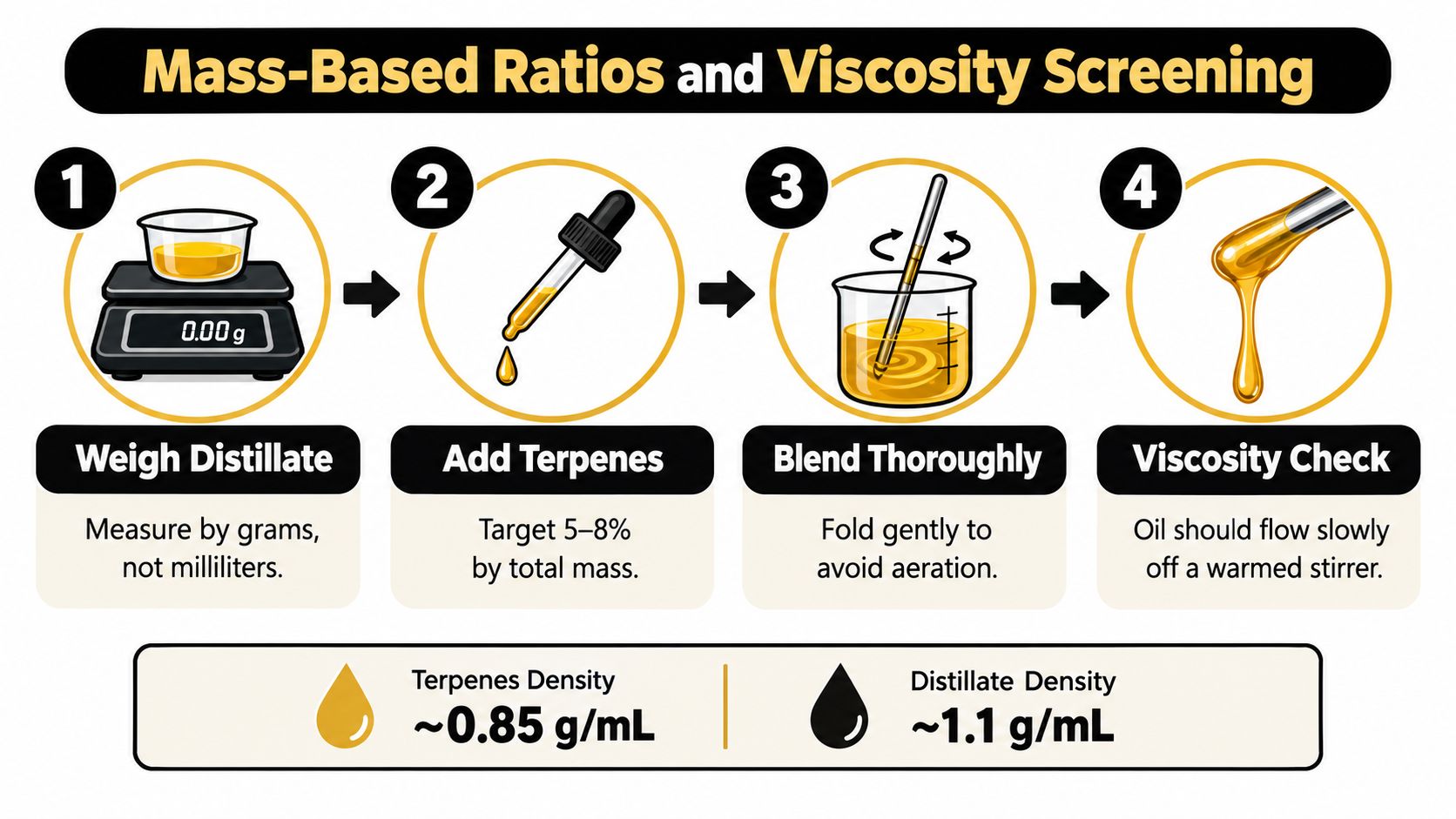
Treat terpene percentage as a hardware-specific engineering variable, not a fixed recipe. Calculate additions by mass, then screen the finished oil across a controlled concentration range. Volume measurements become unreliable during scale-up because terpene and distillate densities differ. Small input errors can therefore cause a larger-than-expected viscosity shift and change how the formulation feeds the target cartridge.
A practical development screen uses 0%, 2.5%, 5%, 7.5%, and 10% total terpene by weight, with the range supported in the technical proceedings on cannabis oil formulation. Treat 10% as an upper screening boundary, not an automatic production target. The acceptable point depends on the cartridge's wick path, seals, operating temperature, and filling process.
Start with a verified distillate batch record and current terpene COAs and SDSs. Confirm each component's identity, purity, residual-solvent status, and intended use before blending. Keep the calculation tied to finished mass, since the formulation must remain reproducible from development through commercial production.
-
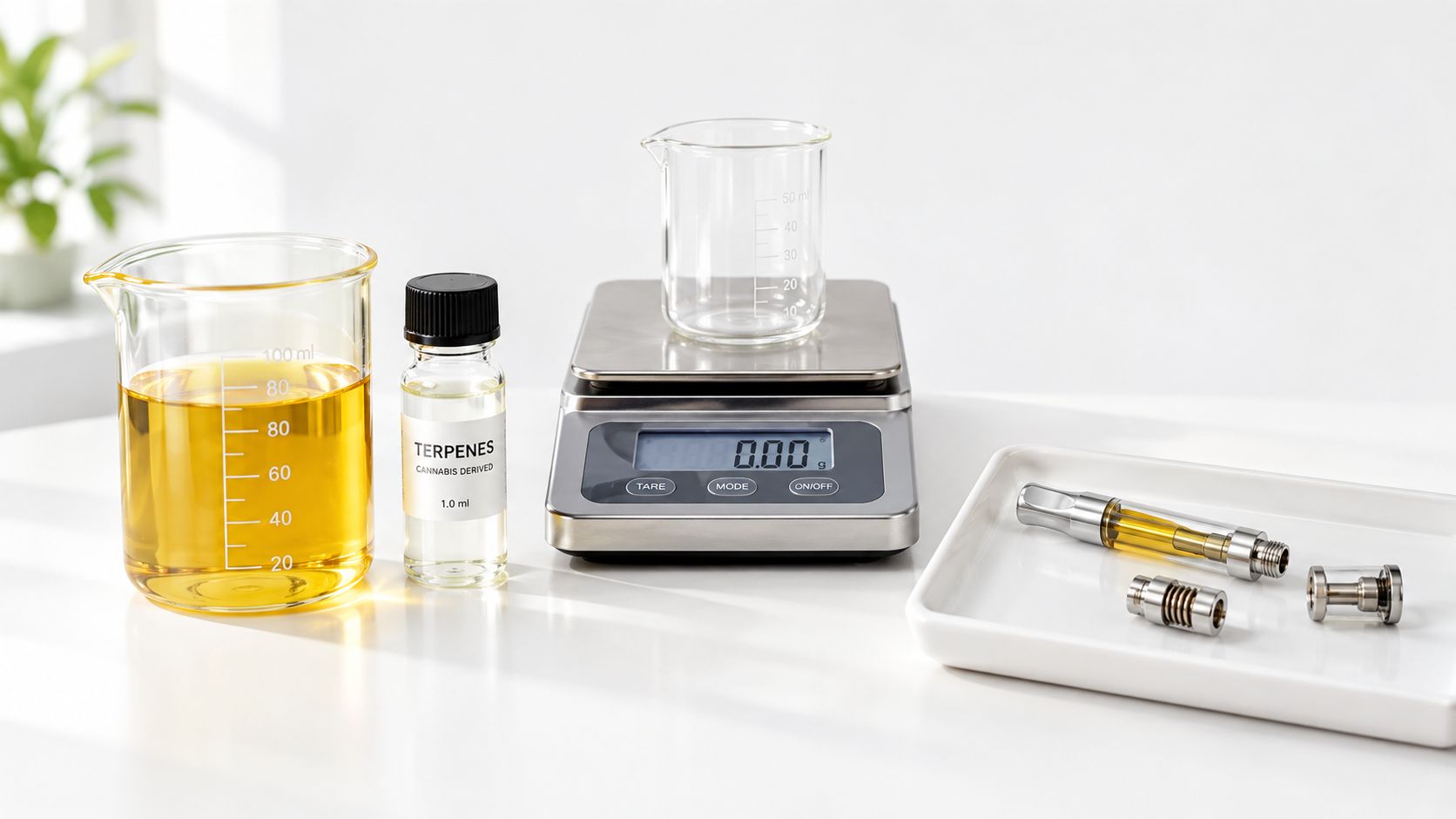
Weigh the distillate. Record the exact mass in a clean, labeled vessel. Build the recipe from grams, not milliliters or drops.
-
Add the terpene blend incrementally. Use a calibrated balance and record the actual mass added. For blends containing several isolates, retain both the component-level calculations and the final total percentage.
-
Mix at controlled temperature with minimum necessary shear. Aim for uniform distribution rather than aggressive aeration. Excessive shear can introduce bubbles and increase oxygen exposure.
-
Rest the sample. Allow entrained air to dissipate before assessing clarity, viscosity, or fill behavior. A fresh foamy sample can distort those observations.
-
Evaluate the blend. Check viscosity, phase separation, color, aroma, clarity, and cartridge-fill behavior. Retain samples for stability review instead of releasing a formulation based only on its appearance immediately after mixing.
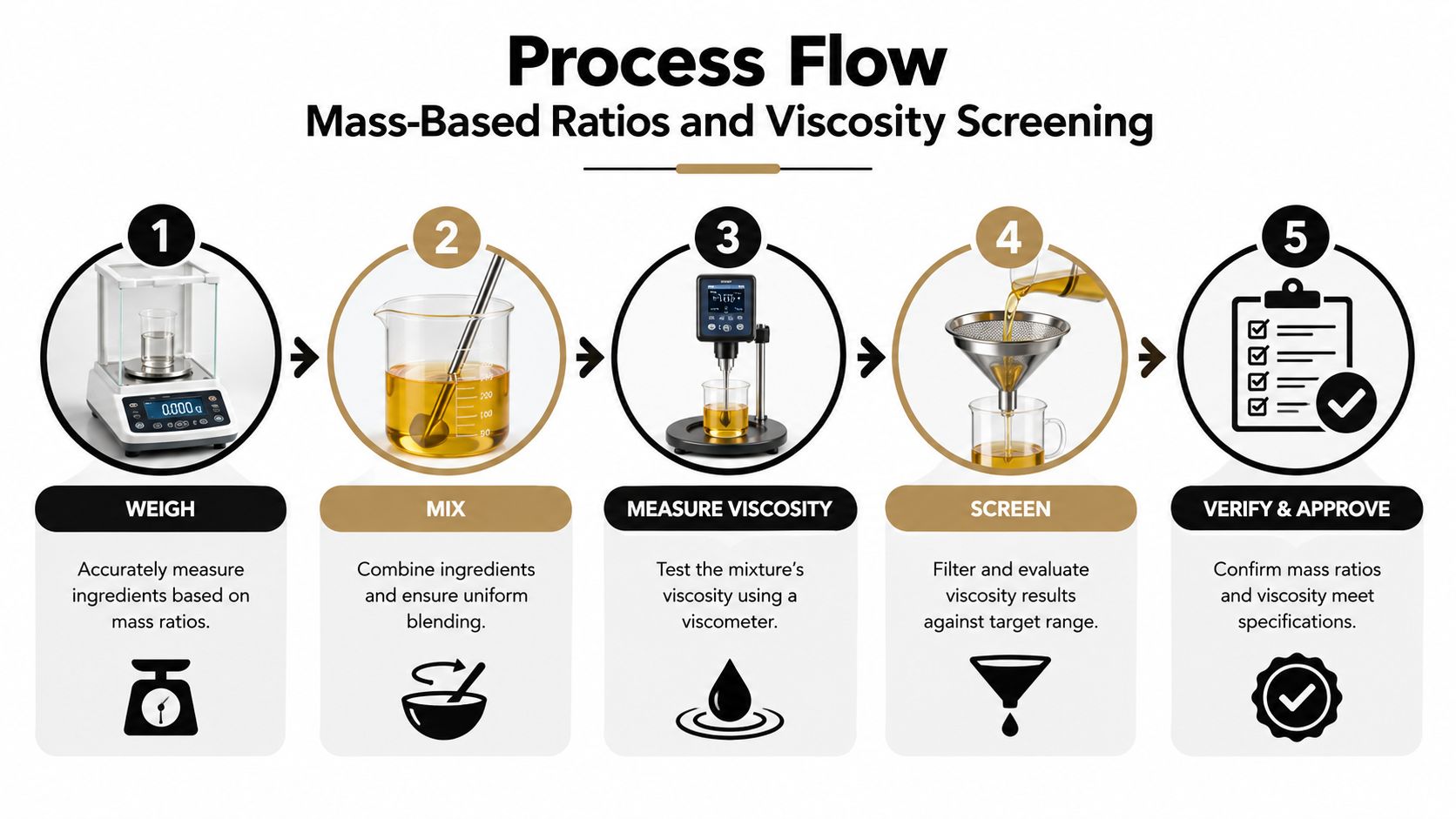
Viscosity can fall sharply as terpene concentration rises, so adjacent screening points may produce materially different filling and wicking behavior. A blend that fills cleanly at one point may become too mobile at the next, particularly in hardware with larger wicking paths or less restrictive seals. Record cartridge-specific observations, not only laboratory viscosity values.
A mass-based worksheet should include:
- Input mass: distillate and each terpene component.
- Final target: total terpene percentage by finished mass.
- Process conditions: mixing temperature, batch time, vessel type, and shear conditions.
- Observations: color, aroma, separation, bubbles, and fill behavior.
- Release data: final cannabinoid, terpene, residual-solvent, heavy-metal, microbial, and aerosol results where applicable.
Use this terpene and viscosity calculation resource to check arithmetic, then verify the result in the intended cartridge. Assay the final blend because handling, filling, and volatile loss can change retained composition.
Mixing Technique and Cartridge Hardware Alignment
A correct ratio can still fail if the blending process and cartridge design are mismatched. Coil power, resistance, airflow, wick material, fill port size, reservoir geometry, and seal design all influence how the oil moves and heats.
Begin with a clean, fully characterized distillate. Warm it only enough to reduce viscosity for controlled incorporation, then add the terpene blend gradually under indirect heat. Use glass or compatible stainless-steel equipment, avoid unnecessary headspace, and keep the vessel covered where process controls allow.
The best technique depends on batch size. A glass stir rod may be adequate for a small compatibility sample, while a heated magnetic stirrer provides more consistent agitation for laboratory development. Larger production vessels usually need an appropriately sized overhead mixer, because a small stir bar may create movement near the center without homogenizing the entire batch.
High shear isn't automatically better. It can introduce air, accelerate volatile loss, and create local heating. Use the minimum shear that produces a uniform blend, then document the validated time and temperature rather than relying on visual mixing alone. General principles for controlled liquid blending are also outlined in this resource on how to blend essential oils with confidence, although cannabis distillate still requires its own compatibility and aerosol validation.
Match the blend to the device
A ceramic cartridge, cotton-wick cartridge, and disposable device can have different flow requirements even when they use the same oil volume. Don't approve a formulation because it fills one model cleanly. Test the exact hardware intended for production and include warm and cool handling conditions that represent shipping, storage, and use.
Evaluate:
- Wicking: Does the oil reach the heating element consistently without flooding?
- Leakage: Does reduced viscosity cause seepage through seals or airflow channels?
- Clogging: Does the formulation restrict flow after storage or repeated heating?
- Aerosol output: Does power change the flavor, harshness, or emissions profile?
- Fill consistency: Does the oil remain uniform from the first cartridge to the last?
An accurate strain-inspired terpene blend also depends on note preservation. Bright top notes can be lost during prolonged warming, while heavier base notes may become disproportionately prominent. Gold Coast Terpenes offers botanical profiles and isolated compounds that can be evaluated as separate inputs, which helps a development team adjust top, mid, and base notes without changing the entire formulation.
The production specification should name the approved cartridge, operating range, oil preparation conditions, fill temperature, mixing method, and acceptance criteria. “Works in carts” isn't a sufficient technical specification.
Use the video as a process reference only. Your own validation record should remain the controlling document for the product.
Inhalation Safety and Finished Aerosol Testing
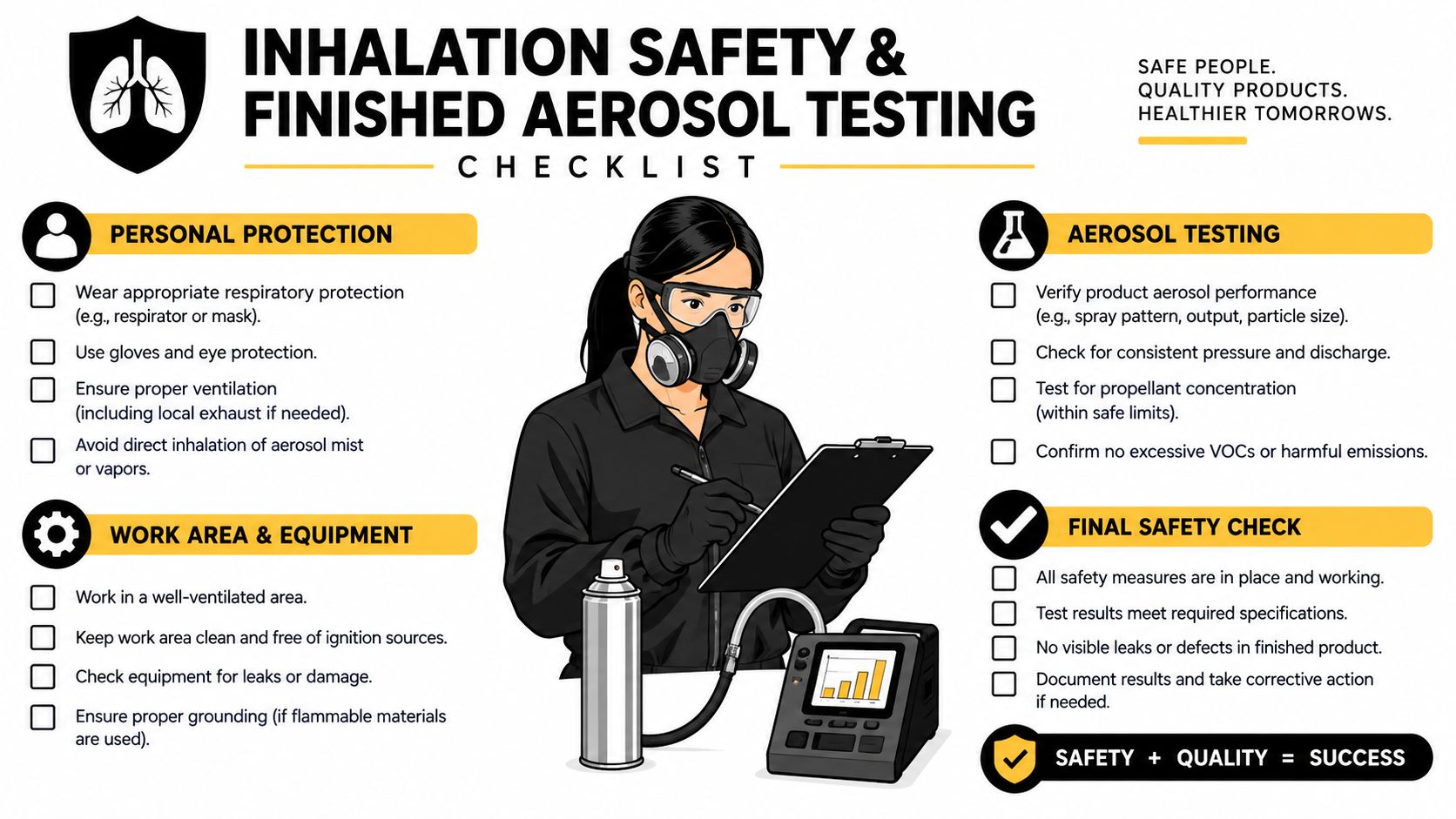
Food-use or oral-safety status does not establish inhalation safety. Evaluate the finished cartridge for emissions, thermal degradation, hardware-derived contaminants, and ingredient behavior under the intended operating conditions. A formulation that performs well in an ingredient review can still produce an unacceptable aerosol after heating.
Incoming COAs and SDSs describe starting materials, not the heated product. They do not show whether a terpene, diluent, adhesive, metal, or cartridge component changes during operation. Research on heated terpenes has identified degradation products including methacrolein, isoprene, benzene, aldehydes, and acids. Other work has shown power-dependent formation of gas-phase products. These findings are summarized in the research brief on flavored cannabis vape products, while our overview of whether terpenes are safe to vape explains the oral-versus-inhaled distinction in more depth.
Build a clean formulation specification
A commercial specification should list every intentional component and exclude unverified additives. Separate isolated terpenes from non-terpene flavoring agents, retain supplier records, and state the total terpene percentage in the finished oil. Record the intended cartridge, operating conditions, and test method so the formula remains reproducible at production scale.
A California-linked study evaluated THC distillates containing 0%, 7.5%, and higher terpene additions, showing how terpene level can be varied during aerosol chemistry comparisons, as described in the published report on terpene effects in cannabis vape products.
Reference-oil replication also requires full ingredient review. Analysis of twelve California vape-oil cartridges found more than 100 terpenes, natural extracts, cannabinoids, and other additives, including approximately 60 terpene, terpenoid, flavor, and fragrance agents. Potential additives included vitamin E acetate, polyethylene glycols, and medium-chain triglycerides, according to the cartridge composition study.
A terpene profile cannot define a clean formulation by itself. Confirm the identity and intended use of every ingredient, not only the dominant aroma compounds.
Test the finished aerosol
Finished-product testing must be device-specific. Connect the formulation, cartridge, power, airflow, and puff conditions in one test plan, then assess the resulting aerosol for relevant emissions and contaminants. Depending on the market, the release system may address cannabinoid content, terpene content, residual solvents, heavy metals, microbial quality, and aerosol chemistry.
Gold Coast Terpenes describes its lab-verified botanical terpenes as free of VG, PG, PEG, and MCT. That documentation can define a starting point for brands excluding those diluents, but it does not replace testing the filled cartridge. Hardware and heating conditions determine the final exposure profile.
The Washington brief also notes that labels such as natural, artificial, botanical, and synthetic lack consistent legal definitions. Labels cannot replace identity testing, supplier documentation, or finished-aerosol evidence. Avoid unsupported claims such as “safe to inhale” or “non-toxic,” and have regulatory counsel review claims for the target market.
Troubleshooting Formulation Failures and FAQ
Formulation failures usually come from oxygen exposure, heat, viscosity drift, or poor oil-to-hardware compatibility. Correct the process before changing the terpene profile. Otherwise, a handling problem can look like a sourcing problem.
Common failures and corrective actions
Flavor drift commonly signals volatile loss or oxidation. Shorten time at raised temperature, use sealed light-protective containers, limit headspace, and compare retained samples during storage.
Cloudiness or phase separation may indicate an incompatible base, incomplete preparation, or inadequate mixing. Review the distillate batch record, inspect the blend after resting, and avoid approving a batch solely because it looked uniform while warm.
Leaking cartridges often mean the oil is too mobile for the selected seals, airflow path, or wicking system. Recheck the mass-based ratio, then test a lower screening point in the same hardware.
Clogging or poor wicking can result from excessive viscosity, temperature fluctuation, or cartridge geometry. Test the formulation in production hardware. Sensory preference alone cannot establish whether the oil will feed and aerosolize consistently.
Inconsistent filling may occur when oil cools during transfer or the blend is not uniform throughout the vessel. Validate fill temperature, mixing time, vessel agitation, and hold time. Sample from different positions in the batch before releasing the lot.
Gold Coast Terpenes supplies botanical blends, isolated compounds, formulation documents, and commercial supply options. Qualify any supplier through COAs, SDSs, batch consistency, identity testing, and documented minimum order quantities before setting a production schedule.
Frequently asked questions
Are botanical terpenes different from cannabis-derived terpenes?
Yes. Botanical terpenes come from non-cannabis plant sources, while cannabis-derived terpenes originate from cannabis material. Neither designation establishes inhalation safety. Evaluate identity, purity, thermal behavior, and finished-aerosol results for both.
What percentage should a formulator add to distillate?
Start with a controlled screen of 0%, 2.5%, 5%, 7.5%, and 10% by weight, following the screening workflow detailed in the viscosity screening section above. Treat those levels as a hardware-specific development range, not a universal recipe or automatic production target. The appropriate level depends on viscosity, heater behavior, airflow, and the resulting aerosol.
Should terpene additions be measured by volume?
No. Measure by mass because terpene and distillate densities differ. Mass-based calculations produce a repeatable finished-weight ratio and make batch records easier to audit during scale-up.
Does a terpene COA prove that a cartridge is suitable for inhalation?
No. A COA characterizes the incoming material. The filled cartridge still requires device-specific evaluation for emissions, thermal degradation, hardware-derived contaminants, and applicable release specifications.
How should a brand replicate the flavor of a reference oil?
Analyze the reference oil's ingredient identity where possible, then separate top, mid, and base notes into a documented strain-inspired blend. Match the profile in liquid form, but approve it only after testing the blend in the intended cartridge under its operating conditions.
What should a brand ask a terpene supplier before placing a commercial order?
Request current COAs, SDSs, identity and purity information, additive disclosures, batch traceability, available pack sizes, minimum order quantities, and scale-up support. Gold Coast Terpenes is one option for botanical profiles and isolates. Apply the same technical qualification process to every input before purchase.
Gold Coast Terpenes offers botanical terpene blends, strain-inspired profiles, isolated compounds, COAs, SDSs, and formulation resources for distillate vape products. Review the available options at Gold Coast Terpenes, then run a small mass-based screen and validate the selected blend in the actual hardware before scaling production.