
Most advice about high terpinolene strains starts in the wrong place. It treats terpinolene like a guaranteed daytime terpene, then tries to force every bright profile into the same “uplifting” box. That works for marketing copy, but it breaks down fast when you're building a cartridge or matching a strain-inspired blend to a real chemotype.
In production, the question isn't whether terpinolene sounds energetic. The question is how it behaves in the full matrix, how much of it you can hold without drift, and what the supporting terpenes do to the final sensory read. That's where formulation gets specific, and where the easy shortcuts stop working.
Why Terpinolene Defies Simple Effect Categories
Terpinolene gets marketed as a clean, bright, daytime terpene, but that label is too simple for formulators. The experience you get from a terpinolene-rich profile depends on concentration, the cannabinoid base, and the rest of the terpene matrix, not on terpinolene alone. The same terpene can read as crisp and cerebral in one blend, then feel softer or more grounded in another.
That matters because terpinolene-heavy material is usually found in THC-dominant, sativa-leaning products, which already push a specific positioning lane. But even there, the full chemotype drives the end result. A sharper profile with more pinene can feel cleaner and more alert, while added limonene or caryophyllene can move the profile toward sweet, herbal, or rounded.
Practical rule: Don't write the effect claim from the terpene name alone. Write it from the whole profile, then confirm it against the finished blend.
The contrarian point is useful in product development. Some sources note that terpinolene can feel calming, sleepy, or even sedating at higher doses or in different cannabinoid pairings, which is why a one-note “uplift” promise can misfire. A cartridge built around a bright top note may still land as relaxing if the base is heavy, the THC is strong, or the supporting terpenes pull the profile away from sharp citrus-pine.
For that reason, I treat effect positioning as a formulation decision, not a terpene stereotype. If the brief calls for “creative focus,” terpinolene can support that direction, but only when the rest of the profile reinforces it. If the brief calls for a smoother evening read, the same terpene can be used more carefully as an accent rather than a headline.
For a deeper look at entourage logic, see this internal guide on how terpenes contribute to the entourage effect.
Terpinolene Chemistry and Market Rarity
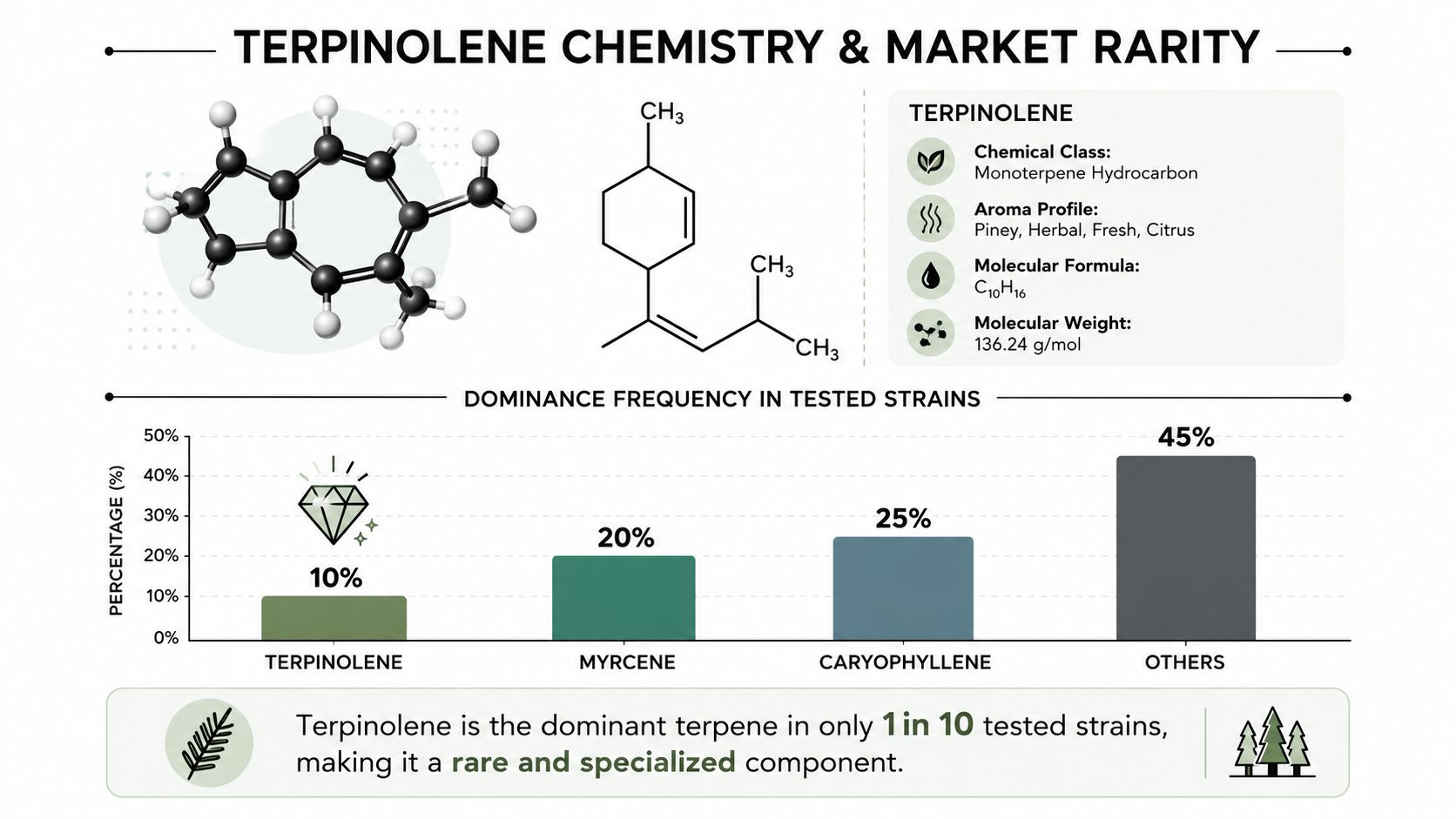
Terpinolene stands out because it is rare as a dominant terpene. Leafly says only around 1 in 10 strains are terpinolene-dominant, and industry explainers repeat that figure at roughly 10% of tested strains (Leafly). That scarcity makes it more than a flavor note. It is a real chemotype signal, and it helps explain why high-terpinolene flower can support a distinct product story.
Why it matters in cartridges and concentrates
From a formulation standpoint, terpinolene's boiling point sits around 184–186°C, which keeps it in the practical vaporization range for standard vape hardware (Terpene Belt Farms). That boiling range makes terpinolene technically relevant to cartridge and concentrate formulation, although hardware and stability still require separate validation. It vaporizes in a usable range, but it does not sit still on the shelf.
Ethos Cannabis reports that terpinolene can exceed 2.5% by weight in flower at the high end, and can reach up to 5% in cartridges and 6% in concentrates (Ethos Cannabis). Those loading levels matter because they push terpinolene from background character into a dominant sensory driver. In that zone, oxidation control, storage conditions, and compatibility testing stop being optional.
What the market is really telling you
A Dutch Passion analysis of U.S. cannabis lab data found Auto Lemon Kix at 38% terpinolene in the terpene profile and Auto Mimosa Punch at 22%. That spread shows how unusual those numbers are compared with more common terpenes like myrcene and caryophyllene. High-terpinolene flower is worth attention because it is a comparatively scarce chemotype that stands out in lab-tested commercial cannabis.
For a technical breakdown of terpene molecular behavior, use this internal resource on the chemistry of terpenes and molecular structure.
High-Terpinolene Strain Profiles for Formulation
The practical way to use high terpinolene strains is to treat them as formulation templates, not as strain names to copy by habit. Some profiles read sharp and piney, others push more citrus, and the supporting terpenes decide where the blend lands in production. The same dominant terpene can support very different product briefs once the rest of the stack changes.
Durban Poison remains the clearest benchmark. Ethos Cannabis reports that terpinolene makes up about 75% of its terpene profile. That level of dominance gives a very defined pine-citrus-bright frame, so it fits products that need a clean, lifted, terpene-forward read.
Template comparison for product development
| Strain | Documented terpinolene level | Typical formulation direction | Product Positioning |
|---|---|---|---|
| Durban Poison | 75% of terpene profile | Pinene, limonene | Creative focus, bright daytime carts |
| Jack Herer | Verify by batch COA | Pinene, limonene | Clean, balanced, familiar classic profile |
| Super Lemon Haze | Verify by batch COA | Limonene, pinene | Citrus-forward, energetic flavor framing |
| Dutch Treat | Verify by batch COA | Caryophyllene, pinene | Sweet pine with a smoother finish |
| Golden Goat | Verify by batch COA | Limonene, caryophyllene | Bright, expressive, modern daytime positioning |
| XJ-13 | Verify by batch COA | Pinene, limonene | Crisp, linear, scent-driven blend |
| Ghost Train Haze | Verify by batch COA | Limonene, pinene | High-impact, sharp, aromatic cartridge direction |
| Clementine | Verify by batch COA | Limonene, caryophyllene | Citrus-led profile with a softer mid-palate |
The supporting terpenes carry more weight than many brands admit. Pinene keeps the top note dry and brisk, limonene pushes the profile brighter and more citrus-like, and caryophyllene rounds the finish so the blend does not feel thin. That is why Jack Herer, Super Lemon Haze, and Ghost Train Haze can all sit in the high-terpinolene conversation while still serving different product briefs.
When I replicate a strain-inspired profile, I treat terpinolene as the top-note architecture. The rest of the blend decides whether the product reads as sharp, sweet, herbal, or polished.
For cartridge development, choose the template from the sensory direction you want, not just from the name on the label. A bright citrus brief and a pine-clean creative brief can both use terpinolene, but they will not use the same supporting ratio.
Formulation Challenges with High-Terpinolene Blends
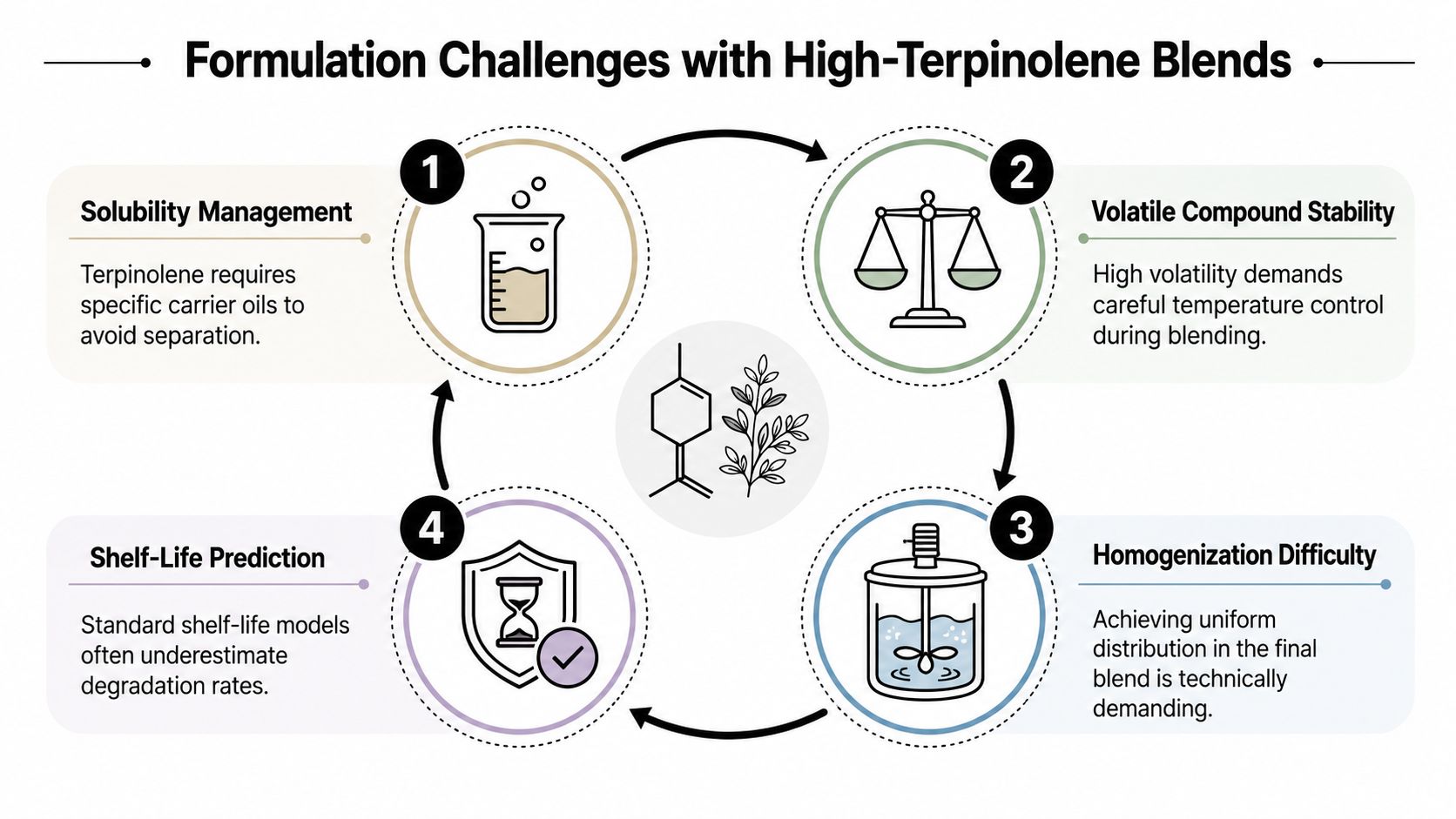
High-terpinolene work is difficult because the terpene is useful in a blend and unforgiving in production. It gives a bright, fast top note and fits vape hardware well, but its chemical reactivity means oxygen, light, and heat control matter more than they do with heavier, more stable terpenes. If those controls slip, the oil can smell correct at fill and still drift quickly in storage.
The three places blends usually fail
The first failure point is storage. Terpinolene-heavy formulas need tighter control over light exposure and headspace than a heavier, more inert blend. Clear packaging and warm warehousing usually shorten the sensory life of the top note, even when the oil still looks acceptable.
The second failure point is vaporization tuning. The terpene sits in a usable heating range, but that does not mean every hardware setup preserves it equally well. If the atomizer runs too hot, the first puffs can taste harsh and the later puffs can flatten out. If it runs too cool, the brightness that justified the profile in the first place drops off.
The third failure point is blend behavior at higher loadings. The cited formulation guide reports concentrations above 5% in cartridges and 6% in concentrates. At those levels, small changes in base viscosity, mixing order, or temperature during homogenization can change how the oil behaves. That is where tolerance on process control gets tight.
For a degradation reference, Gold Coast Terpenes' terpene-degradation resource can serve as a check when you are setting oxidation, packaging, and shelf-life expectations. Use it to compare assumptions before you lock a commercial spec.
Practical fixes that usually help
- Keep the process cool enough to protect top notes, but warm enough to blend cleanly. Excess heat during mixing is a common cause of flavor drift.
- Use opaque or light-resistant packaging. Terpinolene does not hold up well in transparent storage.
- Test the finished oil after fill, not just after premix. Cartridge geometry can expose instability that a beaker blend will not show.
If a batch tastes right but later turns thin, harsh, or muted, oxidation is usually the first thing to check. If the blend separates or clouds, the problem is often the interaction between the terpene load and the base oil rather than the terpinolene itself.
Testing Protocols and Quality Control for Terpinolene Products
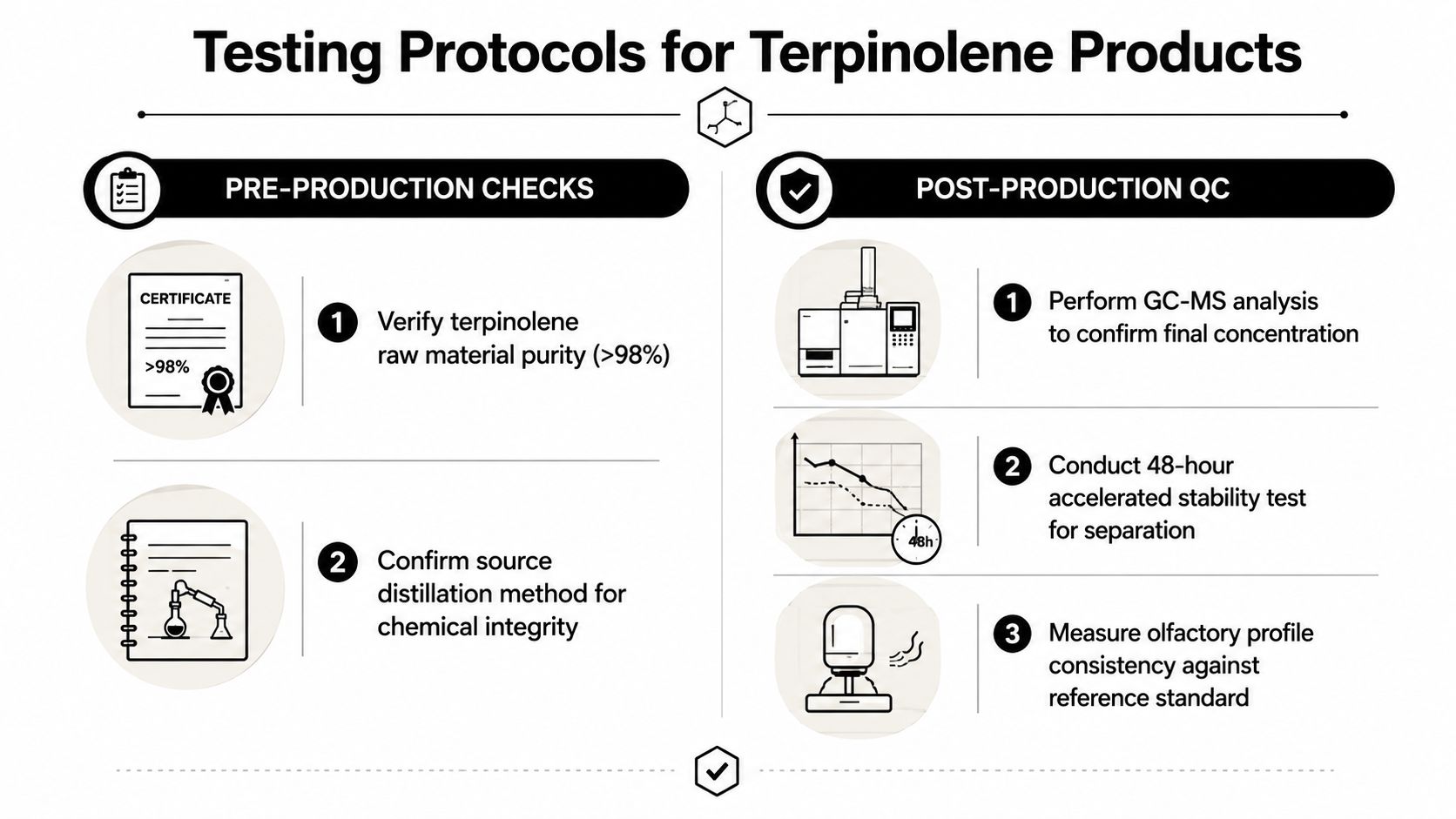
With terpinolene, testing has to happen at intake, during blending, and after fill. You're checking identity, concentration, and stability, because the profile can pass one stage and fail another. GC-MS is the method that gives you the clearest finished-product read for terpene composition, while HPLC is more useful when you're tracking cannabinoids alongside the terpene matrix.
Intake checks that catch bad material early
Start with the supplier packet. I want a certificate of analysis, a safety data sheet, and batch traceability before a terpene ever enters the tank. Visual inspection matters too, because discoloration, unusual haze, or a flat odor can signal that the material has already started to drift.
Practical rule: If the incoming aroma is dull, off, or overly solvent-like, don't try to “fix” it in the final blend. Replace it.
Finished-product control that keeps batches consistent
Finished blends need a reference standard and a repeatable sensory check. GC-MS confirms the concentration, but the nose still catches drift that a numeric report won't explain on its own. For cartridge work, many formulators aim for a tight variance window, and in practice that means you need enough process discipline that a batch doesn't wander between fills.
Accelerated stability testing is the fastest way to learn whether a formulation will hold. One industry checklist uses a 48-hour accelerated stability test for separation and retention checks, which is a practical starting point for high-terpinolene validation. If a sample changes color, splits, or loses its top note in that window, the formula needs revision before scale-up.
The other control point is the aroma benchmark. A terpinolene-rich reference should stay bright, pine-citrus, and clean, not turn dull or oily. When the sensory profile changes faster than the chemistry spec, you've got a storage or packaging issue, not a terpene identity problem.
Sourcing Strategy and Regulatory Compliance
Terpinolene sourcing needs more than a good price. You want supplier consistency, clean documentation, and clear origin records, because the way the terpene was produced affects both positioning and compliance. Botanical and synthetic material don't sit in the same marketing lane, and brands should know which one they're buying before they put it into a commercial formula.
Start with the paperwork, then verify the storage chain. A strong supplier file should include the COA, the SDS, and batch traceability, and the material should arrive in a container system that protects it from oxygen and heat. Nitrogen-flushed packaging and temperature-controlled storage aren't luxury features here, they're basic preservation tools.
For buyers comparing options, this internal guide to where to buy terpenes is a useful procurement reference point. I'd use it to frame questions about origin, format, and consistency before committing to a bulk order.
Compliance gets tighter when the product is heading into vape cartridges or THC-free terpene lines. State-specific rules can affect additives, documentation, and testing expectations, so the formula has to be built with the regulatory path in mind, not bolted on afterward. In practical terms, that means deciding early whether the blend is going into distillate, concentrate, or a stand-alone terpene SKU, then matching the sourcing and label claims to that use case.
Gold Coast Terpenes offers 100% natural, THC-free terpene blends and strain-specific profiles that can support that kind of workflow. For formulators, the value is in having consistent inputs that can be matched to a specific sensory target instead of rebuilding a profile from scratch every time.
If you're building a terpinolene-forward cartridge, start with consistent inputs and a realistic stability plan. Gold Coast Terpenes supplies strain-specific terpene profiles, isolated compounds, and formulation-friendly options that fit commercial blending workflows. Visit Gold Coast Terpenes to compare terpene options, review formulation tools, and source profiles that match your target chemotype.