
The common advice says cannabis smells “bad” because it's loaded with terpenes. That's the wrong starting point for formulators. Terpenes shape the profile, but the harsh, skunky punch that people complain about is usually driven by volatile sulfur compounds, especially 3-methyl-2-butene-1-thiol. If you're building a strain-inspired blend, cleaning up distillate, or trying to keep a vape cart from drifting into an unpleasant note, that distinction matters more than almost any generic aroma tip.
A formulation team can't solve an odor problem by chasing the loudest terpene alone. The job is to identify whether you're dealing with a natural skunky signature, a post-harvest defect, or a processing issue that's been locked into the oil. Once you sort those apart, the right fix becomes obvious, whether that means changing the raw material, adjusting the terpene stack, or tightening cure and storage controls. For broader blending context, I keep a separate terpene formulation guide close at hand when evaluating odor notes.
What Really Causes the Skunky Smell in Cannabis
Terpenes get blamed first because they are easy to talk about and easy to smell. That explanation falls apart fast once you compare a floral or citrus cannabis profile with the unmistakable skunky edge that can dominate a batch at very low levels. The strongest modern evidence points to volatile sulfur compounds, or VSCs, especially 3-methyl-2-butene-1-thiol (321MBT), as the main source of that skunky character (New Scientist, PMC review).
Why that matters in formulation
Sulfur compounds behave differently from the terpene families most formulators know well. They are detected by the human nose at extremely low concentrations, so a trace amount can overpower a carefully built terpene blend. That is why a product can test as terpene-rich and still smell aggressively skunky, because the sulfur note is carrying the sensory weight.
A useful framework is perfumery. Terpenes often provide the bright top notes and the fuller middle of the aroma, while sulfur compounds act like a tiny but forceful base note that changes the whole perception. The cannabis plant also has a broad terpene library, with more than 150 distinct terpenes identified across strains, including common odor contributors such as myrcene, limonene, terpinolene, and pinene (PMC review). But the skunky effect is not primarily a terpene story.
Practical rule: if the aroma feels “too loud” relative to the terpene load you expected, suspect sulfur chemistry before you start increasing flavor intensity.
For product developers, that means strain replication cannot stop at “match the terpene ratio.” A profile can be chemically accurate in terpene terms and still miss the sensory target if the sulfur side of the equation is absent or uncontrolled. When a customer says they want a true skunky line, they are usually asking for a sulfur-shaped perception, not just a generic earthy blend. For a broader blending reference, use the terpene formulation guide as a separate check on aroma balance.
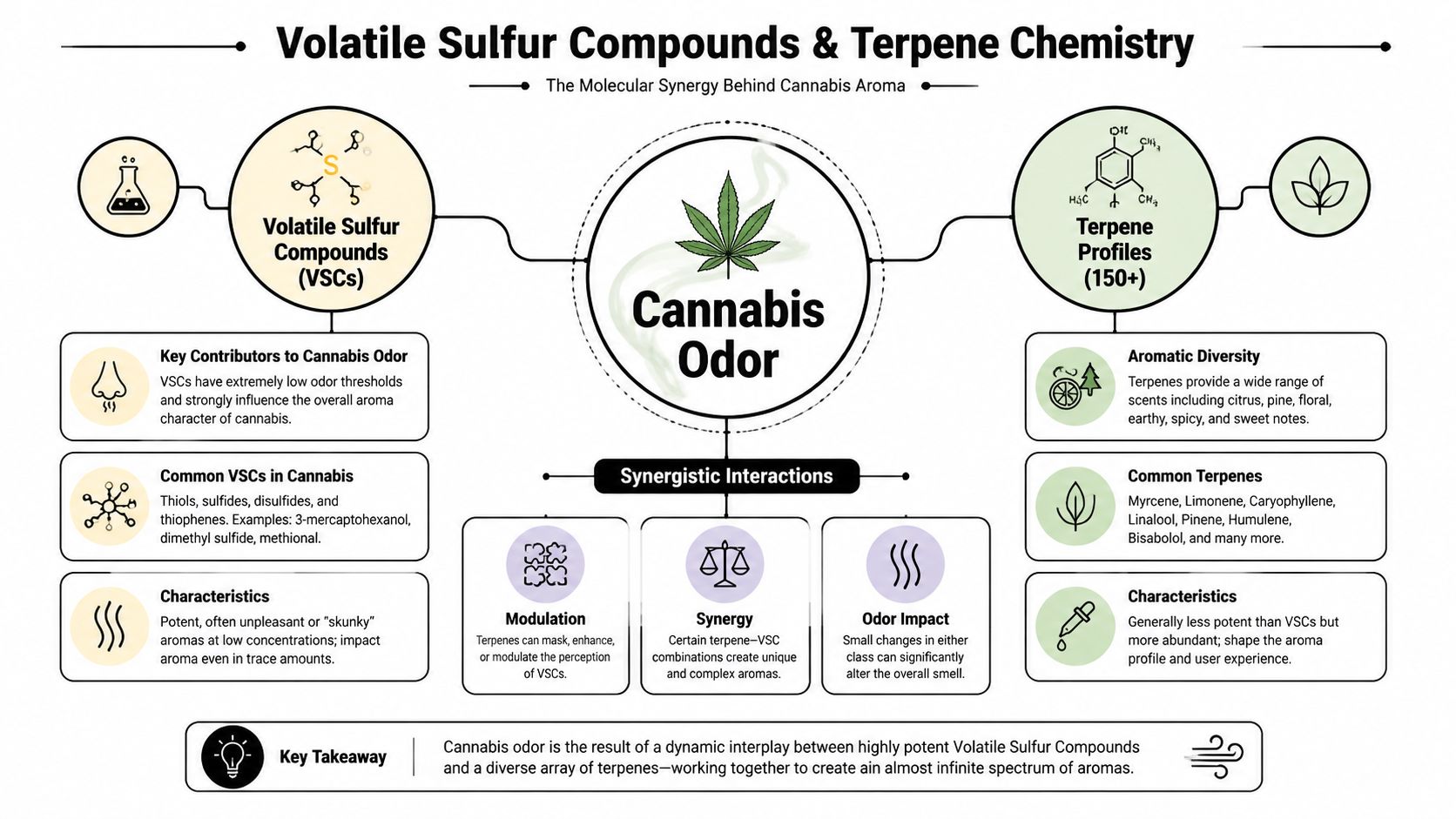
Volatile Sulfur Compounds and Terpene Chemistry
Cannabis odor makes more sense once you stop treating it like a single scent and start reading it as a layered system. A mature flower can be terpene-rich and still be remembered mainly for the sulfur fraction, because that fraction can dominate the nose even at low levels. A blend built around myrcene or limonene can look right on paper and still miss the sharp, skunky edge that defines the cultivar.
Top, mid, and base note thinking
For formulators, the most useful bridge is a fragrance-style model. Top notes are the volatile, bright compounds that register first, mid notes fill the body, and base notes linger and anchor the profile. Terpenes such as limonene often read as bright and citrus-forward, pinene can sharpen the perception, and terpinolene can add a lighter aromatic lift. None of those, by themselves, reproduce the dense sulfurous hit associated with skunk.
Sulfur compounds behave differently in blending. They do not just add another layer, they change how every other layer is perceived. A trace amount can push the aroma from fresh to penetrating, or from cultivar-specific to out of balance. That is one reason some batches seem harsher in late flower, because sulfur compound concentrations can rise during the final flowering stage, when odor is usually strongest.
What the literature corrected
For years, the common assumption was that terpenes created the skunky smell. Recent research shifted that view toward VSCs, especially 321MBT, and one review notes that the August 19, 2021 patent disclosure was the first formal public disclosure naming 321MBT as the primary odorant for the targeted skunky smell (PMC review). Another review emphasizes that mature flowers of some strains produce sulfurous compounds, with 321MBT specifically identified as the responsible odorant.
In formulation terms, sulfur compounds act less like a flavoring ingredient and more like a structural component of the odor. You cannot ignore them and expect a faithful replica.
The practical trade-off is simple. If you are building a strain-inspired terpene blend for a product line, higher terpene intensity does not guarantee a more authentic result. It can just make the wrong note louder. I keep a separate plants that smell like skunk reference on hand when comparing sulfur-heavy aroma families, because the aromatic pattern matters as much as the terpene list.
Diagnosing Bad Odors in Cannabis Products
A bad cannabis odor is not a branding problem, it is a diagnosis problem. If a batch smells ammonia-like, grassy, musty, moldy, or urine-like, treat it as a process fault until proven otherwise. Those notes usually point to curing, drying, storage, or sanitation issues, not to a desirable strain signature. Pull the lot before it reaches extraction or blending, because a flawed input can carry the defect straight into a higher-value ingredient.
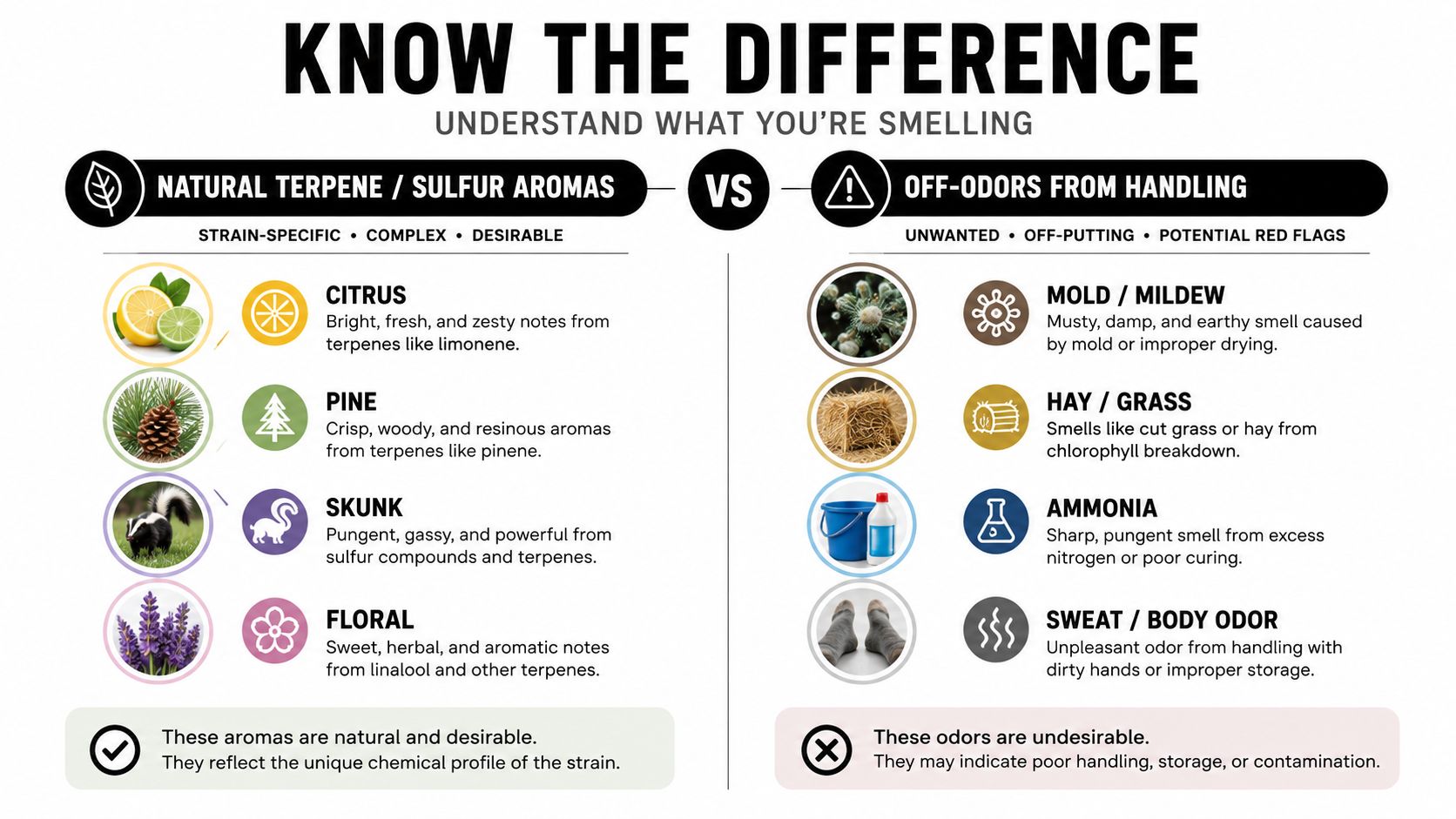
What the smell is telling you
A freshly cut grass note usually points to incomplete curing rather than a desirable green profile. An ammonia smell often tracks with chlorophyll breakdown during curing, which tells you the material did not finish in a controlled way. Musty and moldy aromas are a different class of problem, because they can indicate contamination, excess moisture, or microbial growth. That distinction matters in manufacturing, because extraction does not repair a damaged raw material, it often preserves the defect.
Health Canada notes that cannabis releases odor-causing molecules as the plant matures, and it identifies terpenes as major contributors in that progression. In a plant chemistry context, strong odor by itself does not prove quality. You still need to decide whether the smell reflects normal maturation, or whether post-harvest handling drifted off spec.
A practical screen works better than guesswork.
- Bright, strain-specific notes: usually acceptable if they match the intended profile.
- Ammonia or hay: review curing performance and drying conditions immediately.
- Musty, moldy, or stale notes: quarantine the lot until moisture history and cleanliness are confirmed.
- Overly sharp skunk without balance: check whether aging, contamination, or poor blending has pushed sulfur notes out of proportion.
If incoming biomass already smells wrong, extraction rarely fixes it. The defect usually becomes more expensive.
The same logic applies to distillate and carts. An off-note that starts in biomass can become more obvious after concentration, especially if the formulation has no top-note structure to soften it. I keep a separate why does my cannabis smell like hay resource close during supplier QA discussions, because hay character is often the first sign that curing was not controlled well.
Formulation Strategies for Odor Control
Once you know whether you're correcting, masking, or replicating, the formulation choices get much cleaner. The wrong move is to throw more terpene at the problem and hope the odor behaves. The right move is to build a profile with purpose, using top, mid, and base notes to steer perception instead of letting a sulfur-heavy batch dictate the result.
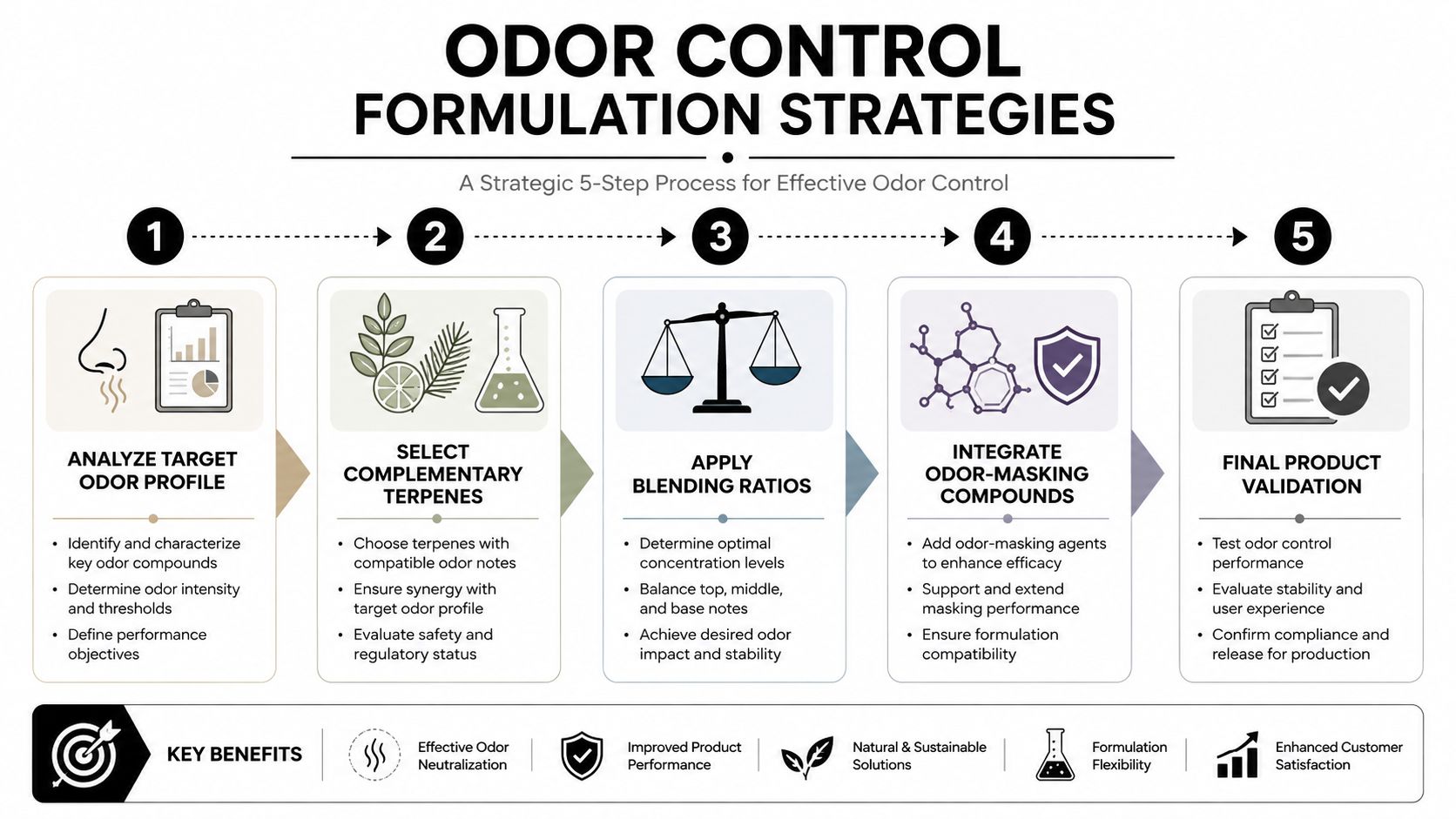
Build the blend around the target, not around the defect
Start with a sensory audit. Decide whether the goal is to preserve a skunky heritage profile, soften a harsh raw-material note, or create a cleaner fruit-forward line for a specific market. If the target is authenticity, you need to respect the sulfur character without letting it become overwhelming. If the target is cleanliness, then lighter terpenes can help pull the profile away from the sharp end of the spectrum.
Limonene is useful when you need lift and perceived cleanliness. Pinene can sharpen and clarify the top end. Terpinolene can add a fresh, aromatic bridge between bright and deep notes. None of them erase sulfur chemistry, but they can rebalance the way the nose experiences it. In practical blending, that's often better than trying to suppress the skunky note outright.
Use process tools where flavor tools can't reach
Raw-material cleanup still matters. Winterization and short-path distillation can help remove unwanted fractions before flavoring, especially if you're trying to reduce persistent off-notes in a base oil. If the sulfur character is coming from the biomass rather than from the intended strain identity, extra purification may be the only sensible starting point. For raw terpene handling, raw terpene spray guidance can help when evaluating how aroma distributes on substrates and in finished systems.
A simple decision split helps:
| Situation | Better move |
|---|---|
| Authentic skunky target | Preserve the core note, then shape it with bright supporting terpenes |
| Harsh sulfur defect | Clean the input first, then rebuild the aroma |
| Distillate lacking character | Add structure with mid and top notes, not just more intensity |
| Cart smells flat after storage | Check oxidation, packaging, and terpene balance before reformulating |
The cleanest commercial results usually come from matching the product format to the aroma goal. A vape cartridge needs stability and clarity. A concentrate may tolerate a darker, more complex note. A distillate line aimed at broad retail appeal usually benefits from a more restrained sulfur footprint and a brighter terpene scaffold.
Post-Harvest and Storage Protocols
Odor defects often start before a formulator ever sees the batch. Drying, curing, and storage decisions can separate a clean, stable aroma from material that reads grassy, stale, or plainly off. The plant keeps changing after harvest, so the central question is whether the post-harvest path preserves the intended terpene balance or lets it drift into a harsher profile.
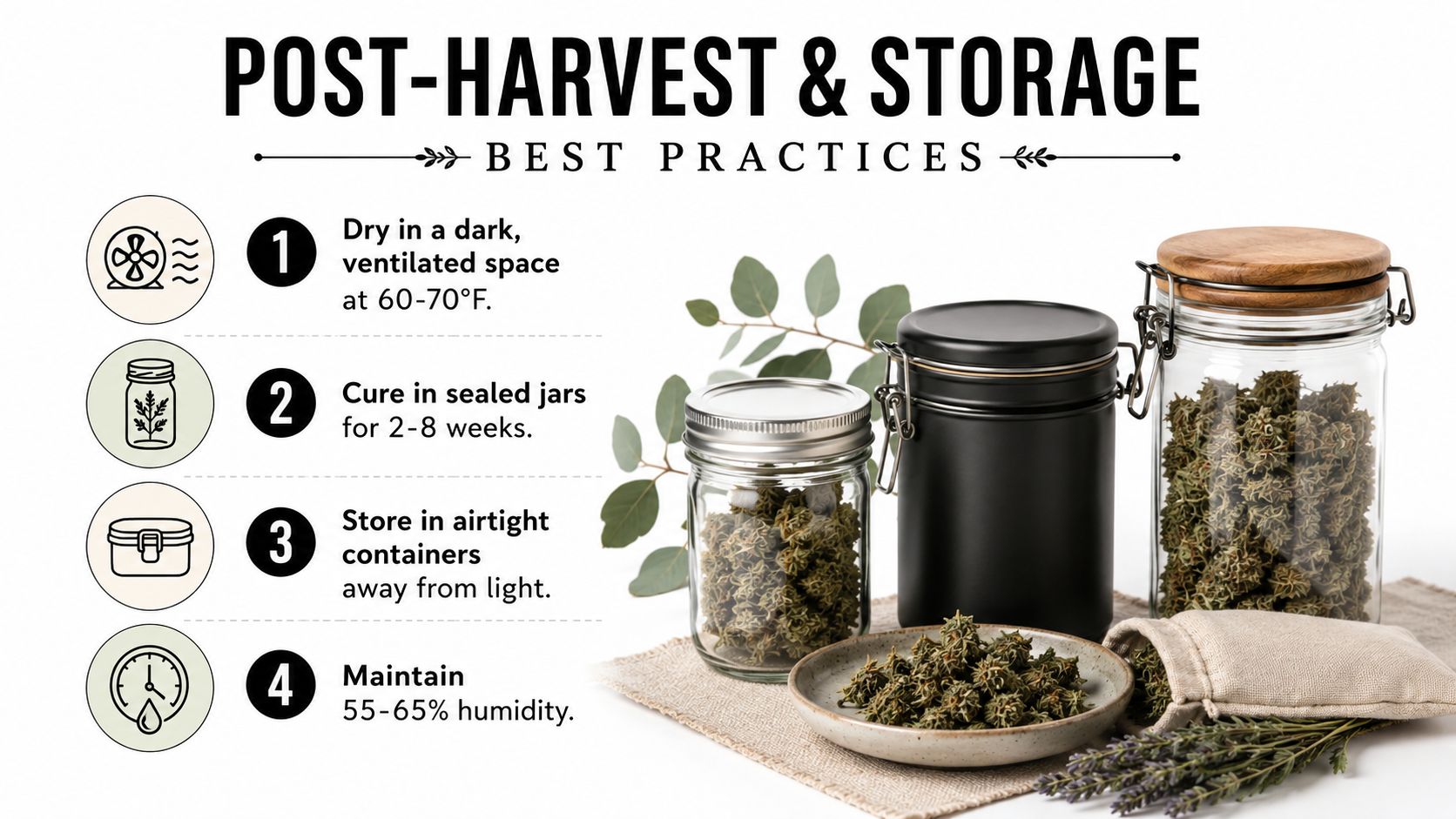
Control the cure before you blame the cultivar
A freshly cut grass or ammonia note is often a curing problem, not a genetic failure. If chlorophyll breakdown is incomplete, the aroma stays green and sharp instead of rounding out into a more coherent profile. That matters because operators sometimes blame the strain when the material was not finished with enough control.
Good post-harvest practice starts with even drying in a stable, ventilated space, so moisture leaves the flower at a predictable rate. The cure then needs enough time for the volatile profile to settle, because rushing to package locks in rough edges that should have dissipated. After that, the material needs protection from light, excess air, and temperature swings, since each of those can push the aroma away from the target before extraction or blending ever begins.
Incoming checks save expensive batches
Manufacturers should treat odor as a receiving spec, not a vague impression. If a supplier lot comes in musty, that defect needs to be recorded before extraction starts. If it is oddly grassy, the cure may still be incomplete. If it smells clean but thin, age or storage may be the problem rather than contamination.
A basic intake checklist should ask:
- Does the aroma match the intended cultivar or format?
- Are there ammonia, hay, mold, or stale notes?
- Is the odor consistent across the lot, or are there hot spots?
- Has the material been stored in a way that protects aroma integrity?
The fastest way to improve finished-product consistency is usually to reject bad input earlier, not to rescue it later.
That caution matters even more for cartridges and distillates, because concentrated systems expose flaws that flower can partly hide. A biomass lot with a storage-driven defect often carries that same defect into the finished SKU, only in a much more obvious form. If the feedstock smells tired at intake, the finished product rarely smells better after processing.
Commercial Applications and Product Development
Odor science turns into commercial value when it informs product decisions early. A brand that understands VSCs can decide whether a line should lean into a true skunky heritage profile, a cleaner fruit-forward expression, or a neutral base that leaves room for targeted terpene positioning. That's a different mindset from asking, “What smells strongest?”
For replicating flavor of a specific cultivar, the biggest mistake is overfitting to one loud terpene and ignoring the rest of the sensory structure. The right approach is to define the target in layers, then choose whether you're building for authenticity, retail friendliness, or process stability. A skunky line may need a more assertive base. A mainstream cart may need brightness, clarity, and less sulfur-driven aggression.
Supplier consistency matters. If you're buying a terpene profile for cannabis product formulation, the batch needs to be repeatable enough that the same SKU smells like the same SKU across production runs. That means you want lab-verified inputs, a stable blending process, and clear documentation of what's doing the sensory work. The more you know about which note is carrying the identity, the less you have to guess during scale-up.
There's also a real regulatory and manufacturing trade-off. Odor control in the facility protects product quality, but overly aggressive cleanup can strip the character out of a strain-inspired blend. The goal is not to erase aroma. The goal is to control the parts that create defects while preserving the parts that make the profile recognizable. That balance is what separates a generic terpene add-back from a commercially useful formulation.
Troubleshooting Common Formulation Challenges
A cart smells too skunky, and the first instinct is usually to cut the flavor load. That can help, but only if the problem is overexpression rather than contamination or raw-material drag. If the sulfur note is coming from input oil, lowering the terpene dose won't fix the root cause. It just makes the defect easier to notice.
If a distillate carries a persistent off-note, I start by asking where the smell entered the process. Raw biomass, extraction, storage, and flavor addition each leave different fingerprints. A grassy odor points me toward cure quality. A moldy or musty note sends me back to incoming material controls. A flat but unpleasant tail often means the base needs more cleanup before the aroma can be rebuilt.
For vape cartridges, late-emerging odors are usually a stability problem. Oxidation, poor packaging, and weak top-note structure can make a blend drift over time. The clean fix is not always stronger flavor. Sometimes it's a better balance, a more stable terpene source, or tighter control of how the oil is stored before filling.
A practical troubleshooting loop looks like this:
- Identify the odor class. Skunky, grassy, musty, or stale.
- Trace the process stage. Biomass, crude, post-process, or finished cart.
- Adjust only one variable at a time. Blend ratio, purification, or storage.
- Document the result. That's how you get batch-to-batch consistency.
If the same issue keeps returning, stop treating it like a flavor problem and treat it like a supplier or process problem. The best custom blend in the world won't rescue compromised input. Good documentation, cleaner raw material, and a stable terpene strategy will.
If you're building a skunky heritage line, cleaning up a distillate base, or trying to spec a more stable cartridge profile, Gold Coast Terpenes can help you work from a more precise aroma framework. Visit Gold Coast Terpenes to explore strain-specific profiles, isolated terpenes, and formulation resources that support cleaner, more consistent cannabis product development.