
A formulation can look correct on paper and still miss the target in the finished product. The same terpene dose may deliver a bright citrus impression in one distillate and a muted, sharp, or nearly absent note in another base. That difference isn't a minor sensory detail. It affects whether a vape cartridge tastes intentional, whether a strain-inspired terpene blend feels recognizable, and whether a brand can reproduce the same profile across production batches.
For product developers, terpene flavors are formulation inputs, not just tasting descriptors. A useful brief needs more than “fruity” or a strain name. It should identify the flavor family, the desired top, mid, and base note balance, the actual carrier matrix, the heat exposure, and the sensory result required at the point of use. This approach supports long-tail searches such as terpene profile for distillate, strain-inspired terpene blend, formulating for vape cartridges, and replicating flavor of a target product.
Introduction to Terpene Flavors for Product Formulation
A developer tests two distillate batches in the same vape system and adds the same terpene percentage to each. One opens with lemon brightness and finishes cleanly. The other begins subtly, then develops a resinous edge after heating. The blend sheets match, yet the cartridges do not. That scenario shows why terpene flavors must be evaluated as finished-product behavior, not only as ingredients on paper.
Flavor forms through the interaction of aromatic compounds, concentration, carrier, temperature, oxygen, and delivery method. Terpenes contribute to recognizable citrus, pine, floral, and herbal profiles, while their balance determines how those notes arrive and persist. This overview of what terpenes are gives new developers a useful foundation for the terminology behind these decisions.
Flavor accuracy is a commercial specification
A product's flavor communicates before customers assess the rest of the experience. Citrus may suggest brightness and precision. Berry can make a profile feel clear and contemporary. Woody, spicy, or creamy notes can add depth and support a more deliberate premium identity. These cues do not make medical claims, and they cannot replace verified product information. They help establish a consistent sensory expectation.
The same expectation should guide the formulation brief. A flavor family describes the destination, while top, mid, and base notes describe how the customer reaches it. Matrix-specific loading then determines whether that structure survives in distillate, a cartridge, or another delivery system. A strain name alone cannot specify those decisions.
Market data shows that terpene flavors now serve applications beyond niche botanical products. One industry report valued the terpene market at $1.2 billion in 2022 and projects $3.5 billion by 2030, with a 13.2% CAGR. North America accounted for 45% of global revenue in 2022, while food and beverage was identified as the fastest-growing end use, expanding at a 14.5% CAGR from 2023 to 2030. The reported terpene market figures and application breakdown place flavor development within a broader cross-sector formulation market.
The working principle is simple: define what the customer should recognize, then translate that sensory target into note structure, concentration, carrier compatibility, and process controls. That translation gives product developers a repeatable way to connect flavor-first positioning with formulation and brand perception.
How Terpene Flavor Works and Why Structure Matters
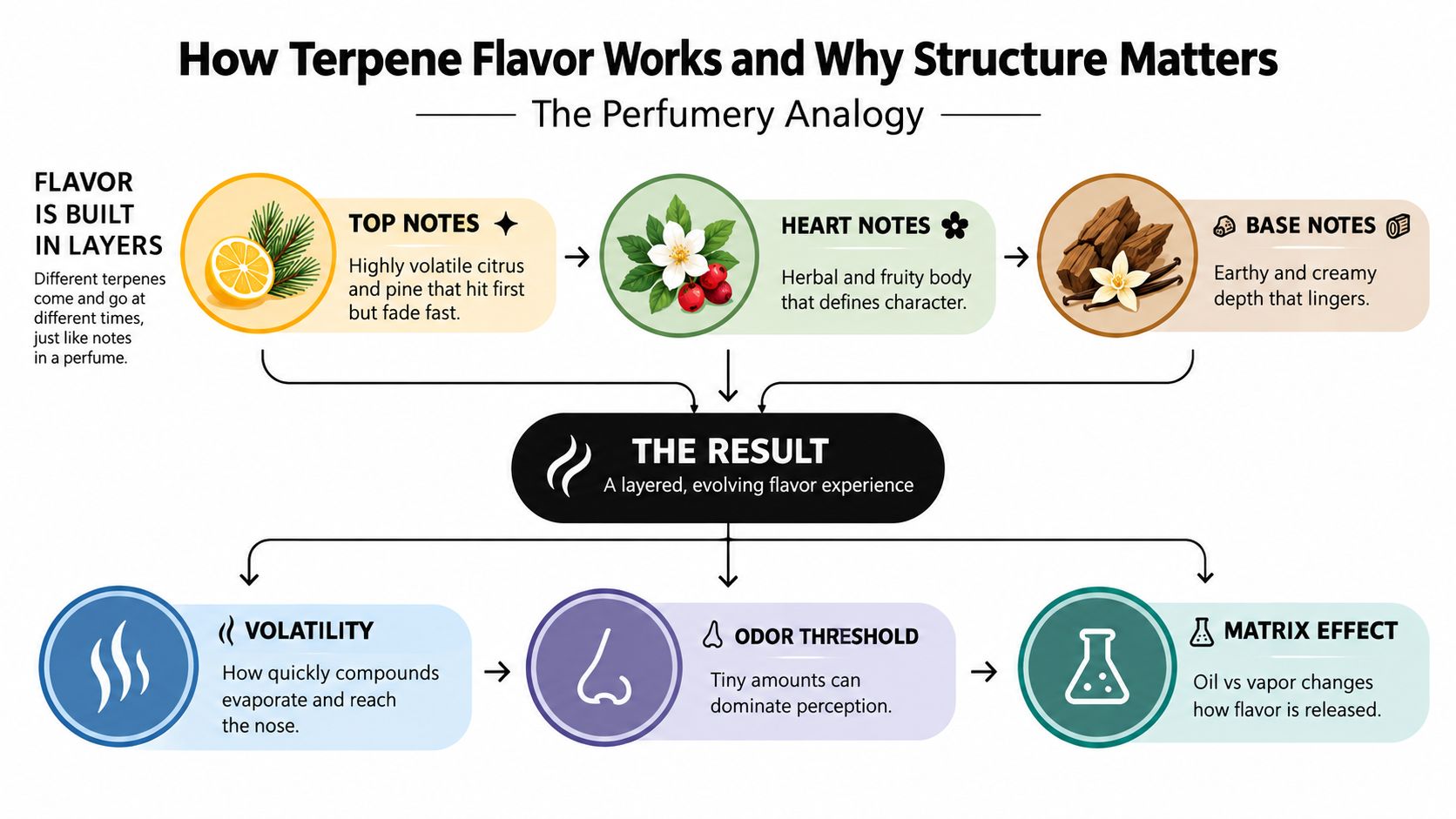
Perfumery provides a useful analogy because a successful fragrance isn't a random mixture of pleasant smells. It has an opening, a central character, and a lasting foundation. Terpene flavors behave similarly, although the final perception depends heavily on the product matrix and delivery conditions.
Start with the three note layers
Top notes create the first impression. Bright citrus and pine compounds often arrive quickly because they are relatively volatile. They can make a cartridge feel fresh, sharp, or energetic at the beginning, but they may fade quickly if the blend is exposed to heat or left poorly sealed.
Mid notes form the heart of the profile. Fruity, floral, and herbal elements usually provide the recognizable character that remains after the initial burst. If the top note is the first sentence of the sensory experience, the mid note is the main idea.
Base notes add depth, persistence, and weight. Woody, earthy, spicy, and creamy elements can make a profile feel rounder and longer-lasting. Too much base material can make the blend heavy, muddy, or less defined, especially when the carrier already contributes viscosity or a strong background note.
A formulation lead should assign every candidate terpene a job before adding it. Ask whether it supplies the opening, supports the central flavor, or anchors the finish. A guide to terpene chemical structure provides useful background for connecting molecular structure with volatility and aromatic behavior.
Concentration isn't the only control
Many terpenes have very low odor thresholds, so a small amount can influence the whole profile. Detectability also changes by matrix. In an orange juice matrix, odor thresholds for key aroma components increased by 15 to 200-fold overall compared with other references, and the threshold for a-pinene increased by up to 300-fold relative to water. The USDA discussion of matrix-dependent odor thresholds demonstrates why a generic flavor table can't replace testing in the actual oil, distillate, or carrier system.
Practical rule: Treat terpene loading as a matrix-specific sensory variable, not a universal target.
Heat adds another source of change. Top notes can evaporate or degrade before the consumer experiences them, while heavy base notes may remain and dominate the finish. The developer therefore needs to control both the blend composition and the route the blend takes through mixing, filling, storage, and use.
Core Terpene Flavor Families and Sensory Vocabulary
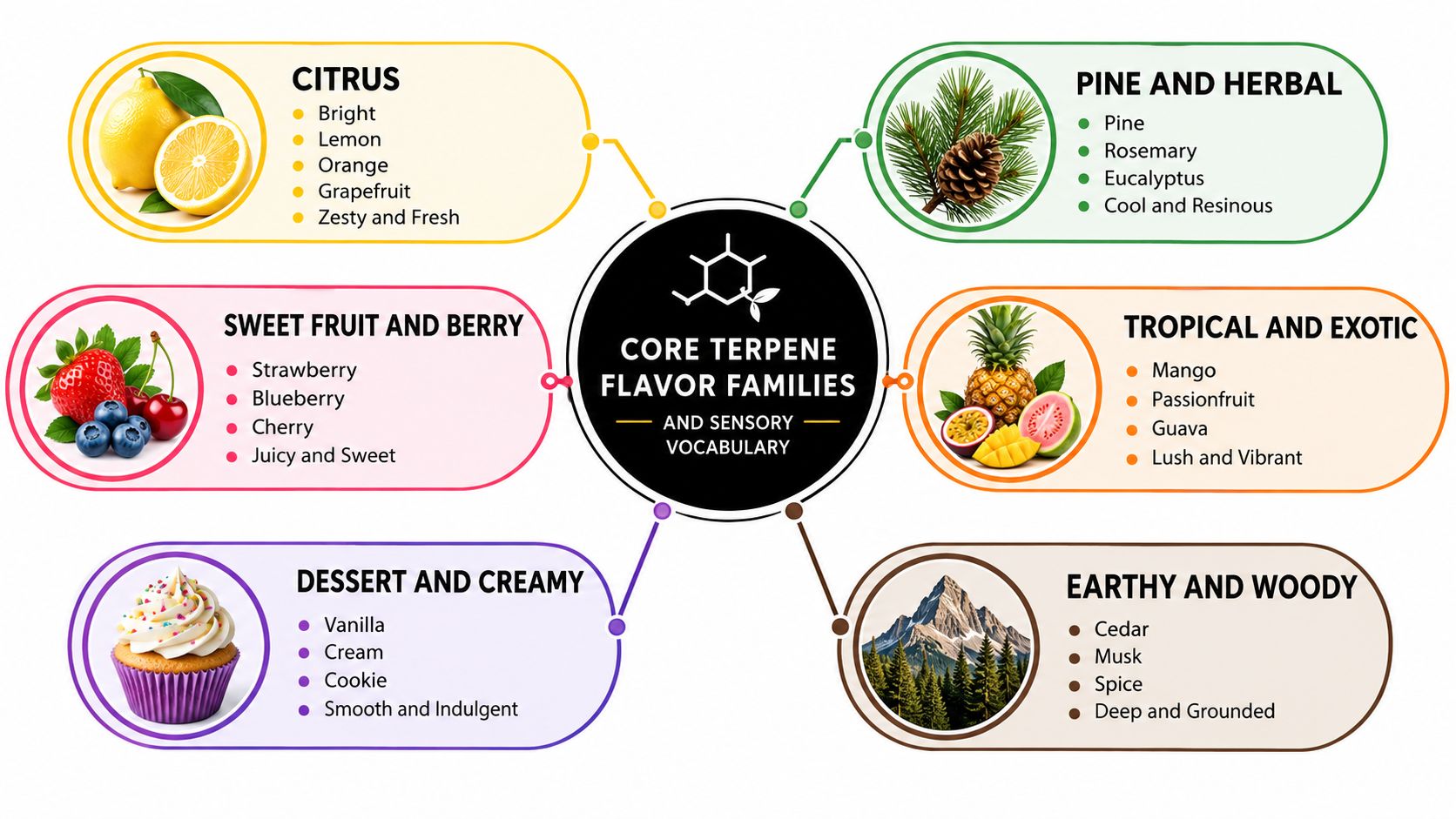
A product developer compares a new blend against a brief that says only “fruit-forward.” The phrase leaves several decisions open: should the opening resemble lemon zest, dark berry, tropical pulp, or a creamy dessert? Precise sensory vocabulary turns that broad direction into a buildable structure, with clear top, mid, and base-note jobs for the blender.
Compare families by sensory job
| Flavor family | Sensory vocabulary | Typical structural role |
|---|---|---|
| Citrus | Lemon, orange, grapefruit, zest, fresh | Usually a top-note direction that creates immediate lift |
| Pine and herbal | Pine, rosemary, eucalyptus, cool, resinous | Can supply top brightness or a sharper herbal mid-note |
| Sweet fruit and berry | Strawberry, blueberry, cherry, juicy, sweet | Often forms the mid-note core with a rounded finish |
| Tropical and exotic | Mango, passionfruit, guava, lush, vibrant | Usually gives the mid-note its vivid identity, supported by citrus |
| Dessert and creamy | Vanilla, cream, cookie, smooth, indulgent | Works as a mid or base direction, adding softness and weight |
| Earthy and woody | Cedar, musk, spice, grounded, deep | Typically anchors the base and extends persistence |
Citrus gives a product fast sensory recognition. Limonene is strongly associated with citrus flavoring, and the referenced market data assigns it 45% share in flavorings. The same report, cited earlier, also places terpene use in food at $600 million in 2022, with 70% tied to flavor applications. These figures describe market activity, while the formulation decision remains sensory: use citrus as the opening signal, then decide whether the middle needs fruit, tropical, or herbal support.
Pine and herbal profiles add freshness and definition. Pinene may read as clean and forest-like at one level, then turn resinous or harsh when the matrix suppresses softer notes. Set this family carefully within the top-to-mid structure.
Sweet fruit and berry is more precise than “fruity.” Dark berry, cherry, and blueberry imply different balances of sweetness, acidity, and depth. Record the dominant fruit cue, perceived freshness, and finish character, whether dry, sweet, or woody, so the target can be evaluated consistently.
Tropical and exotic profiles often need supporting architecture. Mango, passionfruit, and guava can create a lush mid-note identity. Citrus can sharpen the opening, while a restrained woody base keeps the center from feeling hollow.
Dessert and creamy profiles depend on texture as well as aroma. Vanilla, cream, and cookie cues need enough mid and base support to feel rounded without becoming dense.
Earthy and woody notes provide continuity through the finish. They can connect fruit to a deeper base, though excess can hide the flavor cue promised by the package and product name.
This vocabulary also gives teams a more useful way to discuss strain-inspired terpene blends. A strain name can inform the brief, but the sensory family specifies what the formulation must build: opening lift, central identity, or lasting anchor.
Use a terpene flavor chart as an initial reference, then confirm the blend in the finished matrix.
How Flavor Choices Shape Perception and Brand Identity
A customer often forms a product impression from flavor before reading its detailed description. Citrus, berry, tropical, dessert, and woody cues place the product in an immediate sensory category. That category can guide packaging, naming, line architecture, and repeat purchase because it sets expectations for the experience.
Analysts found dark berry profiles increasing, tropical flavors appearing frequently among new launches, and banana-forward dessert profiles performing well in vapes and infused pre-rolls. The terpene market analysis containing those launch observations supports a flavor-first view of product development. The practical lesson is not to copy every popular fruit note. Clear sensory clusters often communicate more effectively than broad strain-style descriptions.
Turn a flavor cue into a SKU decision
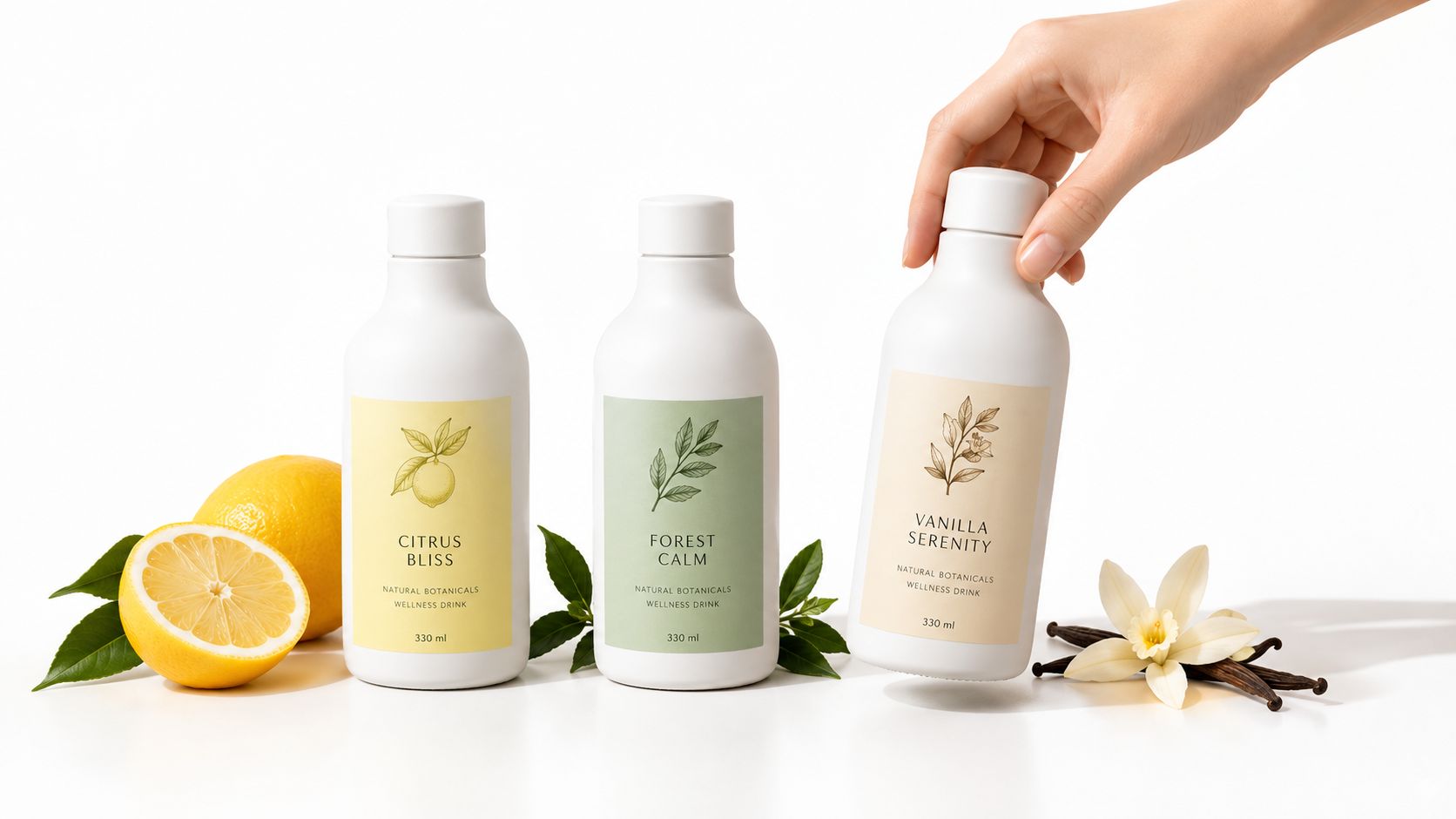
A vape cartridge line can separate products by sensory role rather than by a long list of botanical names. Each role should connect the flavor family to its note structure:
- Bright citrus: Use lemon, orange, or grapefruit as a clear top-note signal for a clean, high-contrast identity.
- Dark berry: Build a fuller mid-note fruit profile, then add enough base support to prevent a thin candy impression.
- Tropical fruit: Let lush mid notes define the center, with a controlled citrus top note for sharper recognition.
- Dessert fruit: Add creamy or cookie-like mid and base depth so the profile reads as dessert rather than a simple berry blend.
- Wood and spice: Use this direction for a grounded identity, while controlling bitterness and resinous edges in the finish.
The matrix changes how those decisions should be dosed and judged. A flavor that feels vivid in a liquid may become muted in a cartridge, while a heavy base can dominate after heating. Test the opening, center, and finish in the finished product, then adjust the brief and label language together.
Packaging should use the same sensory vocabulary as the formulation brief. If the front label promises tropical fruit, the first impression and finish should support that promise. A strain-inspired name can guide the concept, but the flavor descriptor still needs to tell customers what they will taste. This alignment also supports brand differentiation strategies by giving each SKU a recognizable sensory job.
Brand trust depends on the same consistency across naming, visual identity, automated content, and product claims. Teams can use this guide to AI and brand trust when reviewing those touchpoints. A precise flavor identity helps only when the rest of the brand presents it accurately.
Elevated Strains provides one catalog flavor reference for briefs seeking enhanced fruit and dessert nuance. Final selection should still rely on sensory testing, matrix compatibility, and the intended role of the SKU.
Flavor Pairing Principles for Balanced Product Development
A balanced blend starts with a sensory destination, not a collection of favorite aromas. If the goal is a bright and energetic profile, the top note should create the first impression, the mid note should make that impression recognizable, and the base should keep the finish from disappearing. If the goal is smooth and dessert-like, the structure reverses in emphasis. The base and mid notes carry more of the identity, while the top note prevents the blend from becoming flat.
A common three-layer cannabis formulation framework identifies primary terpenes first, adds secondary terpenes at about 10 to 20% each, and keeps tertiary or accent terpenes under 5%. These are formulation guideposts, not universal targets. The reference framework is described in this terpene chart resource.
Build the profile in order
Start by selecting the primary direction. For a citrus and berry profile, the primary family might be citrus, while berry supplies the core identity. Add a smaller woody or spicy anchor only after the opening and body are working together. This order prevents the base from disguising a weak central flavor.
A useful pairing logic looks like this:
| Flavor goal | Top note pairing | Mid note core | Base note anchor |
|---|---|---|---|
| Bright and energetic | Lemon, orange, or grapefruit | Juicy berry or tropical fruit | Light herbal or restrained wood |
| Fresh and resinous | Citrus or pine | Rosemary, herbal fruit, or floral body | Cedar or soft earth |
| Tropical and lush | Citrus zest | Mango, passionfruit, or guava | Gentle spice or wood |
| Smooth and dessert-like | Soft citrus or mild fruit | Cream, vanilla, or cookie | Warm spice, musk, or restrained earth |
| Dark fruit and deep | Grapefruit or tart citrus | Cherry, blueberry, or dark berry | Cedar, musk, or spice |
Avoid the two common failure modes
The first failure is top-note overload. The blend smells impressive in the mixing vessel, but the brightness fades during handling or delivery and leaves little body behind. The second is base-note dominance. Heavy earthy, woody, or spicy materials remain present while the fruit disappears, so the finished product tastes darker than the brand intended.
A good blend should have a clear opening, a recognizable center, and a finish that supports rather than obscures the promise on the label.
Evaluate pairings in the actual product base. A citrus compound may sharpen a berry profile in one distillate, while the same addition may emphasize solvent-like or bitter edges in another. Keep the first evaluation narrow, change one structural decision at a time, and record the sensory result by note layer rather than by overall preference alone.
The product developer's job isn't to maximize aroma intensity. It's to create recognition, balance, and repeatability. A profile that feels slightly quieter but remains coherent through filling and use can be more commercially useful than an aggressive blend that changes after processing.
Formulating for Accuracy in Vapes and Distillate
The same terpene flavor can behave differently in distillate, oil, live resin, or another carrier because release, solubility, viscosity, and heat exposure change the sensory result. Formulators should validate the profile in the finished system, not assume that a reference strip, flavor table, or neat blend predicts cartridge performance.
Control concentration and matrix effects
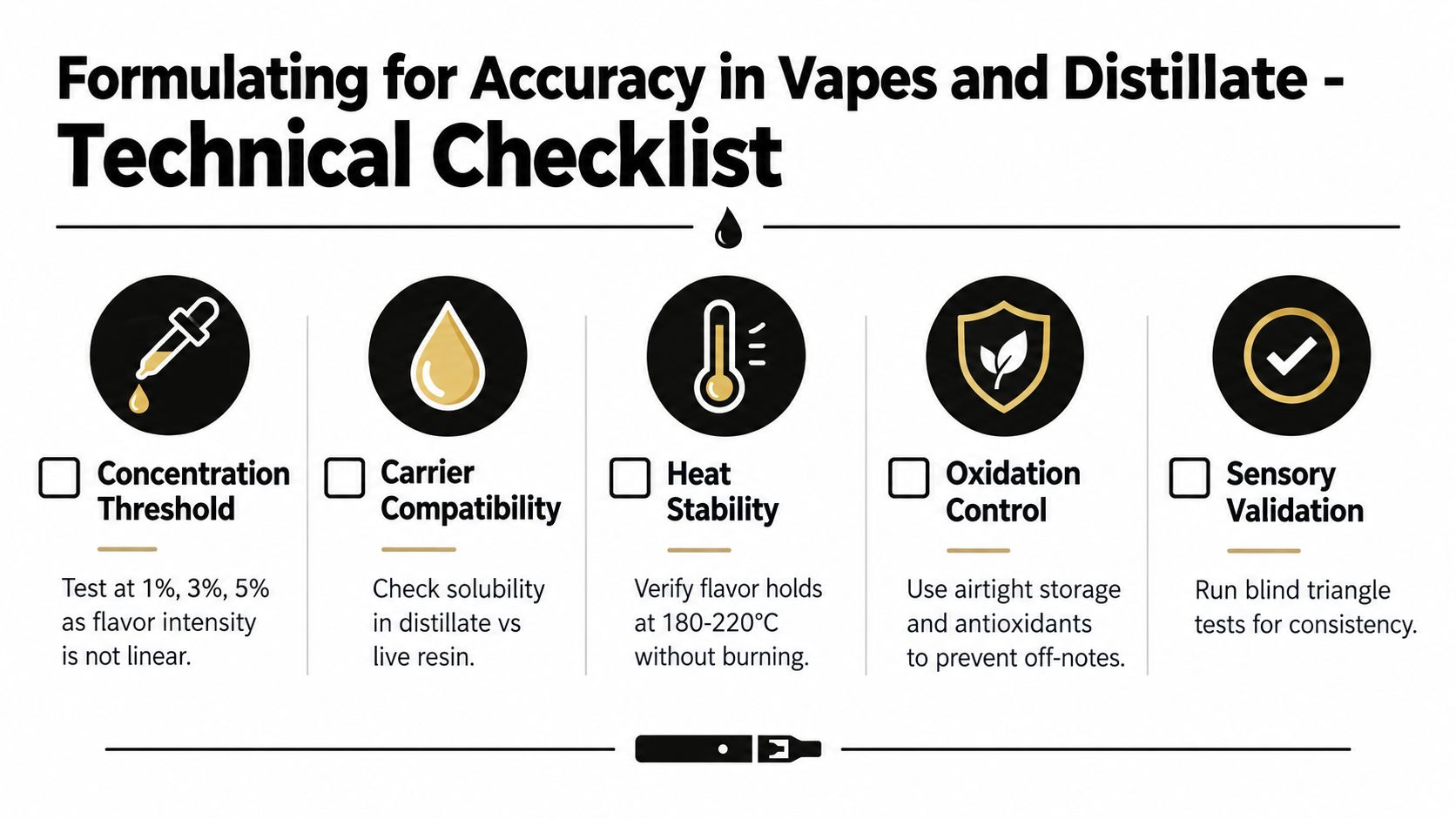
Threshold behavior is concentration-dependent, and the matrix can suppress or amplify perception. As noted earlier, odor thresholds in an orange juice matrix shifted 15 to 200-fold overall, with a-pinene changing by up to 300-fold relative to water. That finding is especially relevant to a terpene profile for distillate because a target percentage that works in one carrier may fail to deliver the same sensory intensity in another.
For vape and cartridge work, published formulation guidance places typical cartridge terpene loading at 5 to 15% by weight, depending on the base material. A separate guide gives 7 to 10% for standard to high-viscosity distillate and 5 to 7% for lower-viscosity base oils. These ranges come from vape formulation guidance for distillate and independent cartridge mixing guidance. They should be treated as starting points for controlled testing, not as automatic specifications.
Minimize heat and verify the finished product
Monoterpenes such as limonene and pinene vaporize at roughly 155 to 180°C, according to the cited vape guide. That supports their use as bright top-note materials, but it also means the product developer must understand the device and process conditions rather than treating volatility as a purely theoretical property.
Heat and oxygen can change the profile. A cited study reported that alpha-pinene heated at 90 to 130°C in air degraded by 23 to 37%, while beta-pinene degraded by 22%. A review also identified 42 heat-sensitive aroma compounds, including monoterpenes and sesquiterpenes, as vulnerable to pathways such as bond cleavage, rearrangement, and hydrolysis. The cited thermal degradation research supports a practical process rule: control purge temperature, residence time, oxygen exposure, and post-blend handling.
For mixing, the independent guidance recommends adding terpenes when distillate is warmed to about 90 to 110°F, allowing gentle blending without unnecessary heat stress. After mixing, evaluate the filled cartridge or finished concentrate, not only the bulk batch.
Record flavor at compounding, after filling, and after the product has experienced its intended handling conditions. Stability is part of flavor accuracy.
Use a terpene calculator to organize trial quantities, and pair it with documented sensory checks. A reliable protocol should include carrier compatibility, visual uniformity, fill behavior, aroma retention, and a blind comparison against the approved reference.
Building Your Flavor Strategy and Next Formulation Steps
A workable terpene flavor strategy can be reduced to a disciplined sequence:
- Define the sensory promise. Choose a specific family and describe the opening, body, and finish in plain language.
- Assign note roles. Select primary terpenes first, then add secondary materials and restrained accents according to the structure described earlier.
- Test the actual matrix. Evaluate the blend in the intended distillate, oil, concentrate, or cartridge system.
- Stress the process, not just the blend. Check the profile after mixing, filling, heat exposure, storage, and normal delivery.
- Approve the SKU against the brand. The product should taste like its package language, remain balanced, and reproduce consistently across production.
The sourcing brief should also state whether the product requires a strain-inspired terpene blend for vape cartridges, isolated compounds for fine adjustment, or a broader flavor family for a new line. Ask suppliers for documentation that matches the intended application, including lab verification, carrier information, and safety materials. Avoid medical claims, and don't describe flavor as proof of a particular physiological outcome.
Gold Coast Terpenes supplies natural terpene blends, strain-specific profiles, and isolated compounds for cartridges, concentrates, and product formulation. Its catalog and educational resources include THC-free, lab-verified terpene options, safety documents, and tools for mixing and development. Visit the Gold Coast Terpenes site to compare flavor directions, review formulation resources, and move an approved profile from sensory brief to production trial.