
Myrcene is often associated with one primary effect: relaxation. In cannabis products, its reputation for promoting sedative, calming effects is well-known. But for product formulators, its role is far more strategic. Myrcene pulls double duty, creating a foundational earthy, musky aroma while also steering the entire blend toward a more tranquil user experience.
This makes it one of the most indispensable tools in our kit for hitting specific sensory and effect targets in vape cartridges, distillates, and other formulated products.
Myrcene's Foundational Role in Product Formulation
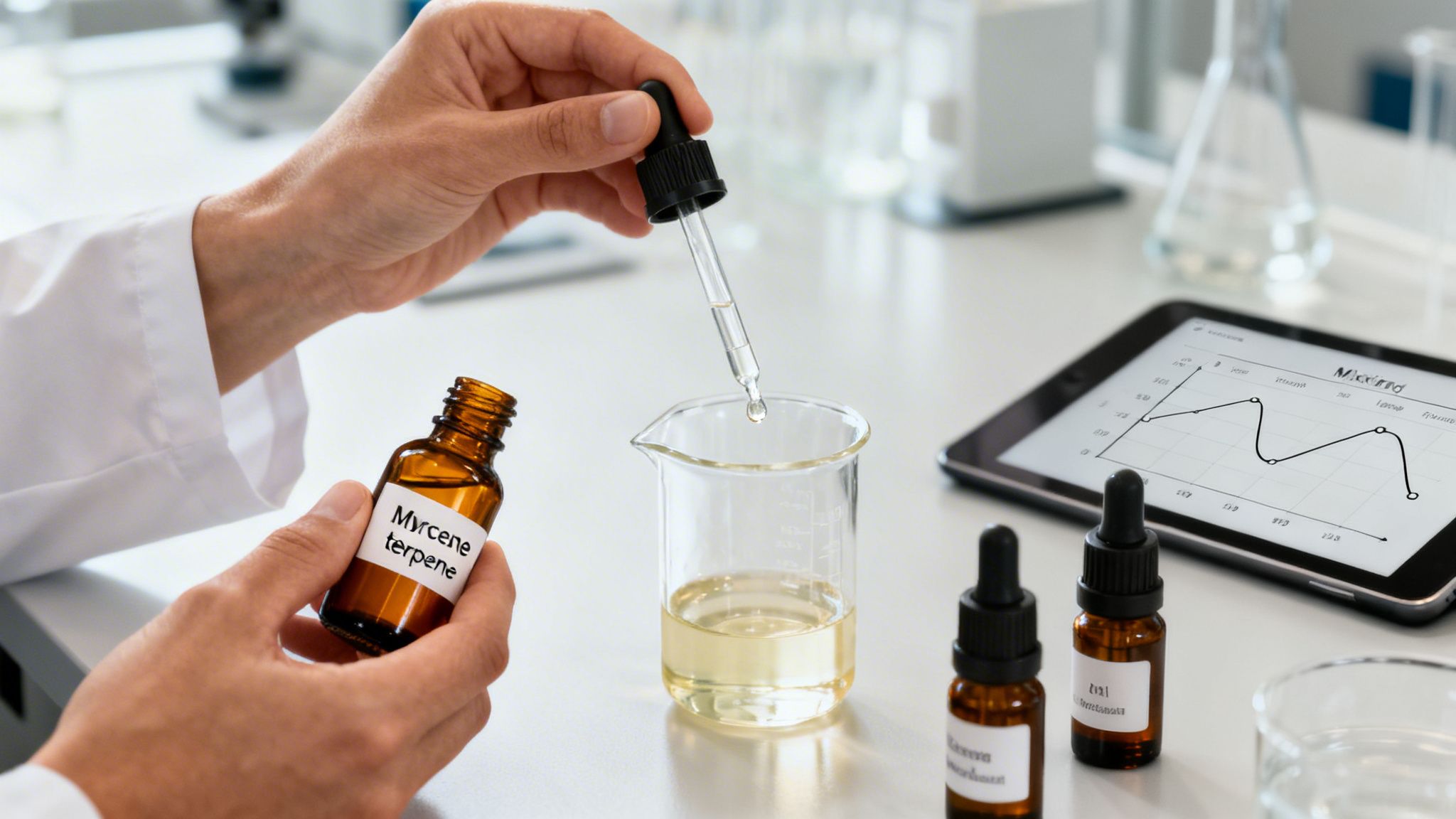
When building a product from the ground up, myrcene isn't just another isolate to throw in the mix. It's a core building block for creating consistent, high-quality vape cartridges, distillates, and edibles. Its power lies in its dual function as both an aromatic anchor and an effect modulator. For serious product development, understanding how to work with it is critical.
Aromatically, its signature scent is earthy and musky, often with subtle, spicy notes of clove or a hint of fruit. In a terpene blend, myrcene is the quintessential base note. It provides the deep, foundational rhythm that the brighter, more volatile top notes (like limonene or pinene) can build upon. Without a solid base like myrcene, a flavor profile feels thin and incomplete.
Steering the Experience
Beyond scent, myrcene is the primary tool for crafting relaxing or sedative experiences. This is the primary reason myrcene dominates so many popular strain profiles. It is present in over 50% of commercial cultivars, often making up 20-50% of the total terpene content in profiles like OG Kush and Granddaddy Purple.
Its sedative action is dose-dependent. The critical threshold appears to be around 0.5%—at concentrations above this level, myrcene significantly enhances entourage effects with cannabinoids, amplifying calming sensations.
By mastering myrcene, formulators gain precise control over two of the most critical aspects of product development: the sensory profile and the target user effect. It’s the cornerstone for creating products that deliver a consistent and predictable experience.
For any brand replicating classic calming strains or developing new wellness products aimed at relaxation, myrcene is a non-negotiable ingredient. Its unique ability to ground a flavor profile while simultaneously steering the product's functional outcome is what makes it a staple in every serious formulator’s toolkit.
To get a better handle on this, check out this in-depth terpene formulation guide.
For a quick-reference summary, we've put together a table outlining myrcene's key characteristics and its functional role in product development.
Myrcene At A Glance For Formulators
| Attribute | Description for Formulation | Target Application |
|---|---|---|
| Aroma Profile | Earthy, musky, slightly fruity/clove-like base note. Grounds the blend. | Creating foundational, full-bodied aromas in "Indica"-style profiles. |
| Viscosity | Moderate viscosity. Mixes well with cannabinoid distillates. | General use in vape cartridges, tinctures, and concentrates. |
| Boiling Point | 167°C (332°F). Relatively stable during processing. | Suitable for standard vaping temperatures and formulation processes. |
| Functional Effect | Promotes relaxation, sedation, and a calming physical sensation. | Formulations for sleep aids, pain relief, and evening relaxation. |
| Entourage Role | Enhances cannabinoid permeability and sedative effects, especially THC. | Products aiming for a strong, "full-body" psychoactive experience. |
| Typical Use Rate | 0.5% to 5%. The effect is strongly dose-dependent. | Start low and increase to achieve the desired level of sedation. |
This table serves as a solid starting point, but true mastery comes from hands-on experimentation and understanding how myrcene interacts with other terpenes and cannabinoids in your specific blend.
How Myrcene Shapes the Flavor and Aroma of a Blend
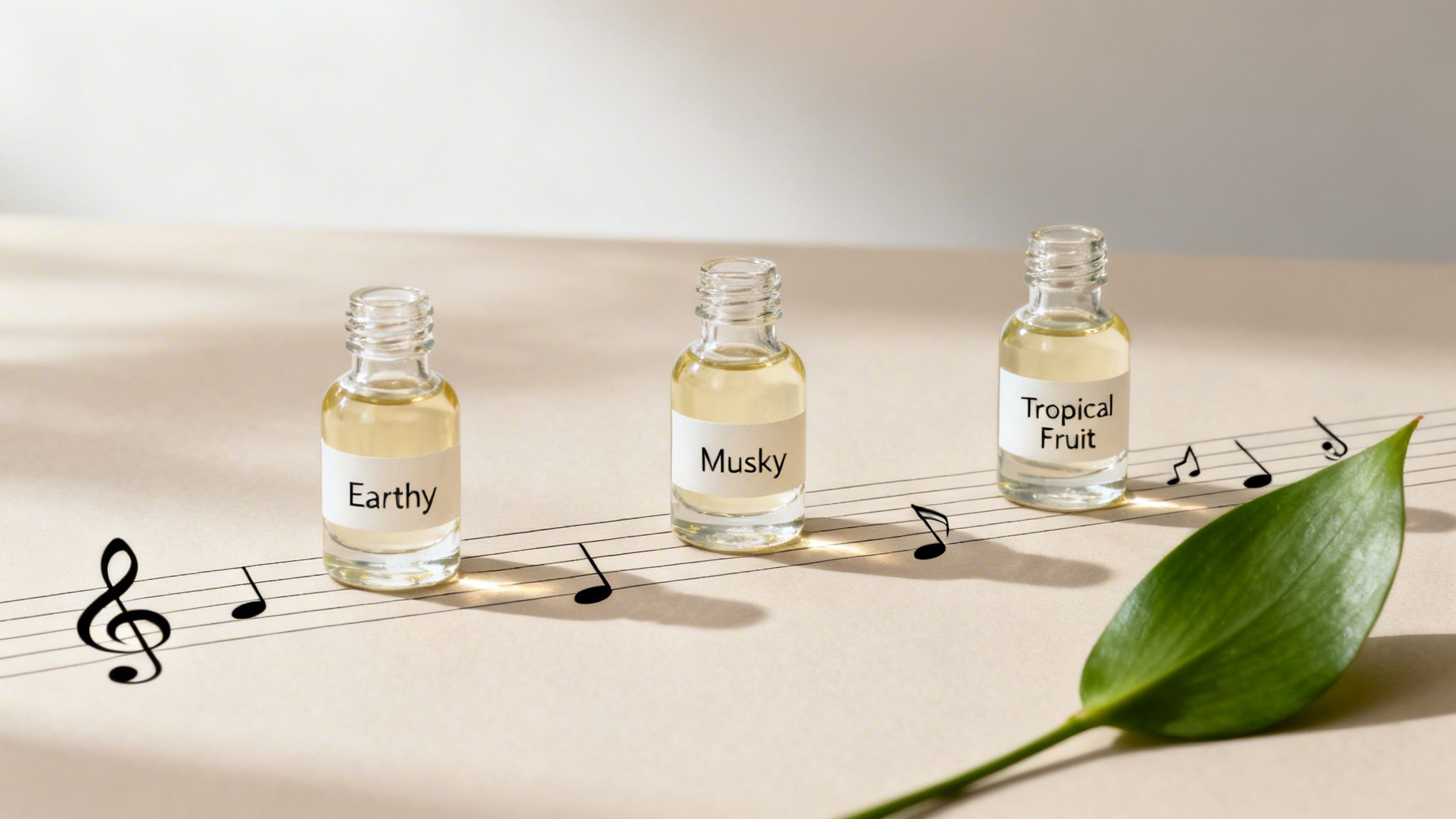
To become proficient in formulating with myrcene, one must look past the simple "earthy" and "musky" descriptors. Deeper analysis reveals subtle hints of spice, similar to clove, and a faint sweetness reminiscent of tropical fruits like mango. Understanding these nuances is the first step toward using myrcene to create a specific sensory experience.
In any formulation, myrcene is your anchor—a heavy, foundational base note. Because of its low volatility and heavy molecular weight, it persists long after the brighter, lighter top notes have dissipated. Without a solid myrcene base, many blends lack depth. They can taste "thin," overly sharp, or artificial, missing the rich, authentic character consumers expect from a quality cannabis profile.
Think of it as the bassline in a musical composition. It provides the rhythm and foundation that holds the entire piece together. The bright, citrusy melody of limonene or the sharp, piney accents of pinene need myrcene to ground them, creating a complete, full-bodied experience instead of just a collection of separate notes.
Building Depth and Stability
A significant challenge with volatile top notes is their rapid evaporation, which can throw a flavor profile off-balance. Myrcene functions as a fixative, binding to these lighter molecules and helping the flavor remain consistent from the first use to the last.
This stabilizing effect is especially crucial for products like vape cartridges and concentrates, where heat can completely alter flavor perception.
- Prevents "Thinness": Myrcene provides blends with necessary richness and body, preventing them from feeling weak or incomplete.
- Boosts Authenticity: Its signature earthy aroma is key to recreating the classic cannabis scent that defines many popular cultivars.
- Stabilizes Volatile Notes: It helps retain brighter terpenes, delivering a more consistent and well-rounded flavor throughout the product's lifecycle.
Nailing Strain Profiles with Precision
To accurately replicate a well-known strain, precise ratios are essential. In many myrcene-dominant strains, this single terpene can constitute anywhere from 20% to 50% of the entire terpene profile.
Consider a classic OG Kush profile. Myrcene is the dominant component, supported by mid-notes like caryophyllene and top notes like limonene. Expert formulators use high-purity myrcene to establish that foundational percentage first, then carefully layer in the other components.
A common error is underutilizing base notes. Formulators often focus so intensely on creating bright, fruity, or candy-like flavors that their products lack aromatic staying power. Myrcene provides the architectural support needed to build a complex sensory experience that endures.
By carefully controlling the concentration of pure myrcene, you can do more than just replicate existing strains—you can refine them. For a more robust "indica-style" profile, increase the earthy base. To ground a fruit-forward "sativa-style" blend without it becoming muddy, use a more subtle concentration. This level of precision distinguishes generic products from the unique, consistent ones that build brand loyalty. Strategic use of myrcene isn't just a detail; it's a sign of sophisticated product design.
Myrcene’s Role in the Entourage Effect
For formulators of advanced cannabis products, the entourage effect is the core principle of development. It is the concept that cannabinoids and terpenes work synergistically, creating effects that are more powerful and specific than any single compound could produce alone. THC may be the primary active, but myrcene functions as a key modulator, altering the entire character of the experience.
Myrcene is a true modulator in this chemical symphony. Its most significant proposed role is as a permeability enhancer. In simple terms, myrcene may help other molecules, like THC, pass through cell membranes more easily. This could facilitate cannabinoid passage across the blood-brain barrier, potentially leading to a faster, more pronounced user experience.
This interaction is precisely what formulators can learn to control. By adjusting myrcene levels, one can strategically steer the effects of a product.
Fine-Tuning Cannabinoid Effects
Understanding myrcene’s place in the entourage effect allows formulators to graduate from simply mimicking flavors to engineering specific experiences. It can be used as a strategic tool to amplify the natural properties of a cannabinoid base, whether that’s THC, CBD, or a blend of minor cannabinoids. This is where laboratory science meets real-world product design.
Consider a THC-dominant vape cartridge. By increasing the myrcene concentration, you can enhance the sedative, relaxing qualities often associated with THC. This is the mechanism behind the classic "couch-lock" effect. A product with 0.2% myrcene will offer a noticeably different experience than one with over 0.5%, even if the THC percentage is identical.
By mastering myrcene dosing, you can create entirely different product lines from the same batch of distillate. A high-myrcene blend becomes your "relax" or "sleep" offering, while a lower dose, perhaps balanced with limonene, can be positioned for a more mellow, daytime experience.
The same logic applies to CBD formulations. When creating a CBD tincture or topical for relaxation, a significant concentration of myrcene can enhance its perceived effectiveness. The terpene works in concert with CBD to produce a more profound sense of physical calm—a tangible benefit that can differentiate a product in a crowded market.
Practical Tips for Formulation
Harnessing the entourage effect requires a precise, methodical approach. Using a generic "indica" blend is insufficient for products aiming for consistency and reliability.
- Establish a Baseline: Begin with a myrcene concentration around 0.5% of the total volume. This is generally a good starting point for achieving noticeable relaxation.
- Make Incremental Adjustments: From there, test your blend by increasing the myrcene in 0.25% increments. This allows you to dial in the desired effect without overpowering the flavor profile.
- Create Synergistic Blends: Pair myrcene with other terpenes that support its intended function. For a sleep-focused product, for instance, combining myrcene with linalool and a hint of beta-caryophyllene can create a deeply sedative formulation.
This level of granular control is what allows you to build a portfolio of products with predictable, repeatable effects—the cornerstone of consumer trust and brand loyalty.
While its sedative and permeability-enhancing properties are its claim to fame, the science on myrcene is still evolving. Recent studies on its potential are putting it on the radar for even more innovative uses. A 2023 study, for instance, explored its effects on certain cell lines.
As a highly prevalent terpene in cannabis, myrcene's ability to cross the blood-brain barrier is central to its function. You can dive deeper into these promising findings by reading the full research paper.
Formulating With Myrcene for Vapes and Concentrates
Moving from theory to practical application, myrcene is one of the most powerful tools for formulating vape cartridges and concentrates. It is the go-to for adjusting viscosity, anchoring a flavor profile, and steering the user experience toward a relaxed or sedated state. Mastering this is the difference between a generic product and a top-shelf staple.
The first critical factor is percentages. Myrcene, like all terpenes, is a natural solvent. It reduces the viscosity of thick cannabinoid oils like distillate. This is essential for proper wicking in vape cartridges, but it’s a delicate balance. Too little, and the oil is too viscous; too much, and you risk leaks and a harsh, overwhelming flavor.
This flow chart provides a visual representation of how myrcene may facilitate cannabinoid transport, a key aspect of its role in the entourage effect.
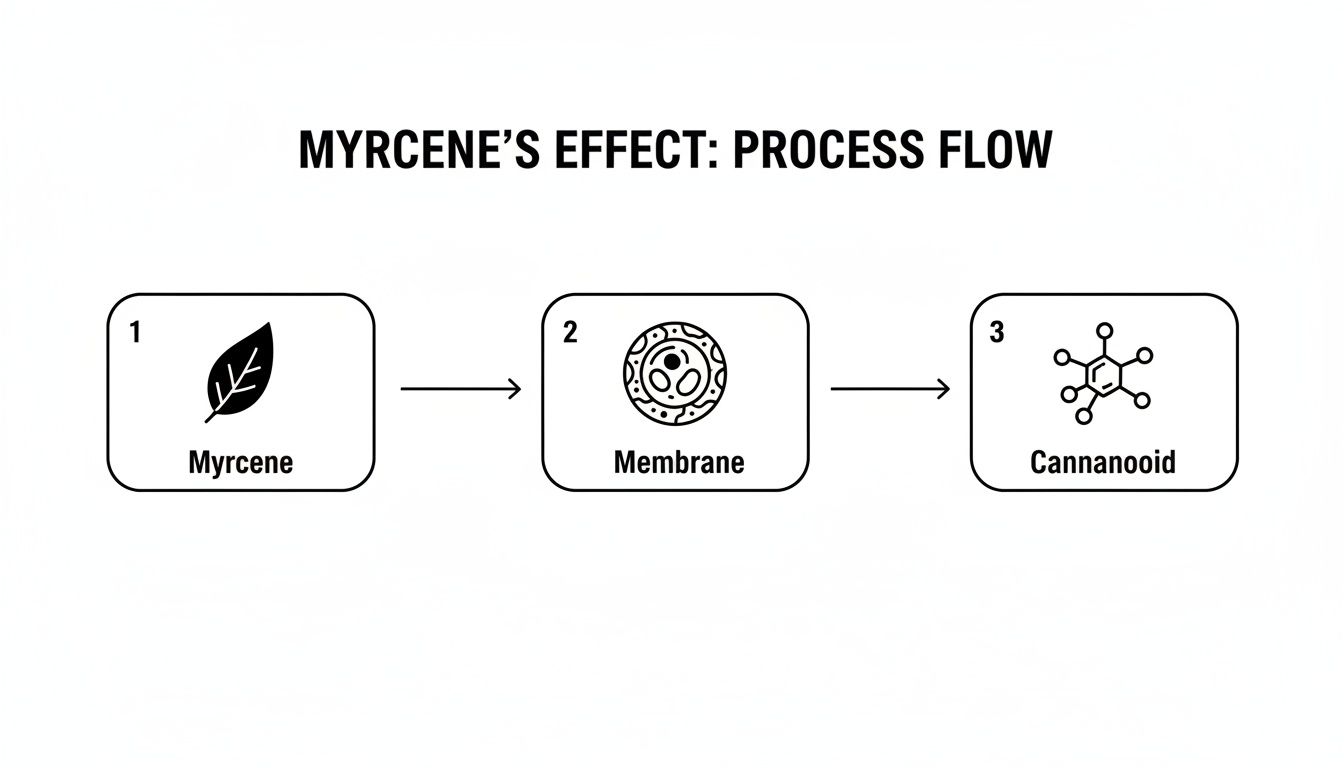
As shown, it essentially acts as a facilitator, potentially helping cannabinoids pass through cell membranes more easily. For formulators, this means myrcene can be key to unlocking a more potent and effective product.
Nailing the Ratios and Getting a Perfect Mix
Precision is paramount. The goal is a perfectly homogenous mixture where terpenes are evenly distributed throughout the oil. This ensures every activation of a vape cartridge delivers the exact same flavor and effect—the hallmark of a professional, reliable product.
A solid starting point for total terpene concentration in distillate is between 5% and 10% by weight. Within that blend, the percentage of myrcene will define the final character. For example, when replicating a classic OG Kush, myrcene might constitute 30-40% of that total terpene blend.
Here’s a process for a smooth, consistent mix every time:
- Warm the Distillate: Gently warm your distillate to around 40-50°C to reduce its viscosity and make it easier to work with.
- Measure Meticulously: Use a calibrated scale. Always add your terpenes to the distillate, not the other way around.
- Mix Thoroughly (But Gently): Stir slowly but completely. For larger batches, a magnetic stirrer is ideal. Mix until no streaks or separation are visible. Avoid aggressive mixing, which can introduce air bubbles and degrade delicate terpenes.
A critical mistake is "eyeballing" ratios. Do not do it. Even a minor miscalculation can compromise viscosity, ruin the flavor, and completely alter the effect. A simple terpene mixing calculator eliminates guesswork and ensures repeatable results.
From Strain Replication to Custom Blends
Myrcene is the backbone of many iconic, relaxing strains. Its earthy, slightly fruity musk is the signature of profiles like Blue Dream and Granddaddy Purple. When building a strain profile from scratch, consider myrcene your foundational note.
Start with the correct myrcene percentage, ideally based on a Gas Chromatography (GC) analysis of the target strain. Then, layer in other terpenes—beta-caryophyllene for spice, limonene for a citrus lift—to complete the profile. This methodical approach is key to creating authentic, accurate profiles.
Myrcene is also a fantastic component for creating novel blends with a specific functional goal. To create an ultra-sedating "Sleep" formula, combine a high concentration of myrcene with linalool. For a more mellow and relaxed but not incapacitating experience, balance a lower level of myrcene with more uplifting terpenes. For a more energetic profile that still has a solid base, you can analyze the terpene profiles of legendary strains like Sour Diesel. In fact, you can learn more about how classic profiles are constructed to get inspiration for your own unique formulas.
When crafting your own blends, having a set of starting points can be incredibly helpful. The goal is to use myrcene as a lever to achieve a desired outcome.
Here’s a quick guide to help you get started on your own formulations.
Myrcene Formulation Ratios for Targeted Effects
| Target Effect | Suggested Myrcene % (in total terpene blend) | Paired Terpenes (Examples) | Formulation Notes |
|---|---|---|---|
| Heavy Sedation / "Indica" | 35% – 50% | Linalool, Beta-Caryophyllene, Terpinolene | The high myrcene content provides the classic "couch-lock" base. Linalool enhances the sedative, calming effect. |
| Relaxation / "Hybrid" | 20% – 35% | Limonene, Alpha-Pinene, Beta-Caryophyllene | A balanced approach. Myrcene provides relaxation without being overpowering, while limonene and pinene add a gentle lift. |
| Mild Calm / Mellow Focus | 10% – 20% | Limonene, Alpha-Pinene, Valencene | Myrcene takes a backseat here, acting as a grounding note to prevent the blend from becoming too racy or anxious. |
| Flavor Foundation | 5% – 15% | Varies widely based on target profile | Used in lower concentrations to add that classic earthy, musky base note without heavily influencing the sedative effects. |
Remember, these are just starting points. The real innovation occurs during experimentation and fine-tuning these ratios to create a proprietary product.
Keeping Your Product Stable and Performing Flawlessly
Myrcene doesn't just impact flavor and effect; it also affects the physical stability of your product. As a monoterpene, it's fairly stable, but it must be protected from oxidation, which can create off-flavors. Always store your pure myrcene and finished blends in cool, dark, airtight containers.
Ultimately, the viscosity dialed in with myrcene directly translates to performance in a vape cartridge. A well-formulated oil will wick perfectly, producing a smooth, flavorful vapor. A poorly formulated oil will either be too thick and taste burnt, or too thin and leak. Both scenarios lead to customer dissatisfaction and damage brand reputation. Testing your final oil blend in the exact hardware you plan to sell is the final, crucial step to guarantee a premium product that performs reliably every single time.
Tapping Into Myrcene's Power for Pain Relief
While known for its calming qualities, myrcene’s potential in analgesic and anti-inflammatory applications presents a significant opportunity for modern wellness products. This opens up new avenues for formulators creating topicals, tinctures, and functional vape blends geared toward physical recovery and relief.
Pre-clinical research consistently shows myrcene’s interaction with the body’s pain and inflammation pathways. Studies suggest it actively modulates the signals that cause pain, making it a scientifically-sound ingredient for functional products.
Formulating for True Synergy
Myrcene's potential is amplified when combined with other compounds that have complementary effects, creating a blend that is more powerful than the sum of its parts. This is where skilled formulation creates value.
One of the best partners for myrcene is Beta-Caryophyllene. While myrcene handles general muscle relaxation and broad analgesic effects, Beta-Caryophyllene directly engages the body's CB2 receptors, which are critical for controlling inflammation.
- Myrcene's Role: Lays the foundation with muscle-relaxant and general pain-soothing properties.
- Beta-Caryophyllene's Role: Targets specific inflammation pathways by interacting with CB2 receptors.
- The Result: Together, they create a more comprehensive solution for physical comfort, addressing both pain perception and its underlying inflammation from two different angles.
This combination should be a primary consideration for any brand developing effective products for the wellness and recovery market.
Putting It Into Practice: Topicals and Tinctures
For topicals, dosage is key. Scientific studies have found that myrcene concentrations between 0.2% and 0.5% are necessary to observe measurable muscle-relaxant effects. This provides formulators with a concrete, evidence-based target for creating creams, balms, and salves.
A significant error is treating terpenes solely as fragrance. To create a truly functional product, myrcene must be treated as an active ingredient and dosed with the same precision as cannabinoids.
Research shows myrcene is a potent ingredient for pain management formulations. In some studies, it has been shown to reduce key inflammation markers by up to 40% when combined with CBD. This is vital information for anyone creating functional cartridges, such as those based on the Forbidden Fruit profile from Gold Coast Terpenes.
For topicals, these effects can be enhanced by using penetration enhancers like dimethyl isosorbide, which helps deliver active compounds deeper into the skin where they are needed. You can learn more about how myrcene contributes to wellness formulations to get the full picture.
By leveraging these formulation principles, brands can offer more than vague promises. They can create products with a solid scientific foundation that appeal to discerning customers seeking targeted relief, building trust and loyalty in a competitive market.
Safety and Quality Control Considerations
When bringing a product to market, the safety and regulatory status of every ingredient is paramount. Myrcene has a clear and well-established safety profile, with a long history of use in the food and beverage industry.
Myrcene is designated as Generally Recognized as Safe (GRAS) by the U.S. Food and Drug Administration (FDA) for use as a flavoring agent. For any formulator, this provides a solid regulatory footing for using myrcene in products like tinctures and edibles, simplifying compliance.
Sourcing High-Purity Myrcene
This regulatory backing is only meaningful if the myrcene used is pure. The difference between a high-purity, lab-tested isolate and a low-grade extract is substantial. Poor quality terpenes can contain residual solvents, pesticides, and other contaminants that pose liability risks and compromise product consistency.
Therefore, partnering with a supplier that provides a detailed Certificate of Analysis (COA) for every batch is non-negotiable. A COA is verification that the myrcene is clean, pure, and free from any adulterants.
Sourcing high-purity, lab-verified myrcene is the single most important quality control step in formulation. It eliminates contaminants, ensures flavor consistency, and protects your brand's reputation by delivering a safe, predictable user experience every single time.
Proper Handling and Storage Protocols
Once high-purity myrcene is secured, its integrity must be protected. Myrcene, like all monoterpenes, is sensitive to heat, light, and air. Oxidation can degrade its aroma, creating harsh flavors and weakening its effects.
To maintain myrcene's quality, adhere to these strict protocols:
- Airtight Containers: Store it in airtight containers—glass or stainless steel are optimal—to prevent oxygen exposure.
- Cool and Dark Environment: Keep containers in a cool, dark place, away from direct sunlight and heat. Refrigeration is ideal for long-term storage.
- Minimize Headspace: Use containers appropriate for the volume of terpene. Less empty space reduces the amount of oxygen that can cause degradation.
Following these simple quality control steps ensures the myrcene in your products performs as expected. These professional standards are the foundation for creating high-quality, reliable products that build consumer trust. To see how seriously we take ingredient integrity, feel free to review our terpene safety documentation.
Common Questions About Myrcene Formulation
As you refine your product formulas, specific technical questions are likely to arise. Here are answers to common challenges formulators face when working with myrcene.
What’s the Sweet Spot for Myrcene to Get Sedative Effects?
While individual experiences vary, industry best practices provide a solid guideline. To achieve relaxing or sedative myrcene terpene effects, a concentration over 0.5% of the total product volume is the generally accepted baseline.
For creating a heavy "couch-lock" profile found in classic OG Kush strains, a more aggressive approach is needed. Formulators often push myrcene to constitute 20% to 50% of the total terpene blend. Test incrementally, as excessive concentrations can cause the earthy, peppery flavor to overpower more subtle notes in the profile.
How Does Myrcene Affect the Viscosity of My Distillate?
Like nearly all terpenes, myrcene is a natural solvent and will reduce the viscosity of thick cannabinoid distillates. Its effect is more moderate than a highly fluid terpene like limonene, but it must be accounted for in formulation.
This thinning action is crucial for the proper function of vape cartridges. A reliable mixing calculator is an indispensable tool here. It helps balance your target terpene percentage with the final viscosity needed to avoid leaky cartridges (oil too thin) or poor wicking (oil too thick).
Chemically, the myrcene molecule is identical regardless of its botanical or cannabis origin. For formulators, the critical factors for achieving replicable results are purity and consistency, not the source.
Can I Use Myrcene from Botanical Sources and Get the Same Results?
Yes. The key advantage of a high-purity isolated myrcene is that you are working with only the myrcene molecule, free from other compounds present in less refined extracts. This purity provides precise control over both flavor and the final effect.
When sourcing ingredients, the Certificate of Analysis (COA) is the most important document—it matters far more than the myrcene's origin. Lab-verified purity, whether from a botanical or cannabis source, is what guarantees your formula is consistent, safe, and effective every time. This level of quality control is fundamental to building a trusted brand.
Ready to create products with consistent, reliable effects? Gold Coast Terpenes offers lab-verified, high-purity myrcene isolate and expertly crafted strain profiles to help you achieve your formulation goals. Explore our full selection at https://www.goldcoastterpenes.com.