
Many shops still treat an AK-47 strain listing as a recipe they can pour into a tank. Gold Coast Terpenes makes 100% botanically derived terpene blends for cartridges and formulation, so the flavor in a cart is a designed blend built to a sensory target. Those inputs are THC-free and formulated without VG, PG, PEG, or MCT. A menu page that repeats one potency band and one mood story does not give a chromatogram you can hit again next month.
Retail naming and plant chemistry have already split. A compiled set of lab results puts typical AK-47 flower near 13–20% THC and under 1% CBD, with one multi-source average at 16.6% THC, according to Weedpedia. Leafly listed the cultivar at 19% THC and 0% CBD in 2025. JointCommerce put an average near 24.6% THC and 1.1% CBD in a 2026 write-up. One 2026 flower listing from Ivy Hall Dispensary showed 22.017% total THC, 0.108% total CBD, and 2.19% total terpenes.
Those figures cannot be averaged into a spec. They show why a strain name works better as a myrcene-led sensory target than as a genetic promise for a THC-free botanical blend. The SKU should say sensory reference. Potency belongs on the distillate COA. Aroma belongs on a terpene formula you can weigh, dilute, and rerun when the reference lot changes.
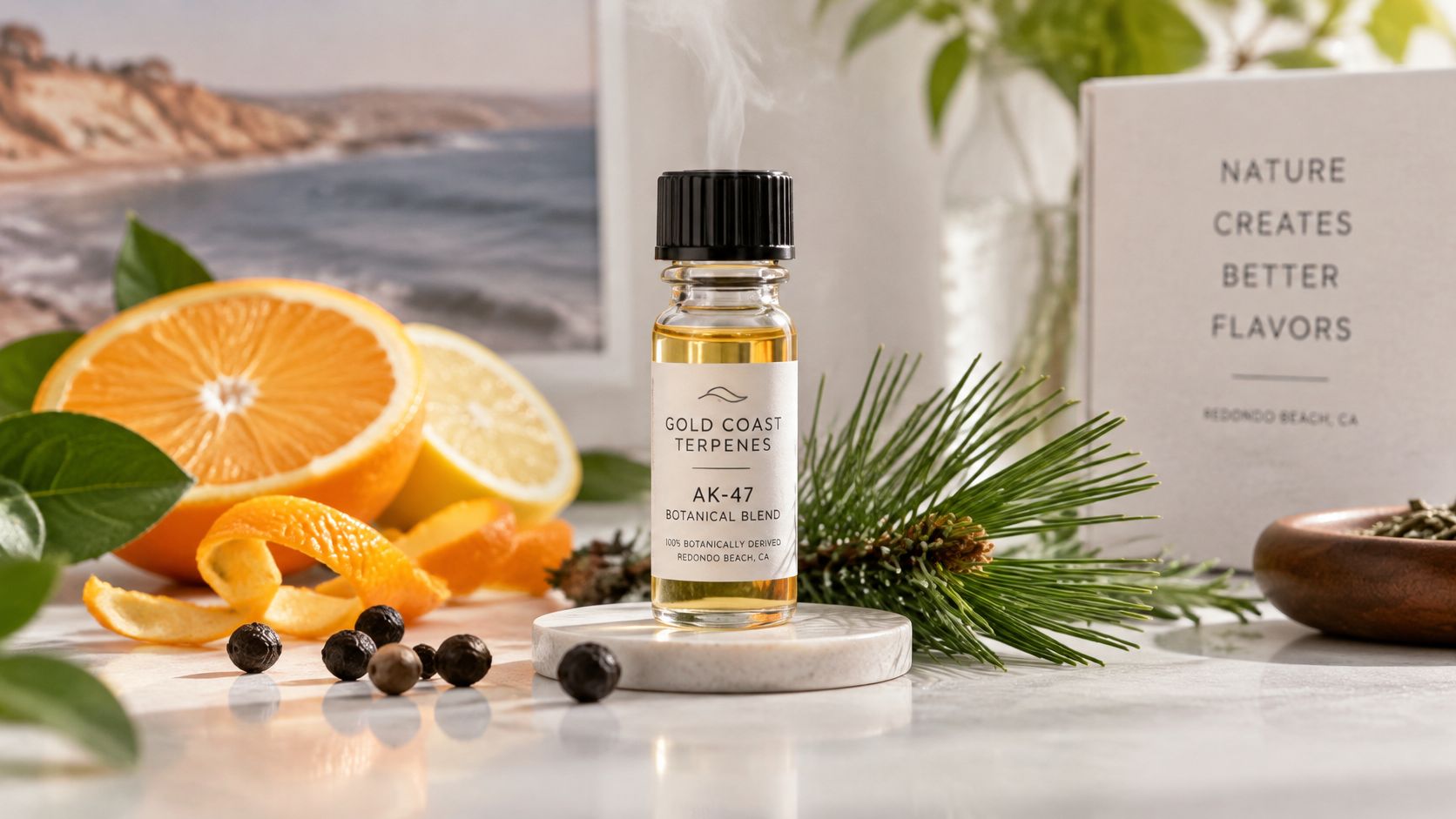
What a name can and cannot lock
Brand memory: Buyers recognize the name from decades of cups and coffeeshop menus. That recognition sells a flavor direction. It does not freeze a chemotype.
Lot drift: Grower, cut, harvest, dry room, and extraction each move cannabinoids and volatiles. Two jars with the same label can smell related and still fail a side-by-side panel.
Label language: "Strain-inspired" is an honest commercial claim. "Same genetics" is not, unless you are selling that exact plant.
Practical rule: If the only document behind a quote is the strain name, you do not have a formula yet.
Which Terpene Ratios and Note Roles Start the Blend
Start from a myrcene-led set of anchors, about 0.5% myrcene, 0.3% beta-caryophyllene, 0.2% pinene, and 0.2% limonene, taken from compiled flower averages, not from a promise that every lot matches them. CannaConnection's strain notes via Cannigma treat AK-47 as a variable chemotype and use that four-compound pattern as a starting framework for spicy, woody, and citrus accents.
Gold Coast Terpenes lists more than 50 indica, sativa, and hybrid profiles and adds new profiles each month. Formulators there use this pattern as architecture, then match it with botanical isolates against a reference COA. The table is a brief. Genotype, harvest maturity, drying, storage, and extraction move both totals and ratios.
Note roles before you scale
| Terpene | Compiled average | Note role | Formulation job |
|---|---|---|---|
| Myrcene | about 0.5% | Base | Heavier herbal and earthy body |
| Beta-caryophyllene | about 0.3% | Mid | Peppery woody spice that lingers |
| Pinene | about 0.2% | Top-mid | Sharper pine and woody lift |
| Limonene | about 0.2% | Top | Bright citrus on the first aroma |
Myrcene is the base. It keeps the blend from reading as generic citrus once the bright compounds flash off a warm coil. Without enough of it, tasters call the oil "lemon cleaner" and miss the herbal weight people associate with the name.
Beta-caryophyllene is the mid-note. Pepper and woody spice are what still reads after the top note is gone. That bite is the part cartridge teams lose first when they chase a louder citrus top.
Pinene sits between mid and top. It is the sharper woody lift, not a second base. Too much and the dry pull goes toward solvent-pine. Too little and the profile feels flat and sweet.
Limonene is the top note and the first thing on a dry pull. It should announce the oil, then step back. It is not the whole AK-47 strain impression.
Scale the anchors to 100 parts
The four averages sum to about 1.2 percentage points of flower terpenes. For a concentrate blend, scale them to 100 parts of terpene oil:
- Myrcene, 42 parts. That is 0.5 divided by 1.2, rounded. This is the body you protect when you later change total load.
- Beta-caryophyllene, 25 parts. Pepper stays in proportion to the herbal base.
- Pinene, 17 parts. Woody lift without taking the top.
- Limonene, 16 parts. Citrus on the open, not a candy top.
Weigh those parts as the strain-inspired terpene blend, then correct them. Pull the reference flower or oil COA, compare the top four, and nudge only the compounds that miss the panel. A bench that smells right in the beaker can still be wrong for distillate, because distillation and cartridge heat change the balance you just set.
Lock the reference COA before any cartridge trial. A sensory panel without that sheet is a preference vote, not a specification.
Use a mixing ratios calculator when you convert parts into grams for a pilot jar. Record the lot of each isolate. If the next botanical lot shifts odor, you will know whether the flower target moved or the ingredient did.
What the Landrace Lineage Means for Flavor Matching
Four landrace regions in one pedigree explains why buyers expect a hybrid aroma. It does not hand you a formula. An interview with Serious Seeds states that the company was established in 1994 and that breeder Simon created AK-47 that same year from Colombian, Mexican, Thai, and Afghan landrace lines. The exact pedigree stays proprietary.
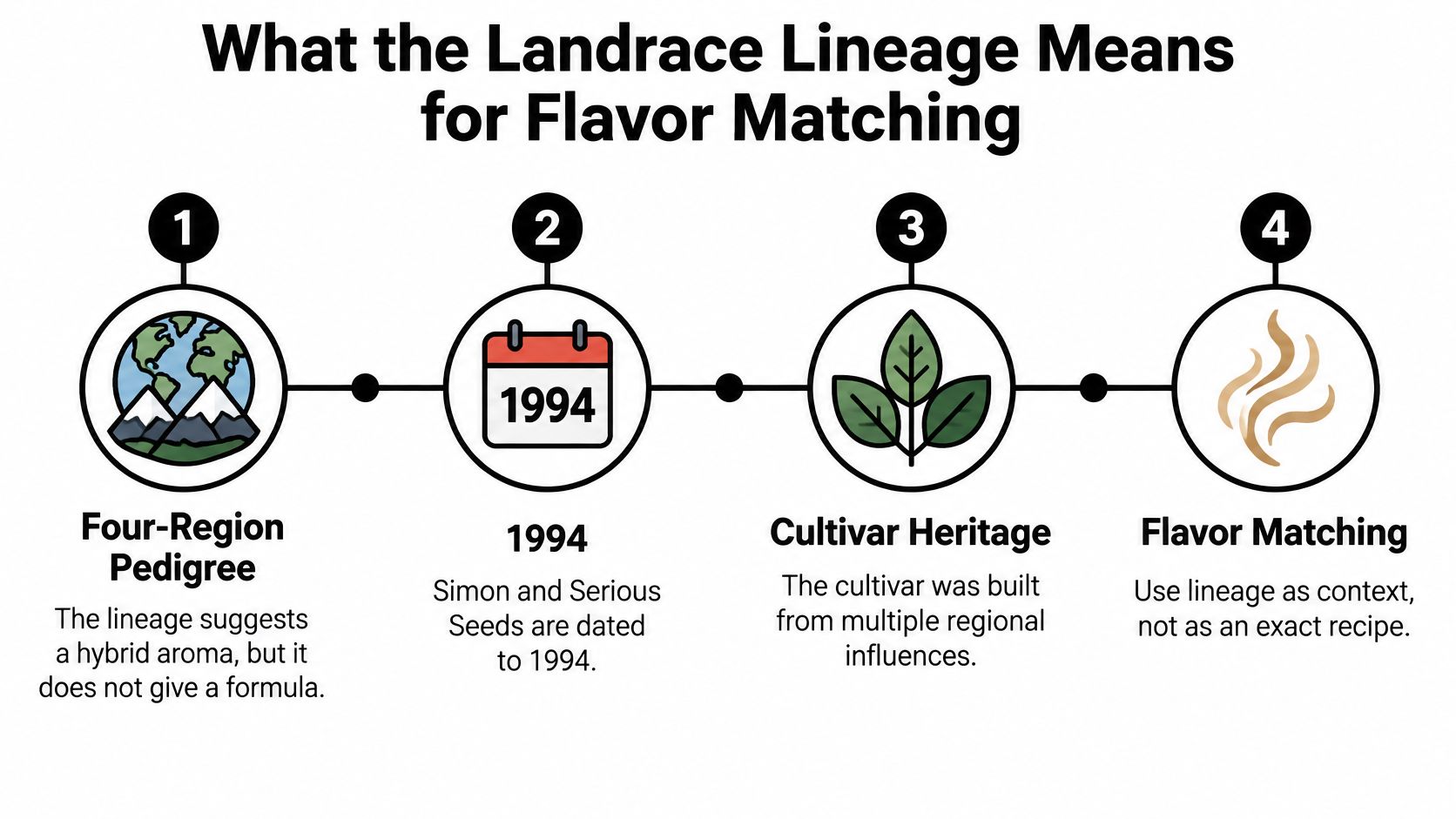
That places the cultivar in the first wave of internationally marketed modern hybrids, not in a single-landrace bucket. For flavor matching, each parent region is a hypothesis a panel can test, not a guaranteed note. The lineage tells you where to look. The COA tells you what you have.
How to read the parents on a blotter
Colombian and Mexican lines are often read as brighter and more citrus-herbal. If a candidate blend opens harsh and sweet, like a dessert vape, it is already off this memory.
Thai lines are often read as sharper and more aromatic. That supports a clean pine-citrus lift, not a heavy floral perfume.
Afghan lines are often read as heavier, earthier body. That is the argument for a myrcene base under the citrus, rather than a fruit-candy profile with no herbal floor.
Three bright parents against one heavy one sketches the target: a myrcene-led blend with citrus and pine riding on top. Gold Coast Terpenes builds lab-checked botanical interpretations, not plant extracts of a named cut. A vape brand can keep flavor steady when the flower supplier changes cuts, because the target is the aroma brief, not the greenhouse. The blend stays a sensory spec, THC-free and reproducible, instead of a genetics claim no cartridge can verify.
Why the cups matter to a label
Serious Seeds reports 27 awards for the cultivar. That record is why the name still works on a package and why buyers arrive with expectations already set. It is not evidence that today's oil matches 1994 flower, and it says nothing about the terpene load in your jar.
A label can say strain-inspired AK-47. It should not say the oil is those genetics. The panel brief stays short: herbal body, pepper, pine, citrus. No candy claim.
The short clip below shows how widely the name circulates, which is a marketing fact, not an analytical one.
Why a Batch COA Beats the Strain Name
Buy or blend against the batch certificate of analysis, because products sold as one chemovar do not share one chemistry. In a Nevada dataset published in PLOS One, 2,662 samples were sold under 396 chemovar names, while terpene measurements grouped them into only three broad clusters, led mainly by beta-myrcene, gamma-terpinene, or limonene. A large U.S. commercial analysis in the same body of work found wide phytochemical spread inside popular names.
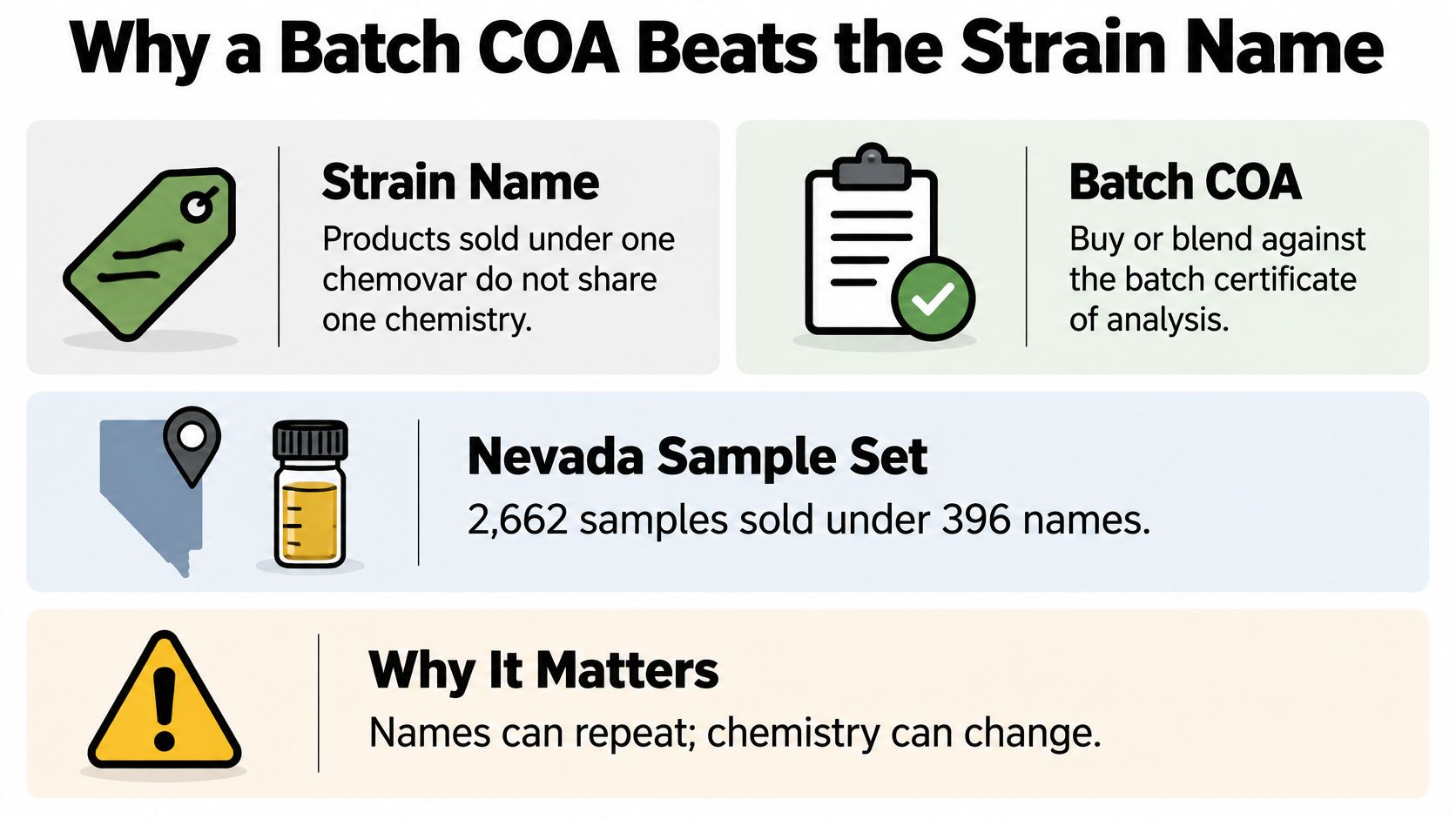
Apply that to this name. One lot can be myrcene-forward and herbal. Another can sit relatively higher in limonene or pinene and still carry the same retail title. A third can show total terpenes near the flower listing you just filed, while a compiled average looks nothing like that jar. The name did not fail. It was never a chemical ID.
Fields to copy onto the spec sheet
Total THC, if the base oil is cannabinoid distillate. Terpenes do not set this number. The distillate lot does.
Minor cannabinoids. They will not build the AK-47 strain aroma, but they belong on the release record so a later complaint is not blamed on the flavor oil.
Top ten terpenes, with units. Percent of oil and ppm are not interchangeable. Write the unit next to every line.
Lab method. A headspace result and a liquid injection result can rank the same sample differently. Match the method when you compare flower target to finished oil.
Distillation and winterization strip or shift volatiles. The flower COA sets the sensory target. The finished-oil COA is the release test. If those two sheets disagree, fix the blend or the process. Do not "average" them into a story.
Botanical terpenes versus cannabis-derived fractions
| Choice | What stays stable | What you inherit |
|---|---|---|
| Botanical, strain-inspired blend | Repeatable isolates, THC-free labeling across markets | You must design the aroma. You do not inherit a harvest. |
| Cannabis-derived terpene fraction | Closer tie to one harvest's volatiles | Lot drift, possible residual cannabinoids, harder cross-market labels |
Gold Coast Terpenes supplies botanical, not cannabis-derived, blends and labels them as strain-inspired profiles. That is the practical side of the Nevada finding. A repeatable myrcene-, caryophyllene-, or pinene-forward blend can rebuild a chosen aroma. It cannot promise how a person will feel. Do not write relaxation, uplift, or anxiety outcomes onto myrcene, pinene, limonene, or caryophyllene.
Reject a supplier quote that offers only the strain name. The comparison method for COAs and label language is laid out in this certificate of analysis guide.
A chemovar name is a filing label. The chromatogram is the purchasing document.
How to Load the Blend for Distillate Cartridges
Start near a 9:1 cannabinoid-to-terpene model, about 10% terpenes by mass, then move only as far as viscosity, leaks, and flavor allow. Published vaping research used that 9:1 THC-to-terpene ratio as a practical concentrate model and found that higher terpene shares can make the oil too fluid and leak from a pen, according to a 2025 methods paper in PMC. Hardware, cannabinoid cut, temperature, and which terpenes dominate all change flow. Do not copy 10% onto every tank.
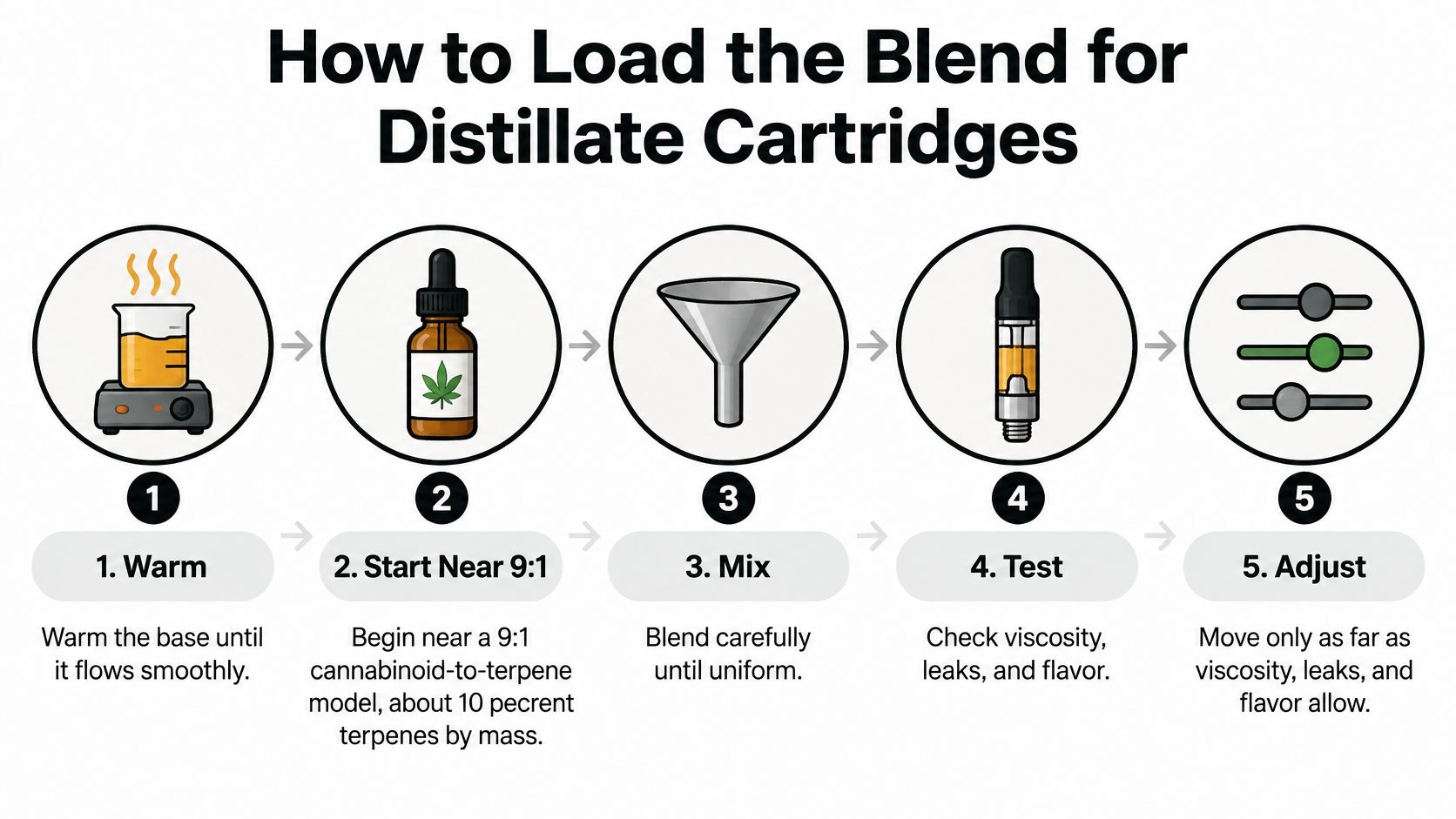
Keep the myrcene-heavy internal ratio fixed in this test. Change only total load. If you rewrite the note balance and the percentage on the same day, you will not know which change caused a leak or a thin aroma.
Bench run
- Warm winterized distillate until it stirs cleanly. Record viscosity before any terpene goes in. Cold, thick oil hides a later leak.
- Pre-dilute the highly concentrated AK-47-inspired blend so a small addition can be weighed. Neat isolate blends are easy to overdose by a few drops.
- Make three jars at 8%, 10%, and 12% terpenes by mass. Those brackets sit around the 9:1 model without turning the trial into a scavenger hunt.
- Mix until clear. Note color, odor in the jar, and whether the oil sheets on the glass or stays put.
- Fill the cartridge you will sell. A different tank, wick, or airway is a different product.
- Stand filled units upright and inverted at production temperature. A pass on the bench at a cooler lab bench is not a pass in a warm fill room.
- Pull a short sensory set: dry pull, first puff, mid-session. You are checking whether pepper and herbal body survive, not scoring a mood.
- Hold retains for the brand's normal shelf window. Recheck leaks and aroma. Flavor that only exists on fill day is not a SKU.
Gold Coast Terpenes publishes dilution guidance for this weighing step, including a walkthrough on how to mix distillate with terpenes. Use it for the math. Use your hardware for the verdict.
What each check is allowed to decide
| Check | Starting point | What to measure | Fail signal |
|---|---|---|---|
| Cannabinoid-to-terpene model | 9:1, about 10% terpenes by mass | Viscosity before and after addition | Oil too fluid for the hardware |
| Published cartridge range | Loads tested beside the 9:1 start | Fill weight and leak orientation | Seepage at production temperature |
| Flavor versus load | Hold the four-note ratio and change only total terpene mass | Dry pull and stored aroma | Citrus only, herbal body gone |
Pass rule: no leak, repeatable fill weight, and the pepper-herbal character still present after storage. A louder jar that weeps at the mouthpiece is a failed oil, not a "bolder" AK-47 strain expression.
What Coil Heat Does to the Inhaled Aroma
The jar is not the puff, so limonene and beta-caryophyllene have to be checked in the liquid and in the aerosol. A review of vape oils notes that cartridges may contain about 10–20% terpenes by weight and can generate aerosols with roughly 2,500–5,000 ppm total terpenes, and separate analytical work found that heating increased both the number and the amount of terpenes seen in vapor, as summarized in Frontiers in Psychiatry. Dominant vapor-phase compounds in that work included beta-caryophyllene, D-limonene, alpha-humulene, linalool, and terpinolene.
What usually shifts on this profile
First puff: Limonene can make the aerosol sharper and more citrus than the bottled oil. If the dry pull was balanced and the first puff tastes like solvent-citrus, the top note is over-delivering under heat. Ease limonene before you add more of everything.
After the top fades: Beta-caryophyllene and the herbal base should still be there. If the pepper disappears by mid-session, support caryophyllene rather than raising total load. A higher load that already leaks will not fix a missing mid-note.
Unexpected peaks: Alpha-humulene can show a hoppy edge in vapor even when it was not a lead on the flower average. Do not call that contamination until you have checked the coil, the puff, and the hardware. Linalool or terpinolene peaks deserve the same check. They may be heat-emphasized traces, not a mis-weighed jar.
Three samples, one sheet
Unheated filled oil. This is the formula you think you made.
First-puff aerosol. This is what the buyer meets.
Aerosol from a cartridge aged under the brand's normal store conditions. This is what you still have after distribution.
Record coil temperature, puff length, terpene load, and hardware on that same sheet. A useful reference for setting the temperature line, without treating it as a medical setting, is this note on optimal vaping temperature. Gold Coast Terpenes documents blends for formulation use and expects each brand to validate aerosol in its own hardware. These measurements are for flavor accuracy and exposure awareness. They are not therapeutic evidence.
Freeze the winning liquid ratio only after the aged-puff check passes. A blend that is right on day one and sharp after two weeks is not locked.
Lock the Blend and Place the First Order
Adopt the blend only if the COA-matched sensory panel, the leak test, and the aged aerosol all pass. If one fails, change load or note balance before you name an SKU.
Decision block: myrcene as the base, beta-caryophyllene as the mid, pinene and limonene as the tops, a first distillate load near 10% by mass, confirmed in cartridge. That is a formulation decision, not a plant identity. The strain name sets the aroma target; the COA and the aerosol data decide whether the liquid earns it.
What to order against
All strain profiles from Gold Coast Terpenes are highly concentrated and need to be properly diluted before they go into oil. Multiple strains can be ordered together, and wholesale pricing applies on strain orders totaling over 64 oz. The strain profile, the mixing calculator, and the formulation guides live on the supplier site, not on a consumer menu. Order the diluted-use profile after the hardware checks, not before.
That sequencing matters. A blend sized to a leak-free cartridge at 10% load is a different order than a speculative pallet. Run the checks first, then buy to the run.
FAQ
Is an AK-47 strain terpene blend from Gold Coast Terpenes cannabis-derived?
No. Gold Coast Terpenes makes botanically derived, THC-free blends. The profile is a sensory interpretation built for distillate and cartridges, not an extract of a named plant.
Can the name guarantee effects?
No. Use the name for aroma only. A myrcene-led botanical blend gives you a sensory target to match against a batch COA; it is not a effects claim a cartridge brand should put on a label.
What minimum should a brand test?
Three loads around 10% terpenes by mass, in the hardware you will ship. Gold Coast Terpenes can supply the concentrated blend. Your leak, fill-weight, and aged-puff data decide the SKU.
How should the label read?
"Strain-inspired AK-47 terpene blend," with the botanical source stated and no genetic-identity claim. The wording should match what is in the bottle.
When is bulk ordering useful?
When a run needs more than one profile, or when strain orders together cross the 64 oz wholesale line. Gold Coast Terpenes allows those strains on one bulk order, and each one still has to be diluted before it meets distillate.
Gold Coast Terpenes supplies concentrated, THC-free botanical terpene blends for distillate and vape cartridges, including a myrcene-led, strain-inspired AK-47 profile you can dilute and lock to your own COA. Spec the four-note target, run the leak and aged-puff checks in your hardware, then order the blend sized to the run. Visit Gold Coast Terpenes to pull the strain profile, the mixing tools, and the formulation guides before the next fill.