
The most popular advice about the 2 Unicorns 1 Poop strain is also the least useful for a formulation team: copy the name, buy a matching flavor, and expect the same result. Gold Coast Terpenes, a Redondo Beach, CA supplier, offers 100% botanically derived, THC-free terpene blends made without VG, PG, PEG, or MCT, but the supplier name alone won't solve a batch-matching problem.
For cart manufacturers, extractors, and cannabis product developers, the useful question is different. What chemistry should the product reproduce, which compounds carry the aroma, and how will the profile behave after dilution, heating, filling, and vaporization? This formulation guide treats 2 Unicorns 1 Poop as a strain-inspired terpene target, not as a dependable chemistry specification.
Why the Strain Name Is Not a Formulation Spec
The name 2 Unicorns 1 Poop is a branding reference, not a validated batch identity. A formulator should start with a current COA and sensory target, then use the name only as a search term for a likely flavor direction.
That distinction matters because independent coverage warns that strain names can mislead, and that the same named cultivar may produce different experiences depending on the grower, harvest timing, and terpene expression. Large-sample research also found that strain labels often fail to match chemical composition, while indica, sativa, and hybrid labels don't neatly predict terpene profiles. The practical consequence is straightforward: two batches sold under the same name may not be chemically interchangeable.
Practical rule: Use the name to locate a reference sample. Use batch-level terpene data to build the formula.
A reliable replication file should capture the flower COA, dominant terpene compounds, total terpene content, harvest and processing context where available, and a retained sensory reference. If the source flower smells like bright grape candy and the proposed blend smells like generic citrus fuel, the label match hasn't solved the problem.
Gold Coast Terpenes' guide to strain-specific terpenes is useful for separating a named profile from the chemistry that gives it commercial value. The formulation target should describe the aroma in operational terms, such as fruity-gas, grape soda, tropical fruit, citrus candy, peppered diesel, or a heavier skunky finish.
This approach also protects repeatability. Brand owners need a flavor that survives production across lots, not a product name that changes meaning from one supplier or cultivator to another. For vape brands, the best specification is therefore a documented ratio and sensory benchmark that can be re-tested in the finished cartridge.
What the 2 Unicorns 1 Poop Strain Actually Brings to a Blend
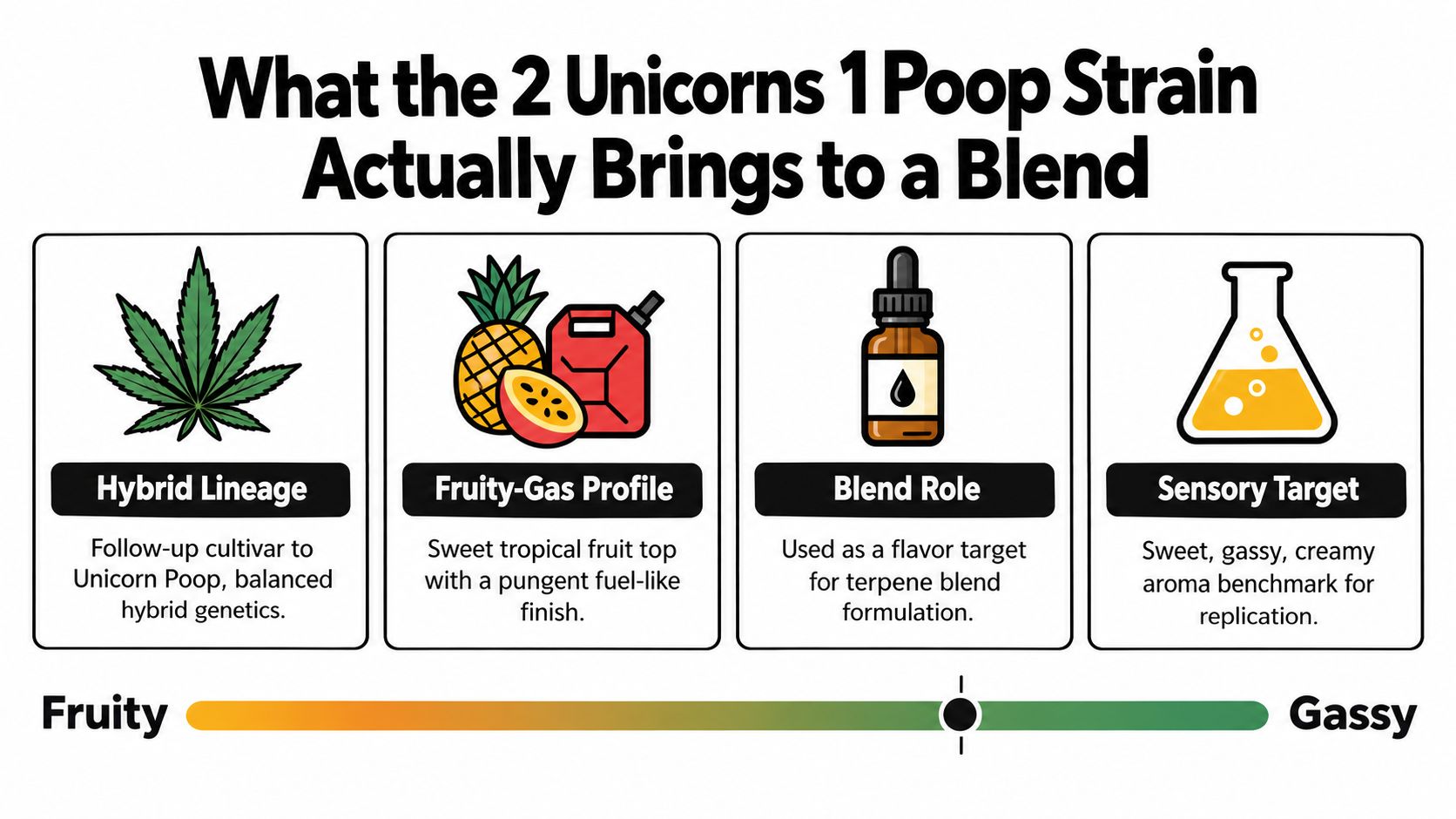
The available descriptions point to a sativa-leaning hybrid with a fruity-gas aroma, led by grape soda, tropical fruit, and gassy notes. Reported dominant compounds are beta-caryophyllene, limonene, and myrcene, which gives formulators a practical starting architecture rather than a reason to reproduce the novelty name blindly.
2 Unicorns 1 Poop is described as a hybrid follow-up to the classic Unicorn Poop. One major retail listing places a product at 28.34% THC in a 3.5 g flower package, with 13 reviews and a 4.4-star average rating at the time of listing, evidence that the name has reached tested commercial availability rather than existing only as an informal breeder reference (retail listing and product data).
Independent seed and strain coverage reports an 8–9 week flowering time, an indoor yield of 400–550 g/m², and THC typically in the 22–24% range (cultivation and potency reference). Those figures aren't a substitute for a flower COA, but they help define the commercial context. A high-potency cultivar with a recognizable aromatic target is likely to be used as a flavor reference for extracts, distillate carts, and strain-inspired blends.
The useful sensory target
For a product developer, the phrase fruity-gas should be more specific than a catalog description. The target begins with sweet grape soda and tropical fruit, then moves toward a gassy, diesel-spice finish. That contrast is what makes the profile workable in a cartridge: the opening gives the vapor a clear identity, while the heavier finish prevents it from becoming a flat candy note.
The reported terpene range also matters for extraction and post-processing. A flower batch with stronger aromatic density can support a more expressive reference, while a weak or aggressively handled batch may cause a formulator to overbuild the blend in an attempt to compensate for lost volatiles. Treat the flower as a sensory source, not as an automatic recipe.
The key input is the relative balance between the bright fraction and the persistent fraction. Limonene helps establish the first impression, myrcene fills the fruit-earth middle, and beta-caryophyllene gives the profile its peppery, gassy anchor. That balance should guide both a botanical blend and an isolate-built formula.
Terpene Profile for 2 Unicorns 1 Poop and Why Each Compound Matters
The terpene profile for 2 Unicorns 1 Poop is dominated by beta-caryophyllene, limonene, and myrcene. Representative reported ranges are beta-caryophyllene at 0.5–1.0%, limonene at 0.3–0.7%, and myrcene at 0.3–0.9%, with total terpene content in dialed grows commonly near 1.8–3.5% by weight (technical terpene profile reference).
| Terpene | Note layer | Character | Reported range |
|---|---|---|---|
| Beta-caryophyllene | Base | Pepper, diesel, spice, persistent body | 0.5–1.0% |
| Limonene | Top | Citrus, candy, bright fruit lift | 0.3–0.7% |
| Myrcene | Mid and base support | Grape-berry, earthy, musky depth | 0.3–0.9% |
Beta-caryophyllene is the structural compound. It drives the peppery diesel-spice base and contributes a more persistent, body-forward sensory character than a bright monoterpene alone. In a cart formula, removing too much of this fraction can leave the opening sweet and recognizable, but make the finish thin and short.
Limonene supplies the lift. It pushes the blend toward citrus candy and helps the fruity-gas target arrive quickly on the first inhale. That brightness is also vulnerable to heat and rough handling, so a formula can test correctly on paper yet lose its most recognizable top layer during production.
Myrcene deepens the center of the profile with grape-berry and earthy notes. Too little can make the blend feel sharp and citrus-heavy. Too much can mute the candy lift and pull the finish toward a heavier earthy character.
Reading the profile as a formulation map
The three compounds don't perform as isolated flavor labels. They work as a sequence. Limonene creates the first impression, myrcene gives the aroma its middle, and beta-caryophyllene holds the finish in place.
Gold Coast Terpenes' terpene effects guide can support internal vocabulary for sensory review, but the production decision should remain grounded in the COA and finished-device test. Avoid medical positioning. For compliance and consumer communication, describe aroma and flavor characteristics rather than promising an effect or health outcome.
How Top Mid and Base Notes Shape a Strain-Inspired Terpene Blend
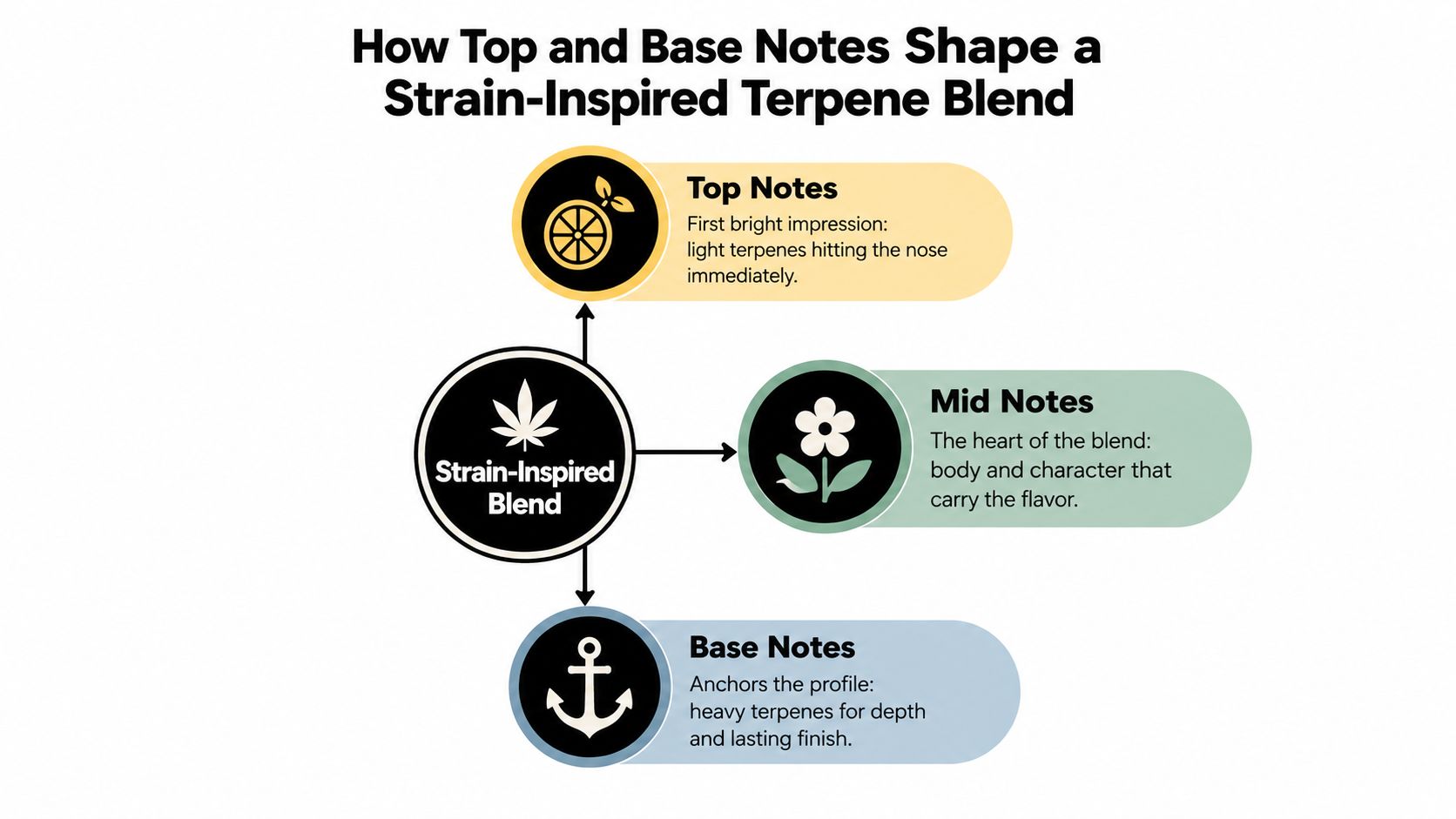
The name 2 Unicorns 1 Poop is a branding clue, not a formulation specification. Build the profile from batch terpene data, then arrange the chemistry by sensory timing: top notes arrive first, mid notes define the center, and base notes extend the finish.
Gold Coast Terpenes' terpene flavor chart lists limonene as a citrus top note at 0.5%–2.5%, linalool as a mid note at 0.2%–1.5%, and myrcene and caryophyllene as base-note materials at 1.5%–4.0% and 1.0%–3.0%, respectively. Treat those figures as reference ranges, not instructions to use every compound at its upper limit.
Build from relative ratios
Start with the current batch's GC-MS flower panel or another documented chemotype reference. Convert each compound's reported percentage into relative parts before scaling the blend to the planned total terpene load.
A worked formulation example uses 1.2% myrcene, 0.4% limonene, and 0.3% caryophyllene. Their total is 1.9%, so the normalized ratio is approximately 63:21:16 after rounding, not 60:20:15 (ratio conversion guidance). Scale those relative parts into a cartridge target of 6%–10% total terpenes, then assess the oil, hardware, viscosity, and sensory result before approval.
Relative parts are more useful than copying raw flower percentages. Flower carries a broader volatile matrix, while a distillate cartridge requires a controlled liquid blend that remains compatible with both oil and device.
Compensate for volatility
Highly volatile monoterpenes can dominate an early bench evaluation and fade during handling or use. Reduce those monoterpenes by 10%–15% when appropriate, then compensate with more stable sesquiterpenes such as caryophyllene. Make the adjustment against finished-cartridge results, not aroma from the mixing vessel alone.
An excessive bright fraction can make the blend smell impressive before filling, then leave the cartridge unbalanced. An excessive base fraction can preserve gas and spice while obscuring the grape-tropical identity associated with the reference profile. Keep the top, mid, and base relationship tied to the batch data and the final device response.
Replicating the Flavor of 2 Unicorns 1 Poop for Vape Cartridges
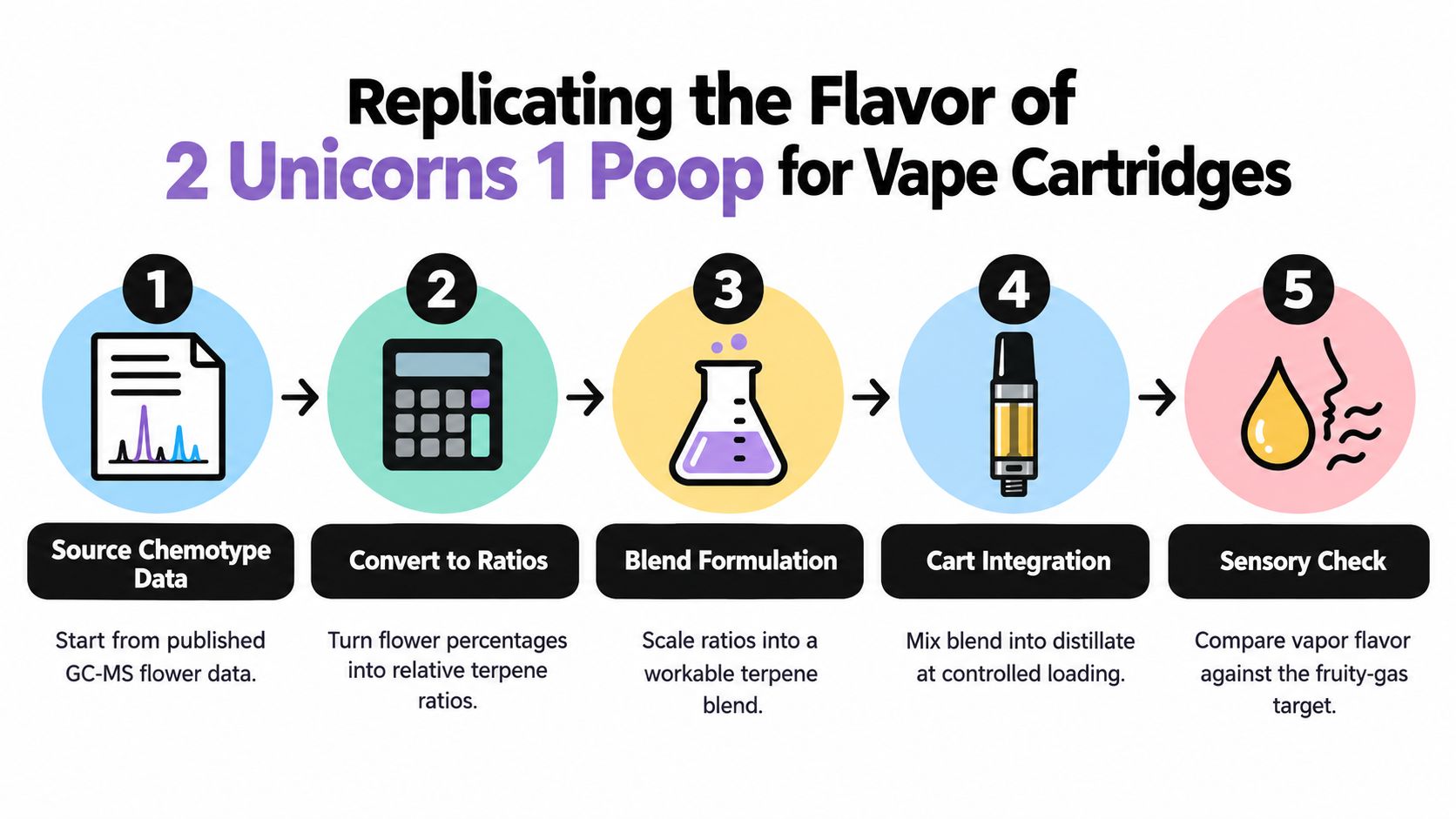
The strain name is a weak formulation spec. To replicate the flavor of 2 Unicorns 1 Poop for vape cartridges, work from batch chemotype data, sensory notes, and the finished cartridge response. Published flower percentages provide a starting point, not a release formula.
Blend or build from isolates
A strain-inspired blend is usually the faster first pass when the target has a fruity, tropical, gas, or spice direction. It can shorten development time, but its supporting compounds may not match the reference lot or may behave differently in your hardware.
An isolate-built formula gives tighter control over the major-terpene relationship. Set limonene, myrcene, and beta-caryophyllene deliberately, then make small corrections toward grape, tropical, diesel, or pepper notes. The trade-off is that a clean major-terpene match may still miss minor compounds that shape the source flower.
Use this workflow for a distillate-based cartridge:
Record the reference. Keep the flower or extract sample, its COA, and a structured sensory record. Note whether grape, citrus, tropical, fuel, pepper, or earth appears first, and which note persists after the initial aroma fades.
Translate the COA into a bench formula. Convert the reported compounds into relative parts, then assign each part to a weighed stock solution. The earlier example gives an approximately 60:20:15 myrcene, limonene, and caryophyllene relationship before production adjustments (formulation ratio example). Keep the unadjusted reference formula so later sensory changes can be traced to a specific edit.
Run a loading pilot. Set the cart target within 6%–10% total terpenes by weight, then produce a 20-cartridge pilot at 6%, 8%, and 10% loading. Record fill consistency, wicking speed, leakage, oil clarity, and first-puff flavor at each level. The best aroma in the mixing vessel is not necessarily the best cartridge result.
Manage volatility during production. Review the bright monoterpene fraction after mixing, heating, and filling. If citrus or candy notes dominate the bench sample but disappear in vapor, reduce that fraction and support the finish with more stable sesquiterpenes such as caryophyllene. Confirm the change through retained samples rather than smell alone.
Test the finished hardware. Compare cartridges against the reference at the intended voltage, puff conditions, and storage interval. A blend that matches in open air can become sharp, thin, or heavy after atomization.
Gold Coast Terpenes provides a mixing calculator for scaling ratios and a formulation resource covering retained samples, internal standards, target sensory notes, and re-testing in the finished format. Those controls give the name a measurable chemistry instead of treating it as a formulation shortcut.
Dosing Safety and Supplier Standards That Protect Your SKU
For cart development, a practical starting range is 5%–10% terpene loading by weight, while many formulators work around 7%–12%, depending on the oil and device (vape cartridge formulation guidance). Treat those figures as development ranges, not a universal release specification.
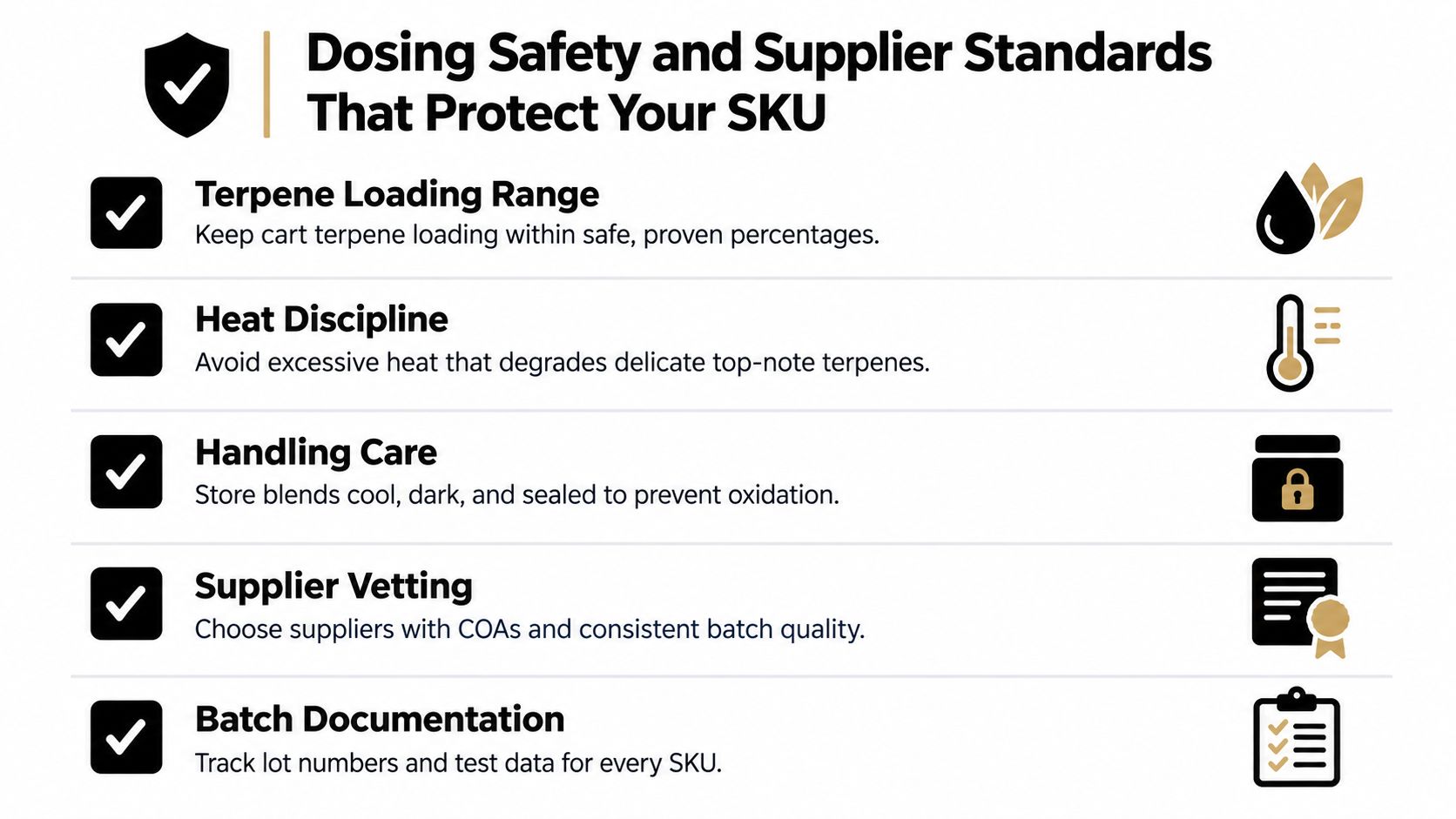
Heat management starts before the terpene stock enters the oil. Warm distillate only until it moves consistently, add the terpene stock gradually, and maintain steady agitation throughout the addition. Excessive heat can flatten delicate top notes, while poor mixing can create inconsistent cartridges within the same production lot.
What to verify before purchasing
A supplier should make the material identity and documentation clear enough for your quality and regulatory teams to review.
- Source declaration: Confirm whether the blend is botanical or cannabis-derived, and make sure the description matches the intended product claims.
- Carrier exclusions: Gold Coast Terpenes describes its blends as free of VG, PG, PEG, and MCT, which gives a formulator a clear starting point for compatibility review.
- Testing records: Request current COAs and connect each blend to a lot number, incoming inspection, and finished-product test.
- Label accuracy: Botanical versus nature-identical labeling must be clear in your records and product documentation. Don't use strain language as a substitute for ingredient disclosure.
- Hardware validation: Re-test viscosity, wicking, vapor flavor, leakage, and end-of-life taste in the exact cartridge format planned for release.
The supplier's terpene quality standards guide provides a useful framework for reviewing purity and documentation. Gold Coast Terpenes states that its products are lab-verified and THC-free, but each manufacturer still needs to evaluate the applicable rules for its market, product type, claims, and final formulation.
Comparable Strains and Formulation FAQ
A close substitute should preserve the fruity-gas direction, not merely contain the same novelty name. Gold Coast Terpenes' catalog includes fruit-forward options such as Forbidden Fruit, while its Elevated Strains line is positioned around nuanced fruit and dessert notes. A profile such as Apple Fritter may be a useful comparison point when a product needs a sweeter dessert direction rather than a direct 2 Unicorns 1 Poop match.
Use a close blend when the sensory target is broad and production speed matters. Use isolates when the retained reference has a distinctive citrus-to-gas balance that a premade blend misses. In either case, validate the finished cartridge, document the lot, and keep the product page aligned with the actual botanical or nature-identical sourcing.
FAQ schema
Is 2 Unicorns 1 Poop a reliable chemistry identifier?
No. The name is a useful flavor-search reference, but batch chemistry can vary with cultivation, harvest, and terpene expression. Verify the current COA and dominant aroma compounds before approving a replication formula.
Should a brand use botanical or cannabis-derived terpenes?
That depends on sourcing goals, product claims, market rules, and documentation requirements. Gold Coast Terpenes supplies 100% botanically derived, THC-free blends, so brands should review the relevant COA and labeling information before selecting a source.
What should a formulator test besides the terpene ratio?
Test the blend in the finished cartridge and device, not only in open oil. Check aroma, vapor flavor, viscosity, wicking, leakage, and how the bright top notes compare with the retained reference.
Is a premade strain-inspired blend better than isolates?
Neither is universally better. A premade blend can shorten development when the sensory direction is close, while isolates provide tighter control when you need to correct limonene, myrcene, or beta-caryophyllene independently.
How should a supplier be evaluated for a vape SKU?
Review source labeling, COAs, carrier ingredients, lot consistency, documentation, and support for batch tracking. Gold Coast Terpenes offers blend and isolate options, but the manufacturer remains responsible for finished-product validation and compliance.
Gold Coast Terpenes offers strain-inspired blends, isolates, formulation education, and mixing tools for rebuilding fruity-gas profiles such as 2 Unicorns 1 Poop for distillate and vape cartridges. Review the available components and documentation at Gold Coast Terpenes, then develop against your retained reference, target ratio, and finished-device sensory test.