
The most common advice about building a Tangie terpene profile is to keep adding limonene until the oil smells like orange. That advice fails in the lab and it fails in the cart. Limonene alone reads as generic lemon, and it misses the sweet, herbal, slightly spicy impression buyers recognize as Tangie.
The numbers say why. In reported Tangie analyses, the lead terpene changes with the sample. Pinene takes the top spot in more than one product certificate. Myrcene takes the top spot in a published review average. A formulator who builds around one molecule can hit a citrus note and still miss the target by a wide margin.
So treat this as a specification problem, not a flavoring problem. Tangie needs a marker range, a dominant-marker order, and a written sensory target. Then every lot needs a certificate that proves it landed inside those limits.
What Tangie Smells and Tastes Like
A buyer opens a Tangie sample and gets orange peel first. A second later comes the sweet, candy-like lift, then a green, herbal edge that keeps the fruit from tasting thin. That sequence, not a single note, is what you're trying to reproduce in a distillate or a cartridge oil.
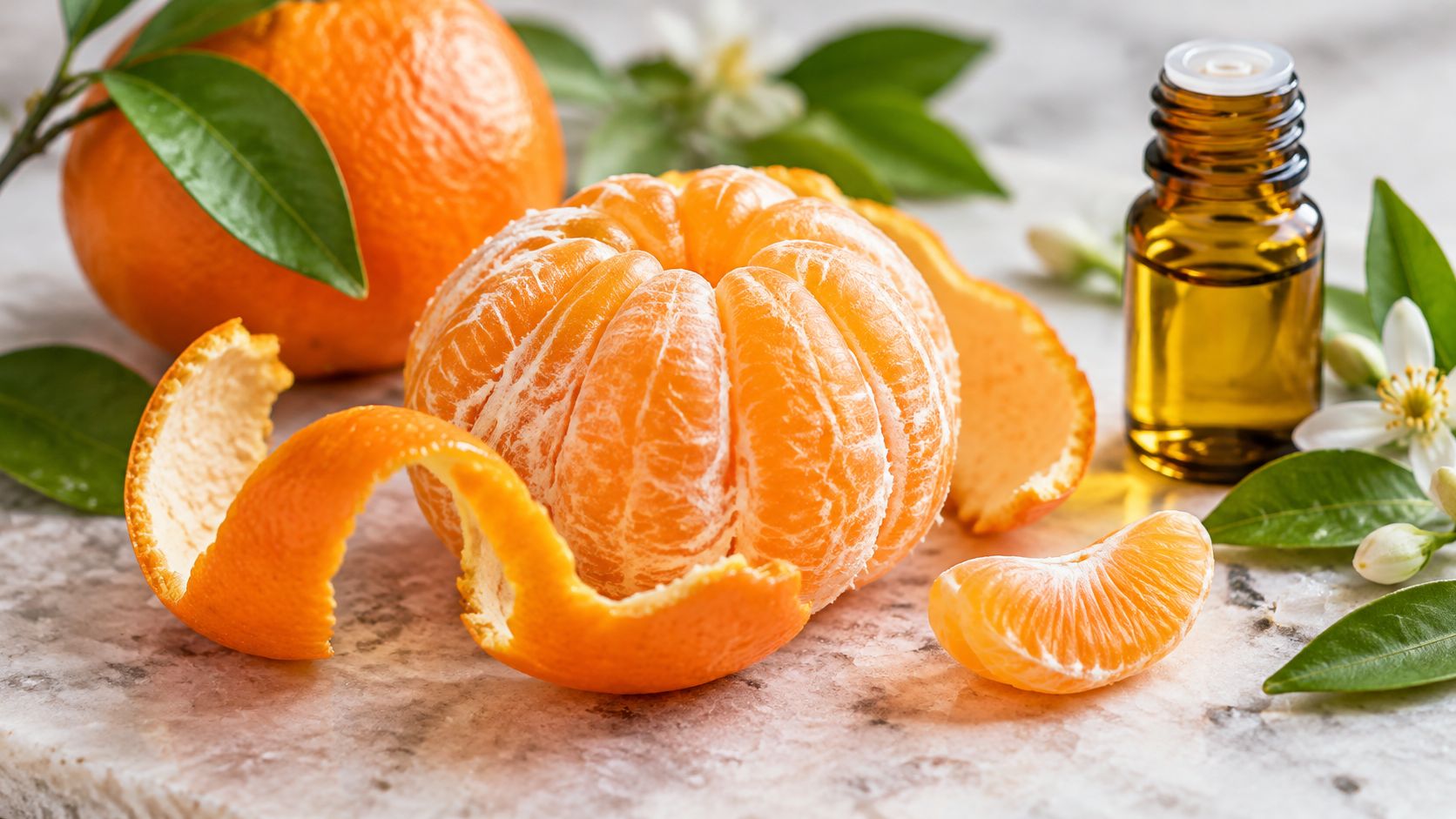
Tangie's history ties it to California Orange and Skunk, which explains the orange-forward name and the resinous, pungent edge that shows up behind it. If you're still building the vocabulary for these notes, our guide to what terpenes smell like maps everyday descriptors onto the compounds that cause them.
Split the target into three zones. Each one gets its own check at the bench.
- Top notes: fresh citrus that hits first. This is the part tasters notice and the part most blends get right.
- Middle notes: the sweet, floral lift that makes the citrus read as orange and tangerine rather than lemon.
- Base notes: spice and earthy depth. This is the part that keeps the flavor from collapsing after the first puff.
Citrus alone is not the story. A lemon-only blend reads thinner than the orange-and-sweet impression the name promises, and buyers notice the gap even when they can't name it.
The practical first step costs an hour. Write a short sensory brief with four or five target notes, for example orange peel, sweet, herbal lift and light spice, then keep it next to the batch record. Every blend decision downstream gets measured against that page. Our terpenes are botanically derived, so the sensory target should come from the sample you approve, not from a strain description someone copied.
Reported Tangie Terpene Profiles Side by Side
Read the spread before trusting any one profile.
| Source Profile | Lead Terpene Pattern | Supporting Pattern | Total Signal to Expect |
|---|---|---|---|
| Lab-compiled review average | Myrcene-led | Terpinolene, alpha-pinene and beta-caryophyllene next | Low total across listed analytes |
| Commercial profile estimate | Limonene-led | Myrcene, beta-caryophyllene and terpinolene next | Higher estimate; treat as a draft target |
| Lot certificate A | Alpha-pinene-led | Citrus and spice compounds follow | Measured lot; exact values belong to its COA |
| Lot certificate B | Alpha-pinene-led | Trans-caryophyllene and limonene follow | Measured lot result |
| Compiled lab data (statistical means) | Lead changes with the dataset | Averages smooth out batch differences | Use only as a wide expectation |
| Sour Tangie flower sample (related phenotype) | Different terpene family | Keep it out of Tangie marker ranges | Separate reference, not a Tangie target |
The sourced rows already disagree. A laboratory-compiled review averaging multiple Tangie product tests puts myrcene first at about 0.50%, with terpinolene 0.20%, alpha-pinene 0.15% and beta-caryophyllene 0.14% (Cannigma Tangie profile). A commercial profile estimate flips the lead to limonene at 0.85%, with myrcene 0.50%, beta-caryophyllene 0.30% and terpinolene 0.20%, for an estimated 4.18% total where limonene is roughly 20% of the signal (Prime Cuts Nursery Tangie data). A measured vape lot lands between those references: 1.441% total terpenes, led by alpha-pinene at 0.712% with trans-caryophyllene 0.308% and limonene 0.212% (3Chi Tangie vape COA).
That spread is the practical lesson. Tangie is a multi-terpene target, so a limonene-only blend can hit the first citrus note and still miss orange sweetness, floral lift and the spicy base. Specify the profile by marker ranges and sensory targets, then verify each lot against its certificate.
Treat estimates as drafts and certificates as evidence. Averages show where samples cluster, while a lot COA shows what is in the bottle.
Buyer check: when a supplier quotes a Tangie profile, ask which pattern it matches and whether the numbers came from a lot test or an estimate. An estimate is a starting point. A lot test is evidence.
Why the Same Tangie Name Gives Different Results
Two bottles labeled Tangie can smell like different fruits. One reads as bright orange candy. The other reads as pine and herbs with citrus somewhere in the background. Both can be genuine.
The cultivar name works like a recipe title. "Orange cake" tells you the dish, not the sugar level, the oven setting or who did the cooking. Two kitchens serve the same title and produce different plates.
Here's the order in which a batch drifts away from its label.
- Genetics and phenotype: breeders and growers keep different selections, so the plant itself sets a ceiling.
- Growing conditions: light, temperature and nutrition shift how much of each compound the plant makes.
- Harvest timing: pick early or late and the volatile mix moves with it.
- Drying and curing: heat and speed during drying cost you the light, volatile notes first.
- Storage: oxygen and warm rooms flatten terpenes over weeks, not months.
- Extraction: each method pulls a different slice of the same starting material.
- The lab method: two labs testing the same material can report different numbers.
The scale of that drift shows up in commercial data. A large analysis of commercial U.S. cannabis found that only 62.5% of Tangie product averages fell into one terpene cluster, which puts the name well behind more chemically stable labels as a specification (PMC analysis of commercial cannabis chemotypes). The same study found myrcene, beta-caryophyllene and limonene generally among the most abundant commercial cannabis terpenes, while most individual terpenes occurred below 0.5% by weight.
That last detail matters more than it looks. When most compounds sit under half a percent, a small shift in one of them changes the impression you get from the finished oil.
Specification rule: a brief that says "Tangie" and nothing else lets two suppliers deliver two different oils and both be right.
So describe Tangie as a marker range plus a sensory reference. Build your quality-control panel around limonene, myrcene, beta-caryophyllene, pinene, terpinolene and ocimene. Accept a lot on two conditions together: total terpene concentration inside your band, and the ratio between the dominant compounds close to your reference. Checking only the biggest number lets a lot pass with the wrong balance.
Do that and the surprises drop. Citrus intensity stays in a predictable window, herbal lift stops jumping around, and peppery depth holds from one batch to the next.
Sensory Roles of the Key Tangie Terpenes
Each compound in the panel does a specific job. Know the job and you know what to fix when a trial batch comes back flat, sharp or thin.
| Terpene | Typical Aroma Note | Role in a Tangie Blend | Watch-Out When Dosing |
|---|---|---|---|
| Limonene | Fresh orange peel and lemon | Main citrus anchor | Alone it reads as generic lemon |
| Myrcene | Earthy, musky, fruity | Body and depth under the citrus | Heavy earthy tone if overused |
| Terpinolene | Fresh, herbal, floral | Bright lift on the top end | Volatile, so recheck the flavor after storage |
| Beta-caryophyllene | Peppery, spicy, woody | Spice and warmth in the base | Strong, so add in small steps |
| Alpha-pinene | Pine, fresh, green | Herbal edge that stops citrus from tasting flat | Can become the loudest note in some lots |
| Ocimene | Sweet, green, floral | Sweet-herbal softness | Check its share on every certificate |
The certificates show why limonene alone can't carry the profile. One reported Tangie sample contained alpha-pinene at 1.166%, limonene at 0.363%, trans-caryophyllene at 0.201%, beta-pinene at 0.179%, beta-myrcene at 0.128%, terpinolene at 0.122% and ocimene at 0.079%. A second Tangie-labeled analysis reported a markedly different spread, with alpha-pinene at 0.712%, trans-caryophyllene at 0.308%, limonene at 0.212%, beta-pinene at 0.116% and alpha-bisabolol at 0.093% (3Chi Tangie certificate of analysis).
In both, pinene outranks limonene. A limonene-only model would miss the true structure of those lots by a wide margin, then get blamed when the oil tastes like candy rather than Tangie.
Dosing rule: keep the lot's dominant-marker order, then tune strength in small steps. Adding a large dose of isolated limonene flattens the profile into a generic lemon note.
Work from a GC-based certificate for every source lot, weigh the blend by mass rather than counting drops, and evaluate the finished oil after dilution. Matrix and concentration change how the headspace releases, so the same blend can smell stronger or weaker once it's in your carrier.
One more check worth keeping on file. Terpenes with the same name can smell different when their stereochemistry differs, so record enantiomer identity wherever the lab reports it. That record saves you when a reorder arrives and the aroma doesn't line up.
How to Build a Tangie Blend Step by Step
Every step below exists because a name can't be weighed on a scale. Markers can.
Start with a reference certificate on the bench. Pull the dominant-marker order from it and write that order into the batch record. Here's the build sequence we recommend.
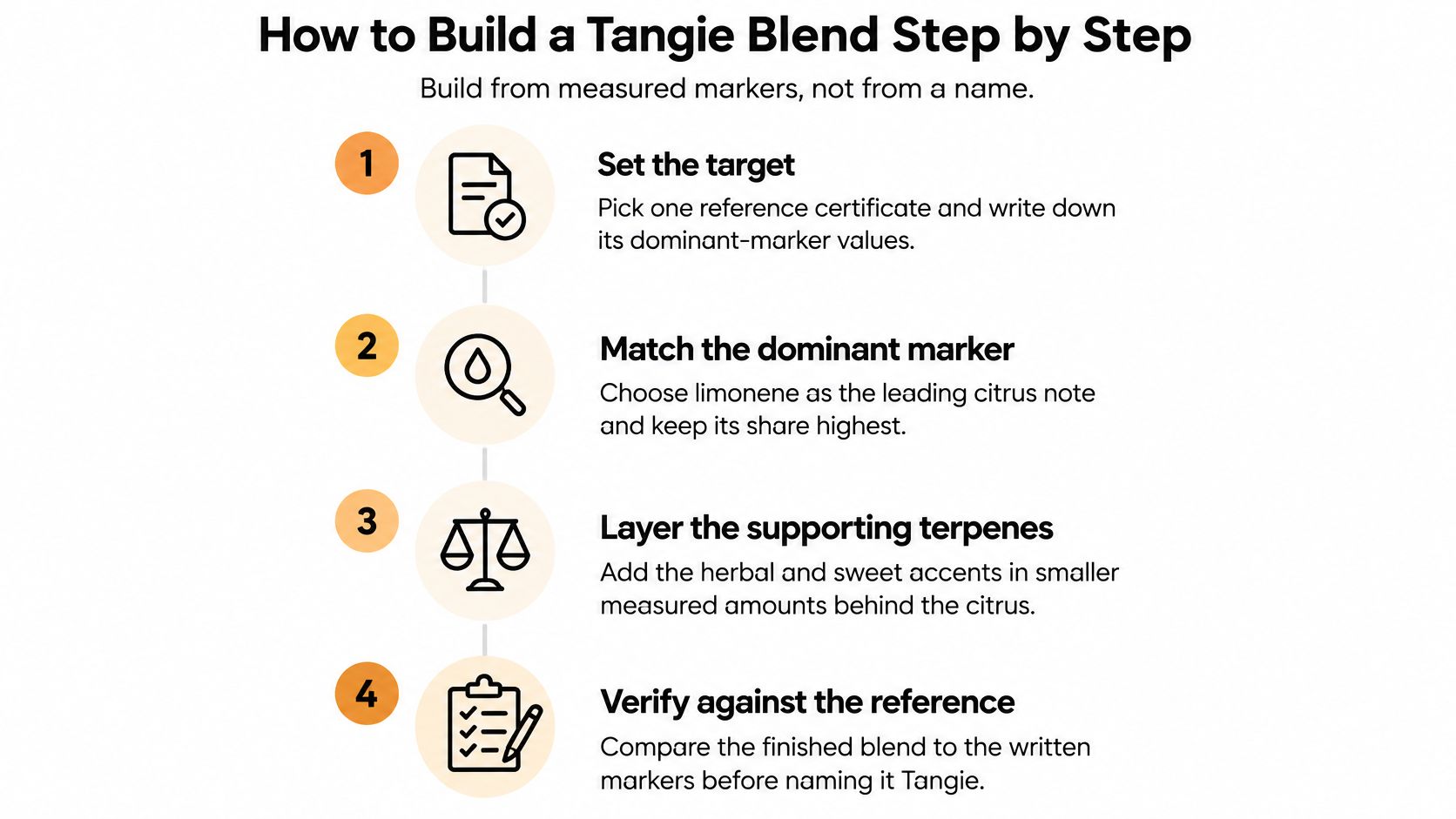
1. Set the target. Pick one certificate and copy only its dominant markers into your spec. On a pinene-led certificate, pinene runs about 3.2 times the limonene figure and caryophyllene about 0.55 times limonene. That 3.2 : 1 : 0.55 shape is your reference. The common slip here is copying a flower percentage straight into an oil recipe, which pushes the wrong dose into the finished product.
2. Choose the building blocks. Pair limonene with myrcene, terpinolene, alpha-pinene and beta-caryophyllene at roughly the ratios the reference suggests. Limonene alone flattens the profile, so the supporting compounds are not optional decoration.
3. Calculate by mass. Drop counts shift with viscosity and density, so convert everything to grams. If you want 2 g of limonene in a 100 g batch and the reference runs 3.2 : 1 : 0.55, you weigh 6.4 g alpha-pinene, 2 g limonene and 1.1 g beta-caryophyllene, then make up the balance from the remaining markers in the same proportion. Our mixing ratios calculator turns percentages into grams for whatever batch size you're running.
4. Blend in small steps. Start at a low loading in the base oil, mix until the sample is fully uniform, and label the batch with the loading rate and the date. Skipping the label costs you the only record you'll have three months later.
5. Evaluate after dilution. Headspace release changes once the blend sits in your carrier. Check flavor, viscosity and cartridge flow on the diluted product, not on the neat blend.
6. Run a compatibility test. Store a small filled sample under your normal conditions, compare it against the reference after a week, and approve bulk only when the match holds.
Compiled laboratory data for Tangie lists terpinolene at 1.07%, limonene at 1.01%, beta-caryophyllene at 0.68%, ocimene at 0.67%, beta-myrcene at 0.58% and nerolidol at 0.52%, reported as statistical means across verified certificates that vary by harvest and cultivation method (CannMenus Tangie data). Terpinolene and ocimene carry the brighter, green, herbal side of that shape, while caryophyllene and myrcene add sharper spice and earthy depth.
When you're ready to see the process demonstrated, this walkthrough covers the mixing and measurement side.
Checking Lot Certificates Before You Buy
A headline total proves nothing about a match. A Tangie-labeled finished oil is reported at 3.944% total terpenes in one product certificate, while a flower profile is reported at 2.238% (3Chi Tangie product COA). Copy the flower percentage into an oil recipe and you dose the wrong amount, even though the number looked authoritative on the page.
Run the checks in this order before any bulk order.
- Full analyte table: every compound listed with its value, not just a total at the top.
- GC-based method: the technique named on the certificate, so you know how the numbers were produced.
- Dominant-marker order: the top three compounds in the same order as your reference. Tangie's citrus comes from a multi-terpene mix, so a lot that reads limonene-led with nothing behind it, or one where pinene leads, is a different target than the name suggests.
- Enantiomer notes: recorded wherever the lab reports them.
- Lot-specific documents: request specifications and safety paperwork when you request the sample, not after the purchase order.
Individual compounds can sit near the reporting limit, which is exactly why the full table beats the headline. A total can look right while a key marker is missing. In a profile like Tangie, the secondary compounds are what separate a true citrus shape from a limonene-heavy approximation, so read past the top line.
Set the addition rate for the blend, confirm the oil's viscosity and flavor at that rate, and verify the finished product with lab testing and documentation.
Approval rule: sign off a lot only when the certificate, the sample and your own compatibility test all agree.
Terpene information for our products is provided by SC Labs, and product paperwork is posted on our Terpene Safety & Documents page. For the certificate itself, our certificate of analysis reference covers what each field reports.
Choosing a Tangie Supplier
Pick a supplier who can prove what's in each lot. A supplier who only repeats the cultivar name gives you nothing to check.
- Lot-level testing: each lot arrives with its own analyte table from a GC-based method, plus a batch number that matches the bottle.
- Botanical origin in writing: the documentation states the terpenes are botanically derived, so the source is clear before you formulate.
- Consistent blend specifications: the same target markers and tolerances from one order to the next, so your reference stays usable.
- A reference sample you can request first: you want to run your own compatibility test in your distillate or cartridge oil before committing to volume.
- Clear volume and custom terms: minimum order sizes stated up front, and a defined process for quoting a custom marker profile.
Ask each supplier to put those five points in writing before you compare prices. Price per ounce means little if the next lot doesn't match the first. If you're still mapping the market, our guide to where to buy terpenes covers what separates a documented supplier from a relabeler.
Request Tangie Samples for Your Next Batch
The decision left is a small one. Test a Tangie blend in your own base oil, or keep guessing from a name.
Make the first order your test run and buy the smallest size that lets you evaluate the blend.
- Pick the profile or the pack. The Tangie blend is described with the flavors citrus, orange and sweet, and the Tropic Pack sets it alongside Pineapple Express and Sour Mango when you want to compare citrus profiles side by side.
- Convert percentages to grams. The Mixing Calculator and Terpenes 101 pages turn the marker ranges from your reference certificate into weights for your batch size.
- Check the documents. The Terpene Safety & Documents page holds the product paperwork, and terpene information for the products is provided by SC Labs, so you can compare the profile against your markers rather than the cultivar name.
- Scale through bulk. Orders over $100 ship free in the U.S., with discounts on orders over 64 oz, once your spec is fixed and every lot has to match the first.
Run the compatibility test in winterized distillate oil and score the result against your written sensory targets. Hold the spec to the marker ranges you set earlier: Tangie's citrus is a multi-terpene mix, and a limonene-only blend reads flat against it.
Gold Coast Terpenes supplies SC Lab-tested terpene blends and isolates for cartridge and distillate work, extracted from fresh plants and free of VG, PG, PEG and MCT. Visit Gold Coast Terpenes to shop the Tangie blend, compare isolates, or price a bulk order.