
Apple Fritter's terpene profile is batch-specific, not fixed. A Panda Farms batch measured 1.39% total terpenes, with beta-caryophyllene at 44.6% of that total and limonene at 21.6%, making those compounds a practical starting reference rather than a universal specification.
The popular advice to copy one “authentic” Apple Fritter ratio is therefore unreliable. For product developers, the useful question isn't whether a blend matches a strain name on paper. It's whether the finished oil preserves the recognizable peppery, citrus, woody, and dessert-fruit hierarchy after mixing, filling, storage, and use. Gold Coast Terpenes supports that type of development with strain-inspired blends and isolated compounds, but the analytical and sensory target still has to come from the source material and the finished product.
Why the Apple Fritter Strain Terpene Profile Is Not Fixed
Apple Fritter shouldn't be treated as a chemically fixed identity. A cultivar label can describe related genetics while concealing meaningful differences created by the genetic cut, harvest timing, drying, curing, storage, and analytical method.
The clearest practical reference is a recent independent report on a Panda Farms Apple Fritter batch. It measured 1.39% total terpenes by weight, with beta-caryophyllene at 0.62%, or approximately 44.6% of the reported terpene total. Limonene measured 0.30%, about 21.6%, while alpha-humulene measured 0.17%, about 12.2%. Together, those three compounds represented roughly 78.4% of the measured terpene fraction (Panda Farms Apple Fritter batch report).
That lot produces a coherent sensory direction. Caryophyllene supports peppery, warm spice, limonene contributes citrus brightness, and humulene adds woody or earthy depth. But those figures describe one tested batch, not every flower lot, distillate, cartridge, or botanical reconstruction sold under the Apple Fritter name.
What the batch data means for a formulator
A strain-inspired blend should be built as a target range and sensory architecture, not as a rigid chemical fingerprint. The Panda Farms numbers are useful because they establish a starting hierarchy: caryophyllene first, limonene second, and humulene as a supporting compound.
That hierarchy matters more than blindly copying total terpene content. A blend can contain the same overall loading as a reference flower and still smell wrong if limonene overwhelms the spice backbone or myrcene pushes the profile toward generic earthiness.
Practical rule: Treat the certificate of analysis as a map of the source lot, not proof of a universal Apple Fritter specification.
Environmental handling deserves its own review because aroma changes before formulation begins. The terpene transformation guide is useful when comparing fresh flower, stored biomass, extract, and reconstructed oil. For commercial work, retain the original sample, record its handling history, and define the sensory endpoint before selecting isolates.
Understanding the Science Behind the Variability
The scientific basis for an Apple Fritter profile comes from validated terpene analytics, not from the strain name alone. A 2023 peer-reviewed headspace gas chromatography mass spectrometry study detected 26 terpene compounds in hybrid Cannabis samples and found broad concentration ranges across its principal constituents (peer-reviewed HS-GC-MS study).
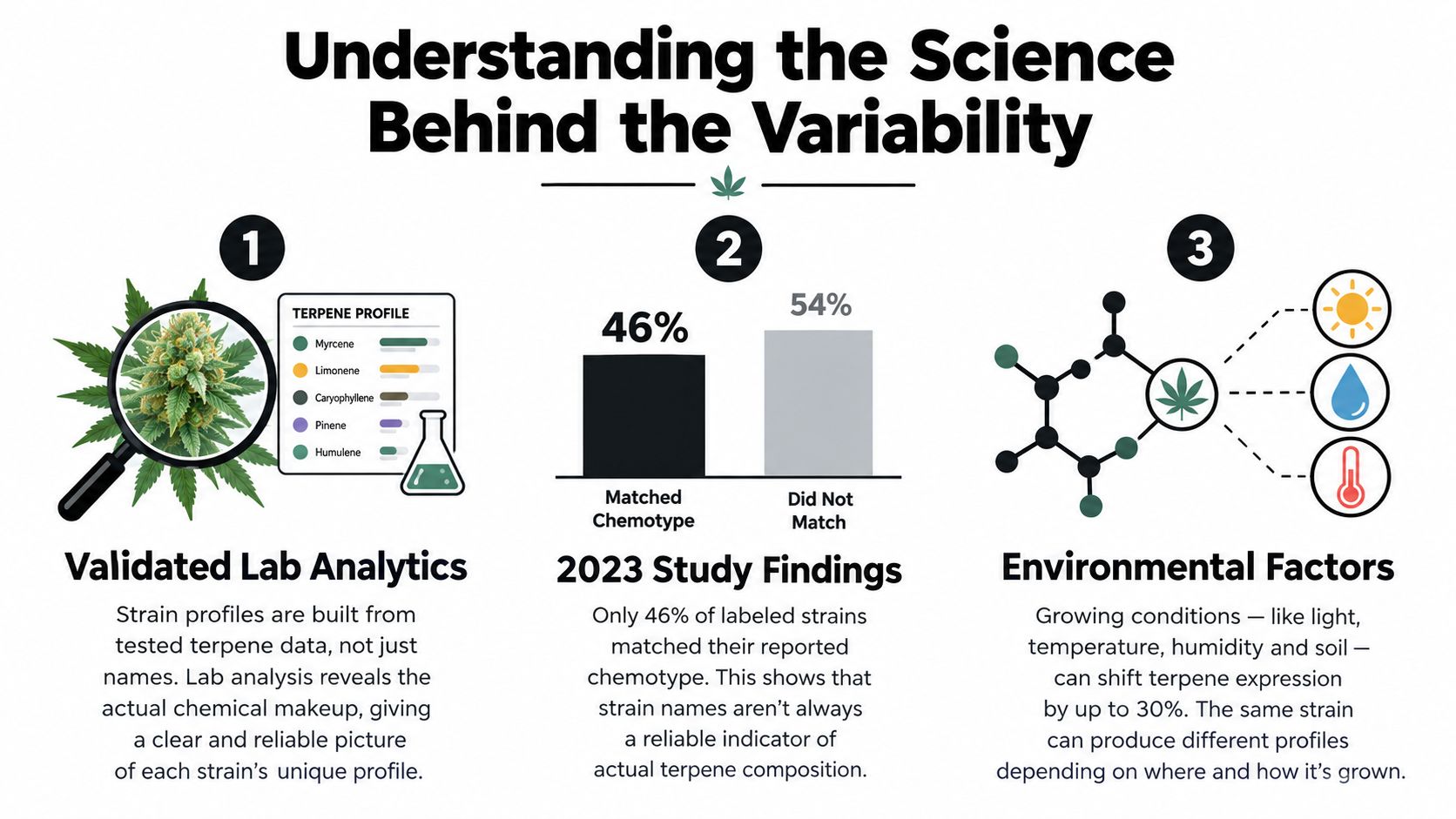
The study quantified alpha-pinene from 9.8 to 2,270 micrograms per gram, beta-pinene from 2.6 to 930 micrograms per gram, myrcene from 0.7 to 17,400 micrograms per gram, limonene from 1.3 to 300 micrograms per gram, beta-caryophyllene from 60 to 3,300 micrograms per gram, and alpha-humulene from 40 to 870 micrograms per gram. Myrcene alone covered an approximately 24,857-fold span between its lowest and highest reported values.
Those ranges explain why one Apple Fritter COA can't serve as a universal recipe. Even before extraction, different plants and lots can produce different proportions of monoterpenes and sesquiterpenes. After extraction, heating, dilution, and storage, the finished oil may move further away from the original flower profile.
Why drying and storage change the target
Limonene and myrcene are monoterpenes, while caryophyllene and humulene are sesquiterpenes. The cited profiling work notes that drying and storage can reduce monoterpenes such as limonene and myrcene while increasing the relative proportion of sesquiterpenes such as caryophyllene.
That doesn't mean caryophyllene necessarily increased in absolute terms. It can become more prominent because other compounds declined. A formulator who compares only percentages may misread that shift as a genetic difference.
For production, the analytical panel should include caryophyllene, limonene, humulene, myrcene, pinene, and related secondary compounds where relevant. Testing the finished oil matters because the cartridge matrix, concentration, and storage environment can change headspace aroma even when the initial blend calculation looks correct.
The terpene biosynthesis guide provides useful background for teams that need to connect plant chemistry with formulation decisions. In practice, however, a current COA and finished-product sensory check are more valuable than a strain label or a generic terpene wheel.
Analyzing the Two Dominant Analytical Archetypes
Commercial Apple Fritter lots often fall into different analytical patterns, and those patterns can produce noticeably different flavor outcomes. One sample may be myrcene-forward, while another may be caryophyllene-forward, even though both carry the same cultivar name.
An Apple Fritter HS-GC-MS certificate measured beta-myrcene at 0.6430%, limonene at 0.5396%, and beta-caryophyllene at 0.4150%. Another commercial COA reported beta-caryophyllene at 0.613%, trans-nerolidol at 0.496%, delta-limonene at 0.435%, and beta-myrcene at only 0.092% (Apple Fritter HS-GC-MS certificate).
Two different starting points
The first lot leans toward earthy, musky depth because myrcene leads the measurable profile. Limonene keeps it bright, but caryophyllene sits behind both. The second lot has a stronger peppery and woody structure, with caryophyllene leading and trans-nerolidol adding a softer, woody-floral dimension.
| Compound | Myrcene-Forward (%) | Caryophyllene-Forward (%) |
|---|---|---|
| Beta-myrcene | 0.6430 | 0.092 |
| Limonene or delta-limonene | 0.5396 | 0.435 |
| Beta-caryophyllene | 0.4150 | 0.613 |
| Trans-nerolidol | Not reported in the cited sample | 0.496 |
The table shows why a single “Apple Fritter terpene blend” can work for one source and fail for another. A myrcene-forward reconstruction may preserve the darker, musky character of one flower lot, but it can lose the peppery pastry impression associated with a caryophyllene-led reference.
Match the source, not the label
For replication work, begin with the actual flower or extract COA. If the target material is myrcene-forward, don't force it into a caryophyllene-led template just because that arrangement appears in another commercial sample. Conversely, if the reference is caryophyllene-forward, adding substantial myrcene can flatten the brighter dessert-fruit character.
The right decision depends on the product brief. A brand seeking a faithful source-lot match needs one architecture. A brand seeking a recognizable Apple Fritter style across changing supply lots may choose a stable caryophyllene, limonene, and humulene framework, then adjust secondary notes through sensory evaluation.
Formulating the Ideal Blend with Isolates
The most defensible starting architecture is a myrcene, limonene, and beta-caryophyllene core, adjusted toward the source COA and sensory reference. Add humulene or farnesene only after the main profile is stable, because secondary compounds can add complexity without rescuing a poorly balanced base.
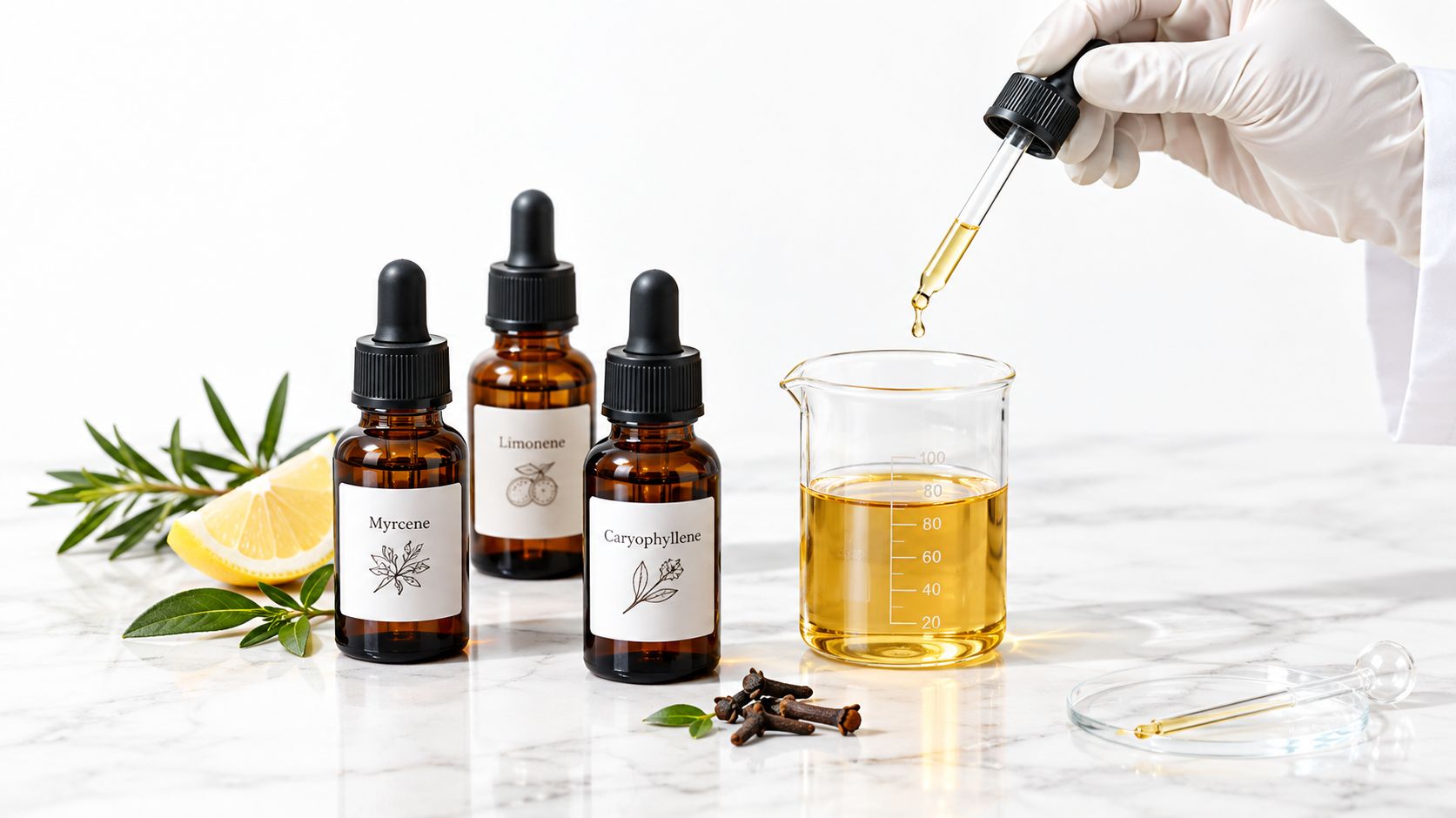
A practical isolate workflow starts with documentation, not dosing. Preserve the reference material, attach its COA to the development record, and describe the desired aroma in operational terms such as peppery spice, bright citrus, earthy depth, and pastry-like fruit. Then select the compounds that can reproduce that hierarchy in the intended carrier.
Build the core before adding complexity
An independent aggregation of Apple Fritter COAs reported mean beta-caryophyllene at 1.01%, limonene at 0.76%, farnesene at 0.38%, beta-myrcene at 0.34%, and humulene at 0.31% (Apple Fritter COA aggregation). Those values are useful analytical targets, but they shouldn't become a universal recipe because other tested lots show different rankings.
A workable development sequence is:
- Define the anchor. Decide whether caryophyllene or myrcene should lead based on the source COA and the approved sensory reference.
- Establish the bright note. Use limonene to create citrus lift, but assess it in the actual oil because its sharpness can dominate quickly.
- Build the base. Use caryophyllene for peppery structure or myrcene for earthy, musky depth, depending on the target.
- Add texture. Evaluate humulene, farnesene, pinene, or other secondary compounds only after the core reads correctly.
- Release by endpoint. Compare the finished oil after mixing and again after storage, using both analytical review and trained sensory evaluation.
Gold Coast Terpenes supplies isolates such as limonene, myrcene, and beta-caryophyllene, along with strain-inspired profiles that can serve as a starting point for this type of architecture. The terpene isolate guide is relevant when teams are moving from a prebuilt blend to controlled isolate adjustments.
Keep the blend version, addition rate, mixing conditions, carrier, and finished-oil observations in the batch record. A formula that smells right in a neat concentrate may shift after dilution, cartridge filling, and storage.
The video below provides additional visual context for handling and blending terpene components.
Optimizing Loading and Diluents for Cartridges
Cartridge development should preserve the relative aromatic hierarchy rather than chase a universal total-terpene number. Before adding anything to distillate, assay the oil, confirm the intended carrier system, and evaluate the complete formulation in the finished cartridge.
Published Apple Fritter data show total terpene concentrations ranging from 1.06% across six scans to 1.45% in a separate scan (published Apple Fritter scan data). That spread is operationally important, but flower totals don't tell you how much terpene remains in a processed distillate. Extraction, purification, heat, and handling can leave the oil compositionally different from the starting biomass.
Assay before blend
A distillate may contain native terpenes, degraded aroma compounds, or almost no meaningful representation of the original flower profile. Adding a prebuilt blend without measuring the oil can duplicate compounds, exaggerate sharp notes, and obscure the source material.
The production sequence should therefore be:
- Assay the distillate: Establish what remains before adding a flavor system.
- Choose the carrier: Confirm compatibility with the oil, device, package, and applicable compliance requirements.
- Set the sensory target: Decide whether the cartridge should emphasize spice, citrus, fruit, wood, or a balanced combination.
- Blend conservatively: Add the strain-inspired system in controlled increments rather than treating the published flower total as a mandatory loading.
- Test the filled cartridge: Evaluate aroma and vapor behavior in the final hardware, not only in a beaker.
Excess limonene can push the profile toward bright citrus and erase the deeper pastry impression. Excess myrcene can make the oil earthy or musky and suppress the dessert-fruit nuance. Caryophyllene and humulene can restore structure, but they won't automatically correct a blend that began with the wrong hierarchy.
The guide to thinning distillate for cartridges can support carrier and processing decisions, but every manufacturer still needs its own compatibility, stability, and compliance validation. Record the reference COA, blend version, addition rate, mixing conditions, fill date, device, and finished-product release criteria.
A strain name on the package shouldn't be the only control point. The batch record needs to show what was blended, why it was blended, and whether the final cartridge still meets the intended sensory target.
Troubleshooting Common Flavor Failures
Diagnose the dominant note in the finished cartridge first. In formulation reviews, the recurring Apple Fritter misses usually trace to hierarchy problems inside the blend, and the release-panel checklist later in this section is the fastest way to confirm where that hierarchy broke down.
Published strain numbers are a starting reference, not a fixed sensory target. Apple Fritter lots can shift with harvest, age, and handling, so a cartridge can still read wrong even when the paperwork looks close to the source profile (Apple Fritter profile and handling discussion).
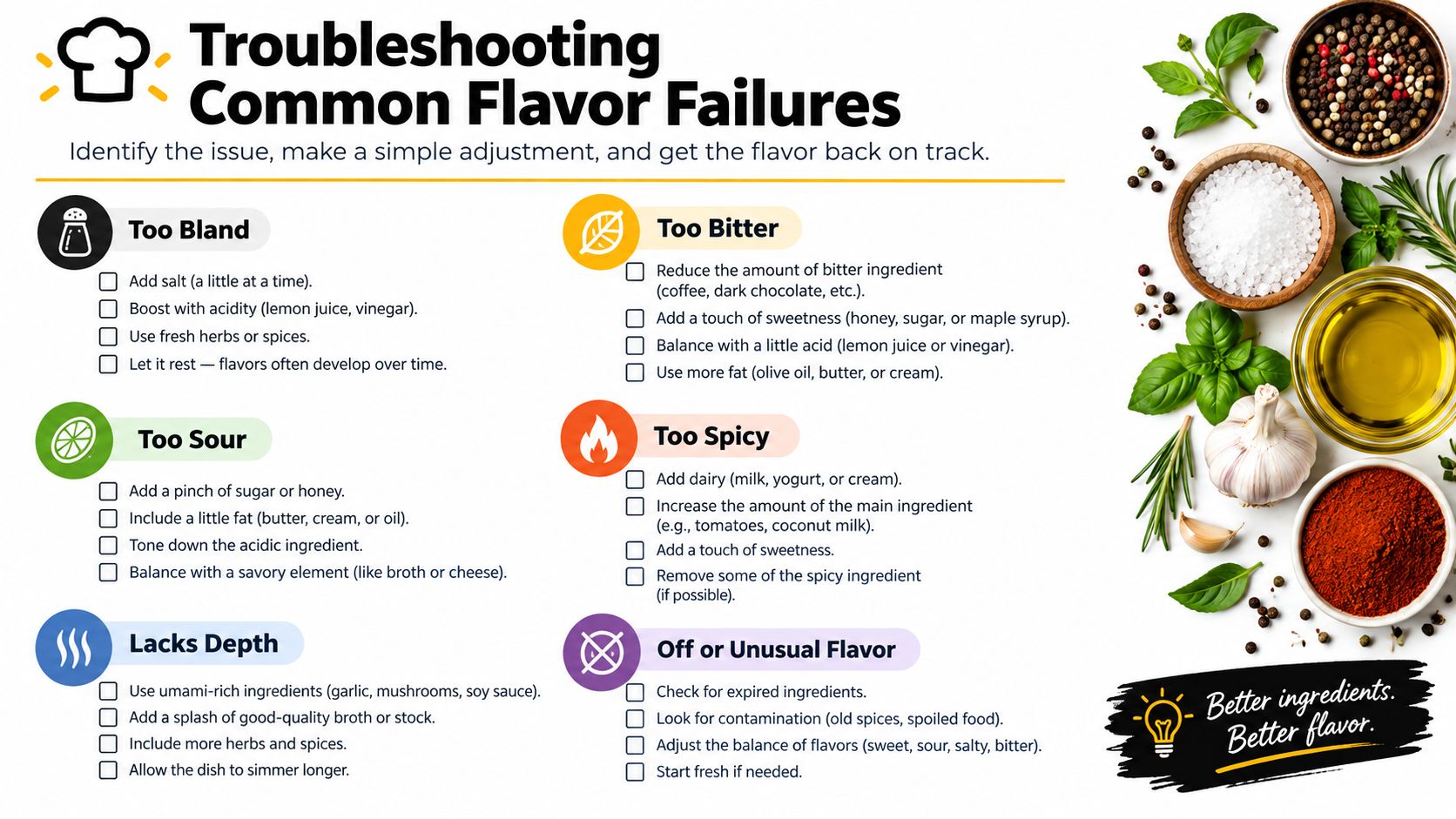
A practical troubleshooting pass starts with one question. What is the first wrong note a trained panel agrees on in vapor, not just in the bottle? Once that note is named clearly, corrective work gets simpler and a lot less wasteful.
When citrus dominates
A sharp lemon top note, surface-level sweetness, or a solvent-like brightness usually means limonene is sitting too high in the hierarchy. That can happen because the blend was built too aggressively around citrus lift, or because the rest of the structure is too thin to hold it in place once the oil is in hardware.
The fix is usually targeted, not broad. Pull the citrus component back in a controlled step, then reassess whether caryophyllene or humulene needs to be restored to rebuild the warm, woody frame that makes Apple Fritter feel grounded instead of generic.
Check it again after storage. Freshly mixed oil can seem balanced in the beaker and still turn brighter in the cartridge as the more volatile notes move through headspace, wick, and matrix. I trust the filled device more than the bench sample when there is a disagreement.
When the blend tastes generically earthy
A muddy, musky, indistinct body usually points to too much myrcene, or to myrcene sitting in the wrong relationship to the rest of the blend. Some formulators keep adding fruit or citrus to fight that effect. In practice, that often creates a split profile. Bright on top, dull underneath.
Pull back the myrcene contribution first. Then rebuild shape with the intended caryophyllene backbone, and add limonene carefully only after the base starts reading clearly again. Apple Fritter needs depth, but it also needs edges. If the middle of the profile collapses into broad earthiness, the apple, pastry, and spice cues stop reading as separate signals.
This is also where copying a reported terpene stack too rigidly causes trouble. Two batches can contain the same named compounds and still perform differently in finished oil because concentration, purity, carrier behavior, and hardware all change what reaches the user.
When the pepper note is missing
If the oil smells fruity but lacks warmth, the structure is usually underbuilt. Start with caryophyllene. It may be underweighted in the formula, or the source lot may have leaned more heavily toward myrcene than expected, so the blend is technically plausible but sensorially soft.
Compare the reference COA with the actual blend record. Confirm isolate identity, lot, and addition rate before changing anything. Then make a small, controlled adjustment and retest in the filled cartridge. This part matters because a missing pepper note is not always solved by adding more total terpene. Sometimes the issue is that the wrong component is carrying the middle of the profile.
Humulene can reinforce woody depth, but it works best as support. If the reference expression is clearly caryophyllene-led, humulene should tighten the frame rather than replace the primary structural note.
When the formula passes analytics but fails sensory review
This happens often enough that it should be built into release practice. An analytical match can still miss in vapor because headspace behavior, carrier interactions, device temperature, storage, and loading all affect perception. A blend that looks correct on paper can flatten, sharpen, or drift once it is aerosolized.
Use a release panel that reviews four stages side by side: the reference sample, the neat blend, the mixed oil, and the filled cartridge. Record descriptors, not just pass or fail. The panel should answer a short checklist that forces a hierarchy call:
- Citrus: Is limonene bright, balanced, or sharp?
- Spice: Does caryophyllene provide warmth without turning abrasive?
- Depth: Is myrcene supporting the profile or masking it?
- Wood: Does humulene add structure without pushing the blend herbal?
- Dessert character: Does the finished cartridge still carry the intended fruit and pastry impression?
That checklist does more than catch defects. It reframes the target correctly. Apple Fritter is not a frozen fingerprint that can be copied by analytics alone. It is a batch-specific sensory target, and each adjustment should move the cartridge closer to that target in actual use.
The release decision should follow the sensory endpoint, supported by the COA, not the total terpene percentage alone.
Gold Coast Terpenes offers strain-inspired blends and individual terpene components for teams that want either a faster starting point or tighter isolate-level control. Visit Gold Coast Terpenes to review Apple Fritter options, isolates, diluents, formulation tools, and documentation for cartridge and distillate development.
Frequently asked questions
Is the Apple Fritter terpene profile universal?
No. Tested lots can differ in their leading compounds because genetics, harvest, drying, storage, extraction, and analytical methods all affect composition. A strain-inspired blend can provide a starting point, but a current source COA and finished-oil sensory review are still required if the goal is a credible match.
Which terpenes should lead an Apple Fritter formulation?
Start by examining beta-caryophyllene, limonene, and beta-myrcene, then consider humulene or farnesene for added structure. The right leader depends on the batch. Some lots read caryophyllene-forward, some skew myrcene-forward, and some sit somewhere in between, which is why sensory validation matters more than rigid copying.
Should formulators match total terpene percentage or compound ratios?
Use compound hierarchy and the sensory endpoint as the main controls. A lower-total lot can still stay recognizable if the key aromatic relationships are intact, while a higher total can miss the target completely when one note takes over the profile.
Can a botanical blend replicate cannabis-derived Apple Fritter terpenes?
It can reproduce a strain-inspired sensory direction, but it should not be presented automatically as chemically identical to a specific cannabis lot. Document whether the inputs are botanical or cannabis-derived, review labeling requirements, and validate the finished oil in hardware.
What should a vape brand test before release?
Test the distillate before blending, the mixed oil after homogenization, and the filled cartridge after storage. Review the COA, blend version, addition rate, carrier compatibility, device behavior, and the sensory endpoint together.
Why does my Apple Fritter cartridge smell citrusy but not like the reference?
Limonene may be overrepresented, or the reference may rely more heavily on caryophyllene, humulene, or myrcene for structure. Compare the source data with the finished oil, reduce the dominant citrus note in a controlled step, and rebuild the base through sensory trials rather than chasing a single number.