
A lemon-candy cartridge can look correct on paper and still taste flat, sharp, or generically citrus-forward after filling. The usual problem isn't the presence of lemon. It's the missing structure behind it, a bright opening without enough mid-palate body or a clean base to keep the finish rounded.
For formulators, Mighty Lemon Drops Inside Out works best as a sensory target rather than a casual strain description. The useful question is how to build its sweet lemon impression for vape cartridges and distillate, then preserve that impression through mixing, hardware testing, storage, and production. The framework below treats the profile as a layered strain-inspired terpene blend, with limonene leading the opening and supporting notes shaping the rest of the experience.
Introduction to Mighty Lemon Drops Inside Out for Formulators
A product developer may start with a simple brief: “Make the cart taste like lemon candy.” The first trial often relies heavily on limonene, and the result smells bright in the vial but becomes thin in vapor. The lemon arrives quickly, then disappears, leaving either a dry citrus edge or an undifferentiated terpene bite.
That failure comes from treating a recognizable flavor as a single ingredient. Lemon candy is a sequence, not merely a lemon aroma. The first impression should feel vivid and sweet, the center should carry zest and citrus body, and the finish should remain smooth enough that the profile doesn't read as cleaning product, lemon peel, or plain botanical citrus.
The musical reference provides useful context for the target. The Mighty Lemon Drops formed in Wolverhampton in March 1985, and by 1988, “Inside Out” had become the track associated with broader recognition in the United States, with contemporary coverage describing it as a college-rock anthem and MTV staple in a KCRW retrospective. The song appears on the 1988 album World Without End, which reached No. 34 on the UK Albums Chart, while the single reached No. 74 on the UK Singles Chart as documented in the album's chart history). That history matters here because the phrase evokes a defined, memorable identity. A formulation target needs the same kind of recognizable signature.
This guide focuses on three practical outcomes:
- A sensory target: What the lemon-candy profile should do from first aroma through finish.
- A note-layered structure: How top, mid, and base materials work together.
- A product-development method: How to approach the blend for distillate, cartridges, and repeatable production.
The commercial opportunity is differentiation. A generic lemon profile is easy to recognize but difficult to remember. A layered formulation gives a brand a more precise flavor brief, a better testing process, and a clearer basis for sourcing either a ready-made blend or individual compounds.
What Mighty Lemon Drops Inside Out Represents as a Flavor Target
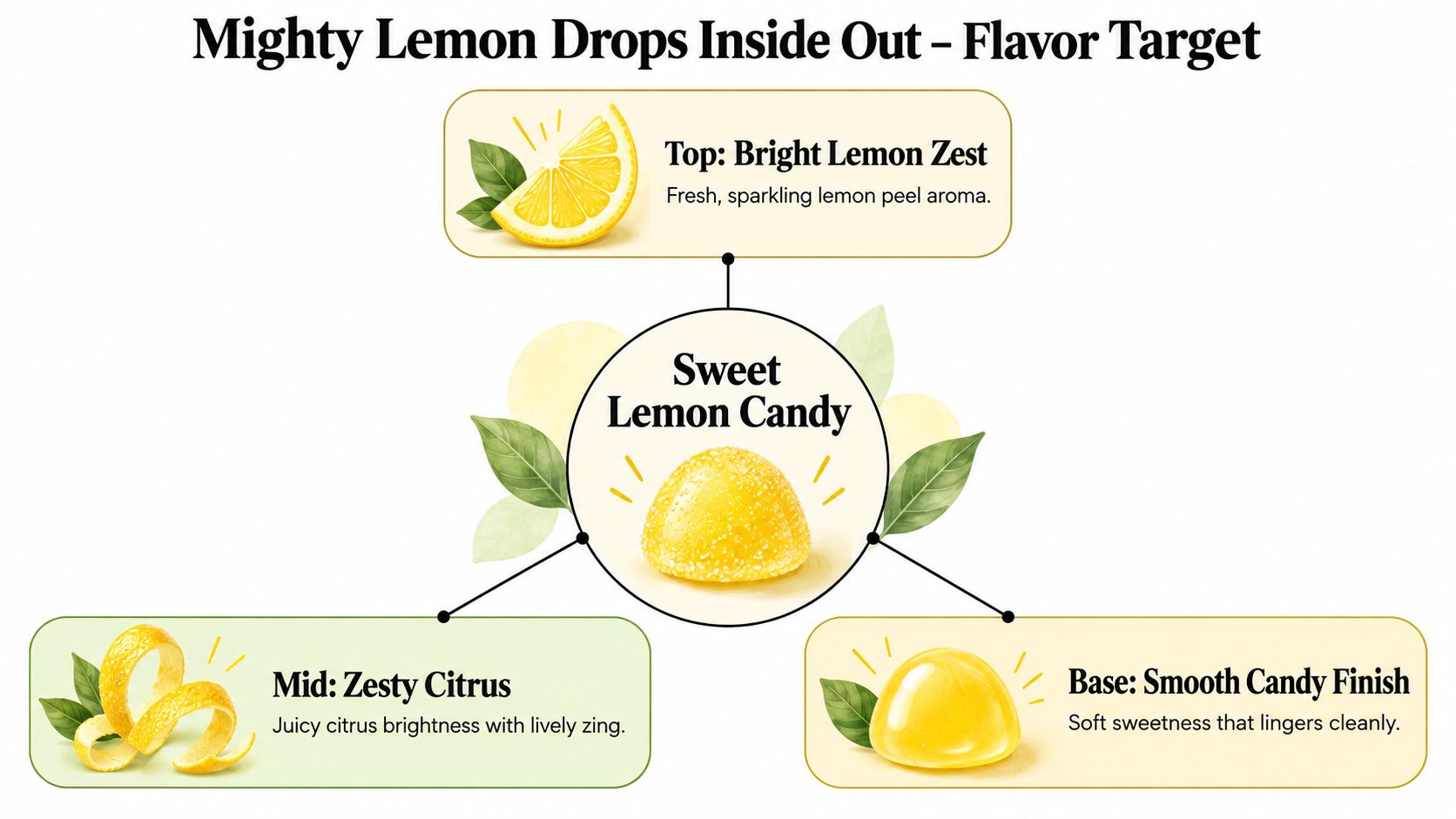
Begin with the sensory phrase, not the ingredient list. Mighty Lemon Drops Inside Out should suggest a lemon-drop candy impression, where the lemon is bright but the overall profile remains rounded and sweet. If the target only says “lemon,” a developer may overbuild the acidic or peel-like side and miss the confectionery character.
Perfume structure offers a useful analogy. A fragrance has an opening that catches attention, a heart that carries its identity, and a base that determines how long the impression remains coherent. A lemon-candy cart follows the same pattern.
Start with the opening
The top note should deliver bright lemon zest with a sweet lift. This is the moment that makes the product identifiable when the cartridge is first opened or when vapor reaches the palate. Limonene is the central tool for this job because it supplies the immediate citrus association. Used alone, however, it can make the profile feel narrow and fleeting.
The mid note provides the recognizable body. Think of fresh zest, citrus oils, and the soft sweetness around a hard candy center. This layer keeps the top note from collapsing into a simple lemon essential-oil impression. It also helps the profile retain character after the initial burst fades.
The base should be clean and restrained. A smooth candy finish doesn't mean adding a heavy dessert character. It means creating enough depth that the lemon doesn't end abruptly or turn harsh. A subtle creamy, woody, earthy, or spicy support can make the finish feel more complete, but the base shouldn't compete with the lemon.
For a more detailed reference point, compare this target with the lemon terpene profile guide. The distinction from a generic lemon strain is important: generic lemon often emphasizes brightness alone, while this target requires brightness plus confectionery softness.
Translate the target into a brief
A practical brief might read:
| Layer | Sensory direction | Formulation purpose |
|---|---|---|
| Top | Bright lemon zest and fresh citrus | Immediate recognition |
| Mid | Zesty citrus with soft sweetness | Palate body and continuity |
| Base | Clean, smooth candy finish | Roundness and persistence |
This wording gives the lab something testable. Instead of asking whether the blend “smells lemony,” the team can ask whether the opening is bright enough, whether the center feels sweet rather than grassy, and whether the finish remains smooth under the intended hardware conditions.
Terpene Profile for Mighty Lemon Drops Inside Out and Note Layering
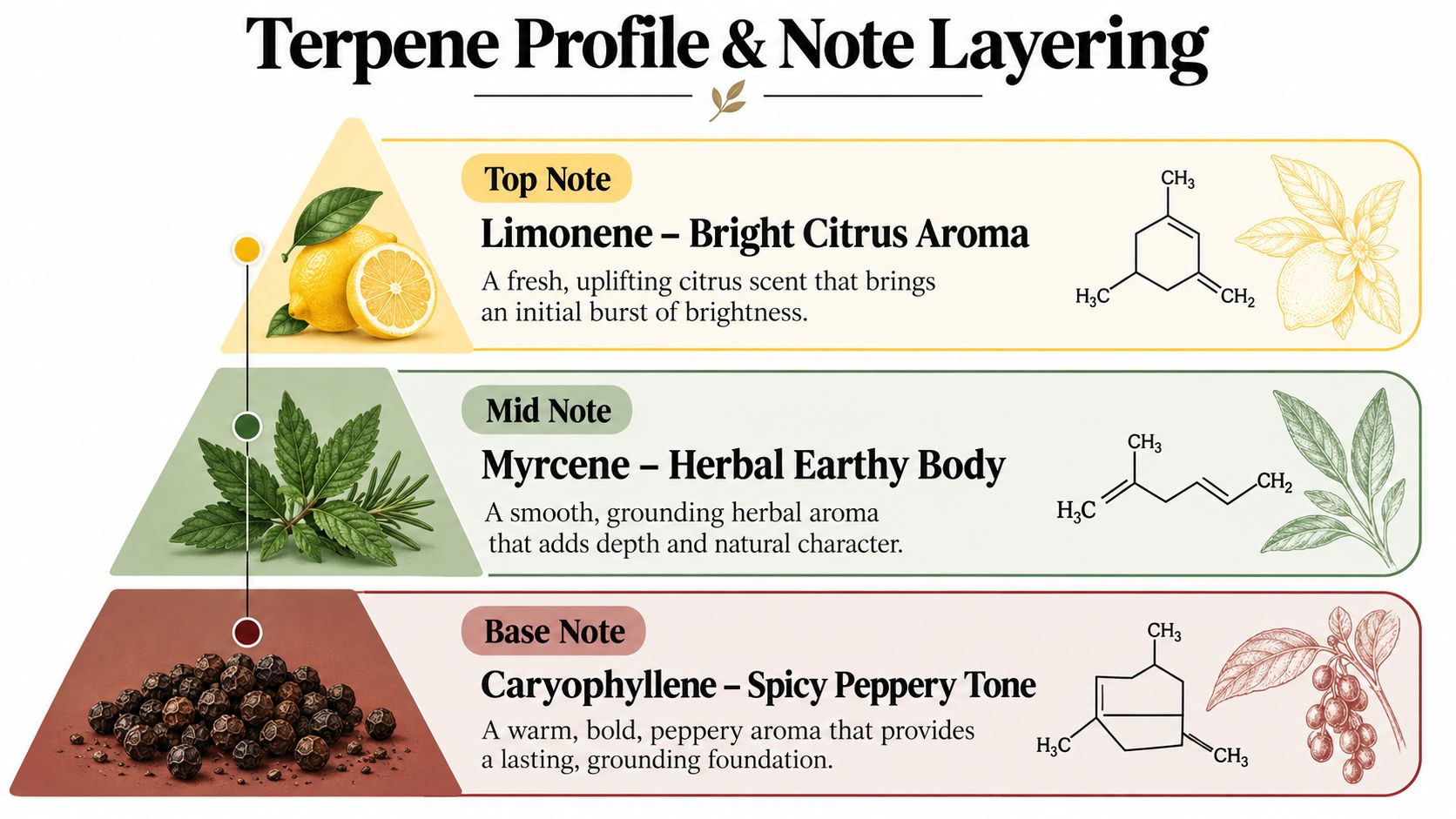
A developer evaluating Mighty Lemon Drops Inside Out should start with the draw sequence, not a single aroma note. The target opens with bright lemon, develops a softer confectionery center, then settles into a restrained, grounded finish. Note layering controls that progression. Limonene supplies the first signal, while the supporting materials decide whether the result resembles lemon candy or concentrated citrus oil.
For lemon-candy-style cannabis formulation, limonene commonly appears at 0.4% to 0.9% by weight, while total terpene content in well-grown material often falls between 1.5% and 3.0%. Those figures describe a profile context, not an automatic recipe for a finished cartridge. The product matrix, sensory threshold, hardware behavior, and compliance requirements still determine the usable formula.
Top note
Limonene is the primary top-note driver. It creates the immediate citrus signal that makes the target recognizable before the supporting layers arrive. In a cartridge, that first impression can dominate because volatile materials reach the vapor phase quickly, particularly when the device runs warm.
The main formulation risk is giving limonene too much responsibility. A blend built almost entirely around it may smell vivid in a test vessel yet taste flat during a draw. Higher heat can also expose a sharp edge. Keep limonene prominent, then give it enough structure to read as sweet lemon rather than raw lemon oil.
Mid note
The mid layer provides body and transition. Myrcene can contribute herbal and earthy depth, while selected citrus-supporting materials connect the bright opening to the finish. The choice depends on the extract matrix and on how strongly the final product should retain botanical character.
This layer works like the soft center of a hard candy: it carries the top note forward without becoming the headline. Excess earthy material can pull the blend toward green or resinous territory. Excess citrus can make the profile louder without making it fuller. Evaluate the center of the draw, not only the first aroma.
Base note
Beta-caryophyllene can add restrained spicy and peppery depth, giving the blend a more grounded finish. Use it as support rather than a flavor headline. Too much pepper character can make the product feel savory or hot, which works against the candy target.
A practical blend architecture assigns 40% or more of the overall profile to primary terpenes, places secondary terpenes at 10% to 20% each, and keeps tertiary or accent terpenes under 5%, as described in this terpene flavor chart guide. These ratios organize the note structure. They do not replace sensory trials or product-specific limits.
Practical rule: Build the lemon identity first. Add only enough mid and base support to make the opening last. Supporting terpenes should clarify the target, not conceal an unclear one.
Evaluate each layer independently before combining it with the intended oil. Smell the top-note concentrate, assess the mid and base separately, then test the complete blend. That sequence shows whether a flat result comes from insufficient lemon, a weak center, or a base that mutes the profile.
How This Profile Performs in Vape Cartridges and Distillate
The same terpene target behaves differently depending on the oil matrix. Winterized distillate, full-spectrum extracts, and isolate-based systems should not receive identical treatment, even when the intended flavor is the same.
Winterized distillate often presents a relatively clean canvas. That can make the lemon-candy profile easy to identify, but it also means the formulation carries more responsibility for body and finish. The top note may feel exposed, and a high-heat draw can make the citrus edge more obvious than it was during room-temperature evaluation.
Full-spectrum or live-resin-style systems bring their own aromatic material. Those native compounds may already provide substantial mid and base character. Adding a complete lemon profile at full strength can create competition rather than improvement. A restrained addition may preserve the extract's identity while adding the candy-like lift the product brief requires.
Isolate-based systems provide another kind of control. They can deliver a clean, repeatable base, but the blend may need more deliberate layering because the underlying oil contributes less native complexity. In that setting, the difference between a sharp lemon and a rounded lemon candy becomes especially dependent on the balance between top, mid, and base notes.
Matrix and hardware comparison
| System | Main advantage | Main formulation concern |
|---|---|---|
| Distillate | Clean, repeatable flavor canvas | Top-note exposure and possible thinness |
| Full-spectrum extract | Native complexity and aromatic body | Added blend may clash with existing notes |
| Isolate-based oil | Precise control over the profile | Requires intentional construction of body and finish |
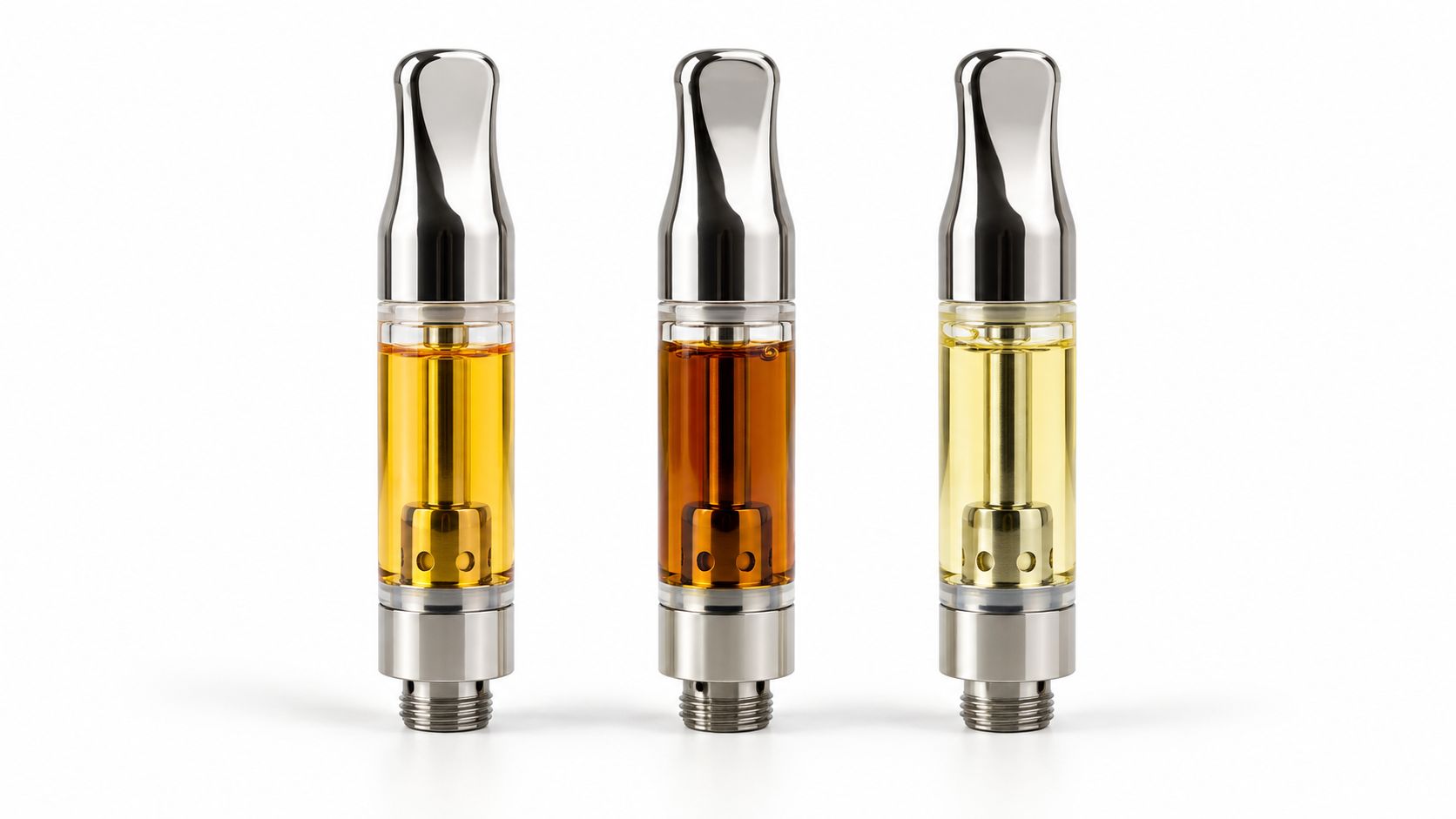
Limonene is volatile, so oxidation, storage conditions, viscosity, and coil temperature all influence the final experience. A blend that tastes balanced in a low-temperature bench test may feel brighter, harsher, or less persistent in a warmer cartridge. The product team should evaluate the filled hardware, not only the oil in a glass vessel.
The terpenes for vape cartridges guide provides a useful application reference. For production, record the hardware, oil matrix, fill conditions, and draw behavior alongside the sensory result. That documentation helps distinguish a formula problem from a delivery-system problem.
Formulating and Replicating Flavor of Mighty Lemon Drops Inside Out
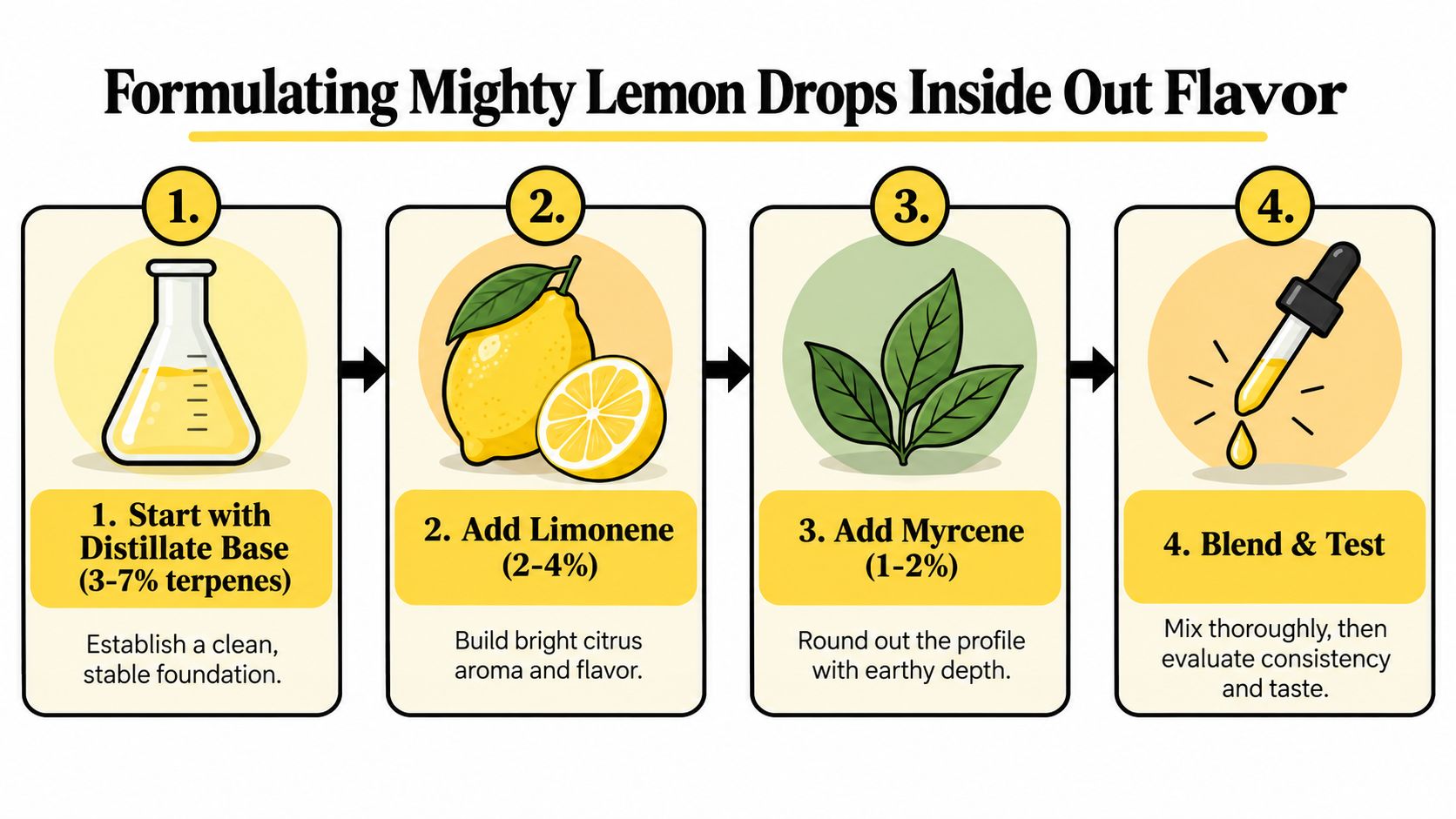
A developer opening a new distillate batch needs a controlled starting point, not a strong first impression. For this target, a common starting range is 3% to 7% total terpene load as reflected in the formulation reference for this target. Treat that range as a development window. The finished cartridge may require less or more adjustment after hardware testing.
Begin with a small trial and add the blend in measured increments. Weigh every component, record lot information, and control the distillate temperature closely enough for uniform mixing without unnecessary heat exposure. The first pass should establish a repeatable baseline. Sensory correction becomes much easier when the starting point is documented.
A practical sequence
Define the sensory endpoint. Describe the opening, center, and finish before combining materials. For Mighty Lemon Drops Inside Out, aim for bright lemon candy at the opening, zesty citrus with sweetness through the center, and a smooth finish with limited botanical sharpness. This brief functions like a map, so each material has a defined job.
Build the top note. Use limonene as the main lemon driver. The formulation concept places limonene at 2% to 4% and myrcene at 1% to 2% within the illustrated distillate approach. Keep both figures inside the selected total load, rather than treating them as additions on top of it. The formulation infographic below shows the staged structure.
Add supporting layers. Introduce mid and base materials gradually. Myrcene can supply body, while beta-caryophyllene can add restrained peppery depth. These layers should support the candy impression, like the center and base of a flavor chord. Evaluate after each change so an overly earthy or spicy note can be identified before it becomes difficult to isolate.
Homogenize and rest. Mix until the oil looks uniform, then let the blend rest before making the final sensory judgment. A short rest may help the materials integrate, but the appropriate interval must come from the team's own matrix and stability protocol.
Test the product, not just the blend
Evaluate the oil at its intended fill temperature, then test it in the actual cartridge hardware. Use low-temperature conditions during early sensory work to reveal the intended profile before heat exaggerates harshness or strips volatile top notes. Compare the first draw, the middle of the session, and the lingering finish.
The distillate and terpene mixing guide can support the mechanical setup. Keep the mixing order, agitation, and acceptance standard consistent across trials. A tank aroma alone does not show whether the formula will deliver the target through a heated cartridge.
A useful comparison point is Elevated Strains, listed as a flavor option in the supplier catalog. It is not a direct substitute for a lemon-candy target. Its value is comparative: assess the finished profile against the sensory brief, rather than judging it by the product name alone.
Lab Testing Safety and Quality Notes for Strain Inspired Blends
Flavor accuracy depends on input quality as much as on ratio selection. A formulation team should source lab-verified, THC-free terpene materials and confirm that the input is free from VG, PG, PEG, and MCT when the product specification requires those exclusions. These checks support both the intended oil behavior and the documentation needed for a regulated manufacturing workflow.
Review the certificate of analysis before approving a lot. The document should identify the material, show relevant analytical results, and provide enough lot information for the production record. A supplier's safety documents and technical guidance can also help the team establish handling, storage, and compatibility procedures.
What to document
- Material identity: Record each terpene or blend used in the batch.
- Lot traceability: Connect the incoming lot to the finished SKU and production date.
- Analytical review: Confirm that the COA matches the material received.
- Sensory reference: Keep a retained reference sample and written notes for opening, mid-palate, and finish.
- Hardware result: Document the cartridge type and test conditions used for approval.
The phrase “strain-inspired” should describe the sensory direction, not imply that a botanical extract has been reproduced exactly. Natural plant profiles vary, and a formulated blend is a designed approximation. That distinction matters for label language, internal specifications, and customer expectations.
Use exotic accent materials sparingly. Their role is to sharpen fruit or dessert nuance, not to overwhelm the lemon structure. If an accent changes the blend's viscosity, creates separation, or introduces harshness, it has moved beyond its intended function.
Quality insight: A stable flavor system needs two records, the formula and the conditions under which the formula passed. Without both, a successful pilot can be difficult to reproduce.
Choosing the Right Strain Inspired Terpene Blend for Your Product Line
A new SKU may need a quick sensory benchmark, while an established extract may require a lemon-candy signature. Choose the blend format accordingly. A ready-made strain-specific profile suits a clear target and rapid comparison. A custom blend gives more control when the extract already has a strong native aroma or the brand needs a distinct finish. Individual isolates provide the most precise control over top, mid, and base notes.
For Mighty Lemon Drops Inside Out, assess each option against the same formulation brief:
- Start with limonene to establish the immediate citrus-candy cue.
- Add mid notes so the vapor does not taste thin or hollow.
- Keep base materials restrained, preserving a clean finish.
- Test the oil in the intended cartridge hardware, not only in a vial.
- Record the approved formula, input lots, and sensory standard before scaling.
Small bench batches help determine whether this target fits a new SKU. Once the blend, oil matrix, hardware, and reference standard perform consistently, bulk terpenes can support repeatable production. A terpene calculator converts the sensory architecture into measured additions, while batch records preserve the ratio and mixing conditions.
Gold Coast Terpenes offers natural terpene blends, strain-specific profiles, isolated compounds, formulation resources, a mixing calculator, and safety documents for cartridge and concentrate development. These materials can support a controlled comparison of ready-made and custom approaches.
Build the trial around the layered lemon-candy brief, test it in final hardware, and compare the result with the defined standard. Approve the profile only after its aroma, finish, and cartridge performance align with the product brief.