
For product formulators, the legendary status of Pineapple Express isn't just about its pop culture fame; it's about a highly replicable and commercially successful terpene profile. Understanding this profile is key to developing products—from vape cartridges to edibles—that deliver the authentic, sought-after experience. The core of this profile is a precise balance of Myrcene, Limonene, and Caryophyllene.
The Pineapple Express Terpene Profile For Vape Cartridges
When a formulator investigates the Pineapple Express terpene profile, they are seeking a chemical blueprint, not a strain history. Replicating this profile accurately is essential for creating a product with authentic flavor and aroma, which drives brand loyalty. While the name attracts initial interest, the sensory experience delivered by the terpenes ensures repeat business.
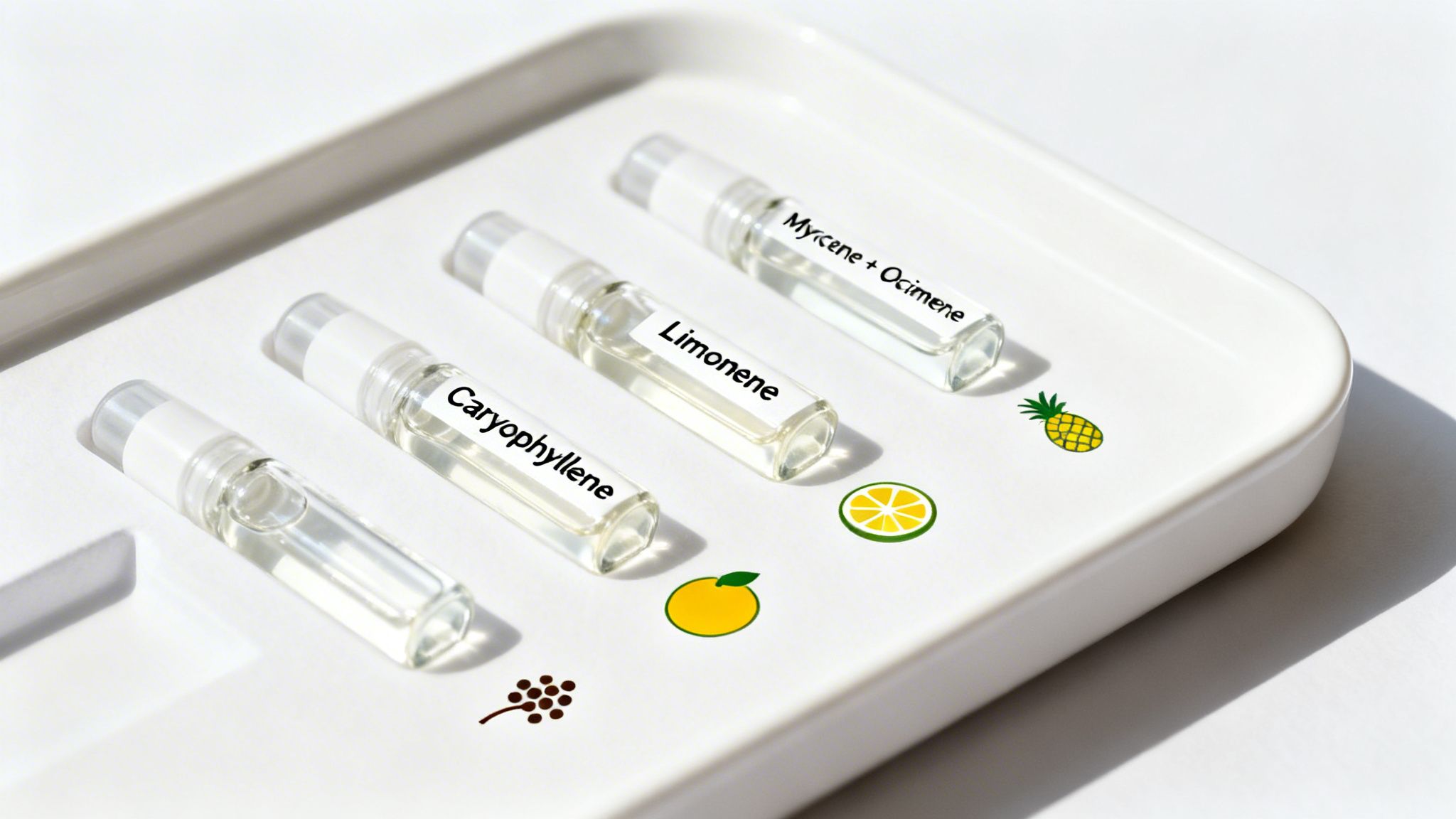
The dominant terpenes function as the primary notes in the final composition. Understanding their individual roles—as top, mid, or base notes—is critical for constructing the complete, layered aromatic profile.
- Top Notes (Myrcene & Ocimene): These volatile compounds create the initial aromatic impact. They deliver the signature sweet and fruity blast of pineapple and mango with a distinct herbal lift. This is the scent that immediately identifies the profile as "Pineapple Express."
- Mid Notes (Limonene): Limonene introduces a bright, sharp citrus element. It adds a necessary layer of complexity that cuts through the initial sweetness, preventing the profile from becoming overly syrupy or one-dimensional.
- Base Notes (Caryophyllene): As the anchor of the blend, Caryophyllene provides a warm, peppery spice and a subtle earthy finish. This base note gives the profile its depth, structure, and lasting power on the palate.
Core Components for Replicating Flavor of Pineapple Express
The key to a successful Pineapple Express formulation is balancing these primary isolates. The interplay between the sweet, fruity top notes of Myrcene and the spicy, grounding presence of Caryophyllene defines the strain's character. Limonene acts as a bridging component, brightening the fruit notes while adding a clean, zesty counterpoint.
A successful formulation moves beyond a generic "pineapple" flavor. It requires building a multi-layered sensory experience from the ground up using specific terpene building blocks. This methodology is how to create a vape cartridge or edible that delivers the authentic profile consumers expect.
For formulators seeking a consistent and reliable foundation, exploring a full range of professionally crafted strain-inspired terpene blends offers a streamlined path to market.
A Quick-Reference Formulation Guide
To transition from theory to application, a clear guide mapping each component's contribution is invaluable.
The table below breaks down the primary terpenes in Pineapple Express, detailing their role in the aromatic structure and providing typical concentration ranges for formulation. This serves as a practical reference when constructing a custom blend or evaluating a pre-blended profile. Achieving the correct ratios is particularly critical when adding terpenes for distillate to ensure flavor and aromatic accuracy.
| Terpene | Aromatic Note Role | Flavor Contribution | Typical Concentration Range |
|---|---|---|---|
| Myrcene | Dominant tropical fruit and mango scent | Sweet, musky, and earthy with fruity undertones | 1.0% – 2.5% |
| Limonene | Bright citrus zest and lemon-peel notes | Sharp, clean citrus flavor that cuts sweetness | 0.5% – 1.5% |
| Caryophyllene | Warm, spicy, and peppery base notes | Black pepper and clove-like spice with a woody finish | 0.5% – 1.5% |
| Ocimene | Sweet, herbal, and floral top notes | Complements the fruit with a slightly woody taste | 0.2% – 0.8% |
This framework provides a solid foundation for creating a Pineapple Express profile that is both authentic and consistently reproducible across production batches.
Unpacking the Flavor: Genetic Origins for Formulation
To accurately replicate a flavor profile, it's essential to understand its genetic origins. The distinct aroma and flavor of Pineapple Express are a direct inheritance from its parent strains, each with its own potent terpene signature. This analysis is less a history lesson and more a reverse-engineering of flavor from a chemical standpoint.
A cultivar's profile is composed of specific chemical compounds, primarily terpenes. Genetic crossing blends these building blocks. Understanding this inheritance is crucial for creating a profile that is authentic and layered, not a simplistic, one-note pineapple flavor.
Deconstructing the Parent Profiles
The unique character of Pineapple Express results from the synergy between its two parent cultivars. One provides a solid, earthy foundation, while the other contributes the bright, fruity top notes that define its reputation.
- Trainwreck: This cultivar provides the spicy, earthy backbone of the profile. Trainwreck is rich in Beta-Caryophyllene, a terpene known for its warm, peppery notes. This creates a grounding base layer, giving Pineapple Express its depth and preventing it from becoming exclusively sweet and fruity.
- Hawaiian: As a classic landrace, Hawaiian is responsible for the vibrant, tropical character. It is high in Limonene and Ocimene, which deliver the signature sweet citrus and juicy fruit notes. This is the source of the "pineapple" aroma—the bright, aromatic lift that defines the initial impression.
The interplay between Trainwreck’s spicy base and Hawaiian’s fruity highlights defines the Pineapple Express experience. The removal of either component would result in an incomplete and inauthentic profile.
From Intentional Breeding to a Legendary Profile
Pineapple Express was the result of intentional breeding with a clear objective. It emerged in the early to mid-2000s, with G13 Labs often credited as the original breeder. The goal was to combine the complex, heavy-hitting genetics of Trainwreck (a hybrid of Afghani, Mexican, and Thai landraces) with the bright sativa characteristics of Hawaiian.
The resulting terpene profile, dominated by caryophyllene, limonene, and ocimene, was a direct and predictable outcome of this crossbreeding. For those interested in the historical context, you can discover more insights about Pineapple Express and its origins.
This genetic story serves as a roadmap for any formulator. One cannot simply combine the most obvious terpenes and expect success. It's necessary to respect the blend—the spicy, woody notes from one parent and the sweet, citrusy tones from the other.
The most effective way to replicate the flavor of Pineapple Express is to treat its genetic lineage as a formulation blueprint. Understanding which parent contributed which aromatic notes enables the construction of a more accurate and layered profile that honors its origins.
Ultimately, knowing the chemical "why" behind the flavor is what separates an average product from a superior one. It provides the blueprint for an intentional, precise formulation that delivers the authentic quality consumers expect.
Building a Flavor Profile: A Formulation Guide to Terpene Layering
Recreating the Pineapple Express profile is an exercise in chemical composition. It requires layering individual terpenes in precise ratios to build a full, harmonious sensory experience, not merely mixing ingredients from a list.
The objective is to construct a multi-dimensional profile that unfolds in stages, mirroring the natural cultivar. This is achieved by balancing the bright, volatile top notes with the richer middle and base notes. Correct execution delivers a complex, genuine experience; failure results in a flat, artificial flavor.
The Three-Act Structure of the Pineapple Express Profile
A well-constructed flavor profile can be understood as a three-part structure. Each act is driven by a specific group of terpenes, and their interaction creates the complete aromatic narrative. Mastering this structure is key to a convincing Pineapple Express strain-inspired terpene blend.
- Act I: The Top Notes: This is the immediate burst of vibrant tropical fruit. It is driven by Myrcene and Ocimene, delivering the signature sweet pineapple and mango aroma. As the most volatile terpenes, they create the first impression.
- Act II: The Mid Notes: As the initial sweetness subsides, Limonene and Pinene introduce fresh complexity. They add a sharp, clean layer of citrus peel and pine, cutting through the sweetness and preventing the profile from becoming one-dimensional.
- Act III: The Base Notes: The final act is delivered by Caryophyllene. It establishes a warm, spicy, and subtly earthy foundation that anchors the brighter notes. This peppery finish adds depth and provides a long-lasting, sophisticated character.
This diagram visualizes how parent strains pass down their distinct terpene groups to create the final hybrid profile.
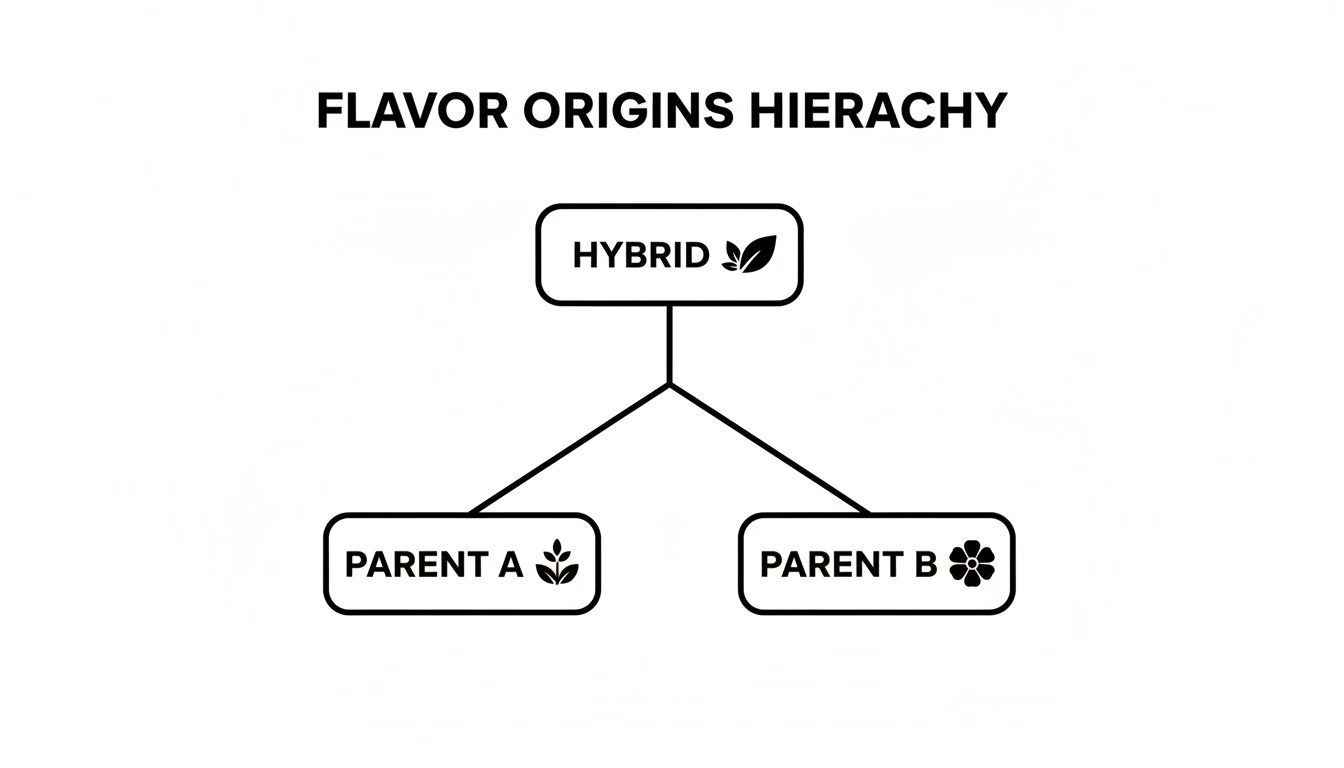
It illustrates how one parent provides the spicy, earthy base notes while the other contributes the bright, fruity top notes. The combination results in a balanced and complex final product.
Adopting a Perfumer's Methodology
The construction of high-end fragrances provides a useful model. Perfumers build a "fragrance pyramid," meticulously layering top, middle, and base notes that evaporate at different rates to create an evolving aromatic journey.
Top notes are the lightest and most volatile. Middle notes emerge next, forming the "heart" of the scent. Finally, heavy base notes provide depth and a lasting impression.
This concept is critical when formulating cannabis products. The bright, fruity notes of Pineapple Express must not evaporate instantly, leaving only a peppery aftertaste. A well-constructed blend ensures the full spectrum of flavor is present from start to finish.
This approach is especially important for products like vape cartridges, where the atomizer's heat can alter terpene expression. A properly layered profile ensures a stable and consistent experience.
A Practical Guide to Layering
The execution of this methodology requires precision. When building a profile from individual isolates, the addition order and ratios are paramount.
First, establish the foundation with base notes like Caryophyllene. This creates a stable anchor for the more volatile terpenes.
Next, build the core character by integrating the mid-notes of Limonene and Pinene.
Finally, carefully add the delicate top notes—Myrcene and Ocimene—at the end of the process.
This bottom-up method prevents the lighter top notes from being overpowered or evaporating prematurely, ensuring each layer of the profile is expressed. The result is a product that doesn't just taste like pineapple—it accurately replicates the Pineapple Express profile.
From Pop Culture to Market Staple: The Commercial Case
For product development, flavor and effect are only part of the equation; marketability is the other. Pineapple Express possesses an enormous, pre-existing market advantage due to its exceptional name recognition.
The 2008 film starring Seth Rogen and James Franco elevated the strain from a niche cultivar to a household name. It was one of the first strains to penetrate mainstream culture while retaining its industry credibility. If you're interested in how this cultural phenomenon was created, you can explore the cultural impact of this strain's profile on modern breeding.
For a product formulator, this means a consumer seeing "Pineapple Express" on a product—be it a vape pen or gummy—has an immediate, pre-existing familiarity with it.
Leveraging Pre-Built Demand
This brand awareness is a significant asset for any product launch. You are not just selling a new tropical flavor; you are selling an experience consumers are already actively seeking. This provides a substantial competitive advantage.
- Faster Customer Adoption: Consumers are more likely to purchase a product with a familiar name. This recognition lowers barriers to entry and accelerates product uptake.
- Reduced Marketing Overhead: The need for extensive consumer education is eliminated. Marketing budgets can be allocated to differentiating your specific product rather than explaining the flavor profile itself.
- Increased Sales Velocity: Because consumers are actively searching for this profile, products experience faster turnover and more predictable revenue streams, reducing the risk associated with a new product launch.
This cultural cachet makes a Pineapple Express strain-inspired terpene blend a strategic business decision, particularly in a crowded marketplace.
A Reliable Performer for Your Product Line
Selecting the right profile involves balancing exceptional flavor with market viability. Pineapple Express occupies this sweet spot perfectly. It offers a genuinely complex and appealing taste backed by brand power that would be prohibitively expensive to build from scratch.
For formulators, this means the significant effort invested in replicating the flavor of Pineapple Express has a higher probability of commercial success. The target audience is already established and seeking an authentic, high-quality version of the profile.
This is about meeting a real, lasting consumer demand that pop culture helped create. Delivering on that promise with a high-quality product is a winning formula. Whether you're crafting products for vape cartridges or a new line of edibles, this profile is a solid foundation.
Simply put, the business case for Pineapple Express is as compelling as its flavor profile. Choosing it aligns your product with a name synonymous with quality and enjoyment—a smart bet backed by over a decade of pop culture relevance.
Practical Application: A Step-by-Step Formulation Guide
This guide details the practical steps for integrating a stable, authentic Pineapple Express profile into your final product.
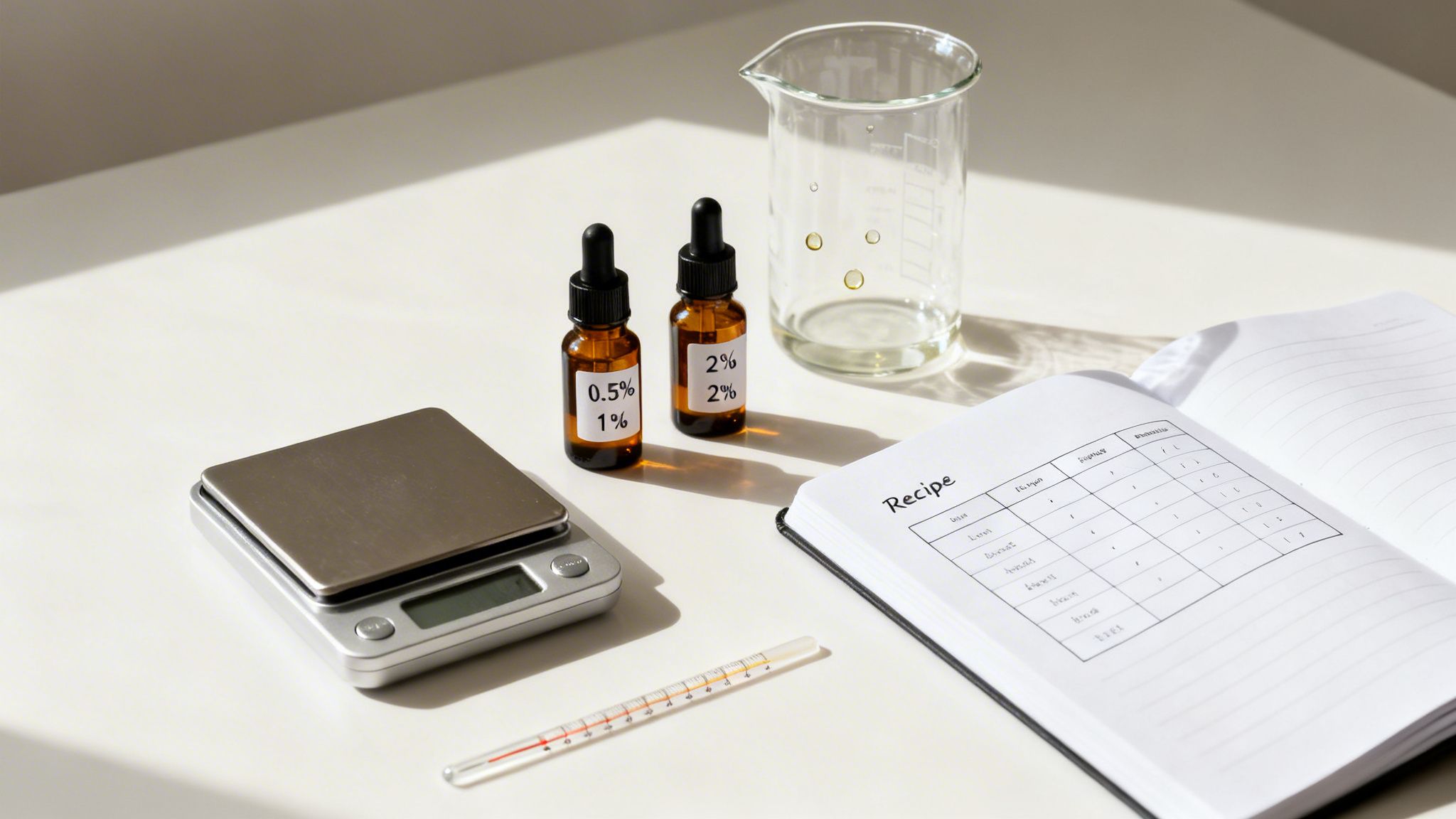
The base material—whether distillate, live resin, or another extract—does not alter the core principles. Proper dosing, thorough homogenization, and adequate steeping are universal requirements for a consistent, high-quality product.
Choosing Your Formulation Path
There are two primary approaches to formulation. The choice depends on production scale, desired consistency, and the level of control required over the final flavor.
Use a Pre-Blended Profile: This is the most efficient path. Utilizing a professionally formulated, complete Pineapple Express profile from a reputable supplier ensures consistency and accuracy. The primary, secondary, and tertiary terpenes are already perfectly balanced, which saves significant R&D time and guarantees a reproducible result.
Build from Isolates: This expert-level route offers complete control to create a unique interpretation of the classic profile by mixing individual terpenes like Myrcene, Limonene, and Caryophyllene. However, this is a complex process where incorrect ratios can easily result in an unbalanced or inferior flavor.
For most brands requiring scalability and consistent quality, starting with a high-quality, pre-blended Pineapple Express strain-inspired terpene blend is the most strategic approach.
The Blending and Homogenization Process
Proper mixing is more than just combining terpenes with an extract. Full integration is required for a smooth, consistent product.
Homogenization is the process of creating a perfectly uniform mixture. The objective is to distribute the terpenes so evenly that every unit of the product is identical. Inadequate homogenization results in "hot spots" of intense flavor and an inconsistent consumer experience.
A reliable, step-by-step process:
Calculate Dosage: Accurately weigh your base extract (e.g., THC distillate). Calculate the required mass of terpenes for your target ratio. For a 6% terpene ratio in 100g of distillate, you would add 6g of terpenes.
Gentle Warming: For viscous extracts like distillate, gentle warming is necessary to facilitate mixing. Maintain a low temperature—100-140°F (40-60°C) is optimal. Higher temperatures risk degrading the volatile terpenes that define the Pineapple Express aroma.
Incorporate and Mix: Add the pre-measured terpenes to the warmed extract. Use a magnetic stirrer or a stainless-steel tool to mix until no streaks or separation are visible and the liquid is cohesive.
Steep for Homogenization: This critical step is often overlooked. After mixing, seal the container and let it rest for 24-48 hours at room temperature. This steeping period allows the terpenes and cannabinoids to fully bond, resulting in a smoother, more integrated profile.
Dosing Recommendations for Different Product Applications
The optimal terpene percentage depends entirely on the starting material and the final product application.
Here are reliable starting percentages for formulation. Always conduct small test batches before committing to large-scale production.
Starting Formulation Ratios for Pineapple Express Profile
| Base Extract Type | Recommended Starting % (by weight) | Target Flavor Intensity | Key Formulation Note |
|---|---|---|---|
| THC/CBD Distillate | 5% – 7% | Strong & Authentic | Start at 5% and increase if necessary. Exceeding 8-10% can lead to harshness. |
| Live Resin / Rosin | 1% – 3% | Subtle Enhancement | These extracts contain native terpenes. The goal is to enhance, not overpower, the existing profile. |
| Shatter / Wax | 2% – 4% | Moderate & Balanced | A slightly higher percentage is needed to infuse flavor effectively into solid concentrates. |
| Edibles (Gummies, etc.) | 0.1% – 0.5% | Mild & Complementary | A very small amount is required. Start low to avoid a bitter or chemical off-taste. |
These guidelines provide a solid foundation for your cannabis product formulation, helping to streamline the process from concept to a market-ready product.
Avoiding Common Pitfalls In Flavor Replication
Even experienced formulators encounter challenges when replicating complex flavor profiles. A few common errors can compromise a batch when developing a Pineapple Express product. Understanding these potential issues is the first step toward avoiding costly mistakes.
The most frequent error is using low-quality or incomplete terpene blends. This leads to a final product with a synthetic, "candy-like" taste that lacks authenticity. A true-to-strain profile is a delicate balance of dozens of compounds, not just the three or four most dominant terpenes.
Another significant hurdle is incorrect ratios. An unbalanced blend can be harsh on the palate or produce a muddled aroma. This often occurs when volatile top notes overpower the subtler base notes, resulting in a fleeting flavor that lacks depth.
The Challenge of Unstable Top Notes
The bright, tropical character of Pineapple Express comes from its most volatile terpenes, particularly monoterpenes like Ocimene. These compounds are highly fragile and degrade quickly when exposed to heat, light, and oxygen.
This sensitivity presents a major production challenge. If not handled carefully, these essential top notes will oxidize and diminish, leaving the final product tasting dull and flat. The vibrant aromatic punch can dissipate before the product reaches the consumer.
A successful formulation is not just about mixing ingredients; it's about preserving the integrity of the most delicate compounds to ensure the flavor remains vibrant and consistent throughout the product's shelf life.
This is precisely why beginning with a professionally crafted and stabilized Pineapple Express strain-inspired terpene blend is often the most prudent strategy. These profiles are engineered for stability, ensuring the volatile top notes are preserved and the complete flavor experience is delivered consistently.
Mastering Ratios And Quality Control
Precision is paramount in flavor replication. A minor miscalculation in ratios can significantly alter the entire profile.
Key considerations for quality control:
- Source High-Purity Isolates: When building a profile from scratch, every component must be of the highest quality. Contaminants or residual solvents in a single isolate can compromise the entire batch.
- Respect Minor Terpenes: Do not underestimate the impact of terpenes present in trace amounts. They often function as modifiers and bridging notes that create a smoother, more well-rounded flavor.
- Implement Rigorous Testing: Do not scale a new formula without extensive small-batch testing. Evaluate the flavor immediately after mixing and again after a 48-hour steeping period to understand how the profile settles and evolves.
Overcoming these common issues requires a technical understanding of terpene chemistry and a commitment to quality. By focusing on high-grade ingredients and precise, repeatable methods, you can capture the authentic essence of Pineapple Express.
Common Questions About Formulating with Pineapple Express
Here we address some of the technical questions that frequently arise during the formulation process, from optimizing percentages for vape cartridges to preserving delicate top notes.
What is the optimal terpene percentage for a distillate cartridge?
For THC distillate, a starting point of 5-7% terpenes by weight is recommended for our Pineapple Express profile. We advise beginning at the lower end (5%), mixing thoroughly, and allowing a 24-hour steeping period before evaluation.
If the flavor intensity is insufficient, the concentration can be incrementally increased toward 8%. Exceeding 10% often introduces harshness and can risk separation of the mixture. Always conduct small test batches to validate your final ratio before large-scale production.
Can I replicate the profile by mixing only the top three isolates?
While tempting as a shortcut, this approach will yield a disappointing result. Caryophyllene, Limonene, and Myrcene are the dominant terpenes, but the authentic character of Pineapple Express lies in the synergy of dozens of minor terpenes.
Using only the primary three will produce a flavor that is generically fruity and earthy but will lack the distinct, complex signature of the true profile.
To achieve the authentic aroma and flavor that consumers recognize, a complete, professionally formulated profile is necessary. It is the most reliable method for creating a premium product with strong market appeal.
How can I prevent the bright, tropical top notes from degrading?
This is a critical formulation challenge. The vibrant top notes are derived from highly volatile monoterpenes like Ocimene, which are susceptible to degradation from heat, light, and oxygen.
During mixing, use the lowest possible temperature required for proper homogenization. After blending, store the finished product in airtight, opaque containers in a cool environment. This protects the delicate terpenes and ensures the product's flavor profile remains stable from production to consumption.
At Gold Coast Terpenes, we specialize in providing the highest-quality, lab-tested terpene profiles for creating consistent, market-leading products. Explore our Pineapple Express strain-inspired terpene blend to experience the impact of precision formulation.