
You can spend a whole afternoon dialing in a terpene blend, fill a pilot run, and still lose the batch at the lab because one chemistry number missed the mark. That's the part formulators learn fast, residual solvents, potency drift, a hardware incompatibility you didn't see coming, then a pallet of finished carts sits on hold while everyone argues over the Certificate of Analysis.
Quality Assurance Testing is the system that keeps that from happening twice. In cannabis and terpene work, it isn't a final checkbox, it's the decision gate that decides whether a raw input belongs in a formulation, whether a blend can survive a cartridge, and whether a finished SKU is safe to ship, stable on shelf, and faithful to the flavor profile you promised.
Why Quality Assurance Testing Matters for Terpene and Cannabis Products
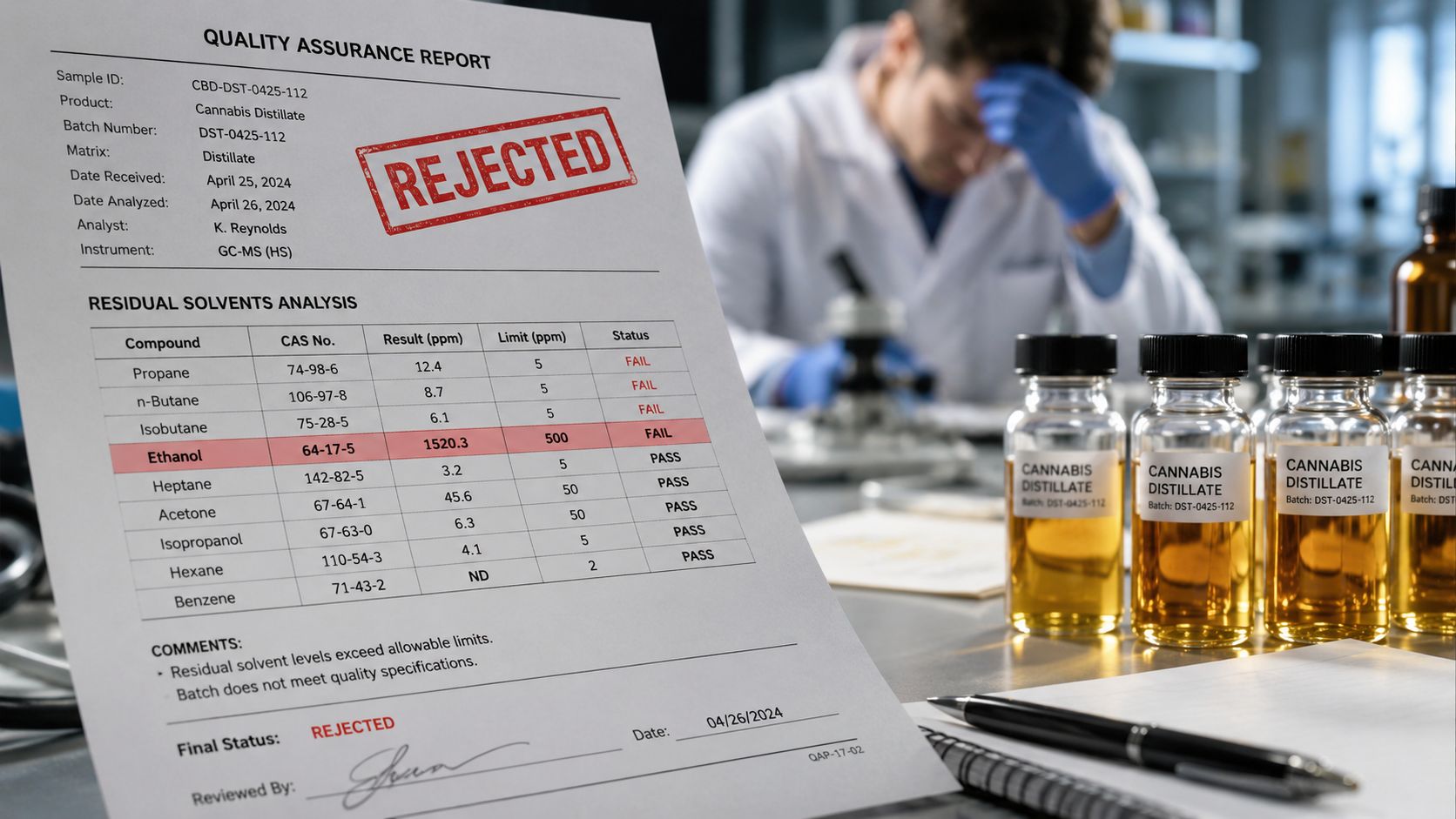
A distillate batch can look clean in the tank and still get rejected after fill because residual solvent levels came back too high. By that point, the team has already paid for extraction, formulation time, cartridges, labor, packaging, labeling, and often freight, then they still have to explain to sales why the launch is delayed and why the same SKU needs another round of testing. That stops being a quality issue and turns into a production problem, a cash flow problem, and a trust problem.
Quality assurance testing prevents that waste by moving the decision upstream. In terpene-rich cartridges and concentrates, one bad input can contaminate an entire SKU run because aroma compounds amplify both strengths and faults. A blend can smell right in a beaker and still carry the wrong solvent signature, the wrong microbial risk, or a compatibility issue that only shows up after the product sits in hardware.
Formal QA becomes a budget line the moment failure is expensive enough to cut into margin and delay revenue. A careful look at how QA gets treated as a cost center when errors are expensive shows the same pattern in other technical fields, the work shifts from a final inspection to a planned system because the cost of a miss is higher than the cost of testing. That is the right lens for cannabis too, where a rejected lot can tie up inventory, stall a launch, and force a second pass through the lab.
Practical rule: If a batch can be ruined by one bad input, test before blending, not after filling.
For terpene and cannabis brands, QA should function as a release system tied to the formulation bench. Potency tells you whether the extract matches the target strength. Terpene identity tells you whether the aroma profile is what you intended. Residual solvents, heavy metals, and microbial screens tell you whether the input is safe to work with and safe to ship. Stability testing tells you whether the oil will still perform after it sits in hardware. Each test answers a different question before money leaves the building.
Gold Coast Terpenes' quality control testing archive as a useful starting point if you're building that kind of gatekeeping into a small operation is worth reviewing if you want to see how a testing program can support release decisions instead of just documenting them.
Core Tests Every Formulator Should Run on Terpenes and Extracts
The cleanest way to think about cannabis QA is to separate quality assurance from quality control. QA is the planned system, the standards, sampling rules, documentation, and acceptance criteria. QC is the actual inspection work, the measurements you run on the material in front of you, the part that tells you whether the batch passes or gets held.
Potency and terpene identity
Potency testing, usually by HPLC, tells you the cannabinoid concentration and whether the extract matches the label claim. For a cartridge formulator, that number affects everything from dilution ratio to viscosity and expected flavor impact. A terpenoid-rich blend can mask a weak potency number on the nose, so the lab result matters more than what the jar smells like.
Terpene profile testing, usually by GC-MS, tells you which aroma compounds are present and at what relative levels. That's the test that helps a formulator replicate a target profile, tune top notes versus base notes, and keep the finished oil consistent from batch to batch. If the profile drifts, the cartridge may still function, but the flavor won't track the spec you sold internally.
Safety screens that protect the batch
Residual solvents are a major gate for distillate and cartridge hardware because volatile carryover can affect both compliance and the finished sensory profile. Pesticides and heavy metals are separate screens, but they land in the same release decision because either one can stop a batch even if the oil looks perfect. Microbial testing does the same job for biological contamination, especially in inputs that have seen poor storage or handling.
VOCs are the final practical screen when you care about odor accuracy and volatile carryover. They're useful when a blend smells “off” even though the cannabinoid and terpene panels look acceptable. In practice, pass versus fail on a COA is not about one heroic number, it's about whether every relevant analyte stayed inside the lab's stated limits.
| Lab Selection Criteria for Cannabis and Terpene Testing | |
|---|---|
| Lab Type | What it tells you |
| Potency by HPLC | Cannabinoid levels, label verification, dilution decisions |
| Terpene profile by GC-MS | Aroma identity, blending accuracy, profile replication |
| Residual solvents | Whether carryover from extraction or processing is acceptable |
| Pesticides | Whether agricultural contamination blocks release |
| Heavy metals | Whether contamination risk from inputs or equipment is present |
| Microbial testing | Whether biological contamination can move into finished goods |
Gold Coast Terpenes' chromatography testing resource fits well if you need to connect profile testing to formulation decisions instead of treating it like paperwork.
A good COA doesn't just say “pass.” It tells you which failure you've avoided and which one still needs a process change.
Sampling, Chain of Custody, and How a Batch Gets Released
The best lab result in the world is worthless if the sample wasn't representative. A cartridge batch needs to be homogenized before anyone pulls material, because a grab sample from the top of a tank can hide solvent pockets, terpene stratification, or viscosity variation that shows up later in fill. Incremental sampling beats a single scoop because it gives you a picture of the whole batch instead of one convenient corner of it.
What a defensible sample looks like
A clean sampling workflow starts with a batch number, a retain sample label, and a written handoff from production to lab. Every transfer should show who collected the sample, when it was collected, what lot it came from, and where it went next. That chain of custody matters because you need to defend the COA during an audit, a customer complaint, or a retest.
In a small cartridge operation, I'd keep the SOP boring on purpose. One batch number per homogenized lot, one sample ID per pull, one retain vial sealed and stored separately, and one release note that can be traced back to the tank, the fill line, and the final package code. If you skip that discipline, you end up trying to reconstruct the batch from memory and old text messages.
Raw input testing versus finished-goods testing
Raw input testing is the better move when the risk sits in the incoming oil, especially for potency, residual solvents, pesticides, and heavy metals. Finished-goods testing matters when the hardware, dilution, or fill process can change the outcome after blending. In some cases, you need both, because the input can pass and the finished cartridge can still fail after contact with the device or after storage.
Supply-chain transparency for terpene work is worth building into your own document set if you want your release package to survive hard questions from buyers and auditors.
The release package itself should be simple. It needs the COA, the batch record, the sampling record, the deviation log if anything went sideways, and the approval signature from the person who can stop shipment.
Here's a useful mental model for batch release:
- Collect a representative sample, not a convenient one.
- Document custody immediately, before the sample leaves the room.
- Test the right matrix, raw input, finished goods, or both.
- Review the data against written limits, not instinct.
- Release only when the paperwork and the chemistry match.
Choosing a Lab and Reading a Certificate of Analysis
Not every lab serves the same purpose, and that's where a lot of small brands make avoidable mistakes. An ISO/IEC 17025 accredited third-party lab is the defensible option when you need regulatory credibility, customer confidence, or a dispute-resistant result. An in-house HPLC setup can be useful for fast potency checks and blend development, but it doesn't replace external confirmation when the batch has to stand up to scrutiny.
Comparing the options
| Lab Type | Typical Turnaround | Cost per Analyte | Defensibility | Best For |
|---|---|---|---|---|
| ISO 17025 accredited third-party lab | Slower than in-house, but structured | Higher than a self-run screen | Highest | Final release, customer-facing COAs, regulatory work |
| In-house HPLC setup | Fast | Lower once the method is running | Moderate | Development work, incoming checks, quick potency screens |
| Quick-turn contract lab | Faster than a large reference lab | Variable | Depends on accreditation and method scope | Pilot runs, time-sensitive decisions, secondary confirmation |
A COA should tell you more than pass or fail. Read the analyte list, the method names, the detection limits, the accreditation info, and the sample ID. If the report leaves out the method scope, hides the lab's credentials, or uses a limit that feels padded enough to make every batch “pass,” that's a problem before the oil ever leaves your dock.
What to ask before you send product
Ask how the lab validates methods, how it handles retests, and whether the method scope covers the matrix you're shipping. A lab that's honest about matrix fit is usually more useful than one that promises speed and gives you a blurry result. Ask for the exact pass/fail criteria up front so your batch record and their report use the same language.
A few labs also support formulation workflows beyond a single release, and Gold Coast Terpenes is one option in that broader supply chain because it provides terpene blends and formulation support materials alongside product lines. That kind of supplier still isn't a replacement for an accredited lab, but it can help keep internal formulation work and external release testing aligned.
COA reading guidance from Gold Coast Terpenes is a practical reference if you're training a team to spot missing IDs, weak methods, or unclear limits.
Stability, Compatibility, and Shelf Life Testing for Cartridges
A cartridge that passes chemistry on day one can still fail after it sits on a shelf or inside a hot shipping lane. Terpene blends stress hardware differently than straight distillate, and some diluent systems can push cannabinoid crystallization or change the feel of the oil long before a consumer ever touches the product. That's why stability and compatibility testing belong in cartridge development, not only in a final release folder.
What to test before you promise shelf life
Accelerated stability work is the fastest way to get useful data without waiting a year. A common setup uses 40°C/75% RH for 4 weeks, then compares the aged sample against the initial fill. The point isn't to pretend that chamber conditions equal real life, it's to create a controlled stress test that can reveal drift in viscosity, terpene loss, seal behavior, and visible phase changes.
You want to check more than taste. Leak testing, coil clogging potential, and material interaction are all relevant because they tell you whether the oil and the hardware are compatible as a system. If the cartridge works cold but fails after shipping heat or repeated handling, the formulation still isn't ready.
What good acceptance criteria look like
A 12-month shelf claim needs support from data you can defend internally. That means documenting initial chemistry, forced-aging results, and any change in fill weight, appearance, or aroma, then deciding in advance what shift is acceptable and what triggers a reformulation. If terpene loss shows up by GC-MS after the aging cycle, or if the oil thickens enough to clog hardware, the shelf-life claim needs to wait.
Don't write a shelf-life number first and search for evidence later. Build the evidence, then assign the claim.
A simple stability chamber doesn't have to be elaborate. You need controlled heat, tracked samples, sealed retains, and a routine comparison schedule. If you can't keep the sample history straight, you won't trust the aging result, and you shouldn't use it to set an expiry date.
Building a Practical QA Workflow for Cartridge and Concentrate Brands
A small or mid-sized brand doesn't need a giant QMS platform to run disciplined quality assurance testing. It needs a repeatable workflow, a clear batch record, and acceptance criteria that someone on the floor can apply without making a judgment call every five minutes. The move is to define gates, not to hope everybody remembers the rules.
A workable release path
Start with incoming raw material inspection. Verify supplier paperwork, record the lot, and test the risk points that matter for that input, then hold the material until the data is reviewed. From there, move into formulation and in-process checks, especially when terpene additions change viscosity or hardware behavior.
Finished-goods release should be separate from incoming screening. The finished cartridge or concentrate needs its own record, because the act of blending, filling, capping, and packaging can create a new failure even when each ingredient passed on arrival. That's where batch records, deviation logs, and retain samples make the difference between a contained issue and a recall.
How a new SKU should move through the system
For a new 1g distillate cartridge, I'd run potency and residual solvent checks on the incoming oil, confirm the terpene profile before blending, then repeat the relevant screens after fill. If the hardware is new, I'd add compatibility and stability checks before the first commercial run. If the batch deviates anywhere, the deviation log should note the exact step, the person who caught it, and the decision that followed.
Internal resources help here when they're focused on process, not hype. A formulation library, a terpene mixing guide, and a cartridge hardware selection sheet are all more useful than a pile of generic PDFs because they let your team make the same decision twice the same way. That's what scales.
Common QA Mistakes That Derail Batches and How to Avoid Them
A batch can look clean on paper and still fail at release if the paperwork, the sample, or the interpretation is wrong. That usually starts with documentation errors, not chemistry. A COA with the wrong lot number, a missing retest date, or a label that does not match the material in the tote can send a good batch to hold status or let a bad one move forward.
Data management failures cause the next layer of trouble. If your incoming screen, in-process notes, and finished-goods record live in different places, no one can reconstruct what changed between blending and fill. I have seen teams chase a stability problem for days only to find the issue in a typo, a copied file, or a retest result attached to the wrong batch record.
Retest results need disciplined handling as well. A passing retest does not erase a failed first result, and a single weak pass should not override a broader trend toward drift, contamination, or solvent carryover. Formulators should review why the material was retested, whether the same sample prep and method were used, and whether the new result reflects the lot that will ship.
Release decisions should also be tied to the right specification set for the product form. A cartridge blend can pass potency and still be a poor release if the record does not capture viscosity changes, fill behavior, or device interaction, while a concentrate can meet target chemistry and still miss if the documentation does not show how the sample was stored before analysis. The practical fix is to keep the batch record, lab report, and disposition decision aligned so one department is not approving a lot on information another department cannot verify.
Supplier files create another avoidable failure point. Missing certificates, outdated spec sheets, and inconsistent naming across vendors make it hard to compare lots or defend a release decision during an audit. Gold Coast Terpenes offers terpene blends and formulation tools that fit into that workflow, but the requirement is internal discipline, the same naming, the same lot trace, and the same approval path every time.
If you treat quality assurance as paperwork after the blend is already done, small errors turn into expensive delays. A stronger system keeps the records clean enough that the chemistry, the hardware, and the release call all point to the same answer.