
You're at the bench with a flavor brief that sounds simple and turns messy fast. The buyer wants a guava-forward cart that still feels polished after fill, doesn't overload the hardware, and can survive lab review without leaning on gimmicks. That's where Guava Ice becomes useful, because the published numbers point to a workable tropical-hybrid profile instead of a vague candy idea.
What matters here isn't strain trivia, it's how the profile translates into top, mid, and base note decisions, load rate, and stability. A good guava-style cartridge needs more than fruit on the front end. It has to stay balanced in distillate, hold its nose through storage, and land in a range that makes sense for commercial vape production.
Why Guava Ice Belongs on a Formulator's Bench
A formulator rarely gets a clean brief. More often, the ask sounds like this, make it read as guava ice in a 1 g distillate cart, keep the flavor load reasonable, and do not make the oil behave badly in hardware. That kind of assignment needs a profile that can be broken into parts, not just described in marketing language.
Guava Ice is useful because one retail listing reports it at 17% THC with 0% CBD, and describes it as a 50% sativa / 50% indica hybrid Guava Ice listing. For product development, that matters. A mid-teens THC read supports a profile that feels present without forcing the flavor system to compete with an aggressively potent flower assumption. The balanced split also leaves room for a broader formulation brief, since the profile does not have to land as strictly daytime or strictly evening.
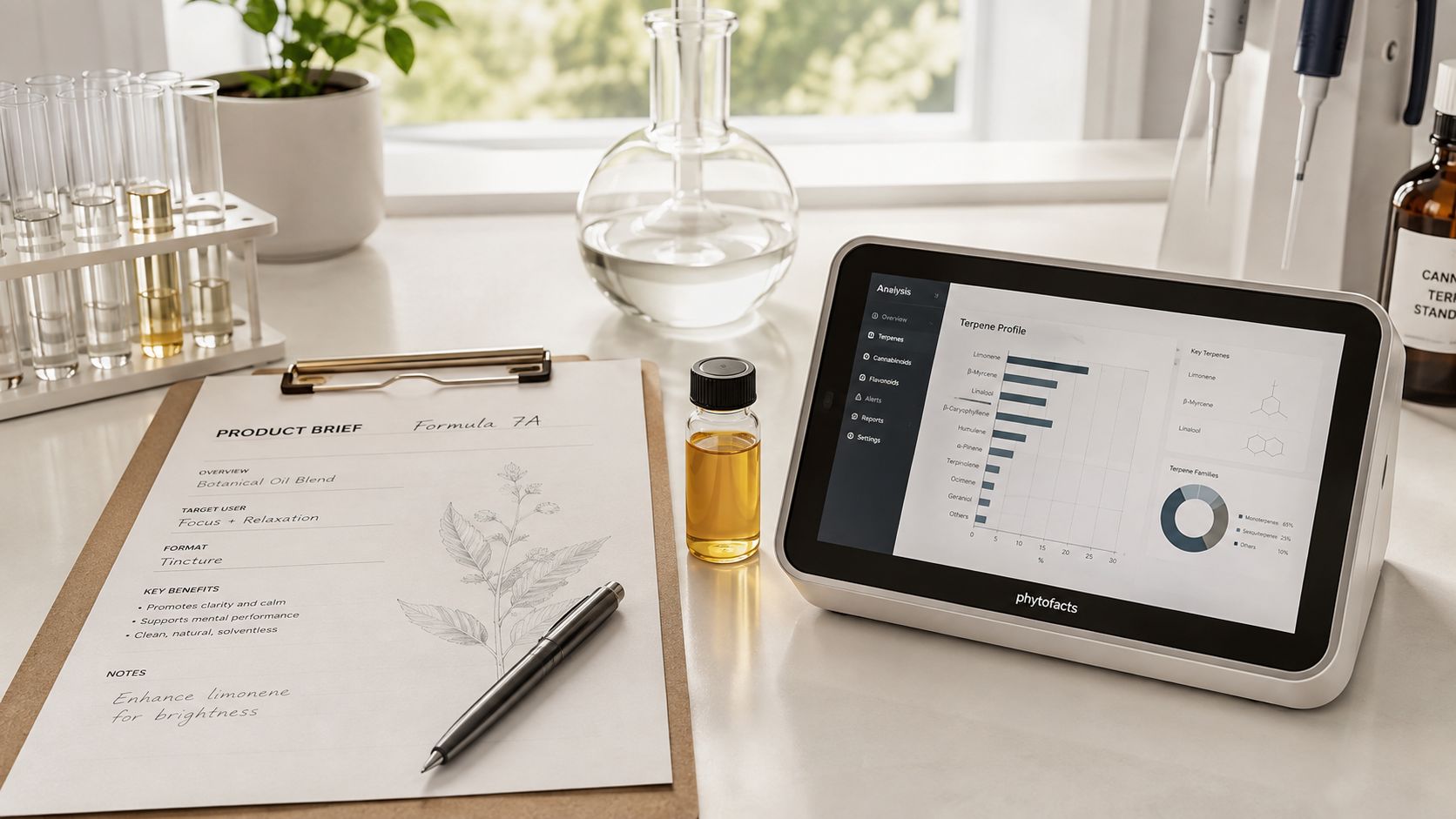
Practical rule: if the brief says “guava” but the blend reads flat in a cart, the problem is usually ratio control, not more total terpene volume.
Guava-family products already have a clear commercial language around fruit, dessert, and tropical hybrid positioning, which gives a developer a real target. The job becomes matching the published profile closely enough that the oil reads as intended after dilution, fill, and shelf time.
A closer look at terpene behavior helps here. The general terpene guidance in Terpenes in Weed is useful context for separating top-note flash from the heavier notes that carry through a fill. A good Guava Ice cart starts with reading the numbers correctly, then deciding which notes need to lead, which notes need to support, and which notes need to stay out of the way.
Guava Ice Genetics and Where the Profile Comes From
Guava-style profiles rarely come from one clean note. They usually sit at the junction of tropical fruit, dessert cream, and a softer cooling or smoothing layer that keeps the fruit from reading like syrup. Lineage matters because it tells a developer whether the profile should push bright and airy, or rounder and more layered. A parent set with Gelato or dessert influence usually points to the second path.
A useful reference point is the broader guava family, where published guides frame the category as a flavor-first hybrid lane built around terpene-heavy, dessert-adjacent flower. That framing helps set the brief. The target is tropical sweetness with body, then a finish that reads creamy or floral rather than purely citrus. For a closer look at how that logic shows up in related material, the Guava Haze strain archive is a useful comparison point.
Parentage signals that matter
One source identifies Guava Icee as 70% indica / 30% sativa and a cross of Ice Cream Cake × Strawberry Guava Guava Icee product page. That is a strong cue even if the SKU is labeled Guava Ice rather than Guava Icee. Ice Cream Cake points toward dessert depth, while Strawberry Guava points toward fruit lift. In formulation terms, that means the profile should read layered and round, not sharp or gas-led.
The cannabinoid position also matters. The Guava Ice listing shows 0% CBD, which places the product in a THC-forward, cannabinoid-simple flower lane rather than a wellness-style mixed cannabinoid line. In cartridge work, that kind of material usually pairs best with a clean distillate base and a terpene system that carries the sensory load on its own.
A guava label can mean very different things across suppliers. The parentage tells you whether the blend needs fruit brightness, dessert thickness, or both.
For a developer, the takeaway is straightforward. If the lineage has Ice Cream Cake or a similar dessert parent, avoid overcorrecting toward pure citrus. Let the fruit arrive first, then keep a creamier underside in the finished oil. That is what makes the profile feel intentional instead of thin.
The Working Terpene Stack and Published COA Ranges
The core working trio for guava-style formulation is limonene, caryophyllene, and linalool. That stack keeps showing up across guava-family guides and COA discussions, and it's the most defensible place to start if you're building a cartridge or evaluating a vendor spec sheet Guava strain guide. The reason is practical. Each terpene pulls a different weight in the finished oil, and the ratio changes how the nose lands.
| Terpene | Published Range | Role in Blend | Sensory Contribution |
|---|---|---|---|
| Beta-caryophyllene | 0.3% to 0.8% | Base to mid support | Spice, body, dry structure |
| Limonene | 0.3% to 0.6% | Top note anchor | Citrus lift, brightness, initial fruit pop |
| Linalool | 0.2% to 0.4% | Mid to finish smoothing | Floral softness, roundness, creamier exit |
The published ranges above are useful because they keep the profile inside a believable guava lane instead of chasing random sweetness. Limonene is the quickest way to bring the top of the cart into focus. If you push it too high relative to the rest, the blend can turn thin and citrus-led instead of guava-led. If it's too low, the nose can feel dull before the first inhale even happens.
Caryophyllene gives the blend its spine. In guava-style profiles, that spice and dry body stop the fruit from reading like candy syrup. Linalool then smooths the edges, especially when the goal is a creamy finish rather than a sharp tropical top. The same range data also explains why a guava cart that smells good in the bottle can go sideways after dilution. Once the distillate takes on the terpene load, the ratio matters more than the raw amount.
For a blender, the practical target is not “more guava.” It's the right balance of lift, structure, and softness. If you're comparing vendor submissions, the most useful question is whether the spec sheet supports those three roles without forcing one terpene to do all the work.
For a matching formulation reference, the COA certificate of analysis archive is a helpful framework for reading terpene specs with a commercial eye.
Translating the Stack into a Distillate Cartridge Blend
A guava-style cartridge usually works best when the blend is built around a low total terpene load and a clear note hierarchy. For a 1 g distillate cart, a practical starting window is 0.5% to 1.5% total load for the primary guava-dominant terpene expression, with a separate 0.1% to 0.3% finishing agent if the profile needs extra crispness, and 0.2% to 0.5% for support terpenes that round the finish. That hierarchy keeps the oil readable without making the cart taste like concentrate syrup.
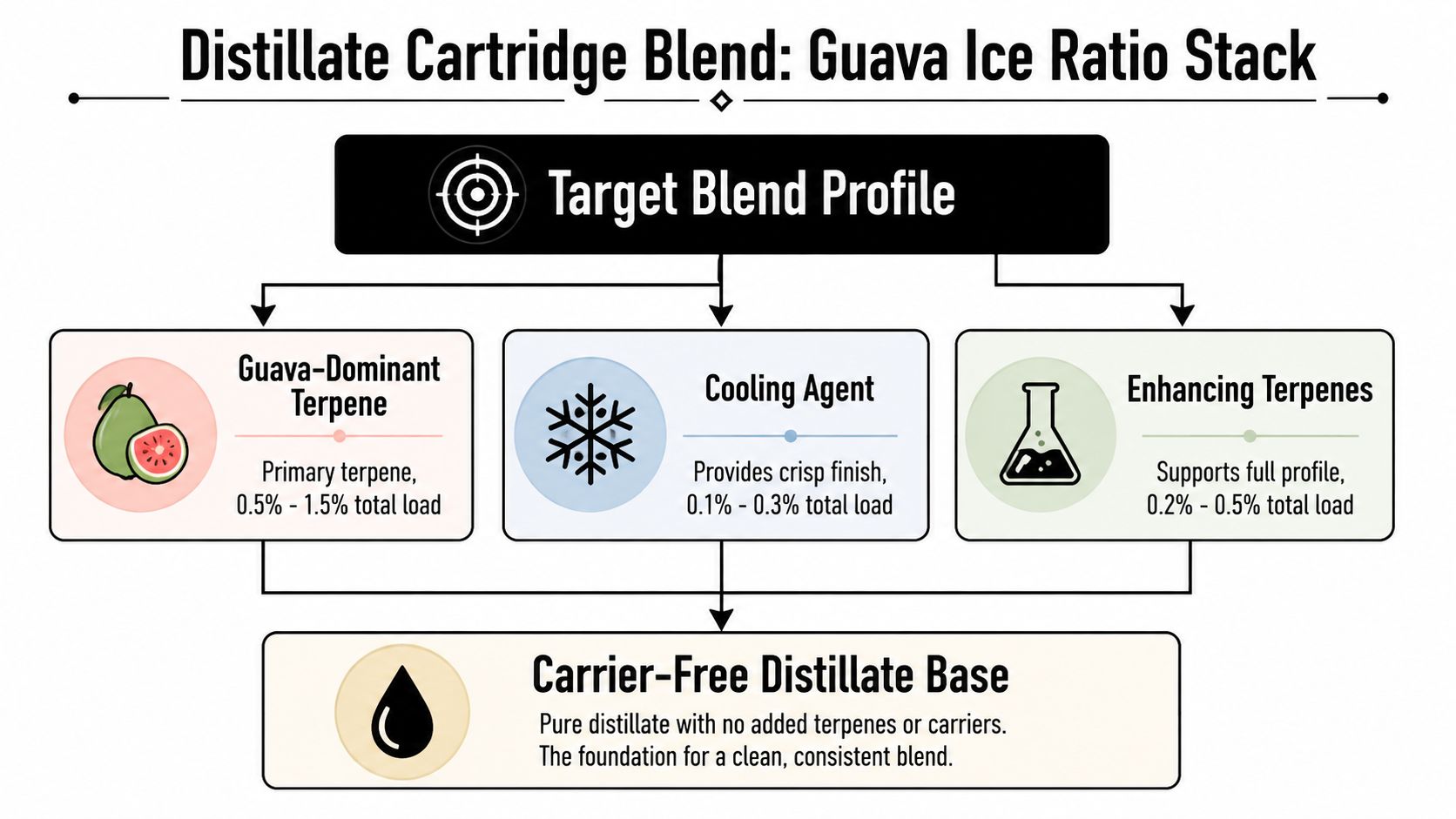
The cleanest bench order is simple. Start with the distillate base, add the base note terpene first, then introduce the top note and finally the smoothing component. That sequencing helps the heavier note distribute before the more volatile material goes in. It also makes it easier to judge whether the batch is drifting fruit-forward or dessert-forward before you commit to a full run.
Two usable starting directions
A fruit-forward build leans harder on limonene at the front, keeps caryophyllene in the middle, and uses linalool as a softener rather than a lead. That version reads brighter on first inhale and usually feels more open in the cartridge. A dessert-leaning build pushes caryophyllene up slightly, keeps limonene present but not dominant, and lets linalool smooth the tail so the guava note feels creamier and less sharp.
If you need a stronger recipe signal, keep the trio on hand as separate materials rather than trying to force one pre-mixed flavor block to do the whole job. That gives you control over brightness, body, and finish. It also lets you adjust for differences in distillate clarity, because a darker or more terpene-hungry oil will often mute the top notes faster than a cleaner base.
Bench note: if the oil tastes fine at room temp but the nose collapses after fill, the top note is too fragile for the ratio you chose.
For cartridge development workflows, the article on how to mix distillate with terpenes is the right companion resource. A Guava Ice blend doesn't need a complicated formula. It needs a disciplined ratio stack, a stable carrier-free base, and enough restraint to let the guava note stay identifiable after the fill.
Load Rates, Mixing Order, and Cartridge Stability
Most formulation mistakes start after the scent test passes. The cart is filled, the oil looks fine, and then the profile flattens, thickens, or separates once it sits. That's usually a load-rate problem first and a flavor problem second. Too much terpene volume can make the nose harsh, but it can also stress wick behavior and make the oil less forgiving in hardware.
Keep the formulation carrier-free. For this kind of distillate cart, that means no VG, PG, PEG, or MCT. Those carriers change viscosity and can affect how the oil feeds through the wick. Pure distillate plus terpenes is the cleaner route when the goal is a predictable guava-style expression and a less complicated compliance story.
Stability guardrails that actually matter
Mix the heavier support terpene into the distillate first, then fold in the brighter top note. That helps prevent volatile loss during blending and keeps the nose from punching too hard at the start. If the blend sits in a warm room, the volatile top can flash off faster than the base, which leaves the cartridge smelling less like guava and more like generic sweetness.
Temperature, headspace, and light exposure all matter during storage. A cart stored warm or exposed to light will usually drift faster than one held cool and dark. Headspace matters too, because more air above the oil gives aroma components more room to move and change before the customer ever opens the box.
A good practice is to keep a retained sample from the same batch and check it against the fresh fill before release. If the nose changes between bench and package, the formula needs a stability correction, not a marketing rewrite.
Stable flavor in a cart usually comes from restraint. The blend has to survive filling, packaging, and shelf time, not just smell good in a cup.
The right question isn't whether the blend can smell loud for five minutes. It's whether the guava note still reads clearly after the product has sat, shipped, and been handled. That's what separates a bench sample from a retail SKU.
Where Most Guava Profiles Go Wrong in Formulation
The most common mistake is treating more total terpenes like a shortcut to better flavor. In guava-family material, that usually backfires. Published guava-type analyses often land in a narrow terpene band, and that range is better read as a ceiling than a target for every cart batch.
A cart built at the high end of that mindset often comes off harsh, busy, and one-dimensional. The fruit can get louder, but it does not get more accurate. What usually happens is that the top note takes over, the mid-palate gets crowded, and the finish loses the layered quality that makes guava-style profiles commercially interesting in the first place.
Accuracy beats volume
A lower-load blend with the right ratio usually beats a louder blend with the wrong one. That is especially true for a profile like Guava Ice, where the brief depends on fruit, spice, and softness working together. If one terpene overwhelms the rest, the cart may still smell strong, but it will not read as the intended cultivar style.
The internal QA standard should be whether the sample still feels like sweet tropical guava with a cool or creamy finish at practical load levels, not whether it hits the strongest room note in the lab. Vendors often overstate performance by describing aroma out of bottle. What matters is the inhaled profile after dilution and wick activation.
A better development standard is to compare your batch against a retained control at the same load. If the control is cleaner and more recognizable at a lower terpene volume, the formula needs adjustment. If your batch only wins by being louder, it is probably carrying too much terpene weight.
For a Guava Ice SKU, the right win is clarity. The cart should read as a deliberate tropical hybrid, not as a perfume load pretending to be flavor.
Lab Testing, Carriers, and Compliance for a Guava Ice Cart
A guava-inspired cart needs clean documentation before it goes anywhere near a co-packer or retail launch. Start with lab confirmation that the terpene profile and cannabinoid content match the label claim. Keep the formulation simple enough that the COA tells the story without carrier confusion.
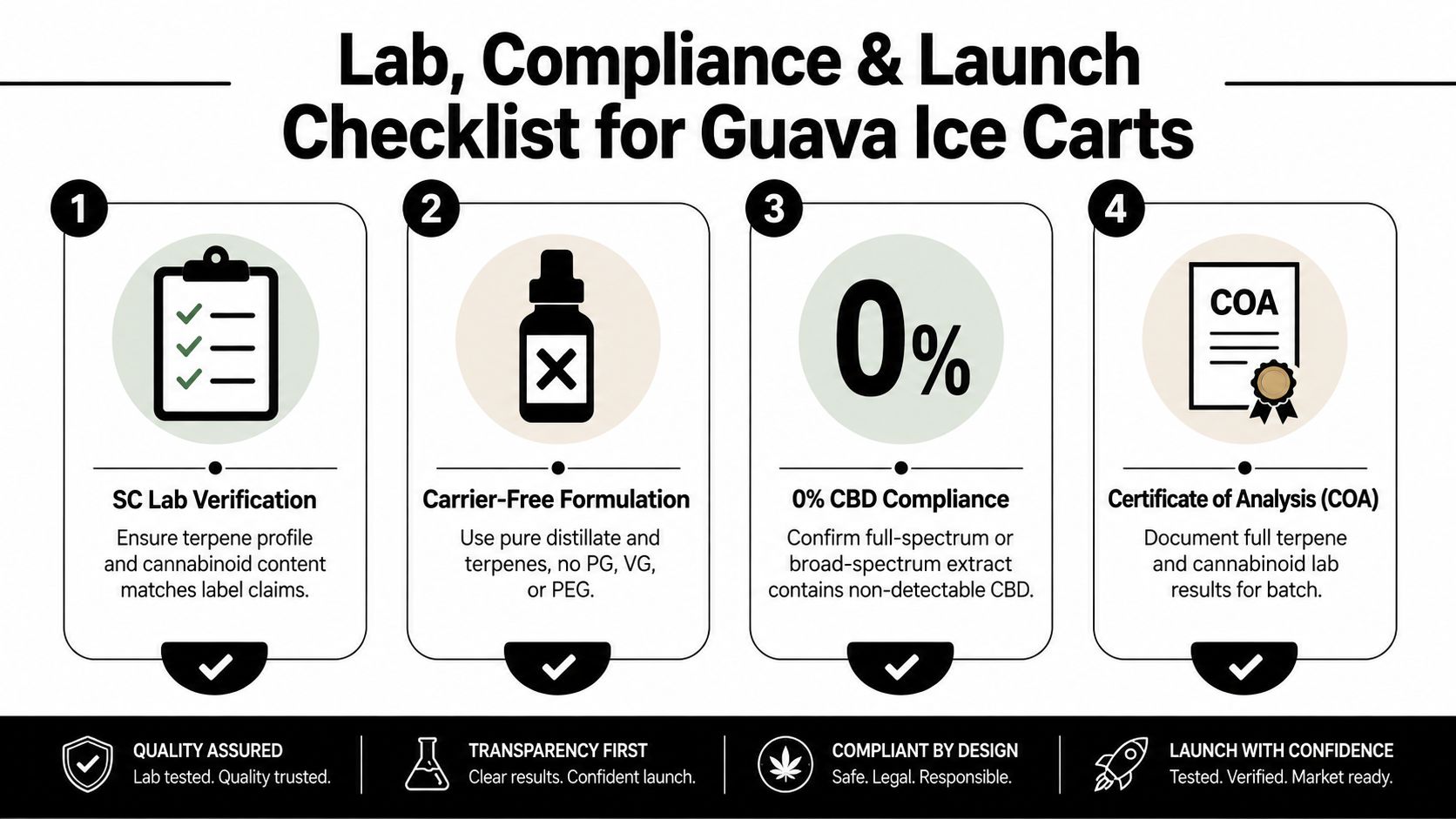
The cleanest compliance posture is a carrier-free formulation with documented terpene inputs and a finished-product COA on file. For a Guava Ice cart, the 0% CBD positioning from the source listing matters because it shapes how the SKU is described and what the label can imply. If the finished oil is intended to mirror that positioning, the cannabinoid story needs to stay aligned with the extract input and not drift into mixed-spectrum language.
Documents to have ready
- Batch COA: Keep the terpene and cannabinoid lab report attached to the lot.
- Formulation sheet: Record terpene inputs, order of addition, and final load.
- Carrier declaration: Confirm the oil uses pure distillate and terpenes only.
- Label review: Make sure the named profile matches the tested content and internal spec.
Jurisdiction still matters. A blend that works in one market can still need label edits, packaging changes, or a different launch path in another. The formula may stay the same, but the paperwork around it often won't.
If a brand owner wants fewer surprises, the best move is to lock the lab standard before production, not after. That keeps the blend, the label, and the COA aligned.
Bringing a Guava Ice SKU to Market
A Guava Ice SKU works best when the product story is built around precision, not hype. The published cannabinoid data puts it in a moderate-potency lane, while the guava-family terpene pattern points toward a fruit-plus-body cartridge rather than a one-note sweet cart. That combination is attractive to buyers who want something recognizable, but not overdone.
The commercial decision points are straightforward. First, decide whether the profile should lean brighter or creamier. Second, keep the terpene load disciplined enough that the cart still behaves well in hardware. Third, make sure the spec sheet, COA, and label all describe the same oil.
A quick approval check helps before the next run:
- Does the blend read as guava first, not generic sweet?
- Does the finish stay smooth after fill and rest time?
- Does the COA support the label claim without extra explanation?
That's the standard for a guava-style vape SKU. If it smells good but doesn't hold its shape, it's not ready. If it holds its shape but loses the guava character, it misses the brief.
Gold Coast Terpenes supplies 100% natural, THC-free terpene blends and isolated compounds that fit this kind of cartridge and formulation work. If you're developing a Guava Ice-style cart, visit Gold Coast Terpenes to review terpene options, strain-specific profiles, and formulation tools before your next production run.