
A Permanent Marker batch can look perfect on paper and still fail the first cartridge draw. The distillate may carry plenty of sweetness and fuel, yet the finished oil reads like generic candy-gas instead of the cultivar's floral, soapy, creamy, ink-like character. That gap is where a strain-inspired terpene blend for vape cartridges becomes a formulation problem, not a naming exercise.
The Permanent Marker weed strain has a modern pedigree, strong market recognition, and a reputation for intense aroma. But a strain name doesn't guarantee a fixed sensory result. Reported batches range from 25% to 34% THC, while terpene results can shift from 1.35% total terpenes to much richer lots, so the source material, cure, phenotype, and processing history all matter (Herb's batch variability profile). The practical question for a manufacturer is simple: how do you rebuild the profile so the cart still carries the dessert-gas signature after dilution, heating, and storage?
Why Formulators Are Rebuilding Permanent Marker Right Now
A typical rebuild starts with a disappointing retain sample. The distillate smells sweet when the vial opens, but the first draw from a cartridge is mostly citrus candy and generic fuel. The creamy center is gone. The clean, sharp floral edge disappears after the initial inhale. By the second or third draw, there's no recognizable Permanent Marker identity left.
That result usually comes from treating the profile as a single flavor note. A botanical blend built around bright citrus and a broad “gas” accord can smell convincing in a vial, yet flatten on hardware because the volatile top notes arrive too quickly and the heavier aromatic structure never survives the draw. Distillation and aggressive thermal handling can also separate the sensory layers that make the cultivar distinctive. What remains may be loud, but loud isn't the same as accurate.
The reconstitution problem
Permanent Marker's commercial identity developed quickly. Seed Junky Genetics worked on the cultivar in its Northridge breeding program from roughly 2019 to 2021, according to Leafly's genetics overview. High Times describes breeder JBeezy's selection path as Biscotti S1 crossed with a Sherb Bx1 male, followed by a cross to a Jealousy F2 male, producing the pedigree (Biscotti S1 × Sherb Bx1) × Jealousy F2 (High Times' Permanent Marker profile).
Doja Pak helped push the cultivar into the wider market in 2022, and Leafly named it Strain of the Year in 2023 (Leafly's strain recognition coverage). That progression made the profile commercially important, but it also created a replication challenge. Product teams now need a repeatable flavor system that can work across distillate, concentrates, and cart hardware, even when the incoming biomass doesn't express the same balance as the reference flower.
Practical rule: Rebuild the sensory architecture, not the reputation. A recognizable cart needs a controlled top, a durable middle, and a base that remains present after heating.
A workable brief starts with phenotype-aware sourcing, a verified COA, and a blend sheet that identifies which notes need reinforcement. The Permanent Marker effects and profile reference can help establish the broader sensory direction, but the production decision should come from the actual lot under development. Your bench test should answer whether the blend preserves the floral-soapy opening, the creamy dessert body, and the diesel-ink finish after dilution and a real draw.
Tracing Permanent Marker's Genetic Lineage for Flavor Clues
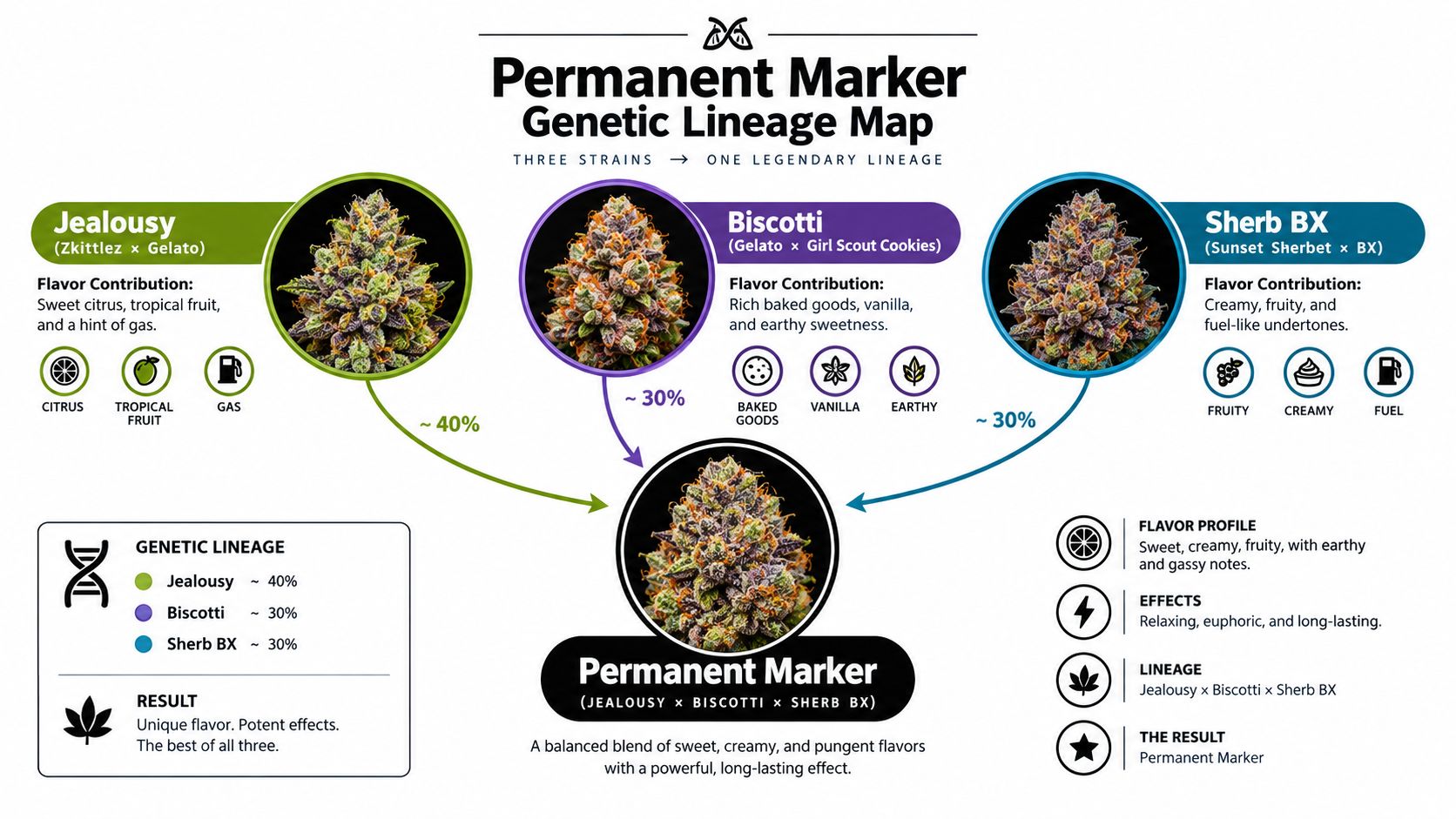
A Permanent Marker reconstitution can smell convincing in a vial and still collapse on a cart draw. Pedigree helps explain why. The cultivar's commonly cited parents, Jealousy, Biscotti, and Sherb Bx, point to a layered target rather than a single sweet or fuel note. The full crossing sequence and breeder details were established in the reconstitution brief above. This section focuses on translating those genetics into aroma architecture. Genetics cannot replace a COA, but it can guide the first analytical screen.
Reading the parents as aroma architecture
Jealousy suggests the creamy, sweet, polished side of the profile. In a reconstruction, that contribution supplies the soft dough and dessert center. A blend built only around citrus and fuel will smell pointed at first, then hollow. The creamy layer gives the opening somewhere to settle.
Biscotti supports cookie, spice, and gas. Caryophyllene is useful in this role because its peppery, resinous character can persist in a finished cart better than delicate floral material. Myrcene adds weight, while humulene can keep the base dry and herbal instead of syrupy.
Sherb Bx helps account for the brighter, more perfumed edge. Limonene can lift the opening, while linalool-like floral accents support the clean, soapy character often associated with Permanent Marker. Both require restraint. Excess floral material makes the blend read as soap, while excess limonene pushes it toward citrus candy.
The Permanent Marker seed and lineage reference provides a useful source check before comparing a cultivar description with the aroma of a target lot. For adjacent dessert profiles, Elevated Strains offers a catalog example of a flavor-hybrid direction. It is a comparison point, not a substitute for a Permanent Marker reference.
What pedigree can predict
Lineage gives the bench test three practical questions:
- Which note should dominate? A creamy-gas lot needs a different correction from a sharp-soapy lot.
- Which note needs protection? Bright citrus and floral accents may fade sooner during processing than the heavier spicy base.
- What should the finished draw do? The opening should feel clean and lifted, the middle sweet and creamy, and the finish should return to gas, pepper, and ink.
That sequence turns pedigree into a working formulation target before the blend sheet becomes a list of isolated compounds.
Dominant Terpenes and Their Top, Mid, and Base Note Roles
A useful terpene profile for Permanent Marker starts with the reported core of beta-caryophyllene, limonene, and myrcene, with some profiles also identifying linalool and humulene as meaningful supporting components. Leafly specifically describes myrcene, limonene, and caryophyllene as recurring elements in the profile (Leafly's Permanent Marker terpene profile). The exact order can change by cut and cultivation conditions, so the blend sheet should preserve the sensory jobs of the compounds rather than assume every batch has the same hierarchy.
Assigning each layer a job
Beta-caryophyllene belongs in the mid-to-base structure. It supplies pepper, resin, and a dry diesel impression. In a cart, it helps the finish remain present after the bright opening fades. It's also the main support for the “ink” and gas impression when a blend risks becoming too sweet.
Limonene works as the lift. It adds citrus peel and bright sweetness, giving the opening enough energy to avoid a dense, muddy draw. The mistake is allowing limonene to carry the whole blend. A limonene-heavy reconstruction often smells appealing in a vial but loses the cultivar's identity once the cartridge warms.
Myrcene rounds the lower register. Its earthy, musky quality can connect the dessert center to the heavier finish. It should provide body without making the blend dull. A batch with too much myrcene may bury the floral top and make the cart feel dense before the gas note arrives.
Linalool supports the clean floral edge. It can create the perfume-soapy first impression, but it needs careful control. The target isn't household-cleaner sharpness. The target is a brief floral flash that transitions into sweet cream and then returns to spice and gas.
The table below converts those roles into a practical architecture.
| Note Layer | Dominant Terpene | Sensory Role | Blend Function |
|---|---|---|---|
| Top | Linalool with bright supporting accents | Floral, clean, lightly perfumed | Establishes the first-second identity on the draw |
| Mid | Limonene | Citrus peel, sweet lift | Keeps the creamy center from becoming flat |
| Mid-base | Beta-caryophyllene | Pepper, resin, dry gas | Carries the signature through heat |
| Base | Myrcene | Musky, earthy, rounded | Adds weight and connects the finish |
| Base support | Humulene | Dry, herbal, restrained | Prevents the gas accord from becoming sugary |
Use the terpene flavor chart to compare sensory descriptors against your available isolates or strain-specific materials. The most reliable approach is to evaluate the blend at three points: vial headspace, room-temperature draw, and warmed hardware draw. A profile that works only in the vial isn't finished.
Reading Lab Data to Set Realistic Formulation Targets
Lab data should determine the direction of a rebuild, but it shouldn't be copied mechanically. Market-facing summaries describe Permanent Marker as terpene-rich, with optimized indoor lots often around 2.0% to 3.5% total terpenes, and standout batches sometimes exceeding 4% (JointCommerce's Permanent Marker terpene guide). Another profile lists 3.2% total terpenes and a 55/45 indica-leaning hybrid structure (The Fade Company's strain profile). These are flower observations, not direct loading instructions for distillate.
Don't convert flower percentages into cart recipes
Flower terpene totals describe the composition of the tested plant material. Distillate has already gone through a process that removes or changes much of its native aromatic fraction, so copying the flower percentage into a finished oil can produce an unbalanced result. The correct target depends on the carrier, hardware, intended draw, and the intensity of the reference product.
For a flavor-forward cart, a practical starting window is 5% to 8% by weight total added terpene blend. A more balanced draw can begin at 3% to 5%, while an effect-first SKU may stay under 2%. These are formulation starting points, not claims about the cultivar's flower composition, and they should be validated against your own hardware and compliance requirements.
Read the COA as a ratio, not a headline
Focus on three analytical signals:
- Dominant-terpene ratio. Determine whether caryophyllene, limonene, or myrcene leads the source lot.
- Sesquiterpene share. A stronger caryophyllene and humulene contribution often supports the dry, resinous finish.
- Minor aromatic compounds. Reported ketones, esters, and other minor components can influence the floral-soapy accent even when they aren't the largest peaks.
Independent reports show why the name alone isn't enough. One batch was reported at 26.7% THC, with 0.28% myrcene and 0.62% limonene, while another retail listing showed 28.76% THC and 1.35% total terpenes (North Coast Provisions' batch listing). Those differences can change the starting correction dramatically.
| Lab Metric | Typical Flower Reading | Distillate Target | Cart Loading Range |
|---|---|---|---|
| Total terpenes | 2.0% to 3.5%, with standout lots sometimes above 4% | Set from sensory intensity and carrier behavior | 3% to 8% by weight, depending on the intended draw |
| Beta-caryophyllene | About 0.5% to 1.2% in reported market summaries | Use as the durable spicy-gas anchor | Adjust within the total blend, not as a standalone target |
| Limonene | About 0.3% to 0.9% | Use for lift and citrus sweetness | Keep subordinate to the full dessert-gas structure |
| Myrcene | About 0.1% to 1.0% | Use to round the base | Increase only when the draw lacks body |
The right target is the one that reproduces the reference after the cart has warmed, not the one that most closely copies a flower percentage.
Building the Profile for Vape Cartridges and Distillate
Start with neutral distillate and treat the terpene blend as a structured concentrate. Don't add individual materials directly into a large production vessel before you've evaluated the architecture. A small pre-mix gives you control over the top, mid, and base relationship and makes correction far easier.
Bench sequence
First, build the aromatic concentrate separately. Combine the selected top, mid, and base materials in a clean glass vial. Use a magnetic stirrer for uniformity, then warm the vial to 40°C to support solubilization without relying on aggressive heat. The aim is a clear, homogeneous pre-mix that can be evaluated before it enters the carrier.
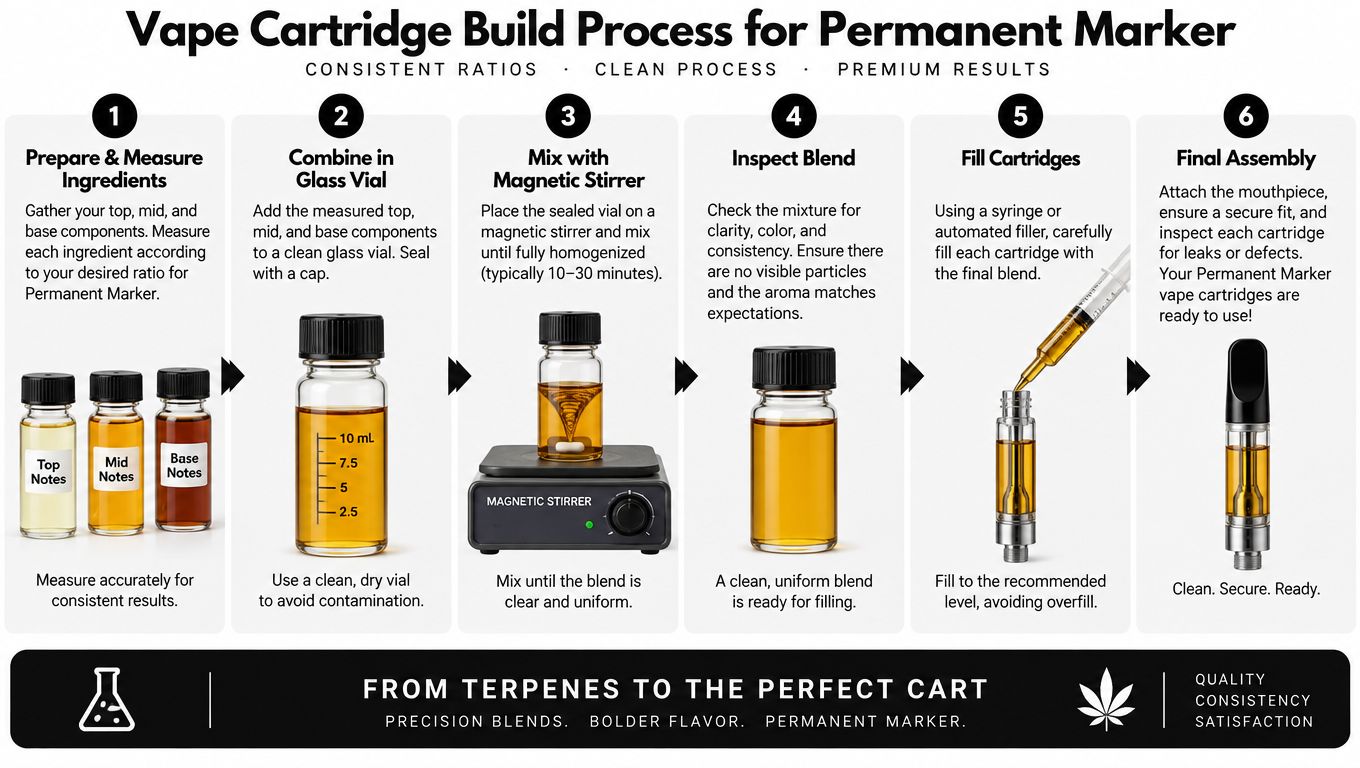
Second, dose by weight into the distillate. Add the pre-mix at the selected total loading, starting with the lower end of your intended window when the aromatic concentrate is especially forceful. Avoid direct high-shear mixing. Excessive agitation can strip delicate floral character from the blend and can also introduce unnecessary air into the oil.
Third, condition the batch before hardware loading. Once the blend is uniform, check clarity, viscosity, and aroma at room temperature. A formulation that seems balanced warm may become too sharp or too thin after it cools. Use the guidance in this terpene-use resource alongside your internal SOPs and applicable quality controls.
Hardware evaluation
Load the test oil into 510 hardware with ceramic or wick cores appropriate for medium-wattage draws. Hardware changes the result as much as the blend does. Ceramic can present a cleaner aromatic profile, while a wick system may alter how quickly the oil reaches the heating surface and how long the finish persists.
Pull one test at room temperature, then repeat after a 24-hour steep. Check four things:
- Opening: Does the floral-soapy note appear without turning harsh?
- Center: Does the dessert cream remain after the first second?
- Finish: Does caryophyllene-led gas and ink stay present?
- Draw behavior: Is the throat feel controlled, or does the blend become sharp and solvent-like?
A practical process demonstration can be viewed below.
The best cart formulation isn't necessarily the strongest-smelling vial. It's the one that keeps its identity across the complete draw and remains coherent after the oil has sat in hardware.
Adjusting the Blend for Phenotype and Batch Variability
A single Permanent Marker recipe won't reliably fit every incoming lot. Existing profiles show meaningful variation in potency and terpene expression, and the strain's sensory reputation depends heavily on cultivation, cure, and post-harvest handling (Herb's analysis of phenotype and batch differences). In production terms, the name identifies a family resemblance, not a guaranteed chromatographic fingerprint.
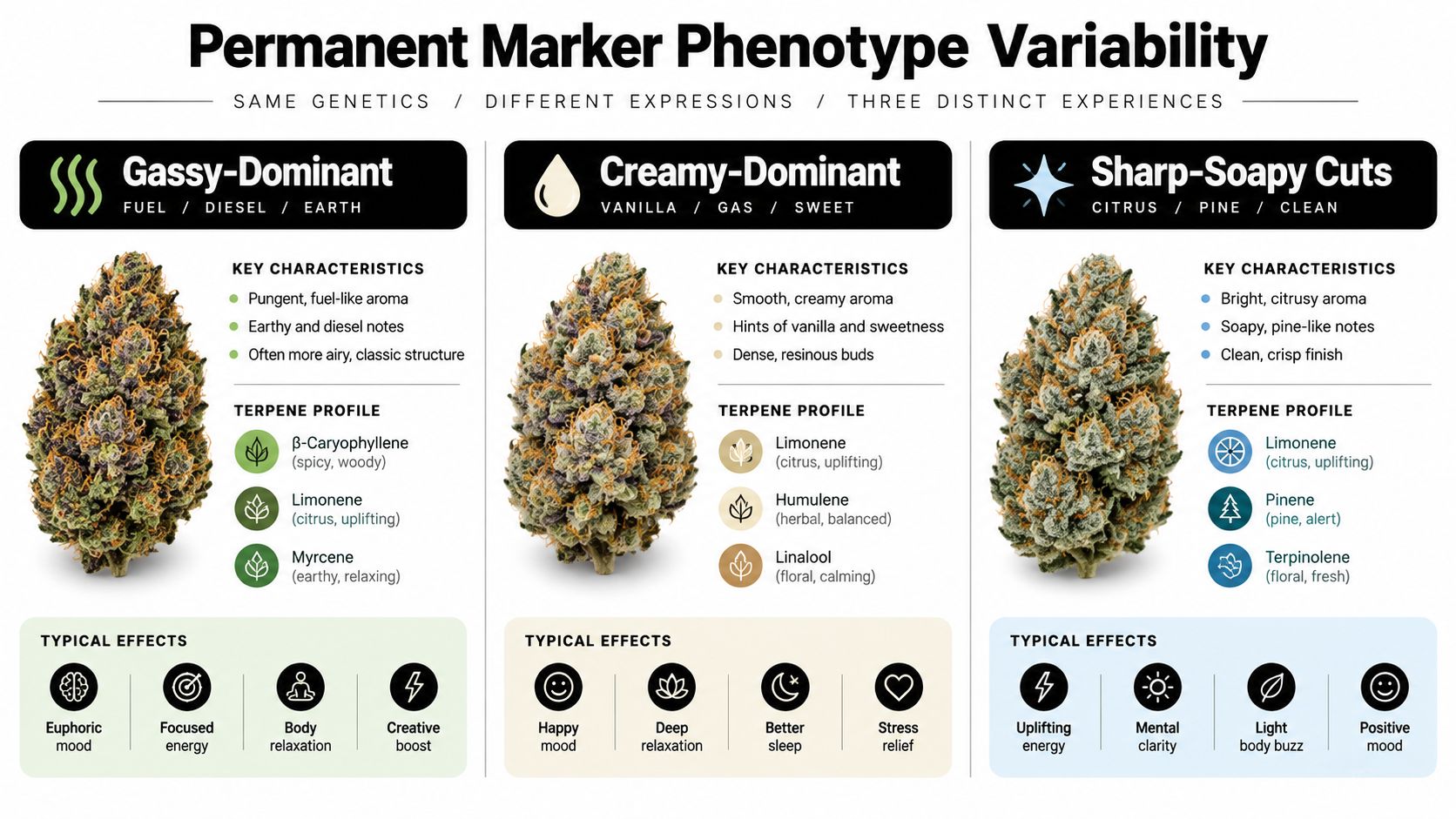
Three useful sensory lanes
A gassy-dominant cut usually needs less added fuel and more attention to the creamy center. If you reinforce the gas without checking the base, the cartridge can become abrasive and lose the dessert character.
A creamy-dominant cut may need more caryophyllene-led structure and a controlled bright lift. Without that correction, the draw can feel soft and sweet, with no sharp marker-like transition.
A sharp-soapy cut requires the most restraint at the top. Linalool and bright citrus should support recognition, not overwhelm the blend. The correction often involves rounding the middle and extending the resinous base rather than adding more floral material.
Verify before you correct
Pull a small aliquot from each incoming biomass lot and run a quick GC screen where your workflow supports it. Compare the result against the master blend and the sensory reference. Nose evaluation remains useful, but it can't reliably distinguish whether a sharp note comes from a true terpene imbalance, oxidation, or handling damage.
Make corrections in 0.2% increments within the blend system, then evaluate each adjustment at room temperature and at representative wicking temperature. Record the source lot, dominant ratios, correction amount, hardware, draw conditions, and the post-steep result. That record becomes your verified starting point for the next harvest.
A master formula is a controlled reference, not a substitute for incoming-lot data.
The most important comparison is not between two labels. It's between the source material and the finished cart under the same sensory conditions. If the source expresses a floral top but the cart loses it, correct the top-to-mid transition. If the cart opens well but finishes thin, reinforce the durable base instead of increasing the entire load.
Practical Formulation Checklist and Next Steps for the Lab
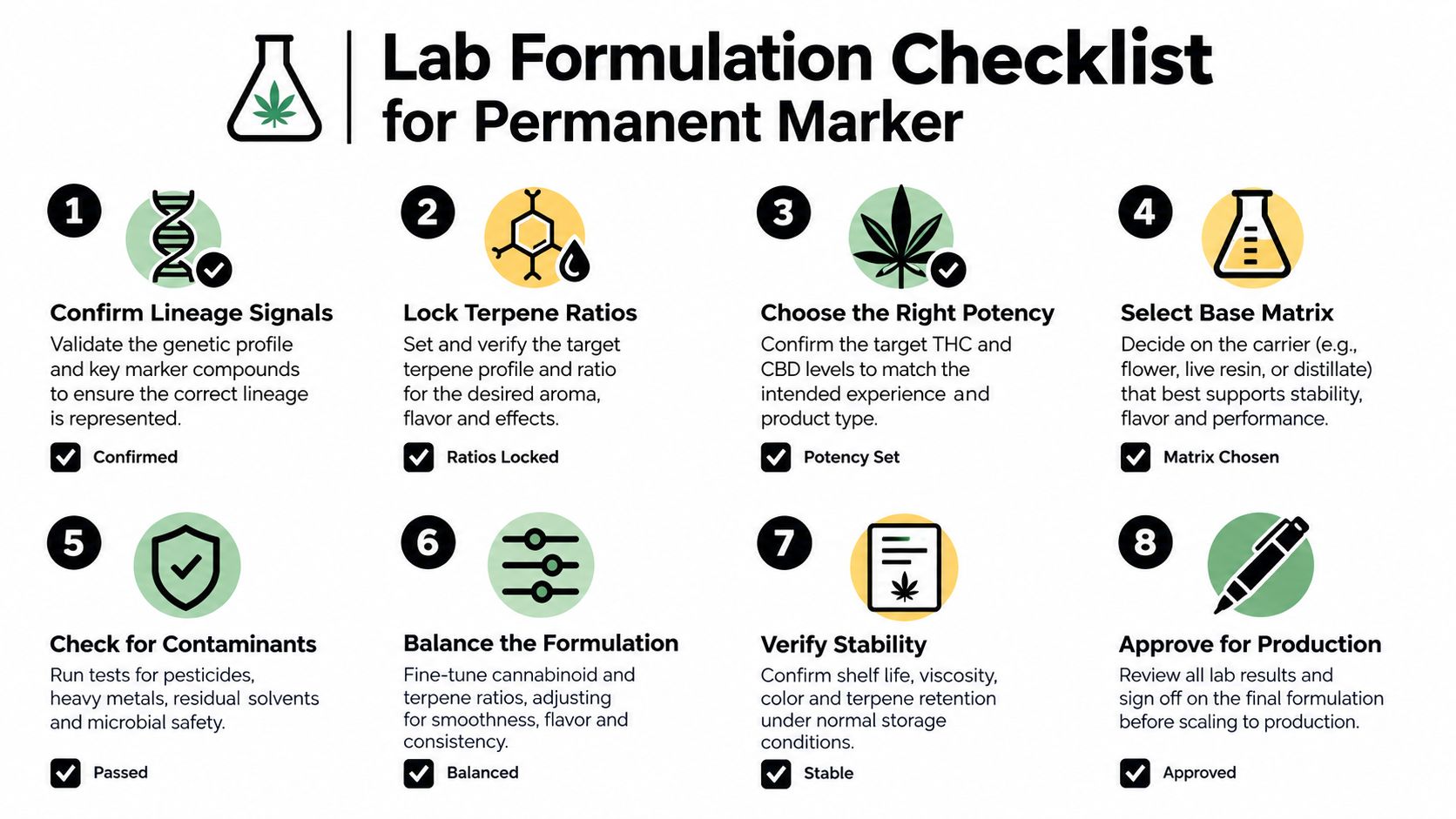
Before sign-off, run the profile through a checklist that forces each major decision into a documented action. This prevents a familiar strain name from replacing actual analytical and hardware verification.
- Confirm the lineage signals. Check that the incoming material presents the expected Biscotti, Jealousy, and Sherb Bx direction, then compare aroma against the reference lot.
- Identify the dominant chemistry. Record whether caryophyllene, limonene, or myrcene leads, and note the supporting floral and herbal components.
- Lock the caryophyllene-led mid-base structure. Establish the spicy, resinous, gas-supporting layer before adding extra brightness.
- Balance the top note. Use limonene for lift and linalool-supported floral character for the clean opening, but test for soapiness after heating.
- Cross-check total terpene load against viscosity. The target must remain compatible with the carrier, filling process, and selected hardware.
- Run a cartridge sit test. Hold filled test units for 48 hours before scaling, then compare the opening, center, finish, and throat feel.
- Re-verify each phenotype batch. Fresh GC data should replace assumptions whenever the source lot changes.
- Document the final blend sheet. Record materials, weights, lot identifiers, mixing conditions, hardware, and sensory outcomes.
The practical handoff is a strain library and formulation workflow that lets your team compare a reference profile with the actual batch in front of you. Gold Coast Terpenes offers strain-specific blends, isolated compounds, distillate-oriented formulation materials, and tools such as a terpene calculator, safety documents, and formulation education. Use those resources to source a starting profile, refine the caryophyllene-led structure, and validate the finished oil against the cultivar rather than relying on memory.
For a Permanent Marker reconstitution project, visit Gold Coast Terpenes to review strain-specific blends, isolated terpenes, and formulation tools suited to cartridges and concentrates. Start with a small bench batch, compare it in your chosen hardware, and use the resulting data to build a repeatable production profile.