
A buyer sends the brief at the worst possible time. They want a Permanent Marker-inspired cartridge, they want it to feel current, and they want it to survive scale without turning into another vague dessert-gas SKU that tastes fine in the sample room and flat on hardware.
That's the core formulation problem behind the hype. Permanent Marker isn't difficult because it's popular. It's difficult because the profile asks for two things at once: a recognizable aromatic signature and a believable effect arc. If either piece breaks, the product reads as generic. You may still ship a usable cart, but you won't ship one that earns repeat orders from buyers who know the target.
The urgency is easy to understand. Permanent Marker was recognized as the 2023 Leafly Strain of the Year, and the cultivar entered commercial release through Doja Exclusives in 2022 according to this Permanent Marker strain report. For formulators, that matters less as consumer trivia and more as a signal that the profile has moved from hype into established demand.
A strong strain-inspired terpene blend for vape cartridges has to do more than copy a shortlist of terpenes. It needs a note structure that opens correctly, a middle that carries the identity, and a base that stays coherent after repeated heating cycles. That's where many teams miss. They build a blend that smells right in a bottle but not in a cartridge.
Introduction Formulating the Next Market Leader
A lot of formulation requests arrive with a familiar subtext: “Give us the next bestseller, but make it manufacturable.” Permanent Marker fits that brief perfectly. Brand teams see the name recognition. Sales teams see an easy menu addition. The lab sees the harder truth. This profile is unforgiving.
If you're formulating for distillate or building a strain-inspired terpene blend for vape cartridges, Permanent Marker forces discipline. The “marker” character can turn harsh if the top note is pushed too aggressively. The floral-soapy layer can drift into cosmetic territory if the middle is overbuilt. The gas backbone can disappear under heat if the base isn't anchored well enough.
Where teams usually get it wrong
Most misses happen in one of three places:
- They formulate from a terpene list, not a sensory target. Knowing the dominant compounds helps, but it doesn't tell you how the aroma unfolds in hardware.
- They optimize for bottle aroma only. A blend can smell excellent at ambient temperature and still lose its identity once aerosolized.
- They ignore effect translation. Permanent Marker's appeal isn't just flavor. The product has to suggest the same lift-then-settle character users associate with the flower.
Permanent Marker is a profile you build in layers, then test under heat. If you only evaluate it cold, you're not evaluating the real product.
For a formulation guide aimed at commercial production, the right approach is deconstruction first, blending second. You need to identify which parts of the profile are doing the branding work, which parts are doing the functional work, and which parts are there only to make the whole thing feel natural.
That distinction matters when you're choosing isolates, adjusting for hardware, and deciding whether a profile belongs in an all-purpose ceramic cart, a lower-temperature pod, or a premium line where sensory fidelity matters more than broad compatibility.
Deconstructing the Permanent Marker Sensory Profile
Permanent Marker's profile only seems chaotic at first. In practice, it behaves like a tightly stacked aroma with a sharp opening, a perfumed center, and a dense finish. If you want a usable terpene profile for Permanent Marker for cannabis product formulation, that layered behavior matters more than any single descriptor.
Top notes that create the first hit
The top note is where the profile earns its name. The opening has to read as sharp, volatile, and slightly chemical without becoming abrasive. That's a narrow line. If your top note lands as citrus-forward, the profile shifts too clean. If it lands as fuel-only, the identity gets flattened.
Permanent Marker's terpene stack is led by Limonene, followed by Caryophyllene and Linalool, with limonene contributing to the signature “sharpie” aroma, caryophyllene bringing peppery spice, and linalool supplying floral soapy undertones that matter in formulation, as described by Good Grades NYC's Permanent Marker profile.
For practical work, limonene is doing more than brightening the blend. It creates the lift and edge that make the profile recognizable on first draw. But limonene alone won't create the marker illusion. It needs supporting material that keeps the top note from reading like ordinary citrus.
Mid notes that prevent a generic gas profile
The middle is what separates Permanent Marker from standard dessert-gas formulations. This section exhibits the floral, soapy, almost polished quality. Linalool does important work here because it softens the transition from aggressive top note to heavier base without erasing tension.
A weak middle creates a common failure mode: the cartridge opens loud, then collapses into undifferentiated gas. That's not close enough. The mid layer has to carry identity through the second and third pull, when the user is no longer reacting to novelty and is instead deciding whether the flavor is coherent.
For teams working on replicating skunky cannabis aromas in terpene formulation, this is a useful comparison point. Skunk-heavy targets often rely on impact and persistence. Permanent Marker needs persistence too, but with more polish in the center.
Base notes that hold under heat
The base is where many cartridges lose fidelity. Gas, earth, and pepper notes can thin out or skew dry depending on the atomizer, oil viscosity, and total terpene load. Caryophyllene is especially important here because it gives the profile weight and a physical sense of structure.
Use the profile as a note pyramid, not a shopping list:
| Note layer | What it should do in the cartridge | Key terpene cues |
|---|---|---|
| Top | Deliver immediate recognition and lift | Limonene |
| Mid | Carry floral-soapy identity without turning perfumey | Linalool, supported by the blend |
| Base | Preserve gas, pepper, and density through repeated pulls | Caryophyllene, heavier supporting notes |
The “sharpie” character should flash first, not dominate the entire session. If it stays on top too long, the blend feels artificial.
That's why sensory accuracy matters commercially. Buyers don't just remember whether a cartridge tasted strong. They remember whether it tasted specific.
Analyzing the Core Terpene and Cannabinoid Matrix
A Permanent Marker cartridge fails fast when the matrix is wrong. You can hit the broad aroma cues and still miss the profile if the terpene set is arranged in the wrong proportions against a high-THC base.

Earlier reporting on the cultivar established the commercial and genetic context. For formulation work, the useful part is simpler. Batches associated with Permanent Marker are commonly described around a caryophyllene, limonene, and myrcene core, paired with very strong THC content. That combination creates the main bench problem: preserving a sharp, floral-gas identity without letting either the top notes or the body collapse in hardware.
Why the matrix matters more than the terpene list
I would not treat these three terpenes as equal sliders. They do different jobs, and they fail in different ways under heat.
Limonene gives the opening edge. In this profile, that edge cannot read like generic citrus brightness. It has to sharpen the first impression so the floral and solvent-like tones feel focused rather than muddy.
Caryophyllene gives frame and pressure. It keeps the gas, pepper, and dry structure from washing out in a distillate system, especially once the coil is warm and the user is taking the second or third pull.
Myrcene handles the transition. Used carefully, it rounds the blend and keeps the base from feeling skeletal. Used too high, it softens the whole profile and drags the marker-like snap into a dull herbal finish.
That interaction is the part many teams miss. A Permanent Marker target does not reward terpene presence alone. It rewards ratio control.
Ratio errors show up quickly in a cartridge
On paper, the formula can look correct. In aerosol, small shifts become obvious.
- Too much limonene and the profile turns thin, loud, and short-lived.
- Too much caryophyllene and the finish goes dry, scratchy, and pepper-forward.
- Too much myrcene and the blend loses the sharpie-floral tension that makes the cultivar recognizable.
For formulators building inhalables, this is the practical value of studying terpene and cannabinoid interactions for superior product formulation. The target is the product as experienced by the user, not a lab sheet with familiar names.
Bench rule: If the top note is still doing all the work by the third pull, the formula is incomplete. If the base takes over on the first pull, the formula is heavy.
Cannabinoid strength changes how the blend behaves
High-potency oil reduces your margin for error. In a softer cannabinoid base, a terpene imbalance may read as a flavor issue. In a stronger base, the same imbalance changes pacing, throat feel, and perceived weight.
That matters for Permanent Marker because the sensory profile depends on tension. The opening has to feel sharp and active, but the blend still needs enough density to carry the floral gas character through repeated heating cycles. If the cannabinoid phase is too dominant, lighter notes disappear early. If the terpene load is pushed too high to compensate, the cartridge can become harsh or perfumey.
A useful working model looks like this:
| Component | Functional contribution in formulation |
|---|---|
| Limonene | Opening definition, sharp recognition, top-note focus |
| Caryophyllene | Dry gas structure, peppery depth, finish control |
| Myrcene | Roundness, transition management, body support |
| Cannabinoid base | Potency and viscosity context that magnifies imbalance |
Commercially, this matrix has to survive more than a fresh-fill smell test. It needs to stay specific in concentrate, hold together in aerosol, and remain believable after the hardware has put real heat on it.
Translating Psychoactive Effects into Formulation
Formulators don't need to make promises about outcomes. They do need to understand why some profiles feel directionally accurate and others don't. Permanent Marker is a strong example because the reported experience follows a distinct sequence rather than a single mood.
The reported Permanent Marker strain effects are characterized by creativity and euphoria at onset, followed by deep physical relaxation, with a psychoactive window that typically lasts 2 to 3 hours and suits evening use without immediate sedation. High-potency cuts testing up to 35% THC also call for caution for new users, according to this Permanent Marker review.
Build for an effect arc, not just a taste match
That sequence matters in formulation. If your vape opens dull and heavy, you've missed the front half of the profile. If it opens bright but never settles into a grounded finish, you've missed the back half.
Limonene helps explain the front end. It supports the sense of uplift, spark, and mental activation that users often associate with this cultivar. Myrcene and caryophyllene help explain the landing. They create the looser body character and calming weight that make the profile feel complete rather than thin.
A practical formulation target for vape cartridges is a two-stage sensory experience:
- Immediate recognition through a sharp, active opening
- Sustained body through a denser middle and finish
That's a different goal from many fruit-forward carts, where the entire session is designed to remain bright and simple. Permanent Marker needs movement.
What works and what fails on hardware
Some formulas smell accurate in a sample vial but fail in use because the note sequence collapses. Common reasons include:
- Front-loaded volatility: The opening flashes, then disappears, leaving an empty base.
- Over-softened middle: The floral layer becomes vague and cosmetic.
- Dry finish: The profile lands spicy without enough body, so the cart feels harsh rather than grounded.
If the product doesn't transition, it won't read as Permanent Marker for long. Users notice the second half of the experience more than formulators sometimes expect.
This matters for packaging language and product positioning too. You don't need exaggerated claims. You need a profile that behaves in a way consistent with what buyers expect from the name. For a serious formulation guide for cannabis product formulation, that means evaluating onset, middle-session flavor retention, and whether the body character feels calming without tipping straight into sedation.
A Practical Formulation Guide for Vape Cartridges
When teams ask for a Permanent Marker strain-inspired terpene blend for vape cartridges, they usually want a recipe. What they need is a controlled starting point and a process for adjustment. The exact endpoint will vary with distillate quality, target hardware, and whether the SKU aims closer to flower realism or a cleaner retail expression.

The blend below is best treated as a bench prototype for formulating Permanent Marker for distillate. It follows the sensory logic discussed earlier: sharp opening, floral-soapy center, gas-pepper base. It also respects the fact that limonene, caryophyllene, myrcene, and linalool are the key aromatic anchors identified in the source material already cited above.
Starting Point Terpene Blend for Permanent Marker Replication
| Terpene Isolate | Role | Percentage of Blend |
|---|---|---|
| Limonene | Sharp opening, “marker” lift, top-note definition | 30% |
| Beta-Caryophyllene | Peppery depth, gas support, structural base | 40% |
| Myrcene | Roundness, body feel, transition into the finish | 20% |
| Linalool | Floral-soapy nuance, middle-layer polish | 10% |
This table mirrors the provided process graphic and gives a useful first pass. It is not a guarantee of sensory parity across every oil and every cartridge. In practice, Permanent Marker usually requires micro-adjustment after live hardware testing.
How to use the blend in real production
For bench work, start conservative with total terpene loading and judge aerosol expression before chasing intensity. This profile can get loud quickly, especially if the distillate already has residual character.
Use this workflow:
- Blend small pilot samples first. Build multiple micro-batches around the same core ratio and compare them in the actual cartridge platform.
- Test warm, not just cold. Evaluate aroma from the filled cart after the oil has equilibrated.
- Watch for top-note fatigue. If the first draw is excellent but the third draw turns flat or sharp, the top is too exposed.
- Adjust the middle carefully. Small linalool movement can improve authenticity, but too much pushes the profile into soap rather than floral gas.
For teams needing a broader primer on how to use terpenes in cartridges and concentrates, the key takeaway here is restraint. Permanent Marker is recognizable because of contrast, not because every note is pushed to maximum intensity.
Hardware changes the profile more than most briefs admit
A ceramic cart often presents this style of blend more smoothly because it can preserve the floral middle and soften pepper edges. Hotter hardware can exaggerate dryness in the caryophyllene-heavy base and burn off the limonene flash too quickly. Quartz can perform well, but only if output is controlled.
Here's the practical comparison:
| Hardware variable | Likely impact on Permanent Marker profile |
|---|---|
| Cooler, smoother output | Better preservation of the floral-soapy center |
| Hotter output | Faster top-note loss, greater pepper and dryness |
| Restricted airflow | More density, sometimes less top-note clarity |
| Open airflow | More aromatic lift, less perceived body |
Stability and sensory retention
Permanent Marker is one of those profiles where stability is not just a shelf-life concern. It's a brand integrity concern. If the marker-like opening fades first, the product can drift into a generic gas cart long before there are visible signs of degradation.
I'd rather ship a slightly quieter but coherent Permanent Marker-inspired blend than an aggressive formula that peaks on day one and loses identity in the field. That's especially true for larger production runs where storage conditions vary across distribution.
A durable formulation for vape cartridges should hold onto three things after fill and after repeated device use:
- Recognition on first pull
- Floral continuity in the middle
- Pepper-gas structure at the finish
If one of those disappears, the SKU still functions, but it no longer performs as a faithful replication of the target.
Ensuring Fidelity with Lab Testing and Quality Control
A profile isn't finished when the mixing beaker looks clean and the pilot cart tastes promising. It's finished when the final product verifies against the intended chemistry and remains free of avoidable contamination. That's what separates a strain-inspired concept from a production-ready cartridge line.
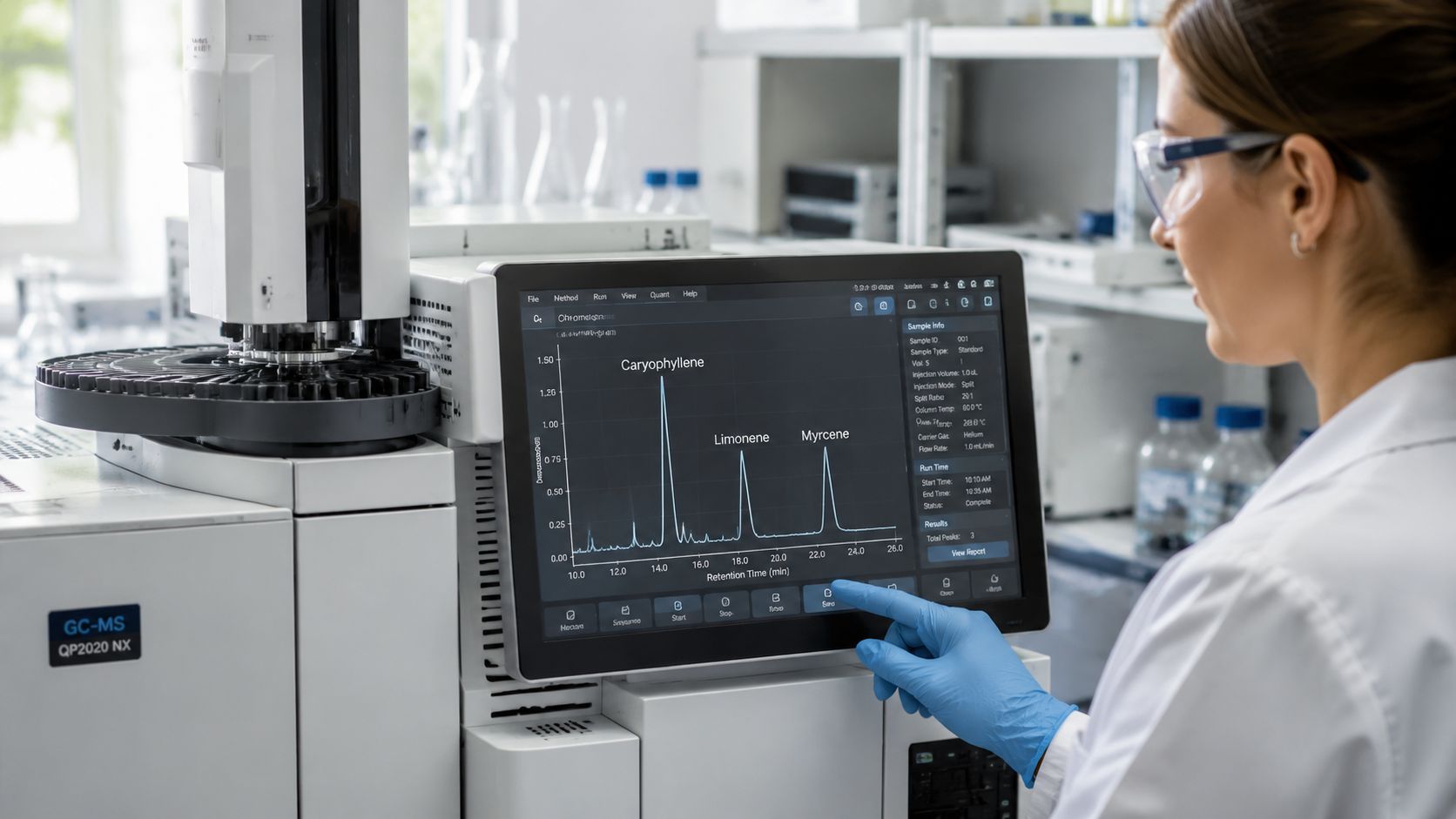
What to check on the COA
For terpene formulation work, a useful certificate of analysis should help you answer two questions. First, does the final blend still express the intended hierarchy of compounds? Second, did the manufacturing process introduce anything you don't want in an inhalable product?
When reviewing post-formulation data, focus on:
- Terpene identity: Confirm the core profile aligns with the formulation target and that no major component has drifted unexpectedly.
- Relative balance: Look for whether dominant compounds stayed dominant after blending and filling.
- Contaminant screening: Review the panel for unwanted residuals and other safety issues relevant to inhalation.
- Lot consistency: Compare production lots rather than trusting a single successful pilot.
For teams that want a more grounded look at chromatography testing for terpene products, the key operational habit is comparison. A single COA is useful. Side-by-side COAs across iterations are where formulation decisions become defensible.
A strain replication program gets expensive when every sensory problem is treated as a flavor problem. Sometimes the issue is drift, contamination, or thermal instability.
Why sensory panels aren't enough
Internal tasting panels matter, but they have blind spots. Palate fatigue, expectation bias, and hardware inconsistency can make a flawed formula seem acceptable. Lab data gives you a second lens.
Use both. Let the panel identify whether the profile feels right. Let the analytical work confirm whether it is built and maintained the way you think it is.
A simple training asset can help align teams before launch:
The commercial reason to verify everything
Quality control protects more than compliance. It protects SKU identity. Permanent Marker is a profile buyers will compare against memory, competing products, and flower benchmarks. If your line drifts from batch to batch, trust erodes fast.
That's why serious formulation teams validate after every meaningful change. New distillate lot, new hardware, new fill temperature, new terpene lot. Each variable can move the finished expression enough to matter.
Conclusion From Blueprint to Blockbuster
Permanent Marker works as a development target because it forces precision. You have to deconstruct the sharp opening, hold the floral-gas middle together, and keep the finish dense enough to survive real hardware. Then you have to verify that the filled cartridge still behaves like the profile you built.
That's the path from a popular strain reference to a commercially credible vape SKU. Strong products don't come from copying a name. They come from disciplined note design, careful hardware matching, and quality materials that stay consistent from pilot to production.
If you're building a strain-inspired terpene blend for vape cartridges or need lab-verified components for distillate work, Gold Coast Terpenes offers strain-specific profiles, isolates, and formulation resources built for manufacturers, extractors, and brand teams. Their catalog and tools can help you move from concept bench to repeatable production with better sensory control.