
You've got a cart formula that works at the bench. The aroma lands where you want it, the oil fills cleanly, and the first unit tastes like the profile on the spec sheet. Then sales asks for a real run.
That's where a lot of terpene formulations go sideways. A one-gram or ten-gram recipe can behave beautifully, then drift when you scale it into a larger vessel. The usual mistake is treating the job like simple kitchen math. For distillate and terpene work, that assumption costs flavor accuracy, consistency, and time.
The practical question isn't just how to scale recipes. It's how to scale a volatile, aroma-driven formulation without flattening the top notes, changing the body, or creating a batch record you can't reproduce later.
From a Perfect Gram to a Production Kilogram
A benchtop cart recipe usually earns its way into production the hard way. You tweak the distillate temperature, change the addition order, swap one terpene blend for another, then finally get a result that fills, wicks, and vapes the way it should.
Then someone multiplies the formula and expects the production run to behave the same.
It rarely does.
With distillates, isolates, and strain-inspired terpene blend work, the formula is only part of the story. The vessel changes. The hold time changes. The amount of exposed surface changes. The mixing pattern changes. A profile that smelled bright in a small glass beaker can read heavier or duller in a larger batch because the lighter compounds didn't stay in the system the same way.
That's why production planning has to start before the batch is weighed out. Inventory discipline matters earlier than often realized. If you're juggling multiple terpene lots, diluents, and fill schedules, weak material control turns a scaling issue into a traceability issue. This is one reason I point teams to practical operations reads like inventory management tips for formulation workflows.
What actually changes when you scale
A scaled batch introduces several real trade-offs:
- Longer exposure time means volatile notes have more opportunity to shift.
- Larger thermal mass can make a mix harder to bring into a narrow processing window.
- Different headspace and vessel geometry can change aroma retention.
- Operator variation becomes more visible when the batch is large enough to matter financially.
The thousandth unit doesn't fail because the math was wrong. It fails because the process around the math changed.
Good formulators treat scale-up as a process problem with a math component, not a math problem with a quick process check.
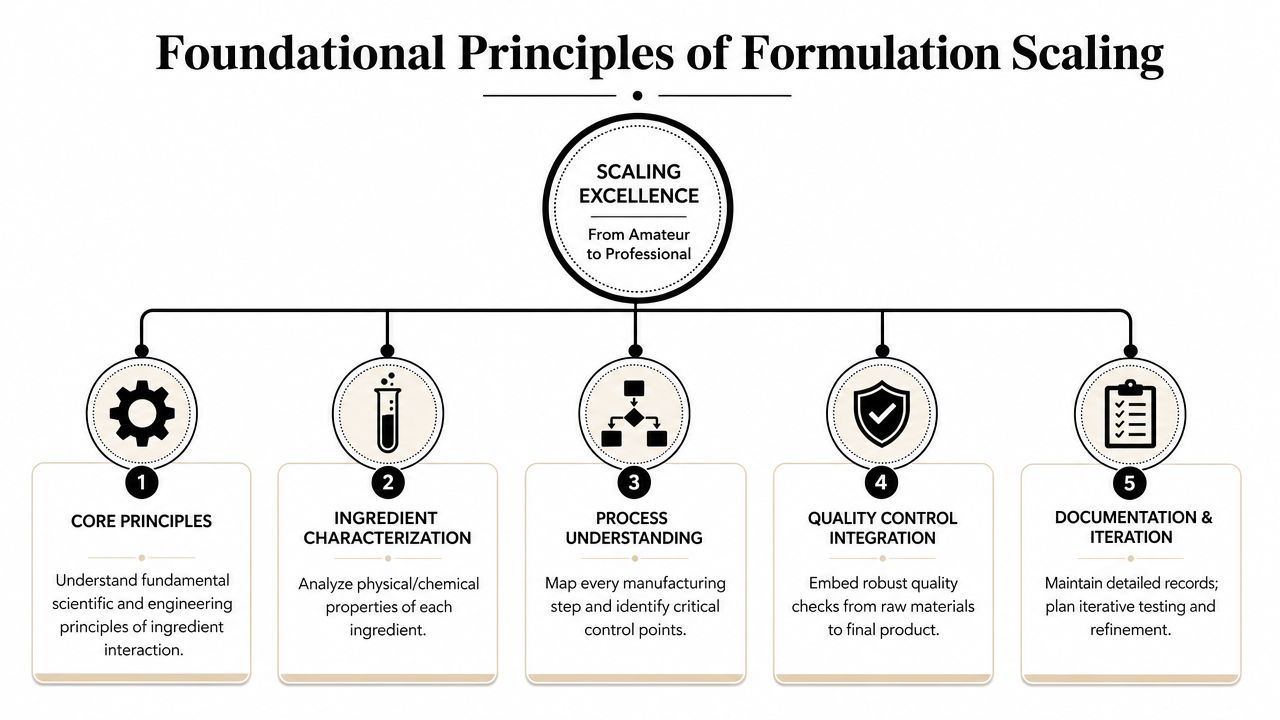
Foundational Principles of Formulation Scaling
A terpene blend that works at 1 gram can fail at 1 kilogram even when the math is perfect. The reason is simple. Scaling changes how the material behaves in the room, in the vessel, and during the hold. For distillate work, formulation scaling starts with control, not intuition.
Weight is the control system. Drops, eyeballed milliliters, and scoop-based habits create variation before the batch even reaches the mixer. Distillates change flow with temperature. Terpenes dispense differently depending on bottle, tip, and operator. If the target is repeatable potency, flavor, and fill performance, every material needs to be weighed in grams and recorded as used.
Weight first, always
In bench work, a small overpour can be corrected and forgotten. In production, that same habit can push terpene loading outside spec, shift sensory balance, or create avoidable label and compliance problems.
Use grams for every ingredient. Record target weight and actual weight. Keep the batch sheet in metric units from the first successful trial so the same record can scale without translation errors.
A practical setup usually includes:
- A calibrated digital scale for benchtop and pilot work
- Metric batch sheets with target and actual weights
- A lot-tracked raw material log for distillate, terpene blends, isolates, and diluents
- A pre-weigh workflow so operators are not making judgment calls mid-batch
The scaling factor matters, but process behavior matters too
The arithmetic is straightforward. Divide target batch weight by original batch weight, then multiply each ingredient by that factor.
The harder part is knowing what that clean math does not protect. Terpene systems are full of volatile compounds, and distillate processing adds heat, viscosity shifts, and longer mixing windows. A formula can scale linearly on paper and still lose top notes, drift in perceived intensity, or miss its target viscosity in the tank.
I treat scale-up as two linked jobs. First, preserve the composition. Second, preserve the process conditions that let that composition survive. If either side slips, the batch can pass a formula check and still fail in production.
The professional baseline
A formula has a better chance of surviving scale-up when the team builds around a few disciplined rules:
- Write formulas by weight, not volume
- Convert each proven bench formula into percentages of total batch weight
- Record process conditions such as temperature, addition order, mixing time, and hold time
- Define acceptable loss points for aroma, potency, and fill behavior before the batch is run
- Review compliance impact if any adjustment changes declared ingredients, concentration, or labeling thresholds
For viscosity control, the raw material record should also identify the exact diluent spec used in development. That prevents a common production mistake where the formula is copied correctly but a different processing aid or diluent grade changes how the batch flows and fills. One useful reference point is a dedicated terpene diluent resource for formulation work.
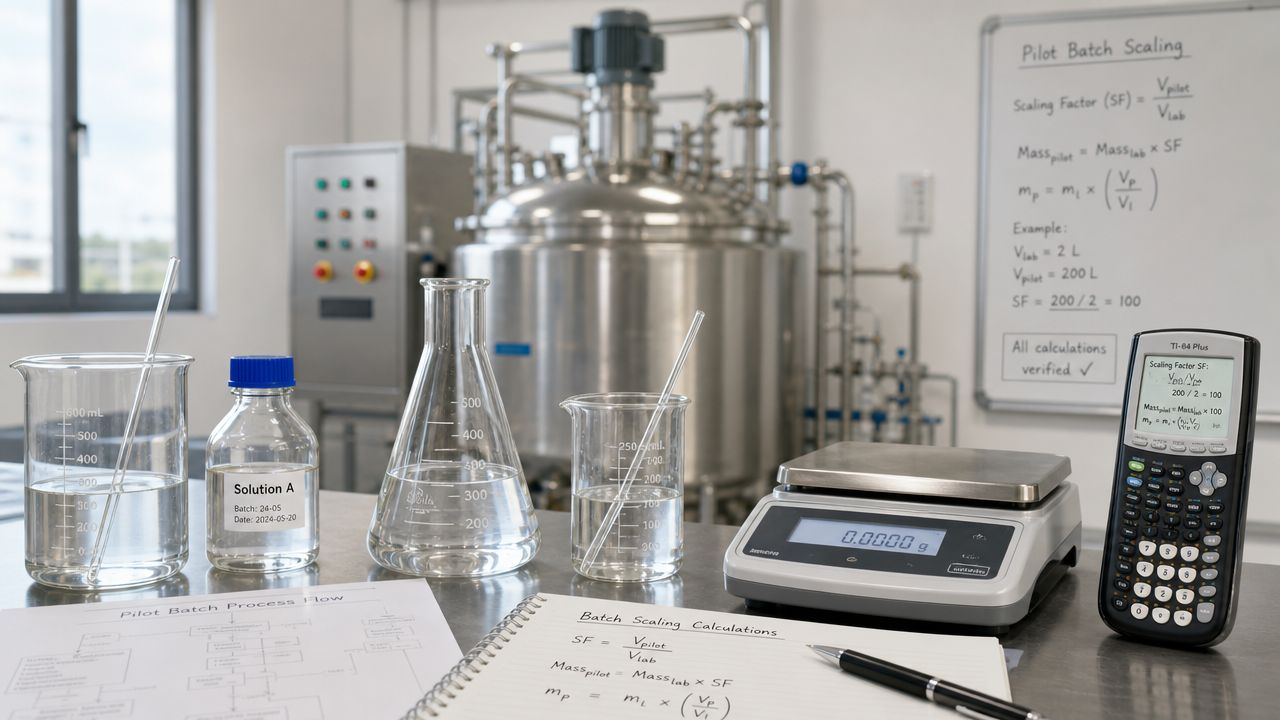
The Core Math From Benchtop to Pilot Batch
The cleanest way to scale terpene recipes is to stop thinking in “recipe amounts” and start thinking in formulator's percentages. Food production has long used the percentage system because it scales more cleanly than volume multiplication. The same logic works for distillate, terpene blends, and viscosity modifiers.
The industry-standard methodology for scaling is the percentage system. It requires identifying the ingredient with a 100% scaling value, calculating a scaling factor by dividing the target yield weight by the original, and multiplying the other ingredients' percentages accordingly. That weight-based approach matters because volume measurements are often rounded and introduce variance, as explained in Modernist Cuisine's guide to scaling by percentage.
Build a master formula
Start with the benchtop batch exactly as it was proven, not as you remember it. That means actual weights, not target weights. If the test batch succeeded with a slight overpour or a corrected terpene addition, those details belong in the record.
Then convert each ingredient into a percentage of total batch weight.
A simple structure looks like this:
| Ingredient | Benchtop weight | Percentage of total |
|---|---|---|
| Distillate | recorded in grams | calculated from total |
| Terpene blend | recorded in grams | calculated from total |
| Diluent or modifier | recorded in grams | calculated from total |
Once you have that percentage formula, batch size stops being the problem. You can generate a small validation batch, a pilot run, or a production run from the same master formula.
How to calculate the batch
Use this sequence:
Confirm original yield weight
Use the final batch weight that worked on the bench.Set the target yield weight
This is the amount you want after mixing, not a rough pre-loss estimate.Calculate the scaling factor
Divide target yield by original yield.Apply percentages to the target batch
Multiply each ingredient percentage by the target batch weight.Round for weighing discipline, not convenience
Don't round to whatever is easy to pour. Round in a way that matches your scale capability and your SOP.
Why percentages beat direct multiplication
Direct multiplication sounds equivalent, but percentage formulas expose errors faster. If your ingredient list doesn't reconcile to the total batch weight, the formula is wrong. If a component moves out of expected range, you'll see it immediately. That matters when you're trying to preserve a specific terpene profile for distillate filling.
Practical rule: If the percentages don't sum cleanly to the intended total, don't mix the batch yet. Fix the sheet first.
What the math does not solve
The math preserves ratio. It doesn't preserve behavior.
A larger vessel may need a different mixing sequence. A warm distillate may hold or release aroma differently than a cooler one. A blend with aggressive top notes may need later addition than a heavier base-forward profile. That's why I separate formula scale from process scale in every batch review.
Use the formula to keep composition stable. Use process validation to keep the product recognizable.
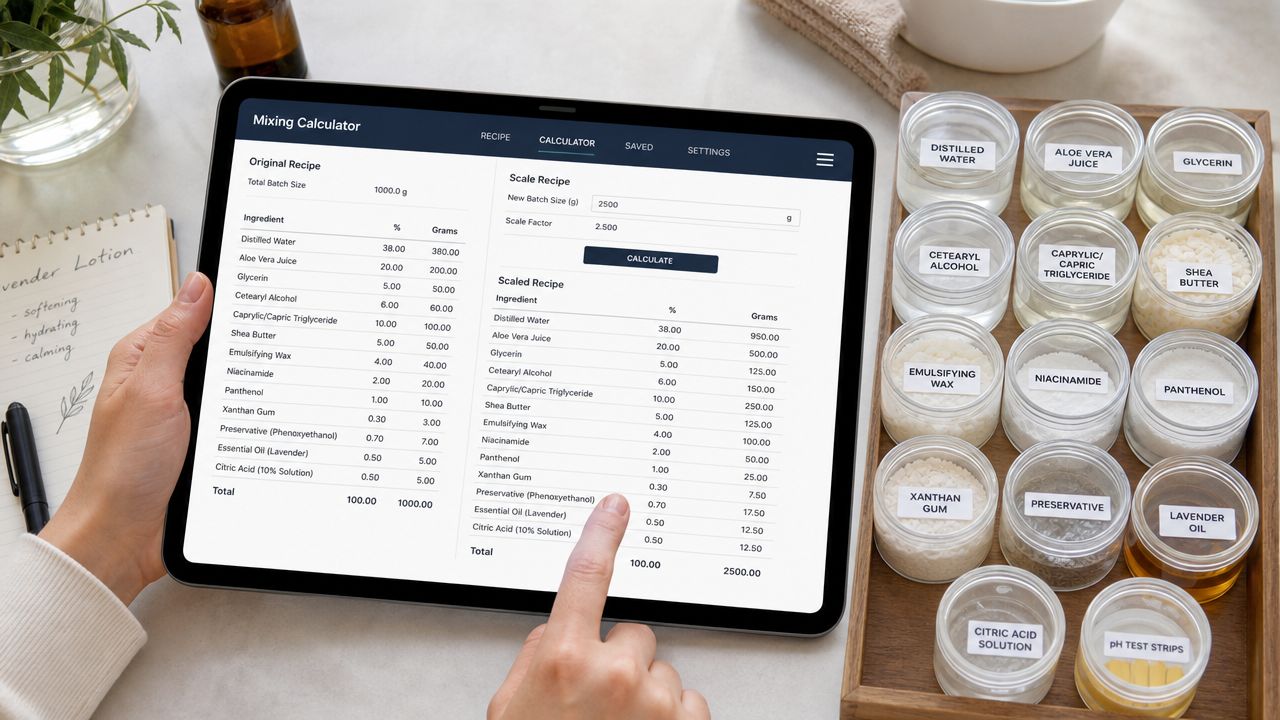
A Worked Example Using a Mixing Calculator
Your 10 gram bench sample smells right, fills cleanly, and lands on target. Then the same formula goes to 1 kilogram and the cart tastes flatter, the top note drops early, or the batch fails to match the sensory reference after a short hold. That gap is why I use a calculator as a control tool, not as proof that scale-up is finished.
A simple example shows the math.
Say the target is a strain-inspired terpene blend for vape cartridges built around a Blue Dream style profile: 85% distillate, 10% Blue Dream terpene blend, and 5% diluent. Start with a 10-gram test batch.
The benchtop batch
At 10 grams total, the target weights are:
- Distillate: 8.5 g
- Blue Dream terpene blend: 1.0 g
- Diluent: 0.5 g
That batch is small enough to evaluate without burning through expensive input material. It also gives you a clean read on three things that matter in cannabis manufacturing: first-pass aroma, compatibility with the distillate, and whether the blend stays coherent after a short hold in a capped container.
For the calculations, use a tool that keeps operators from rebuilding the sheet by hand. The mixing ratios calculator for terpene and oil blends is useful for converting the same percentage formula into different target yields without transcription mistakes.
Scaling the same formula to a pilot batch
Now run that exact composition at a 1-kilogram (1000 g) pilot scale.
| Ingredient | Percentage | Weight at 10 g | Weight at 1000 g |
|---|---|---|---|
| Distillate | 85% | 8.5 g | 850 g |
| Blue Dream terpene blend | 10% | 1.0 g | 100 g |
| Diluent | 5% | 0.5 g | 50 g |
The formula did not change. The batch size changed.
That distinction matters in regulated production. If the percentages stay fixed, the intended composition stays fixed on paper. What can still move is process behavior. A kilogram batch holds heat longer, takes longer to homogenize, and gives volatile compounds more opportunity to flash off during transfer, mixing, or waiting at the filler.
If you need a sensory reference for development, a Blue Dream terpene profile for vape cartridges is a reasonable starting point. Use it as a benchmark for note balance, then tune the formula to your actual distillate rather than assuming the bench result will copy over cleanly.
Cooklang makes a useful point in its discussion of scaling failures and validation batches. Teams should validate scaled formulas in intermediate runs instead of assuming straight multiplication will preserve the final result. That advice applies even more strongly to terpene systems because aroma compounds and cannabinoids do not respond like stable dry ingredients.
A short walkthrough is useful if your team learns better by seeing the workflow in action.
What I look for after the calculator step
The calculator gives target weights. Approval still depends on the batch.
I check three things before releasing a pilot run:
- Aroma balance immediately after mixing and again after hold
- Visual uniformity, clarity, and fill behavior in the actual hardware
- Potency and profile fit against the intended product spec, not just the spreadsheet
A batch can match the math and still miss the product. That is the main lesson in terpene scale-up. Use the calculator to control composition. Use pilot observation, retention samples, and QC review to confirm the formula still performs once volatility, heat exposure, and handling enter the process.
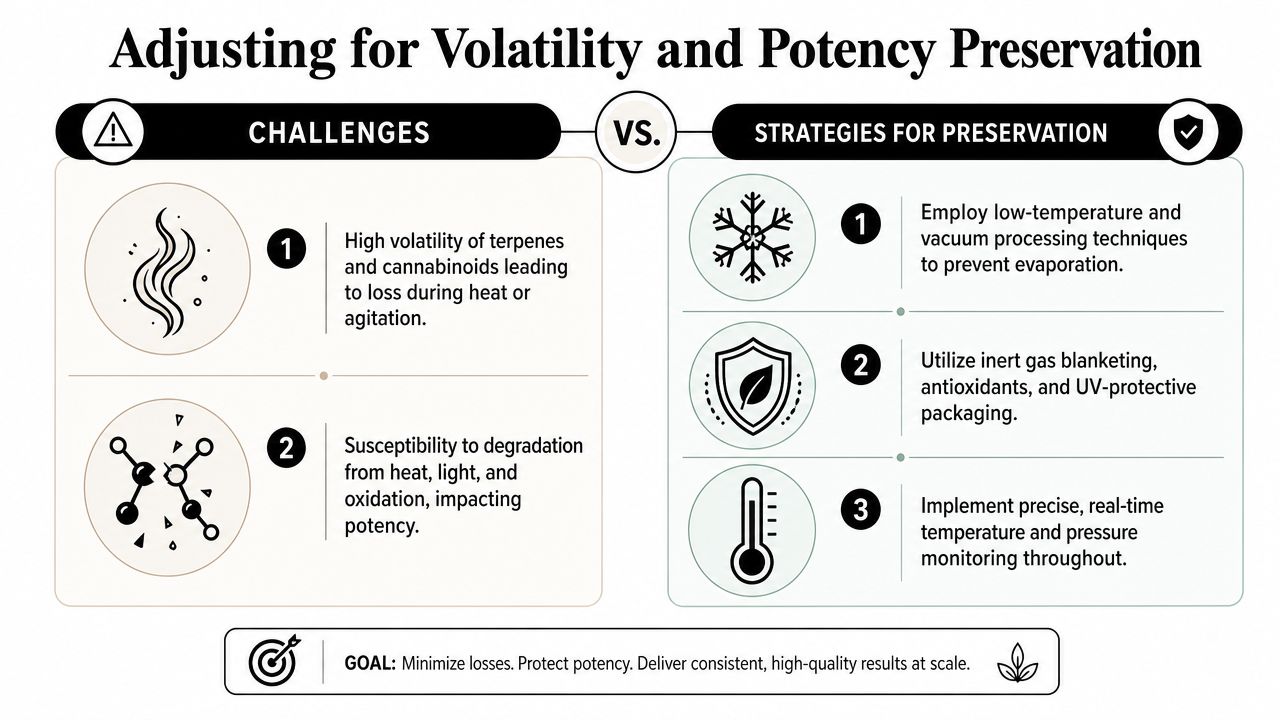
Adjusting for Volatility and Potency Preservation
Terpene scaling gets hard when the light compounds start acting like light compounds. That's the point where generic advice about multiplying ingredients stops being useful.
Top notes, mid notes, and base notes don't all carry the same production risk. In a terpene profile for cannabis product formulation, top notes usually move first. They're often what give the opening impact of the profile. Mid notes carry body and recognition. Base notes sit longer and can dominate if the brighter material fades during processing.
Why volatile profiles drift during scale-up
Food science provides a useful analogy for volatile loss. When volumes are reduced to 0.5x, sauces can reduce 2–3x faster because of increased surface-area exposure, which leads to over-concentration of volatile compounds. The same source notes that halving a recipe with essential oils or isolates can double the perceived potency due to non-proportional evaporation, according to this discussion of scaling and volatile compounds.
That matters directly in terpene work. If your small trial and larger batch expose the blend to different surface-area-to-volume conditions, the aromatic profile can move even when the paper formula is unchanged.
For example:
- Top notes can thin out during warm mixing or extended hold.
- Mid notes may become more apparent because brighter volatiles dropped away.
- Base notes can make the finished oil feel heavier than the original bench sample.
This is one reason formulators working with limonene-heavy or myrcene-forward blends should understand the boiling point of terpenes and why processing conditions matter.
Practical controls that preserve the profile
I treat volatility control as a sequence issue as much as a temperature issue.
Limit unnecessary heat
Warm the distillate only enough to get workable flow. Extra heat creates avoidable aroma loss.Shorten open-vessel time
Don't let the blend sit exposed while operators handle something else.Add sensitive aromatics late when the process allows it
This can help preserve the opening character of the profile.Use tight lids and disciplined transfers
Repeated open pours and transfers cost more aroma than many teams realize.
The more your process smells like terpenes in the room, the less likely it is that all of those terpenes stayed in the batch.
Potency preservation is part of flavor preservation
For distillate formulations, sensory drift and potency drift can show up together. If evaporation or handling changes the relative composition of the batch, the profile can taste off and test differently than expected. That's why in-process checks matter even when the formula itself didn't change.
A sensible QC routine includes:
| Checkpoint | What to review | Why it matters |
|---|---|---|
| Raw material verification | Lot identity and spec match | Prevents profile drift before mixing |
| In-process observation | Temperature, hold time, mixing order | Catches avoidable aroma loss |
| Post-mix review | Uniformity, aroma, viscosity | Confirms the batch resembles the target |
| Retained sample | Stored reference from approved run | Supports future replication |
Production Scaling Records Safety and QC
Once a pilot batch is approved, the work shifts from formulation to repeatability. At this point, many teams lose control. They have a good formula, but a weak production record.
A commercial batch needs a written record that another operator can execute without guessing. If the process depends on one person “knowing how it should look,” it isn't production-ready.
The batch record has to capture the real process
A usable record should include more than ingredient names and target weights.
Include:
- Raw material identity and lot numbers
- Target and actual weights for each ingredient
- Addition order
- Processing temperatures
- Mix times and hold times
- Operator initials and date
- In-process and final QC observations
That record gives you traceability when a production lot tastes slightly different from the retained sample. It also tells you whether the issue started with material, method, or handling.
Safety and regulatory review aren't optional
Before commercializing a scaled recipe, regulations may require consultation with a Process Authority and a scheduled process approval. That requirement exists because safety and quality problems can arise when heat transfer and cooking behavior change with larger volumes, as outlined in University of Maryland Extension's guidance on scaling products for commercialization.
Cannabis manufacturing has its own regulatory framework, but the principle is the same. Scale changes process behavior. If your operation uses heated oil handling, solvents, or closed-system equipment, the safety review belongs in the scale-up plan, not after the first failed run.
Write the SOP as if a trained operator who has never seen your bench trial will run the batch next week.
A practical QC checklist for release
I prefer a release checklist that's short enough to be used every time.
Formula match
Confirm the executed weights reconcile to the approved master formula.Sensory match
Compare the released batch against a retained approved sample, not memory.Physical performance
Review fill behavior, appearance, and stability observations relevant to the SKU.Documentation closure
Make sure deviations, corrections, and material substitutions are recorded before release.
For teams building repeatable systems, a standing reference library of SOP and QC materials helps. A useful place to start is a dedicated set of quality assurance processes for terpene and formulation workflows.
If your team can reproduce the batch on paper, on the floor, and in the final cart, you've solved the scale-up problem.
If you're building a terpene profile for distillate, a strain-inspired terpene blend for vape cartridges, or a repeatable formulation guide for cannabis product formulation, Gold Coast Terpenes offers strain-specific blends, isolates, and practical tools that can support bench work, pilot calculations, and production planning.