
Jealousy is exactly 50% Indica and 50% Sativa, so the direct answer to the Jealousy strain indica or sativa question is that it's a balanced hybrid. For a formulator, though, that label is the least useful part of the profile. The commercial value sits in how its terpene stack produces a repeatable sensory and functional outcome.
That gap matters because teams still ask the wrong first question. If you're building a strain-inspired terpene blend for distillate, a cartridge line, or a Jealousy-inspired SKU, "indica or sativa" won't tell you how to recreate the sweet cream, lemon zest, diesel snap, or the relaxed-but-alert positioning that makes this cultivar commercially relevant. The build logic comes from chemistry, not category.
Early in development, I treat Jealousy as a labeling problem first and a formulation problem second. The labeling problem is simple. The cultivar is balanced. The formulation problem is where teams either create a convincing profile or miss it by turning Jealousy into a generic dessert gas blend with no structure.
| Formulation question | Consumer shortcut | What actually helps in production |
|---|---|---|
| Is Jealousy indica or sativa? | Balanced hybrid | Useful for label language, weak for replication |
| What should drive the blend? | Genetics | Dominant terpene structure and note balance |
| Why does the profile feel balanced? | Hybrid effects | Caryophyllene, limonene, myrcene, and supporting minors |
| What wins in carts? | Strain name alone | Aroma fidelity, hardware stability, and repeatable sensory output |
Moving Past the Indica or Sativa Question
Jealousy strain indica or sativa is a real search, but it's not the right framework for product development. The balanced 50/50 answer is technically correct. It just doesn't give your extraction or formulation team enough precision to build a reliable Jealousy-style cart, concentrate, or distillate enhancement system.
Formulators need a more useful question. Ask what compounds create the profile buyers expect when they see the name Jealousy on a package. That's where commercial consistency starts.
Why the label breaks down in manufacturing
The indica and sativa model is broad, and broad categories create broad mistakes. Teams lean on them when they don't yet have a target aromatic structure. That usually leads to overbuilding body notes, underbuilding citrus lift, or flattening the finish into a generic creamy gas profile.
Modern terpene science is more practical here. The useful reference point is the cultivar's chemovar expression, not a retail shorthand. Gold Coast Terpenes explains this shift clearly in its guide to indica vs sativa terpenes.
Practical rule: If a label doesn't help you choose top notes, mid notes, base notes, and blending order, it won't help you formulate.
What professionals should track instead
For cannabis product formulation, three things matter more than the old binary:
- Aromatic hierarchy: Which compounds open first, which hold the body, and which stay on the finish.
- Blend behavior in oil: Some profiles smell right in a vial but collapse once introduced to distillate.
- Effect positioning: Not medical claims, just whether the profile lands as heavy, bright, calm, sharp, or balanced.
Jealousy matters because it resists the lazy assumption that "hybrid" tells you enough. It doesn't. If you're formulating for vape cartridges, the profile needs shape. You need a peppery-fuel base, citrus lift, and enough earthy sweetness to avoid a thin, sharp top end.
That makes Jealousy a good example of a larger lesson. Consumer labels answer shelf questions. Terpene architecture answers manufacturing questions.
Jealousy Strain Genetics and Chemovar Overview
What does Jealousy genetics give a formulator? A starting constraint set, not a finished flavor brief.
Jealousy is widely identified as a Sherbert Bx1 x Gelato 41 cross, commonly described as a balanced hybrid, and noted by Barney's Farm as Leafly's Strain of the Year in 2022, with high THC potential, a 65 to 70 day flowering window, and strong production yields in cultivation settings, according to Barney's Farm's Jealousy cultivar data.
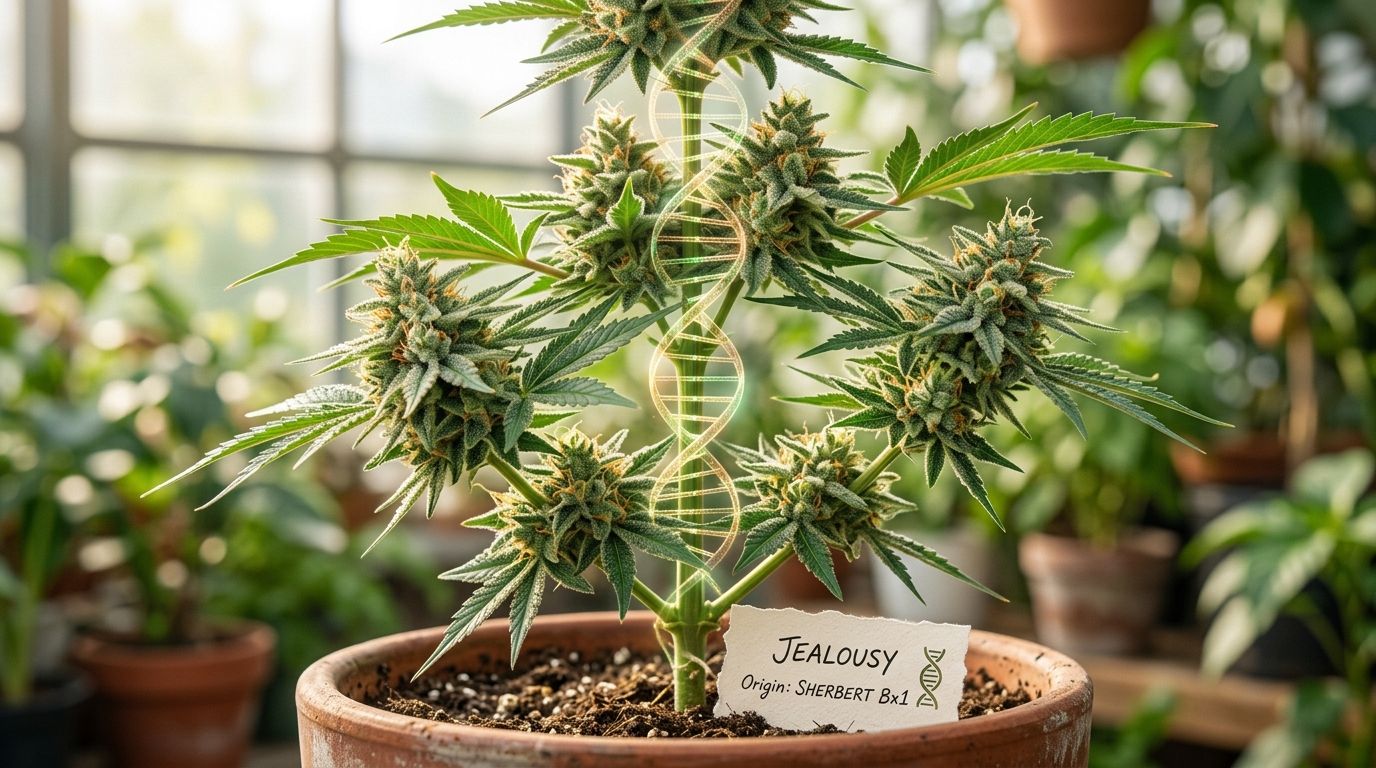
For product development, the useful part is the lineage. Sherbert Bx1 and Gelato 41 point toward a profile family with dessert sweetness, citrus lift, and a heavier gas-spice floor. That does not guarantee a single aromatic outcome across every batch or cultivation run, but it does narrow the target enough to set formulation boundaries early.
That matters commercially.
If the team treats Jealousy as a generic hybrid, the blend usually drifts into a broad sweet-gas profile that could pass for several unrelated cultivars. If the team starts with lineage and then checks chemovar expression, the formula has a better chance of keeping the creamy top, the citrus edge, and the peppered finish in the right order.
The baseline spec that helps product teams
The production value of Jealousy is straightforward:
- Recognizable parentage: Sherbert Bx1 x Gelato 41 gives a plausible reason for the cultivar's sweet, creamy, citrus-forward first impression and denser, spiced finish.
- Strong retail familiarity: Strain recognition makes Jealousy a practical target for strain-style cartridge development instead of a niche one-off profile.
- Good cultivation appeal: High potency potential and favorable production traits help explain why the cultivar shows up often enough to matter in commercial replication work.
Those points help with positioning, sourcing conversations, and benchmark selection. They do not replace terpene analysis.
I tell junior formulators to use genetics as a filter. Genetics help rule out the wrong profile family. They do not tell you the exact ratio of citrus to pepper, how much sweetness the blend can carry before tasting flat in oil, or whether the finish should read earthy, gassy, or creamy on exhale.
For product-side translation, Gold Coast Terpenes' Jealousy OG strain formulation page is a useful reference because it frames Jealousy as a replication problem, not a label question.
A short visual overview helps if you're training production or brand teams on the cultivar context before moving into blend design.
The Jealousy Terpene Profile for Formulation
Which part of Jealousy survives the jump from flower to oil. The market label, or the terpene ratios that create the inhale, mid-palate, and finish.
For formulation, the answer is the ratios. The profile only reads as Jealousy when the blend keeps a firm caryophyllene base, enough limonene to open the aroma, and enough myrcene to connect the transition without dulling the finish. JointCommerce's Jealousy terpene breakdown describes that hierarchy clearly, with beta-caryophyllene leading, followed by limonene and myrcene.
That order matters in production. It gives you a repeatable structure for strain-style cartridge work instead of a vague “hybrid dessert” target.
Jealousy Strain Primary Terpene Breakdown
| Terpene | Typical Role in the Profile | Aromatic Contribution | Formulation Function |
|---|---|---|---|
| Beta-caryophyllene | Dominant structural terpene | Pepper, spice, faint fuel | Holds identity and keeps sweetness in check |
| Limonene | Primary opening terpene | Citrus zest, brightness | Creates lift and improves first impression |
| Myrcene | Transitional terpene | Earthy, herbal, soft fruit | Connects top and base notes, rounds texture |
Top, mid, and base note roles
Jealousy fails fast when a blender treats these terpenes as equal-volume accents. They do different jobs, and the ratio is what creates recognition.
- Beta-caryophyllene sets the floor. If this drops too low, the profile loses the peppery pressure and fuel edge that separate Jealousy from softer dessert profiles.
- Limonene controls the opening. Too little gives you a muddy inhale. Too much pushes the profile toward bright sherb citrus and away from Jealousy.
- Myrcene manages continuity. It keeps the handoff between sweet top notes and the heavier base from feeling abrupt, but excess myrcene can make the blend feel lazy and overripe.
I train junior formulators to evaluate Jealousy in sequence, not as a single aroma event. First inhale. Mid-palate. Exhale. If those stages collapse into one sweet note, the blend is off even if the raw terpene list looks correct on paper.
What works in a Jealousy terpene profile for formulation
Commercially, Jealousy performs best when the blend preserves contrast. You need brightness at the front, cream through the center, and spice with a faint gassy edge on the finish. That contrast is what helps the profile stay recognizable after dilution into oil and early heat exposure in hardware.
Use caryophyllene as the control point. Then tune limonene for lift and myrcene for texture. Teams that need a tighter process for ratio selection and deployment can use this practical guide on how to use terpenes in formulation workflows.
What tends to hold up in manufacturing:
- A firm caryophyllene backbone that keeps the profile from drifting into generic creaminess
- Clean limonene restraint so the opening is bright without turning sharp or candied
- Measured myrcene support that rounds the center without muting the finish
What tends to fail:
- Overbuilt sweetness that wipes out the pepper-fuel signature
- Excess citrus that makes the profile read like a broad Gelato-family blend
- Fuel treated as an afterthought when that dry spicy finish is part of Jealousy's recognition pattern
The flavor construction logic
The useful question is not whether Jealousy is indica or sativa. The useful question is whether your formulation reproduces its flavor sequence under cartridge conditions.
In practice, that means building for three sensory checkpoints:
- A bright, controlled citrus entry
- A creamy, sweet middle with enough density
- A peppery finish with slight gas and dryness
That sequence is what gives Jealousy commercial value as a formulation target. It is also why a terpene-first approach produces better cartridge fidelity than strain labels alone. Labels help with merchandising. Ratios determine whether the oil tastes right after filling, settling, and use.
Replicating Flavor of Jealousy for Vape Cartridges
How do you get a Jealousy cartridge to read like Jealousy after dilution, filling, storage, and repeated heat cycles? You build to the chemovar's sensory sequence and pressure-test it in finished oil. The indica or sativa label does not help with that job. Terpene ratios do.
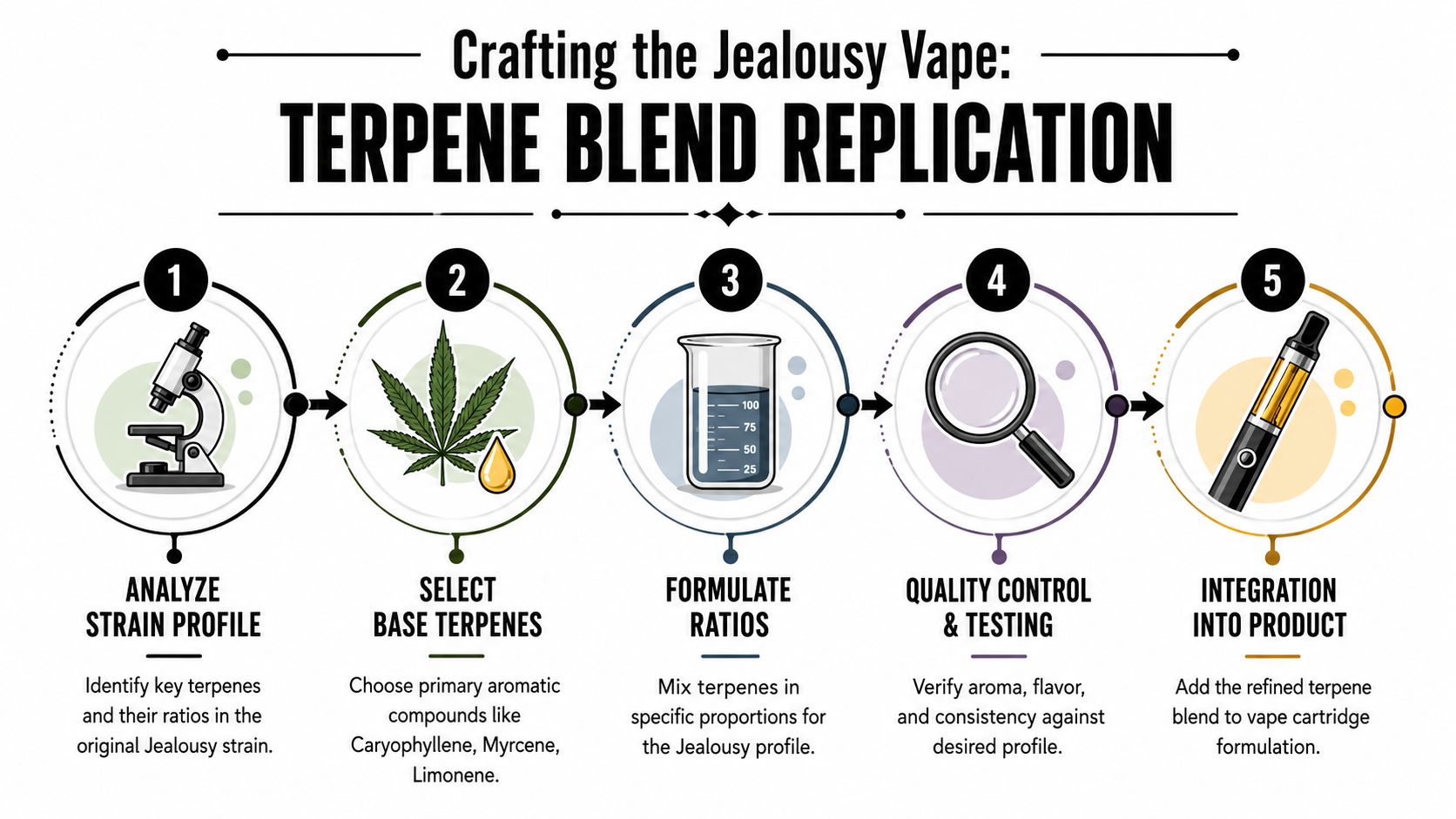
Jealousy is a good example of why consumer strain categories break down in formulation work. The commercial target is not a broad mood label. The target is a recognizable progression in vapor: bright entry, dense cream-sweet middle, then dry pepper and light gas on the finish. If that sequence collapses, the cartridge may still smell pleasant, but it will not read as Jealousy with any consistency across batches or hardware.
A practical blending workflow
I train junior formulators to start with structure, then refine character.
- Set the caryophyllene floor first. This gives the blend its dry, spicy frame and keeps the profile from drifting into soft dessert territory.
- Dose limonene for lift. You want a defined top note on inhale, not a citrus-forward profile that turns the blend into generic Gelato-family fruit.
- Use myrcene as a connector. It helps knit the opening to the mid-palate and can improve perceived density if kept in range.
- Test in the final matrix. A blend that smells accurate in a glass vial can flatten or skew after it is cut into oil.
- Make small revisions. Large terpene moves usually fix one sensory problem and create two more.
One bench cue matters more than teams expect. If the first heated pull reads as sweet cream with no dry pepper edge, the base is underbuilt. In practice, that usually points to weak caryophyllene support, an overfed sweet middle, or both.
Cartridge-specific failure points
Cartridges punish loose formulation. Heat changes volatility. Hardware changes delivery. Storage shifts the balance again.
I check three things every time:
- Preheat aroma: confirms whether the opening still has definition before activation
- First-pull vapor: shows whether the profile blooms in the right order instead of dumping sweetness all at once
- Lingering finish: verifies that pepper, dryness, and light fuel stay present without turning rough
Commercial formulation diverges from review-site strain talk. A Jealousy-inspired blend has to survive real packaging and real use, not just smell close in a concentrate jar.
For teams building SOPs around this process, Gold Coast Terpenes has a useful reference on using terpenes in formulation workflows. If you source a Jealousy-style blend instead of building from isolates, keep the same evaluation standard. Judge it in finished oil, in your target hardware, after a short rest period.
What improves fidelity
A few habits consistently produce better cartridge outcomes.
- Separate each sensory checkpoint. Evaluate raw blend, diluted oil, and filled cartridge as different stages.
- Track heat response in writing. Some Jealousy-style blends open late and finish correctly. Others flash bright and lose their pepper core.
- Correct in narrow increments. Small ratio changes preserve structure and make troubleshooting possible.
Common production mistakes are just as consistent.
- Chasing sweetness after a harsh first test. This often hides the underlying issue, which is poor balance or aggressive hardware.
- Using floral notes to soften the finish. That shifts the profile away from Jealousy's expected dessert-gas identity.
- Approving from bottle aroma alone. Vapor behavior is the product.
High-fidelity Jealousy cartridges come from repeatable ratio control, not strain-label shorthand. Build the top note with restraint, keep the center dense without turning syrupy, and protect the peppery finish through actual cartridge conditions. That is the difference between a blend that references Jealousy and one that performs like it.
Advanced Formulation The Entourage Effect in Action
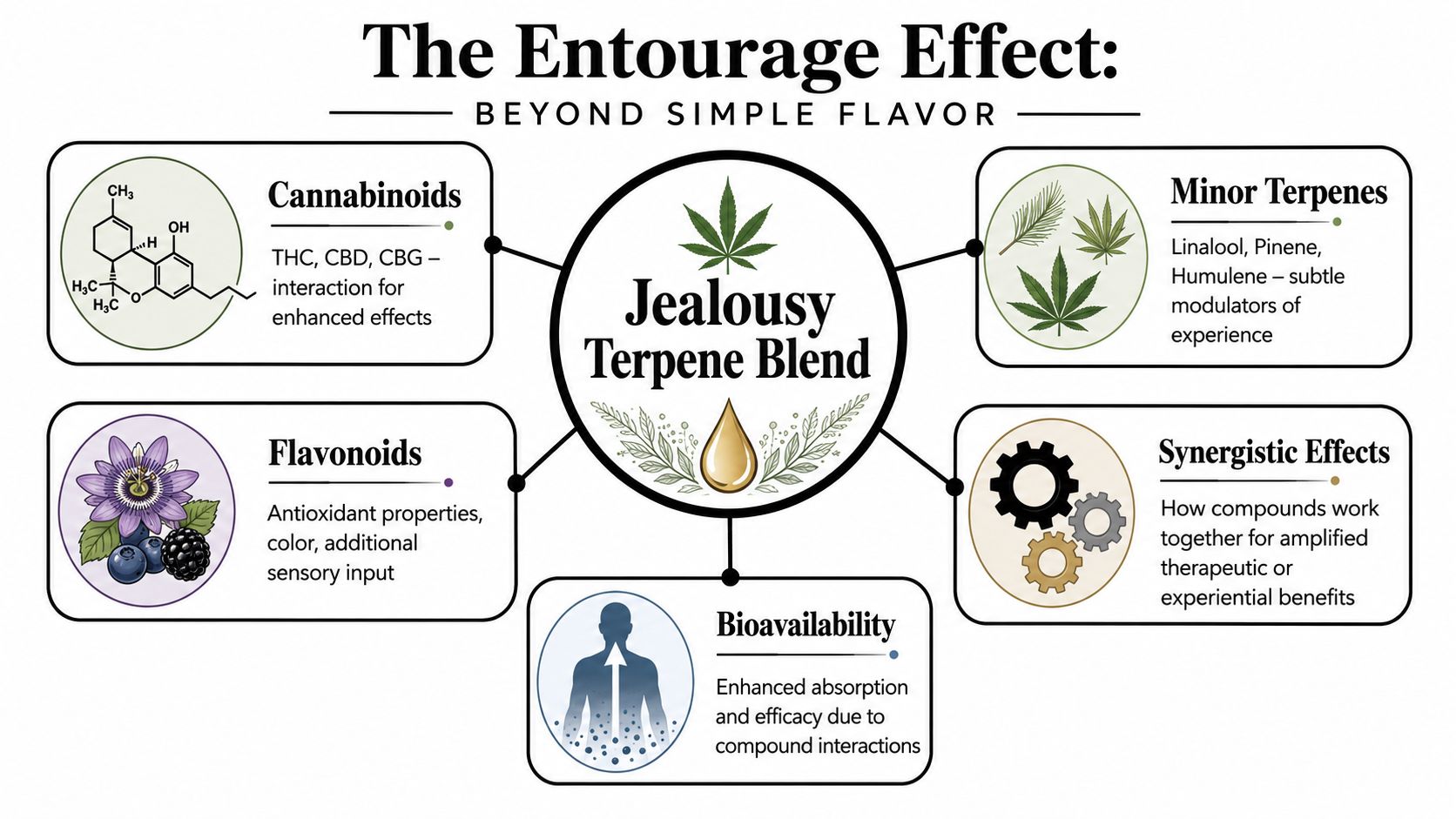
Good Jealousy formulation doesn't stop at aroma. The cannabinoid system you place under the terpene blend changes how the profile lands in the final product.
Leafly notes that Jealousy contains approximately 1% CBG, and that this minor cannabinoid works in synergy with the terpene profile to support the strain's balancing effects in which users report mental relaxation paired with physical energy, as described in Leafly's Jealousy profile.
Why the base oil changes the result
Junior teams often oversimplify. They assume that if the terpene blend is right, the experience will be right. That's not how finished products behave.
A Jealousy-style terpene profile placed into a neutral distillate can smell close to target but still feel flatter than expected. A broader cannabinoid base can preserve more of the balanced character. That doesn't mean you should force complexity into every SKU. It means your base material should match the product brief.
Practical decisions for cannabis product formulation
When you're formulating for cannabis product formulation rather than only aroma matching, use a layered review:
- Cannabinoid substrate choice: Decide whether the target product is meant to emphasize clarity, density, or a more balanced profile.
- Minor cannabinoid support: If your project allows it, think about whether a small CBG component better aligns with the Jealousy concept.
- Minor terpene restraint: Supporting compounds can add realism, but they shouldn't obscure the known caryophyllene-limonene-myrcene core.
A useful technical reference for teams working through these interactions is Gold Coast Terpenes' overview of the entourage effect and cannabinoid-terpene synergies.
The best Jealousy-inspired products don't just imitate flavor. They preserve the profile's internal balance.
What experienced formulators do differently
Experienced formulators don't ask whether one ingredient explains the whole outcome. They check whether all major variables point in the same direction.
If the terpene blend suggests balanced dessert gas, but the cannabinoid base pushes too flat or too heavy, the finished product drifts off target. If the base is right but the top note is too bright, the profile reads as another citrus-forward hybrid. Jealousy works because the system is coherent.
That coherence is what buyers notice, even if they never use the term entourage effect.
Why a Terpene-First Approach Wins
The old Jealousy strain indica or sativa question survives because it's easy to ask. It doesn't survive because it's useful in formulation. For product developers, the more reliable model is chemovar-driven and terpene-first.
That isn't just a preference. Modern cannabis science confirms that indica vs. sativa labels do not reliably predict effects; instead, subjective outcomes are driven by chemovar-specific terpene ratios, where the co-dominance of caryophyllene with limonene in Jealousy creates its signature dual-axis effect, according to Terpene Belt Farms' review of terpene-led effect profiles.
What this changes in product development
A terpene-first approach gives your team something actionable:
- For strain-inspired terpene blend work: You can define a target with sensory logic instead of vague category language.
- For vape cartridges: You can tune what opens, what carries, and what lingers.
- For distillate enhancement: You can preserve identity even when the base material is otherwise neutral.
- For brand owners: You can position a product around a repeatable profile instead of shelf shorthand.
The commercial trade-off
Teams that rely on indica and sativa labels move faster at the naming stage and slower at the correction stage. They often end up revising aroma, flavor, and hardware response after the first production pass.
Teams that start with terpene architecture do more thinking up front. They usually get closer to target sooner because the build has structure from the beginning.
A strain name can sell the first purchase. Profile fidelity is what keeps the SKU alive.
Jealousy is a useful case because it exposes the weakness of old labels so clearly. Yes, it's a balanced hybrid. No, that isn't enough to formulate from. The blend logic lives in the interaction between caryophyllene, limonene, myrcene, and the broader chemical context around them.
If you're building for commercial outcomes, that's the answer that matters.
If you're building a Jealousy-inspired terpene blend for distillate, cartridges, or broader cannabis product formulation, Gold Coast Terpenes offers strain-specific blends, isolates, and formulation resources that can help you move from profile theory to bench-ready development.