
Exotic strain names are often treated as if they were chemical specifications. They aren't. A scientific analysis found that commercial cannabis names are “poorly or not at all defined,” while samples clustered into only three terpene-dominant groups covering 59%, 33%, and 8% of samples. The same analysis concluded that terpene composition can indicate genetic background and origin more reliably than a commercial name or cannabinoid profile (scientific analysis of cannabis naming and chemistry).
For formulators, that limitation is useful. A name such as 24K Gold Punch, Sour Diesel, or a tropical hybrid can serve as a sensory brief, but a repeatable SKU requires more than copying a label. You need to identify the flavor family, assign volatile materials to top, mid, and base notes, account for distillate behavior, test the blend in the intended cartridge hardware, and validate the result against a reference batch.
The sections below translate exotic strain names into practical systems for distillate, vape cartridges, replication work, and new product development. Use the terpene flavor chart to understand note architecture, then compare strain-inspired options with terpenes for distillate and formulation resources before building a pilot batch.
1. Strain-inspired terpene blend formulation guide for exotic dessert profiles
Dessert profiles need note architecture. A bright fruit opening creates recognition, while a creamy mid-note and restrained woody or spicy base keep the blend from tasting thin in distillate or becoming sharp during vaporization. This structure also helps when replicating a reference profile or developing a new SKU from an exotic strain name.
For a 24K Gold Punch-inspired direction, build around limonene, myrcene, and beta-caryophyllene. Limonene supplies candy and citrus lift, myrcene adds body and softness, and beta-caryophyllene gives the finish dry spice. The 24k gold punch profile provides a practical reference for this style of development.
Practical rule: Treat the name as a target aroma, not evidence of a fixed chemical ratio.
Set the pilot loading within the commonly used 5% to 15% terpene loading range by weight, with many formulations falling around 7% to 12% according to the base and hardware (vape application guidance). If the distillate already carries strong aroma, begin at the lower end. Excessive loading can mask the base, reduce viscosity, and make the finish feel harsh.
Build the profile in layers
Keep the first matrix simple and scale it with a terpene calculator. A workable starting direction is approximately 38% limonene, 24% myrcene, and 15% beta-caryophyllene within the terpene blend, leaving the balance for secondary fruit, floral, and creamy accents. For bench-to-production scaling, the terpene mixing calculator uses the example that 100 grams of distillate at a 5% load requires 5 grams of terpenes.
Add the blend after the relevant distillate heating step. Prolonged high-heat exposure can flatten top notes, so mix under controlled conditions and assess the finished oil rather than relying on the formula alone. Test the blend in the intended cartridge, because ceramic or wickless hardware may preserve delicate candy notes better than a system that adds pronounced wick character. Confirm aroma, vapor harshness, viscosity, and note balance before approving the batch.
2. Formulating fruit-forward exotic terpene blends for vape cartridges
Exotic strain names that suggest mango, pineapple, or other tropical fruit require a structured aroma plan, not a name alone. Build the profile by separating top, mid, and base decisions so the cartridge remains bright without becoming thin or harsh.
Use limonene and ocimene for the top note. Limonene supplies a clear citrus edge, while ocimene pushes the opening toward fresh, green tropical fruit. Add myrcene in the mid note to give the aroma more body and keep the fruit from disappearing quickly. Too much myrcene can make mango or pineapple feel heavy and herbal, so assess the balance in both the oil and the vapor.
A practical starting point is a limonene-to-ocimene relationship near 3:1. If the transition from bright fruit to a softer floral center feels abrupt, test small additions of terpineol or linalool. These materials can connect the top and mid notes without making the cartridge smell overtly perfumed. For the base, keep the supporting materials restrained. The goal is persistence after exhalation, not a dense finish that covers the fruit.
Manage volatility and hardware response
Ocimene is relatively volatile, so storage and thermal cycling need controlled testing. Keep finished cartridges in a stable environment around 18°C to 22°C when that range fits the operating and stability protocol. Compare ceramic and metal-coil systems side by side. Heat distribution changes which notes arrive first, and a blend that performs well in ceramic hardware may lose its brightest character in another delivery system.
For a geographic reference, the Maui Wowie terpene guide can frame a tropical direction without treating the historical name as a fixed batch specification.
Approve the profile from the cartridge, not the mixing vessel alone. Combine limonene and ocimene first, add myrcene next, then introduce pinene or terpineol in small increments. Record aroma immediately after mixing and again after equilibration in the base. Compare those observations with vapor harshness, viscosity, and note order before approving the blend for replication or a new SKU.
3. Strain-inspired terpene blend formulation for candy-dessert notes in distillate
Candy and dessert naming has become a major direction in modern cannabis branding, but a sweet-sounding name doesn't automatically create a sweet sensory result. The formulator must construct sweetness through softness, floral creaminess, and lingering base notes, rather than expecting one isolate to perform the entire job.
Myrcene can provide a rounded body, linalool can add a smooth floral cream impression, and nerolidol can extend the finish with a quiet woody depth. Minor materials can supply the confectionery detail. Geraniol, used carefully, can add a rose-like accent that supports vanilla and candy impressions without taking over.
A reasonable development matrix should vary the relationship between myrcene and linalool rather than locking into one formula immediately. Test a softer version, a brighter version, and a more persistent version. This helps separate a useful profile from one that only smells sweet in the bottle.
Protect the middle and base notes
Winterized and decarboxylated distillates can mute some sensory detail. Add terpenes after the relevant heating process, using a controlled post-winterization temperature window rather than prolonged high heat. Linalool and other volatile materials need protection from both heat and light, so opaque, UV-protective packaging with a reliable seal is important during retention testing.
Formulation insight: Perceived sweetness is an architecture problem. The top note attracts attention, but the mid and base notes determine whether the profile feels creamy, thin, or woody.
Keep nerolidol restrained. At higher levels, its woody character can pull a candy profile toward earth and dry timber. Evaluate the blend in the finished cartridge because vapor temperature and airflow can exaggerate that shift. Marketing language should describe sensory properties such as creamy, confectionery, floral, or soft, and shouldn't imply a medical outcome.
4. Formulation guide for fuel and gas terpene profiles in vape cartridges
Fuel profiles require controlled harshness. When translating exotic strain names like Sour Diesel into a fuel-forward profile, start with the caryophyllene-to-humulene relationship. Beta-caryophyllene provides the peppery core, humulene adds dry herbal depth, and myrcene rounds the edges. Pinene can lift the opening, while a restrained amount of limonene supplies contrast without shifting the blend toward citrus.
A diesel or skunky cartridge becomes unpleasant when pepper, dry earth, or burnt herbal notes dominate. A practical starting point is a beta-caryophyllene-to-humulene ratio near 3:1, with myrcene used as a moderator rather than a headline note. Build the first matrix around several myrcene levels while holding the fuel character steady. Evaluate the blend in the finished distillate, after storage, and through the selected cartridge platform. Intensity alone is an incomplete success measure. The profile must remain recognizable and tolerable at the point of use.
Match the blend to the coil
Ceramic and metal-coil systems are useful starting platforms for aggressive profiles. Cotton wick systems can magnify peppery harshness and blur the difference between diesel, skunk, and dry spice. Run the same oil through each target device, then record the opening note, throat feel, aftertaste, and persistence.
Hardware changes the balance between top, mid, and base notes. Pinene and limonene may dominate the first draw, while caryophyllene and humulene determine the lingering impression. Confirm those shifts with repeated draws and retention checks before approving a replication or new SKU.
Wholesale partners need sensory language that stands on its own. “Sharp peppery character with an herbal-earthy base” sets a clearer expectation than a strain name alone. The Sour Diesel terpene resource can support that naming-to-sensory translation.
Balance fuel profiles by adding lift, controlling the pepper edge, and choosing hardware that does not amplify harshness.
5. Exotic strain-inspired terpene blends for citrus-forward profiles
Exotic strain names often evoke citrus directions, but a bright, credible profile requires more than a high limonene level. Organize development by note family: limonene supplies the top note, pinene sharpens the opening, caryophyllene provides a dry mid-to-base backbone, and myrcene keeps the composition from feeling hollow.
For distillate, cartridges, replication work, and new SKU development, set the sensory target before adjusting ratios. The finished profile should read as bright, clean, and citrus-forward while retaining enough structure through processing and vaporization. Control pinene carefully. Excess can turn lemon into pine and increase abrasive character, particularly in hotter hardware. A small amount of linalool or geraniol can connect the top and mid notes, but floral material should remain subordinate.
Design for brightness without harshness
A practical starting matrix uses 42% to 48% limonene and 9% to 12% pinene within the terpene blend, with caryophyllene and myrcene forming the foundation. Treat these figures as development inputs, not universal specifications. Base oil, intended intensity, storage, and cartridge construction can shift the result.
A post-winterization addition around 60°C to 70°C may help retain volatile citrus and pine notes when that temperature window has been validated for the process. Compare samples in ceramic or wickless hardware, then confirm the approved blend in the commercial platform. Record the first draw, mid-palate transition, finish, and persistence after storage.
Brightness is not the same as intensity. A high-impact citrus blend can still fail if the first puff is sharp and the finish disappears.
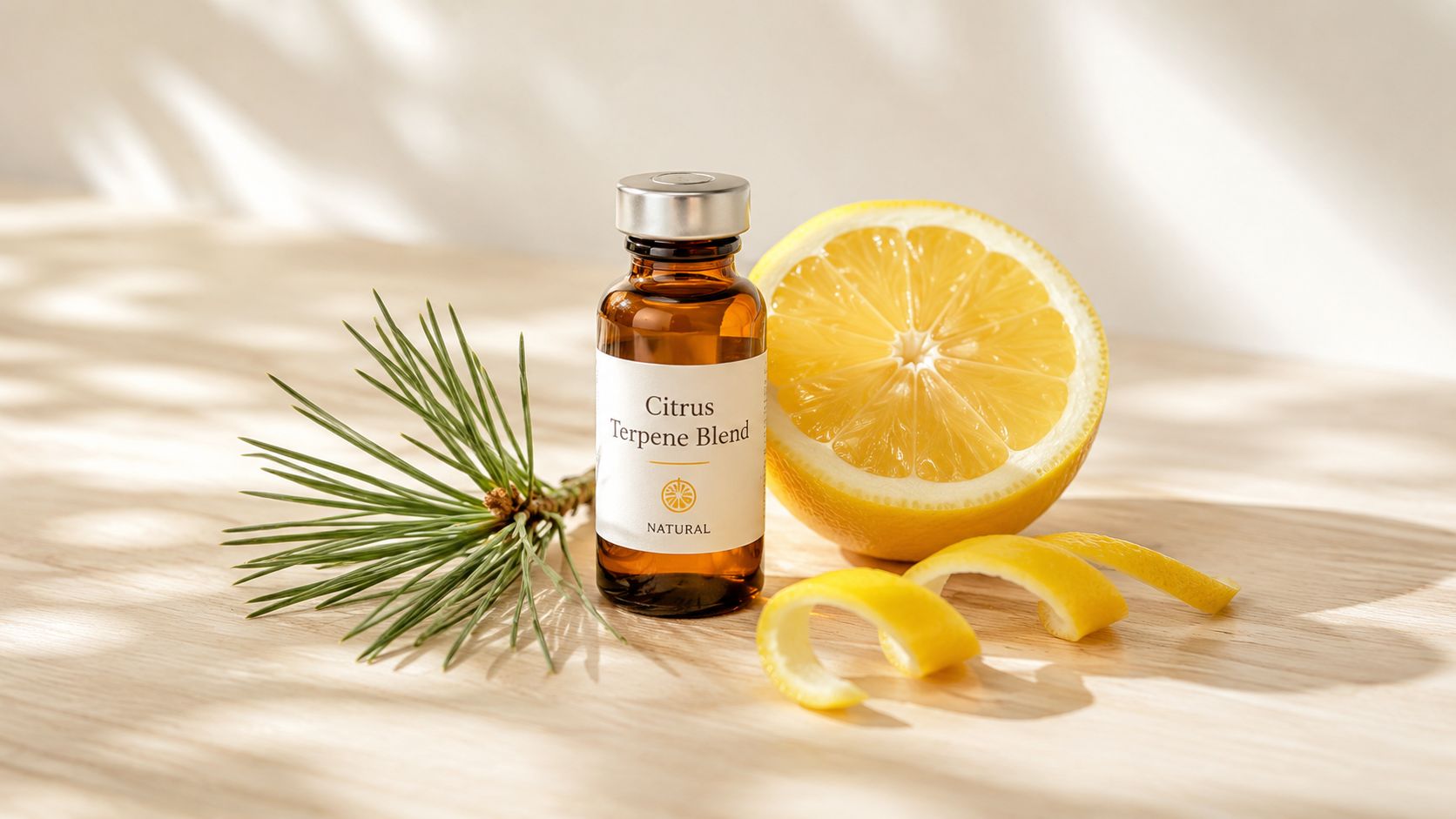
Use bright, energetic, citrus-forward, and clean only when a sensory panel applies those descriptors consistently. The image reference for this profile is shown below.
6. Formulation guide for herbal-spiced terpene profiles in distillate
Herbal-spiced profiles reward precision because they contain several strong sensory signals. Beta-caryophyllene can deliver pepper and warmth, humulene adds a dry herbal layer, and pinene supplies a sharper aromatic lift. Terpineol and linalool can soften the composition, while camphene can add a cool, camphor-like undertone.
The profile should feel layered rather than medicinal. Start by establishing the caryophyllene, humulene, and pinene relationship. Then add terpineol and linalool in measured steps until the pepper edge becomes more polished. If the floral materials become too prominent, the blend can shift from refined herb and spice to perfume.
Keep the supporting notes subordinate
A development direction can place beta-caryophyllene around 30% to 34%, humulene around 8% to 10%, and pinene around 11% to 14% of the terpene blend. Terpineol around 4% to 5% and linalool around 1% to 2% may provide useful smoothing. Camphene around 2% to 3% can add depth, but higher use levels may create an unwanted medicinal impression.
These ranges are not substitutes for a sensory panel. Evaluate the oil at rest, during the first inhalation, and on the finish. Test ceramic and metal-coil systems before approving the profile, because cotton wicks can increase the apparent harshness of pepper-forward materials.
Give wholesale buyers a clear sensory statement: spiced herbal with floral complexity and peppery warmth. That language supports premium positioning without promising an effect, therapeutic outcome, or universal experience.
7. Strain-inspired terpene blends for floral-creamy profiles
Floral-creamy profiles require restraint. Linalool can create a soft floral center, nerolidol can extend the finish, and myrcene can add body. Geraniol may introduce rose complexity, but it can quickly move the profile away from refined cream and toward overt perfume.
The best result usually comes from making the floral note feel integrated rather than obvious. Start with the creamy body and then add the floral center. If you reverse that order, the blend may smell attractive in a vial but become sharp or cosmetic in a cartridge.
Protect the premium impression
Keep linalool and nerolidol in a controlled relationship, then use geraniol as an accent rather than a headline. Beta-caryophyllene should remain low enough to preserve the profile's polished character. The finished cartridge needs a tight seal and dark, UV-protective packaging because light exposure can degrade sensitive aromatic materials.
Evaluate three dimensions separately:
- Opening character: Does the first note read as soft floral or sharp floral?
- Body: Does myrcene create creaminess, or does it make the blend heavy?
- Finish: Does nerolidol leave a smooth, quiet persistence or a woody aftertaste?
Use ceramic hardware for the primary panel, then confirm the result in the production cartridge. Sensory language such as luxury, sophisticated, and creamy-floral works only when the product remains smooth across batches. It shouldn't be used to imply relaxation, sleep, or another health-related outcome.
8. Formulation guide for skunky and pungent terpene profiles
Skunky profiles depend on controlled pungency. Preserve the heritage character while managing throat feel, thermal behavior, and batch consistency.
Build the pungent core first, then moderate it with a restrained woody, herbal, or citrus counterpoint. Beta-caryophyllene adds pepper and density, while myrcene can soften the transition. Use limonene sparingly when the profile feels closed or overly heavy, since too much lift can pull the blend away from its intended character.
Validate pungency in the finished device
A vial test cannot predict the complete cartridge experience. Vaporization may make pungent notes more aggressive, and cotton systems can exaggerate harshness. Compare ceramic and metal-coil hardware, recording the first draw, mid-session character, and lingering aftertaste.
If throat feel dominates, reduce beta-caryophyllene before changing several other variables. Test a small blend matrix against the chosen distillate and device, changing one factor at a time. This establishes an operating window for replication work and new SKU development.
Keep brand language focused on heritage, pungency, authenticity, and bold aroma. Avoid implying that a name guarantees a particular effect or chemistry. For markets with strong legacy preferences, a recognizable skunky direction can support commercial positioning, provided the product has a clear sensory specification and remains consistent across batches.
9. Terpene reference for common sensory notes
A practical reference map connects an exotic strain name to formulation decisions without treating sensory language as analytical identity. Names may suggest fruit, candy, gas, cream, or herbs, but replication work and new SKU development require measured ingredients, batch records, and finished-device testing.
Use the following map to assign materials to flavor families and note layers:
- Limonene: Bright citrus, lemon peel, and a fast-opening top note.
- Myrcene: Soft herbal fruit, rounded body, and a heavier base impression.
- Beta-caryophyllene: Pepper, spice, warmth, and a dry structural finish.
- Linalool: Floral softness, light creaminess, and a mid-note bridge.
- Nerolidol: Woody persistence and a quiet, lingering base.
- Ocimene: Fresh, green, tropical fruit lift.
- Pinene: Pine, fresh resin, and aromatic sharpness.
- Humulene: Dry herb, wood, and hop-like depth.
- Geraniol: Rose, floral sweetness, and a delicate accent.
- Terpineol: Floral, pine-like softness that can connect citrus and herbal families.
- Camphene: Cool herbal and camphor-like depth, useful only at controlled levels.
Note architecture follows volatility and boiling point
Top, mid, and base notes organize the blend by arrival and persistence. Top notes appear first and fade quickly, mid notes establish the profile's heart, and base notes add weight and staying power. A technical reference places limonene as a top note at 176°C, linalool as a mid note at 198°C, and myrcene as a base note at 167°C.
For the full terpene flavor chart, refer back to the earlier reference on terpene note architecture and boiling-point reference.
In distillate and cartridges, note order changes with heat exposure, airflow, and hardware. A bottle evaluation can therefore misrepresent the finished draw. Confirm each family in the target device, then record first-draw impact, mid-session balance, and aftertaste before approving a replication or SKU formula.
10. Formulation best practices and safety considerations
A reliable strain-inspired terpene blend starts with a controlled record. Log the supplier, lot, ingredient identity, concentration, mixing order, process temperature, base distillate, cartridge hardware, and sensory result. Keep a certificate of analysis for every material, then test the finished product against the requirements of its sales market. This record supports replication work and makes it easier to identify whether a sensory shift comes from the terpene blend, distillate, or device.
Terpene loading is a formulation variable, not a fixed recipe. General vape guidance places practical use within 5% to 15% by weight, with many blends targeting 7% to 12%. Highly refined distillate may need less (vape formulation guidance). Hardware narrows the workable range. Industry guidance identifies 8% to 12% for ceramic cell cartridges and 5% to 8% for cotton wick systems (hardware and distillate mixing guidance).
Build validation into the release process
Use a defined release protocol:
- Confirm identity: Review ingredient COAs and verify the intended terpene materials.
- Check stability: Hold samples at expected storage and use temperatures, watching for evaporation, oxidation, and separation.
- Test hardware: Run the oil through every target cartridge platform. Airflow and heating behavior can change top-note impact, mid-note balance, and base-note persistence.
- Record sensory data: Compare opening, body, finish, throat feel, and batch consistency.
- Complete compliance testing: Use third-party testing for residual solvents, potency, and terpene profile where required.
Packaging should be airtight, opaque, and UV protective when light sensitivity is a concern. Labels and marketing claims must follow local and regional cannabis and consumer-product rules. Use the regulatory compliance checklist to organize that review before production approval.
Top 10 Exotic Strain Terpene Blend Comparison
| Item | 🔄 Implementation complexity | ⚡ Resource / efficiency | ⭐ Expected outcomes | 💡 Ideal use cases | 📊 Key advantages |
|---|---|---|---|---|---|
| Strain-inspired guide, 24K Gold Punch (exotic dessert) | Moderate–High, precise ratio balancing, winterization control | Moderate, strain-specific terpenes, occasional isolates (vanillin/ethyl maltol), hardware validation | ⭐⭐⭐⭐, high recognition; candy-forward sensory fidelity | Premium cartridges, winterized distillate, limited/seasonal SKUs | Differentiation, premium positioning, reproducible across cart hardware |
| Formulating fruit-forward, Tropical phenotype | Moderate, ocimene handling and ratio scaling | Moderate, limonene/ocimene/myrcene dominant; cooler storage/logistics | ⭐⭐⭐⭐, bright juicy fruit perception, strong regional performance | Tropical/regional SKUs, summer lines, ceramic/metal-coil cartridges | Broad regional appeal, masks plant off-notes, scalable production |
| Sweet phenotype engineering, Candy-dessert for distillate | Moderate, volatility and oxidation control for linalool/nerolidol | Moderate–High, specialty florals (nerolidol, linalool), UV‑protective packaging | ⭐⭐⭐⭐, perceived sweetness without synthetics; high price premium | Premium/limited-edition carts, evening-use indulgence lines | Strong premium margins, works with darker distillate, high repeat purchase |
| Diesel-Skunky phenotype, Fuel/gas replication | Moderate, refinement to avoid acrid/chemical notes | Low–Moderate, common pungent terpenes; hardware guidance needed | ⭐⭐⭐, strong legacy appeal; stable in distillate | Legacy/wholesale markets, strain-authentic product lines | Masks low-quality base, strong loyalty, cost-efficient terpene mix |
| Citrus-forward, Bright, energetic phenotype | Low–Moderate, simple limonene-pinene dominance; volatility management | Low, high-availability terpenes; cost-effective | ⭐⭐⭐⭐, broad mass-market appeal; functional uplift perception | Morning-use/functional lines, mass retail, all hardware types | Broad appeal, stable, cost-effective for high-volume SKUs |
| Herbal-spiced, Complex phenotype engineering | High, multi-terpene layering and sensory optimization | High, multiple mid/minor terpenes, extended development and panels | ⭐⭐⭐⭐, connoisseur appeal; supports premium pricing | Connoisseur/limited editions, upscale wholesale, boutique cartridges | Entourage-effect marketing, premium margins, strong wholesale demand |
| Floral-creamy, Luxe phenotype for premium cartridges | Moderate, manage linalool/nerolidol volatility and balance | High, expensive florals, specialized packaging (UV/opaque) | ⭐⭐⭐⭐, luxury positioning; relaxation/evening-use resonance | Spa/retail luxury channels, female-skewing premium lines | High margins, sophisticated sensory profile, strong upscale appeal |
| Skunky & pungent, Bold phenotype engineering | Moderate, pungency control and throat-sensation mitigation | Low–Moderate, common terpenes; hardware recommendations | ⭐⭐⭐, strong legacy/connoisseur loyalty; niche appeal | Legacy consumers, strain-authentic and bulk distillate lines | Authenticity, effective masking of off-notes, stable pairings |
| Terpene reference, common terpenes & sensory notes | Low, informational resource | Low, documentation; easy integration into workflows | ⭐⭐⭐, improves formulation alignment and marketing language | Formulation labs, product teams, marketing copy development | Quick lookup of sensory notes; guides terpene selection and ratios |
| Best practices & safety/regulatory considerations | Low–Moderate, documentation, testing and validation workflows | Moderate, QA systems, COAs, third-party testing, compliant packaging | ⭐⭐⭐⭐, reduced regulatory risk; improved shelf stability | All formulation and scale-up operations, market entry readiness | Regulatory compliance, stability guidance, supplier quality controls |
From Name Inspiration to a Validated SKU
Exotic strain names work best as creative starting points. They give a product team a shared direction, such as candy-dessert, tropical fruit, citrus, diesel, floral cream, or herbal spice. They don't establish a guaranteed terpene profile, cannabinoid range, effect, or experience. Scientific work has described popular cannabis names as lacking standardized taxonomic validity and consistent definition (academic research on cannabis naming). That distinction matters when a brand wants to move from an attractive concept to a product that performs consistently.
Start by selecting the flavor family and reference profile. Decide whether the target is bright and volatile, dense and pungent, creamy and persistent, or layered across several families. Then map the desired top, mid, and base notes. Limonene can provide a quick citrus opening, linalool can form a floral middle, and myrcene or nerolidol can support the base, but the combination must be adjusted for the actual distillate and delivery system.
Build a small blend matrix rather than making one large batch. Change one major variable at a time, such as the limonene-to-ocimene relationship in a tropical profile or the amount of beta-caryophyllene in a fuel profile. Keep the total terpene load documented by weight. For example, 100 grams of distillate at a 5% load requires 5 grams of terpenes, according to a practical mixing guide (terpene scaling reference). Use a calculator to scale the same ratio from bench work to production.
Add the blend to the intended distillate after the relevant heating step, using controlled temperature and mixing time. Avoid treating heat as a flavor-development tool unless the process has been specifically validated. Volatile top notes can disappear while heavier materials remain, leaving a profile that is flatter, darker, or harsher than the original target.
Test every candidate in the target cartridge hardware. Ceramic, metal-coil, and cotton-wick systems can express the same blend differently because heat distribution and wicking alter note release. Record the first inhalation, mid-profile character, finish, throat feel, vapor behavior, and any changes after storage. A blend that smells correct in a vial but fails in the production device isn't ready for release.
Finally, document sensory, stability, and compliance results alongside supplier COAs. Use strain-specific blends or isolated compounds to refine accuracy, but don't let the product name replace analytical verification. Gold Coast Terpenes offers natural strain-specific profiles and isolated compounds that can support this type of development, including options for distillate, cartridges, and concentrates. The finished SKU should be named for its intended sensory direction, supported by its test data, and described without medical claims.
Gold Coast Terpenes offers strain-specific terpene blends, isolated compounds, formulation resources, and a terpene calculator for teams developing exotic, fruit, dessert, fuel, and floral profiles. Visit Gold Coast Terpenes to compare formulation components and build a more repeatable terpene system for your next distillate or cartridge SKU.