
Gold Coast Terpenes sells 100% natural terpene blends. For Do Si Dos, one commercial profile lists total flower terpenes at 2.0–3.5%, with beta-caryophyllene at 0.3–0.8% and linalool at 0.2–0.5%, according to the Hyperwolf Do-Si-Dos profile. These are flower percentages, not blend ratios. Keep the two measurements separate when setting a strain-inspired terpene blend for distillate.
What Terpene Profile Does Do Si Dos Strain Have?
A published Do Si Dos reference blend assigns 71% of its composition to seven named compounds. The remaining 29% is unspecified, so formulators must set that portion deliberately rather than treat the reference as a complete recipe. Gold Coast Terpenes supplies 100% natural terpene blends, including strain-specific profiles.
The reference lists 24% beta-caryophyllene, 16% D-limonene, 9% myrcene, 9% humulene, 7% linalool, 4% beta-pinene and 2% alpha-bisabolol, according to the Royal King Seeds Do-Si-Dos review. These shares describe that blend, not every flower lot sold under the Do Si Dos name.
Do Si Dos Reference Terpene Profile by Compound
| Terpene | Role in the blend | Reference share in blend | Reported flower range |
|---|---|---|---|
| beta-Caryophyllene | Base-mid, peppery body | 24% | 0.3-0.8% |
| Limonene | Top note, bright citrus | 16% | Not stated |
| Myrcene | Mid-base, herbal and earthy | 9% | Not stated |
| Humulene | Base, woody and earthy | 9% | Not stated |
| Linalool | Mid, floral rounding | 7% | 0.2-0.5% |
| beta-Pinene | Top, fresh pine accent | 4% | Not stated |
| alpha-Bisabolol | Base, soft floral | 2% | Not stated |
| Total terpenes | Whole profile | 71% defined by the seven listed compounds | 2.0-3.5% of flower |
Read the blend by function. Limonene gives the profile its bright citrus top note; beta-pinene adds a fresh accent that can become prominent if overused. Beta-caryophyllene provides peppery depth, while linalool softens the middle with a floral note. Keep linalool in a supporting role to avoid pushing the blend toward a perfumed character.
Myrcene and humulene contribute herbal, earthy weight beneath the brighter notes. Alpha-bisabolol adds a soft floral finish. The listed compounds account for 71% of the reference, leaving the other 29% open for a deliberate formulation choice.
Practical rule: Preserve the dominant-to-secondary proportions before adjusting the remaining share. The right compound list at the wrong weighting can change the profile's character.
Use the published ratios as a starting point, then compare them with the lot's certificate before ordering or formulating. The reference is a target for comparison, not a fixed specification for every Do Si Dos batch.
Does the Do Si Dos Name Fix the Terpene Profile or Each Lot Blend?
No. The name points to a family of profiles, so the certificate of analysis decides which member you hold and which correction applies when replicating the flavor of Do Si Dos for distillate.
Independent lab summaries show one compiled profile averaging 0.47% limonene, 0.25% myrcene and 0.20% linalool, while other samples lead with caryophyllene or myrcene, a variation documented in the PMC study of cannabis terpene blends. Same cultivar name, three different leading compounds. That's not a rounding error. It's a different starting material for formulation purposes.
Four levers move those results:
- Phenotype selected: Different cuts of the same cross express different dominant terpenes, so clone source changes your baseline before any other variable acts.
- Growing conditions and harvest timing: Light, feed and harvest day shift volatile output, and early or late harvest changes the top-note balance most.
- Curing and storage: Heat, oxygen and time strip the most volatile compounds first, which is why an older lot often tastes flatter at the top.
- Extraction and lab method: Extraction pulls compounds unevenly, and labs don't all run identical methods, so method belongs on every comparison you make.
The cultivar name points to a family of profiles, while the certificate shows which member you hold.
The lab step below shows why ranking has to come from a document, not a label.
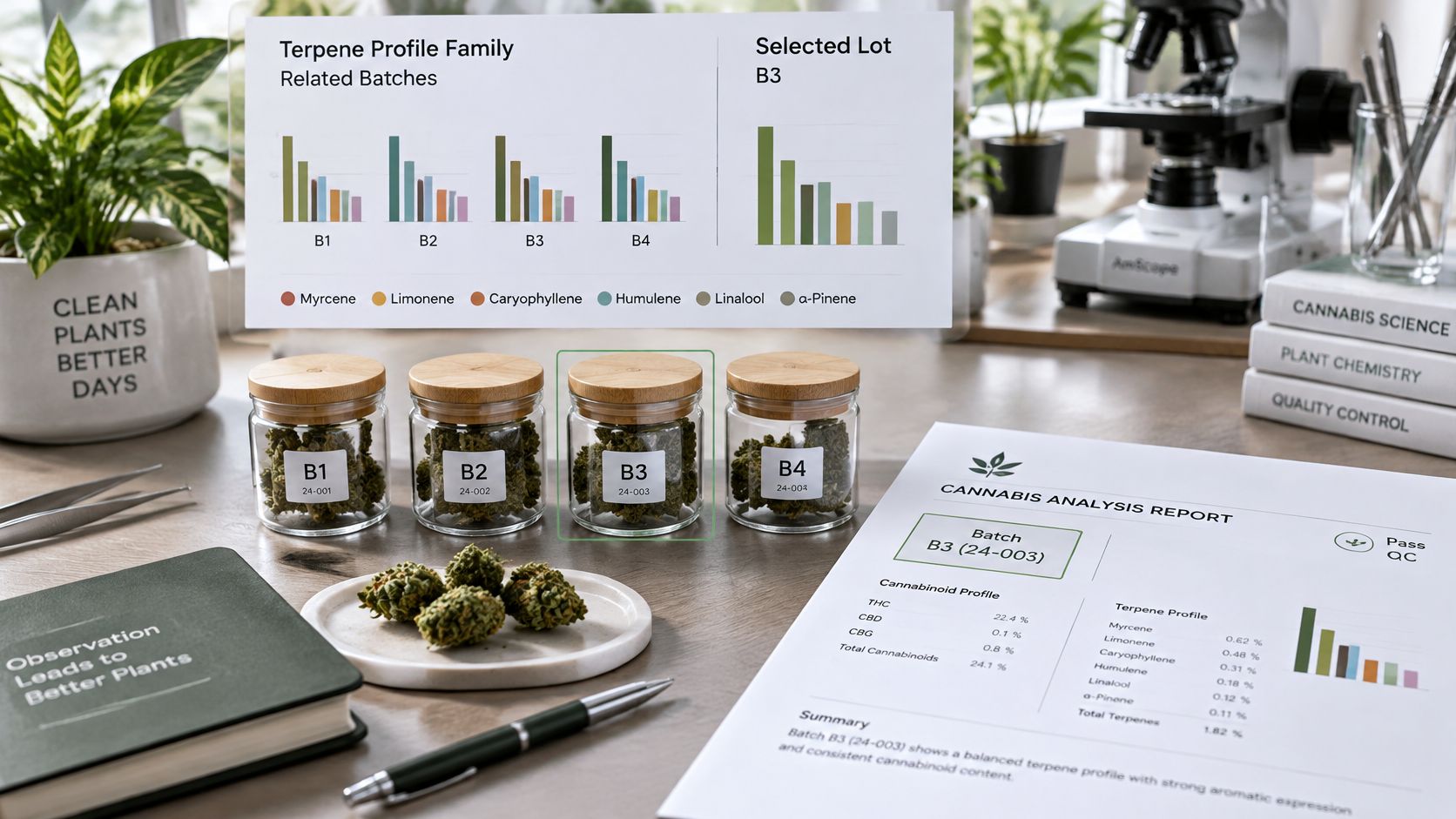
Blend Adjustments by Lot Profile
| Lot profile | Leading terpene on certificate | Blend adjustment | Re-test focus |
|---|---|---|---|
| Limonene-led lot | Limonene | Add citrus top-note correction | Citrus intensity after heating |
| Caryophyllene-led lot | beta-Caryophyllene | Reduce added base material | Pepper depth and dryness |
| Myrcene-led lot | Myrcene | Reduce added myrcene and humulene | Earthy weight and herbal bitterness |
| Linalool-heavy lot | Linalool | Cut linalool to a sparing accent | Floral intrusion |
Put the first two rows side by side and the problem gets concrete. A limonene-led lot needs its citrus top note reinforced, because the source already leans bright and your blend has to match that direction after heating. A caryophyllene-led lot needs the opposite move. The peppery body is already present, so adding a full base dose overshoots into dryness.
A myrcene-led lot carries its own earthy weight, so added myrcene and humulene should come down before the base swallows the top note. A linalool-heavy lot is the one panels flag fastest. Floral intrusion reads immediately as wrong, so cut linalool back to an accent even if the certificate suggests the flower carried more.
I would apply four working rules to every correction. Change one variable per run, so you know what caused the shift. Use isolated compounds for small corrections and a standardized strain-inspired blend for larger ones. Re-test the finished oil, not the mixing sample, because processing changes volatile balance. Log which lot triggered which change, since a fix for one lot can overshoot the next.
Write your spec as a window of ranked dominant compounds and ratios, labelled strain-inspired, never as one absolute percentage. Browsing strain terpene profiles for formulation benchmarks gives you comparison structures, but the binding numbers come from certificates. Gold Coast Terpenes lot certificates supply the ranking data this method needs, so name the batch on every spec you issue.
How Do I Read a Certificate of Analysis for a Lot?
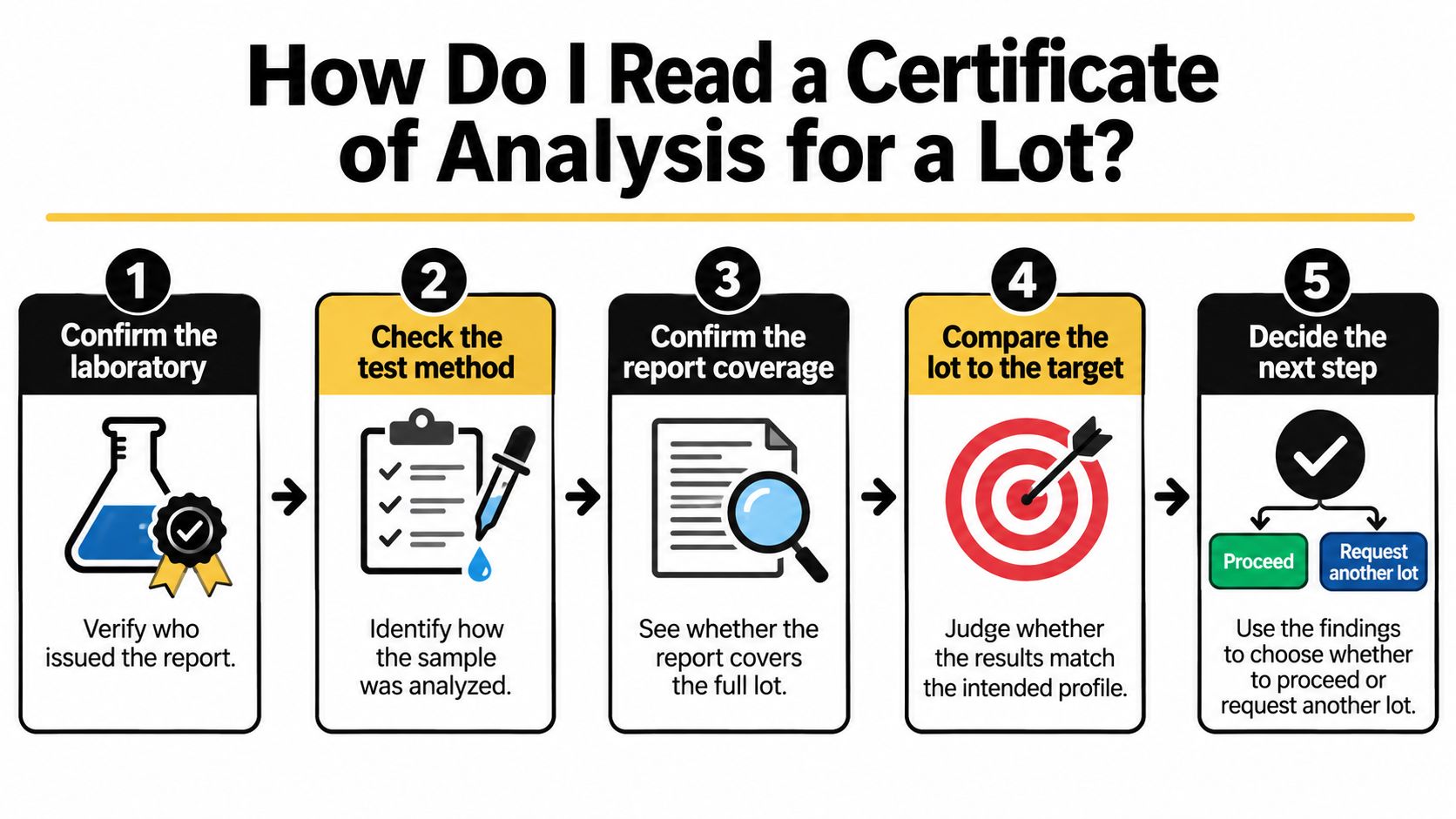
A certificate of analysis (COA) is useful only when its material and test method match the lot you are evaluating. Check those details before comparing terpene percentages.
- Confirm the lab, method and material. Check who issued the report, which test method was used, and whether it covers flower or finished oil. A flower report and an oil report describe different materials, so their results are not directly comparable.
- Record total terpene percentage. For a flower report, compare the total with the 2.0-3.5% range in the reference table. A result outside that range calls for closer review of the material and its storage, rather than an automatic pass or rejection.
- Rank terpenes by weight. Sort the compounds from highest to lowest. A report's display order may be alphabetical or based on panel position, which does not show which compounds dominate.
- Separate major from trace compounds. The leading compounds shape the main profile; trace compounds contribute detail. Correct a meaningful mismatch in a major compound before spending a reformulation cycle on a trace-level difference.
- Compare the top three against your target. Check limonene for the top note, beta-caryophyllene for body, and myrcene and humulene for earthy weight. Use the lot's measured ranking and ratios to decide whether it fits your target or needs correction.
- Record THC separately. Potency does not establish aroma. Keep the THC result distinct from the terpene panel when assessing the lot.
- Log batch number, date and lab. Keep all three in the formulation record so lot comparisons use consistent identifiers. This record helps distinguish material changes from process changes.
The COA certificate of analysis guide explains report anatomy in more depth. Use the COA's batch-specific results when deciding whether a lot matches your Do Si Dos target.
How Do I Build a Do Si Dos Blend for Vape Cartridges?
The seven published terpene shares define 71% of the reference blend. The remaining 29% needs a deliberate formulation choice: add selected minor terpenes or increase the listed compounds proportionally to reach 100%. Leaving that portion unspecified lets the supplier's default determine nearly a third of the profile.
For a 7.5% load in a 10 g batch, add 750 mg of terpenes. Applying the reference shares gives beta-caryophyllene 180 mg, limonene 120 mg, myrcene 68 mg, humulene 68 mg, linalool about 53 mg, beta-pinene 30 mg and alpha-bisabolol 15 mg. Record the chosen treatment of the remaining 29% on the batch sheet.
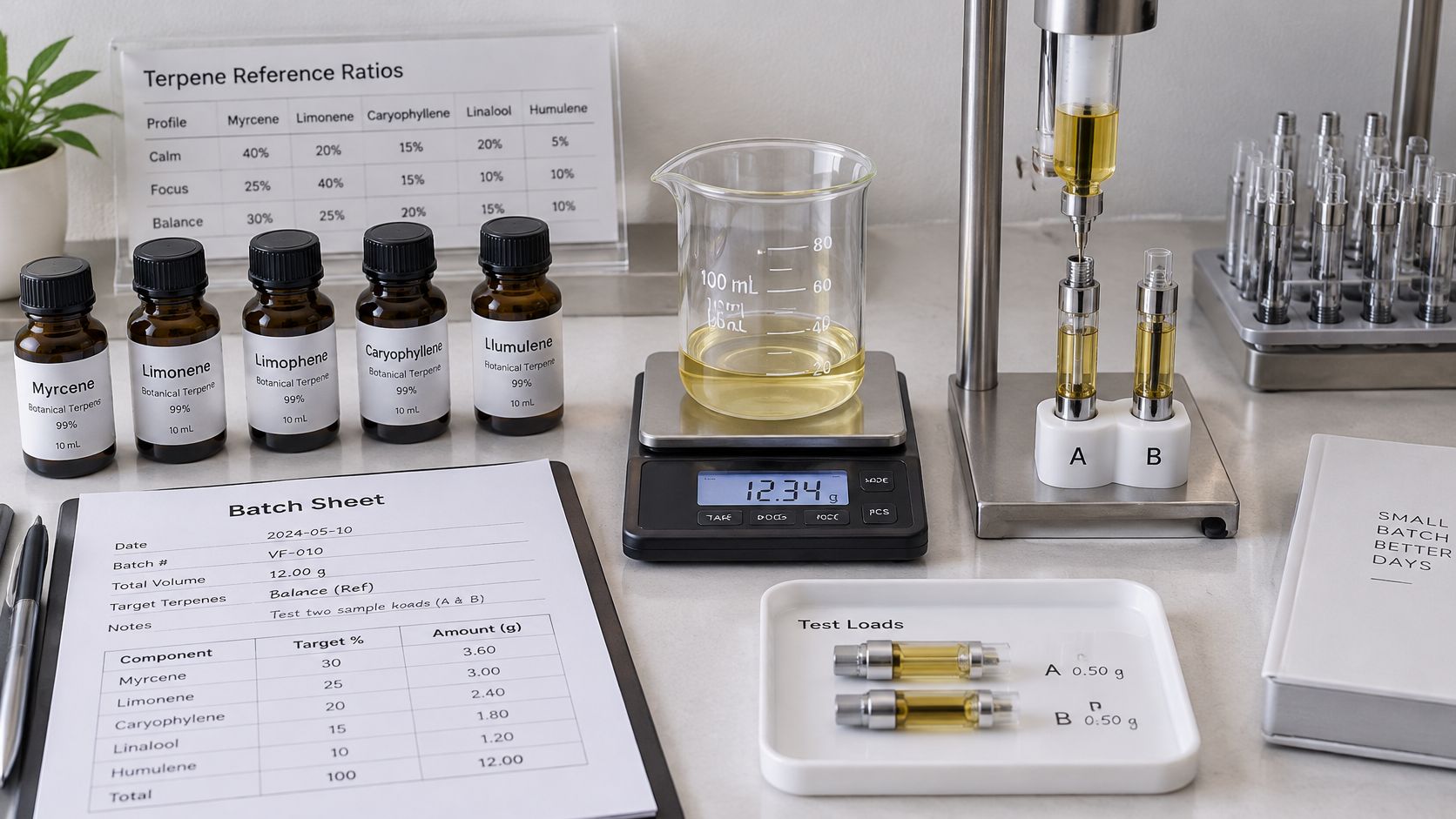
Six Steps From Ratios to a Tested Cartridge
- Select the source oil and review its certificate. Gold Coast Terpenes is one source option. Match the material to its lot documentation before using it in a batch.
- Scale the reference ratios. A mixing calculator, such as the one Gold Coast Terpenes offers, can help convert the proportions into batch weights.
- Prepare samples at 7.5% and 15.0% load. Comparing two loads helps show how flavor intensity and harshness change with concentration.
- Test on the intended hardware. Measure viscosity, aerosol output and leakage in the cartridge, using the voltage and airflow intended for use.
- Evaluate flavor after heating. Room-temperature aroma alone does not establish how the blend will taste when heated.
- Retest after storage. Compare the stored sample with the initial one for changes in aroma, flavor and hardware performance.
The study conditions described in the reference do not establish how a blend will perform across different cartridges. Test aerosol output on your own hardware at each load.
Loading Test Points for a Do Si Dos Cartridge
| Terpene load | Purpose | What to measure |
|---|---|---|
| 0% (THC distillate control) | Baseline for hardware and aerosol | Aerosol mass, viscosity, leakage |
| 7.5% | Medium benchmark for flavor | Flavor intensity, aerosol output, leakage, viscosity |
| 15.0% | High benchmark for flavor | Flavor intensity, aerosol output, leakage, viscosity, stability over storage |
The mixing demonstration below shows the bench technique behind steps 2 and 3.
Judge the finished cartridge, not only the bench sample. The guide to using terpenes in production covers handling basics; confirm the final load on your chosen hardware.
How Should a Strain-Inspired Do Si Dos Label Avoid Effect Claims?
A label should identify the product, describe its sensory profile, and avoid promises about what consumers will feel. A terpene certificate reports composition; it does not establish clinical effects or prove that a blend produces the effects associated with a cultivar.
“Indica” can suggest an outcome to buyers, even when a brand intends it as a flavor or category label. Describe the blend's aroma and taste instead, such as citrus, pepper, and earth.
Label Checklist for a Strain-Inspired Blend
- Strain-inspired wording: Make clear that Do Si Dos refers to a flavor target, not a claim that the product contains the cultivar.
- Terpene list with percentages: Use figures from the batch certificate. A published reference profile may not match the lot being sold.
- Testing laboratory and batch number: Include the laboratory and lot identifier so buyers can connect the listed percentages to the relevant batch.
- Handling notes: State that concentrated terpene blends need proper dilution before use.
- State or market requirements: Review the rules that apply to the product and its destination before approving label artwork.
A sensory descriptor can be direct: “Citrus-peppery, Do Si Dos-inspired terpene blend.” It describes flavor and positioning without promising an effect.
Keep origin statements equally precise. Gold Coast Terpenes supplies strain-inspired terpene blends, but the product's specific composition and origin should be stated according to its documentation. Avoid implying that a terpene blend contains the Do Si Dos cultivar itself. Before approving artwork, use the regulatory compliance checklist for terpene products to review the label's claims and required information.
Avoid guaranteed effects, medical wording, and language that suggests the blend is the cultivar itself.
What Should I Do Next to Verify a Do Si Dos Batch Before Ordering?
Treat the Do Si Dos name as a starting hypothesis, then check the lot before placing a larger order. Use a ranked terpene target with acceptable ranges for the leading compounds, rather than relying on a profile name or a single target value.
- Request the certificate for the source lot and review its batch details and reported composition.
- Compare the lot with your target. The published seven-compound reference accounts for 71% of the blend, leaving 29% to define deliberately in your formulation.
- Choose a correction approach if the lot differs from the target, and document the changes for repeat batches.
- Test at 7.5% and 15.0% loads in your own hardware. Set the dilution ratio during these trials, before committing to larger production quantities.
- Scale only after the tests pass. Use flavor and aerosol performance in your hardware as the decision criteria.
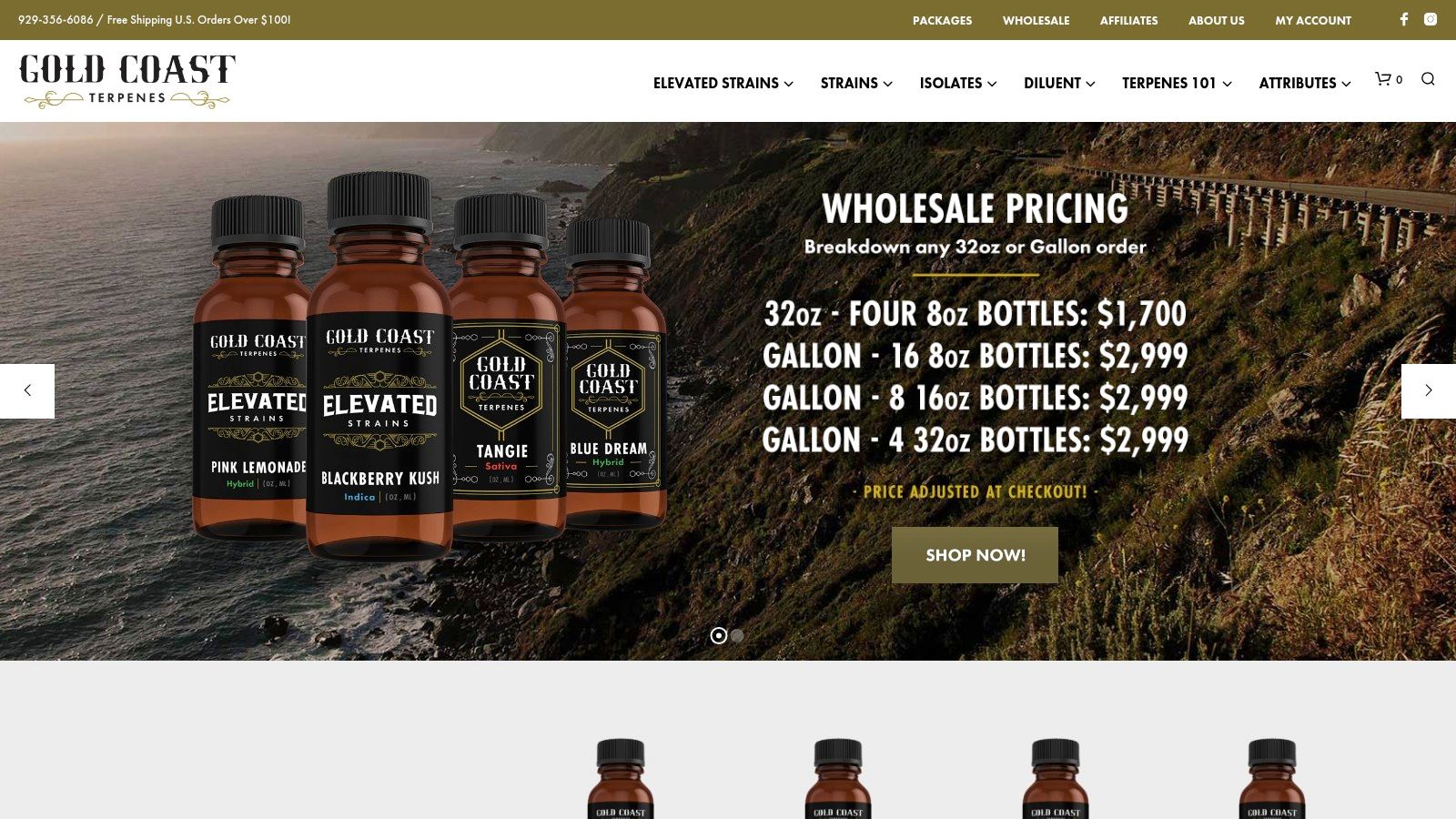
Gold Coast Terpenes supplies 100% natural terpene blends and offers over 50 strains across Indica, Sativa and Hybrid categories. Its bulk ordering option lets customers order multiple strains at one time, which can support side-by-side profile comparisons. All strains are highly concentrated and need proper dilution before use, so include dilution trials in your test quantity.
Confirm commercial terms for the strain that matches your confirmed lot certificate before ordering. Minimum order quantities, lead times and dilution guidance for a particular item should be confirmed with the supplier. Keep your target, lot certificate and test results together so the formulation can be reviewed before scaling.
What Do Formulators Ask Before Buying Do Si Dos Terpenes?
Four questions cover the points buyers raise before ordering a Do Si Dos terpene profile for cartridge work.
Does the Do Si Dos Name Guarantee a Terpene Profile?
No. The same name can yield limonene-led or caryophyllene-led lots, so each certificate needs its own check. Gold Coast Terpenes lot certificates let you verify ranking before you commit.
Is the Seven-Compound Reference Blend the Same as the Flower?
No. It's a published replication target for a strain-inspired terpene blend, while the 2.0-3.5% total terpene figures come from lab reports of flower. Blend shares and flower percentages measure different things.
Can a Do Si Dos Blend Be Built From One Terpene?
Not reliably. Start from beta-caryophyllene, limonene and myrcene, then add the remaining compounds in the reference proportions. A single compound gives you one note, not a profile.
Where Should a Formulator Start With Gold Coast Terpenes?
Request the lot certificate for one small test size from Gold Coast Terpenes and run the certificate checks. Scale only after the cartridge test passes on your hardware.
{“@context”:”https://schema.org”,”@type”:”FAQPage”,”mainEntity”:[{“@type”:”Question”,”name”:”Does the Do Si Dos name guarantee a terpene profile?”,”acceptedAnswer”:{“@type”:”Answer”,”text”:”No. The same name can yield limonene-led or caryophyllene-led lots, so each certificate needs its own check.”}},{“@type”:”Question”,”name”:”Is the seven-compound reference blend the same as the flower?”,”acceptedAnswer”:{“@type”:”Answer”,”text”:”No. It is a published replication target, while total terpene figures of 2.0-3.5% come from lab reports of flower.”}},{“@type”:”Question”,”name”:”Can a Do Si Dos blend be built from one terpene?”,”acceptedAnswer”:{“@type”:”Answer”,”text”:”Not reliably. Start from beta-caryophyllene, limonene and myrcene and add the rest in the reference proportions.”}},{“@type”:”Question”,”name”:”Where should a formulator start with Gold Coast Terpenes?”,”acceptedAnswer”:{“@type”:”Answer”,”text”:”Request the lot certificate for one small test size, run the certificate checks, and scale only after the cartridge test passes.”}}]}Request a lot certificate for a small Do Si Dos test size, run the seven certificate checks against your ranked target window, and build your 7.5% and 15.0% cartridge samples before committing to volume. Gold Coast Terpenes supplies botanically derived, strain-inspired blends with the batch documentation that workflow requires. Start your verified trial order at Gold Coast Terpenes.