
A cartridge team can approve a Caribbean Breeze flavor, receive the next oil batch, and discover that the bright orange note has turned herbal, piney, or gas-forward. The problem may not be poor blending. It may be that the name Caribbean Breeze refers to different genetic references in the supply chain.
For formulators, that distinction changes everything. A reliable strain-inspired terpene blend starts with a defined sensory target, a known terpene architecture, and a base-specific adjustment plan. This guide treats Caribbean Breeze as a formulation project for vape cartridges, distillate, concentrates, and commercial cannabis products, not as a dispensary-style strain review.
The practical question is simple: are you replicating the tropical-citrus expression associated with orange and pineapple, or a newer creamy tropical line with citrus, gas, and dessert depth? Once that choice is clear, limonene, myrcene, beta-caryophyllene, pinene, humulene, and related compounds can be arranged into a repeatable flavor system instead of mixed by instinct. For foundational reference work, formulators can also use this strain terpene profile guide.
Introduction to Caribbean Breeze for Product Formulation
A brand owner usually notices the problem during a sensory review. The first pilot has a clean citrus lift and a recognizable tropical finish. A later production lot tastes like generic fruit candy, even though the label still says Caribbean Breeze. The team may respond by adding more citrus, but that often makes the profile sharper without restoring the missing mid and base notes.
That outcome reflects a formulation error, not just a flavor preference. Caribbean Breeze isn't one universal chemical formula in the marketplace. Available references describe different lineages, potency ranges, and dominant terpene patterns. A manufacturer who doesn't lock the reference material before blending can produce a technically consistent batch that is still sensory-inaccurate.
The commercial value sits in the detail. Orange, pineapple, creamy fruit, herbal green notes, pine, spice, and light gas occupy different positions in the aroma structure. A blend that contains only a bright citrus compound may smell attractive in a vial but lose identity after dilution, heating, and passage through cartridge hardware. A more complete profile uses volatile top notes for the opening, fruit and herbal compounds for the body, and warmer materials for the finish.
Why the profile matters in a cartridge
Distillate often needs aromatic structure because refining can leave a relatively neutral base. Live resin and solventless extracts may already contain a strong native character, so the formulator's role is usually correction or reinforcement rather than full reconstruction. Hardware adds another variable because coil temperature, oil movement, and wicking affect which notes reach the user first.
A strain-inspired blend gives the team a controlled starting point. It can be compared against a certificate of analysis, a retained flower reference, or a sensory standard before the product moves into scale-up. The aim isn't to make an exaggerated fruit flavor. It's to preserve the tropical-citrus identity while keeping enough depth for the profile to remain recognizable when heated.
Formulation principle: Flavor accuracy depends on architecture. A citrus note can announce Caribbean Breeze, but the supporting notes determine whether the profile actually finishes like Caribbean Breeze.
This article focuses on phenotype selection, terpene function, flavor replication, cartridge compatibility, and practical testing. It also keeps the language non-medical. The relevant outcome for a manufacturer is sensory consistency, not a promised physiological effect.
Understanding the Two Caribbean Breeze Genetic Profiles
The first profile is the widely cited sativa-dominant hybrid associated with Alien Orange Cookies × Sunset Sherbet. Major strain databases describe it as a 60% sativa and 40% indica cultivar, placing it in the modern designer-hybrid era rather than among old landrace strains. Its reported sensory direction is tropical and citrus-forward, with orange, pineapple, and other bright fruit notes, as described in the Caribbean Breeze lineage reference.
That reference is a logical target for a cartridge positioned around energetic daytime character and mood-lifting language, although product copy should remain within applicable regulations and avoid medical claims. From a formulation perspective, the key point is the bright opening. Limonene can support the citrus impression, while fruit-oriented supporting materials help prevent the result from becoming a one-dimensional orange profile.
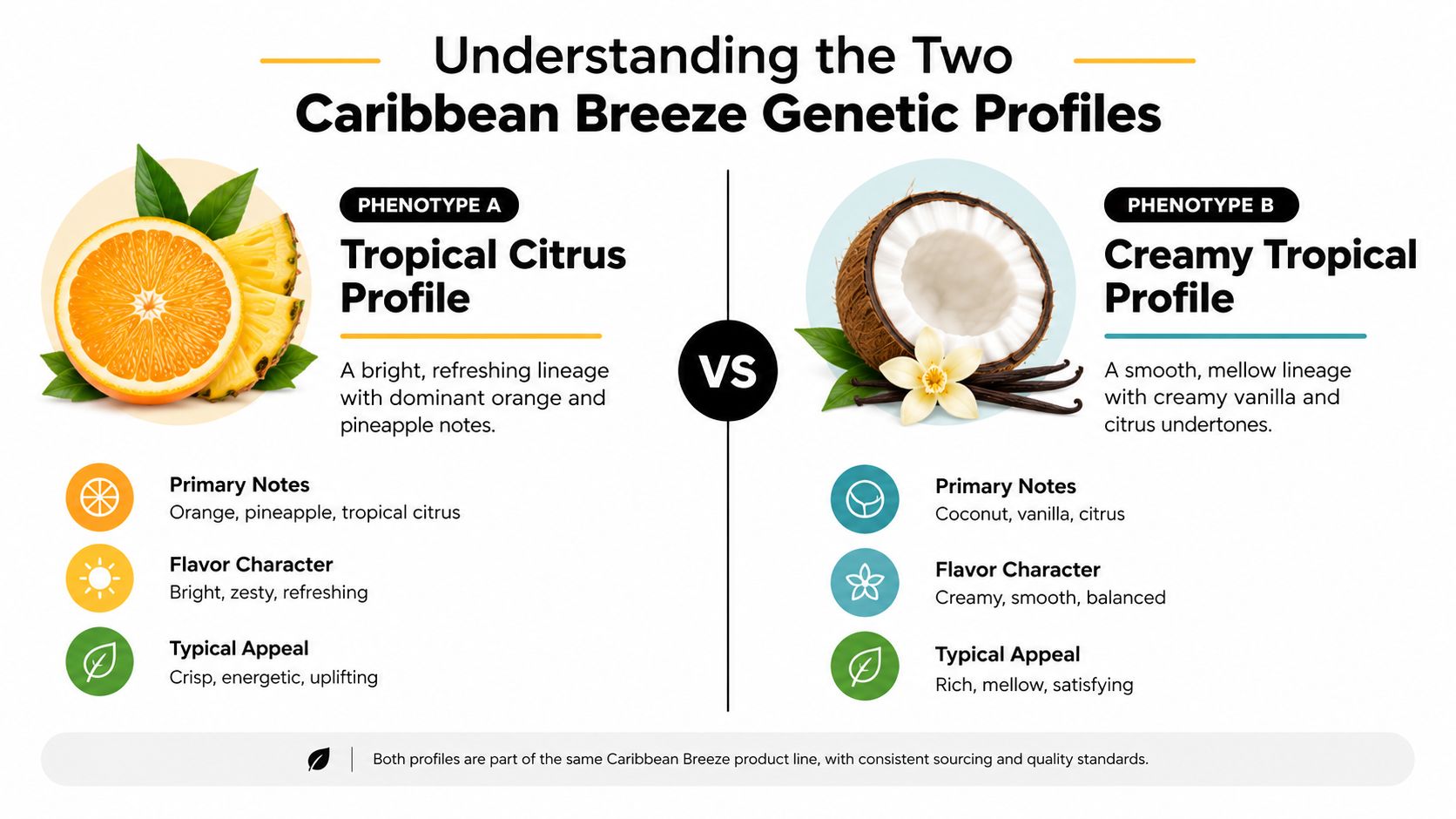
Profile A and Profile B require different targets
A separate market line appears under the same name. The Seed Junky-associated version is identified as Pineapple Fruz × (Biscotti × Sherb bx), according to this market genetics document. Listings commonly present this line as more indica-leaning and terpene-rich, with terpinolene and beta-caryophyllene helping drive the aroma. Secondary impressions can include gas and citrus.
That version shouldn't be recreated with the same bright-citrus formula used for the Alien Orange Cookies × Sunset Sherbet reference. Its target may need a softer tropical body, more creamy dessert character, and a warmer finish. Terpinolene can bring a fresh, floral, green-fruit quality, while beta-caryophyllene adds a peppery and woody anchor. The precise balance depends on the source phenotype and the intended extract base.
| Market reference | Sensory direction | Formulation priority |
|---|---|---|
| Alien Orange Cookies × Sunset Sherbet | Bright orange, pineapple, tropical citrus | Preserve citrus lift and fruit clarity |
| Pineapple Fruz × (Biscotti × Sherb bx) | Creamy tropical fruit, citrus, gas, spice | Add body and depth without burying the fruit |
The name alone isn't sufficient for a replication brief. Request the source lineage, current COA, terpene panel, and a retained sensory sample. For internal education, this indica versus sativa terpene guide can help teams discuss aroma direction without treating genetic labels as a substitute for analytical data.
Deconstructing the Terpene Profile for Formulation
A cartridge can open with bright orange, turn herbal in the middle, and finish with warm spice. Reading Caribbean Breeze through a perfume pyramid helps explain that sequence. Top notes create first contact, middle notes form the recognizable body, and base notes provide persistence. For formulators, the model works like a troubleshooting map when a sample smells too sharp, flat, or green.
Independent commercial lab-style data place some samples around 18% to 24% THCA, with total terpenes commonly at 1.5% to 3.0% by weight. Other samples reach 4.4% total terpenes, including beta-caryophyllene at 1.47%, beta-myrcene at 1.09%, limonene at 1.1%, humulene at 0.41%, and alpha-pinene at 0.21%, according to this commercial profile analysis. Those figures describe tested samples, not a fixed specification for every Caribbean Breeze product.
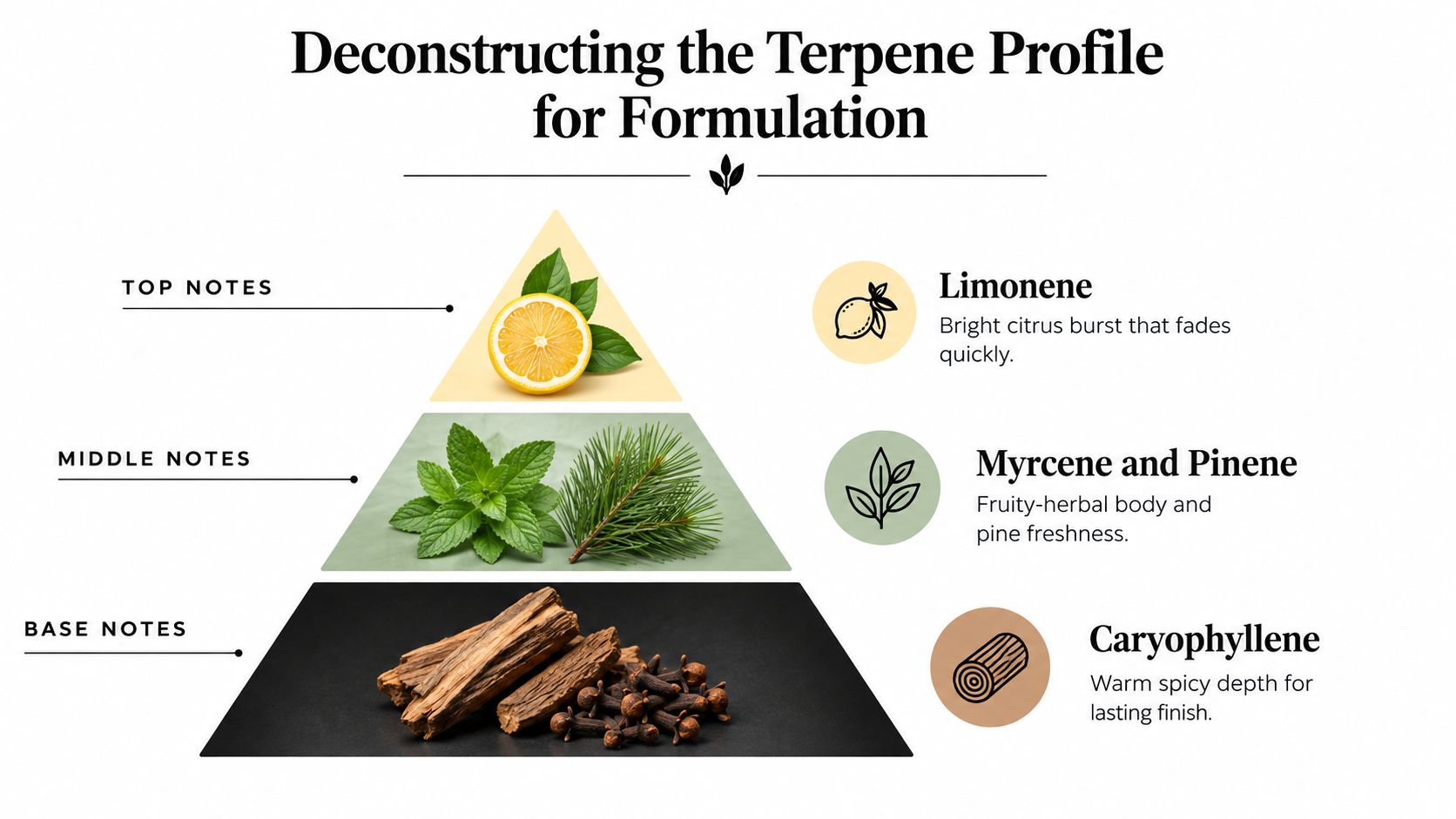
Top notes create the first contact
Limonene is the clearest citrus driver. It can supply orange peel, lemon brightness, and a quick aromatic lift. If distillate smells dull in the vial, a controlled citrus accent may restore definition. Excess limonene can make the profile smell like cleaning product or overly sweet orange candy.
Pinene adds freshness and a green, airy edge. That edge keeps tropical fruit from becoming heavy or syrupy. The cited commercial sample included alpha-pinene and also identified beta-pinene, so pine character may belong to the broader expression rather than indicate contamination.
The practical target is a citrus opening that leaves room for fruit, green freshness, and a warm finish.
Middle notes carry the identity
Myrcene gives the blend a rounder, fruitier body. It can connect the citrus opening with tropical impressions and soften an overly pointed top note. Terpinolene, emphasized in the newer market line, may add fresh, floral, green, and lightly tropical qualities. Together, these materials can move the accord from juicy fruit toward herbal brightness, so their balance matters.
Humulene supports a drier herbal and woody impression. It can add structure when a fruit profile feels too simple. A commercial product listing also reported a Caribbean Breeze sample with 4.4% total terpenes, including humulene at 0.41%. Treat that product listing as a formulation snapshot, not a universal specification.
Base notes prevent a hollow finish
Beta-caryophyllene contributes warm spice, pepper, and woody depth. It can anchor orange and pineapple so the flavor remains present after the initial draw. For a creamy tropical target, that warmth also balances dessert notes that might otherwise taste soft or overly sweet.
Use the terpene flavor chart to connect each adjustment with a sensory purpose, then assess the complete accord after heating. Vial aroma is only the first checkpoint. Cartridge hardware and temperature change which volatile notes become prominent, so a successful blend must be judged in the intended device.
How Phenotype Variation Impacts Flavor Accuracy
A manufacturer can receive two products labeled Caribbean Breeze and find that one opens with orange and pineapple, while the other leans toward herbal, pine, spice, or gas. That difference does not automatically indicate a labeling error. The name may cover separate genetic lines and phenotypes, each requiring a different flavor target.
The Seed Junky-associated profile, identified as Pineapple Fruz × (Biscotti × Sherb bx), is one clear reason to separate market references before setting a sensory standard. Its lineage appears in this Caribbean Breeze market reference. A brand pursuing a creamy tropical profile could waste development time correcting a bright orange sample that was never meant to match the approved target.
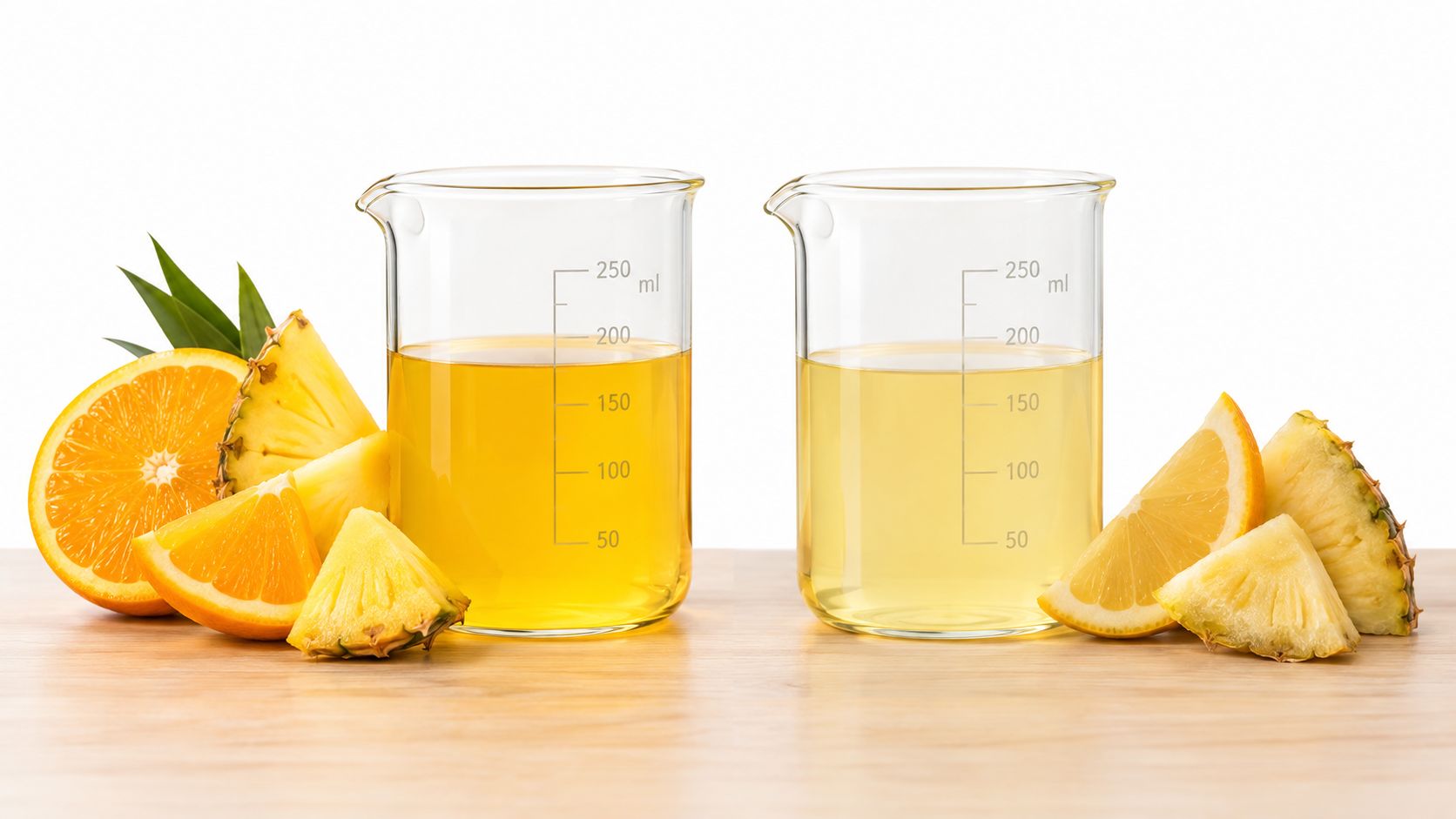
Set the sensory target before blending
Begin with a written sensory target, not only a strain name. Describe the opening, body, and finish in language that a formulator can test:
- Opening: orange peel, pineapple, bright citrus, or soft creamy fruit.
- Body: juicy tropical fruit, green freshness, floral fruit, or dessert-like roundness.
- Finish: pepper, wood, herbal dryness, pine, or light gas.
Then compare that target with the available COA. Reported Caribbean Breeze material spans a tested THC range around 23.0% to 28.0%, with CBD below 1.0%, while another commercial reference reports a lower THCA range. These differences make each batch its own analytical and sensory input. The higher-potency range is documented by StrainPedia's Caribbean Breeze entry.
Use a decision checklist
Before scaling a strain-inspired terpene blend, verify:
- Lineage: Identify the genetic reference used by the supplier.
- Analytical panel: Review dominant terpenes and total terpene content.
- Sensory reference: Retain sealed flower, extract, or an approved aroma standard.
- Base interaction: Test the blend in the intended distillate, resin, or solventless base.
- Hardware output: Evaluate the oil in the target cartridge, not only in glass.
- Approval language: Record what the team means by “Caribbean Breeze” in the batch specification.
This checklist prevents the common commercial error of chasing a changing flavor target. Select one phenotype reference, document its sensory boundaries, and reject formula changes that improve one profile while moving the product away from the approved one.
Formulating Caribbean Breeze for Vape Cartridges and Distillate
A cartridge brand may call two very different oils “Caribbean Breeze.” One may target bright citrus and tropical lift, while another preserves creamy fruit, herbal depth, or a warmer finish. Formulation starts by choosing which market phenotype the cartridge should reproduce, then judging the base against that sensory target.
The base determines how much the terpene blend must contribute. Neutral distillate can accept a fuller strain-inspired profile. Live resin may already carry citrus, fruit, or gas notes, so the blend may only need to sharpen a missing accent. Solventless material often has a strong native aroma. Add terpenes carefully, or the result can resemble a flavor concentrate instead of an extract.
Match the accent to the problem
If the oil lacks lift, test a limonene-forward correction. If tropical fruit feels thin, examine myrcene and compatible fruit notes for added body. If the finish fades too quickly, beta-caryophyllene or humulene may add warmth and persistence. If the blend turns green, reduce pine and herbal character before increasing fruit.
Treat the terpene profile as a set of formulation directions rather than a fixed recipe. A reported reference places myrcene at 0.5% to 1.0%, limonene at 0.4% to 0.8%, and beta-caryophyllene at 0.3% to 0.7%. The reported THC range is around 23.0% to 28.0%, with CBD below 1.0%. These figures can orient the target, but the actual COA and sensory behavior of each batch should control the formula.
Avoid diluents that blur the intended aroma system. A VG, PG, PEG, or MCT-free terpene approach may suit an oil-compatible specification, but compatibility, stability, and safety still require review. Follow a controlled distillate mixing guide when incorporating the blend.
| Extract Base | Accent Priority | Compatibility Note |
|---|---|---|
| Distillate | Build citrus, tropical body, and warm finish in sequence | Confirm viscosity, clarity, and uniformity after mixing |
| Live resin | Reinforce the missing note rather than rebuilding the whole profile | Native terpenes may amplify citrus, gas, or herbal materials |
| Solventless | Use restrained accents that preserve extract character | Evaluate separation, crystallization, and heated flavor in the final hardware |
Hardware belongs in the same evaluation loop. An open vessel may smell balanced, while a hot coil emphasizes limonene or brings out myrcene and caryophyllene after repeated draws. Record cold aroma, first-draw flavor, mid-session flavor, and finish. Those observations help separate a formula problem from a base or delivery-system problem.
Practical Usage Guide for Cartridges and Concentrates
A controlled bench process protects the intended profile better than a large corrective addition. The supplied formulation guide gives 1% to 3% incorporation as a practical starting range, with adjustments based on intensity, as shown in the required Caribbean Breeze concentrate guide. Use that range for development only, not as a universal production specification. Regulatory, toxicological, hardware, and finished-product requirements determine the final formula.
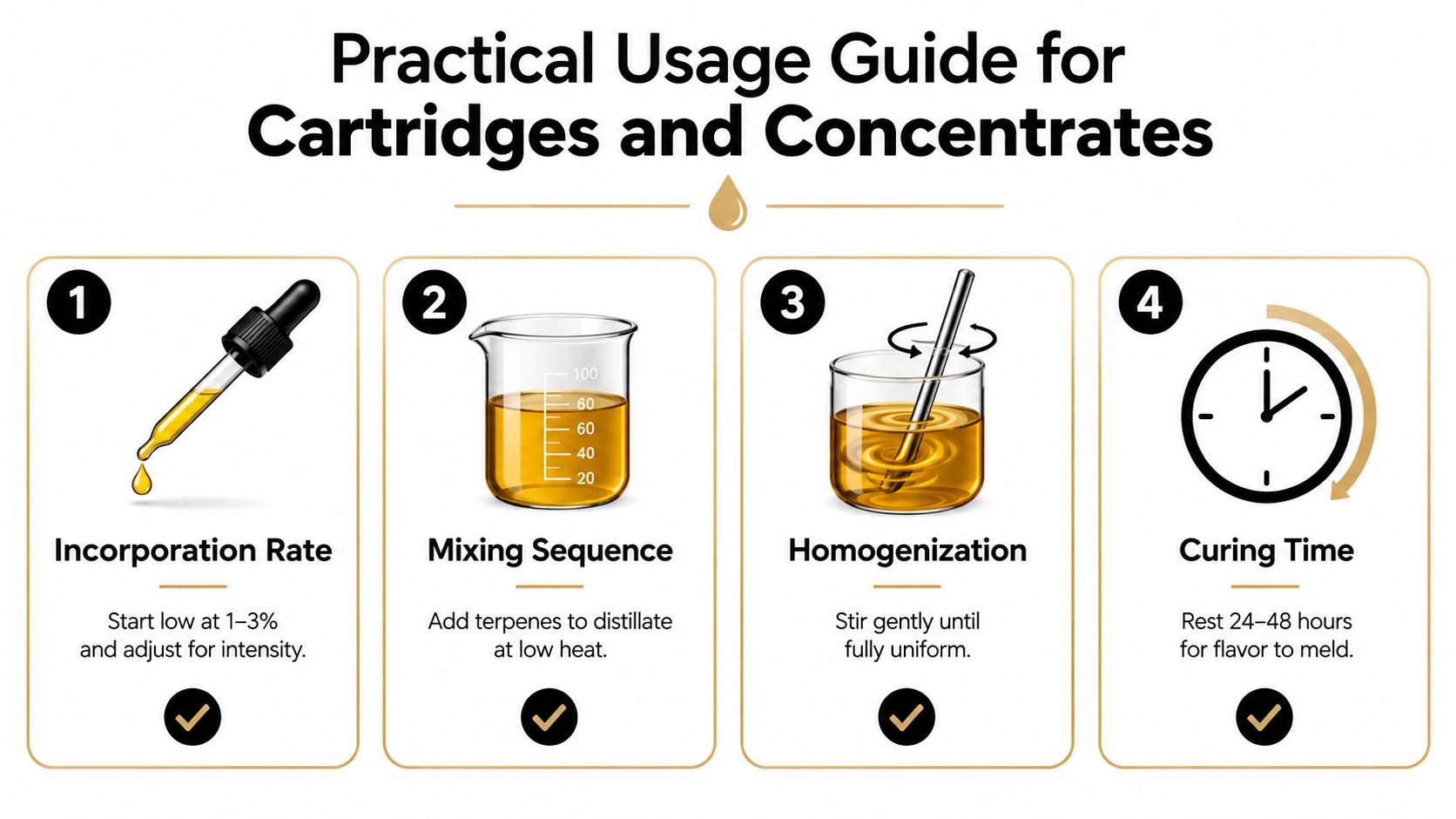
Add the blend gradually
Warm the distillate only enough to reduce viscosity. Add the terpene blend in small portions, mixing after each addition instead of pouring everything into the base. This works like seasoning a sauce. Once a volatile top note becomes excessive, adding more base may not restore the original balance.
For the first bench trial, divide the base into small, labeled samples. Keep one control sample without added terpenes, then compare restrained, balanced, and fuller versions. The comparison shows how the blend changes the profile without consuming an entire production batch.
Use a repeatable mixing sequence
- Prepare the base: Confirm that the distillate or concentrate is uniform and shows no visible separation.
- Preblend the terpenes: Combine the selected compounds or strain-inspired blend before adding them to the oil.
- Incorporate under controlled heat: Use the lowest practical temperature needed for flow, limiting unnecessary heat exposure.
- Homogenize gently: Stir until the oil appears uniform without introducing excessive air.
- Rest the sample: Let the blend equilibrate before judging the final flavor.
- Test in hardware: Evaluate both the cold-filled cartridge and the heated draw.
As noted earlier, the reported composition includes beta-caryophyllene, beta-myrcene, limonene, humulene, alpha-pinene, and beta-pinene, along with CBN. That combination explains why a tropical profile can carry herbal, pine, and spicy structure alongside its citrus opening. Judge the entire aromatic sequence, not only the orange-like top note.
Bench rule: Approve the flavor after the oil has rested and the cartridge has been heated. A fresh mix may smell brighter than the finished product, while hardware can reveal harshness that never appeared in the vial.
Check wicking and draw behavior across the intended cartridge format. If one device produces a sharp opening while another gives a heavier finish, the formula may be acceptable, but the hardware specifications are not equivalent. Record the cartridge, oil temperature, fill condition, and sensory result for every approved trial.
Building a Consistent Caribbean Breeze Product Line
A consistent Caribbean Breeze SKU begins with a decision that many teams postpone: define the phenotype. Choose the bright tropical-citrus reference or the creamy tropical reference, document the lineage and sensory target, then match the terpene blend to that target. Without this step, every later adjustment becomes subjective.
The blend should preserve a clear note hierarchy. Limonene can establish the citrus opening, myrcene and related fruit notes can provide body, and beta-caryophyllene, humulene, or pinene can keep the finish from becoming flat. The right ratio depends on the extract base and hardware, so approval should include cold aroma, heated flavor, uniformity, and stability observations.
A practical release workflow
- Sensory check: Compare the finished cartridge with the approved reference profile.
- Stability check: Reassess the oil after storage under the product's planned conditions.
- Hardware check: Confirm that the selected cartridge preserves the intended opening and finish.
- Panel check: Use a trained internal panel or qualified external reviewers to verify that the flavor remains recognizable without relying on the strain name alone.
For commercial production, retain the COA, blend lot, mixing record, and final sensory notes together. A traceable process lets the team correct a raw-material shift without rewriting the entire formula. It also gives sales and quality teams a precise explanation of what the Caribbean Breeze product is designed to deliver.
Gold Coast Terpenes supplies THC-free, lab-verified terpene blends, isolated compounds, formulation resources, and cartridge-focused materials for brands developing tropical-citrus profiles. Visit Gold Coast Terpenes to review strain-inspired options and build a controlled starting point for your next Caribbean Breeze vape or concentrate SKU.