
You can waste a week building a “gas” vape SKU that smells fine in the jar and turns flat once it hits heat, or you can start with a cultivar that gives you a defensible terpene target from the first weigh-in. Sans Souci sits in that narrow lane where formulation questions matter more than consumer trivia, because the name is tied to a high-potency, terpene-forward profile, but the identity is not fully stable across public databases. For a bench team, that means the job is simple, decide whether the name deserves a slot in your terpene library, and if it does, anchor it to chemistry you can reproduce. If you want a strain-targeted starting point instead of another generic gas blend, the first step is to treat Sans Souci as a formulation problem, not a menu item.
Why Sans Souci Belongs in Your Formulation Library
A cartridge developer with a short terpene shelf has to make hard choices. A generic gas profile is easy to source and easy to sell, but it often reads broad and interchangeable. A Sans Souci strain target is more demanding, yet it gives you a cleaner sensory brief, especially if you are building for brands that want something loud, spicy, and citrus-backed instead of a vague fuel note.
The practical reason Sans Souci belongs in a formula library is that it gives you a real reference for replicating flavor rather than guessing at it. The cultivar is documented as a 60% indica / 40% sativa hybrid with a traced cross of (Garlic Cookies X Sour Dubb BX) X I95 AllBud. That lineage matters because it points toward a gas-garlic base with enough lift to keep the profile from collapsing into pure funk.
For formulators, the three decisions are straightforward.
- Which terpenes anchor the blend, usually caryophyllene first and limonene second.
- Which carrier matrix fits the target, distillate for control, resin for authenticity.
- How to verify supplier claims, by checking that the COA matches the expected dominant pair and terpene density.
Practical rule: if the supplier cannot show a terpene pattern that looks like Sans Souci, treat the material as a different profile, even if the label says otherwise.
A defensible starting point is a caryophyllene-led structure with limonene in support and myrcene or similar grounding notes kept in the lower tier. In practical blend terms, that usually means a top, mid, base split that favors spice and fuel up front, citrus in the middle, and a heavier earthy anchor underneath. That kind of ratio gives you room to scale the profile without letting the citrus get thin or the gas note turn harsh.
If you keep a strain archive, Sans Souci earns space because it helps you compare an engineered gas profile against a strain-specific one. For broader profile organization, a strain-terpene archive like the one on the strain terpene profiles page is the kind of reference that keeps product development from drifting into guesswork.
Lineage and Lab Numbers That Drive Formulation Choices
Sans Souci's reported lineage points straight at the kind of profile a formulator should expect. The Garlic Cookies side supports the savory, pungent backbone, while the I95 side leans into heavier fuel and earth, which is where this cultivar earns a place in a mature gas brief rather than a candy brief AllBud. Lineage will not tell you everything, but it does tell you where the first formulation mistakes usually happen.
The lab side carries more weight. Reported panels place Sans Souci in a THC range that runs from the high teens into the upper twenties, with one retail-tested sample landing at 29.73% THC and 3.51% total terpenes AllBud. Another batch came back at 4.196% total terpenes AllBud. That kind of terpene density gives you enough material to build a profile that survives the move from flower into carts or distillate without flattening out.
For a cleaner read on what those numbers mean in practice, use a lab report interpretation guide before you approve a sample. A COA that shows strong terpene density and a believable gas-spice balance is more useful than a strain name with no analytical support.
Here is the inheritance map I would use when I am checking a flavor brief against the material:
| Parent | Reported Role | Dominant Aroma | Key Terpenes |
|---|---|---|---|
| Garlic Cookies | Gas and savory anchor | Garlic, spice, fuel | Caryophyllene, myrcene |
| Sour Dubb BX | Sharp funk support | Sour, diesel, resin | Limonene, caryophyllene |
| I95 | Weight and depth | Earth, fuel, dark spice | Caryophyllene, myrcene |
Sans Souci is already chemically loud. That matters because loud material gives you room to preserve identity through processing instead of forcing the profile to carry itself with added sweetness or artificial top notes.
If the flower batch sits above the 3% total-terpene range, you are not dealing with a barely detectable profile. You are dealing with a material that can actually shape the finished SKU.
Dominant Terpenes and the Top Mid Base Architecture
Sans Souci starts with an identity problem before it becomes a formulation problem. The name may pull attention, but the profile has to be read from the terpene stack, and the stack is led by beta-caryophyllene and limonene Deep Root Harvest. That is the anchor I would build around, because the strain label alone will not tell you how the oil will behave in a cart, a distillate blend, or a concentrate SKU. In one quantified panel, the sample showed beta-caryophyllene around 3.82 mg/g, limonene around 4.85 mg/g, and beta-myrcene around 4.66 mg/g Deep Root Harvest. Another panel reported beta-caryophyllene at 3.34 mg/g, beta-myrcene at 3.96 mg/g, and limonene at 5.05 mg/g Blue Oak NJ. That spread is normal for commercial flower, but the ranking stays usable, and that is what matters in a production brief.
The cleanest way to translate those numbers is with a top, mid, base architecture. It gives you a practical way to scale the profile without turning it into a terpene dump.
Top note
Limonene belongs at the top. It gives the first impression, the citrus lift, and the brighter opening on the nose. If you underdose limonene, the blend can feel flat and closed in. If you push it too hard, the profile goes thin and starts reading like a generic citrus SKU instead of Sans Souci.
Mid note
Myrcene carries the middle. It softens the edges, adds herbal depth, and keeps the blend from feeling like a harsh spice bomb. In Sans Souci-style work, myrcene should support the center, not run the show. That middle layer is where the strain keeps its weight after the first pull fades.
Base note
Beta-caryophyllene is the base. It supplies the pepper, the garlic-adjacent spice, and the heavier gas frame that makes the profile feel credible in hardware. I lock caryophyllene first when I am building a Sans Souci-inspired blend, then I tune the top once the base is stable. That order matters because the base sets the shelf-stable impression, while the top is the part most likely to drift if the matrix is weak.
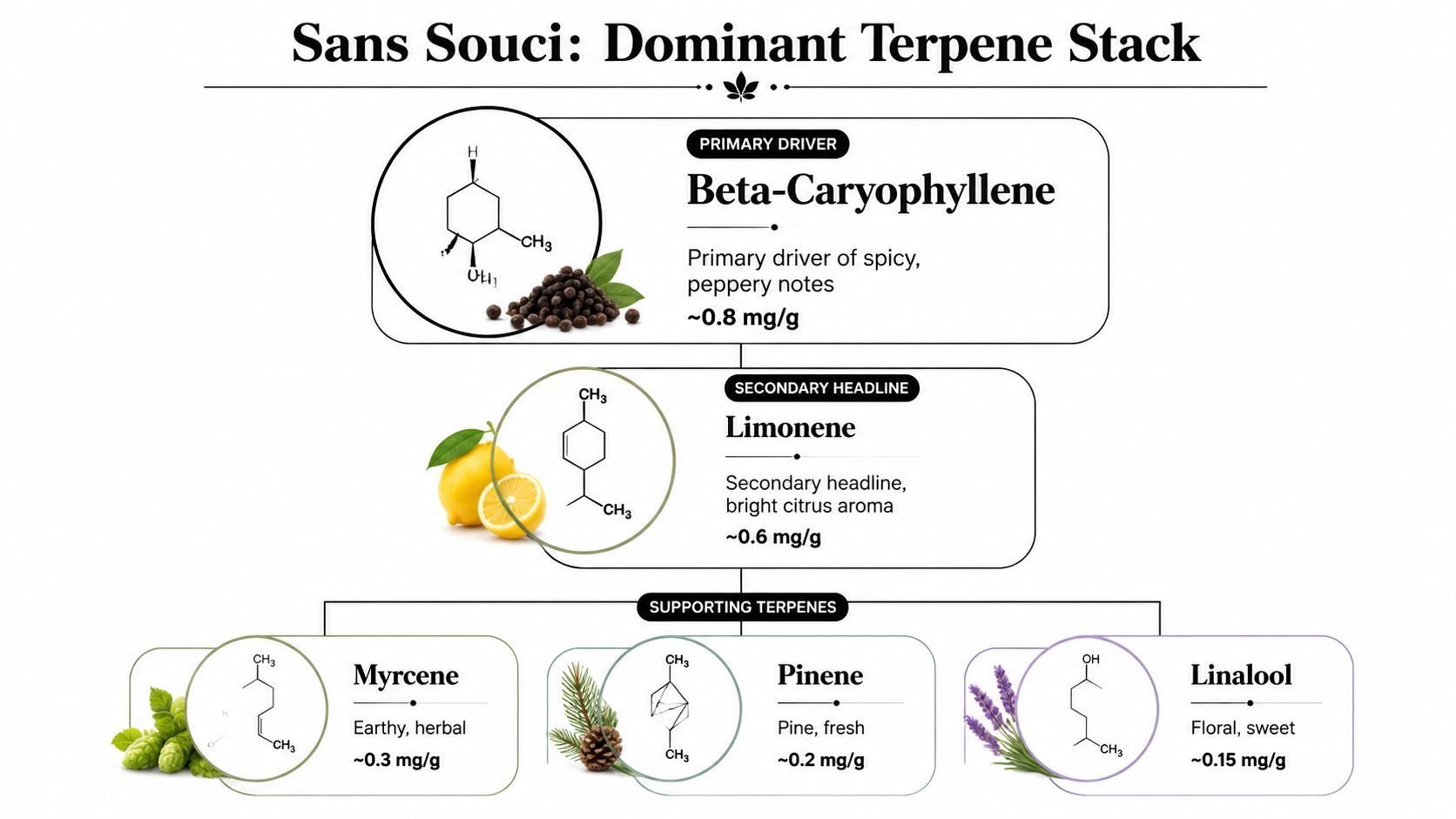
For small corrections, pinene can sharpen the edge, and linalool can round the finish without pushing the profile into perfume territory. I treat both as support tools, not lead ingredients. That keeps the blend closer to the original gas-spice balance and gives you room to control burn, throat feel, and aroma retention without overcomplicating the recipe.
Formulation shortcut: build the base first, then check whether the top still reads as Sans Souci after heat and storage, not just on the bench.
If you want a quick reference for how those roles map across aroma families, the terpene flavor chart is a useful comparison tool.
Aroma Flavor and Functional Targets You Can Formulate To
A Sans Souci brief starts with a simple problem. The name carries less identity certainty than the terpene set, so the panel has to judge the oil by sensory behavior, not by the label alone. In practice, I brief against a pungent spice, cracked pepper, citrus zest, fuel, and earthy depth target, then check whether the blend still reads that way after heat, storage, and a few pulls in hardware.
That kind of brief keeps the panel focused on what the cartridge should do. The opening should feel immediate and clean enough to register, but not so bright that it turns perfumed. The middle needs enough savory weight to hold the profile together. The finish should stay dry, peppery, and slightly gassy, with enough depth to avoid a thin lemon-cleaner impression.
For a flavor panel, I would use this working script:
Sensory brief
- Opening impression. Bright citrus peel, sharp gas, and a quick flash of spice.
- Mid-palate. Herbal, earthy, and lightly sweet, with a savory edge.
- Finish. Pepper, fuel, and a dry, lingering spice that stays credible in hardware.
That language gives the panel a better job than a terpene list alone. It tells them what the profile should feel like on the first draw, what should remain after the top note fades, and what failure looks like if the blend drifts. If the opening is too loud, the cart can come off artificial. If the finish takes over, the oil can feel heavy and lose the lift that makes Sans Souci recognizable.
For formulators, the useful trade-off is authenticity versus polish. A Sans Souci-inspired SKU should stay strain-forward and savory, but it still has to read cleanly on a shelf and in a cartridge. I usually ask for a profile that is loud enough to signal gas, balanced enough to keep citrus in the frame, and dry enough on the back end that the finish does not turn sweet or muddy.
A ready-to-use panel note looks like this. Evaluate for a gas-forward profile with citrus lift, a savory herbal middle, and a peppery finish that holds after heating. Ask whether the top note stays identifiable after the first pull, whether the midsection keeps its earthy weight, and whether the base remains dry instead of sliding into candy, cleaner, or flat fuel. If the panel can answer those points consistently, the formula is close to the target.
For a product brief, I'd write it as a loud, strain-forward gas profile with citrus lift and a long savory finish. That keeps the target practical for the lab and understandable for the sales side without reducing the profile to vague diesel language.
Choosing the Right Carrier Matrix for a Sans Souci Profile
Sans Souci behaves differently depending on what's carrying it. In winterized distillate, the terpene blend has room to lead, so the gas-citrus top note can read cleanly. That's usually the best choice when you want control and repeatability, but it also means the formula has to survive oxidation management because limonene and caryophyllene can drift if the system is sloppy.
Live resin is closer to the plant's native chemistry, so it's the most authentic route when the goal is sensory fidelity. The trade-off is that you're not just adding a profile, you're negotiating with the extract's own terpene population. If the base oil already has strong native terps, your Sans Souci blend needs to complement them, not fight them.
CO2 extract sits between those poles. It can retain broader aroma structure than stripped distillate, but it usually won't give you the same plant-like intensity as a fresh resin format. That makes it a workable choice when you want a more stable, less volatile carrier without losing all of the native complexity.
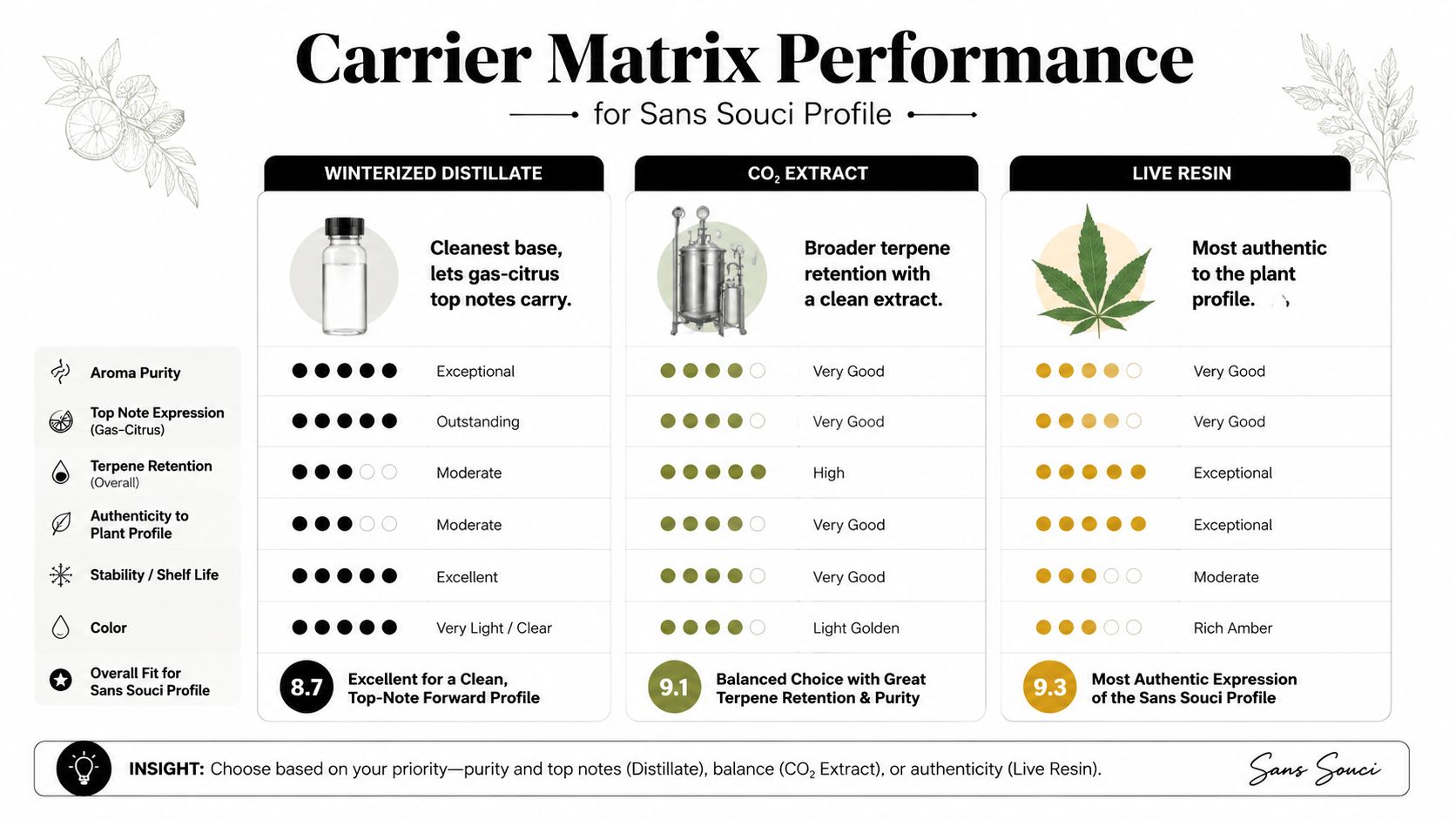
The decision rule is simple. If the SKU is a cart and you need a controlled gas-citrus opening, use winterized distillate. If the format is a concentrate and you want native character, use live resin or a similarly terpene-rich base. If you need a middle ground for a broader lineup, CO2 extract can bridge the gap.
Gold Coast Terpenes supplies strain-specific terpene profiles and isolated compounds for this kind of work, which makes it a practical option when you're comparing a Sans Souci recreation against other strain targets. The key is not brand loyalty, it's matching the carrier to the sensory brief.
Recommended Blends and Mixing Ratios for Carts and Concentrates
A Sans Souci-inspired blend starts with the dominant pair, then uses the supporting terpenes to keep the profile rounded and believable. For a 0.5 mL cart, I treat 5% to 8% total terpene load as the practical working window for a distillate base. That is enough to make the profile present without burying the oil or making the finish harsh.
Two bench-ready starting points work well:
| Terpene | Role | Blend A Cart % | Blend B Concentrate % |
|---|---|---|---|
| Beta-Caryophyllene | Base, spice, gas | 35% to 40% | 30% to 35% |
| Limonene | Top, citrus lift | 30% to 35% | 35% to 45% |
| Beta-Myrcene | Mid, body, softness | 15% to 20% | 10% to 15% |
| Pinene | Brightness, edge | 3% to 5% | 3% to 5% |
| Linalool | Smooth finish | 2% to 4% | 2% to 4% |
| Terpinolene or Ocimene | Lift for concentrate only | 0% | 3% to 6% |
The cart blend needs a tighter hand. Sans Souci reads best when the caryophyllene-limonene core stays intact, because that pairing carries the gas and citrus signature without drifting into a generic terpene mix. For a dab-style concentrate, limonene can move a little higher, and a small amount of terpinolene or ocimene can add lift if the brief calls for a brighter opening.
Mixing rule: pre-dilute the terpene concentrate before you commit it to the full batch, especially when the blend leans heavy on caryophyllene.
The scaling step is straightforward. Weigh the finished oil target, calculate the terpene load from the desired percentage, then divide that load across the terpenes in the ratio above. For example, if a batch calls for a fixed terpene addition, the top note should stay in its lane, the middle should carry the body, and the base should remain dominant without flattening the profile. After that, run a simple weight-in, weight-out check so the final blend lands where the formulation sheet says it should. The mixing ratios calculator is the right internal tool to keep the math honest.
Identity Ambiguity and the COA Discipline That Solves It
A Sans Souci lot can look right on the label and still miss the target in the tank. Public strain pages do not agree on its identity, and that is the first problem formulators have to solve. Some describe it as Unknown or Legendary, while others assign the specific cross (Garlic Cookies X Sour Dubb BX) X I95 Joint Commerce. The name gives you a starting point, not a chemistry guarantee.
That gap is why I treat the COA as the source of truth. I want a third-party COA that names the cultivar, shows the terpene panel, and lets me confirm whether the batch fits a Sans Souci-style brief. I also want the terpene load to sit in the 3% to 4% range that has been reported for some batches, because that gives me a workable ceiling for flavor intensity without pushing the blend into a harsh, overbuilt profile AllBud. Most importantly, caryophyllene and limonene need to appear as the dominant pair. If they do not, I treat the material as a different input, even if the jar says Sans Souci.
A buyer-side check usually comes down to three questions:
- Is this a stable cultivar? Public listings do not always make that clear.
- Can I trust the name alone? No, the COA carries more weight than the sticker.
- Should I blend to the expected profile anyway? Only when the chemistry lines up.
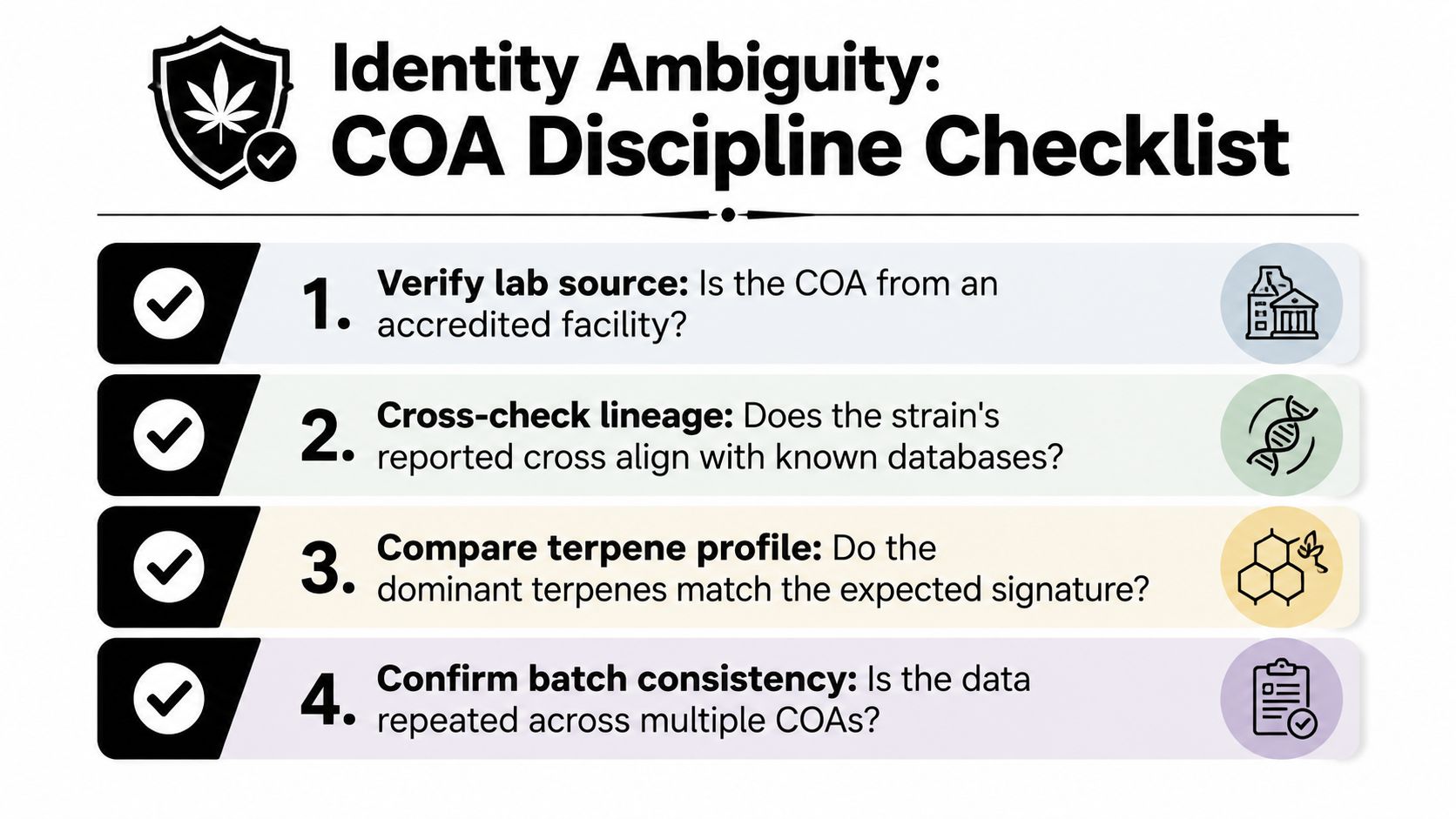
That discipline saves time in product development because it keeps the wrong raw material out of the wrong SKU. If the same name arrives with a different dominant terpene pair, the problem is not minor batch drift. It is a sourcing mismatch, and it should be handled that way.
Stability Testing and Next Steps for Your Blend
A Sans Souci formula can look right on the bench and still fail after storage, so the first pass is only the start. I run a short stability check under accelerated heat at 40 degrees C for two weeks, then compare GC-MS at day 0 and day 14 for caryophyllene and limonene retention. If the profile is going to drift, that shows up before the blend reaches production scale.
The failures usually show up in the same two places. Limonene oxidation can flatten the citrus note until it reads stale or turpentine-like. Caryophyllene can push harder into a sharp clove tone and take over the body, which breaks the Sans Souci balance you were trying to hold.
Sensory work needs two passes, one at room temperature and one at the battery operating temperature. A blend that only smells right when it is cold is not ready for a cart. It has to keep its shape where the customer uses it.
A clean QA checklist looks like this:
- Day 0 baseline: record the aroma, viscosity, and target ratio.
- Heat exposure: hold the sample at 40 degrees C for two weeks.
- Day 14 retest: compare terpene retention against the baseline.
- Sensory panel: check cold and heated performance separately.
Some Sans Souci batches have tested as high as 35% THCa with 3.51% to 4.196% total terpenes, which puts the cultivar in the upper tier of contemporary flower potency Certified Stoners. That kind of chemistry is why stability cannot be an afterthought. Strong starting material still fails if the blend loses its top note or turns harsh after storage.
Keep the Terpenes 101 guide and your strain-specific product pages open while you bench test. When the label says Sans Souci, the finished oil should read like Sans Souci in the lab, in the cart, and after heat.
If you're building a Sans Souci-style cart or concentrate and want a terpene profile that is consistent enough to scale, Gold Coast Terpenes carries strain-specific profiles, isolated compounds, and practical formulation tools for that workflow. Visit Gold Coast Terpenes to compare options, check supporting resources, and match your target profile to a carrier system that holds up.