
You're likely in the same spot I see in a lot of formulation teams. Citrus is crowded, generic candy profiles collapse into sweetness, and dessert blends often turn heavy once they hit a cartridge. You need something familiar enough to sell, but distinct enough that it doesn't read like another fruit-and-cream remix.
Red Cream Soda flavor solves that problem unusually well for cannabis product formulation. It gives you nostalgia, brightness, creamy body, and a confectionary finish without forcing the blend into bakery territory. More importantly, it gives formulators a profile with clear note architecture, which makes it easier to build intentionally for distillate, live resin, and strain-inspired terpene blend work.
Why Red Cream Soda is Your Next Winning Flavor Profile
A cartridge fails fast when the first pull reads as generic candy and the second turns flat against distillate. Red cream soda solves a more specific formulation problem. It gives manufacturers a profile consumers recognize immediately, while still leaving enough structure to tune for different extract bases and hardware.
That matters on the bench. A usable confectionary profile needs top-note impact, mid-palate identity, and a finish that does not smear into syrup after repeated pulls. Red cream soda gives you that framework. The opening can carry bright red-candy lift, the middle can hold a bubblegum or soft fruit impression, and the finish can deliver cream and vanilla without drifting into bakery frosting.
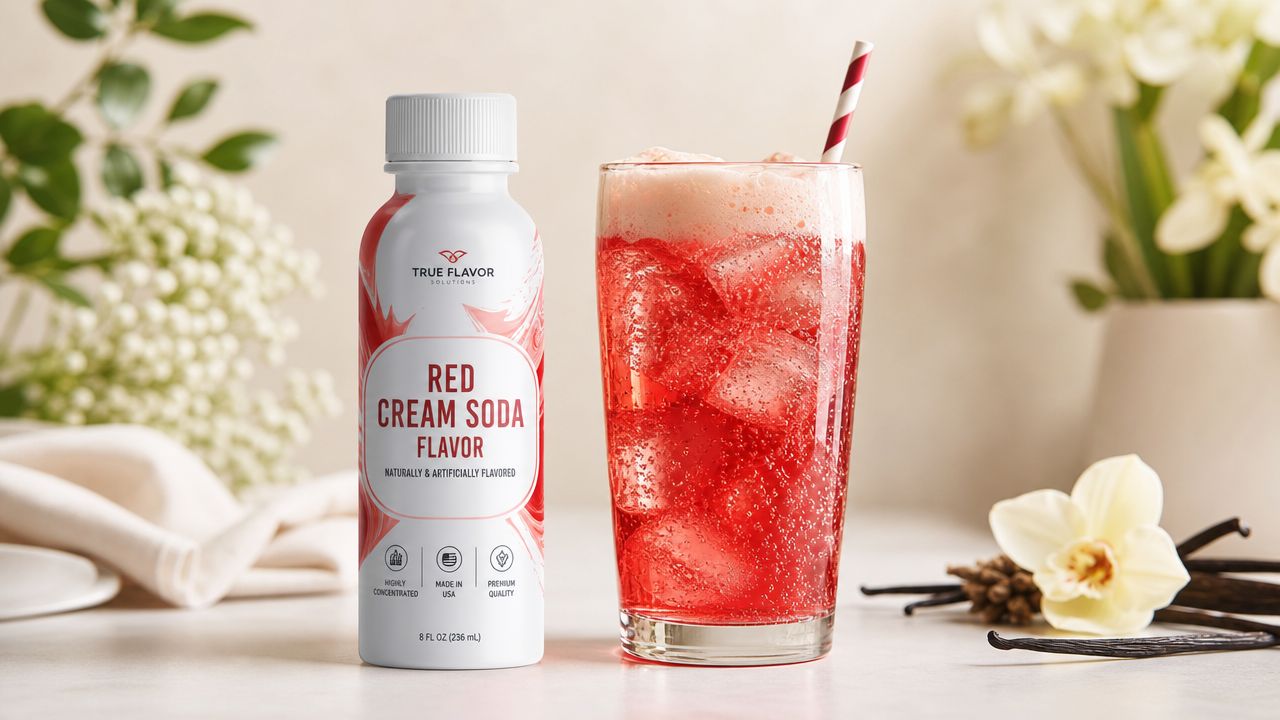
Why the profile stands out
Red cream soda has a distinct commercial identity, not just a color shift from standard cream soda. The Big Red historical entry on the Soda Fandom wiki documents the brand's origin as Sun Tang Red Cream Soda in Waco, Texas, which helps explain why consumers read the profile as its own category rather than plain vanilla soda with red dye: https://the-soda.fandom.com/wiki/Big_Red
For product development, that difference is useful. Consumers usually expect more than vanilla sweetness from this name. They expect a bright, candy-coded red impression with a creamy finish. That expectation gives formulators a wider operating window than you get with delicate fruit profiles, where a small terpene shift can push the result off target.
I see the same pattern in adjacent confectionary profiles. A profile like Cherry Pie terpene profile development can work when a brand wants baked-fruit familiarity, but red cream soda usually performs better when the goal is soda-shop nostalgia without pastry weight.
Why it works for cannabis product formulation
The biggest advantage is tolerance. Distillate, live resin, and terpene carriers all impose different constraints on sweetness, volatility, and finish. Red cream soda handles those constraints better than floral blends, tart citrus builds, or thin candy flavors because it has room for both lift and body.
Three practical benefits show up quickly in production:
- It survives base interference: Sweet candy-citrus top notes remain recognizable even when the oil has a noticeable background character.
- It accepts creamy support: Vanilla, ethyl maltol-type sweetness, and soft confectionary modifiers can round rough edges if they are kept under control.
- It gives sales teams a clear brief: The name communicates the expected experience with very little explanation.
That last point matters more than flavor teams sometimes admit. If a retail buyer, budtender, or consumer has to decode the concept, the product starts with friction.
Why formulators should care about accuracy
Accuracy changes whether the profile reads premium or cheap. If the red note is too cherry-forward, the blend turns medicinal or hard-candy sharp. If the cream note is too dense, it tastes like frosting trapped in oil. If the bubblegum bridge is missing, the flavor loses the exact candy-soda identity that makes the profile commercially valuable.
That is why this profile earns bench time. It is recognizable, but it also rewards controlled adjustment. You can build it for a cleaner distillate vape, a heavier concentrate application, or a strain-inspired confectionary SKU by changing the same core architecture instead of starting over. Most guides stop at naming terpenes. This approach goes further by treating red cream soda as a manufacturable system with target percentages, carrier-specific examples, and a troubleshooting path you can use in production.
Deconstructing the Red Cream Soda Flavor Profile
Most failed red cream soda builds fail for a simple reason. The formulator treats it like a single flavor instead of a layered one. This profile only reads correctly when the top impression, body, and finish arrive in the right order.
The most useful technical description comes from a formulation-focused terpene product reference. It defines the profile as a three-note structure, with sweet citrus and bubble gum as top and mid notes, and a smooth vanilla cream finish as the base note, as described in this Red Cream Soda solvent-free terpene flavor reference.
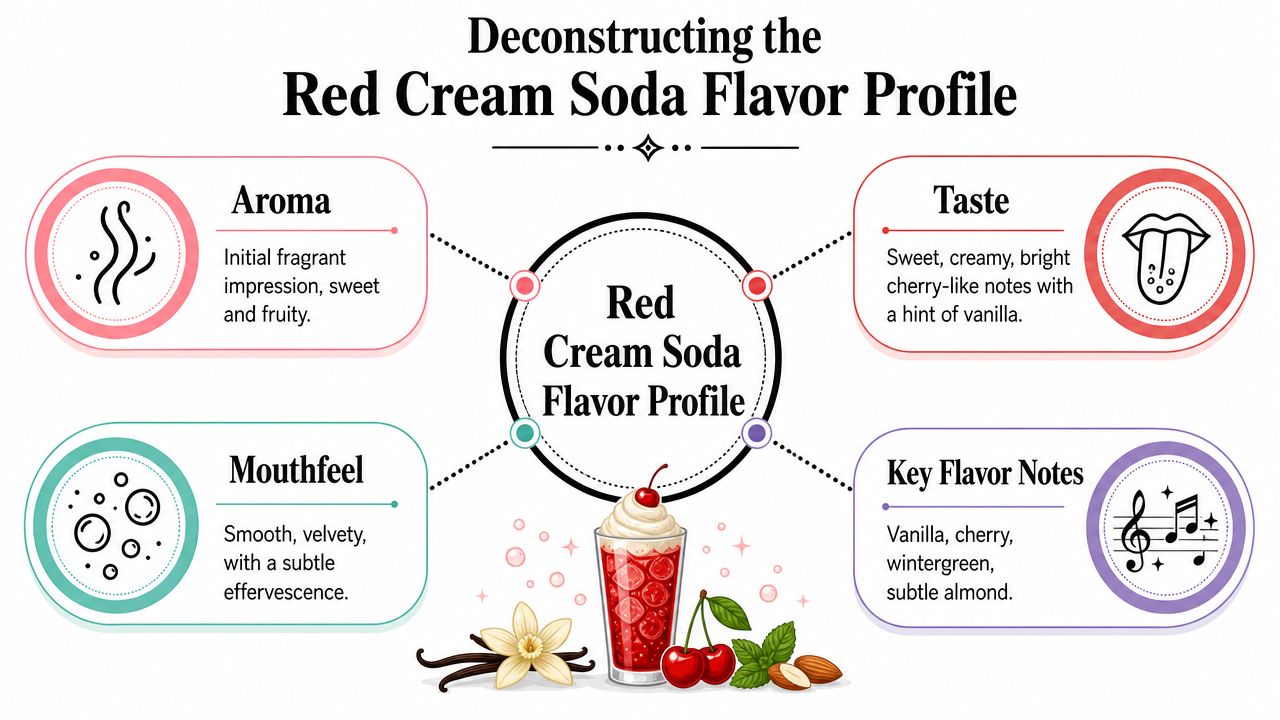
Top and mid note behavior
The first second matters most in a cartridge. You need lift, but not sharpness. In this profile, the opening should feel sweet and bright, not tart. Citrus is there to create sparkle, not to announce itself as lemon or orange.
Bubblegum sits in the mid zone and does important work. It creates the “red” association many users perceive even when no literal berry note dominates. That's why a lot of red cream soda formulations fall apart when the formulator strips out the candy bridge and relies only on fruit plus vanilla.
A useful comparison point for aromatic direction is a Cherry Pie terpene profile. Not because red cream soda should smell like cherry pie, but because cherry-adjacent sweetness often needs a balancing green or resinous edge to avoid becoming syrupy.
Base note and finish
The finish is where the cream soda identity lives. Vanilla shouldn't behave like frosting, custard, or bakery cream. It should behave like smooth soda-cream body. That means softer diffusion, less density, and a cleaner finish.
A successful base note does three things:
| Function | What you want | What to avoid |
|---|---|---|
| Body | Rounded cream impression | Oily heaviness |
| Sweetness support | Soft extension of candy notes | Flat sugary finish |
| Retention | Lingering vanilla halo | Perfumey coating |
The profile should open bright, widen into confectionary sweetness, and close with smooth cream. If the vanilla arrives first, the blend is upside down.
What the profile should not become
Red cream soda is easy to push in the wrong direction. Common mistakes include:
- Cherry soda drift: Too much bright red fruit, not enough cream body.
- Bubblegum overload: Loud aroma, weak finish, juvenile character.
- Vanilla dessert drift: A profile that reads as frosting rather than soda.
For replicating flavor of red cream soda for cannabis product formulation, accuracy comes from restraint. Every note has to support the central illusion of sparkling red confection with cream, not dominate it.
Building Your Terpene and Isolate Palette
Once the sensory target is clear, ingredient selection becomes easier. You're not choosing compounds because they're fashionable. You're choosing them because each one solves a specific structural problem in the blend.
A useful reference for replicating flavor of this profile in strain-inspired work describes the dominant scent markers as sweet strawberries and creamy vanilla with light spices, and points formulators toward d-Limonene, beta-Myrcene, and beta-Caryophyllene in the blend architecture in this Red Cream Soda terpene profile reference.
Core palette for the build
Here's the working palette I'd use for a terpene profile for distillate or for vape cartridges.
- d-Limonene: This is your lift. It adds a sweet citrus flash that suggests carbonation and keeps the blend from tasting static. Use it carefully. Too much and the profile tips into orange candy.
- Beta-Myrcene: This gives fruity depth and helps bridge bright top notes into the sweeter center. It's one of the easiest ways to stop the blend from tasting thin.
- Beta-Caryophyllene: You don't add this to make the profile spicy in an obvious way. You add it because a tiny amount creates finish and definition. Without it, the profile can feel flat and one-dimensional.
- Ethyl vanillin type support: This is the cream core. It has to be smooth, diffusive, and controlled. In red cream soda, vanilla is the body note, not the headline.
- Cherry-berry support materials: These build the red-fruit identity. The trick is to suggest red fruit without turning the formula into syrup or cough-drop territory.
- Bubblegum support: Used sparingly, this is often the missing link between fruit and vanilla.
Why each role matters
A quick review of the sensory jobs helps during bench work. When a trial fails, you need to know what to change.
| Component family | Main job in the blend |
|---|---|
| Citrus terpenes | Create sparkle and opening lift |
| Fruity terpenes | Build red-candy identity and mid-palate fullness |
| Creamy isolates | Deliver soda-cream body |
| Spice or dry finish terpenes | Prevent sweetness from feeling flat |
A good terpene flavor chart is useful here because it keeps the build grounded in note function instead of strain-name thinking.
What usually works and what usually doesn't
What works is a layered palette with one obvious top-note driver, one fruity bridge, one creamy anchor, and one finishing terpene. What doesn't work is piling on multiple candy materials that all compete for the same space.
Bench insight: If three ingredients are all trying to say “sweet red candy,” one of them usually needs to leave.
Another common error is treating vanilla as a broad sweetener. It isn't. In this style of formulation, vanilla is a textural device. It should soften, round, and lengthen. If it starts shouting, the formula loses its soda identity.
Sample Formulations for Vape and Concentrate Applications
Most guides stop being useful at this point. They'll name a few terpenes, then leave you to solve the blend on your own. For manufacturing, that isn't enough. You need a starting formula with clear target percentages inside the terpene blend, then a practical loading strategy into the oil.
A product reference for red creme soda flavor describes the profile in technical terms as creamy vanilla, cherry-berry terpenes, bubblegum sweetness, and trace pomegranate hints for complexity, which is a good working model for bench formulation in this red creme soda flavor listing.
Red Cream Soda Formulation Starting Points
The table below gives starting points within the flavor blend itself, not final cannabinoid potency. Adjust final loading based on hardware, oil viscosity, and the native aroma of your extract.
| Compound | Role | Recipe A (For Distillate) | Recipe B (For Live Resin) |
|---|---|---|---|
| d-Limonene | Sweet citrus lift | 24% | 18% |
| Beta-Myrcene | Fruity depth | 22% | 20% |
| Beta-Caryophyllene | Dry spice finish | 6% | 8% |
| Ethyl vanillin support | Cream body | 26% | 18% |
| Cherry-berry support | Red candy identity | 14% | 12% |
| Bubblegum support | Mid-note sweetness | 6% | 4% |
| Trace pomegranate support | Complexity | 2% | 2% |
| Neutral smoothing support | Blend polish | 0% | 18% |
How to use the two recipes
Recipe A is built to survive cleaner, more neutral distillate. It pushes the creamy center harder because distillate often needs extra body to avoid tasting hollow. It also carries more top-note energy so the profile shows up quickly in a cartridge.
Recipe B is gentler. Live resin already brings native aroma, texture, and sometimes sulfur, pine, gas, or floral interference. This version leaves more breathing room, reduces the obvious confectionary push, and gives the extract more room to speak.
A technical reference on cannabis vape liquid is helpful when deciding how aggressively a flavor blend should cut through the base oil.
Loading guidance by carrier
For practical bench work, I'd approach loading like this:
- For neutral distillate: Start lower than you think, test, then climb in small increments until the profile reads clearly without coating the palate.
- For full-spectrum bases: Use a lighter hand. The goal is usually alignment, not domination.
- For high-output hardware: Reduce the force of the sweet top note first if the blend gets loud or hot on inhale.
That sequence saves time because you're tuning impact first, then sweetness, then finish.
Mixing Dilution and Sensory Evaluation Process
Good formulas still fail when the mixing process is sloppy. Red cream soda is especially sensitive because the profile depends on sequencing. If the volatile top notes flash off during blending, the formula loses sparkle. If the creamy supports aren't fully integrated, the finish feels detached.
Start with clean glass, controlled heat, calibrated scales, and enough headspace to mix gently. Avoid overhandling. This profile doesn't reward aggressive processing.
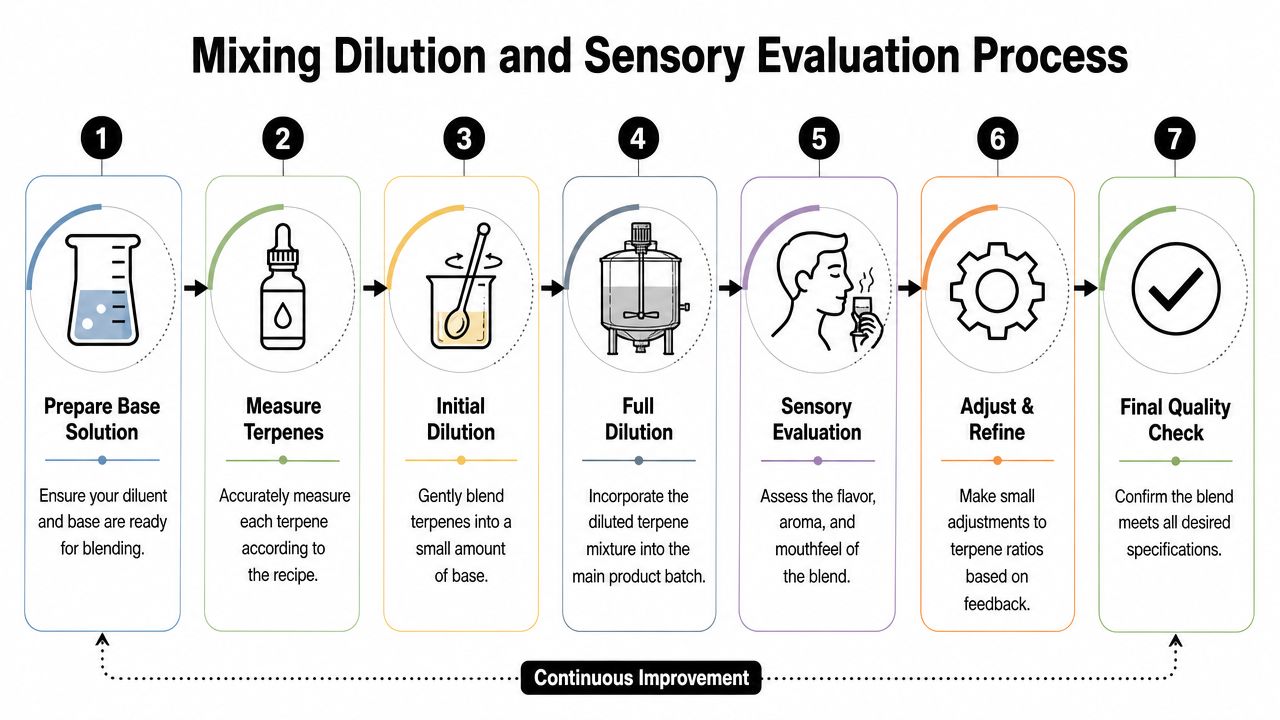
Recommended mixing order
The order matters more than many teams assume.
- Pre-build the flavor blend. Combine terpenes and flavor supports first. Let the blend settle before adding it to cannabinoids.
- Warm the base oil gently. You want flow, not stress.
- Add a small portion of base to the flavor blend. This creates a starter dilution and reduces shock.
- Fold the starter back into the main batch. Mix slowly until homogeneous.
- Rest the batch. Freshly mixed samples can smell louder and less integrated than they'll taste later.
Operational note: If the first sensory read is taken immediately after mixing, teams often overcorrect the top note and bury the cream finish.
A structured method helps keep these variables under control. A reference on sensory evaluation methods is worth keeping in the workflow for panel consistency.
For a visual walkthrough, this demo is a useful companion during process setup:
Sensory targets during evaluation
You need a target standard before the tasting starts. One useful market reference is Jamaican Red Cream Soda, which is described as having a vibrant red hue and a strong, almost candy-like sweetness that differs from the traditional golden vanilla cream soda common in the United States, as noted in this cream soda origins guide.
That doesn't mean every cannabis version should be pushed to the same sweetness. It does mean your panel should know whether the intended profile is candy-forward or cream-forward before evaluating.
A simple evaluation framework
Use a short scorecard instead of open-ended comments.
| Sensory checkpoint | What the panel should ask |
|---|---|
| Aroma opening | Does the first impression read bright and red-candy-like, or just sweet? |
| Mid-palate | Is there a believable soda-confection center, or only fruit? |
| Finish | Does smooth cream remain after exhale? |
| Balance | Does any single note dominate too early? |
Panel comments become much more useful when they answer those questions directly.
Troubleshooting and Fine-Tuning Your Flavor Blend
A red cream soda blend usually fails in one of two places. The top collapses into generic red candy, or the finish turns dense and bakery-sweet. In cannabis hardware, both problems get louder after heat, which is why I treat troubleshooting as a formula problem first and an intensity problem second.
Keep revisions tight. Change one material or one ratio at a time, then retest in the same carrier and device. If you adjust ethyl maltol effect, vanillin weight, and total flavor load in one pass, the next sample may taste better, but you still will not know which change fixed it.
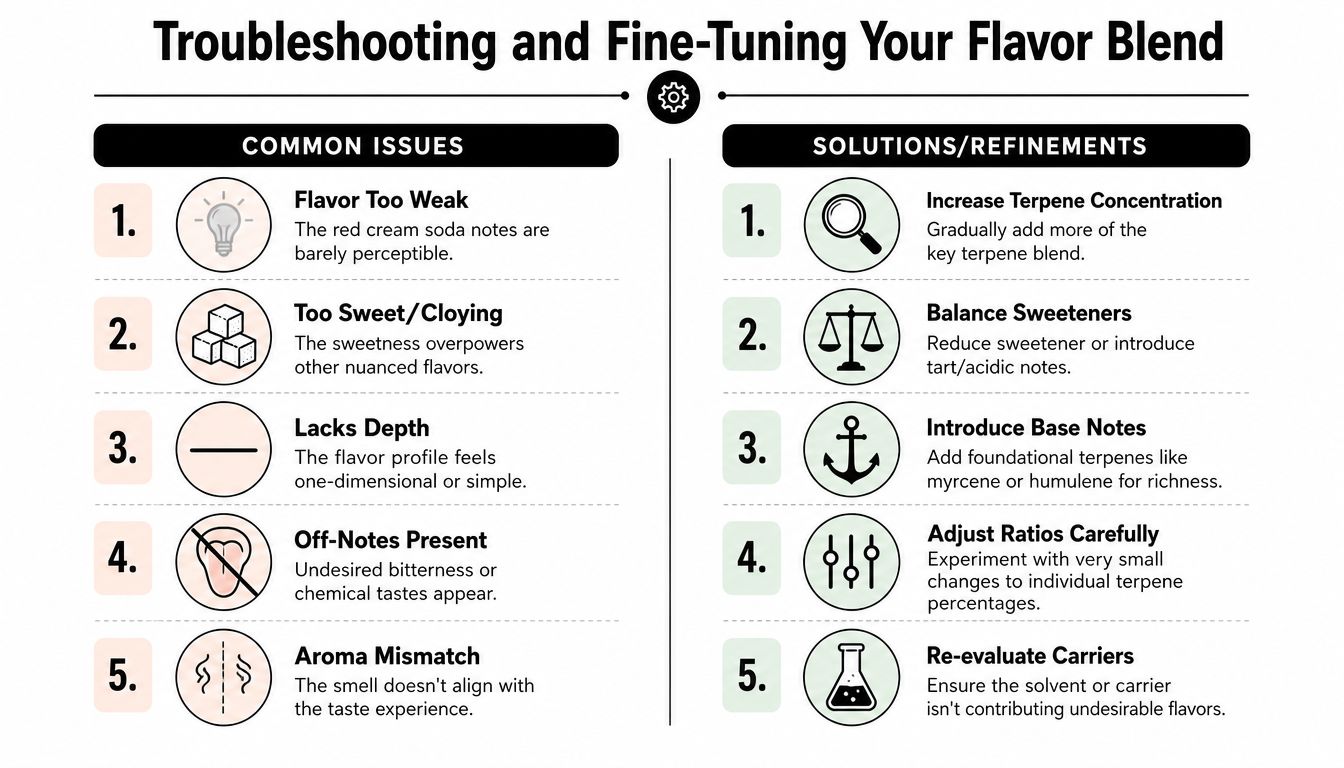
Common problems and practical fixes
This is the troubleshooting table I use at the bench after the first pilot round.
| Problem | Likely cause | Fix |
|---|---|---|
| Flavor is too weak | The red-fruit top is getting absorbed by the base oil or muted by the cannabis matrix | Raise the red-fruit bridge first, usually by a small increase in ester-driven fruit support. Leave vanilla unchanged until the opening is audible again |
| Too sweet or cloying | Candy support, vanillin, or creamy lactonic notes are sitting too high relative to the dry finish | Reduce the candy layer before cutting the whole formula. Then increase the dry finisher slightly so the profile clears faster on exhale |
| Lacks depth | The blend jumps from bright top note to cream finish with no middle | Add a mid-palate connector such as a softer berry or citrus-fruit transition note. More sweetness will not solve a missing middle |
| Off-notes appear on heat | A sharp top-note isolate is overdosed and becomes obvious in the cartridge | Pull back the most volatile driver, then retest in-device. A formula that smells correct in the beaker can still fail after coil exposure |
| Aroma and taste don't match | The nose is built on highly volatile notes, but the vapor body is too thin | Lower the loudest volatile component and increase the body note slightly so the inhale and exhale read as the same flavor |
The trade-off is simple. More top note gives you recognition on first inhale, but too much makes the profile thin and artificial. More cream support gives you authenticity, but too much pushes the blend toward frosting or melted candy.
Color and identity
Consumers usually expect this profile to signal "red" before they even taste it. That association is established earlier in the article through the category history, and it still matters during product design.
Keep the visual cue separate from the flavor build. If the packaging, oil color, or hardware tint carries the red identity, the formula does not need extra candy weight to compensate. I see teams make that mistake often. They chase a brighter visual concept by overdosing the flavor, and the result is a heavier, less stable vape.
Final tuning rule: Fix structure before intensity. A louder bad blend is still a bad blend.
When to rebuild instead of tweak
Some blends are not one adjustment away from working. They are built on the wrong architecture.
Rebuild if the opening reads as generic cherry candy, the cream finish tastes like frosting, the profile works in the jar but not in vapor, or each revision makes the flavor less coherent. At that stage, stop trimming around the edges and reset the note stack.
I go back to four jobs in the formula: one bright lift, one red-fruit bridge, one cream anchor, and one dry finisher. That framework gives manufacturers something they can control across distillate, live resin blends, and different cartridge hardware. It also makes troubleshooting cleaner, because each component has a defined role instead of three overlapping ones.
If you're building a Red Cream Soda flavor terpene profile for vape cartridges, for distillate, or a strain-inspired terpene blend for cannabis product formulation, Gold Coast Terpenes is a strong place to source isolates, terpene blends, and practical formulation tools for bench work through production.