
You're standing at the bench with a sweet berry flavor oil, a bright citrus concentrate, and a formula that still smells more like generic lip balm than raspberry lemonade. Gold Coast Terpenes supplies 100% natural terpene blends, strain-specific profiles, and isolated compounds for cartridges, concentrates, and product formulation, and that same layered aroma logic helps solve this chapstick problem. The useful question isn't which single oil smells like raspberry lemonade. It's how to build a stable, lip-safe profile that opens with citrus, carries a convincing berry heart, and still feels good after application.
For cannabis product developers, extractors, and vape brands, a raspberry lemonade chapstick is a compact exercise in flavor architecture. The work involves botanical versus cannabis-derived terpenes, oil compatibility, volatility, labeling, compliance, and sensory matching. The finished balm may be a skincare product, but the formulation discipline is close to developing a strain-inspired terpene blend for vape cartridges or flavoring a distillate system.
What Makes a Raspberry Lemonade Chapstick Actually Work
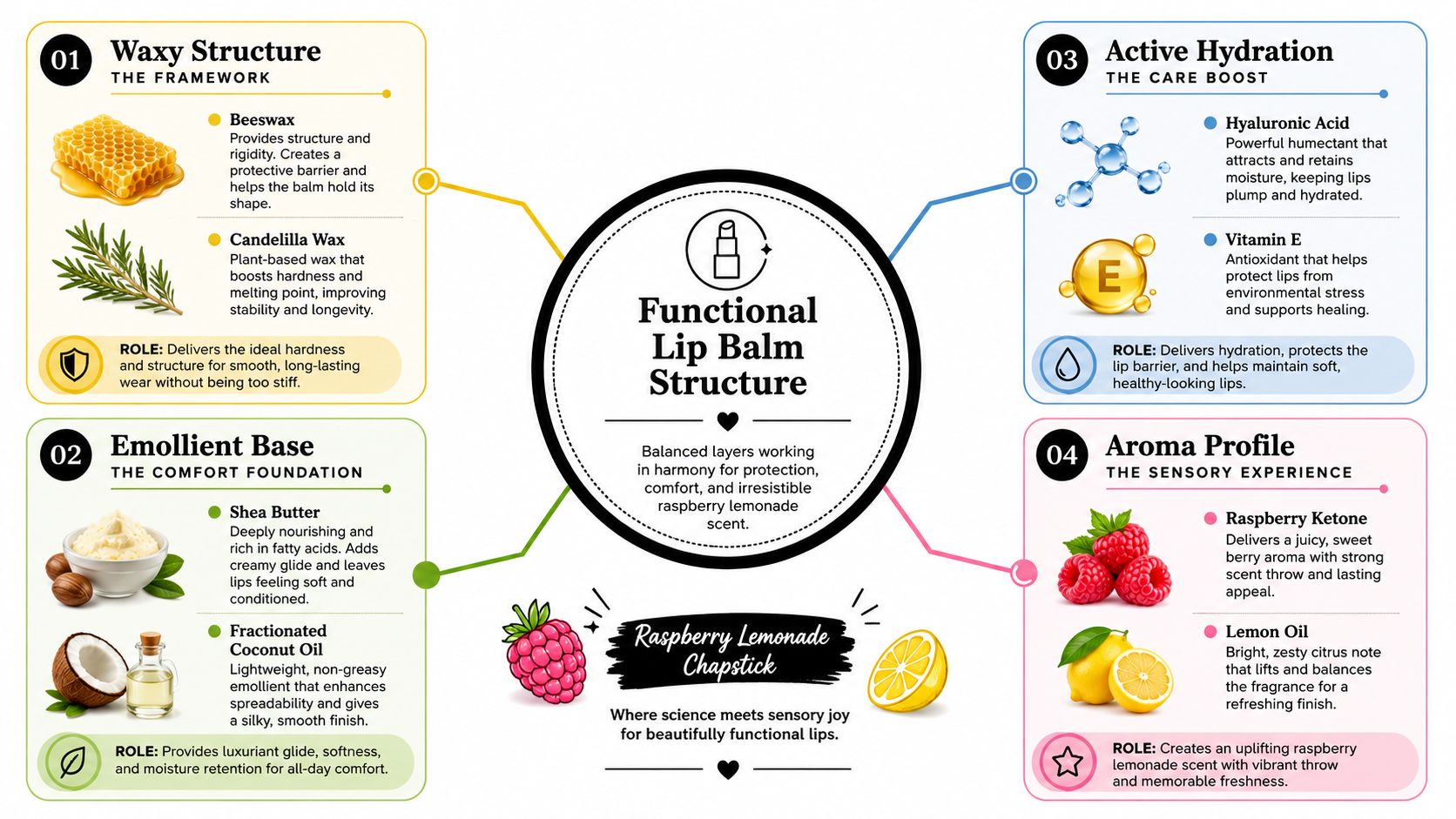
A successful raspberry lemonade chapstick needs four coordinated layers: waxy structure, emollient base, hydration support, and volatile aroma compounds. If one layer is missing, the balm may smell right but drag, melt, sweat, or feel greasy on the lips.
Structure controls glide and stability
Start with the wax network. Beeswax gives a balanced glide and familiar firmness, while candelilla creates a harder vegan stick. Carnauba can increase hardness further, but too much can make the application feel brittle or draggy. The wax needs to support the tube without turning the product into a hard, waxy film.
The oil phase supplies slip and spread. Fractionated coconut oil, jojoba, sweet almond oil, and MCT are useful choices, but each changes the finish. Jojoba tends to feel lighter and more structured, while fractionated coconut oil gives a clean, fluid glide. An all-oil base feels greasy because it lacks the solid network that controls migration and payoff.
Shea or mango butter can soften the sensory profile and add body. A stable polar carrier or compatible dispersion aid can help suspend flavor evenly, but a water-based ingredient doesn't belong in an anhydrous stick without a validated emulsification system. Water-soluble flavorings and alcohol-based extracts can separate or destabilize texture.
Aroma needs multiple chemical cues
Single-note flavor oils rarely reproduce a named fruit convincingly. Raspberry aroma is produced by a cluster of impact compounds that includes raspberry ketone, α-ionone, β-ionone, linalool, geraniol, nerol, α-terpineol, β-ocimene, β-pinene, and β-caryophyllene, as described in peer-reviewed raspberry aroma literature. Lemon adds bright citrus cues through compounds such as citral and limonene.
Bench rule: Treat raspberry lemonade as a stacked-terpene problem, not a single fragrance decision.
The finished sensory sequence should have a bright opening, a tart fruit middle, and a soft berry finish. This is the same top, middle, and base-note thinking used when replicating flavor of a commercial profile for distillate. For additional context on plant-derived approaches, a discussion of top natural lip care for skincare enthusiasts can help frame the difference between sensory appeal and barrier-supporting care.
Gold Coast Terpenes also publishes practical material on terpenes in skincare and natural solutions. Use that kind of formulation resource to keep aroma decisions connected to the finished product's skin-contact requirements.
Ingredients and Equipment You Need Before Melting
For a 100-gram raspberry lemonade chapstick batch, prepare the raw materials and measurement tools before heating. Small weighing errors matter when the flavor load is low, so use a digital scale that reads to 0.1 g and record every addition in a batch sheet.
Raw materials
A practical starting inventory includes:
- Wax: Beeswax pastilles melt around 62–65°C, while candelilla supports vegan formulas and carnauba creates a harder glide. Select one primary wax before adjusting the oil phase.
- Carrier oils: Fractionated coconut oil, jojoba, sweet almond oil, and MCT provide different levels of slip and absorption.
- Butters: Shea butter adds richness, while mango butter can produce a lighter, less dense feel.
- Antioxidant support: Vitamin E acetate may help protect the oil phase, but it isn't a substitute for stability testing.
- Berry component: Use an oil-soluble, lip-safe raspberry flavor oil or a raspberry ketone-rich concentrate.
- Citrus component: Choose a lip-safe lemon or citrus flavor oil containing relevant citrus aroma molecules, such as citral or limonene.
- Sweetener choice: A sweetener-free formula is appropriate when you don't want a sugary sensory system, including products developed for diabetics.
Flavor oils must be lip-safe, not candle-grade, diffuser-grade, or general fragrance-grade. Ask suppliers for cosmetic documentation, allergen information, and an up-to-date IFRA certificate for the intended leave-on lip application. Food-grade status alone doesn't automatically establish suitability for a cosmetic product.
Bench equipment
Set out a double boiler or hot plate, borosilicate beakers, silicone spatulas, a thermometer, pipettes, sanitized lipstick molds or twist tubes, and labeled containers. A controlled water bath is easier to manage than direct heat because it reduces hot spots in the oil phase.
For teams comparing renewable inputs, the guide to green chemistry applications offers useful background on how material selection can affect development decisions. Gold Coast Terpenes also maintains a food-grade terpenes guide that can support early supplier conversations, though every lip product still needs its own safety and regulatory review.
How to Layer Raspberry and Lemon Aroma Molecules
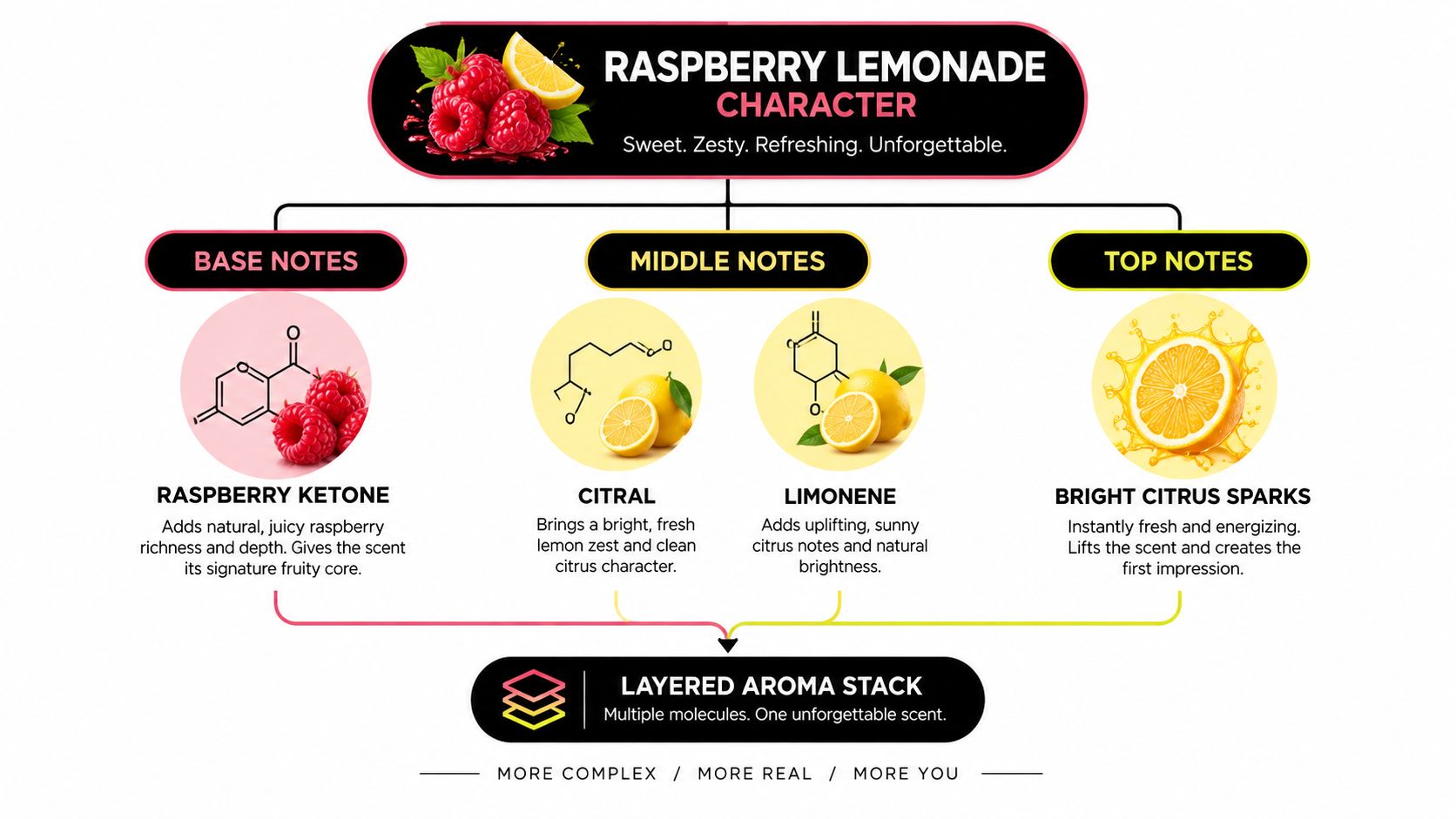
A convincing raspberry lemonade character comes from layering a berry base, tart citrus middle, and volatile bright top note. A single limonene addition usually reads as sharp citrus or cleaner, not freshly squeezed lemonade.
Build the berry foundation first
Start with raspberry ketone or a raspberry flavor oil that carries sweet, jam-like materials such as ethyl maltol. Raspberry ketone gives recognizable berry character, but it shouldn't carry the entire profile. Raspberry fruit chemistry includes multiple terpene and terpenoid families, with reported compounds such as limonene, linalool, geraniol, nerol, p-cymene, terpinolene, and α- and β-pinene, according to independent fruit-volatiles research.
The lemon layer needs tartness rather than simple brightness. Citral supplies a sharper, peel-like lemon impression, while limonene provides lift. A small amount of gamma-terpineol can soften the transition and make the citrus impression feel less like a cleaning product.
Commercial raspberry-lemonade terpene blends commonly center on d-limonene, β-caryophyllene, and terpinolene, with some formulations listing linalool among the dominant components. That structure explains why a layered blend works better than isolated limonene. Commercially, the same aroma families can support a strain-inspired terpene blend for vape cartridges or a flavor system for distillate, but the material must be approved for its actual application.
Dose for sensory control, not maximum impact
The specified formulation window in the bench plan is 0.5–1.5% total flavor load, subject to the supplier's lip-use documentation and current compliance requirements. Add the flavor below 70°C to limit flash-off, and evaluate the cooled product rather than judging aroma from the hot beaker.
For more blending context, Gold Coast Terpenes offers a guide to crafting a signature scent through terpene blending. A separate reference point is Elevated Strains, which is a flavor page rather than a raspberry lemonade specification.
Bright citrus products also show how aroma can become part of a broader sensory concept, as seen in these bright citrus wellness gifts. For a commercial formula, keep the aroma recognizable but subordinate to glide, comfort, and ingredient transparency.
Step-by-Step Melt, Mix, and Pour Process
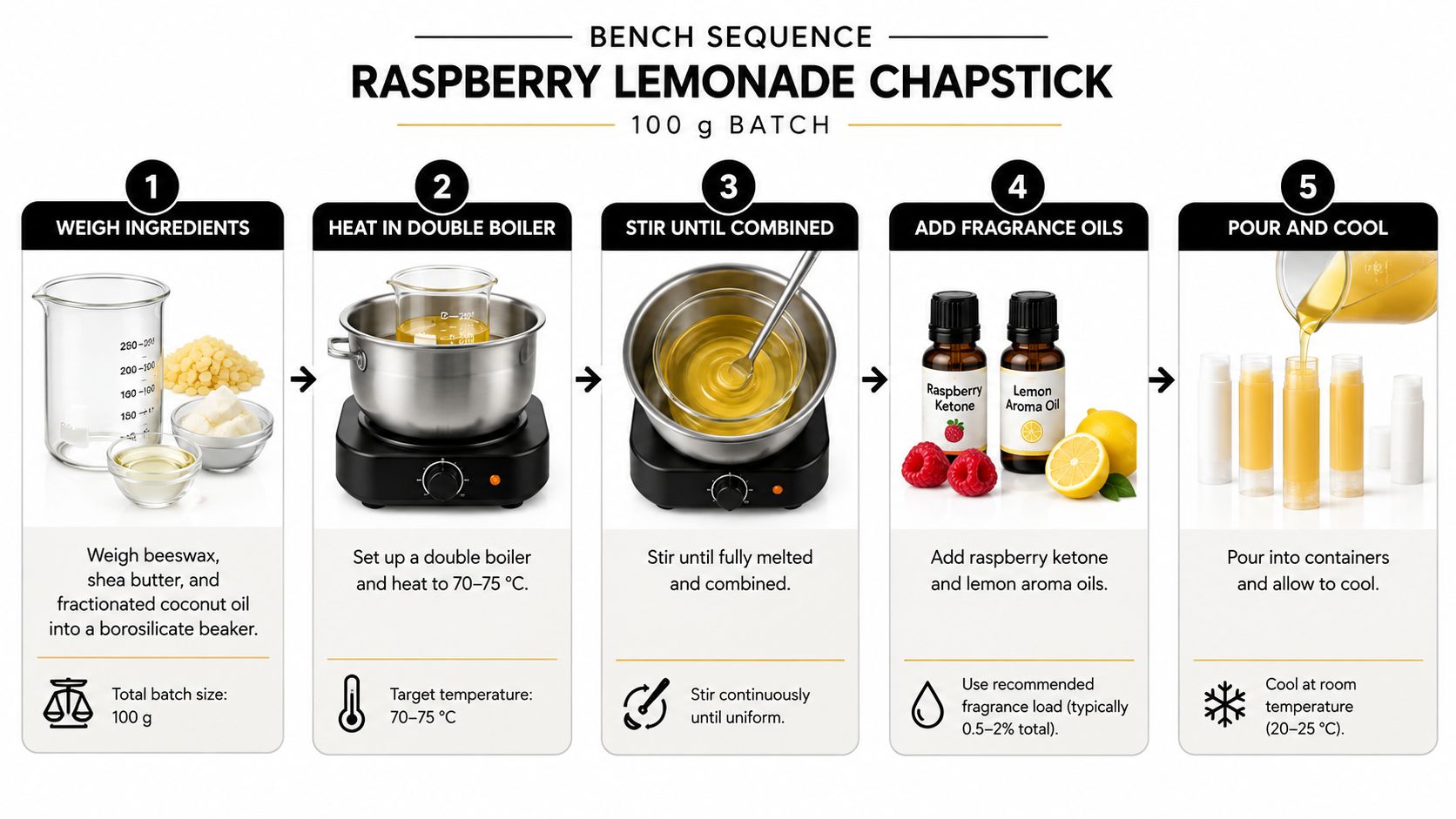
The bench sequence is straightforward: melt the structural phase completely, cool before adding volatile aroma materials, mix gently, and pour without introducing air. For a 100-gram batch, temperature control matters more than speed.
Melt the structural phase
- Weigh the solids and oils. Place the beeswax, shea butter, and fractionated coconut oil into a clean borosilicate beaker. Keep the flavor concentrate in a separate labeled container.
- Set the water bath. Use a double boiler or hot plate and bring the working environment to 70–75°C. Avoid direct contact between the beaker and a hot plate surface.
- Dissolve completely. Stir with a silicone spatula until no wax or butter particles remain. Incomplete melting can create graininess, uneven firmness, or inconsistent flavor distribution.
Hold the blend only as long as needed. Extended heat increases the chance of volatile loss and can alter the sensory character of delicate citrus materials.
Add aroma during controlled cooling
Allow the carrier blend to cool to roughly 65°C. Add the raspberry component first, because the heavier berry character forms the base of the profile. Add the lemon concentrate next, using a pipette to control the target load, and stir slowly until uniform.
The flavor oil should be added after the waxes and butters are fully melted but before the batch thickens. A practical window is 140–160°F, or 60–71°C, because adding it hotter can cause rapid volatile loss and a weaker finished flavor, as explained by formulation guidance for flavor oils in lip balm.
Practical observation: The hot batch often smells stronger than the cooled stick. Don't increase the dose until you've evaluated the set product.
Mix for uniformity, not aeration. Whipping can create bubbles and a lighter-looking fill. Pour into sanitized 4.5 g lipstick molds or twist tubes while the batch still flows, then allow the units to rest undisturbed. Wipe residue from the rim before it hardens, cap after the surface has set, and label the batch with its flavor version and date.
The following video can help visualize the basic bench movement, but it doesn't replace lip-use safety documentation or your own process validation.
Flavor Dosage, Safety, and Allergen Checks
For a 100-gram carrier batch, calculate flavor load by weight and confirm each component's permitted use level with the supplier's current documentation. A practical development screen can compare low, balanced, and bold sensory versions, but the final lip-safe limit comes from the applicable certificate and regulatory review.
Reference loads for early bench trials
| Intensity Tier | Flavor Load % | Raspberry Ketone (g) | Limonene (g) | Citral (g) | Notes |
|---|---|---|---|---|---|
| Low intensity | 0.8% | 0.4 | 0.2 | 0.2 | Subtle berry and citrus opening |
| Balanced target | 1.2% | 0.6 | 0.3 | 0.3 | Clear raspberry lemonade direction |
| Bold development ceiling | 1.8% | 0.9 | 0.45 | 0.45 | Screen only after lip-use documentation review |
These are development allocations, not universal permitted maximums. The table separates the aroma materials for comparison, but a commercial formula may use a pre-composed lip-safe flavor oil rather than isolated compounds. Don't assume that a material suitable for vape cartridges is suitable for lips.
Check allergens and user exposure
Declare relevant allergens according to the market where the product will be sold. Citrus-forward formulas may require attention to citral, linalool, limonene-related materials, and oxidation products. In a Hong Kong Consumer Council survey, 41 samples contained fragrance allergens, and 5 products reached approximately 0.85% to 2.1% total allergen content, according to the consumer-testing information summarized here.
Oxidized limonene deserves particular attention. The same source reports a clinical patch-test summary with 8.3% reactivity to oxidized limonene among sensitive-skin participants versus 2.1% for standard vanilla balms. Use tight packaging, consider appropriate antioxidant support, and test for scent shift, sweating, texture drift, and irritation during repeated wear.
Avoid essential oils near children, conduct a controlled patch test on the inner arm, and keep water-based extracts out of an anhydrous system. Gold Coast Terpenes provides a terpene safety guide that can support general handling decisions, but the finished lip product still requires product-specific review.
Final Adjustments and Storing Your Finished Balm
Evaluate the cooled balm for glide, hardness, and aroma throw before making a commercial decision. A formula that smells excellent in the beaker may still drag on application or leave an oily film after it sets.
If the stick feels greasy, remelt the batch and add beeswax in 1 g increments, checking the glide after each adjustment. If it feels brittle, add fractionated coconut oil gradually. A top-note reduction after 48 hours can be normal, so adjust the citral side of the ratio in the next version rather than flooding the current batch with extra citrus at the end.
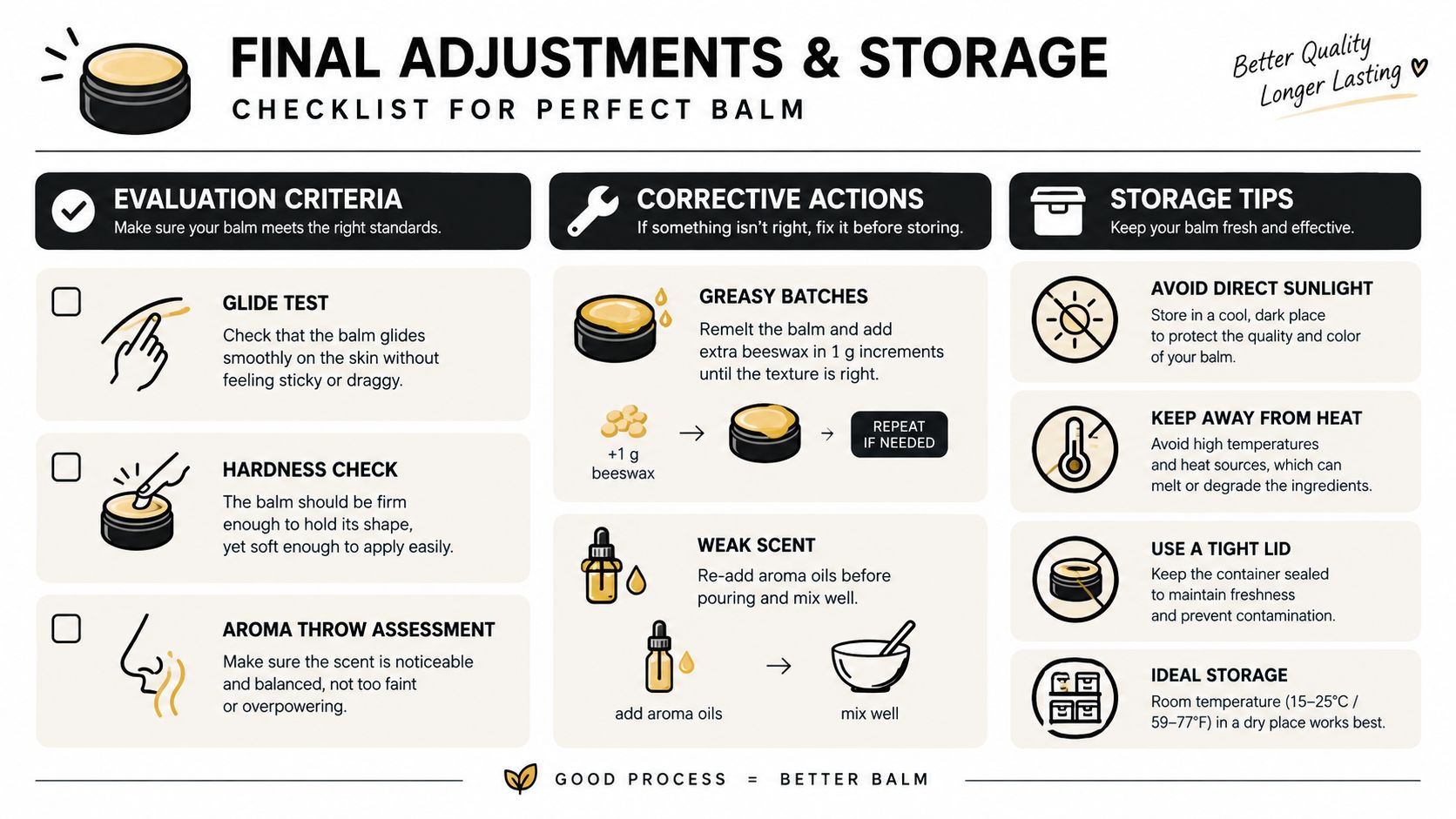
Allow the balm to cure for 24–72 hours at room temperature before final sensory approval. Use opaque tubes where possible, protect the product from heat and direct sunlight, and label every unit with the batch date and flavor version. A working shelf-life expectation is roughly six to nine months, but commercial release should follow stability testing rather than a bench assumption.
Gold Coast Terpenes offers botanical terpene blends, isolated compounds, strain-specific profiles, and formulation resources that can help you translate a raspberry lemonade aroma concept into a controlled flavor system for distillate or other product development work. Visit Gold Coast Terpenes to review the available formulation materials and select components for your next bench trial.
Frequently asked questions
Is raspberry lemonade chapstick a single flavor oil problem?
No. A convincing profile usually combines berry, tart citrus, and bright top-note cues. Raspberry aroma literature identifies multiple contributing compounds, so one dominant material rarely delivers the full character.
Can cannabis-derived terpenes be used in a lip balm?
Only when the material is specifically documented and approved for lip use in the target market. Botanical and cannabis-derived terpenes also differ in sourcing, labeling, compliance, and expected documentation, so a vape-compatible ingredient isn't automatically suitable for a leave-on lip product.
What temperature should flavor oils enter the batch?
Add them after the waxes and butters have fully melted and the batch has cooled into the controlled range, commonly around 60–71°C. The exact limit depends on the supplier's guidance and the volatility of the selected materials.
Why does limonene alone smell unlike lemonade?
Limonene supplies bright citrus lift but lacks the tart, juicy, and berry context that makes lemonade recognizable. Combining it with citral and a raspberry base creates a fuller sensory sequence.
What should a vape brand ask a terpene supplier?
Ask for botanical versus cannabis-derived labeling, lip or inhalation suitability where relevant, batch documentation, allergen information, IFRA materials for cosmetic use, and clear application guidance. Gold Coast Terpenes also provides safety documents, terpene education, and formulation tools for product developers.