
Most Purple Gelonade formulation advice starts with the wrong question. It asks whether the flower looks purple, then treats that color as proof of a distinct aromatic identity. For a cartridge manufacturer, that assumption can create an unstable benchmark before the first pilot batch is mixed.
Purple Gelonade is commonly described as a Purple Punch × Gelonade cross, but other references frame it as a purple-leaning Gelonade phenotype or a loose market label. Independent coverage repeats the lineage and flavor story without supplying cultivar verification, breeder records, or lab-side markers, so color alone can't tell you whether a batch carries a different functional terpene profile (Better Than Nine's Purple Gelonade reference). The commercially useful target is therefore not purple flower. It's the grape-candy citrus profile, with a bright lemon opening, a peppery or floral middle, and a creamy fruit finish.
For formulators working with distillate, isolates, or strain-inspired terpene blends for vape cartridges, that distinction matters. The reliable way to reproduce the profile is to map its aromatic architecture, validate the blend in the intended hardware, and document the batch variables that affect the final result.
Why Purple Gelonade Is a Formulation Puzzle Worth Solving
Purple appearance is the least reliable input in a Purple Gelonade brief. Some product references identify it as a true Purple Punch × Gelonade cross. Others describe a phenotype selected for coloration, while commercial listings may apply the name to purple-leaning batches with Gelonade-style citrus and dessert notes.
That distinction affects sourcing. Flower with strong purple coloration may not provide a repeatable terpene target after extraction. Distillate can carry a cultivar name that reflects market positioning rather than a verified chemotype. Use the name to communicate an intended flavor direction, but do not treat it as a quality specification.
Practical rule: Treat the cultivar name as a sensory brief, not as a laboratory result.
The most consistent sensory description is grape, candy, citrus, and berry, alongside Gelonade's lemon-forward, creamy character. The combination has commercial appeal because it adds fruit depth to a recognizable citrus profile. Purple coloration may suggest that direction to buyers, yet the cartridge still needs to deliver the lemon lift that makes the profile read as Gelonade.
Color has limited value once material enters processing. Anthocyanins can influence flower appearance, but the finished cartridge is judged through its volatile fraction, cannabinoid base, hardware, and vapor curve. If the purple trait does not correspond to a repeatable aromatic difference, it adds little to the finished SKU.
Set the target in functional terms:
- Opening: bright lemon and citrus candy.
- Middle: pepper, spice, and restrained floral nuance.
- Finish: berry, grape sweetness, and creamy persistence.
This framework gives manufacturers a practical comparison point for incoming lots. It also separates a genuine aromatic target from a visual marketing cue that may disappear during extraction. Validate the profile through sensory checks and analytical data before treating purple-labeled material as equivalent across batches.
Lineage and What Each Parent Contributes to the Profile
Lineage is useful for setting a formulation hypothesis, not for approving a batch. Purple Gelonade is commonly described as Purple Punch × Gelonade, while Gelonade is traced to Lemon Tree × Gelato #41 (lineage reference for Purple Gelonade). That ancestry suggests a layered target, but it cannot establish whether purple coloration marks a distinct chemotype or only a visual trait that disappears during extraction.
Lemon Tree contributes the sharp citrus direction expected at the front of the profile. Gelato #41 adds sweeter, creamier dessert character, helping explain Gelonade's lemon-candy opening and soft vanilla-adjacent body. Purple Punch shifts the expression toward heavier fruit, especially grape and berry. In a cartridge, those parent roles matter only if the extracted volatile fraction preserves them.
Gelonade's name is associated with a 2018 Cannabis Cup best-sativa result according to the seed-market listing. That listing provides market context, not an independent award record or proof that products sold under the name share one chemical profile. Commercial naming remains less precise than the label often suggests.
Translating ancestry into aromatic layers
Use the parentage as a sensory map:
- Lemon Tree contribution: clean citrus brightness and a sharp opening.
- Gelato #41 contribution: creamy sweetness and dessert depth.
- Purple Punch contribution: grape, berry, and added fruit weight.
- Combined expression: candy-citrus top notes over a creamy, fruit-forward base.
This map helps a formulator diagnose a mismatch. A lot that smells strongly purple in the jar may still produce a mostly lemon profile after extraction. Conversely, added fruit character can make a formulation feel heavy if it suppresses the citrus lift. Compare incoming material by aroma, extracted oil, and finished vapor rather than by flower color alone.
Cultivation conditions add another source of variation. Adjacent Gelonade references describe a sativa-dominant hybrid with upward growth and pronounced stretch. An independent grow review reports flowering around 63 to 70 days and highlights stretch management, linking batch differences to canopy control, airflow, and harvest conditions (Gelonade cultivation review). Those variables can change aromatic intensity and balance while the cultivar name stays the same.
For fruit-dessert benchmarking, 24k gold punch offers a related catalog reference. It is not evidence of Purple Gelonade equivalence. Compare whether it adds fruit weight without covering the citrus top. A broader Gelonade indica or sativa reference provides further context for the naming question. Production decisions should follow the COA and controlled sensory testing, not ancestry or purple appearance alone.
Terpene Architecture for Accurate Strain Replication
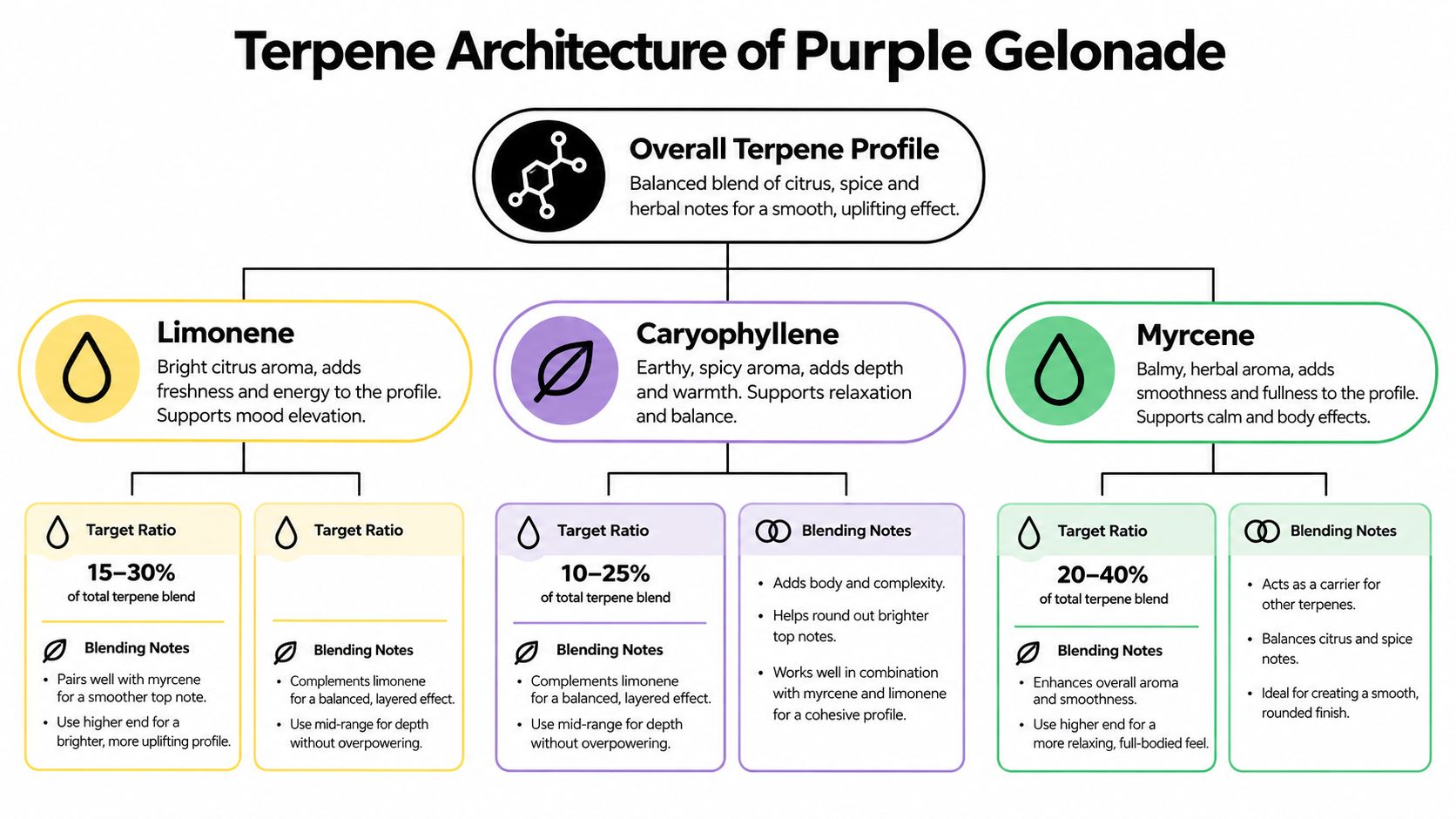
A terpene list isn't enough to replicate Purple Gelonade. The formulator needs to know what arrives first in vapor, what fills the middle, and what remains after the bright citrus note fades. Available Gelonade-related coverage consistently identifies limonene and beta-caryophyllene, while sources differ on whether linalool or myrcene occupies the more prominent supporting position (adjacent Gelonade terpene coverage).
That disagreement isn't a problem to hide. It reflects phenotype and source variation, and it argues against copying a fixed ratio without tasting the result in the intended oil and device.
The three-layer working map
Top notes should lead with limonene. It creates the immediate lemon and citrus-candy impression that makes the profile recognizable. Too much can make the vapor feel sharp or solvent-like, especially when the distillate already has a thin or bright character.
Mid notes come from beta-caryophyllene, with linalool as a possible floral and berry-supporting component. Caryophyllene gives the blend pepper and structure. Without it, a sweet citrus formulation can feel hollow. Linalool can soften the transition toward the creamy fruit finish, but it should support the profile rather than turn it overtly floral.
Base notes are where myrcene becomes useful. It contributes weight, earthiness, and persistence. Some references place it more prominently, while others emphasize linalool instead. For a cartridge, the correct choice depends on whether the target is a lively lemon-forward experience or a denser dessert finish.
| Aromatic Layer | Primary Terpene(s) | Sensory Function | Formulation Note |
|---|---|---|---|
| Top | Limonene | Lemon peel, citrus brightness, candy lift | Use it to establish recognition, then check for excessive sharpness in vapor |
| Mid | Beta-caryophyllene, linalool | Pepper, floral berry, rounded complexity | Caryophyllene adds structure, while linalool can soften the transition |
| Base | Myrcene, with fruit-supporting notes | Creamy weight, earthiness, lingering finish | Increase carefully when the target needs dessert depth without muting citrus |
This layered approach works better than treating every listed terpene as equally important. A citrus-forward terpene profile for vape cartridges should have a clear first impression, a stable middle, and a finish that doesn't collapse into generic sweetness.
The purple label may describe the flower's appearance. The vapor profile has to earn its identity through balance.
Formulators who need a broader reference framework can use this strain terpene profiles guide when comparing adjacent cultivars. The comparison should focus on sensory roles and batch behavior, not on forcing every product into a single universal formula.
Cannabinoid Data and What It Means for Cartridge Development
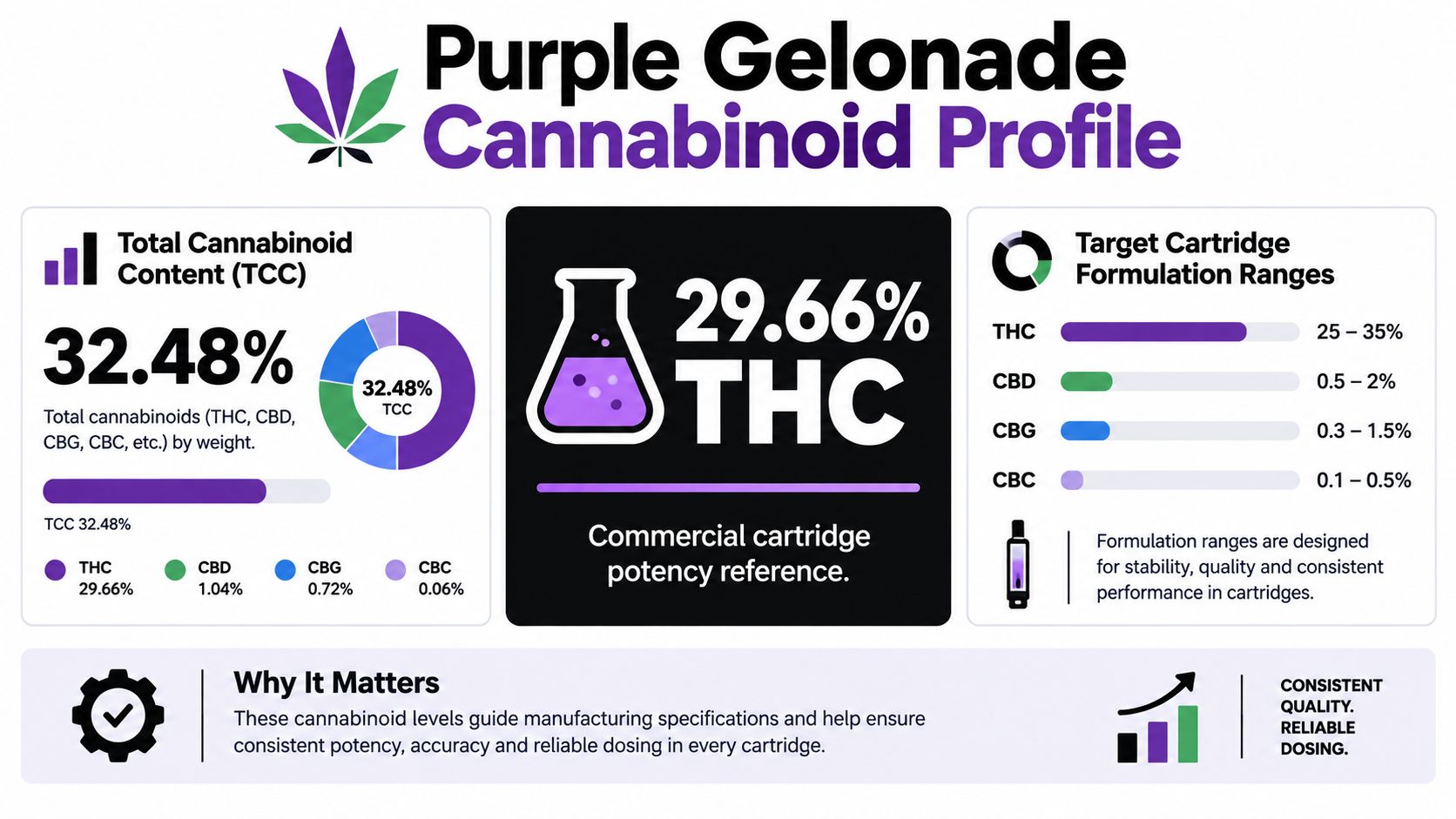
The reported 29.66% THC figure is useful context, not a cartridge formula. It describes one commercial flower profile, while finished cartridge potency depends on the distillate or concentrate, terpene addition, blend ratios, and final product specification.
Source-flower THC applies to the tested lot. Refinement, dilution, filling, storage, and use can all change the final product context. For labeling and release decisions, the finished cartridge laboratory result carries more weight than a potency figure attached to a cultivar name.
Phenotype descriptors and what they do not tell you
Purple Gelonade is often described as approximately 70% sativa and 30% indica, with indoor flowering of 8 to 9 weeks and outdoor harvest around early October. Those descriptors can support positioning for a bright, fruit-forward experience, but they do not establish a terpene profile or predict cartridge performance.
The purple phenotype deserves the same caution. Color may be a visible selection trait or a marketing cue, yet extraction can erase much of that distinction. Once flower becomes distillate, the product identity depends on the compounds that survive processing and the terpene system used to rebuild the sensory profile. A purple appearance alone does not prove a meaningfully different vapor profile.
Commercial naming also varies by breeder, grower, and seller. Treat grape, candy, citrus, and berry descriptions as a development hypothesis, then verify them against the source material and finished oil. Standard Gelonade references often emphasize lemon and vanilla, so the purple expression may offer a useful positioning contrast without guaranteeing a separate chemical signature.
A practical development brief can specify:
- A bright citrus entry that remains recognizable at the selected vapor temperature.
- A fruit and candy middle that separates the blend from plain lemon.
- A creamy, persistent finish that stays clear after repeated pulls.
- Finished-batch cannabinoid and terpene results verified for release, rather than inferred from source flower.
Reported uplifting or sativa-leaning descriptors may inform brand language, but they should not become medical or guaranteed-effects claims. Keep the story sensory and technical, and use cannabinoid data for labeling, compliance, and batch consistency.
A lab report interpretation guide helps teams separate source-material results from the data required for release decisions. Keep sensory positioning, cannabinoid labeling, and formulation chemistry as separate controls.
Formulating the Purple Gelonade Profile with Gold Coast Terpenes
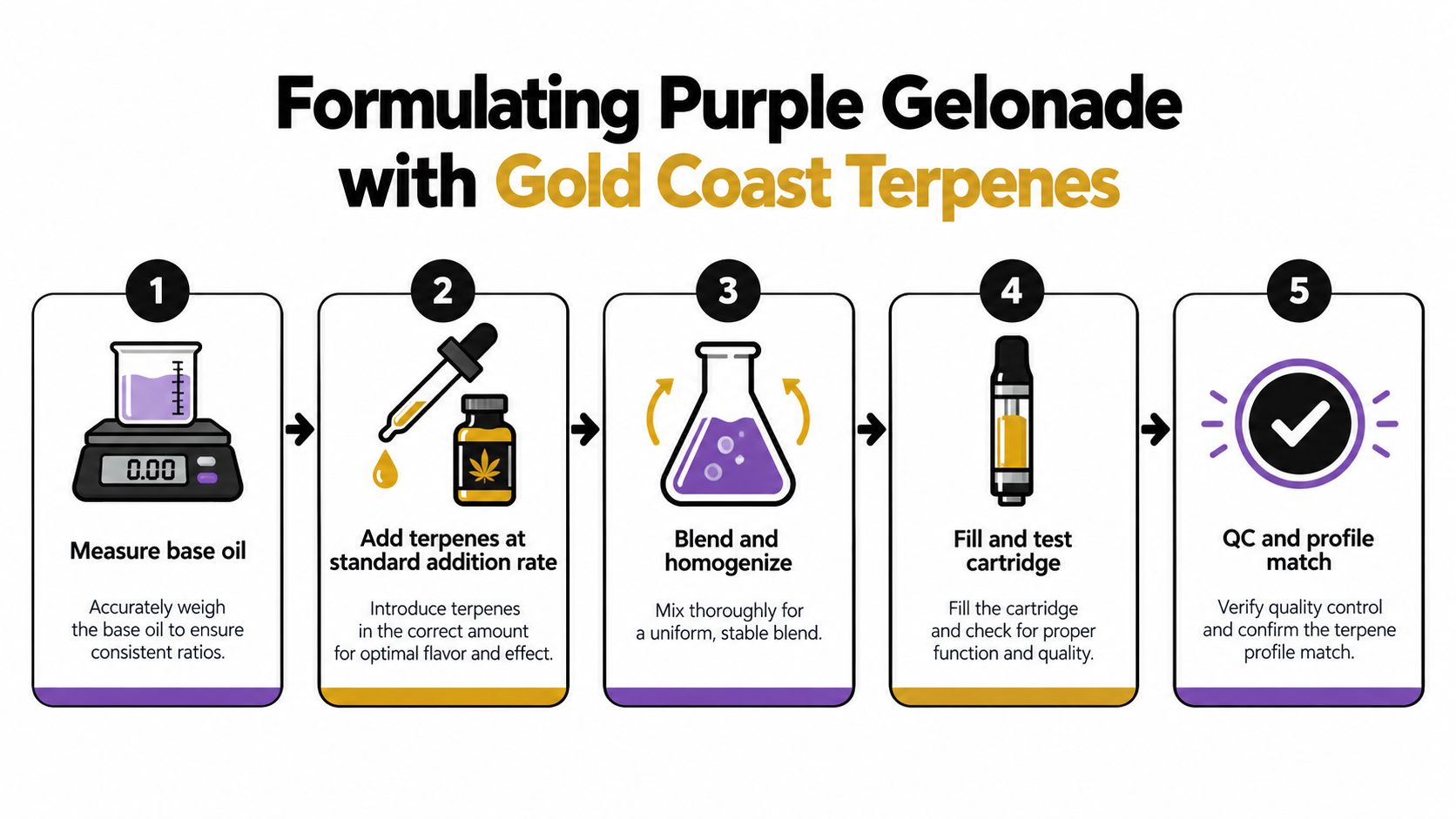
A practical strain-inspired terpene blend for distillate starts with controlled addition, not aggressive flavor loading. The supplied formulation guidance places common distillate additions in the 5% to 15% by-weight range, with many vape applications landing around 8% to 12%. Those figures should be treated as starting points for validation, not universal instructions, because viscosity, hardware, oil composition, and local requirements can change the acceptable window.
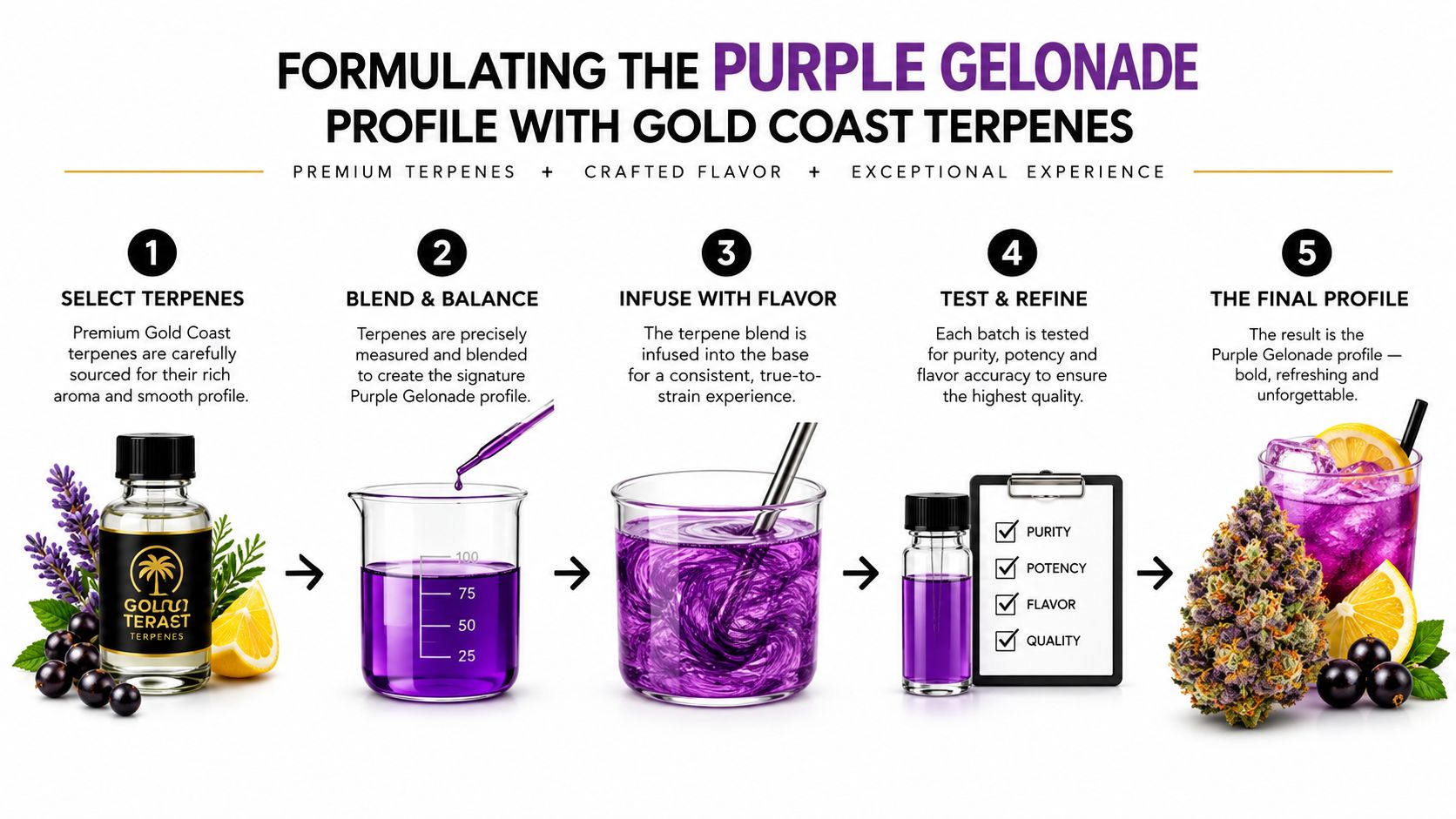
Begin with the aromatic objective. Purple Gelonade needs limonene-led brightness, caryophyllene structure, and enough myrcene or linalool support to create fruit and cream depth. A prebuilt strain profile can shorten development time, while isolates give the team more control over the exact balance.
A workable pilot sequence
Define the target before mixing. Write down the desired opening, middle, and finish. If the target is grape-candy citrus, don't accept a blend that smells only like lemon oil before it enters the distillate.
Choose the base approach. A strain-specific blend is useful when speed and repeatability matter. An isolate build makes sense when the existing distillate already supplies part of the profile and only needs correction.
Build in aromatic order. Start with limonene for the top note, add beta-caryophyllene for pepper and structure, then use myrcene or linalool to tune persistence and softness. The exact internal ratio should come from sensory trials, because the verified references identify the terpene set but don't establish a validated Purple Gelonade formula.
Mix under controlled conditions. Bring the terpene blend into the base gradually, use a consistent mixing protocol, and record the temperature. Excessive heat can reduce aroma fidelity, while incomplete homogenization can make the first and last filled cartridges taste different.
Test the filled hardware. Evaluate the pilot after filling, not only in a glass vial. Check the first pull, the middle of the oil, and the late-use flavor. A blend that smells accurate in bulk can become too sharp, too thin, or overly sweet after vaporization.
Gold Coast Terpenes supplies strain-specific blends and isolates such as limonene, myrcene, and beta-caryophyllene, which maps directly to the layered approach above. Its Elevated Strains catalog can also serve as a reference point when a development team is comparing fruit and dessert directions, but the candidate still needs to be tested against the Purple Gelonade brief.
What usually fails
Raising the total terpene load to force a stronger nose often creates a harsher cartridge rather than a more accurate one. Likewise, adding more limonene to compensate for weak fruit notes can erase the creamy middle instead of fixing it. The better correction is usually structural, add the missing aromatic role rather than increasing the loudest material.
Run a small pilot before committing production material. Compare the blend against the source reference, record the order of aroma release, and retain a control sample. For ongoing supply, keep the target defined by sensory notes and analytical results, not by the purple name alone.
Safety, Compliance, and Quality Control for Terpene-Forward Formulations
Flavor accuracy doesn't excuse weak process control. A Purple Gelonade cartridge still has to meet requirements for material safety, hardware compatibility, labeling, and batch release. The most reliable teams treat the terpene blend as a controlled input with its own documentation, not as an informal flavor adjustment.
Control the addition and the hardware
The supplied formulation guidance cautions that additions above 15% can create problems with viscosity, hardware compatibility, and the consumer experience. Staying inside a validated range protects more than taste. It also reduces the risk that a thick or unusually mobile formulation behaves differently during filling, storage, or use.
Before scaling, confirm:
- Compatibility: Test the actual oil and hardware combination, including seals, tanks, and heating behavior.
- Homogeneity: Verify that the blend stays uniform after mixing and through the filling sequence.
- Vapor performance: Evaluate flavor at the device's normal operating conditions, not only by smelling the bulk oil.
- Documentation: Record the lot, addition rate, mixing temperature, mixing time, and filling conditions.
Gold Coast Terpenes describes its products as SC Lab-tested and formulated without VG, PG, PEG, or MCT. Those specifications are relevant to material review and supplier documentation, but each manufacturer still needs to confirm that an input meets its own market, hardware, and regulatory requirements.
Verify every input
Brands operating across hemp-derived or multi-state markets should confirm the THC-free status of terpene inputs and retain the applicable supplier documentation. A strain-style name doesn't establish cannabinoid content. The finished formulation and every input should be reviewed under the rules that apply to the destination market.
A useful batch record ties three datasets together:
- Terpene addition: identity, lot, amount, and percentage by weight.
- Process conditions: mixing temperature, time, homogenization method, and filling sequence.
- Analytical result: finished cannabinoid profile, terpene information where required, and release status.
This record helps identify whether a flavor shift came from the incoming distillate, the terpene material, the mixing process, or the hardware. It also makes supplier comparisons more objective when two batches carry the same Purple Gelonade label but perform differently.
Quality-control checkpoint: Don't approve a strain-matched cartridge from aroma alone. Match the sensory result to the finished batch record and the required laboratory documentation.
A practical quality assurance processes reference can support the development of a repeatable review system. The central lesson is that purple coloration is not a sufficient release criterion. For manufacturers, the meaningful differentiators are a stable aromatic structure, compatible materials, documented inputs, and a finished product that reproduces the intended citrus-fruit-dessert profile from batch to batch.
Gold Coast Terpenes offers strain-specific terpene blends, isolated compounds, and formulation resources for teams developing Purple Gelonade-inspired cartridges and concentrates. Review the available options at Gold Coast Terpenes, then use a controlled pilot and finished-hardware test to select the blend that matches your target.