
A lot of teams hit the same wall with dessert profiles. Sales wants a cart that tastes familiar enough to move quickly, operations wants something stable across batches, and the lab gets handed a strain name with a vague instruction to “make it hit like the flower.”
Peanut Butter Cherry Pie strain is a good example of that gap between brand language and formulation reality. It has a recognizable dessert identity, but that identity only survives commercialization when the aromatic structure is built deliberately. If you overpush the cherry, it turns syrupy. If you overbuild the savory side, it reads stale or generic. If the terpene system isn't matched to the cannabinoid base and hardware, the whole SKU feels muddy.
This is a formulation blueprint for teams working on a terpene profile for Peanut Butter Cherry Pie strain-inspired vape cartridges, distillate blends, and other inhalable formats. The focus is practical. Build the sensory stack, choose ratios that hold up in production, and give marketing language that matches what the product delivers.
Replicating a Modern Dessert Strain Profile
A formulation brief lands on the bench with three constraints attached. The cart has to read as cherry pie on the first pull, carry a believable peanut butter body through the mid-palate, and stay stable enough for repeated production runs. That is the core task behind a Peanut Butter Cherry Pie launch.
Commercial versions fail when the profile is treated like a novelty flavor instead of a controlled dessert stack. The target is specific. Bright baked-fruit top notes, a nutty and slightly creamy center, and enough earthy dryness underneath to keep the finish adult and strain-referential. If any one of those pieces dominates, the SKU starts reading as candy cherry, generic pastry, or muddy nut mix.
Lineage still matters at this stage, even before ratio work. Peanut Butter Cherry Pie is generally positioned around Georgia Pie and Peanut Butter Breath influence, which gives formulators a practical map for where the fruit, bakery, and savory notes should come from. I use that map as a constraint, not a story. It keeps the blend tied to a recognizable cultivar profile while leaving room to build for hardware, oil base, and cost of goods.
For teams calibrating the fruit side first, a dedicated Cherry Pie terpene profile reference is a useful starting point because it clarifies the baked cherry direction better than a generic red-fruit target.
The build order matters. Start with the cherry-pie architecture, then layer in roasted nut and earthy depth in small increments. If the first bench sample already tastes finished before those heavier notes are added, the formula is headed toward a simple cherry dessert profile rather than Peanut Butter Cherry Pie.
Practical rule: Build the fruit and bakery frame first. Add the peanut, earth, and cocoa accents only until the profile turns strain-specific. Beyond that point, the blend gets dull fast.
Deconstructing the Sensory Profile for Formulation
Formulators usually get into trouble when they treat this profile as one flavor. It isn't. It's a layered sequence. The opening, middle, and finish all have different jobs.
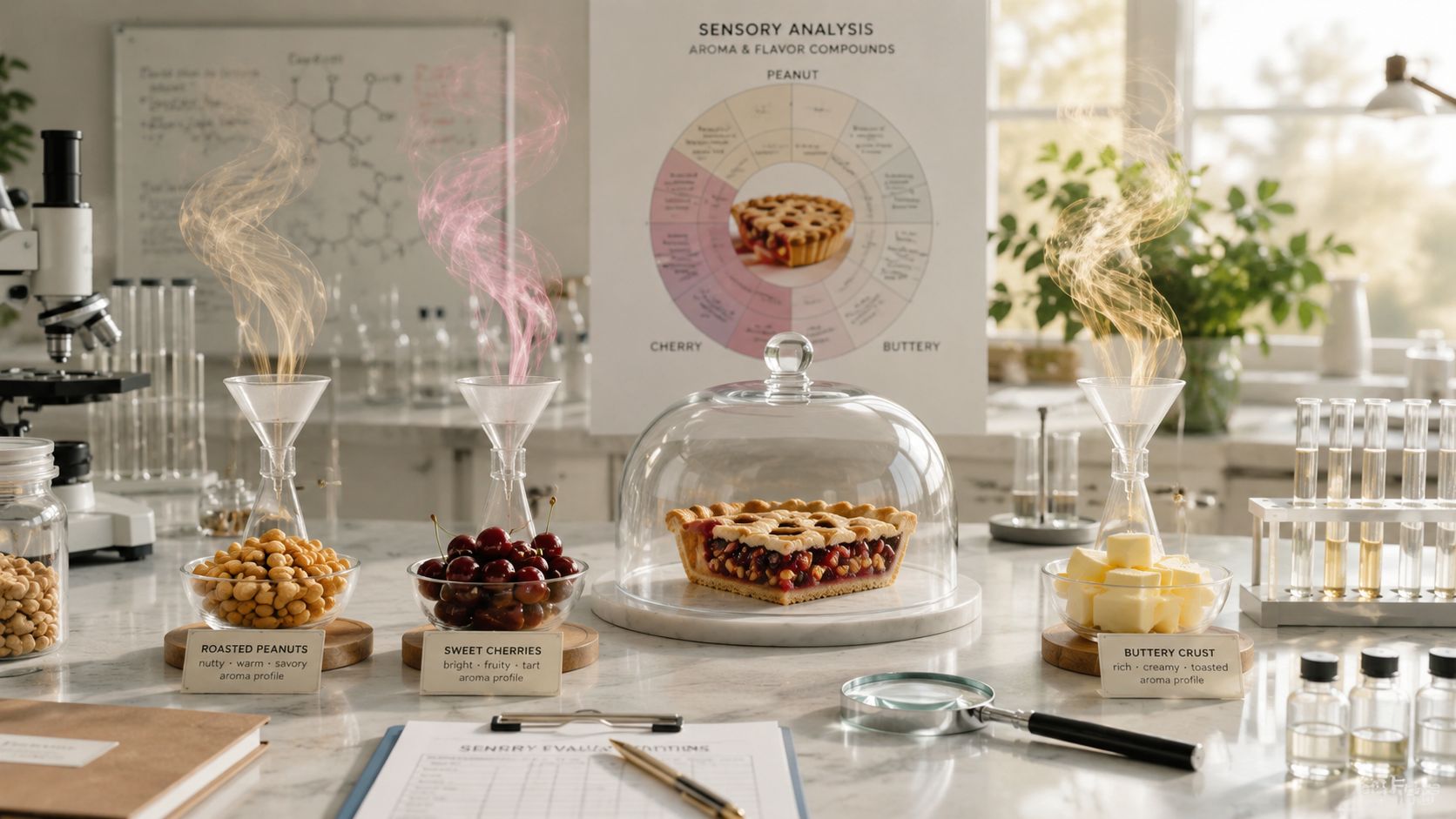
Top notes
The top of the profile should read as bright cherry with a soft citrus lift. Not sharp candy cherry. Not medicinal red fruit. What you want is the effect of baked fruit opening out of a warm crust.
In sensory work, that means the first impression needs lift and clarity. If the top note is too thin, the profile dies before the exhale. If it's too loud, the savory mid-palate never lands.
Mid notes
The center is where the profile earns its name. This is the creamy peanut butter, toasted nut, and bakery dough zone. Most failed versions miss here.
A common mistake is using sweetness to imitate creaminess. That doesn't work. Sweetness makes the blend taste flavored. Nutty warmth and rounded spice create the bakery effect more convincingly than merely adding more fruit or confectionery character.
Base notes
The finish should hold earth, dark cocoa, and a faint gassy dryness. That base keeps the profile from tasting juvenile. It also gives the inhale-to-exhale transition the weight people expect from a dessert cultivar with a savory genetic side.
Here's a useful way to evaluate the build on the bench:
| Sensory layer | What you want | What failure sounds like |
|---|---|---|
| Top | bright cherry, lifted fruit | candy, syrup, artificial jam |
| Middle | nutty, creamy, bakery warmth | peanut shell, stale pastry, sweetness overload |
| Base | earth, dark chocolate, slight gas | muddy, flat, harsh finish |
Teams new to strain-inspired work should also spend time with a general terpene vocabulary reference before naming a blend complete. A Terpenes 101 guide helps standardize internal tasting language, which matters when R&D, production, and marketing all use different words for the same note.
A profile like this should unfold in sequence. If every note appears at once, the blend usually tastes crowded rather than premium.
The Core Terpene Profile for Replicating Flavor
The fastest way to lose the Peanut Butter Cherry Pie identity is to chase flavor adjectives without respecting the terpene spine. The verified profile points to a flower that averages 1.76% total terpene content and is dominated by limonene, β-caryophyllene, β-myrcene, and β-pinene, according to Illinois News Joint's review of Peanut Butter Cherry Pie by Kaviar. That same source notes a recognizable sequence where limonene drives the initial uplift while myrcene and caryophyllene shape the heavier back half.
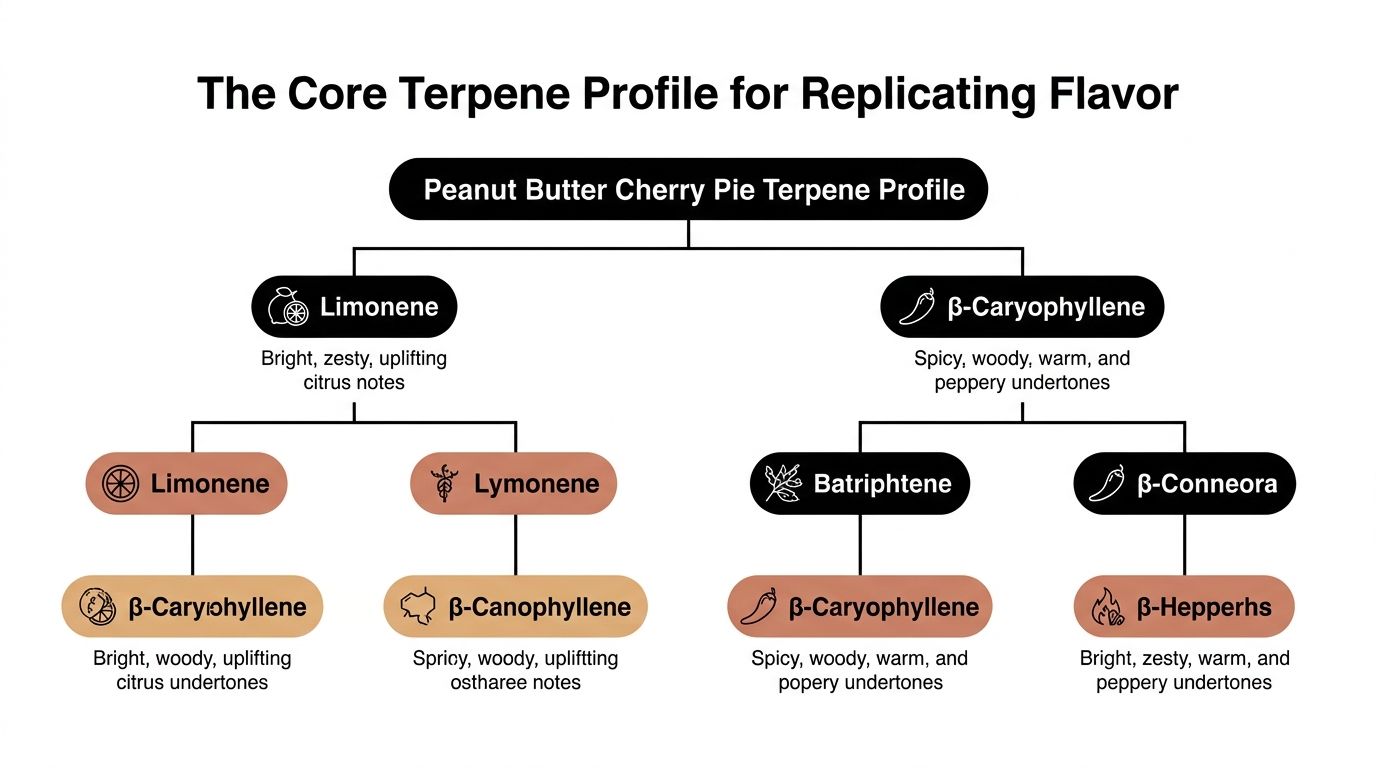
What each dominant terpene is doing
Limonene handles the opening. In this profile, it doesn't read as obvious lemon. It acts more like a brightening tool. It lifts the cherry top note and prevents the bakery side from collapsing into heaviness.
β-Caryophyllene supplies warm spice, structure, and a dry woody edge. In dessert-style strain replication, this terpene often does more than formulators expect. It helps turn simple sweetness into something that feels baked, toasted, and mature.
β-Myrcene rounds the blend. It softens the edges, adds earthy weight, and keeps the finish from feeling thin. Used carefully, it supports the nutty body. Used too hard, it can flatten the fruit and make the profile sleepy in the wrong way.
β-Pinene is the control point. It adds air and definition. Pinene is not typically considered part of a peanut-butter dessert build, but small amounts stop the center from becoming pasty.
Top, mid, and base note assignment
For practical formulation, I'd map the profile this way:
Top note driver
- Limonene: supports bright fruit lift and opening clarity
Mid note drivers
- β-Caryophyllene: warm bakery spice and toasted depth
- β-Pinene: definition and aromatic separation
Base note driver
- β-Myrcene: earthy body and finish cohesion
This kind of note mapping is easier to tune when the team uses a consistent aromatic reference. A working terpene flavor chart is useful in QC because it reduces vague comments like “needs more dessert” or “too dark.”
What works in replication
When building a strain-inspired terpene blend for Peanut Butter Cherry Pie for distillate, the order matters more than many teams assume.
- Build the lift system first. That means limonene and whatever supports your cherry direction.
- Add warmth and toast next with caryophyllene-led structure.
- Use myrcene to lock the base into place.
- Add only enough pinene to restore definition.
What doesn't work is starting from an earthy, heavy foundation and trying to paint cherry on top. The profile turns muddy fast, and the “pie” concept never shows up cleanly.
Formulating for Expected Effects
A strain-inspired inhalable product has to do more than smell accurate. It also has to align with the effect language buyers already associate with the name. For Peanut Butter Cherry Pie, that expectation is usually a product that opens brighter, then settles into a heavier, more body-centered experience.
That expectation lines up with the terpene behavior already noted earlier. Limonene tends to shape the initial lift, while myrcene and caryophyllene pull the profile into a more grounded finish. The practical takeaway for formulation is simple. Perceived effect and flavor structure are tied together. If you change one aggressively, you usually change the other.
How to tune the effect direction
A few formulation choices make the biggest difference:
For a brighter launch profile
- Let limonene lead more clearly in the opening aroma.
- Keep the nutty center controlled so the first draw doesn't feel dense.
For a heavier evening presentation
- Push caryophyllene slightly harder in the middle.
- Let myrcene carry more of the finish and body.
For a more balanced hybrid impression
- Keep pinene just high enough to preserve articulation.
- Don't let bakery warmth smother the fruit lift.
Many brands tend to overcorrect. They hear “dessert indica-leaning profile” and bury the blend in heavy notes. That usually produces a product that tastes darker than the strain name suggests and feels less dynamic.
Bench note: If the exhale is doing all the work, the customer may call it relaxing but they won't call it memorable.
Effect positioning also needs compliance discipline. You can frame the blend around mood, tone, and sensory pacing without crossing into prohibited claims. For teams that need a clearer internal standard on this topic, the discussion around whether terpenes affect the high is useful as a formulation and labeling reference.
Potency and Cannabinoid Base Considerations
A Peanut Butter Cherry Pie SKU fails fast if the cannabinoid base feels lighter than the name suggests. This profile sits in the high-potency dessert lane, so the oil has to deliver enough body and impact to support that positioning, not just the flavor brief.
For product development, the practical question is not whether to chase the highest THC number possible. The question is how to build a base that keeps the formula commercially credible after terpene loading, hardware constraints, and batch variance are accounted for. A strong flower-inspired concept can still turn into a thin cart if potency math is handled late.
Matching the base to the profile
The base choice changes both sensory performance and market fit.
| Base choice | What it does well | Trade-off |
|---|---|---|
| High-THC distillate | supports category potency expectations and keeps the label simple | can read flat if the terpene system does all the sensory work |
| Alternative cannabinoid base | gives flexibility for hemp-derived or state-specific programs | often needs tighter balancing so the effect tone still fits the strain name |
| Broad-spectrum base with minor content | adds texture and perceived complexity | off-notes show up quickly if the input oil is not clean |
High-THC distillate is usually the easiest path for a commercial replica because it gives a neutral canvas and predictable fill behavior. It also exposes weak formulation work. If the cherry top note is sharp, the nutty center is muddy, or the finish drops off too quickly, distillate will not hide it.
Broad-spectrum systems can produce a more convincing result, especially for brands trying to avoid a sterile one-note effect. The trade-off is interference. Even small background notes from the cannabinoid base can pull this profile away from cherry pastry and into generic sweet earth.
Potency math affects the finished experience
Every terpene addition lowers cannabinoid concentration in the finished oil. That sounds obvious, but production teams still make label decisions from base COAs instead of post-blend calculations. On a dessert profile, that mistake shows up twice. The number on pack drifts down, and the formula can start feeling softer than the strain name implies.
A simple rule helps. Set your target around finished oil, not starting input.
Two checks belong in the bench workflow:
Recalculate potency after terpene addition
- Use finished-batch composition for spec sheets, not just the incoming base result.
- If you need a quick worksheet for post-blend adjustments, a terpene and oil mixing ratios calculator saves time during iteration.
Check viscosity in the actual hardware
- A formula can test well on paper and still wick poorly.
- Dessert profiles with heavier middle notes often reveal atomizer limits faster than lighter citrus builds.
I treat potency and flavor as one formulation problem. If the terpene load is high enough to get the peanut-butter-cherry effect right, the cannabinoid base has to be chosen with that dilution already in mind. Brands that get this right usually ship a product that tastes dense, fills cleanly, and still meets the expectation attached to a modern high-potency strain name.
Blending Ratios for Vape and Concentrate Formulation
Instead of pursuing a fantasy perfect ratio, a starting point is generally needed. For formulating Peanut Butter Cherry Pie strain-inspired terpenes for vape cartridges, the useful move is to begin with a terpene system that preserves cherry lift while letting caryophyllene and myrcene build the bakery and earthy body.
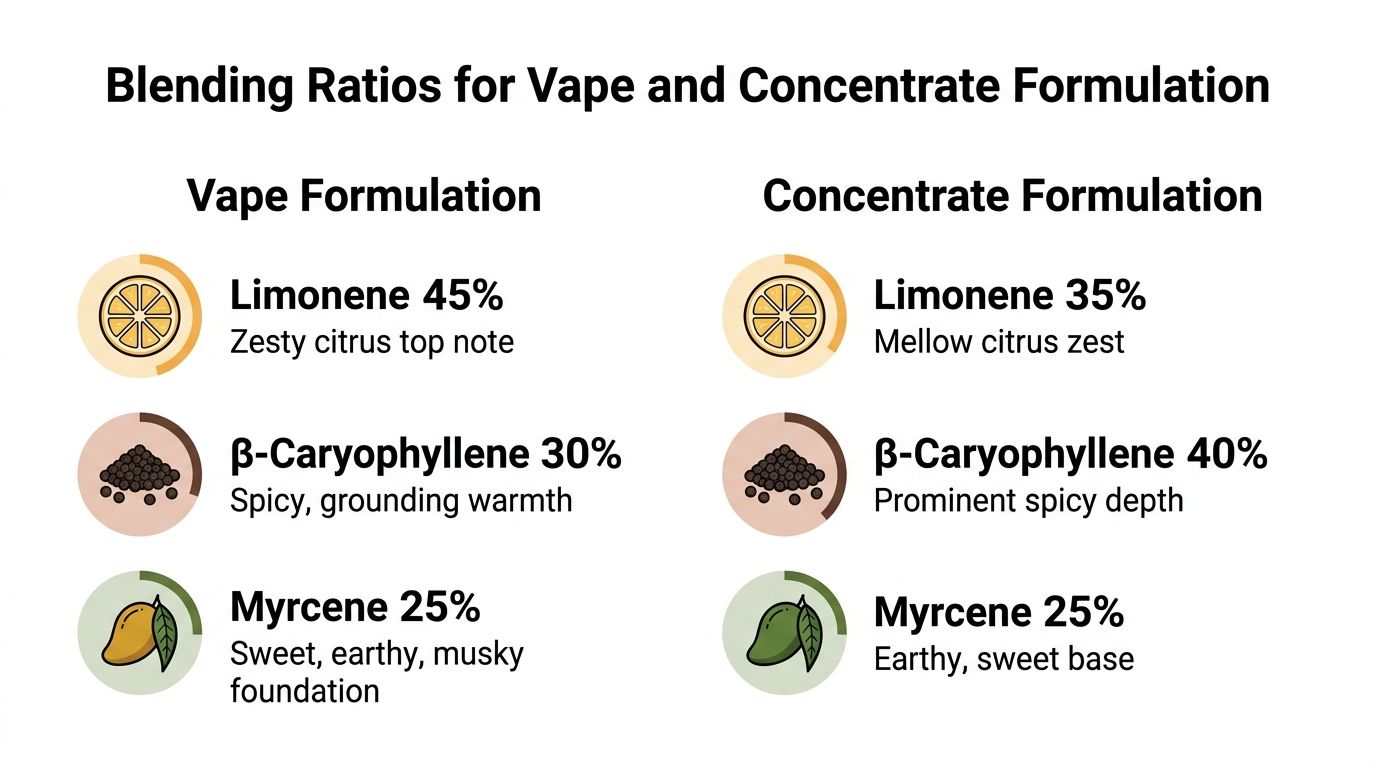
The ratio framework below is a workable bench target for the terpene blend itself, not a claim about the exact native flower composition:
| Application | Limonene | β-Caryophyllene | β-Myrcene | Use case |
|---|---|---|---|---|
| Vape-focused build | 45% | 30% | 25% | brighter top note, cleaner first draw |
| Concentrate-focused build | 35% | 40% | 25% | deeper spice and heavier body |
Those ratios work because they preserve the recognizable front-end brightness while giving the center enough toasted warmth to read as dessert rather than fruit candy.
Why the vape and concentrate versions differ
Cartridges reward clarity. A vape formula usually performs better when the opening note is more pronounced. That's why the vape version benefits from the higher limonene share. It keeps the first draw articulate and helps the profile survive common hardware muting.
Concentrates can carry more density without collapsing. That allows a caryophyllene-forward version to present more warmth, dryness, and depth.
A lot of teams also benefit from seeing the mixing workflow in action before scaling. This walkthrough is worth reviewing during bench prep:
Small-batch process that holds up
Use a repeatable sequence:
Warm the base gently
- You want easier incorporation, not terpene loss.
- Excess heat makes dessert profiles drift fast.
Add the terpene blend in staged increments
- Don't dump the full load at once.
- Early sensory checks catch imbalance before the batch is committed.
Homogenize thoroughly
- Dead spots in the mix create fill-to-fill inconsistency.
- In dessert profiles, inconsistency is obvious.
Rest and re-evaluate
- Freshly mixed samples can smell sharper than they'll present later.
- Re-test before approving scale-up.
Keep your first pilot deliberately conservative. It's easier to add a little more aromatic weight than to rescue a batch that tastes greasy, harsh, or overloaded.
For teams dialing production math, a mixing ratios calculator speeds up batch planning and helps prevent manual errors.
What usually fails
Too much top note
- The blend tastes like cherry candy with no pastry center.
Too much myrcene
- The formula gets broad and dull.
- The cherry disappears into earth.
Too much caryophyllene
- Warmth becomes pepper.
- The profile stops reading as dessert.
Marketing Your Peanut Butter Cherry Pie Product
A launch meeting for this profile usually breaks the same way. Product wants to sell the cherry note. Sales wants to call it peanut butter because the name is memorable. Compliance wants every effect claim stripped out. The workable answer is to market the contrast, not a single flavor note.
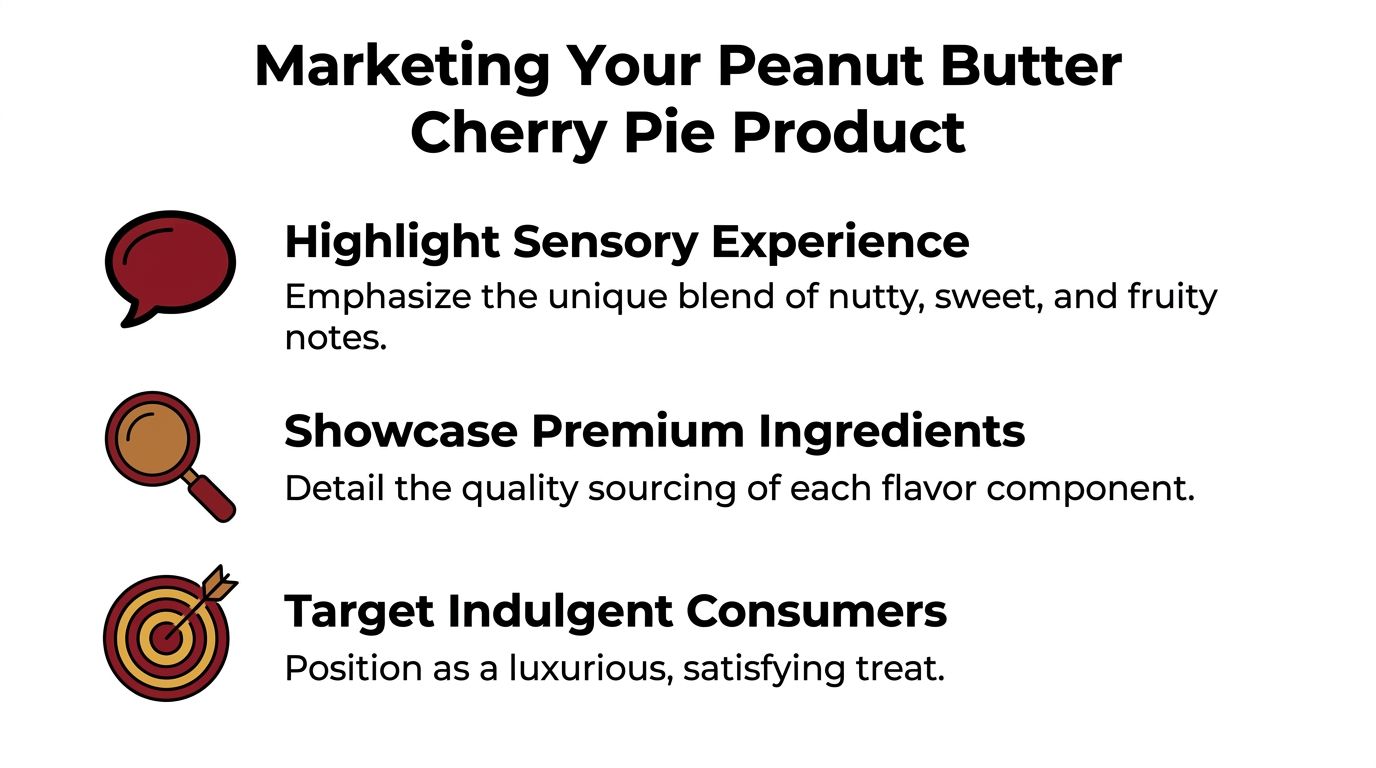
This profile earns shelf interest when the copy describes structure with some discipline. The commercial value comes from the tension between fruity pastry aromatics and a toasted, savory finish. As noted earlier, that combination is associated with premium flower pricing in established markets. Derived products inherit that expectation. If the vape, concentrate, or edible extension reads like generic cherry candy, the product feels cheaper than the name suggests.
For brand teams, the job is simple. Sell it as a layered dessert profile with an adult palate, not as novelty sweetness.
Copypoints that match the profile
These lines stay close to the actual sensory build and give marketing teams language they can use across packaging, menus, and PDPs:
For a premium dessert vape
- Cherry pastry on the front end, toasted nutty depth on the finish.
For brands that want a more refined tone
- A layered dessert profile with fruit, bakery warmth, and savory weight.
For lineage-based positioning
- Built around the contrast that made this style of dessert strain commercially distinct.
For evening-oriented merchandising
- Richer aroma expression with a fuller, grounded finish.
What to avoid in packaging and PDP copy
Weak copy usually fails in one of three ways. It oversimplifies the flavor, makes the product sound gimmicky, or drifts into claims the formula cannot support.
| Weak copy | Better direction |
|---|---|
| “Sweet cherry flavor” | describe cherry, bakery warmth, and nutty depth as one profile |
| “Peanut butter cart” | present it as a dessert strain interpretation, not a novelty snack flavor |
| “Ultra-relaxing medical benefits” | stay with aroma, flavor, and expected tone of experience |
A useful rule in commercialization is that specific sensory language sells better than inflated adjectives. “Toasted,” “pastry,” “dark cherry,” and “savory finish” give customers a clearer target than “bold,” “luxury,” or “next-level.”
If the SKU is going on a crowded menu, use category language that supports price integrity. “Dessert architecture” and “layered dessert profile” do that well because they signal construction and complexity. “Sweet cherry” does not. That phrasing matters more for this profile than for a standard fruit strain because the backend note is what makes Peanut Butter Cherry Pie recognizable.
For teams building a Peanut Butter Cherry Pie strain-inspired terpene blend for vape cartridges, distillate, or cannabis product formulation, Gold Coast Terpenes offers strain-specific blends, isolates, and practical formulation resources that make bench work faster and batch consistency easier to maintain. If you need a cleaner route from flavor target to finished SKU, it's a strong place to source the building blocks.