
You're staring at a spec sheet, a target blend, and a deadline. The brief says tropical, citrus-forward, and clean enough for a premium cart, but the batch in front of you still tastes too flat, too candy-like, or too harsh after heat cycles. That's where Passion Orange Guava earns its place, because it gives formulators a recognizable fruit profile with enough structure to build a stable commercial vape around it.
For product teams, the passion orange guava strain isn't a novelty flower reference. It's a formulation blueprint. The value is in its repeatable sensory architecture, a bright citrus top, a round tropical middle, and a grounded finish that can survive real hardware, real heat, and real shelf conditions.
From Target Profile to Finished Product
A brand owner wants a tropical SKU that sells quickly. An extractor wants a profile that won't collapse in a cartridge. A formulator wants both, and that means starting with a flavor target that already has a clear sensory map. Passion Orange Guava works because it's fruit-forward without becoming generic, and it has enough terpene identity to guide a commercial blend instead of forcing guesswork.
Start with the sensory job, not the strain name
The practical move is to translate the profile into function. In a vape, the first impression has to hit fast, so the top note must read as bright citrus. The middle has to carry a ripe tropical body, and the base has to keep the blend from feeling thin or overly sharp. That's exactly why POG is useful in formulating for vape cartridges and other oil systems.
Strain inspiration matters more than strain worship. You're not copying flower, you're reproducing the sensory logic of the flower in a controlled delivery format. For broader blending context, a terpene product page such as Guava Haze can be useful as a comparison point when you're testing tropical fruit direction against citrus-heavy reference points.
Practical rule: If the first sniff reads like orange peel but the finish disappears, the blend is underbuilt. If the finish lingers but the opening feels dull, the citrus top note is too weak.
Commercially, that matters because cartridges fail at the margin. A profile that smells good in a beaker can still flatten out in a final device if the top note is too volatile or the base is too heavy. POG gives you a way to balance those extremes with a known terpene frame instead of trying to invent a tropical profile from scratch.
Understanding the POG Genetic Blueprint
Passion Orange Guava is a sativa-dominant hybrid with a 70% sativa / 30% indica split, created from Tangie × Guava Dawg. Its dominant terpene is limonene, and its THC content is typically reported at 16%–20%, which places it in a range often used as a reference point for flavor-first SKU development in mainstream strain guides like AllBud's Passion Orange Guava profile. That lineage matters because parentage is one of the fastest ways to predict the sensory direction you need to reproduce.
What the parents tell a formulator
Tangie-style genetics usually point you toward sharp citrus lift. Guava Dawg pushes the profile toward a creamier tropical body with a rounder fruit finish. Read together, the cross suggests a profile that starts bright, moves juicy, and ends with enough depth to keep the flavor from tasting like a one-note orange concentrate.
That's useful in cartridge development because you can map the sensory job to components instead of chasing vague “tropical” language. Limonene carries the opening. The guava side implies support from fruitier mid-notes and a smoother tail. That's how you keep a vape from feeling top-heavy or artificially sharp.
Why this blueprint helps in commercial work
When you're building a SKU for retail, genetics become a shorthand for expectation management. The customer may not know the chemistry, but they do know whether a product smells like citrus candy, fruit juice, or generic botanical oil. POG sits in the fruit-forward space where the name, lineage, and aroma all point in the same direction.
The best replications start by honoring the parent logic, not by overloading the blend with every tropical note available.
That approach also reduces formulation churn. If you know the profile is limonene-led and fruit-rounded, you can narrow your ingredient set and test with purpose. For teams working through strain comparisons, a terpene flavor chart such as this terpene flavor chart resource helps keep the aroma map aligned with your target before you move into final ratios.
Deconstructing the Terpene Profile
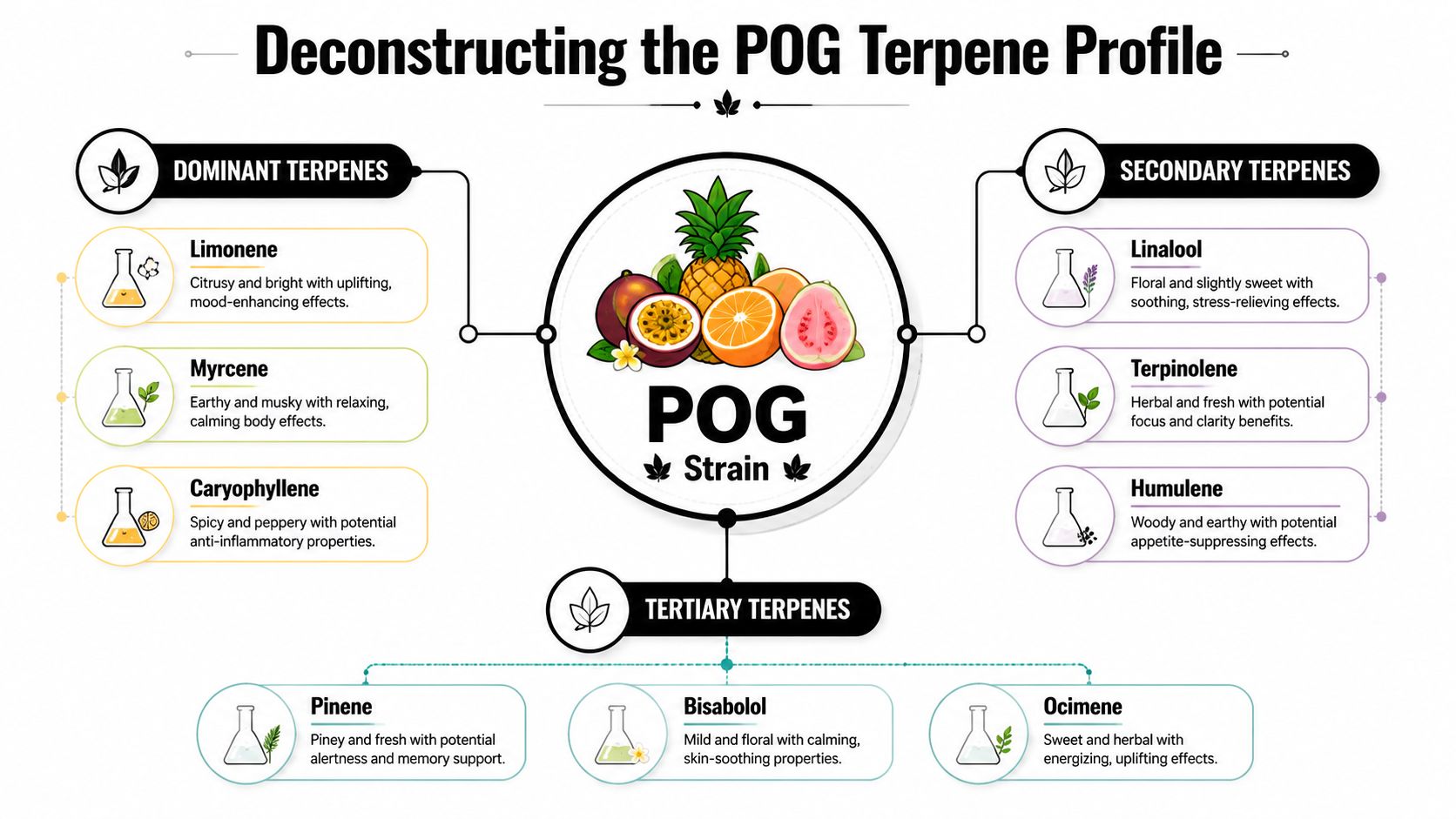
The chemistry is what makes POG useful for formulation. Independent strain coverage places the profile at limonene 0.6%–1.2%, beta-caryophyllene 0.3%–0.8%, and myrcene 0.3%–1.0%, with total terpene content in high-quality flower ranging from 1.5%–3.2% GrowDiaries. That combination gives you a citrus-heavy front end, a fruit-body middle, and a grounding finish that can be translated into a commercial vape blend.
The big three and what each one does
| Terpene | Typical Range | Aromatic Contribution |
|---|---|---|
| Limonene | 0.6%–1.2% | Bright citrus, orange peel, top-note lift |
| Myrcene | 0.3%–1.0% | Ripe fruit body, softens sharp edges |
| Beta-caryophyllene | 0.3%–0.8% | Spicy depth, structure, base-note support |
Limonene is the anchor. If that note is weak, the whole profile loses its POG identity. Myrcene matters because it keeps the citrus from becoming brittle, and beta-caryophyllene stops the blend from tasting hollow once it's heated and aerosolized. Together, they create a profile that reads as juice-like instead of perfumed.
How to think about note structure
In formulation language, limonene sits in the top note, myrcene works as the mid note, and beta-caryophyllene functions as the base note. That hierarchy matters because vape cartridges don't present flavor the same way flower does. Heat accelerates perception, and the ingredients you choose have to survive that delivery path without collapsing into a single flat citrus burst.
A second guide describes POG as overwhelmingly limonene-forward, with myrcene and beta-caryophyllene as important secondary notes, and says successful replication should prioritize a high-quality dominant citrus component Joint Commerce. That's the right starting point for a commercial build, because it tells you where to spend your blend budget first.
Replicating the POG Flavor Signature
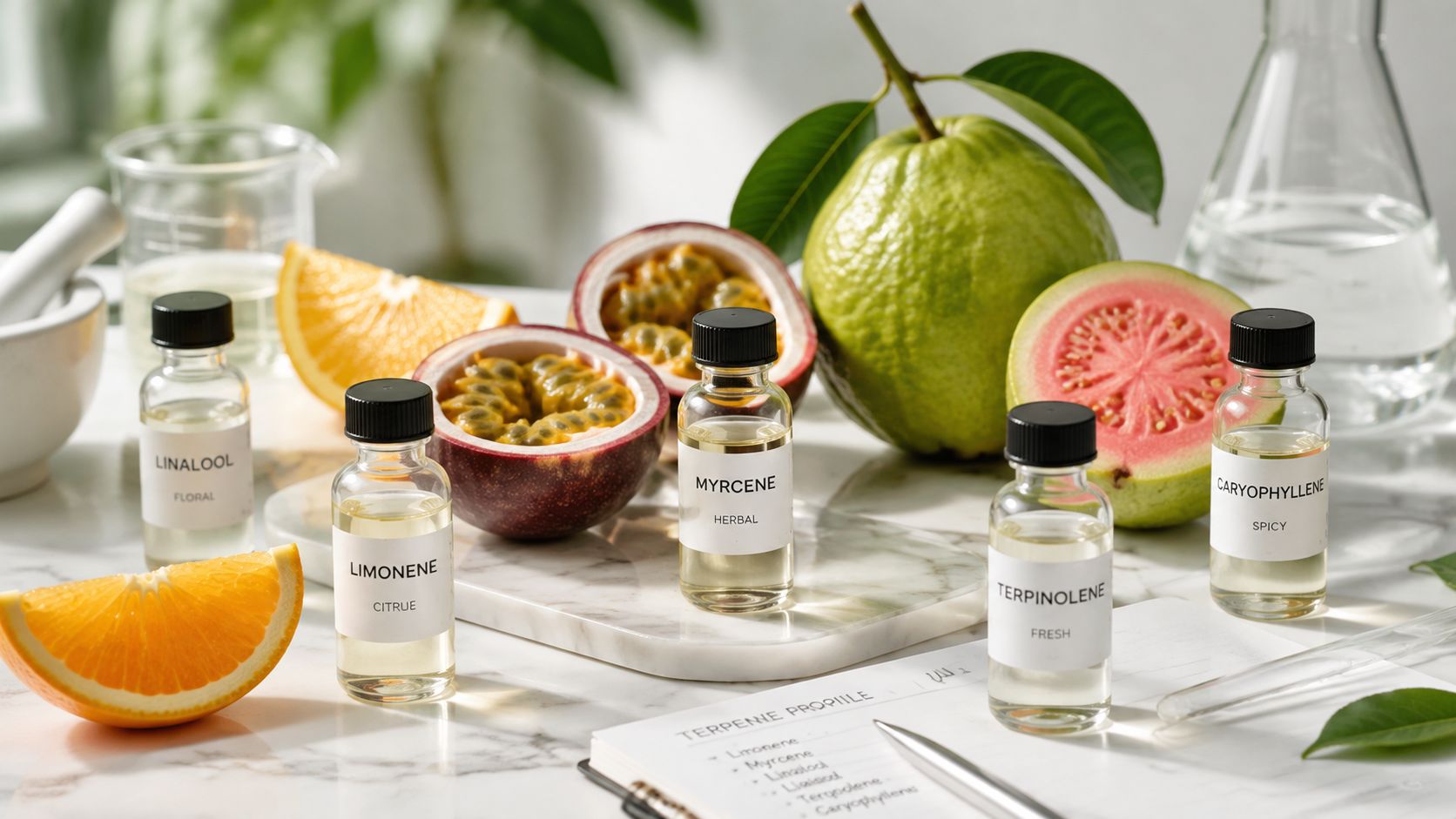
A solid POG replication starts with citrus, but it shouldn't stop there. The mistake I see most often is overbuilding the orange note and calling it tropical. That produces something bright, but not something recognizably POG. The better route is to create a limonene-led backbone, then shape the middle and finish so the profile feels layered instead of loud.
Build the profile from the top down
Start with a dominant limonene component. That establishes the orange peel lift and gives the blend immediate recognition. Then bring in myrcene to add a softer fruit body, which keeps the citrus from reading as thin or overly sharp. Finish with beta-caryophyllene so the blend has a grounded tail that still feels compatible with a premium cartridge.
After that, test the profile on hardware, not just in a jar. A blend can smell complete at room temperature and still fall apart once heat opens the volatile fraction. The final vape should present a clear citrus burst first, then a broader tropical fruit body, then a cleaner finish that doesn't linger as a harsh botanical aftertaste.
Minor notes still matter
Even when a strain guide highlights three core terpenes, the nuance often comes from small supporting notes. A tiny amount of floral or green lift can make the profile feel more authentic, especially if your goal is a smoother, less candy-like result. The trick is restraint. Too much supporting detail turns the cartridge muddy, and the customer just reads it as generic fruit oil.
For comparison work, it helps to examine other citrus-forward references such as Orange Creamsicle. That kind of side-by-side evaluation makes it easier to separate bright citrus structure from creamy sweetness, which is where many POG-inspired blends get better with one adjustment instead of five.
The goal is consistency, not novelty. If the blend tastes exciting but shifts too much from cartridge to cartridge, the formula isn't ready. A commercial POG profile should feel recognizable at first inhale, stable through the middle of the fill, and still clean at the end of a tank.
Formulation Guide for Vape Cartridges
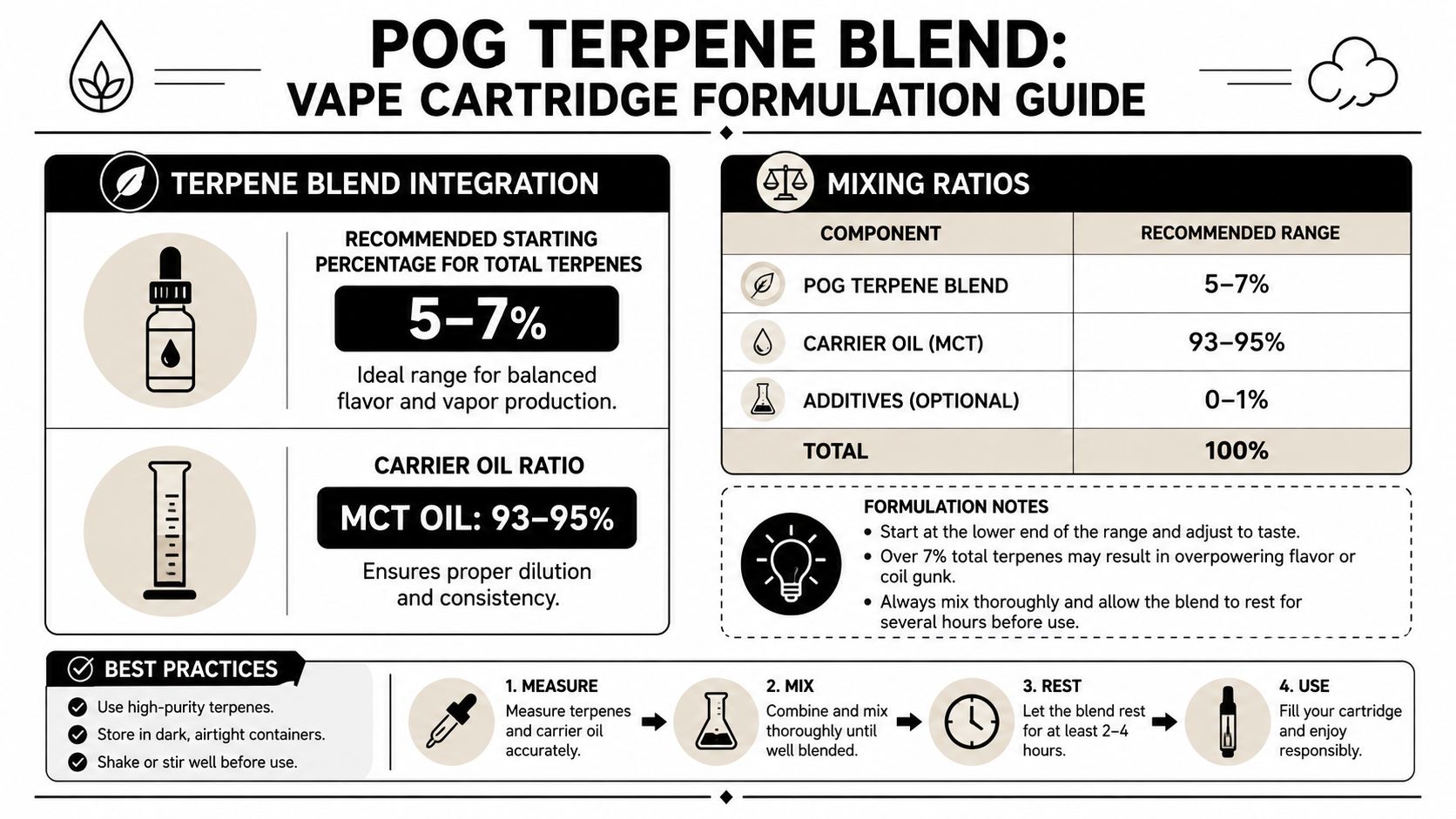
A POG-inspired cart has to work in real oil, real hardware, and real storage conditions. The numbers only matter if the blend stays homogenous, hits clean, and doesn't scorch out the citrus on the first warm cycle. For that reason, many formulators start in the 5% to 7% total terpene range, then adjust by base oil, viscosity, and device behavior.
Start with the base oil, then add the blend
For THC, CBD, or delta-8 distillate systems, begin with a small pilot batch and fold the terpene blend into warmed oil slowly. Mixing by volume alone isn't enough, because viscosity varies a lot across inputs and winterized oils behave differently from thinner distillates. The main objective is a uniform solution, not just a container that looks mixed at the top.
Avoid relying on PG, VG, or MCT oil if the goal is a clean terpene-driven flavor profile. Those diluents can interfere with flavor purity and drift away from the premium sensory standard most cart brands want. Gold Coast Terpenes supplies THC-free terpene blends and isolates that are free of VG, PG, PEG, and MCT, which makes them a straightforward option when you want flavor without a carrier-oil compromise.
Manage heat and viscosity carefully
Terpenes are sensitive to heat, so the mix-up stage should stay controlled. Too much heat can strip the brighter citrus notes and leave you with a flatter finish than you planned for. If the oil is too thick to blend cleanly, warm it just enough to move, then let the terpene addition do the rest of the work.
Practical rule: if you need aggressive heat to make the blend move, the formulation is already outside the comfort zone for cartridge performance.
A simple workflow helps. Mix the terpene fraction first, add it to the base oil incrementally, and check homogeneity before filling hardware. That keeps flavor dispersion even and reduces the chance of one cart tasting citrus-heavy while another reads mostly base oil. For teams scaling multiple SKUs, that consistency is what protects margin and repeat orders.
Lab Testing and Safety Considerations
A cartridge formula isn't finished until it's tested. Third-party lab testing is the line between a promising batch and a commercial product that can ship with confidence. A solid testing workflow should verify terpene profile accuracy, confirm potency after blend integration, and screen for contaminants or residual solvents before anything goes to market. For a practical QC framework, see third-party lab testing guidance.
Match the target, then confirm the result
The first question is simple. Does the finished oil still resemble the intended POG profile after dilution and heat exposure? If limonene drops too far, the product loses its signature. If the base becomes dominant, the flavor stops reading as the strain-inspired target and starts reading as generic fruit oil.
The second question is consistency. One passing batch means little if the next fill drifts. That drift damages brand trust faster than a bad label because customers notice when a flavor name no longer matches the cart in their hand.
Safety is part of formulation, not an afterthought
Testing also protects the manufacturing side. Residual contaminants, handling errors, and unstable mixtures create avoidable risk, and none of that belongs in a product line built around a premium flavor story. If a brand wants repeatable retail performance, QC has to sit inside the formulation process, not after it.
A POG-style cart can carry a strong identity, but only if the profile stays stable from batch to batch. That's the standard that supports scale.
Marketing Insights for POG-Inspired Products
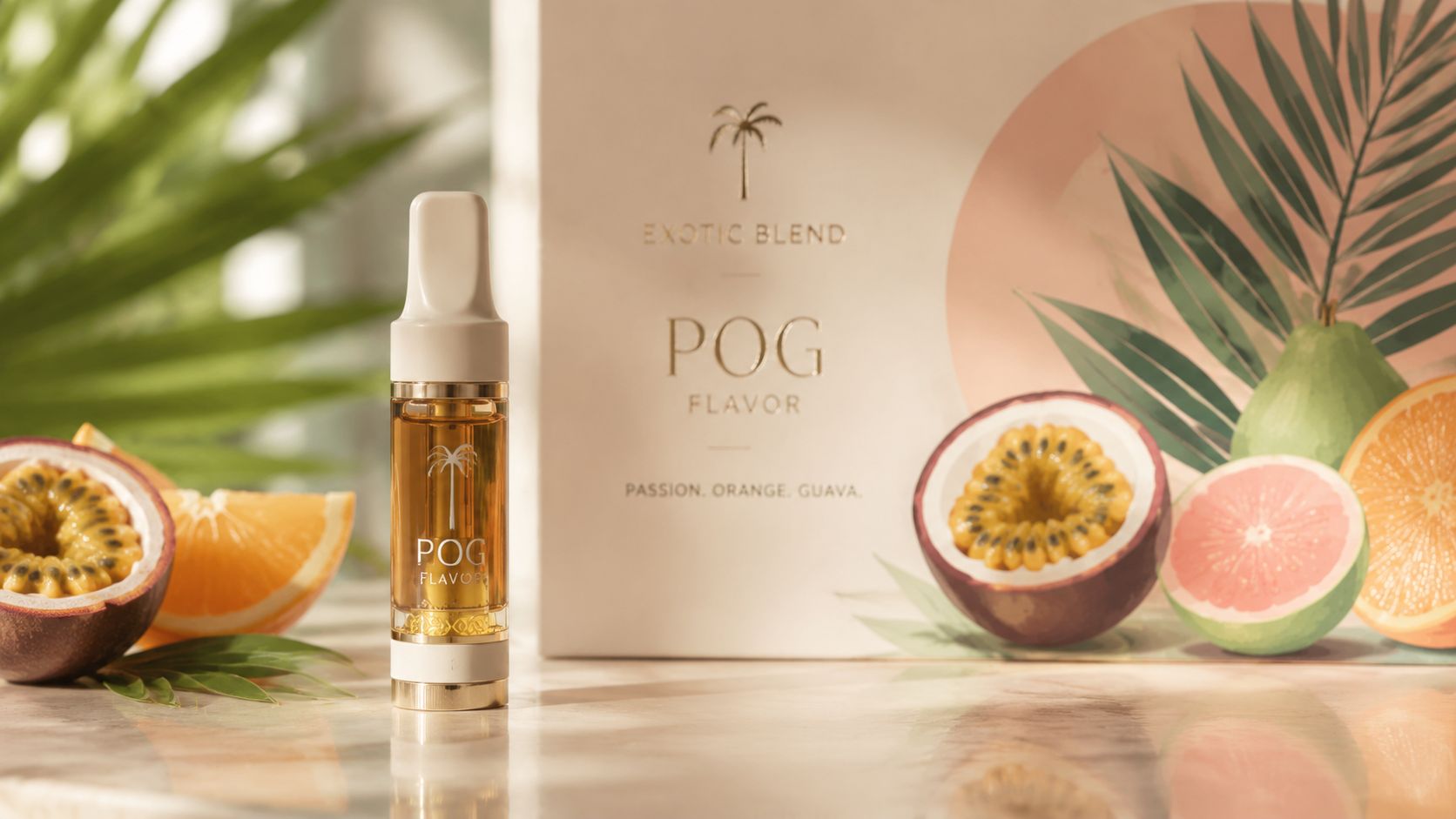
Once the formula is stable, the marketing message should be just as disciplined. A POG-inspired cart doesn't need exaggerated claims. It needs language that tells the buyer exactly what kind of flavor experience to expect, namely a bright tropical profile with citrus up front and a fruitier finish behind it.
Name the flavor like a product team, not a dispensary menu
Good naming keeps the terpene story intact. Terms like tropical citrus, orange guava, or fruit-forward citrus communicate the profile without overpromising exotic complexity that the cartridge can't deliver. That helps wholesalers, retailers, and buyers understand where the SKU belongs in the lineup.
The best commercial angle is clarity. If the customer likes bright fruit profiles, the product should read that way in the name, on the packaging, and in the shelf description. If the formula leans heavier into citrus, say so. If it's rounder and softer, say that instead.
Use the profile to define the audience
POG-inspired products are a natural fit for brands building around flavor-first buyers who want something distinct from gas-heavy or dessert-heavy carts. That doesn't mean the product has to sound playful. It means the messaging should be vivid, specific, and easy to repeat across menus, menus pages, and wholesale sheets.
For teams developing multiple SKUs, keep the story consistent. The same profile can appear as a cart, a disposable, or a distillate adjunct as long as the flavor language stays aligned. That's how a strain-inspired line starts to feel like a real program instead of a one-off release.
The formulation work matters most because it gives the marketing team a story they can stand behind. When the flavor is stable, the naming gets easier, the rep pitch gets cleaner, and the reorder conversation gets simpler.
Gold Coast Terpenes supplies strain-specific terpene profiles, isolates, and formulation tools that fit POG-style cartridge development, including citrus-led and fruit-forward blends. If you're building a Passion Orange Guava-inspired SKU or refining a tropical vape line, visit Gold Coast Terpenes to compare profiles, review formulation resources, and source components that are designed for consistent commercial use.