
You're staring at a bench of distillate, a terpene rack, and a brief that says “make it taste like Cocoa Puffs.” The problem isn't just sweetness, it's making the profile read as chocolate, cream, cereal, and soft funk without turning the cart muddy or one-dimensional. That's where a Cocoa Puffs strain formulation guide for vape carts earns its keep, because the strain's commercial value sits in the gap between nostalgic branding and a much more nuanced chemical profile.
The Commercial Case for Replicating Dessert Strains
Dessert-driven cannabis still sells because buyers can understand the flavor promise immediately. Cocoa Puffs is a useful target for formulation work because the name suggests a familiar chocolate-cereal profile, while the actual use case is usually more restrained, with references pointing to calm focus and evening use rather than a literal sugar rush AllBud. That gap matters in product development. It lets a brand present something familiar on the shelf while still building to a terpene-led experience that behaves more like a crafted aromatic product than a candy flavor.
Where the money is won or lost
A lot of dessert profiles fail because they stop at “sweet.” That can work for a first sniff, but it is weak in a vape cartridge, where the top note opens fast and the mid and base notes decide whether the product feels deliberate or generic. Cocoa Puffs is a stronger commercial target because the market already accepts that the name and the effect do not have to match perfectly. Independent strain references place the strain in a potency band of about 18% to 24% THC, with CBD reports that vary across listings, which reinforces that this is not a single fixed consumer experience Joint Commerce AllBud.
Practical rule: if the brand story is dessert nostalgia, the formulation still has to perform like a serious aromatic product, not candy flavoring.
The opportunity is precision. Brands that get the balance right can position the SKU as flavor-forward without promising an exaggerated sensory effect. That matters in vapes and distillates, because consumers judge these products in seconds. If the first pull does not read cleanly, the packaging will not save it.
Why Cocoa Puffs is harder than it looks
Cocoa Puffs is commercially interesting because it is not a standardized chemovar in the wild. The same name can show variation in potency reporting, and that means the formulator cannot depend on a single universal sensory outcome AllBud. In practice, that pushes you toward a strain-inspired terpene blend instead of a rigid “exact match” fantasy.
For product development, that is a good thing. The goal is a repeatable commercial profile, not a museum-grade botanical clone. The strongest results usually come from building a profile that carries dessert appeal, then tightening the edges so it behaves well in a cartridge base. For a practical framework on aroma structure, the terpene guides on top, mid, and base notes are useful when you are mapping the flavor into a format that has to hold up in use.
Deconstructing the Cocoa Puffs Sensory Profile
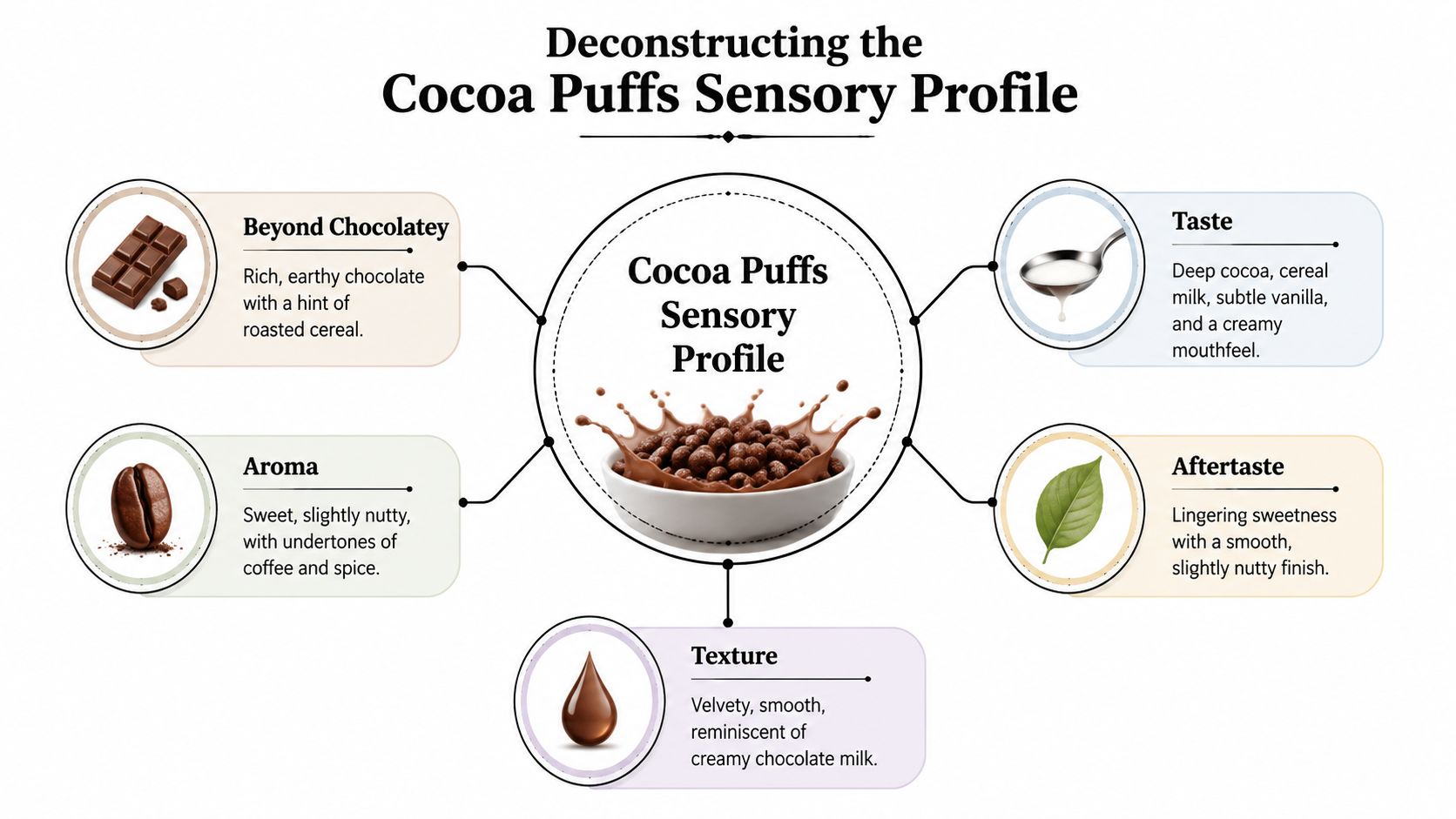
A formulator who starts with “just make it chocolatey” usually ends up with a flat oil. Cocoa Puffs works better as a layered stack, where chocolate, cream, berry, and coffee cues sit on top of back-end notes that can tilt gassy, minty, rubbery, or floral Joint Commerce. That structure changes how you build the blend, because each layer asks for a different terpene move.
The flavor map a developer should actually build
Start with the opening impression. In a vape cart, the first pull has to read like a sweet chocolate-cereal idea right away, which means keeping the most volatile terpenes under control so they support the profile instead of taking it over. The middle carries the creamy cocoa and coffee impression, and the base keeps the blend from collapsing into sugar-water. Without that lower structure, the oil can feel bright on one draw and thin on the next.
Cocoa Puffs also gives a formulator room to choose a direction. One expression can skew more chocolate cream, while another phenotype or market listing can drift toward gas or mint Joint Commerce. That is useful in product development, because it lets the brand decide whether the final SKU should read more confectionary, more kushy, or more balanced. The right call depends on the category, the hardware, and how much sweetness the base oil can carry before it starts to feel forced.
Why the dessert cue needs restraint
Cereal branding is powerful, but too much sweetness makes the oil feel artificial after a few draws. The better approach is to let the dessert cue come from how the notes interact, not from one loud ingredient pushing the blend off balance. That keeps the cart readable and still gives it a premium finish.
The strongest Cocoa Puffs-style oils do not taste like cereal syrup. They taste like a chocolate-forward blend with enough cream, spice, and structure to stay interesting through the full draw.
For aroma and flavor structure, the tasting notes guide is a practical reference when you need to separate top-note sparkle from deeper baked and earthy tones. If the blend reads too sugary in the first moment, the rest of the profile loses its balance. If it reads too earthy, the dessert cue disappears. The target is the middle ground, where the cereal reference stays recognizable and the oil still behaves like a serious commercial product.
Identifying the Core Terpene Signature
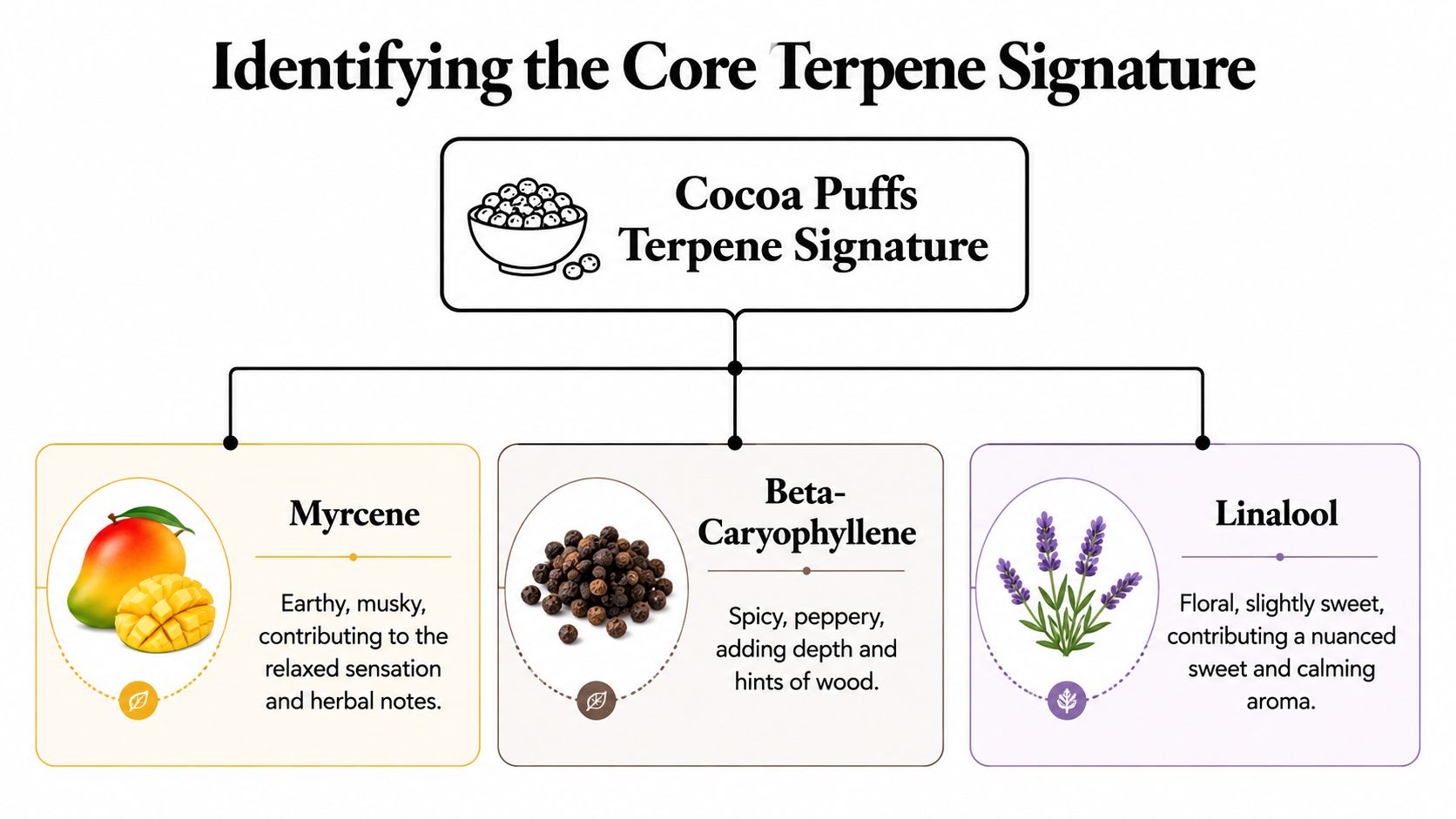
A formulation team trying to recreate Cocoa Puffs should start with the terpene stack that repeatedly shows up in chocolate-leaning cannabis profiles, Myrcene, Caryophyllene, and Limonene. That combination gives you the core structure for a vape-ready replica. Myrcene supplies the grounding layer, Caryophyllene adds warmth and spice, and Limonene keeps the profile from collapsing into something heavy or flat.
How the three main notes work together
Myrcene is the base. In a dessert profile, it helps build the earthy, musky softness that keeps chocolate from tasting thin. Caryophyllene sits in the middle and carries peppery warmth with a faint wood tone, which reads as depth instead of simple sweetness. Limonene sits on top. Used carefully, it gives the blend a cleaner opening and helps the cereal cue stay recognizable without pushing the oil into candy territory.
That hierarchy matters in cartridge work because each terpene evaporates and presents differently under heat. The top note should register on the first pull, but it cannot overpower the body of the blend. The mid note needs enough weight to hold up during repeated heating. The base note needs enough persistence to stay present after several draws. Cocoa Puffs works only when those roles are balanced, not stacked without control.
Why a small floral accent helps
Some chocolate-forward strain references carry a slight floral edge, and a light Linalool addition can help with that kind of finish. It should stay in the background. Its job is to round the sweetness and smooth the transition from chocolate to cream, which can make the finished cart feel more polished. In commercial blending, that kind of softening often matters more than adding another loud note.
For a closer comparison to other chocolate-leaning profiles, the chocolate cannabis strain archive is a useful reference when you are deciding how far to push cocoa versus cream. The main takeaway is straightforward. Cocoa Puffs is not built on one terpene. It depends on a three-part structure with supporting accents, and the ratio choices have to respect that.
A Starter Formulation for the Cocoa Puffs Profile
A useful starter blend should be strong enough to test, but flexible enough to tune. The goal isn't to hit a fantasy “exact match” on the first batch. The goal is to create a Cocoa Puffs strain-inspired terpene blend that behaves well in oil and gives your R&D team a reliable baseline for refinement.
Starter ratios to begin bench testing
| Terpene | Role | Suggested Ratio (%) |
|---|---|---|
| Myrcene | Base note, earthy body, softens the chocolate impression | 36 |
| Beta-Caryophyllene | Mid note, warm spice, adds structure and dryness | 24 |
| Limonene | Top note, bright lift, supports the cereal-sweet opening | 18 |
| Linalool | Softens the profile, adds a floral cream edge | 8 |
| Humulene | Earthy depth, keeps the blend from becoming sugary | 6 |
| Minor support terpenes | Fill out texture and adjust finish | 8 |
Use that table as a starting point, not a final recipe. If the oil reads too earthy, lower myrcene slightly and bring limonene up in small increments. If the cart tastes too bright or thin, move weight back into myrcene and caryophyllene. That kind of controlled adjustment is faster than rebuilding the blend from scratch.
What to test first
A bench sample should tell you three things quickly. First, whether the top note opens with chocolate-leaning sweetness instead of generic citrus. Second, whether the mid-palate feels creamy and slightly spiced. Third, whether the finish stays smooth rather than sharp. If the finish gets woody or dry too early, caryophyllene and humulene are probably too dominant.
Development note: a good starter blend is one you can explain to a production manager in one minute and tune in two more passes.
If you're scaling from lab to production, the mixing ratios calculator can help keep test batches consistent across small adjustments. That's where the commercial side gets real. One ratio can work in a pilot cart and fail in a larger tank if the oil base changes. A disciplined starting formula makes those changes easier to diagnose.
Application Guidance for Distillate and Concentrates
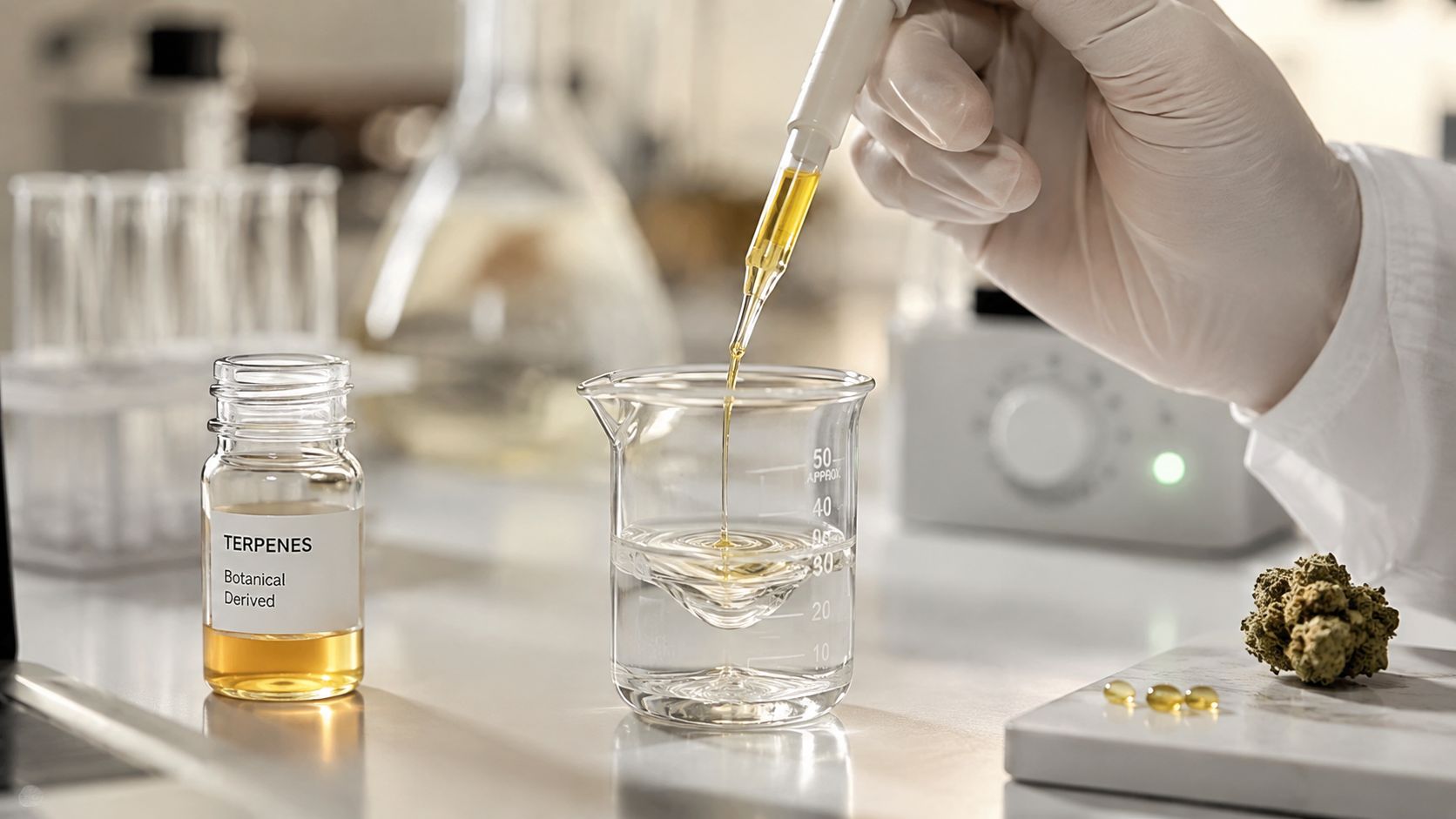
The blend only matters if it goes into oil cleanly. For terpenes for distillate, the biggest mistakes are overheating, under-mixing, and assuming every base behaves the same. Winterized oil, refined distillate, and less processed concentrates all carry aroma differently, so the starting material changes how the Cocoa Puffs profile presents in the final cart.
Mixing conditions that protect the profile
Keep the blend warm enough to move, but not so hot that you flatten the top notes. Terpenes are volatile, and they don't reward sloppy heat management. Use a magnetic stirrer for small batches or an overhead mixer for larger ones, and don't rush the homogenization step. A smooth blend should look uniform before it ever reaches a cartridge fill line.
The original Cocoa Puffs genetics from Hazeman Seeds, listed as Darwoh 2.5 Chocolate Thai × Chocolat Trip, are described as a tall plant with high yield potential, which suggests a sturdy structure for careful extraction and formulation work SeedFinder. That matters commercially because sturdy, resinous material usually gives formulators more room to preserve character through processing. It still needs controlled handling, though. Strong genetics don't rescue a bad mix.
Practical rule: if the base oil is too thick, don't fix it by dumping in more terpenes. Fix the process first.
What happens in different bases
A cleaner distillate will usually show the Cocoa Puffs profile more clearly because it doesn't bring as much competing flavor noise. A heavier concentrate can add body, but it can also dull the chocolate and cream cues if the starting material is already earthy. That's why early bench work should include side-by-side tests, not a single guess-and-go batch.
A formulation team can also use the terpene product pages as a sourcing reference when comparing isolates and strain-inspired blends. For this profile, the practical goal is homogeneity first, flavor accuracy second, and vapor performance third. If those three don't align, the cart won't feel commercially ready.
Ensuring Stability and Regulatory Compliance
A good flavor profile can still fail if the product isn't stable. Vape formulations need clean inputs, documented ratios, and a COA trail that proves what went into the batch and what came out of it. That's not paperwork for its own sake. It's how brands protect consistency, especially when a Cocoa Puffs-inspired SKU has to taste the same across runs.
What the final product needs to prove
Use terpene inputs that are lab-verified and free of VG, PG, PEG, and MCT. Those carriers don't belong in a precise strain-inspired vape profile, and they complicate both formulation logic and customer trust. The final oil should also be tested by a third party so potency and purity can be checked against the production record.
Documentation matters as much as the blend itself. A batch sheet should show the terpene lot, the ratio used, and the final fill date. If a cartridge comes back with a flavor defect, that paper trail is what lets a manufacturer isolate the problem quickly instead of guessing. The brand's reputation depends on that discipline.
Compliance is part of the formulation work
A formulation that tastes right but can't be defended on paper is incomplete. The regulatory compliance checklist is a practical reference when you're setting up internal QA, especially if your team is moving from R&D into production. It helps keep the process consistent before the product ever leaves the room.
For teams using structured sourcing, Gold Coast Terpenes offers lab-verified, THC-free terpene components that are free of VG, PG, PEG, and MCT, which can simplify the input side of the process. The point isn't branding. The point is reducing variability at the source. If the input is consistent, the blending decision gets easier.
Frequently Asked Formulation Questions
How do I make the blend more creamy or less earthy
Push the profile toward the middle and top notes. A little more limonene can brighten the opening, while a measured linalool addition can soften the edges and make the cocoa impression feel smoother. If the blend still feels too soil-like, reduce myrcene in small steps, not all at once.
What should I do if the cart tastes sharp after filling
That usually means the blend needs time to integrate, or the top note is too aggressive. Let the filled oil rest and re-test before changing the recipe. If the sharpness stays, the issue is often ratio balance rather than the base oil itself. In that case, trim the limonene first and evaluate again.
Can this profile work outside vape cartridges
Yes, but the use case changes the priorities. In concentrates, the same Cocoa Puffs-inspired structure can support flavor-forward dab products or infused formulations, but the balance between top and base notes may need to shift because different delivery methods reveal different parts of the blend. The same logic applies to terpenes for cannabis product formulation more broadly. You're not copying a flower sample. You're designing a sensory outcome for a delivery format.
How long should terpene-infused distillate steep before QA
Long enough for the oil to become uniform and for the flavor to settle, then you test it. Don't use time alone as the decision-maker. Check consistency, aroma, and fill behavior. If the batch is still separating or the aroma is uneven, it's not ready.
What's the fastest way to troubleshoot a weak Cocoa Puffs style profile
Compare the blend against the three core notes. If it lacks dessert character, the top note is too dull. If it lacks body, the base is too light. If it reads like a generic sweet cart, you've probably overcorrected and lost the spice and earth that make the profile feel real.
Gold Coast Terpenes works with strain terpene profiles, isolates, and formulation tools for cartridge and concentrate development, so it fits this kind of project from bench test to production run. If you're building a Cocoa Puffs-inspired SKU, visit Gold Coast Terpenes to review terpene options, formulation resources, and batch tools that can help you dial in the flavor with more control.