
The consumer shorthand "indica for anxiety" is a useful marketing concept, but for product formulators, it lacks the scientific precision required for creating effective, replicable products. The calming effects consumers associate with "indica" cultivars are driven by specific terpene and cannabinoid profiles, not botanical lineage. Relying on outdated classifications hinders product innovation, consistency, and efficacy.
Moving Beyond Cultivar Myths in Product Formulation
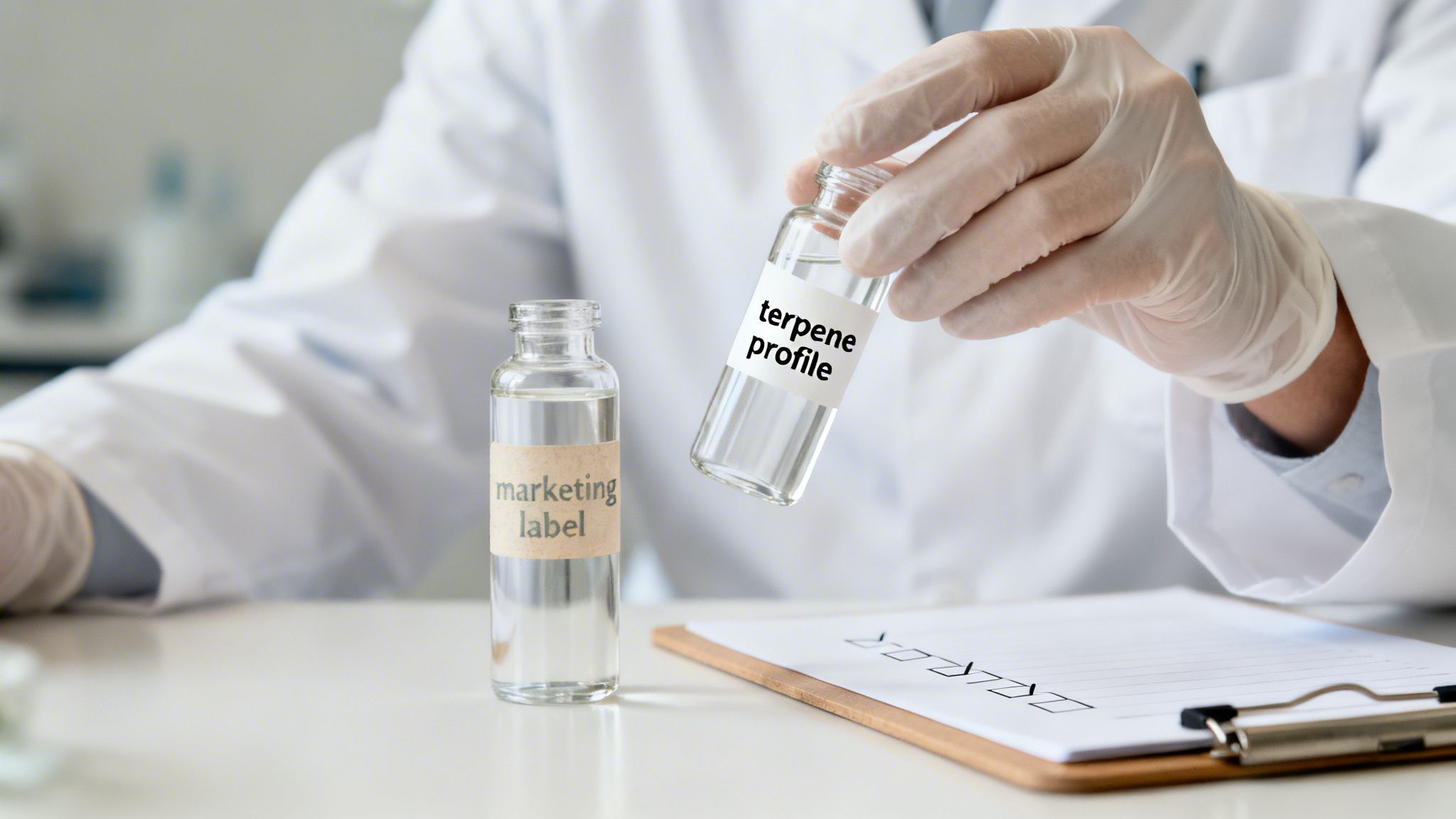
For brands aiming to develop reliable, high-performance products, the "indica" narrative presents a significant formulation challenge. It oversimplifies complex phytochemistry and is often responsible for batch-to-batch inconsistency that erodes consumer trust.
The determining factor for a product's effect is its molecular profile—the precise combination and ratio of active compounds. This profile dictates the sensory and functional characteristics of the final product, not the plant's morphology. Adopting a formulation-centric approach is therefore critical. The focus must shift from broad, often inaccurate botanical labels to the specific ingredients that engineer the desired outcome.
Shifting Focus to Formulation Science
The objective is to deconstruct the consumer's expectation of an "indica" experience and then reconstruct it from the ground up using precise, isolated compounds. This chemical engineering approach offers distinct commercial advantages:
- Consistency: Replicating a terpene profile with analytical precision guarantees that every product batch delivers an identical end-user experience. This eliminates variability and builds brand reliability.
- Control: Formulators can precisely modulate terpene ratios to develop unique, proprietary blends that serve as powerful market differentiators.
- Accuracy: Marketing claims can be substantiated with verifiable formulation data, building credibility with an increasingly sophisticated consumer base.
For product developers, the operative question is not, "Is this an indica strain?" but rather, "Does this chemical profile contain the necessary compounds, such as Myrcene, Linalool, and Beta-Caryophyllene, to achieve a calming effect?"
This represents a fundamental shift from reliance on botanical folklore to a methodology grounded in empirical data.
Traditional Belief vs. Formulation Science
| Concept | Consumer Assumption (The Myth) | Formulator's Reality (The Science) |
|---|---|---|
| Source of Effects | The "indica" plant type is inherently relaxing. | A specific blend of terpenes and cannabinoids creates the effect. |
| Product Consistency | If it's labeled "indica," it will always be calming. | Effects vary significantly between batches without chemical analysis and formulation control. |
| Formulation Goal | Source popular "indica" strains. | Isolate and blend specific compounds to engineer a target effect. |
| Marketing Language | "Relaxing Indica Blend" | "Formulated with Linalool & Myrcene for a calming experience." |
This table illustrates the gap between consumer-facing marketing and the meticulous science required for effective product development.
Ultimately, the limitations of the indica vs. sativa debate are well-established within the industry. To build a successful brand, formulators must move beyond these legacy terms. By focusing on the chemical building blocks, you can create superior products that consistently deliver on their functional promise.
The Science of Calming Terpene Profiles
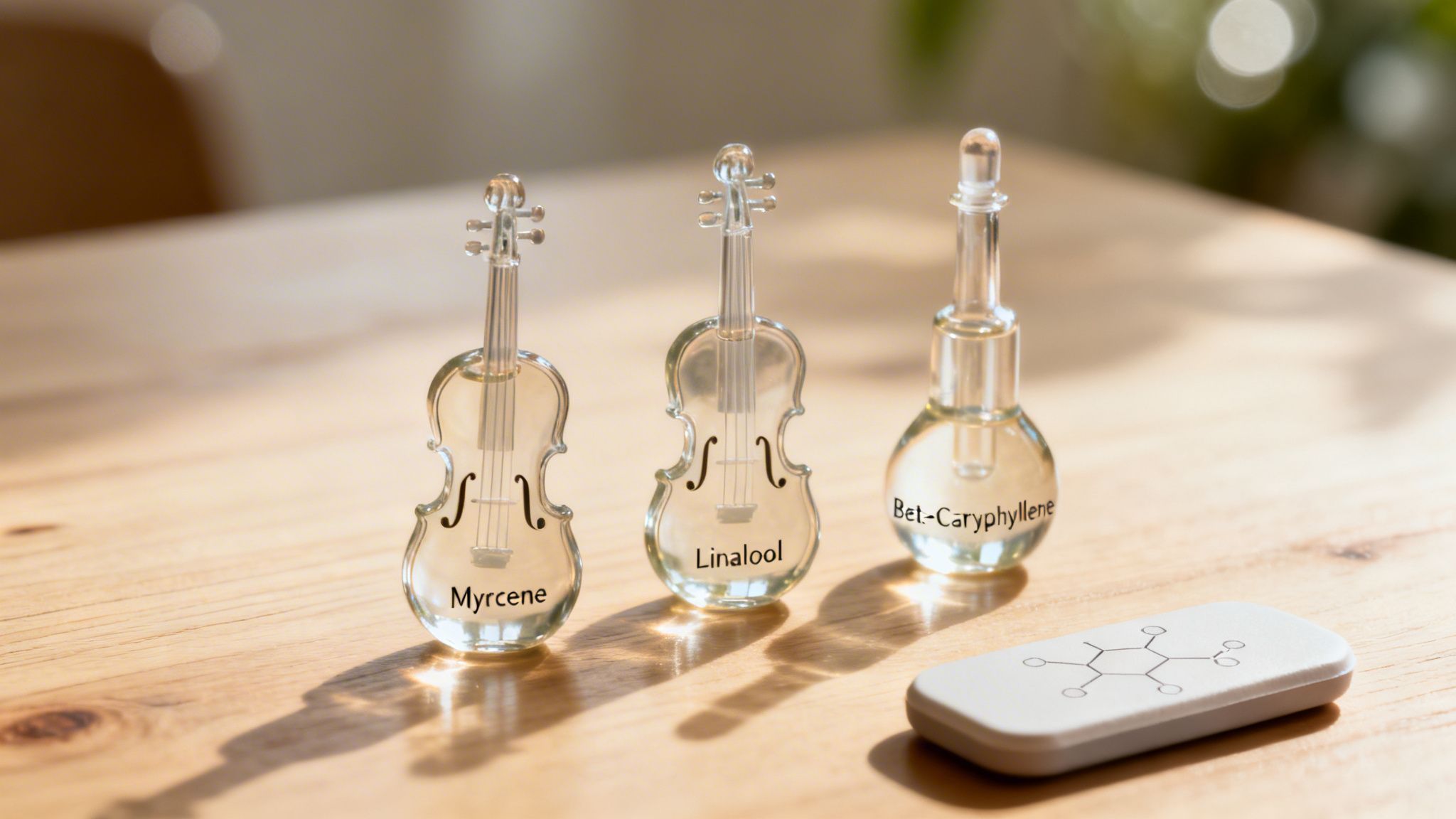
To engineer a product that meets the expectations of the "indica for anxiety" consumer, formulators must analyze the molecular composition, not the botanical label. The deeply relaxing effects consumers seek are not inherent to a plant's lineage but are the result of specific combinations of aromatic compounds known as terpenes.
Terpenes are the primary architects of a product's nuanced effects. While cannabinoids like CBD may establish the foundational therapeutic canvas, terpenes are the individual instruments that create the rich, targeted sensory and physiological experience. For a formulator, this is the practical application of the entourage effect.
The True Drivers of Calming Effects
A functional understanding of these aromatic molecules is essential for creating reliable and repeatable formulations. For anxiolytic blends, three terpenes consistently form the foundational core: Myrcene, Linalool, and Beta-Caryophyllene. Each interacts with physiological systems in distinct ways to produce calming outcomes.
Myrcene: Often the most abundant terpene in relaxing profiles, Myrcene provides a heavy, earthy, and musky aroma. It functions as a powerful base note and is associated with sedative qualities that promote physical relaxation.
Linalool: Known for its floral, lavender-like aroma, Linalool acts as a mid-note and is strongly associated with stress reduction. It contributes a sense of tranquility and mental calm to a formulation.
Beta-Caryophyllene: This spicy, peppery base note is unique in that it also functions as a cannabinoid by directly engaging CB2 receptors. This allows it to help soothe physical tension and discomfort, often without inducing significant sedation.
Mastering the blend of these compounds allows formulators to move beyond simple strain replication and begin engineering novel experiences with predictable, targeted effects.
The key takeaway for formulators is to cease chasing the "indica" classification and instead focus on blending with scientific purpose. The objective is to construct a specific terpene profile that delivers a consistent calming sensation in every batch.
Combining Terpenes with Cannabinoids
This terpene-first formulation strategy is amplified when combined with cannabinoids like CBD. While terpenes modulate the sensory experience and nuanced effects, a cannabinoid like CBD provides a potent, non-intoxicating foundation for anxiolytic products.
By infusing high-quality CBD distillates with precisely crafted terpene blends—particularly those rich in Myrcene, Linalool, and Beta-Caryophyllene—formulators can create superior vape cartridges and other products that leverage the entourage effect to its fullest potential. Understanding the distinct roles of key isolates is critical for designing sophisticated and effective formulations. Exploring the unique properties of an isolate like the versatile Linalool terpene can open up new avenues for your calming product lines.
Key Terpenes for Anxiolytic Formulations
To move beyond the outdated "indica for anxiety" model, formulation must occur at the molecular level. The focus is on specific terpenes that consistently contribute to a state of calm. These aromatic compounds are the building blocks of an effective anxiolytic blend, with each contributing a unique aromatic profile and functional benefit.
The process is analogous to perfumery, where top, middle, and base notes are layered to create a complex, evolving aromatic experience. In formulation, terpenes are selected and combined to produce a desired sensory journey and functional outcome. The balance of these notes is critical to the final product's success.
Myrcene: The Sedative Base Note
Myrcene is the cornerstone for creating the classic, heavy-bodied relaxation effect consumers associate with "indica" cultivars. Its earthy, musky aroma serves as a powerful base note in any calming formulation. Functionally, it is known for its deeply relaxing and sedative properties, anchoring the entire experience and promoting physical ease.
In formulation, Myrcene is typically the dominant terpene in blends designed for evening use or for targeting significant stress. Increasing its concentration can amplify the product's calming nature, but care must be taken to avoid an excessive "couch-lock" effect if that is not the intended outcome. For vape formulations, a precise percentage of a pure Myrcene isolate can establish the foundational relaxation that defines traditional "indica-leaning" profiles.
Linalool: The Calming Mid Note
Linalool, with its characteristic delicate, floral aroma reminiscent of lavender, is an ideal mid note for anxiolytic blends. Its aroma is culturally associated with tranquility. Functionally, Linalool is excellent for mitigating mental overactivity and promoting a sense of peace without the pronounced physical sedation of Myrcene.
The inclusion of Linalool adds an element of sophistication to a formula. It can soften the harsher, earthier notes of other terpenes and contributes to a more pleasant, well-rounded flavor profile, enhancing the overall user experience.
Beta-Caryophyllene: The Soothing Base Note
Beta-Caryophyllene serves a dual role in formulation. As a base note, its spicy, peppery aroma adds warmth and complexity to a blend. Its unique functionality stems from its classification as a sesquiterpene that also acts as a cannabinoid, directly interacting with CB2 receptors within the endocannabinoid system.
This unique interaction helps ease the physical tension and discomfort that often accompany mental stress. For a formulator, Beta-Caryophyllene adds a body-centric calming effect without inducing drowsiness, making it highly suitable for daytime formulations or for users who require relief while maintaining focus. A high-quality Beta-Caryophyllene isolate is an exceptionally versatile tool in a formulator's kit.
The art of formulation lies in achieving synergy. A blend might open with the gentle calm of Linalool, transition into the deep body relaxation from Myrcene, while Beta-Caryophyllene works in the background to alleviate physical stress.
The following table provides a quick-reference guide for these core terpenes in the context of formulation.
Core Terpenes for Anxiolytic Formulations
| Terpene | Aromatic Note (Top/Mid/Base) | Primary Functional Effect | Commonly Found In |
|---|---|---|---|
| Myrcene | Base | Sedative, Relaxing | Granddaddy Purple, OG Kush |
| Linalool | Mid | Calming, Stress-Reducing | Lavender Kush, Amnesia Haze |
| Beta-Caryophyllene | Base | Soothing, Anti-inflammatory | GSC, Sour Diesel |
By mastering the properties of these core terpenes, formulators can transcend strain replication and begin creating novel, superior products. This scientific approach enables the development of targeted formulations that deliver predictable, consistent results.
How to Formulate an Indica-Inspired Vape Cartridge for Distillate
Moving from theory to application, we'll outline the process of developing a premium vape cartridge that delivers a reliable calming effect. This is a matter of precise chemical engineering, requiring high-quality inputs and a clear definition of the target user experience. You are not merely mixing oils; you are constructing a molecular experience.
This section details two approaches: replicating a classic calming strain profile and designing a novel anxiolytic blend from scratch. Both methodologies prioritize safety, efficacy, and the end-user experience, moving beyond the simplistic "indica for anxiety" concept into targeted, intelligent formulation.
Foundational Principles for Vape Formulation
Before developing specific recipes, it's critical to establish foundational best practices that distinguish premium brands.
- Start with Low Concentrations: During R&D, always begin with a low terpene percentage, typically 4% to 6% by weight. This conserves costly raw materials, prevents the final product from being overly harsh, and allows for accurate sensory and functional evaluation before scaling.
- Use High-Quality Distillate: The quality of the final product is contingent on the quality of the base. A clean, potent, and properly winterized distillate is essential for ensuring formula stability and preventing separation or crystallization.
- Prioritize Lab-Tested Terpenes: Never use terpenes that are not accompanied by a Certificate of Analysis (CoA). A CoA verifies purity and confirms the absence of contaminants and harmful diluents like VG, PG, or Vitamin E acetate.
The graphic below illustrates the three botanical sources that form the backbone of most calming formulations.
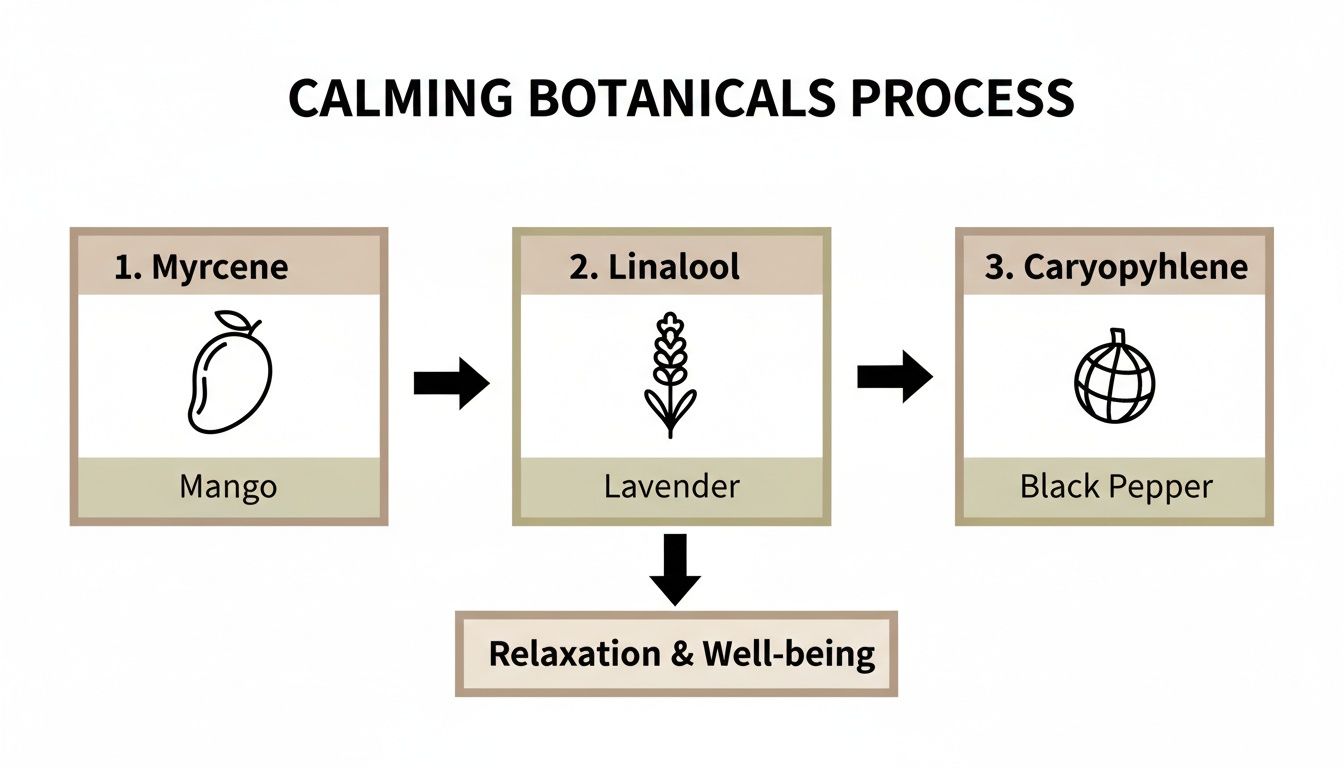
A thorough understanding of the functional contributions of Myrcene, Linalool, and Caryophyllene is the first step toward creating a sophisticated anxiolytic blend.
Example 1: Replicating a Strain-Inspired Terpene Blend
Let's construct a blend inspired by OG Kush, a cultivar known for its balanced, stress-reducing effects. The objective is to replicate its iconic aromatic and functional profile using a pre-blended, strain-specific terpene solution.
- Calculate Ratios: For a 100g batch of vape oil at a 5% terpene concentration, you will need 5g of the OG Kush terpene blend and 95g of cannabis distillate.
- Gentle Heating: Gently warm the distillate to approximately 100-120°F (40-50°C). This reduces viscosity, facilitating a homogenous mixture. This gentle heating also preserves the integrity of delicate cannabinoids and volatile terpenes.
- Combine and Mix: Slowly introduce the 5g of terpenes into the warmed distillate while stirring. Mix thoroughly but gently for several minutes until the solution is fully homogenized. A magnetic stirrer is recommended for this step.
- Settle and Syringe: Allow the mixture to cool and rest for a minimum of two hours. This allows any entrapped air bubbles to dissipate before filling cartridges.
Example 2: Building a Novel Anxiolytic Blend for Distillate
This example focuses on creating a custom formulation from individual terpene isolates to achieve a specific calming effect, enhanced with CBD for its anxiolytic properties.
The market for wellness products is expanding rapidly, and terpene-infused CBD formulations offer a significant competitive advantage. For precision, a terpene mixing calculator is an essential tool. It eliminates guesswork and ensures exact ratios for batch-to-batch consistency.
For a custom 6% terpene blend designed for anxiolytic effects, the isolate ratios might be structured as follows:
- Myrcene: 40% (for foundational body relaxation)
- Linalool: 30% (for mental calm and anxiolytic properties)
- Beta-Caryophyllene: 20% (for physical soothing via CB2 receptor interaction)
- Limonene: 10% (to introduce a subtle mood elevation and brightness)
The mixing procedure is similar to the first example. First, precisely measure and combine the individual isolates to create the custom terpene blend. Then, introduce this blend into the warmed distillate. This approach provides maximum control over the flavor, aroma, and functional effects of the final product.
To delve deeper into advanced techniques, review our comprehensive guides on vape formulation.
Capturing the Anxiety Relief Market Opportunity
Commercial success in the wellness sector requires the integration of formulation science with strategic market positioning. The significant demand for natural, effective anxiolytic solutions represents a substantial commercial opportunity for formulators capable of delivering consistent, high-quality products.
Today's consumers are more educated and demand transparency. They make purchasing decisions based on tangible benefits and specific ingredients, not on archaic classifications like "indica." This market evolution creates an opening for brands that prioritize customer education and establish technical authority.
From Vague Labels to Transparent Formulations
Instead of relying on the "indica for anxiety" trope, forward-thinking brands are marketing their products based on their chemical composition. They highlight key terpenes like Myrcene and Linalool on their packaging, explaining the functional rationale for their inclusion. This strategy builds consumer trust and differentiates a product in a saturated market.
This approach requires a commitment to quality and consistency, which begins with raw material sourcing. It is imperative to formulate with high-purity, strain-specific terpene blends and isolates from a reputable supplier. This is the only way to ensure batch-to-batch predictability and enable scalable production.
The brands that will dominate this market are those that educate their customers on the science of terpenes, empowering them to make informed choices. Transparency is a cornerstone of building lasting brand loyalty.
Meeting the Demand of the Wellness-Focused Consumer
The explosive growth of the CBD market is largely driven by consumer interest in its anxiolytic benefits, and the sector's value is forecasted to keep climbing. This trend coincides with a broader societal increase in reported anxiety levels.
For formulators, the path is clear. By integrating specific terpene blends into winterized distillates, you can potentiate the natural calming properties of cannabinoids like CBD through the entourage effect. This directly addresses a well-defined consumer need for pure, effective, and functional wellness solutions.
A science-first approach enables your brand to connect with this sophisticated, wellness-focused demographic. Delivering a product that is not only effective but also transparent about its formulation creates a powerful competitive advantage. For the technical insights needed to achieve this, our detailed formulation guides provide the necessary protocols.
Common Questions When Formulating for Anxiety
As you transition from concept to execution, several practical questions arise. Here are answers to common challenges formulators encounter when creating anxiolytic blends.
What's the Ideal Terpene Percentage for an Anxiety-Focused Vape Cartridge?
While there is no single universal percentage, a professional starting range is between 4% and 7% terpenes by total weight. This window typically provides an effective balance of flavor, aroma, and functional effect without being overwhelming.
For blends high in potent terpenes like Myrcene or Linalool, it is advisable to begin at the lower end of this range, around 4-5%. It is always easier to titrate up in subsequent test batches than to correct an overpowering formulation. Exceeding this range can lead to a harsh vapor and an unpleasant sensory experience, counteracting the intended calming effect. A terpene mixing calculator is an indispensable tool for ensuring accuracy and repeatability.
Can I Use "Sativa" Terpene Profiles in an Anti-Anxiety Formulation?
Yes. This question highlights the necessity of moving beyond outdated indica/sativa classifications. "Sativa-dominant" should be understood as a descriptor of a specific aromatic profile, not as a rigid determinant of effect.
Many terpenes commonly associated with "sativa" cultivars, such as the bright, citrusy Limonene, are excellent for mood elevation and stress reduction. Some of the most sophisticated anxiolytic blends pair a grounding terpene like Myrcene with an uplifting one like Limonene. The result is a balanced experience that calms the mind without inducing sedation, making it ideal for a daytime-use product. The guiding principle should be to select terpenes based on their documented functional properties, not their historical strain association.
How Do I Ensure Consistency in an Anxiolytic Blend From Batch to Batch?
Consistency is a hallmark of professional manufacturing and is achieved by controlling all process variables. It rests on three pillars: sourcing, measurement, and procedure.
To achieve unwavering product consistency, you must control every variable. This means starting with identical raw materials, measuring them with precision tools, and executing the exact same mixing procedure every single time.
First, quality sourcing is non-negotiable. Partner with a reliable supplier that provides pure, lab-tested terpenes with a Certificate of Analysis (CoA) for every batch. This ensures the consistency of your starting materials.
Second, precise measurement is critical. Use calibrated digital scales and appropriate laboratory equipment to eliminate measurement error. Even minor deviations in terpene ratios can alter the final profile.
Finally, document your process. Establish and adhere to Standard Operating Procedures (SOPs) for the entire mixing protocol. A documented, step-by-step workflow is the only way to guarantee that every batch is an exact replication of the last.
Ready to formulate with precision and consistency? Gold Coast Terpenes provides lab-verified, diluent-free terpene isolates and strain profiles to help you engineer the perfect anxiolytic blend. Explore our complete collection at https://www.goldcoastterpenes.com.