
Most advice on fruit works peach papaya treats the pairing as interchangeable tropical sweetness. That shortcut produces a bright opening, but it often leaves the cartridge flat, musky, or overly candy-like after the first part of the puff. A credible strain-inspired terpene blend for distillate needs peach to establish familiarity, papaya to add controlled tropical depth, and minor compounds to create the stone-fruit illusion that generic mango or citrus-heavy formulas miss.
The commercial opportunity is precise replication, not louder flavor. Peach and nectarines represent a major global fruit category, while papaya brings a more exotic identity with a different sensory risk profile. For formulators, the question isn't whether the fruits sound compatible. It's which aromatic structure will remain pleasant through the full vapor cycle, mix consistently into the base, and give a buyer a clear reason to choose the product.
Why Peach Papaya Is Not Just Another Tropical Blend
The popular assumption is that peach-papaya works because both fruits supply sweetness. That description misses the formulation problem. Peach has a recognizable stone-fruit direction, while papaya can introduce floral, caramelized, earthy, and musky impressions at the same time. If the papaya component dominates too early, the result may read as ripe tropical fruit with an off-note rather than as a polished peach-forward profile.
Consumer preference data supports a restrained use of papaya. Papaya sits in the 60th percentile of consumer affinity in Datassential flavor tracking, which indicates meaningful interest but not automatic mass appeal, as reported in the consumer preference discussion of tropical fruit positioning. Peach therefore has a practical commercial role: it carries familiarity and approachability while papaya supplies differentiation.
Familiarity should carry the first impression
A mainstream cartridge usually benefits from a peach-led opening. The top note should communicate ripe stone fruit quickly, then allow papaya to appear as a rounded tropical accent rather than a separate, competing fruit. This structure gives the product a recognizable identity without flattening it into a generic peach candy.
That positioning matters because buyers don't judge flavor in isolation. Peach purchasing research cited in the available consumer literature describes decisions shaped by flavor, sweetness, texture, color, and packaging, not flavor alone. In a cannabis product, the equivalent variables include the label promise, oil appearance, draw experience, aroma release, and whether the flavor remains coherent from the first puff to the last.
Practical rule: Let peach make the product understandable. Let papaya make it memorable.
For an adventurous or premium audience, you can raise the tropical complexity, but that doesn't mean pushing papaya as hard as possible. The better move is to increase aromatic lift and floral nuance while controlling the musty facet. A useful reference point for fruit-led terpene work is this guide to fruity terpene profiles, but the formulation still needs to be judged in the actual distillate matrix.
The strongest commercial interpretation is usually peach first, papaya underneath, and stone-fruit detail in the middle. That approach gives brand owners two clear positioning paths. One is smooth, sweet, and broadly approachable. The other is brighter, more aromatic, and intentionally exotic.
Deconstructing the Aromatic Architecture
Peach aroma contains a broad catalog of identified volatiles, but a relatively small group of high-impact compounds controls the recognizable impression. Esters and lactones, especially γ-decalactone, supply the ripe, creamy, peach-like body, while C6 aldehydes and alcohols contribute green, fresh-cut facets, according to this review of peach aroma chemistry. In a cannabis terpene system, the practical lesson is simple: don't attempt to recreate every possible fruit molecule. Build a controlled architecture around dominant, supporting, and trace notes.
The available Papaya Peach formulation guides describe a recurring structure led by limonene, myrcene, and beta-caryophyllene, with ocimene and geraniol contributing to the stone-fruit effect. The ranges below provide a useful strain-inspired framework, not a universal formula.
Peach Papaya Terpene Composition Ranges
| Terpene | Role | Target Range % | Function |
|---|---|---|---|
| Limonene | Top note | 0.5–1.2% | Citrus lift and opening brightness |
| Myrcene | Mid note | 0.3–0.9% | Soft, rounded body |
| Beta-caryophyllene | Base note | 0.2–0.7% | Spice, depth, and persistence |
| Ocimene | Supporting top and mid note | 0.1–0.4% | Airy, sweet, stone-fruit lift |
| Geraniol | Supporting mid note | 0.1–0.4% | Floral fruit nuance and peach-like complexity |
The ranges for limonene, myrcene, and beta-caryophyllene are reported in the Papaya Peach strain formulation guide. That same source identifies ocimene and geraniol as important contributors to the stone-fruit illusion. They're easy to omit because they're minor components, but omission is exactly why many tropical blends smell like citrus fruit with sweetness instead of peach-papaya.
A tested Papaya Peach cartridge listing gives a more specific example, with beta-caryophyllene at 0.96%, beta-myrcene at 0.35%, beta-pinene at 0.13%, bisabolol at 0.19%, limonene at 0.84%, linalool at 0.50%, and total terpenes at 3.77% in the listed profile, documented by the commercial cartridge composition. This example shows why a convincing profile needs more than limonene. Linalool can soften sharp citrus edges, caryophyllene can anchor the base, and the minor fruit-oriented compounds can bridge the two.
A separate retail cartridge test reports 2.86% total terpene content for a Papaya Peach product, providing a lower benchmark for balancing impact and distillate compatibility, as described in this Papaya Peach terpene profile guide. The useful takeaway isn't to copy a label blindly. It's to design the formula so each layer has a job.
For a deeper look at how papaya and related fruit profiles are approached, see this Papaya OG terpene guide.
Calibrating Terpene Load for Distillate Systems
Terpene percentage controls more than aroma strength. It affects vapor smoothness, perceived harshness, and how the oil flows through the cartridge. A blend that smells convincing on a blotter can turn thin, aggressive, or unstable after entering winterized distillate. Judge calibration in the finished matrix, not in the concentrate alone.
The 2.86% total terpene benchmark from retail cartridge testing offers a practical lower reference for a peach-papaya trial. The 3.77% listed total from another commercial cartridge shows a higher-load example. Both product references are documented in the tested Papaya Peach cartridge benchmark and the listed cartridge terpene composition. Treat these figures as comparison points, not targets. More terpene may increase initial impact while reducing comfort, stability, or repeatability.
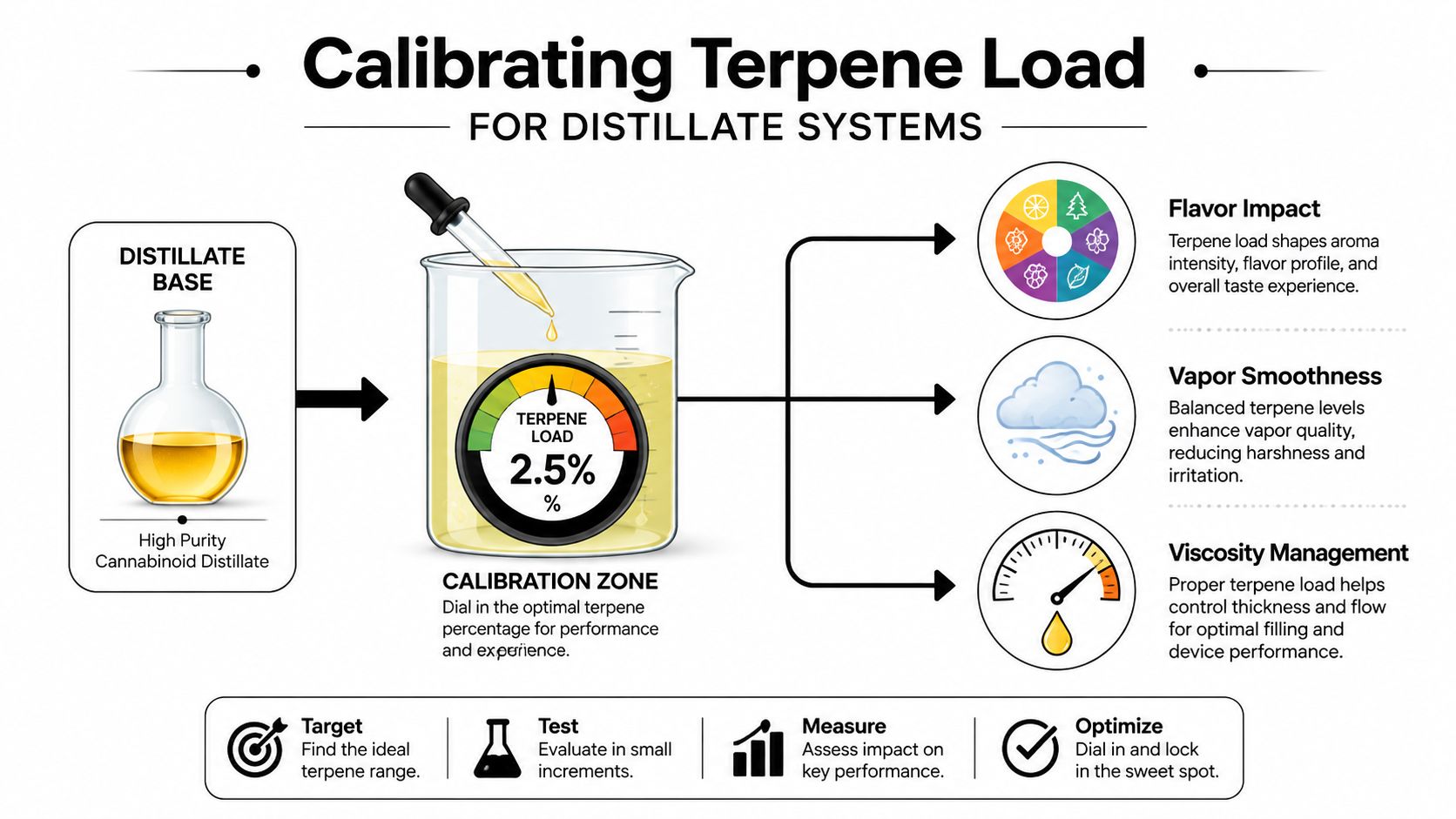
A workable calibration sequence
Build the aromatic concentrate first. Develop the peach-papaya blend separately, then check its odor, clarity, and balance before introducing it to the oil.
Dose into distillate incrementally. Start near the lower benchmark, mix thoroughly, and evaluate the finished oil. The concentrate can smell balanced while the matrix magnifies harshness or suppresses peach character.
Pass three checks together. Flavor impact, vapor smoothness, and viscosity behavior must work as one system. A stronger top note is not an improvement if it makes the inhale harsh or creates hardware-flow problems.
Correct the structure before raising total load. If the blend feels thin, strengthen its mid-body or stone-fruit bridge instead of automatically adding limonene. If it feels heavy, reduce dense base character before adding more brightness.
Winterized distillate deserves close observation because blending can change clarity, flow, and flavor release. A diluent can alter viscosity, but it cannot correct a papaya off-note or supply missing peach nuance.
For handling, mixing order, and compatibility checks, follow this guide to mixing distillate with terpenes. The commercial goal is a stable, repeatable oil with an intentional fruit profile, not a formula that reaches a terpene percentage while losing its sensory identity.
Managing Papaya's Sensory Challenges
Papaya fails when its musky side arrives before its fruit character. Sweet, caramelized, and floral notes can support liking, while musty or off-note aroma, bitter aftertaste, citrus aroma, and fibrous texture perception can reduce acceptance, according to the available papaya preference research. In a vape cartridge, “texture” appears as inhale roughness, dryness, or an unclean finish rather than literal fruit fiber.
The practical solution is to build a peach frame around the papaya. Peach aroma depends heavily on lactone-rich ripe-fruit notes, while C6 compounds supply green freshness, as documented in the peach aroma chemistry research. Ocimene and geraniol also matter at low levels. Ocimene adds airy, fresh lift, and geraniol provides a floral bridge that can make the pairing read as stone fruit instead of a generic tropical blend. Push either too far, however, and the profile becomes sharp, perfumed, or thin.
Papaya's musky character needs context, not removal. A rounded peach body can soften the edge, while controlled floral support preserves papaya's identity without allowing the off-note to dominate the first impression or the finish.
Choose the sensory direction before adjusting the blend
Red-flesh papaya varieties generally show higher sugar content than yellow-flesh types, while yellow types carry more linalool oxide and terpinolene, according to the papaya preference material. Those differences support three practical directions:
- Round and candy-like: Use a fuller peach body, restrained green lift, and controlled floral support. This suits a product that must feel familiar and smooth immediately.
- Bright and tropical: Give papaya more aromatic lift, with fresh and floral facets held below the level where mustiness takes over. This creates differentiation but narrows the margin for error.
- Creamy and ripe: Build around lactone richness and soft mid-body notes, then keep papaya as an accent. The tropical note feels mature rather than raw or vegetal.
Treat papaya as a variable within the aromatic structure, not as one fixed note. Its effect changes with the surrounding terpenes, the oil matrix, and the intended audience. A papaya-heavy brief may sound exotic, yet perform poorly in a cartridge if the opening is musty and the finish turns bitter.
Blend for the aftertaste, not just the opening aroma.
The broader discussion of unusual sulfurous and animalic perceptions in this guide to cannabis aromas associated with skunk reinforces the same formulation principle: off-notes need controlled context. Keep papaya recognizable, but place it inside a peach-led profile that reads ripe, clean, and deliberate.
Choosing Your Formulation Direction
Brand owners usually face a choice between mainstream approachability and exotic differentiation. Neither is universally correct. The decision depends on how much familiarity the product needs at first contact, how distinctive the competitive set already is, and whether the package communicates a smooth fruit profile or a more adventurous aromatic experience.
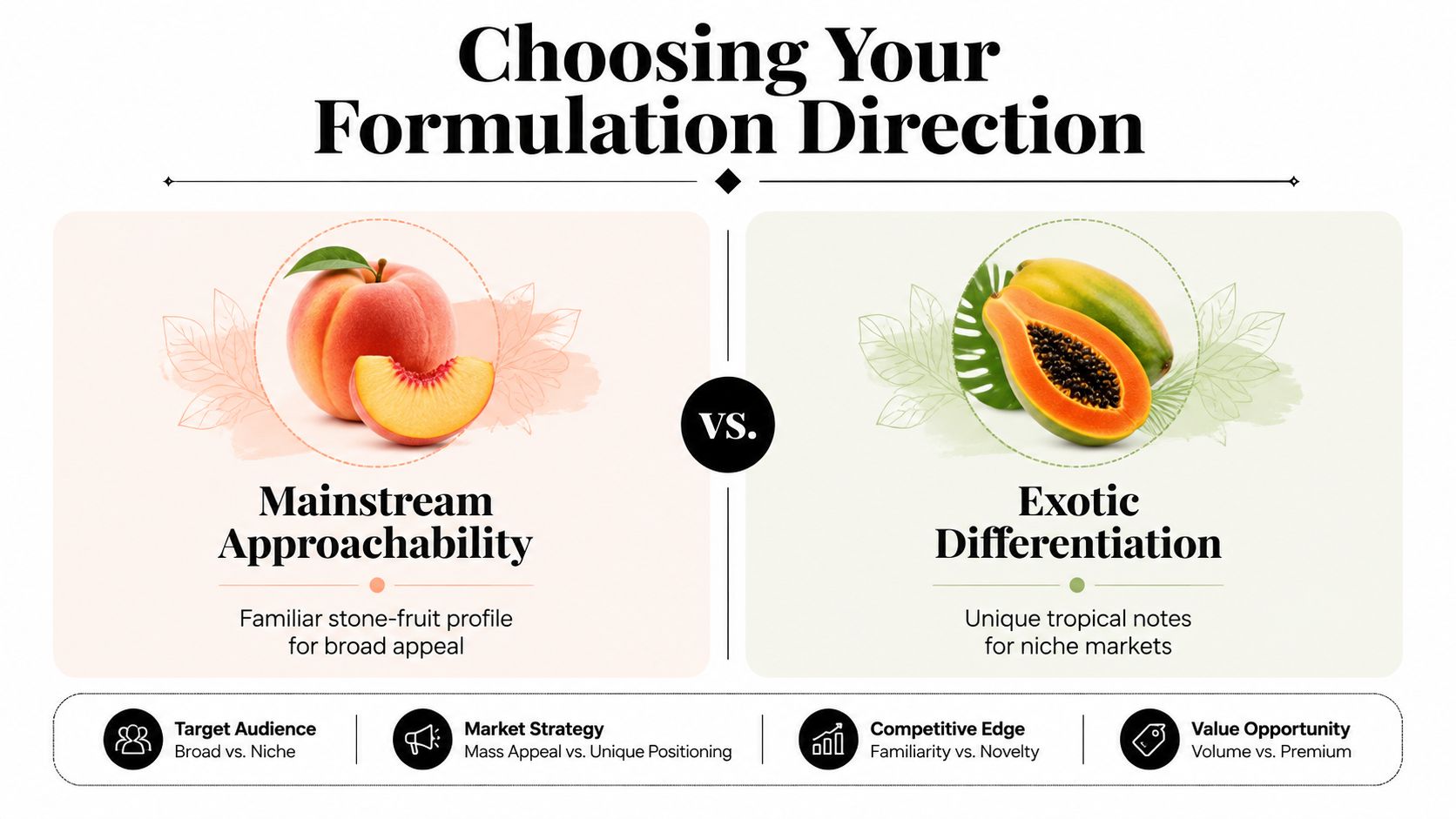
Mainstream approachability
Make peach the primary identity when the product needs a quick sensory read. The formulation should lead with recognizable stone-fruit character, use papaya to add roundness, and keep the tropical edge controlled. This is often the safer direction for a new brand, a broad retail placement, or a cartridge line where the label must communicate flavor without explanation.
This approach doesn't mean making the blend simple. Minor terpenes still matter because they can supply the difference between a generic peach candy impression and a more natural peach-papaya profile. The key trade-off is restraint. Too much exotic character may reduce immediate acceptance even if experienced tasters find it more interesting.
Exotic differentiation
Lean further into papaya when the product has a defined niche and the brand can support a more unusual sensory promise. In this version, brighter aromatic lift and floral tropical detail become more visible, but the peach foundation should remain present. Papaya works better as a designed accent than as an uncontrolled dominant note.
Consumer research also shows that buyers respond to multiple attributes, including sweetness, texture, color, and packaging. That means formulation and merchandising need to agree. A bright tropical profile paired with a heavy, creamy visual promise creates a mismatch, just as a peach-forward formula may underdeliver if the package presents it as an intensely exotic fruit.
| Decision | Favor peach | Favor papaya |
|---|---|---|
| First impression | Familiar stone fruit | Distinctive tropical fruit |
| Sensory risk | Lower | Higher |
| Best use | Broad positioning | Niche differentiation |
| Main technical concern | Avoid flat sweetness | Control musty and bitter facets |
Papaya isn't automatically the stronger mass-market note. In many commercial applications, the better answer is peach as the lead, papaya as the supporting accent, and ocimene or geraniol as the detail layer that makes the pairing feel complete.
Production Protocols and Safety Considerations
A successful bench formula still needs a disciplined production system. Terpenes should be evaluated for intended inhalation use, documented by lot, and blended only with materials confirmed compatible with the finished product and hardware. Do not treat a flavor name as a substitute for a certificate of analysis, safety documentation, or regulatory review.
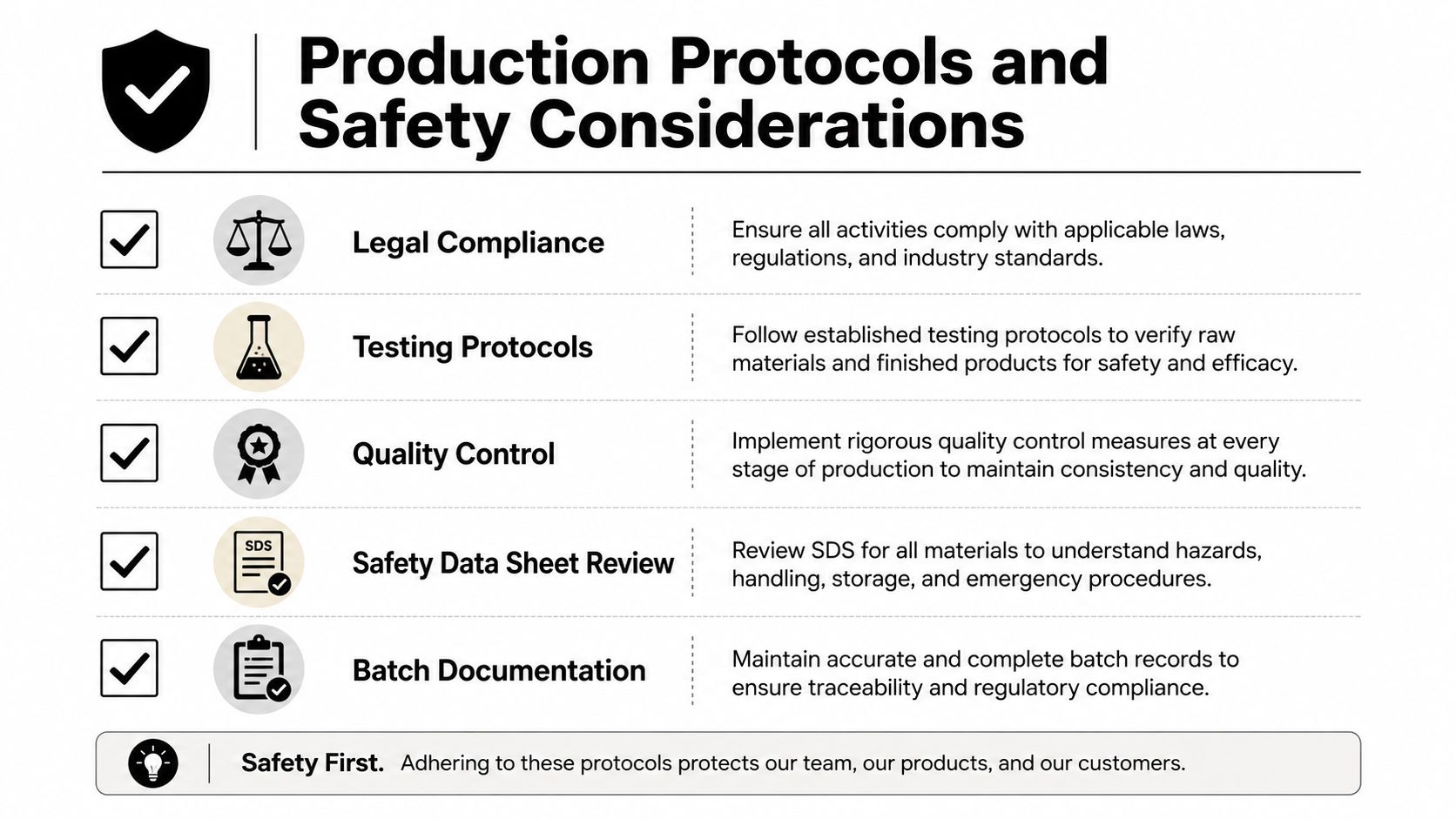
Build controls into the batch process
- Legal compliance: Confirm the rules that apply to the destination market, product category, labeling, and intended route of sale. Requirements can differ by jurisdiction.
- Testing protocols: Request current analytical documentation for the terpene blend and finished oil. Verify that the testing scope matches the material and use case.
- Quality control: Check appearance, homogeneity, aroma, and draw performance against an approved retained sample.
- Safety data sheet review: Review handling, storage, exposure, and incompatibility information before production staff work with the blend.
- Batch documentation: Record lot identifiers, weights, mixing conditions, operator checks, and release decisions so deviations can be traced.
Keep the formulation free from carrier systems you don't want in the finished product, including VG, PG, PEG, and MCT, when the specification calls for a neat terpene approach. Gold Coast Terpenes describes its product line as THC-free and free of those carrier materials, with SC Lab testing and safety resources available for formulation work. Treat those statements as supplier specifications to verify against the current documentation for the exact material you purchase.
For teams managing multiple formulas, packaging records, and release checkpoints, production data automation with NanoPIM can provide a structured way to maintain production data sheets. The software doesn't replace laboratory judgment, but organized records reduce transcription errors and make it easier to compare batches.
Work with suppliers that can provide certificates of analysis, safety data sheets, lot consistency information, and clear storage guidance. Then validate the blend in the actual cartridge, because a formula that passes a bench aroma check can still show flavor fade, harshness, leakage, or inconsistent release in hardware.
Positioning Peach Papaya in Competitive Markets
Peach-papaya gives brands more to work with than a generic tropical claim, but the positioning has to reflect the formulation. Peach production is globally significant, with about 27.9 million tonnes of peaches and nectarines produced in 2024, and China accounting for 17.6 million tonnes, roughly 63% of the total, according to the FAO-linked peach production data. Spain, Turkey, Italy, the United States, and Iran were the next-largest producers, showing both the scale and regional concentration of the category.
Papaya is smaller but still globally important. 2024 world output was about 14.65 million tonnes, with India producing 5.29 million tonnes, about 36% of the global total, while the Dominican Republic, Indonesia, Brazil, and Mexico were also major producers, as reported in the FAO-linked papaya production data. Papaya exports were only about 0.365 million tonnes in 2023, which indicates that most production is consumed domestically rather than traded internationally.
Turn formulation detail into a product reason
Those supply patterns can support different brand stories, but don't turn agricultural scale into an unsupported sourcing claim. Use the information to explain why peach feels familiar and broadly legible, while papaya signals a more regionalized tropical identity. The product story should remain anchored in what the cartridge delivers.
A practical SKU strategy can separate the two directions:
- Core cartridge: Peach-led, rounded, and easy to understand.
- Differentiated cartridge: More visible papaya, floral lift, and a brighter aromatic finish.
- Formulation system: One peach-papaya base adjusted with isolated compounds for controlled line extensions.
For wholesale buyers and distributors, technical transparency is more useful than vague tropical language. Provide the intended terpene architecture, total load target, lot documentation, and hardware validation notes. A flavor reference such as 24k Gold Punch can sit within a broader flavor development catalog, but it shouldn't be presented with invented claims about price, availability, or performance.
The commercial argument is strong because the pairing can serve two markets without requiring two unrelated flavor systems. Keep peach responsible for approachability, use papaya to create distinction, and reserve minor terpene adjustments for the exact sensory direction. That makes the profile easier to scale across cartridges, concentrates, and other distillate formats while preserving a recognizable brand signature.
Gold Coast Terpenes offers natural terpene blends, strain-specific profiles, isolated compounds, formulation education, safety documents, and tools for cartridge and distillate development. Visit Gold Coast Terpenes to evaluate peach-papaya components and build a documented blend around your target aroma, terpene load, and hardware system.