
You're staring at a spec sheet, a tote of biomass, and a customer brief that says the flavor has to land closer to the original cultivar, not just “strong.” That's where CO2 hash extraction gets confusing, because the term gets used for two very different workflows, and the choice changes everything from equipment to final aroma.
In commercial processing, that confusion matters. A formulator looking for a terpene profile for vape cartridges needs a different outcome than a technician making dry-ice kief for pressing, and the wrong assumption can waste time, money, and material. The cleanest way to approach the topic is to separate the language first, then build the process around reproducibility, safety, and terpene preservation.
Overview of CO2 Hash Extraction
A technician can hear CO2 hash extraction used in one meeting and mean a pressurized solvent process, then hear it again and mean dry-ice kief. The phrase is overloaded, and that is where a lot of confusion starts. One workflow uses supercritical CO2 extraction, pressure vessels, and solvent recovery. The other uses frozen material and mesh screens to separate trichome heads mechanically, which is a different kind of hashmaking altogether (supercritical CO2 vs dry-ice hash confusion).
A simple way to separate the two is to ask what is doing the work. In supercritical systems, carbon dioxide acts as the solvent and carries target compounds out of biomass. In dry-ice hash sieving, the material is chilled so brittle trichomes break free during agitation and screening. The equipment, the hazards, and the end use are different, so they should never be treated as interchangeable in cannabis product formulation.
For formulators, that distinction affects the whole chain. A solvent-based line can be set up to support replicating flavor of a target cultivar with more control over fractionation and recovery, while dry-ice sieving is better understood as a mechanical prep step for collecting kief. If the goal is a strain-inspired terpene blend, the upstream material has to be predictable before it ever reaches a cart fill station or a distillate tank.
Practical rule: if the process uses pressure vessels, separators, and solvent recycling, it is supercritical extraction. If the process uses frozen material and mesh bags, it is dry-ice hash handling.
A technician who starts with that definition avoids a lot of downstream mistakes. Safety checks, yield expectations, and terpene retention choices all depend on which process is being used. A baseline reference like CO2 extraction fundamentals helps anchor the vocabulary before any equipment is selected or any batch plan is written.
Fundamentals of CO2 Extraction Science
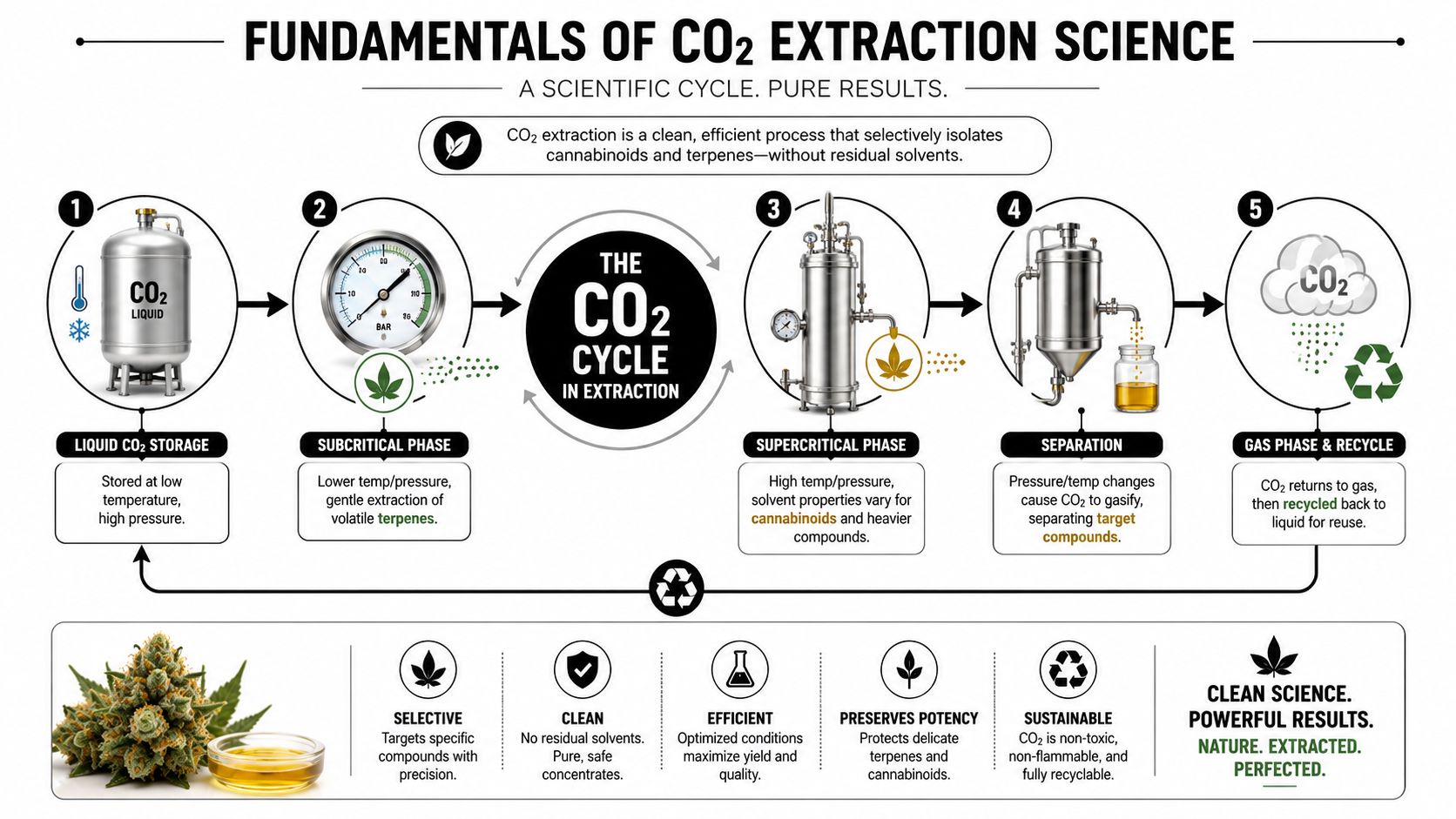
A technician loading a vessel for CO2 hash extraction needs to know what carbon dioxide is doing at every stage. Under the right pressure and temperature, CO2 reaches its supercritical state and behaves like both a liquid and a gas while it pulls compounds from biomass, then returns to gas when conditions drop at ambient pressure (supercritical CO2 conditions and behavior). That behavior is why operators use it in closed systems. The solvent does its work, then separates cleanly instead of lingering in the finished concentrate.
The same process language also causes confusion, because “CO2 hash extraction” can mean two different things in practice. One meaning refers to solvent-based extraction using pressurized carbon dioxide, while the other refers to dry-ice hash handling, where frozen material is agitated and screened so brittle trichomes fall away. The equipment, safety profile, and end product are different, so a formulation team should treat them as separate workflows, not as interchangeable labels. A plain-language reference like CO2 extraction process guide helps keep that terminology straight before a batch plan is written.
Why phase behavior matters
CO2 behaves like a tunable extractor. As pressure and temperature shift, its density changes, and that changes what it can carry out of the plant. Higher density reaches farther into heavier resin material, while lower density is gentler on lighter aromatic compounds. That is why staged control matters so much in CO2 hash extraction for product development.
A peer-reviewed study found 60°C to be optimal overall, with 131.2 bar favoring monoterpenes, 319.7 bar favoring sesquiterpenes, and 284.78 bar optimal for CBD (optimization study on pressure and temperature behavior). In a production room, that means one pass can be tuned toward bright top-note material, while another can be adjusted toward deeper mid- and base-note fractions. The practical value is control. CO2 can support cannabinoid and terpene fractionation instead of forcing every run into the same crude-oil outcome.
Reading the cycle as a process map
The cycle is easiest to follow as a chain of physical changes. Liquid storage feeds the system, subcritical conditions can pull lighter volatiles, supercritical settings can reach heavier material, and the separator forces dissolved compounds to fall out while the gas is recycled. That closed-loop behavior keeps the process cleaner and gives the operator a controlled path toward a more solvent-free concentrate.
For new technicians, the main mistake is treating CO2 as one fixed setting. It is not. Pressure, temperature, and flow all change what comes off the plant, so a stable method is really a sequence of controlled conditions, not a single magic number. Reproducibility comes from matching those settings to the target material, then repeating them with the same discipline from batch to batch.
Selecting CO2 Extraction Equipment and Operational Modes
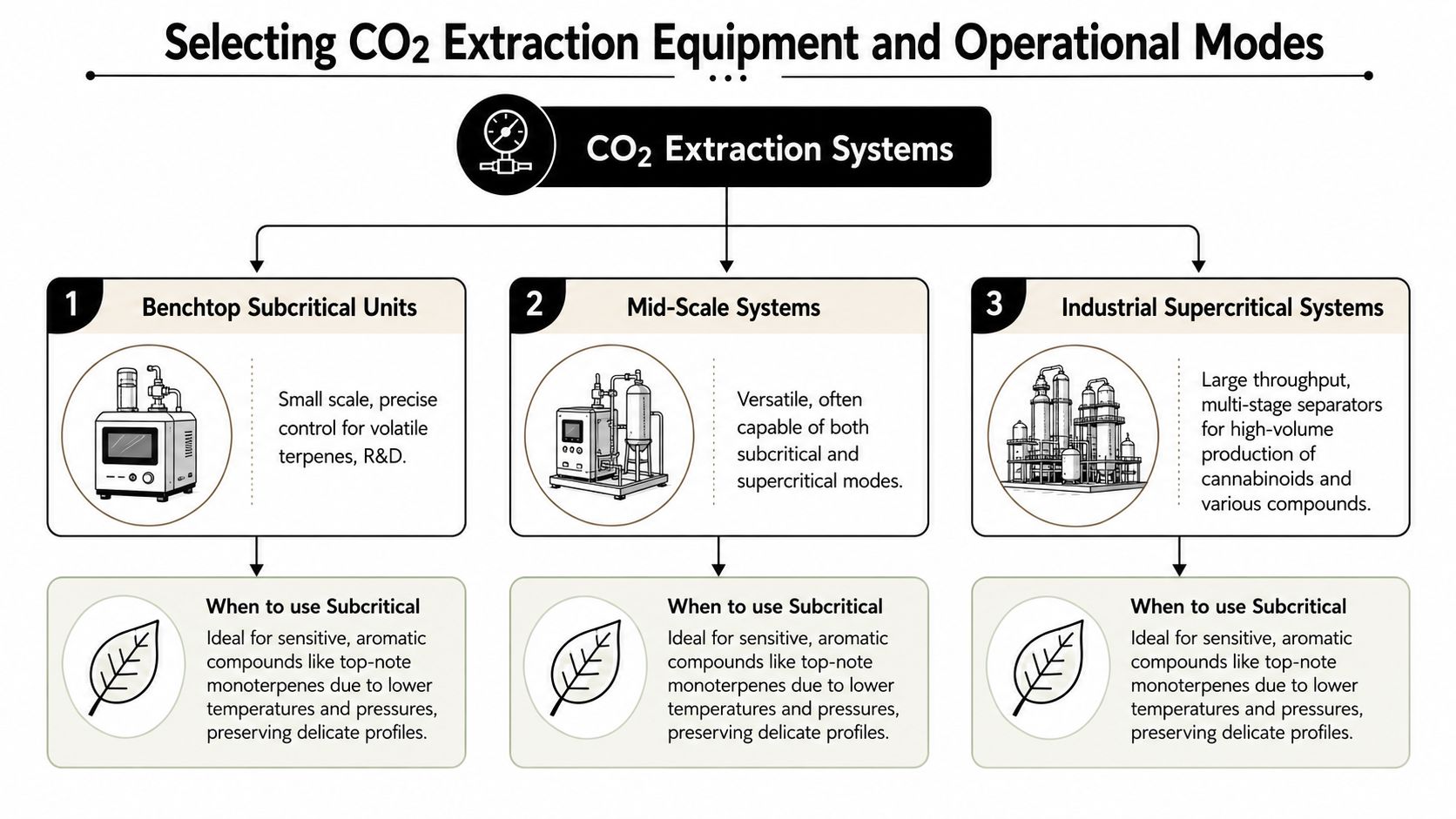
A technician choosing CO2 extraction equipment should start with the product target, not the catalog page. A benchtop subcritical unit fits R&D work and batches built around lighter volatiles, while an industrial system with multi-stage separators fits production lots that need repeatable fractionation and higher throughput. Between those extremes sits a flexible platform that can shift between subcritical, supercritical, and combined modes without forcing the room to be redesigned around one operating style.
What to look for before you buy
Pressure rating matters because CO2 extraction depends on tight control. Separator configuration matters because it determines how cleanly fractions drop out of solution. Solvent recycle capability matters because the gas is reused after separation, which supports a closed-loop recycling and separation behavior model and cuts down on loss (closed-loop recycling and separation behavior).
That recycle loop is one reason CO2 is handled as a nonflammable solvent method. The gas strips compounds, the resin falls away in the separator, and the CO2 can return to the system instead of being treated as a one-pass consumable. For extractors who need consistent inputs for formulating, that repeatability often matters more than a single impressive-looking run.
A useful way to keep the process honest is to change one variable at a time, then write down what happened. If pressure, temperature, and run time all move together, the result may look different, but the cause stays hidden.
That discipline is also the core point in a guide on CO2 extraction considerations for reproducibility, which recommends adjusting one parameter at a time and documenting each run so the team can connect method changes to yield and potency (CO2 extraction considerations for reproducibility). This is the difference between operating equipment and building a process that gives the same result again and again.
For teams comparing broader solvent extraction methods, a practical starting point is solvent extraction methods.
Comparing CO2 with Hydrocarbon and Rosin Extractions
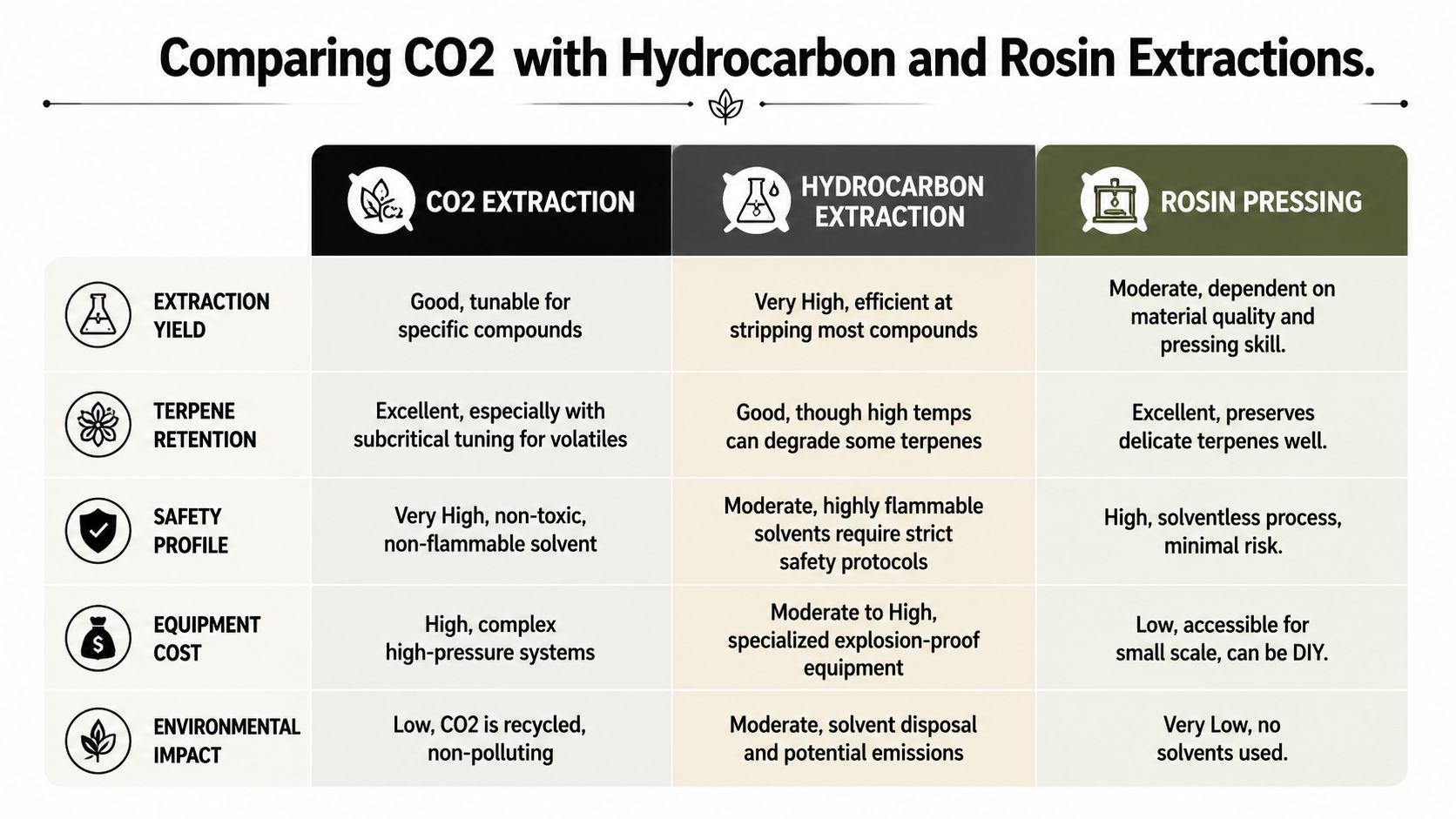
A production team usually starts by asking a simple question. What does the finished concentrate need to do in the jar, in the lab, and on the production line? CO2, hydrocarbon, and rosin can all reach quality targets, but each one solves a different problem. CO2 suits facilities that want a tunable, nonflammable process with room for terpene fractionation. Hydrocarbon fits operations built around fast stripping and flammable-solvent infrastructure. Rosin serves small-batch solventless work where the press operator can keep tight control over the starting material and the press cycle.
The practical tradeoffs
CO2 extraction can recover up to 95% of the available cannabinoids from plant material when the method is optimized, with typical yields in the 10–20% of starting plant weight range (CO2 recovery and yield ranges). For commercial processors, that matters because it gives the technician a controlled way to separate fractions instead of pushing everything into one mixed output. Peer-reviewed work has also described efficient CBD and THC extraction from cured biomass, even without a co-solvent, which helps explain why CO2 remains attractive for consistent production.
Hydrocarbon extraction is often selected for how forcefully it strips material, but that strength comes with a more demanding safety profile because the solvents are flammable. Rosin brings a solventless appeal and strong terpene retention, but throughput and consistency depend heavily on starting material quality and press technique, a distinction that becomes obvious in live rosin vs rosin. For a product team focused on for vape cartridges or other repeatable formulations, the method that supports batch-to-batch consistency usually matters more than the method that sounds simpler on paper.
A cleaner way to frame the choice is this. CO2 gives control over conditions and fractions. Hydrocarbon gives aggressive stripping. Rosin gives solventless simplicity. A brand that needs stable, flavor-forward input for for distillate blending usually chooses the process that protects reproducibility, terpene handling, and downstream consistency, not the one with the strongest marketing story.
Maximizing Terpene Profiles and Yield with CO2 Extractions
A batch can look promising on paper and still lose its character at the first bad decision. In CO2 hash extraction, terpene preservation starts before the machine is even warm, because the operator has to decide whether the goal is a bright, top-note extract, a broader resin fraction, or a material stream meant for later blending. That same phrase, CO2 hash extraction, also gets used by some people to mean dry-ice hash, so the process has to be defined clearly before anyone starts tuning equipment or judging yield.
Matching conditions to the flavor target
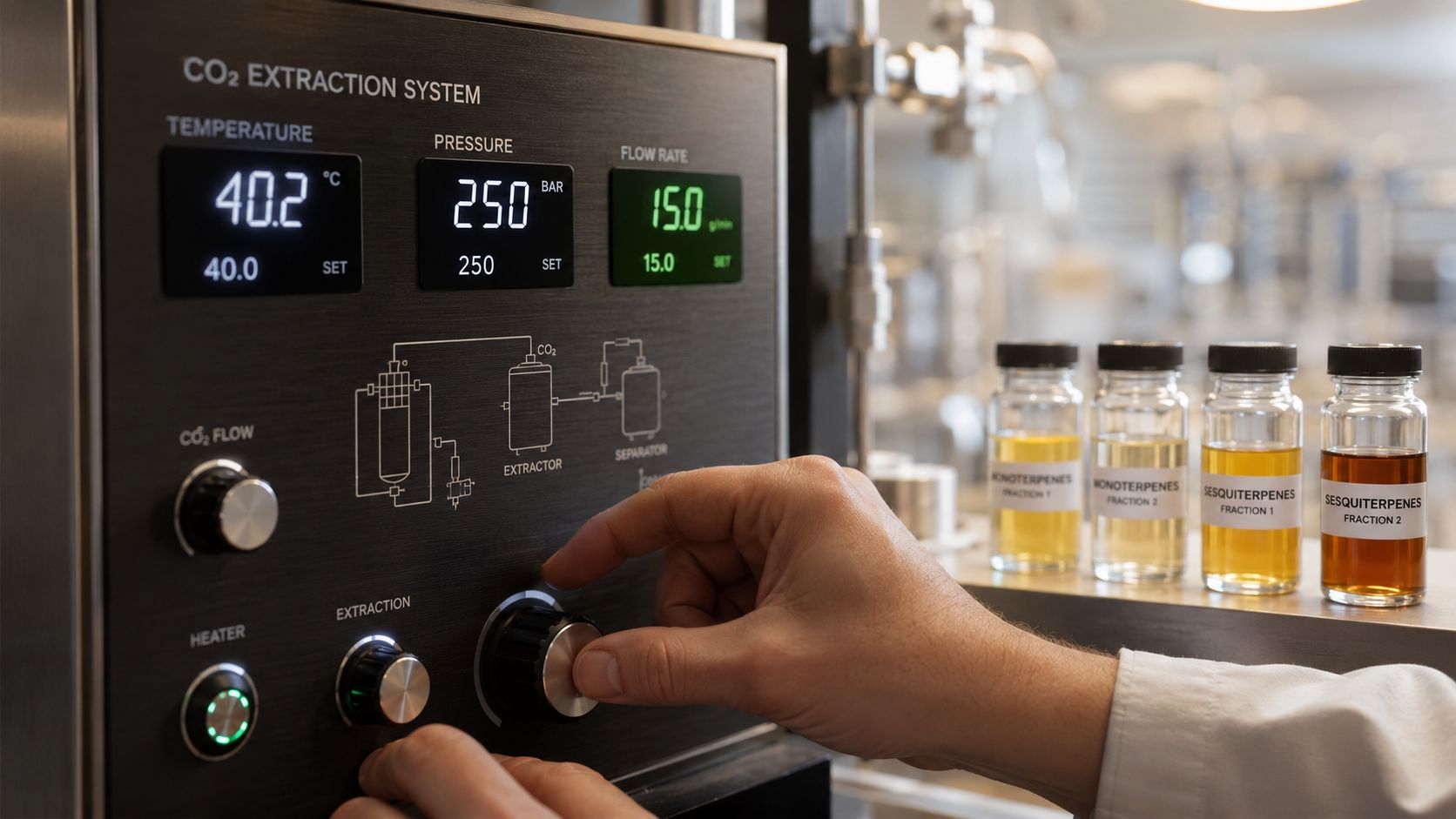
Lower settings are usually the starting point for delicate volatiles. As pressure and temperature rise, the system can pull a heavier slice of the plant, which helps when the target needs resinous body or a broader fraction for later formulation. That staged approach matters for terpene profile for cannabis product formulation because it lets a technician sort top notes from mid notes and base notes instead of blending everything into one undifferentiated extract.
The practical rule is simple. Change one variable, record the result, and keep the run notes tied to the lot. A technician who changes pressure and temperature together can tell that something changed, but cannot tell what caused the shift in aroma, yield, or texture. For a process built on reproducibility, that distinction matters as much as the final smell.
For terpene handling, temperature targets are not guessed, they are set against known behavior of the compounds being chased. The reference point is the boiling behavior of the main aroma compounds, along with how pressure changes their movement through the system, as outlined in factors that affect terpene boiling points and temperatures. That kind of reference keeps a technician from treating every run like a guess.
Here's the way technicians usually think about the fractions:
- Top notes: lighter, more volatile aromatics that need gentler conditions.
- Mid notes: the bridge between sharp brightness and heavier body.
- Base notes: denser, resinous material that can support depth and staying power.
A strain with a strong citrus front end will usually demand a different handling plan than one built around earthy depth. The extract does not need to do every job by itself. A strain-inspired terpene blend can carry the missing notes later, which lets the processor protect the most fragile aromatics instead of forcing the extraction to overwork them.
Video walkthroughs can help new techs visualize how tuning changes the output.
Keep one run, one parameter change, one notebook entry. That is how a process becomes repeatable instead of lucky.
A technician who learns to separate flavor goals from yield goals will make better choices at every stage. The machine can pull more material when conditions are pushed harder, but the best result is the one that matches the intended use, whether that is a bright concentrate, a fuller-bodied input, or material meant for careful post-processing.
Post-Processing Strategies Quality Testing and Regulatory Best Practices
Extraction output is rarely the final material. Most commercial lots still need winterization, filtration, and sometimes decarboxylation before they're ready for formulation. Winterization helps remove waxes and lipids, filtration cleans up the matrix, and decarboxylation prepares certain inputs for the format the brand wants to sell.
The sequence that protects the batch
The safest way to think about post-processing is as a refinement chain. A processor can move from crude oil to cleaner fractions, then into a formulation-ready input, but only if the handoff between steps is controlled. If the goal is a stable cartridge base, the team needs to watch viscosity, clarity, and final terpene integration instead of treating the concentrate like a finished product the moment it leaves the extractor.
Quality control needs to match the product type. Potency assays confirm cannabinoid content, terpene profiling checks whether the aroma is where it should be, and residual solvent analysis verifies that the material meets the relevant compliance target for the market. Microbial testing matters as well, especially when biomass handling or downstream mixing leaves any room for contamination.
Safety belongs in the same conversation. Pressure relief valves, certified fittings, and written standard operating procedures aren't optional details, they're the framework that keeps a high-pressure process from turning into a facility problem. A disciplined team also keeps inspection records for separators, seals, and any component that sees repeated thermal or pressure cycling.
A useful internal check is this:
- Before extraction: verify vessel condition, fittings, and calibration status.
- After extraction: confirm fraction identity and whether further winterization is needed.
- Before formulation: confirm potency, terpene profile, and suitability for the intended SKU.
The technical point is simple. A concentrate isn't commercially useful until it's measured, cleaned, and matched to the product spec. That's especially true if the next step is a terpene profile for formulation guide workflow, where even a small mismatch in aroma can throw off brand consistency.
Incorporating Gold Coast Terpenes into Concentrate Formulation
Once the extract is clean and the batch record is solid, terpene blending becomes the part that shapes brand identity. A lab-verified, THC-free terpene blend gives formulators a controlled way to correct aroma, sharpen strain identity, and build consistent for vape cartridges or distillate products without guessing at the sensory profile. That matters because buyers judge the product by smell and taste before they ever think about process.
Why the blend belongs in formulation, not guesswork
A good strain-inspired terpene blend doesn't just add scent. It helps recreate the top-note sparkle, the mid-palate body, and the base-note finish that make one cultivar feel distinct from another. That's useful when the extracted fraction is close but not exact, or when the manufacturer wants a stable sensory profile across multiple batches.
For cartridge work, terpene addition usually happens after the oil has been cleaned up enough to support consistent mixing. For distillate work, the terpene set often becomes the final sensory adjustment that turns a neutral base into a recognizable profile. The key is to match the aromatic role to the formulation need, not just pour in flavor because the batch looks bland.
The same logic applies to replicating flavor of a target cultivar. If the brief calls for a bright, energetic top-note opening, the formula needs components that support that impression. If the brand wants a fuller, more grounded finish, the blend needs body, not just sharpness. That's why formulation teams benefit from product libraries that include profile-specific options and a calculator that keeps dosing consistent across runs.
When teams build around a known profile, they stop rebuilding the sensory wheel every time a new lot arrives. A structured terpene system makes it easier to adjust for batch variation, maintain SKU consistency, and keep the commercial output aligned with the original product brief.
Conclusion and Next Steps
A solid CO2 hash extraction workflow starts with the right definition, not the right slogan. If the project is supercritical extraction, the team needs to control pressure, temperature, separation, and recordkeeping. If the project is dry-ice hash, the team needs a different workflow entirely. Once the extract is in hand, quality testing and terpene formulation decide whether the final product feels consistent from batch to batch.
The next move is practical. Choose equipment that matches the product target, document one parameter change at a time, verify post-processing quality, and build the final aroma around a reproducible terpene strategy. That's the path that supports terpene profile for cannabis product formulation, not just one-off output.
If you're building carts, distillate, or other branded concentrate SKUs, start with the extraction method that gives you the most control over flavor and repeatability, then pair it with a terpene system that can carry the profile across production runs.
A CTA for Gold Coast Terpenes.