
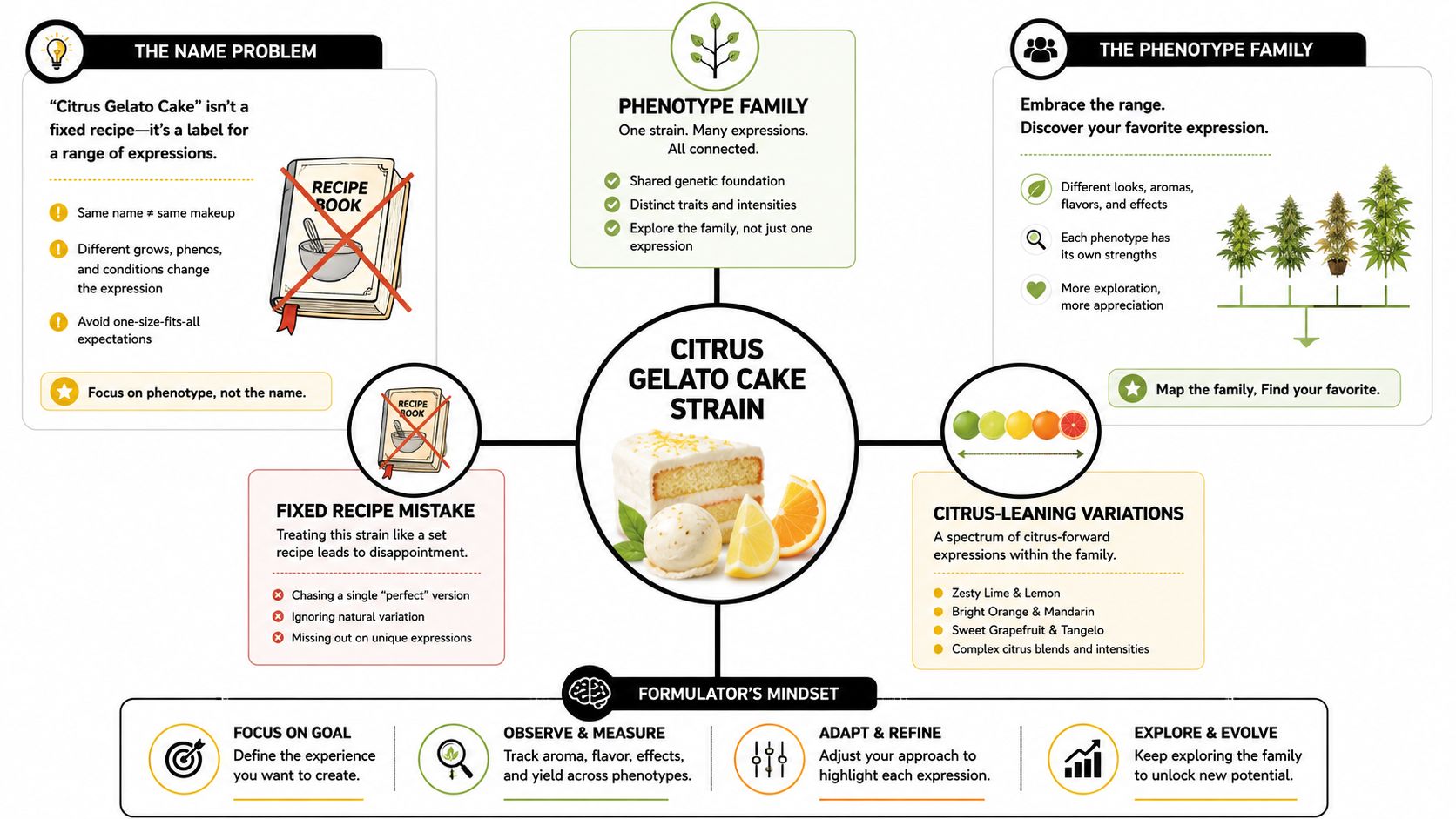
The popular advice is to treat Citrus Gelato Cake as a fixed flavor recipe, then add limonene until the oil smells like lemon. That approach often produces a sharp, thin cart because the strain name doesn't identify one standardized chemovar, and limonene alone can't recreate the cream, dough, spice, and soft finish associated with the profile.
For formulators, the more useful target is a moving citrus-dessert spectrum. A documented flower sample lists 1.64% total terpenes, with limonene, pinene, terpinolene, bisabolol, and linalool forming the measured core, while reported THC values span 18% to 32% across related Citrus Gelato Cake descriptions and batches (AllBud's Citrus Gelato Cake profile, JointCommerce's strain guide). That variation matters more in a cartridge than it does in a flower jar, because heating, hardware, carrier viscosity, and storage all reshape the sensory result.
What Citrus Gelato Cake Actually Means for Formulators
Treating Citrus Gelato Cake as a fixed recipe is the fastest way to build the wrong cart. The name covers related expressions within the Gelato and Wedding Cake lineage, including citrus-leaning Gelato Cake phenotypes and descendants selected for lemon or dessert aromatics, as discussed in JointCommerce's Citrus Gelato Cake lineage discussion.
For a formulator, that makes the name a sensory direction, not a complete chemical specification. One lot may present lemon peel over frosting, another orange sherbet, and another creamy dough with citrus only in the opening. Those differences matter once the oil is heated. A note that feels layered in flower can flatten in a CCELL, while ceramic hardware may preserve more of the softer base. Carrier viscosity and storage add further variables.
Start with measured chemistry
A practical working definition is a limonene-led, dessert-rounded terpene target. A Gelato-derived cut report lists 1.64% total terpenes, with 0.630% limonene, 0.410% pinene, 0.250% terpinolene, 0.210% bisabolol, and 0.140% linalool (Royal King Seeds' Gelato Cake terpene report). Use those values to rank sensory roles, not to copy a flower profile directly into finished oil.
Flower chemistry and cartridge chemistry run at different total loads. Dilution, heat, and the selected carrier change how quickly citrus appears and whether cream, dough, or spice survives the draw. Set the relationship between bright, fresh, complex, and soft notes first, then adjust the blend for the hardware.
Write the brief in sensory terms:
- Citrus direction: lemon peel, orange sherbet, or candied citrus.
- Dessert direction: cream, frosting, dough, or cookie.
- Finish: pepper, soft wood, earth, or restrained fuel.
- Analytical anchor: batch-specific terpene data, rather than the strain name alone.
Practical rule: Treat “Citrus Gelato Cake” as a target window. Lock the sensory endpoint before selecting isolates or a strain-inspired terpene blend.
The Gelato and Wedding Cake families still provide useful dessert architecture. A Gelato strain profile for formulation can help establish a creamy base, but the citrus-selected expression requires bench work and hardware checks. Reproduce the expected sensory behavior, then document the chemistry that delivers it.
Key Terpenes That Drive the Profile
Citrus Gelato Cake is a moving chemovar spectrum, not a fixed terpene formula. For cartridge work, the useful question is which compounds create the citrus, dessert, and finish in a specific lot, then how those roles change after dilution and heating. Limonene leads, pinene adds lift, terpinolene supplies breadth, bisabolol softens the center, and linalool rounds the finish.
The measured composition
| Terpene | Flower % by weight | Role in cartridge |
|---|---|---|
| Limonene | 0.630% | Bright lemon and orange top note |
| Pinene | 0.410% | Freshness, pine lift, sharper definition |
| Terpinolene | 0.250% | Airy herbal-citrus complexity |
| Bisabolol | 0.210% | Soft floral warmth and rounded body |
| Linalool | 0.140% | Creamy, floral softness that reduces edge |
A reported sample measured 6.30 mg/g limonene, 4.10 mg/g pinene, 2.50 mg/g terpinolene, 2.10 mg/g bisabolol, and 1.40 mg/g linalool (Royal King Seeds' reported Citrus Gelato Cake values). Use those values to rank sensory roles, not to assume every lot or finished oil will match them.
Limonene establishes the lemon-orange identity. It can make a cart smell vivid in the vial, yet excessive loading often produces a solvent-like or aggressively zesty first pull. Keep enough mid and base material behind it so the finish does not vanish after the citrus burst.
Pinene sharpens definition and keeps a sweet distillate from feeling heavy. A restrained amount can suggest fresh citrus and air. Too much shifts the profile toward pine cleaner, especially in hardware that produces a hot, concentrated opening.
Terpinolene connects citrus with herbal and lightly floral character. It preserves aromatic breadth after the first brightness fades, but overheated hardware can make that complexity read as harsh. Test it in the actual CCELL configuration rather than raising it automatically.
Bisabolol and linalool provide softness. Bisabolol rounds angular edges, while linalool supports the creamy and floral side of the dessert impression. Neither creates vanilla alone. If the brief calls for frosting or cookie, dedicated flavor materials may still be required.
A d-limonene formulation reference helps separate a weak citrus top from a poorly supported blend. If the vial smells bright but repeated pulls taste flat, add structure in the middle and finish before adding more limonene. That adjustment usually preserves the intended citrus dessert profile more reliably.
Top, Mid, and Base Notes Explained
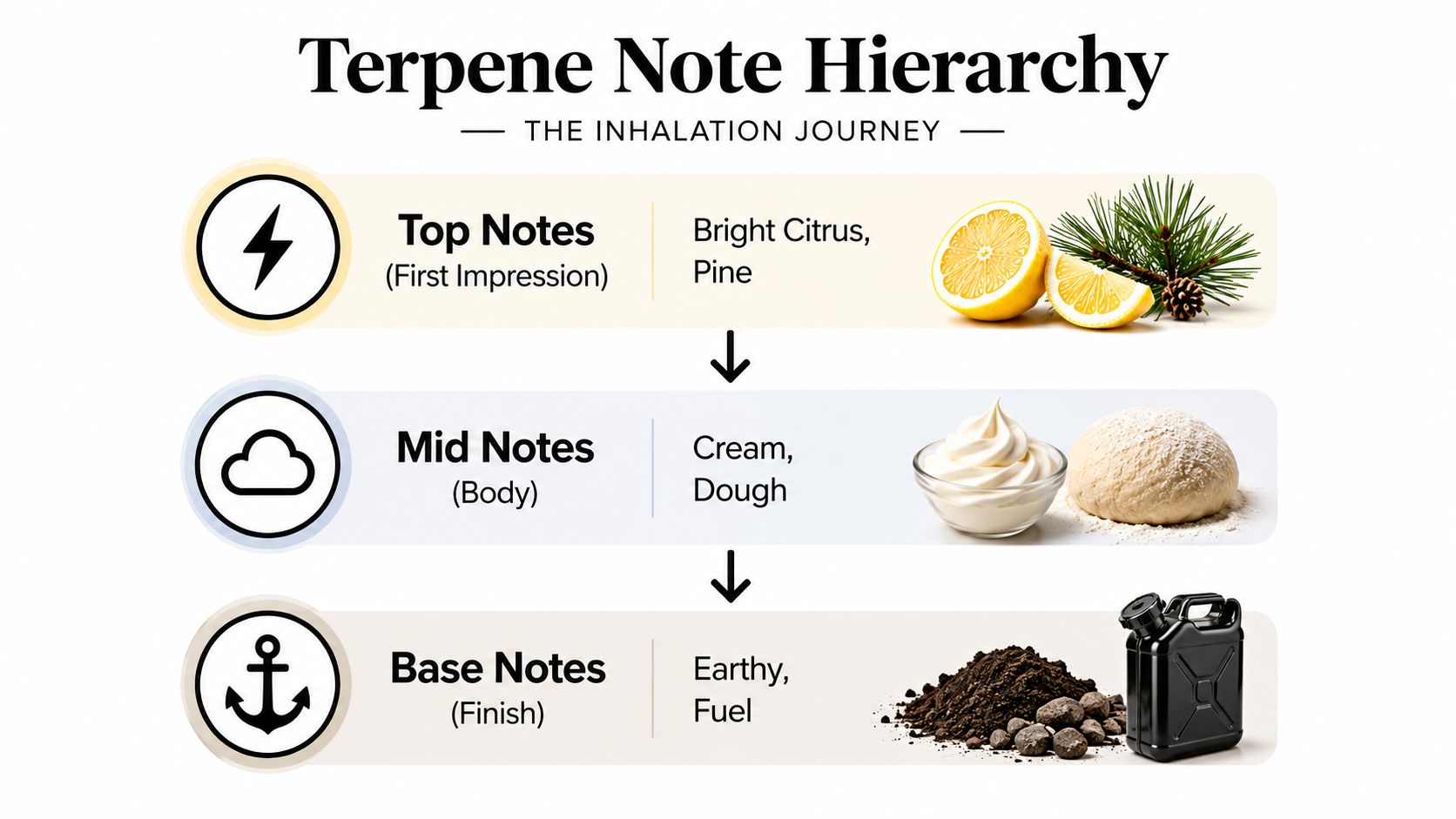
Citrus Gelato Cake is better handled as a moving chemovar spectrum than as a fixed strain label. In the cartridge, evaluate the inhalation in stages. Top notes arrive first, mid notes supply the body, and base notes remain after the citrus lifts. A blend becomes unstable when one layer carries the whole profile.
Top notes create the first second
Limonene and pinene handle the opening. They provide lemon peel, orange brightness, and fresh air, which makes the SKU recognizable in the vial and on the first pull. They also expose formulation errors quickly.
A top-heavy blend reads as lemon cleaner because the draw delivers sharp brightness without cream or warmth behind it. In a CCELL, heat can make that opening even more concentrated. A weak top layer leaves the oil generic, even when the middle and base contain suitable dessert materials.
Mid notes make the profile recognizable
The mid layer carries the Gelato and Wedding Cake direction. Linalool, terpinolene, bisabolol, and selected flavor materials can suggest cream, dough, frosting, and soft spice.
The target is a continuous transition, not a literal cake flavor. The first draw may present lemon, the middle should move toward creamy dessert, and the exhale should retain enough warmth to give the profile weight. If the middle collapses, adding more limonene only makes the imbalance more obvious.
Base notes determine whether the cart has weight
Caryophyllene and myrcene are practical structural choices for Gelato-style bases. Caryophyllene brings warm pepper and spice, while myrcene adds softer, earthy roundness. Gelato terpene profile guidance describes the same functional relationship, with caryophyllene providing structure, limonene supplying citrus lift, and myrcene mellowing the finish.
| Layer | Citrus Gelato Cake expression | Common failure |
|---|---|---|
| Top | Limonene, pinene, bright citrus | Lemon cleaner or excessive sharpness |
| Mid | Terpinolene, linalool, bisabolol, cream and dough accents | Hollow or one-note vapor |
| Base | Caryophyllene, myrcene, warm spice and soft earth | Flat, muddy, or overly earthy finish |
Use the terpene flavor chart during sensory review so the panel describes the same transition. Keep the top restrained enough for the mid to appear, and set the base high enough to survive the draw without turning muddy. The intended result is a citrus opening that resolves into dessert rather than stopping at zest.
Building a Cartridge Ratio That Holds Together
A strain name does not give you a finished cartridge formula. Treat Citrus Gelato Cake as a moving chemovar range, then set the citrus, dessert, and structural notes against the carrier and hardware you will use.
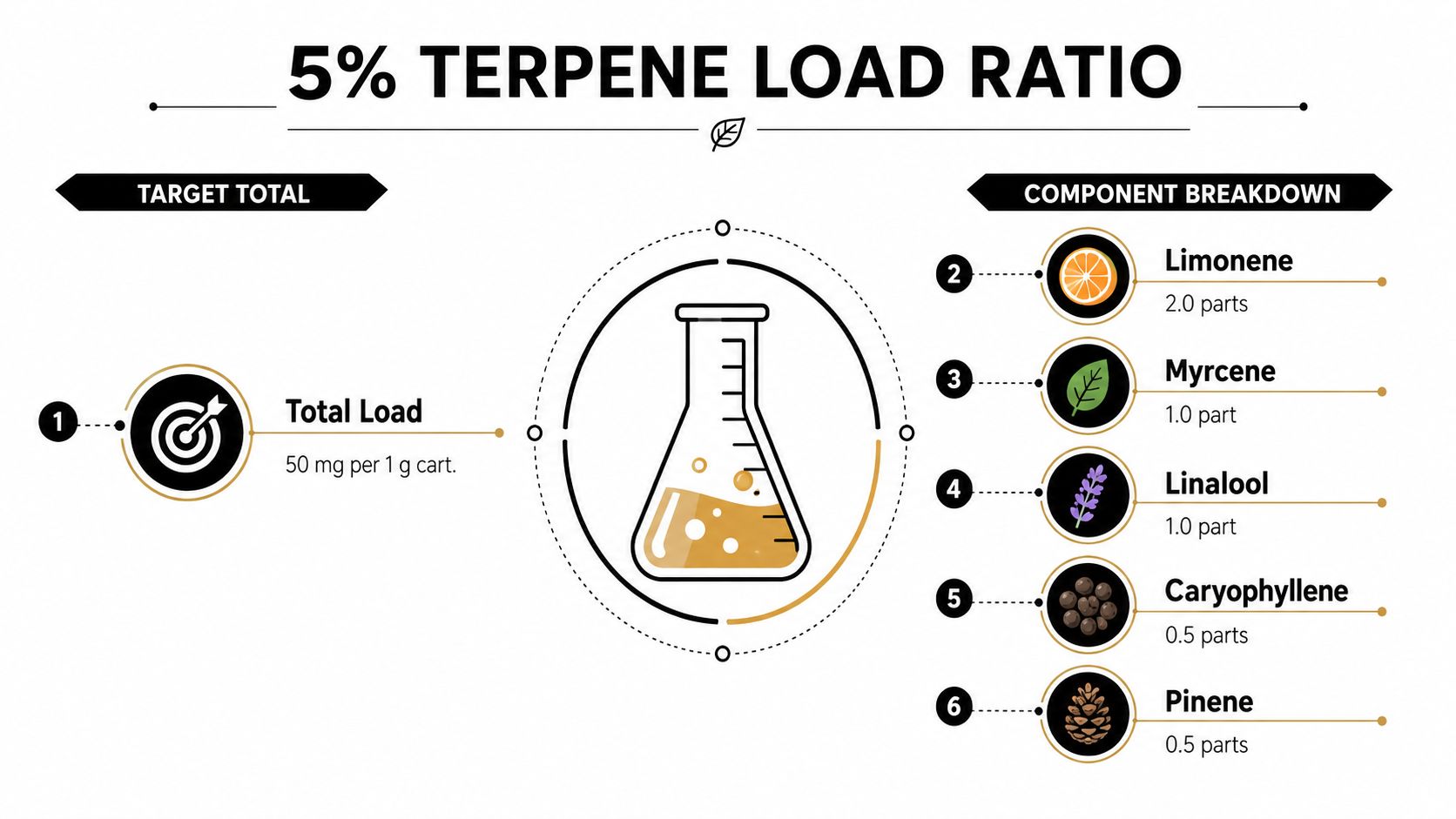
For a 1 g distillate cartridge, a practical starting point is a 5% terpene load by weight, equal to 50 mg of total terpene material per gram of oil. The formulation reference for this profile is Gold Coast Terpenes' cartridge formulation guidance. Build the blend in parts per hundred, then convert those parts into the final batch weight.
A workable starting blend
Use this internal allocation for the citrus-dessert portion:
- Limonene, roughly 38%: Lemon and orange on the first pull.
- Pinene, roughly 25%: Freshness and definition.
- Terpinolene, roughly 15%: Aromatic complexity through the draw.
- Bisabolol, roughly 13%: Soft floral warmth.
- Linalool, roughly 9%: Edge control and dessert softness.
These percentages map the aromatic portion before adding structural support. Once caryophyllene and myrcene enter the formula, recalculate the complete composition in a mixing worksheet or the Gold Coast Terpenes Mixing Calculator.
The supplied ratio infographic offers another bench starting point for a 5% load: 50 mg per 1 g cart, with component parts of 2.0 limonene, 1.0 myrcene, 1.0 linalool, 0.5 caryophyllene, and 0.5 pinene. That softer arrangement suits a rounded dessert interpretation. The measured flower relationship may require more citrus definition, but copying it directly into distillate can leave the finish underbuilt.
Adjust for the actual oil and hardware
Distillate contributes little native aroma, so it often needs more base support. If the first pull is vivid and the finish disappears, raise the caryophyllene or myrcene side modestly while trimming the brightest component. Do not increase the total terpene load automatically.
A piney or medicinal result usually calls for less pinene. A perfumed result points toward reducing linalool or bisabolol. If the vapor feels hot and scratchy, check terpinolene, coil temperature, and airflow together before rebuilding the ratio.
For selected vape terpene builds, vape terpene selection guidance places limonene in a practical 3% to 6% range, myrcene in a 2% to 5% range, and caryophyllene in a 4% to 8% range. Treat those as component-level guidance, not targets to stack at their upper limits. The final decision belongs to the oil, the cartridge, and the sensory result.
Distillate Versus Full Spectrum Carriers
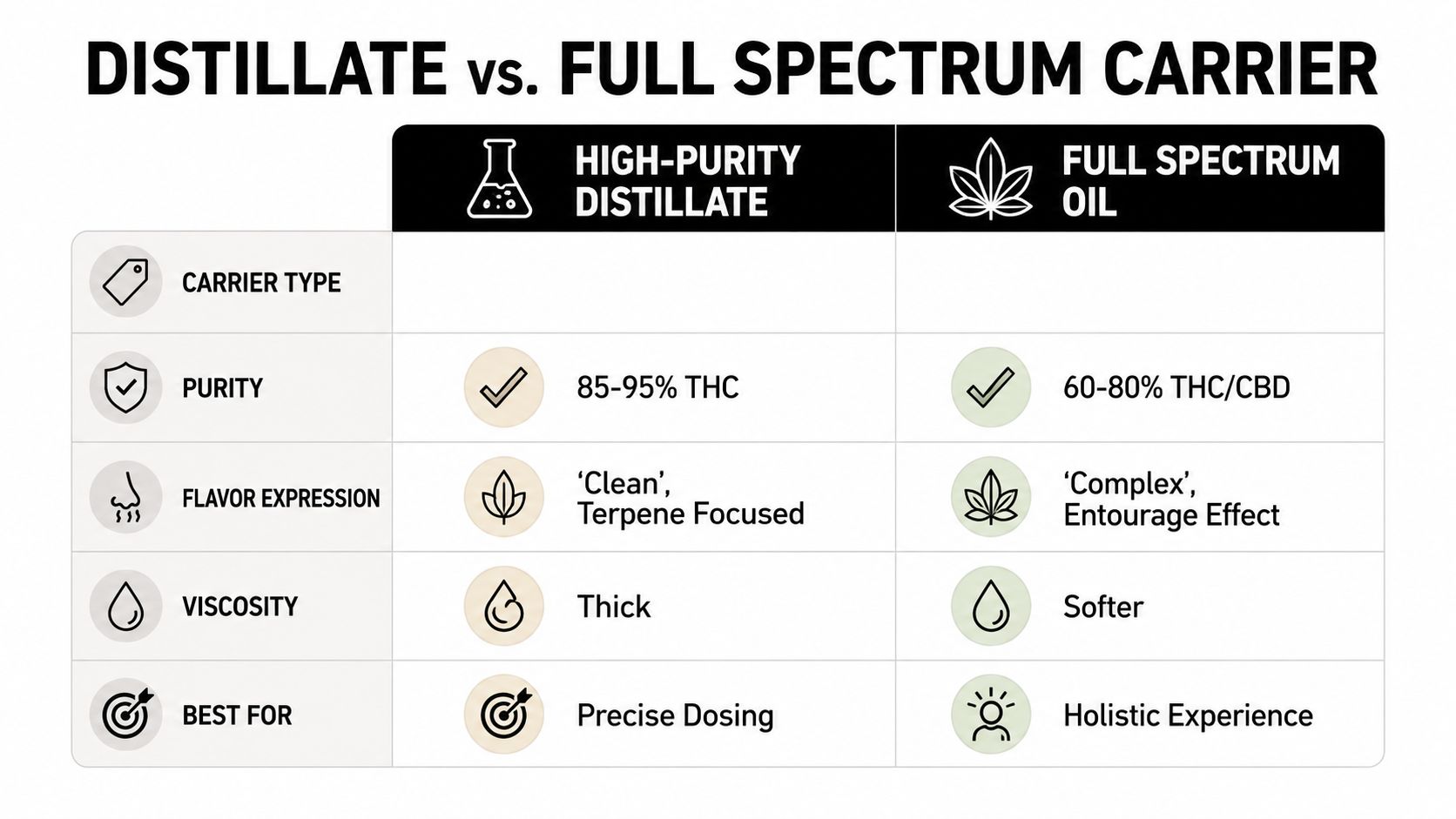
The carrier can change the result more than the terpene percentage suggests. High-purity distillate offers precise control, but its low native aroma leaves thin blends exposed. Full-spectrum materials contribute their own aroma and viscosity, while competing with any strain-inspired profile added afterward.
Distillate gives control
Distillate lets the formulator set the citrus-to-dessert relationship with precision. Limonene can lead the opening, while caryophyllene, myrcene, linalool, and selected flavor isolates shape the middle and finish. This makes the carrier useful when citrus gelato cake is treated as a moving chemovar spectrum rather than a fixed strain formula.
The trade-off is diagnostic clarity. Too much limonene can taste sharp and narrow. Too little myrcene or caryophyllene leaves the oil bright in the vial but hollow after vaporization. The full-spectrum terpene formulation resource helps frame whether native carrier character should remain prominent or whether a cleaner, more controlled profile is the better starting point.
Hardware changes the result. Ceramic systems may preserve a cleaner flavor picture, while wick-based systems can shift delivery through saturation rate and heat distribution. Evaluate the same blend in the intended cartridge, not only in a vial or laboratory glassware. Delicate cream notes often disappear first when the coil runs hot.
Full-spectrum oil brings character
Live resin, rosin, and high-terpene extracts already contain native aroma compounds. Adding a full distillate-style terpene load can over-terp the cartridge, covering the extract with a loud citrus top note and reducing its original identity.
For these carriers, an added Citrus Gelato Cake-style load around 2% to 4% by weight is a practical starting range, subject to the native COA and sensory result. The lower end preserves more of the extract's character. The upper end gives more correction when the native oil lacks citrus or dessert definition.
Diluent choice should follow the carrier and cartridge, not a generic viscosity target. First confirm that the oil flows through the selected hardware at the intended temperature. Then choose a compatible, documented material. A viscosity modifier can alter flavor and create a separate compliance question, so it should not be the default fix.
Storage exposes weak formulas
Citrus top notes can fade in storage when seals or headspace allow volatile material to escape. Compare unopened controls with pulled samples, then record aroma at the beginning and end of the shelf test. Inspect color, viscosity, leakage, and taste as well.
Cold storage can reveal crystallization or separation. Caryophyllene-rich structures may behave differently as distillate cools, so return samples to the intended testing condition before judging flow. The formula is ready only when it performs consistently in the actual package, not merely when it tastes correct on the bench.
Pairing Strategies for Citrus Dessert SKUs
Treat Citrus Gelato Cake as a chemovar spectrum, not a fixed strain specification. A citrus frosting SKU and a lemon-dough SKU can share a base, but their ratios, dessert materials, and hardware behavior must create distinct sensory reasons to exist. Reusing one limonene-heavy formula under several labels produces a weak portfolio.
Pairing one for a citrus frosting direction
For a Wedding Cake-inspired SKU, keep the Citrus Gelato Cake core intact and shift the middle toward frosting. Increase the soft floral impression with linalool, then add a restrained vanillin or sweet-cookie isolate only when the application and safety documentation support it.
The target is citrus frosting, not lemon candy. Limonene should open the profile, caryophyllene should provide gentle spice, and the dessert material should supply the cake impression that terpenes alone may not deliver.
Control the sweetener effect carefully. Excess vanillin can cover the citrus and leave a heavy finish in a cartridge. Too little may disappear after heating. Test the blend in the finished CCELL or other selected hardware, because the wick or ceramic surface can mute delicate cream notes.
Pairing two for a lemon-bright direction
For a Lemon OG-inspired SKU, reinforce pinene and terpinolene while keeping the myrcene and caryophyllene foundation restrained. The target is lemon zest over soft dough, with more lift and less frosting.
A high-limonene strain formulation guide separates Wedding Cake-inspired profiles from Lemon OG-inspired profiles through their supporting terpene structure. That distinction gives formulators a practical way to separate neighboring SKUs while retaining a shared Citrus Gelato Cake foundation.
Set sensory checkpoints before adjusting ratios:
- Bright version: Citrus arrives immediately, with pine and lemon peel carrying the opening.
- Dessert version: Cream and frosting follow the citrus rather than replacing it.
- Shared base: Spice and soft earth remain present without dominating the finish.
The operational benefit is a validated base that can support both a citrus-frosting product and a brighter lemon-dough product. Each finished blend still requires its own COA review, batch record, and hardware check. Confirm the result after heating, because a note that survives bulk tasting may collapse or turn sharp in the cartridge.
Stability, Testing, and a Pre-Launch Checklist
A bench sample confirms that the profile works at one moment. It does not confirm that the cartridge will hold its flavor through storage, repeated pulls, or a hardware change. Citrus Gelato Cake requires a controlled release process because its bright top note exposes imbalance quickly.
Run the release sequence
Begin with a 50 g pilot batch. Record the actual terpene mass, mixing temperature, mixing time, rest period, and fill conditions. Retain a sample for comparison with the finished production lot and the original sensory target.
Complete a 14-day accelerated heat and UV stability check before scaling. Compare the beginning and ending samples for citrus intensity, cream presence, harshness, color, viscosity, leakage, and separation. Test the filled cartridge, not only the bulk oil, since ceramic and wick behavior can change the sensory result.
Use at least three pull profiles on the selected device: a light draw, a normal production draw, and an aggressive draw. Gentle laboratory inhalation can hide a sharp or terpinolene-heavy result that appears once the coil runs hotter.
Watch the known failure modes
- Terpinolene harshness: If the profile turns abrasive above 200°C, check coil temperature first. Reduce terpinolene before rebuilding the entire blend.
- Limonene loss: Inspect cartridges with silicone seals for citrus fade during the shelf test, then compare them with a properly sealed control.
- Cold crystallization: Check caryophyllene-rich distillate after cold storage. Judge the oil only after it returns to the intended test condition.
- Layer collapse: If citrus dominates at fill while cream disappears in vapor, strengthen the mid-note structure instead of raising the total terpene load.
- Hardware mismatch: Reject a formula that performs in one cartridge but fails in the production device.
Keep the final COA, sensory panel notes, hardware lot, fill temperature, and storage conditions with the batch record. That record converts a strain-inspired terpene blend into a repeatable product specification.
Gold Coast Terpenes offers natural, THC-free terpene blends, strain-specific profiles, isolated compounds, diluents, safety documents, and a Mixing Calculator for cartridge and distillate development. Visit Gold Coast Terpenes to source citrus, dessert, and structural components for a controlled Citrus Gelato Cake formulation.