
Blue cotton candy flavor is a two-layer sensory system, not a single chemical identity. Gold Coast Terpenes makes 100% botanically derived terpene blends from Redondo Beach, CA, so formulators can build that spun-sugar body and berry top note without leaning on cannabis-derived input or combustion artifacts.
Blue cotton candy has been recognized since 1958, when Gold Medal promoted blue raspberry for cotton-candy and snow-cone operators, and the frozen-beverage version followed in 1970 or 1971 with ICEE. That history matters because the market learned to read blue as a sensory cue, not a botanical fact, and that cue still shapes vape and distillate briefs today what is the origin of blue raspberry flavor.
What Blue Cotton Candy Flavor Actually Is
Blue cotton candy flavor is best treated as a sensory convention, not a standardized recipe. If you brief it as a single note, you usually end up with a generic berry or an overworked candy profile that misses the nostalgic read entirely.
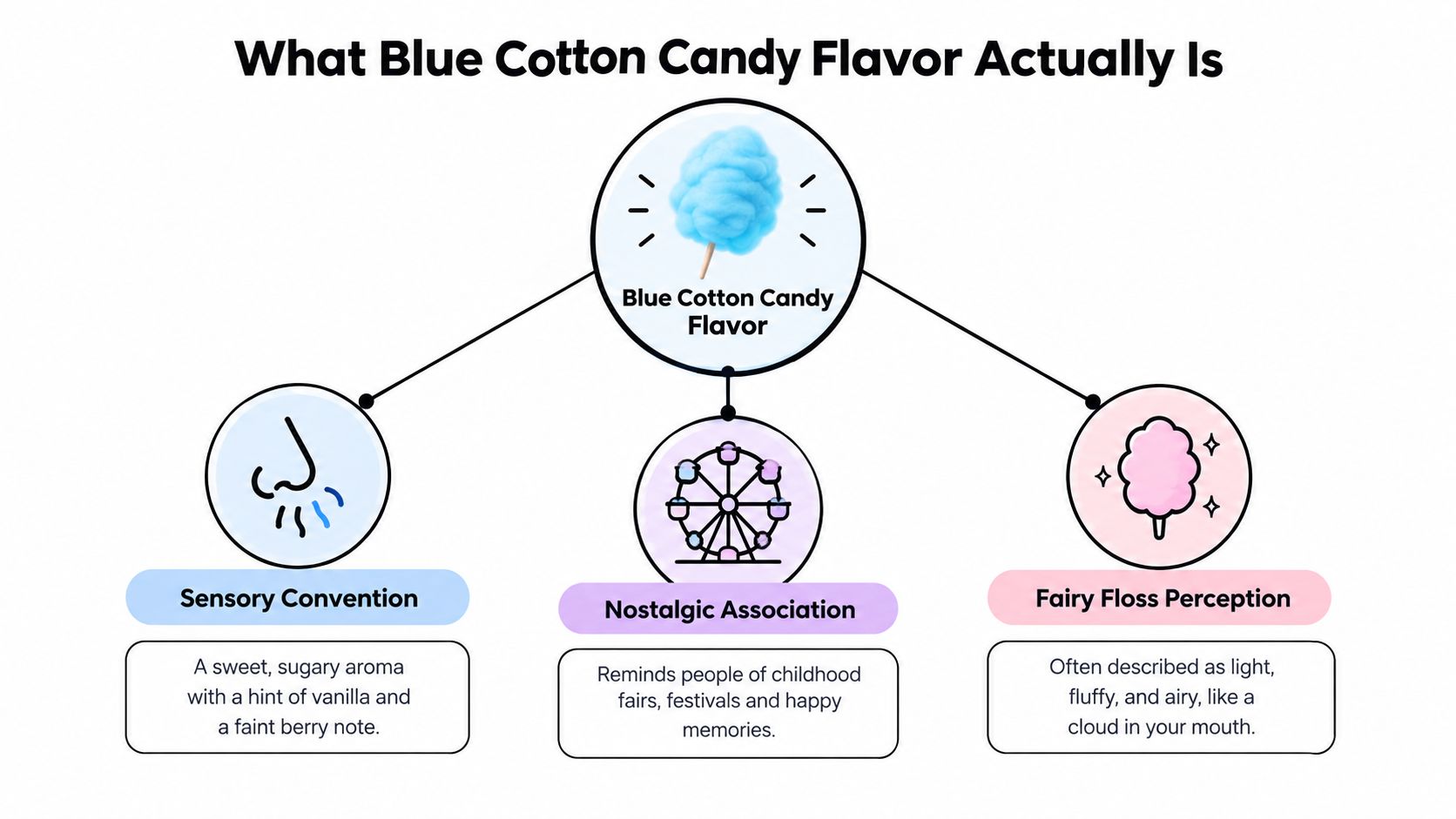
Gold Coast Terpenes, as a botanical terpene supplier, is useful here because the job is not to chase color. The job is to control aroma architecture, then decide separately whether the SKU needs a blue visual cue, a clear oil, or a naturally tinted finish. A lot of brands still collapse blue cotton candy into blue raspberry, but the practical formulation brief is broader than that.
The historical cue behind the profile
The flavor identity grew out of fairground confectionery, then spread into slush drinks, candy, and frozen desserts. By the 1970s, blue raspberry had become recognizable enough that the color itself started signaling a sweet-tart berry impression, even when the actual fruit had nothing blue about it. That's why consumers respond to the color before they even identify the aroma.
Practical rule: if your color story and aroma story disagree, buyers notice the mismatch before they can describe it.
For Gold Coast Terpenes customers building a 2026 SKU, that means the brief should separate appearance, top note, and candy body. A blue finish can support recognition, but it won't rescue a weak formula.
What is blue raspberry flavor is a useful internal reference if you need to compare how the category is usually described versus how it performs in formulation.
The Two-Layer Sensory System Behind the Flavor
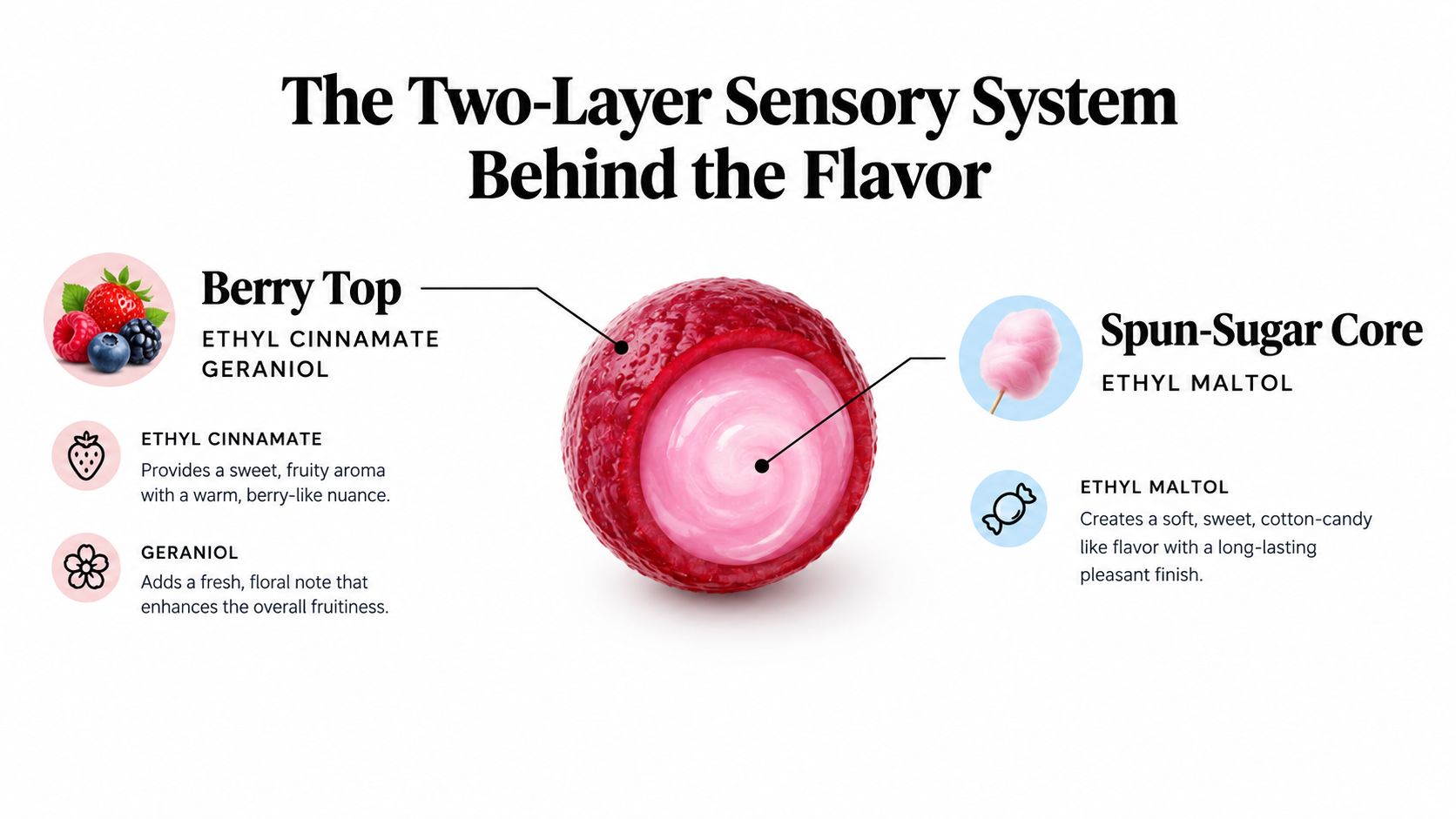
Blue cotton candy reads correctly when the spun-sugar core and the berry top stay in balance. If one layer takes over, the profile drifts away from candy and starts reading as plain fruit or sugary syrup.
Base layer first, fruit layer second
The base layer is the sweet, caramel-like cotton-candy body. Ethyl maltol is the main structural anchor because its odor profile is documented as sweet, fruity-caramellic, and cotton-candy-like, while maltol reinforces sweet, fruity, berry, strawberry, and caramellic impressions. The top layer is the restrained berry accord, which can lean raspberry, strawberry, or mixed fruit without turning the profile into jam.
That trade-off matters in real development. Push the berry fraction and you get clearer fruit recognition, but the spun-sugar impression weakens. Push ethyl maltol and the candy reads more like real candy, but it can turn dense or burnt-sweet if the level is too high.
Gold Coast Terpenes' botanical isolates can support the edges of the blend. Limonene adds lift, myrcene rounds the middle, and beta-caryophyllene adds depth without forcing the formula into one flat flavor lane.
What to test, not just what to imagine
A workable sensory matrix keeps one layer steady while you move the other. Test which version reads as blue candy, which reads as fruit candy, and which one goes flat.
A good formulation brief separates sweetness, berry brightness, and caramel depth before it reaches hardware testing.
If the SKU is being built for for vape cartridges or for distillate, the same two-layer structure still applies, but heat and dilution change how each note survives. Gold Coast Terpenes' botanical blend philosophy stays practical here because the blend can be tuned as a top, mid, and base system instead of a single flavor shortcut.
Ethyl Maltol and the Spun-Sugar Core
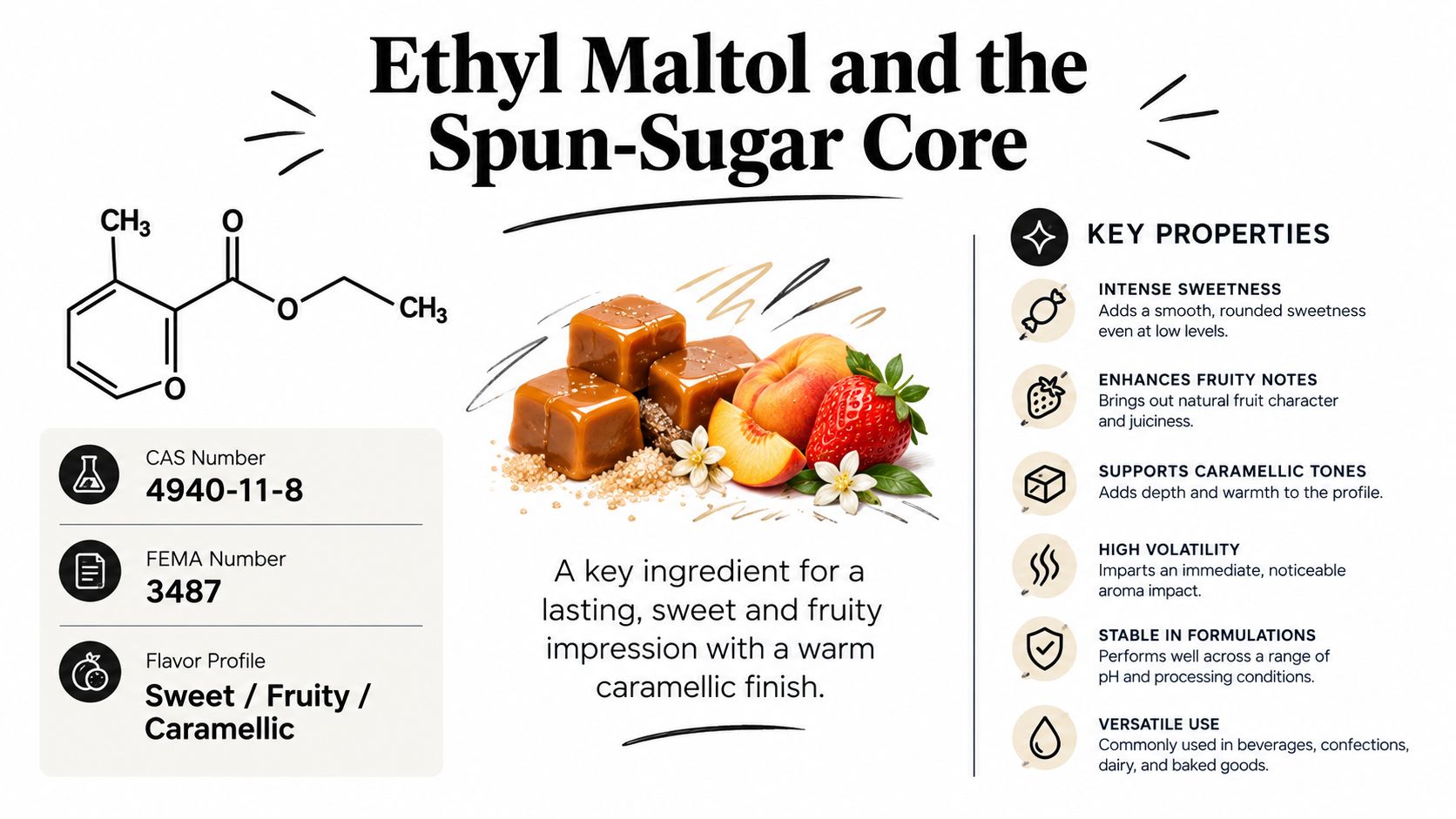
Ethyl maltol is the main structural anchor in the cotton-candy body. It gives the blend the cooked-sugar, sweet-fruit center that keeps the profile reading as candy instead of plain berry syrup.
Why the base can get heavy fast
Ethyl maltol, chemically 2-ethyl-3-hydroxy-4H-pyran-4-one, carries CAS 4940-11-8 and FEMA 3487. Flavorist references describe it as about 4–6 times more potent than maltol, with typical use levels of 0.1–2.0% in a flavor compound, roughly 10–150 ppm in finished candy flavor materials that contribute to candy flavor notes.
Those ranges explain the common failure mode. At a low level, ethyl maltol reads as berry-supportive sweetness. Raise it too far and it starts to mute freshness, then the profile can drift into jammy or burnt-sugar territory. A cotton candy flavor preparation safety sheet also lists ethyl maltol at 1–5% by weight inside the flavoring itself cotton candy flavor SDS.
Food references are not inhalation permission
Those are food-flavor references, not inhalation limits. The FDA listing identifies ethyl maltol as a flavoring agent or adjuvant under food rules, and the JECFA-reported acceptable daily intake is 0–2 mg/kg body weight, but that still does not establish route-specific safety for aerosol use FDA flavoring agent listing for maltol and ethyl maltol.
For cartridge development, keep ethyl maltol in the mid to base sweetener role, then leave space for the berry top note to survive heat and dilution. Gold Coast Terpenes' SC Lab-tested documentation and THC-free terpene oils reduce supplier-side ambiguity, but they do not replace route-specific toxicology review.
Flavor extracts for baking is a useful internal read if your team wants a clean example of how food-flavor logic differs from product-development logic.
Matching the Berry Top Without Breaking the Candy Read
The berry top has to stay restrained. Push it too far and the profile becomes a plain fruit flavor, but pull it too far back and the “blue” signal disappears.
Picking the right fruit direction
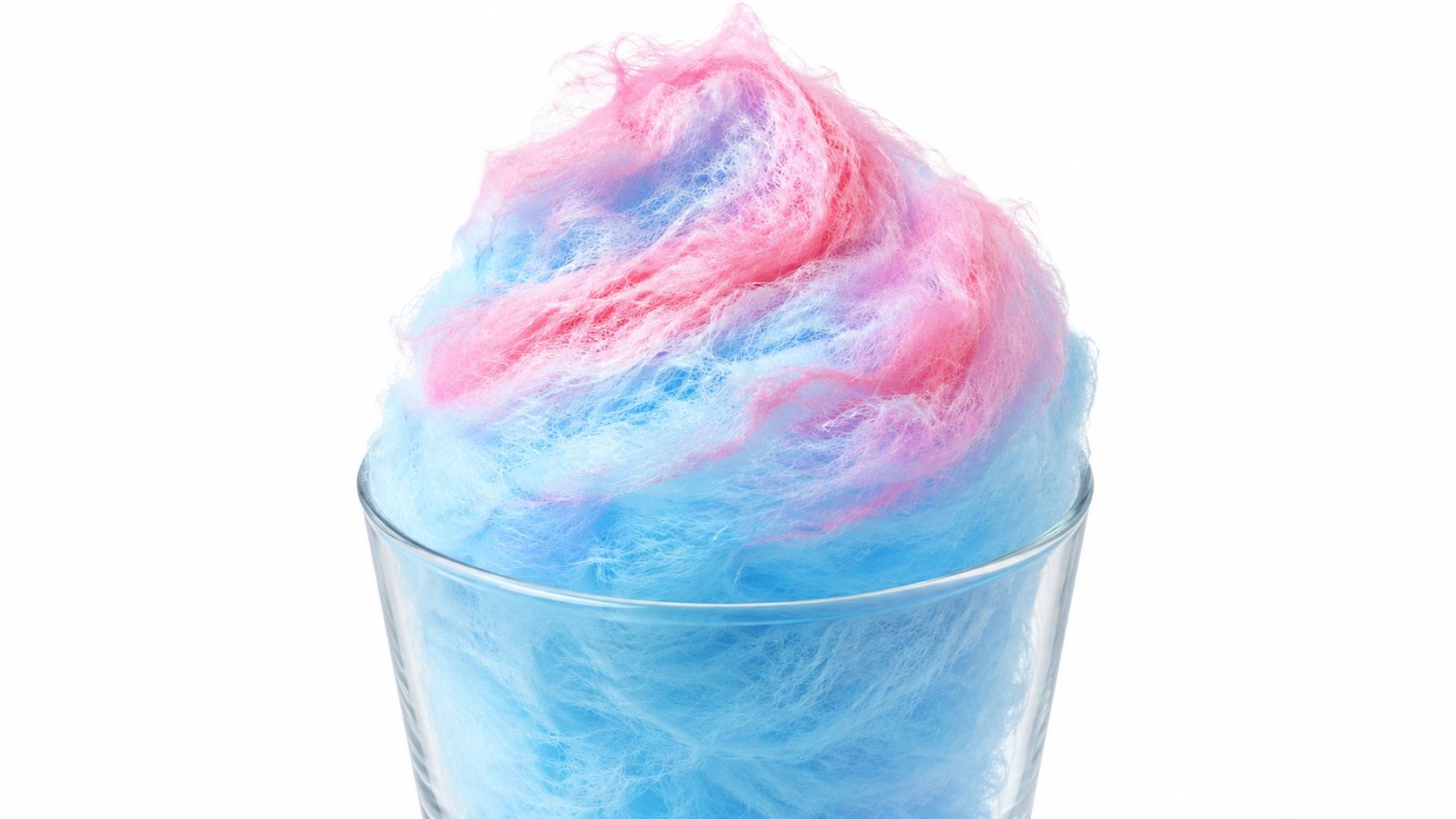
A blue cotton candy brief usually lands in one of four directions. Bright raspberry keeps the profile sharp, strawberry softens it, blueberry-leaning material can make it feel darker and less candy-like, and a vanilla-bubblegum tilt pushes it into a different dessert family entirely.
Gold Coast Terpenes' botanical, THC-free blends are built without VG, PG, PEG, or MCT, so the same top-note decision behaves differently in a food matrix than it does in a cart. That's why supplier documentation matters. If the aroma goal is a tart berry candy, the top note has to support the spun-sugar body, not replace it.
A quick comparison for formulators
- Bright raspberry direction: gives the clearest link to the blue candy cue, especially when the base is sweet but not muddy.
- Strawberry direction: reads softer and rounder, useful when the brand wants less tartness.
- Blueberry-leaning direction: can feel more generic or jammy, so it needs tighter control.
- Vanilla-bubblegum direction: useful only if the brief is moving away from classic blue cotton candy.
Elevated Strains is one catalog page that reflects how Gold Coast Terpenes organizes flavor-hybrid work, even when the target isn't a literal candy profile.
If the brief needs more fruit lift, a botanical flavor profile resource such as fruit terpenes is a better starting point than trying to force the answer from color alone. The same logic applies when comparing something like Bananna runtz to a blue candy target, because dessert fruit and blue candy are not the same sensory job.
Building a Blender Brief From Sensory Language
Turn the brief into three scores before anyone starts mixing. That keeps the target measurable and stops the team from arguing over “close enough” without a shared sensory map.
A practical scoring sheet
Start with sweetness intensity, berry brightness, and caramel depth, then score each one on a simple 1 to 5 scale. Use that sheet to set the first bench target, then check it in the actual coil temperature, hardware, and oil viscosity instead of treating the bench sample as the finished result.
Working rule: raise the base while holding the top constant, then reverse the order and watch where the candy read collapses.
A worked example makes the brief usable. Target 4/5 sweetness, 2/5 berry brightness, 3/5 caramel depth, then start at 0.8% ethyl maltol in the compound, step the berry top by 0.1% increments, and re-score after a 24-hour rest and heated drawdown.
That method shows whether the formula needs more body or less fruit. It also makes sample A and sample B easier to compare without chasing a subjective “best” result.
Tools that help the process
Gold Coast Terpenes' Mixing Calculator turns that sensory language into weight percentages. For a blue cotton candy-style brief, the point is not a prettier catalog pitch, it is a repeatable translation from taste notes to compound loading, then back to a coil test.
The catalog still matters because a nearby flavor family usually gives a better starting point than a fantasy recipe. A neutral reference like Apple Fritter flavor-hybrid profile can help a team judge how much sweet body a blend carries before the berry top is added.
Why Blue Is a Color Decision, Not a Flavor Decision
Blue is a visual code, not a chemically fixed flavor. The flavor identity developed through confectionery and beverage marketing, then got reinforced so often that buyers now expect color and taste to travel together even when they don't have to.
The regulatory side matters more in 2026 than it used to. In April 2025, the U.S. Department of Health and Human Services and the FDA announced plans to phase out petroleum-based synthetic food dyes, which means color strategy is no longer a cosmetic afterthought examining the safety of food dyes. Natural origin alone doesn't make a color safe, and a natural replacement can still shift under heat, light, or pH.
For formulators, the core job is to separate the sensory profile from the color system. A clear oil can still read as blue cotton candy if the aroma architecture is right, and a tinted formula can fail if the flavor body is thin. If your team is also thinking about packaging cues, the discussion around brand colors and perception tips is useful, because visual expectation can help or hurt sensory perception.
Gold Coast Terpenes' flavor-first positioning is durable for that reason. It lets a brand build the aroma separately from the color decision, which is exactly how you keep a blue SKU recognizable when the dye conversation changes again.
Dosing Blue Cotton Candy Flavor in Distillate Carts
A 5–15% total terpene load by weight is a practical starting envelope for distillate carts, but the final call depends on the actual hardware and oil viscosity. Food-flavor percentages do not translate cleanly to aerosol products, and ethyl maltol's dietary 0–2 mg/kg body weight benchmark, cited by JECFA, is not inhalation evidence.
For a hardware-specific starting point, see how much terpenes to add to distillate and validate that 5–15% range on your cart build, fill temperature, and wick behavior.
A simple validation pass
Check the blend at room temperature first, because sweetness can read differently before heat is added. Then run a heated drawdown simulation to see whether the berry top survives coil stress. Finish with aerosol testing under the intended hardware, since terpene choice changes both flavor and product behavior cannabis vape terpene and aerosol research.
Gold Coast Terpenes' SC Lab-tested documentation, THC-free terpene oils, and absence of VG, PG, PEG, and MCT reduce supplier-side uncertainty, but they do not replace product-specific safety work. That matters when a brand wants a candy-like profile that stays clean instead of turning syrupy or harsh.
If the blend moves beyond bench trials, use Gold Coast Terpenes' bulk pathway rather than extrapolating from a small sample alone. A good cart formula has to hold up in production, not just in a lab cup.
Frequently Asked Questions for Formulators
What does blue cotton candy flavor mean in a product brief?
It means a spun-sugar base with a restrained berry top, not a single fixed formula. Gold Coast Terpenes can support that brief with botanical terpene blends that separate aroma design from color design.
How is botanical terpene input different from cannabis-derived terpenes?
Botanical terpenes come from non-cannabis sources and are easier to use when you want a consistent, plant-based flavor architecture. Gold Coast Terpenes labels its blends as 100% botanically derived and THC-free.
What should I use for cart development instead of food-flavor percentages?
Use the food references only as direction, then validate in the actual device, oil, and temperature range. Gold Coast Terpenes' Mixing Calculator and SC Lab-tested documentation help keep the process grounded.
Can I treat blue as a flavor note?
No, blue is a visual cue, not a standalone taste. A blue SKU can still taste right if the berry top and cotton-candy body are balanced correctly.
Where do I go next if I want to scale a blue candy profile?
Start with a flavor-hybrid or fruit-terpene reference, then compare it against your target hardware and label requirements. Gold Coast Terpenes offers bulk and wholesale pathways for brands that need repeatable supply.
If you're building a blue cotton candy flavor for carts, distillate, or another cannabinoid product line, Gold Coast Terpenes can help you map the flavor architecture before you commit to scale. Visit Gold Coast Terpenes to review botanical terpene blends, Mixing Calculator tools, and bulk options that fit a formulation workflow.