
You're staring at a melon-forward pilot batch that tastes right on the first pull, then veers into pepper and herbs before the cart is even half empty. That's the part most strain pages skip, and it's exactly where formulation wins or fails. For a Sweet Melon strain terpene profile for vape cartridges, the job isn't just to copy a flavor note, it's to hold the fruit line under heat, dose, and storage conditions.
Sweet Melon is better treated as a sensory target than a fixed botanical fingerprint. Modern melon history shows why, cultivated melons trace back to two major lineages that diverged about 2 million years ago, with melon domestication stretching back at least 4,000 years in Africa and Asia, and sweet dessert watermelon forms appearing in Mediterranean regions by roughly 2,000 years ago (FAO agris record). In cannabis, that same “melon” idea has become a flavor category, not a single universal cultivar. That matters in the lab, because what a buyer calls melon can be a bright fruit top note, a soft musky body, or a spice-leaning finish, depending on how the blend is built.
Why Sweet Melon Keeps Drifting in Your Formulations
A brand owner usually spots the problem during QC, not during planning. The sample smells clean out of the bottle, the first few draws read like fresh honeydew, then the profile shifts and the cart starts finishing like peppery spice with a herbal edge. That drift feels like a batch problem, but it usually comes from how the aroma behaves under use, not from a bad base oil.
Heat doesn't treat every terpene the same
Sweet Melon listings consistently point to myrcene, limonene, and beta-caryophyllene as the main aromatic drivers, with total terpene content commonly around 1.5% to 3.0% by weight under optimal cultivation (Joint Commerce guide). That mix gives you a melon profile with a citrus lift and a peppered backbone, which is useful until heat starts exposing the weakest link. The top note goes first, then the rounded fruit body thins out, and what's left is the spice.
For that reason, a 50/50 hybrid like Sweet Melon often feels broader than a narrow melon-leaning sativa expression. The balanced genetics create a wider aromatic lane, which helps the profile read as fruit-forward at low intensity and more grounded at higher intensity. The same flexibility also means more room for the blend to drift if the ratio isn't controlled tightly.
Practical rule: if the first draw tastes right but the second and third slide into spice, don't reach for more total terpene load first. Rebalance the top, mid, and base notes.
A lot of formulators chase the wrong fix. They raise the total terpene percentage, hoping more aroma will preserve sweetness, but all that often does is push the heavier notes harder once the cart warms up. Sweet Melon rewards restraint, because the fruit impression comes from balance, not brute force.
The Three Control Points in the Sweet Melon Terpene Profile
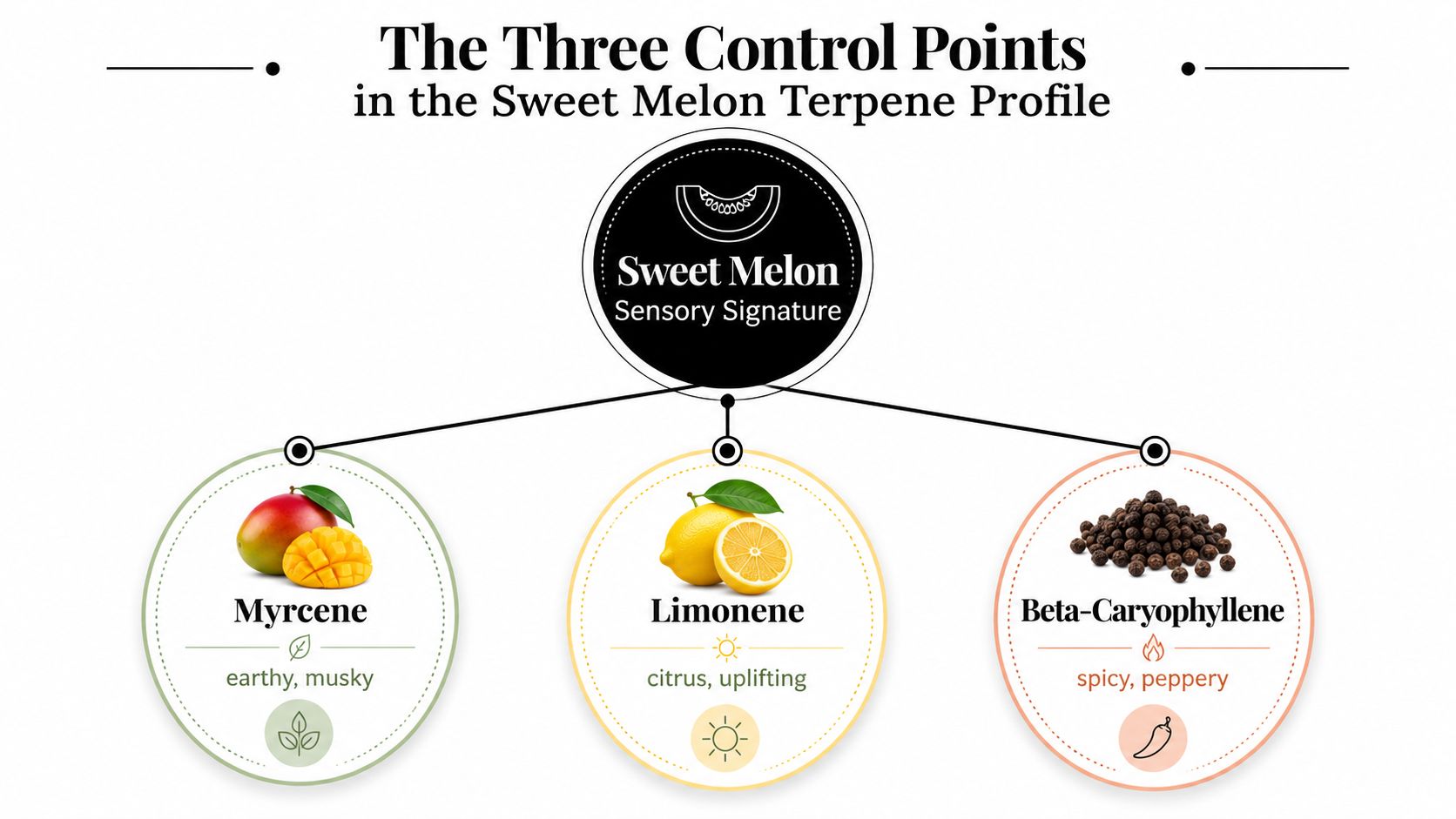
The cleanest way to build this profile is to treat it like a three-part structure. Limonene carries the top note, myrcene shapes the mid and base body, and beta-caryophyllene keeps the finish from becoming flat or candy-like. When those three move together, the profile feels like melon. When one of them runs hot, the profile starts leaning citrus, herbal, or pepper-heavy.
Myrcene is the body of the blend
Myrcene gives the profile its rounded tropical base. In practice, that's the note that keeps a melon cart from reading like sweet air freshener. It fills the mid-palate and gives the vapor some weight, which matters in distillate, where thinness shows up fast.
Limonene is the bright edge
Limonene is the lift. It supplies the citrus-sweet flash that consumers often interpret as fresh melon, even when they can't name the compound behind it. If you want the first impression to feel juicy instead of dull, limonene has to be present in a way that survives the first heat cycle.
Beta-caryophyllene is the guardrail
Beta-caryophyllene adds peppery warmth. Left alone, it can pull the blend toward spice. Used correctly, it gives the profile depth and stops the fruit from collapsing into simple candy. That's why melon blends that feel adult and polished usually have a controlled caryophyllene finish instead of a flat sugary aftertaste.
A separate strain guide places dessert-style melon cultivars between 1.5% and 3.0% total terpenes by weight, and the same guide describes Sweet Melon potency in the broader dessert-hybrid band at 18% to 25% THC, with top phenotypes around 22% THC in retail listings (AllBud). Those numbers matter because higher-potency material tends to demand cleaner sensory architecture. The stronger the oil, the less room there is for muddled flavor.
For brands using a strain-inspired terpene blend, the practical move is to treat these three compounds as independent control points, not a locked package. That's how you preserve the melon read across different carriers, coil systems, and heat loads.
Formulating with Gold Coast Terpenes Strain-Specific Blends and Isolates
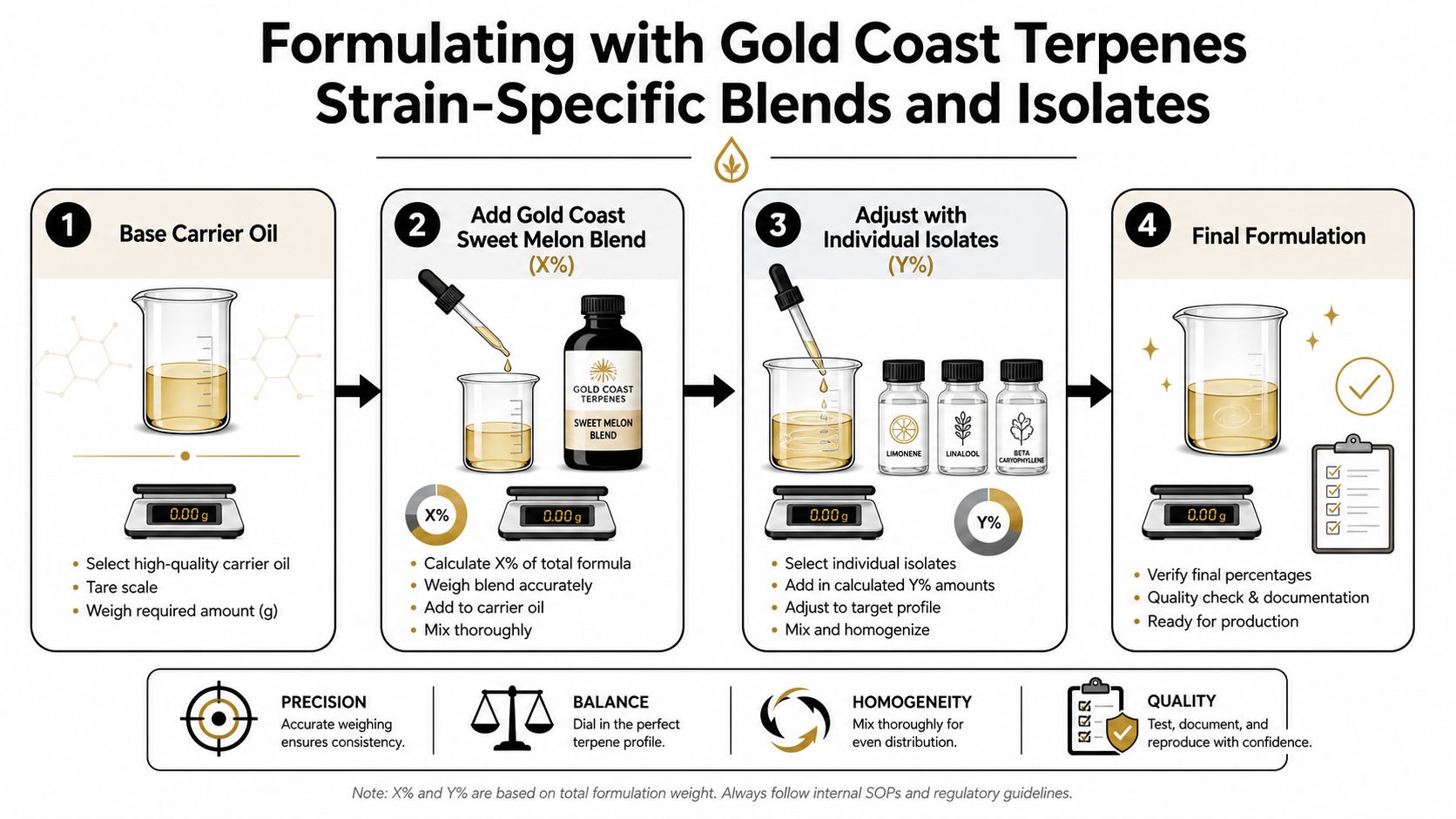
A workable bench protocol starts with a known base, then trims the edges. For a Sweet Melon-style build, the easiest route is a strain-specific melon blend as the foundation, then small corrections with isolates if the sample leans too citrus, too musky, or too pepper-forward. One option in the market is Gold Coast Terpenes, which sells strain-specific profiles and isolates for cartridge and concentrate work, along with a Terpenes 101 resource and a sample pack page.
Start with the base blend, then adjust
For a distillate-based cartridge pilot, begin with a conservative terpene inclusion and test the flavor after the first and third pulls. If the fruit note drops too quickly, nudge limonene upward in small corrections. If the profile gets loud but hollow, add back body with myrcene. If the finish feels too candy-like or thin, a little beta-caryophyllene usually restores structure.
For a live resin or other concentrate-oriented build, keep the correction strategy even tighter. Those formats already carry more native character, so the goal is not to overwrite the matrix. It's to reinforce it without turning the finish spicy.
A useful workflow is simple:
- Blend the base carrier oil and main extract thoroughly.
- Add the Sweet Melon-style terpene base.
- Evaluate aroma before and after warm resting.
- Adjust with isolates only after the first pass is stable.
Formulation note: add terpenes after the oil is fully blended and no longer being pushed through unnecessary heat. Extra heating doesn't “help” the aroma, it usually strips it.
The Mixing Calculator resource is useful when you need to scale a pilot result without rewriting the ratio from scratch. The same matters for production discipline. A small test batch that reads correctly at the bench can drift once it's scaled if the order of addition changes or the oil is mixed too aggressively.
Cartridge Versus Concentrate Formulation Trade-Offs
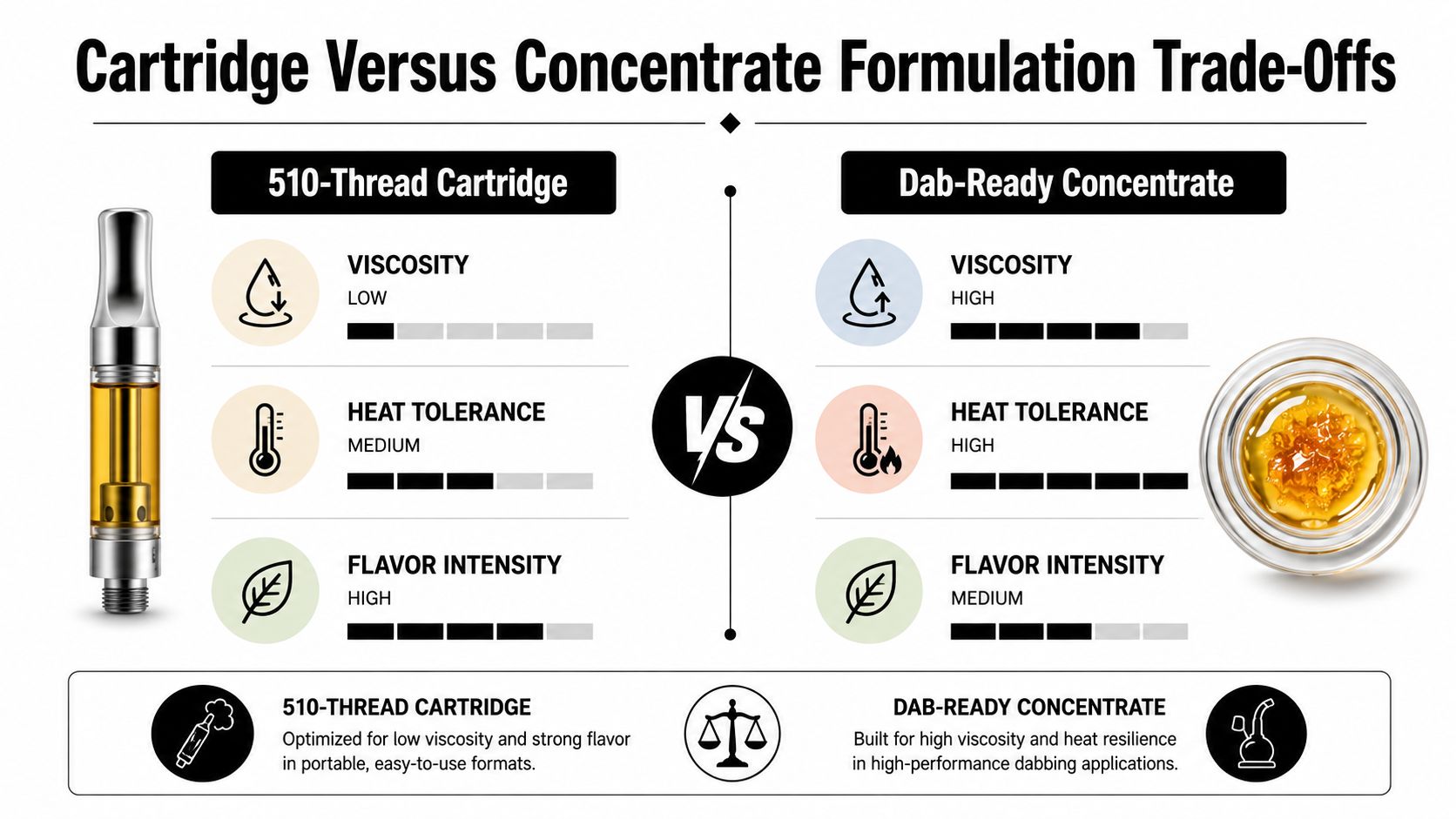
The same Sweet Melon profile doesn't behave the same way in a 510-thread cartridge and a dab-ready concentrate. That's not a branding issue, it's a physics issue. Coils, bangers, airflow, and viscosity all change which part of the aroma survives long enough to matter.
Cartridges need more top-note insurance
In carts, the heat load is concentrated and repeated. That means the fruit top note burns off faster, especially if the coil runs hot or the user chain-hits the device. A slightly stronger limonene presence helps the first impression survive long enough for the consumer to register “melon” before the profile settles.
Cartridge formulators also need to watch viscosity. Too thick, and the cart struggles. Too thin, and the flavor can feel sharp or unstable. That's why a master blend built for carts usually has to be more protective of the bright note than a concentrate blend.
Concentrates can hold more base character
Dab-ready products give you more room to preserve deeper structure, but they also expose flaws faster. If the base is too spice-forward, high heat makes it obvious. In this format, preserving beta-caryophyllene matters because it supports the finish and keeps the profile from turning flat once the top note flashes off.
For teams choosing which SKU to prioritize first, I'd start with the format that already sells most reliably in your line. Then adapt the other product from the same core chemistry instead of trying to create two unrelated flavor systems. That keeps purchasing, QA, and sensory targets aligned.
The article Is Live Resin Better Than Distillate is worth reading if your current decision point is whether the matrix should be flavor-led or extract-led. The answer changes how much terpene correction you need, and how hard you can push the melon note before it turns stale.
The Dose-Dependent Shift That Breaks Most Melon Profiles
A melon SKU can pass bench tasting and still fail in use if the terpene load is pushed too far. The first impression stays fruity, then the later pulls drift toward herbal spice and the profile stops reading cleanly as melon. That crossover is where a lot of formulations lose the bright top note that made them attractive in the first place.
Sensory load changes with concentration
Sweet Melon strain guides describe a nuance formulators should respect, melon-leaning terpene spaces can feel focusing at small doses and more sedating at larger ones, with dry mouth and dry eyes as common negatives (Leafly Sweet Melon listing). The same aromatic stack does not read the same way at every load, and that shift matters more than the strain name on the label.
A 5% terpene load can deliver a bright, energetic fruit note in some distillate systems, while an 8% load in the same base can push the profile toward heavier herbal territory. I treat that range as a crossover zone, not a target. Once the blend moves into that heavier lane, the melon impression gets harder to hold.
Test the point where fruit turns to spice
The quickest way to find the ceiling is to run paired sensory checks, one at the intended shelf load and one slightly above it. If the higher-load sample loses the juicy front note and the finish turns peppery, the matrix is already at its limit. Keep the fruit-forward top note where it still reads as fruit, not where it only survives by force.
A practical control point is a simple ratio check before you commit to full production. A terpene mixing calculator can help you model the blend before you scale it into hardware, especially when you are trying to preserve brightness without letting the spice notes take over. That kind of pre-check does not replace sensory work, but it does reduce the number of blind adjustments.
What works better is building one master blend for the target format, then holding a small reserve for last-mile correction. That reserve should restore brightness, not cover a weak base. If the corrective addition starts dragging the finish deeper into herb and pepper, the fix has gone too far.
- Check the first pull: confirm the melon note shows up immediately.
- Check the third pull: confirm the flavor still reads fruity instead of herbal.
- Check the finish: confirm the spice stays in support, not in control.
The question is readability, not volume. If a customer cannot separate melon, herbs, and pepper after a few draws, the blend is too dense for the device and the dose range you are targeting.
Testing and Quality Control Checklist for Batch Consistency
A reliable melon SKU doesn't need a giant lab to stay in line, but it does need repeatable checks. Batch drift usually shows up first in aroma, then in viscosity, then in customer feedback. If you catch it in-house, you don't have to explain it later.
What to verify before release
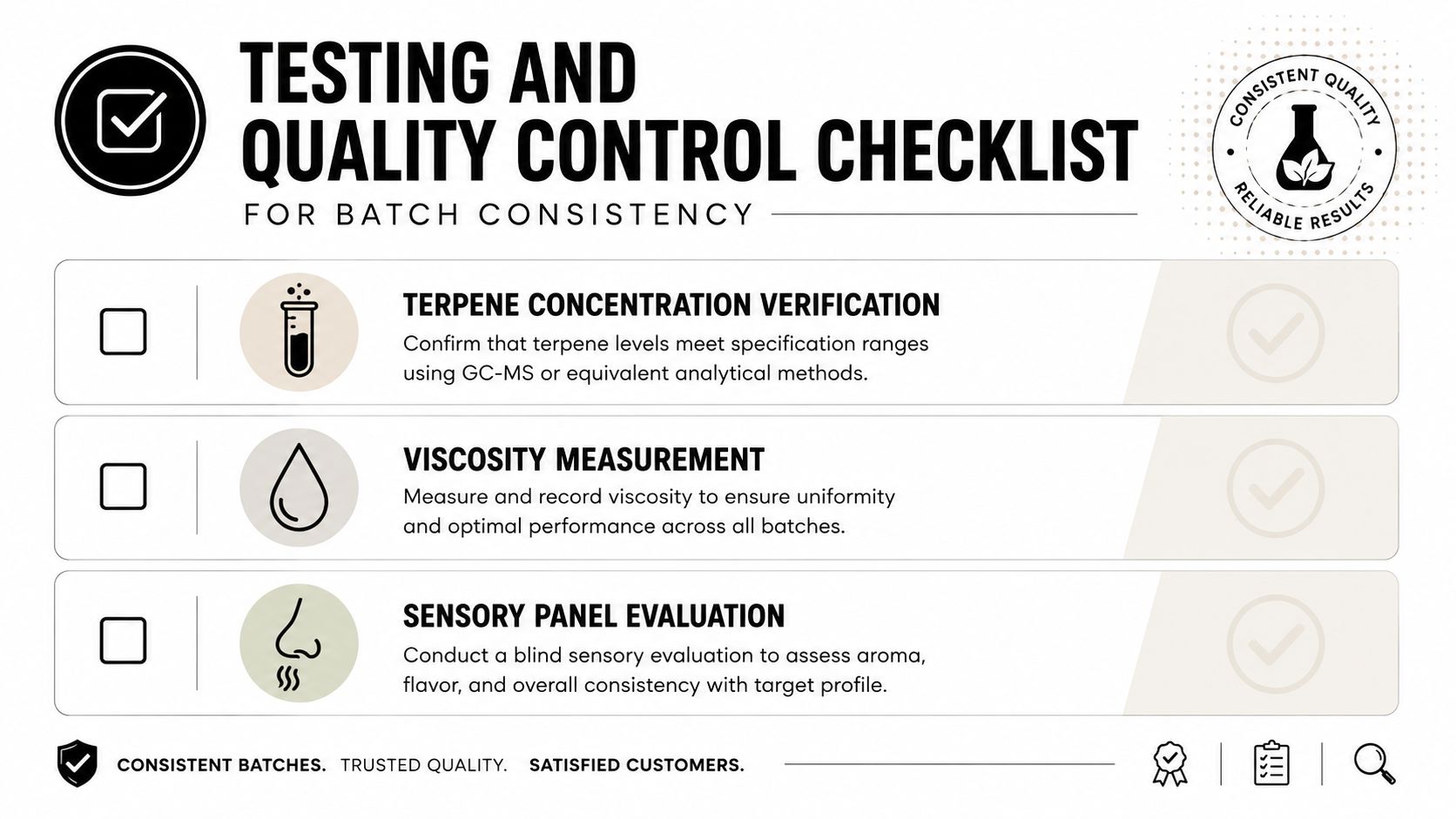
Use a fixed checklist for every Sweet Melon-style batch:
- Terpene concentration verification: confirm the blend matches the intended load before fill.
- Viscosity measurement: make sure the oil still behaves the same in the hardware you're using.
- Sensory panel evaluation: train staff to identify melon top note, citrus lift, and pepper finish separately.
The point isn't to make everyone a flavor chemist. The point is to give production a common language. If one tester calls the sample “sweet,” another says “herbal,” and a third says “spicy,” the batch needs another look before release.
I'd also keep a written batch record that includes the source of the base oil, the terpene lot, the date of blending, and the date of final evaluation. If a sample separates in storage or develops a flatter aroma after sitting, pull it back into review rather than letting it ship. For teams that already use third-party validation, SC Labs results are useful as a comparison point against in-house checks, especially when you're building a repeatable fill standard.
The quality control testing resource fits well here if your production team needs a tighter structure around sampling and review. QC only works when it's boring, consistent, and documented.
Positioning Sweet Melon as a Flavor Category for Broader Market Appeal
Melon is increasingly a flavor category, not just a strain name. That's useful commercially because it gives brands room to build adjacent SKUs without pretending every jar will smell identical. It also lowers risk when a customer expects candy-sweet melon and the sample naturally trends more herbal or spicy.
A stronger retail story is to position the product as fruit-forward with a controlled pepper finish. That language sets better expectations than vague “dessert” wording, and it gives your sales team something concrete to say when buyers ask how the profile differs from generic sweet hybrids. Packaging copy should reinforce the melon cue without overpromising a single fruit note that may not survive every device.
For wholesalers, the message is simple. The profile is designed to preserve the melon top note across formats, while keeping enough spice in the base to avoid tasting thin or artificial. That's the kind of technical positioning that survives a buying conversation because it explains the trade-off instead of hiding it.
If you want one product family to carry the concept, use melon as the anchor and build outward into tropical and dessert-adjacent variants. That approach gives you more room to support different price tiers, different devices, and different consumer expectations without resetting the brand story each time.
Gold Coast Terpenes supplies strain-specific profiles, isolates, and formulation resources that fit this kind of SKU work, including melon-leaning options for carts and concentrates. If you're building a Sweet Melon-style product and need a consistent starting point, visit Gold Coast Terpenes and compare the profile options, sample packs, and mixing tools against your current bench standard.