
A cracked beaker is a small failure until it isn't. In a terpene room, a limonene-heavy blend can spread fast, stink up the whole bench, and turn a clean formulation run into a waste problem if the first response is sloppy. The work is never just about wiping up liquid, it's about saving product, protecting drains, and keeping the next batch from inheriting contamination.
Why Terpene Spills Deserve Their Own Playbook
A terpene spill doesn't behave like a dull warehouse leak. It flashes through the room differently, carries odor far beyond the puddle, and can wreck the sensory character of nearby materials if the response drags on. In a licensed extraction lab, that means spill containment procedures have to protect both people and product, not just the floor.
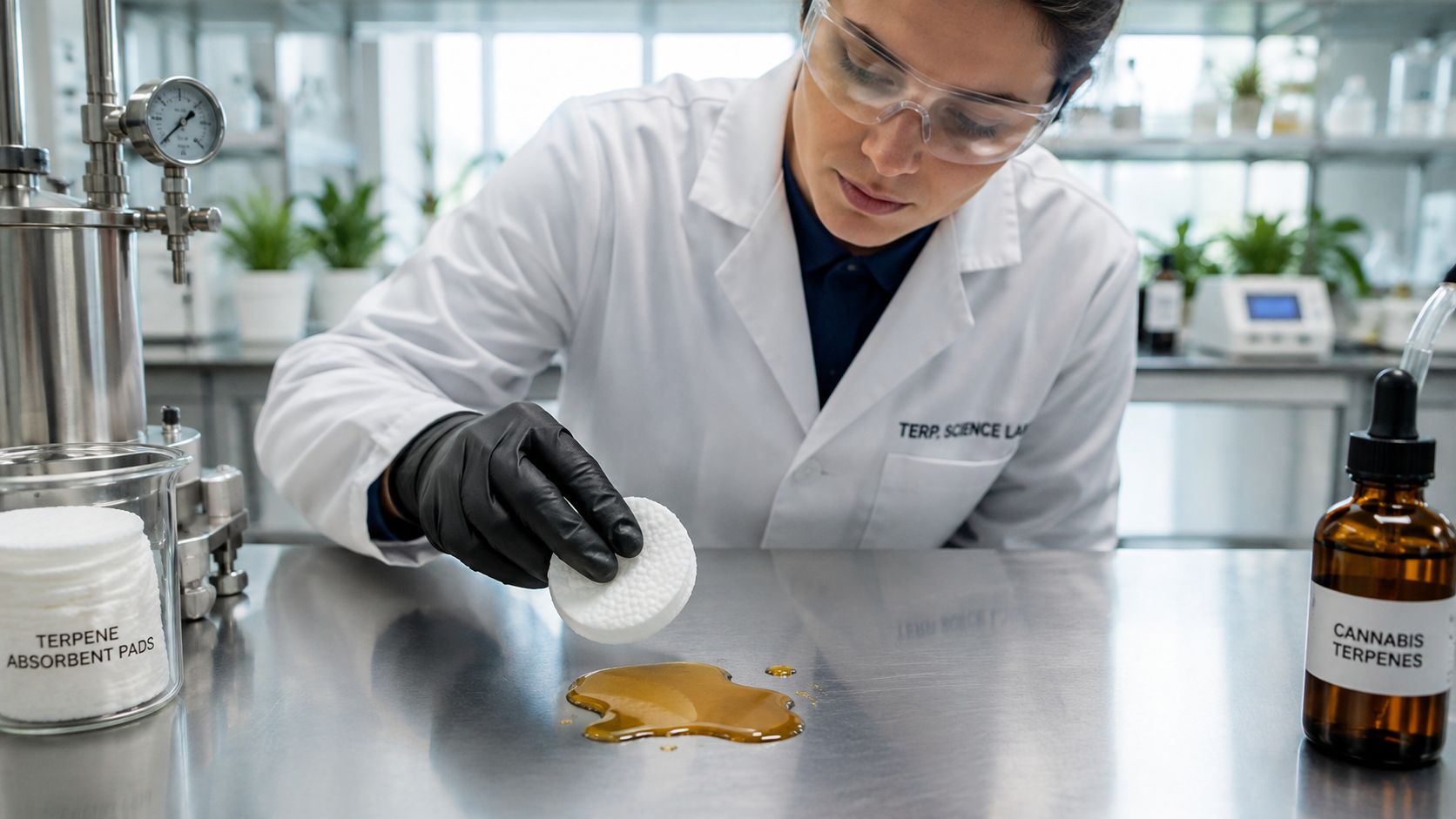
What makes a terpene spill different
A limonene-rich blend can spread scent into adjacent rooms before anyone notices the liquid line. That's a commercial problem, because odor transfer can make a good formulation smell off long after the spill itself is gone. It's also a cleanup problem, because the wrong absorbent can soak up the whole aroma along with the liquid and leave you paying twice, once for lost material and again for disposal.
The EPA spill pattern is the reason seasoned facilities plan for fast isolation instead of heroic cleanup. In the cited hydraulic fracturing spill review, 56% of spills were 1,000 gallons or less, and human error was a common cause, including 19% from flowback and produced water due to human error with a median volume of 1,000 gallons, and 14% from flowback and produced water due to human error at storage units with a median of 840 gallons. That profile points to routine, not mythical, events, which is why response has to be immediate and boring in the best way possible, stop the leak, keep it off drains, and keep it out of the waste stream until you've got control. The review is here if you want the underlying pattern in black and white, EPA hydraulic fracturing spill data review.
Practical rule: if the spill can still migrate, you haven't contained it yet.
A terpene floor spill also behaves differently from a water-based cleanup because residue matters. A bad wipe-down can smear scent across the bench and into gloves, shoes, or tools, which is how one small break becomes a whole-room sensory failure.
Pre-Incident Setup Before the First Drop Hits the Floor
A lab that handles terpene blends should fail safely before anyone opens a bottle. That starts with secondary containment, drip trays, and storage that keeps the most likely release from becoming a room-wide event. It also means keeping spill kits where the release will happen, not across the lab where they look organized but aren't useful in the moment.
Build the room for the spill you're most likely to have
The usual mistake is buying one giant universal kit and calling the bench prepared. That doesn't work well in terpene formulation, because the bench may need a different response than a drum storage area or a cart used for cart filling. Put a compact kit at the formulation bench, another near solvent handling, and a larger kit by bulk storage or transfer points.
If a kit is too far away, it's useless under stress. Place the nearest kit where someone can reach it without crossing the spill, then keep a second set of supplies farther out for cleanup support. For storage habits that support this layout, the practical baseline in this terpene storage guide is worth matching to your own floor plan.
What belongs in each zone
| Spill Kit Inventory by Lab Zone | Core Contents | Reorder Trigger |
|---|---|---|
| Bench work area | Sorbent socks, small pads, nitrile gloves, disposal bags, marker | After any use that opens a pack |
| Solvent transfer point | Diking socks, pads rated for oils or solvents, drain cover, face shield | When the kit is missing a drain cover or socks |
| Bulk storage area | Larger absorbent inventory, overpack bags, labels, PPE, waste container | If contents no longer match stored liquids |
Drain protection should be visible, not implied. CCOHS warns that spills shouldn't enter drains or sewers, and Cornell EHS says floor and storm drains should be dyked off first, which is exactly why drain covers and barrier socks need to be in arm's reach, not in a cabinet that only one supervisor can open.
The other weak point is compatibility. A terpene bench that also sees ethanol or cleaning chemistry shouldn't rely on a one-size-fits-all absorbent cabinet. Compatible storage cabinets, clear signage, and eyewash or shower placement near the handling zone matter because the person who has to move first will not be the person who planned the lab. A good setup makes the safe choice the easy one.
First Five Minutes at the Spill
A worker's first move should be automatic, not improvised. The sequence is simple because stress strips people down to habit, and good spill containment procedures have to survive that moment.
The response flow that actually holds up
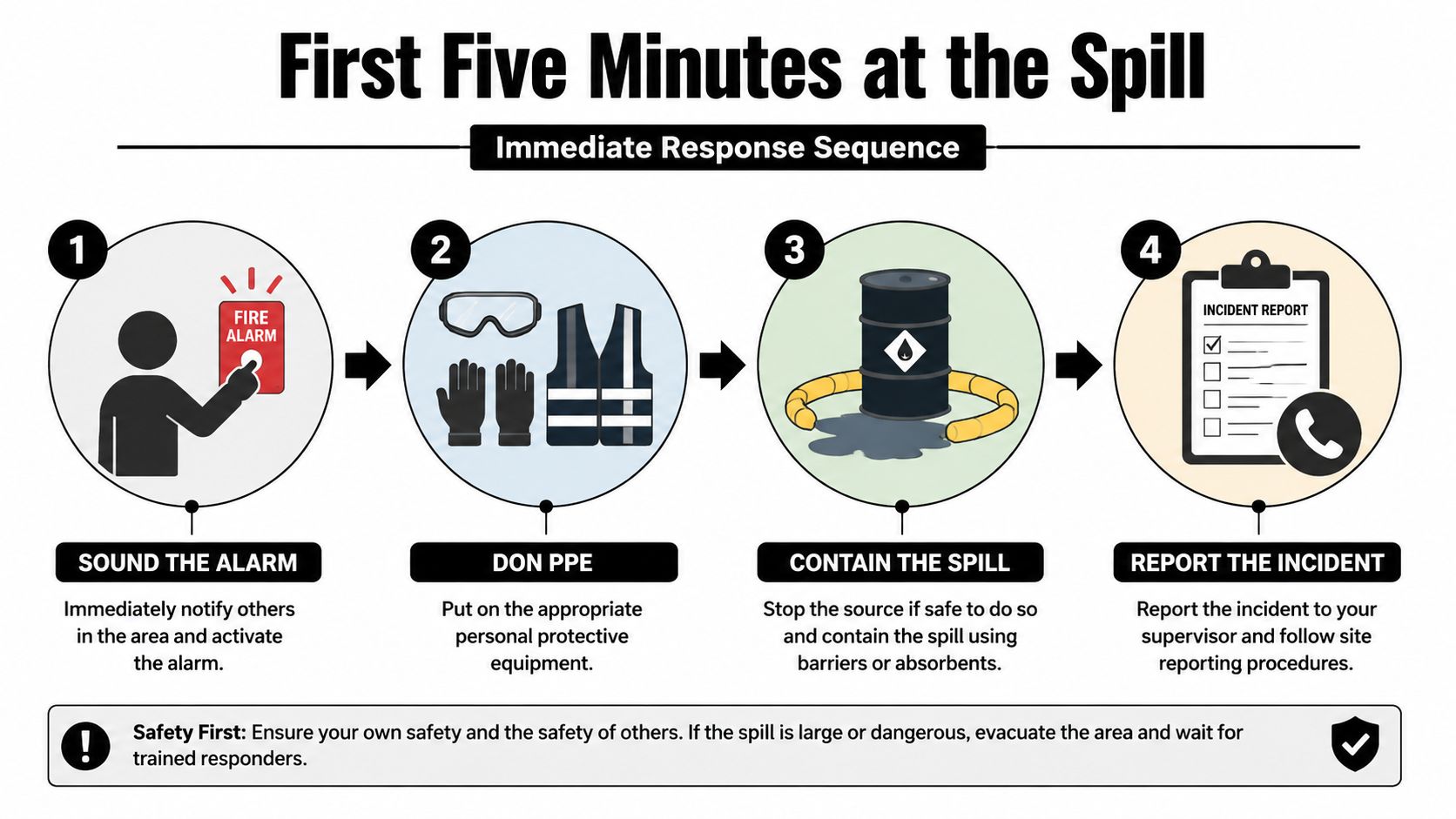
Sound the alarm first. If other people are in the room, they need to know before they step into the vapor path or walk liquid into a drain. Then isolate the area, pull back traffic, and put on the right PPE for the material on the bench, because terpene exposure, solvent splash, and broken glass are not the same event.
If the source is safe to stop, stop it. If it isn't, don't turn the cleanup into a second incident. That's the point where perimeter control comes next, because you want the spill boxed in before absorbent ever touches the liquid.
Stop the source if you can do it without becoming part of the spill.
The immediate-response order that works is the same one CCOHS gives for liquid chemical spills, sound the alarm, isolate or evacuate the area, don appropriate PPE, stop the source if it is safe, then contain the liquid with diking or absorbent socks and booms before it reaches drains. Cornell adds the useful floor detail, apply absorbent slowly from the outside toward the middle and dike off drains first, which keeps the liquid from chasing you under carts or into grout lines. The same sequence is summarized in CCOHS liquid chemical spill response and is consistent with the source-control emphasis in the limonene safety document.
A terpene spill also has a vapor control problem. Even if the puddle looks small, vapor can move into nearby rooms and turn a contained event into an HVAC annoyance. That's why the room has to be isolated early, before people start walking in and out with open doors.
The embedded response sequence below is the one I'd want new staff to rehearse until it feels dull.
Choosing the Right Absorbent and Neutralizer
Absorbent choice decides whether cleanup feels controlled or stupidly expensive. In terpene work, the wrong pad can soak up product, push residue deeper into texture, or create a waste stream that's bigger than the spill itself.
Match the material to the spill
Universal pads are fine for general housekeeping, but they're not the best answer for terpene-rich liquids. They can work in a pinch, yet they're rarely the best first-line choice when the bench is full of valuable fragrance material and the goal is to preserve what's left. Cellulose is useful for oils, but it still needs to be handled as contaminated waste once it has seen product.
Vermiculite is the old standby many labs reach for because it's available and does absorb liquid. The problem is disposal gets awkward fast, especially if the spill includes solvents or aromatic material that shouldn't be smeared around. Kitty litter is even less attractive for solvent work, because clumping fillers are built for cat boxes, not for preserving a clean bench or a traceable waste stream.
Sand still has a place, but it's the wrong tool if you expect absorption. It can help block movement, yet it creates a lot of contaminated mass, which is why some ports and industrial safety teams treat it as a last resort. The spill-containment guidance from NOAA's spill containment methods page also makes the source-control point clear, then the disposal burden comes later.
Practical rule: if the absorbent makes cleanup harder to document, it probably wasn't the best choice.
Neutralizers are not all cleanup wins
Acid and caustic residues from clean-in-place work are a different class altogether. Neutralizers can help when the spill is an acid or base, but they shouldn't be used as a reflex on a terpene floor. Dispersants and emulsifiers are a bad fit in a lab because they spread the material around instead of removing it, and they can turn one spill into a wider contamination event.
A better choice is the one that contains, then collects. For terpene liquids, that usually means perimeter control first, then a compatible absorbent, then waste collection in a leak-proof container. For corrosives, use the smallest effective neutralization step and keep the waste definition honest.
A comparison helps here.
| Material | Best Use | Main Caution |
|---|---|---|
| Universal pads | Quick response on mixed small spills | Not ideal for high-value terpene recovery |
| Cellulose | Oil-like liquids and general wipe-up | Becomes contaminated waste fast |
| Vermiculite | General absorbency | Disposal can become cumbersome |
| Kitty litter | Limited utility for non-solvent messes | Poor fit for solvents and process liquids |
| Sand | Perimeter blocking | Heavy contaminated waste load |
Cleanup by Spill Class and Safe Disposal
The cleanup path changes with the spill class. If you treat a terpene isolate, an ethanol release, and a mixed formulation like they're identical, you'll either waste product or create disposal problems you didn't need.
Pure terpene isolate spills
For a clean terpene spill, keep the response tight. Dike the perimeter, work from the outside inward, and move the residue into a leak-proof container with a clear label that tells the next person what was collected. If the product is recoverable and uncontaminated, that decision should happen in line with your own quality policy, not because the mop bucket looked convenient.
Do not rinse a terpene spill into a sink. That just moves the problem into plumbing and air handling, and it makes the waste stream less defensible. If the residue is contaminated, treat it as hazardous or process waste according to your site classification.
Ethanol or hydrocarbon solvent spills
Solvent spills need extra attention because of ignition risk and vapor spread. The first move is still perimeter control, but the waste container and cleanup materials need to stay compatible with the solvent class. Use absorbents that won't break apart under the liquid, and keep vapor sources out of the area until the room is cleared.
For these spills, a labeled hazardous-waste receptacle is the safer endpoint for cleanup materials. The American Chemical Society's chemical spill guide recommends controlling the liquid by diking the spill and using absorbents such as vermiculite, cat litter, or spill pillows from the outside inward, then disposing of cleanup wastes in a hazardous-waste receptacle. That sequence is laid out in ACS chemical spill response guidance.
Mixed formulation spills
When the spill contains terpenes plus diluents like PG or MCT, the cleanup turns into a compatibility decision. Some residues can be collected for disposal, but that doesn't mean they're recoverable as product. Mark the container with the contents, date, and spill area, then keep it separate from normal production waste so it doesn't get blended into a less controlled stream.
Cornell's floor-cleaning detail still applies after pickup, wash the surface with soapy water once the free liquid is removed, then restock the spill kit. That second part matters more than people admit, because a kit that got raided and never rebuilt is just shelf clutter.
Documentation, Reporting, and Regulatory Touchpoints
A spill without documentation turns into an argument later. Auditors want to see what happened, what was used, who responded, and what changed afterward, because a clean floor doesn't prove a controlled process.
What belongs in the incident log
The log should capture the material, location, approximate quantity, cause, immediate response, and final disposal path. It should also show whether drains were protected, whether PPE was used correctly, and whether the event reached any external pathway. If your corrective action just says “cleaned spill,” that's not a corrective action.
The practical reporting chain needs to fit your site, not a generic form. Internal notification should go to the supervisor, safety lead, and any environmental contact who can decide whether the event needs escalation. If the release touches a drain, waterway, or public area, the external notification path should already be mapped.
Where the regulatory pressure shows up
SPCC-covered facilities have to build containment and diversionary controls into the operation, and EPA guidance says bulk storage container installations need secondary containment for the entire capacity of the largest single container plus sufficient freeboard to contain precipitation. EPA also states that related containment must provide at least 10% of total volume or 100% of the largest container, whichever is greater, under the hazardous-waste storage rules summarized in the containment guidance. That matters because your paperwork has to match the physical controls already on the floor. See the EPA overview of spill prevention and containment requirements and the related secondary containment guidance.
For a clean internal record, the compliance checklist at this regulatory resource is a useful mirror for your own incident form. The form should tell a reviewer the same story your staff would tell in person, just without the drift.
Training, Drills, and Keeping the SOP Alive
The best SOP in the world dies if nobody can find the kit or remember the sequence under pressure. Training keeps the response human, which is the only way it works on a live floor.
Make the routine small enough to survive
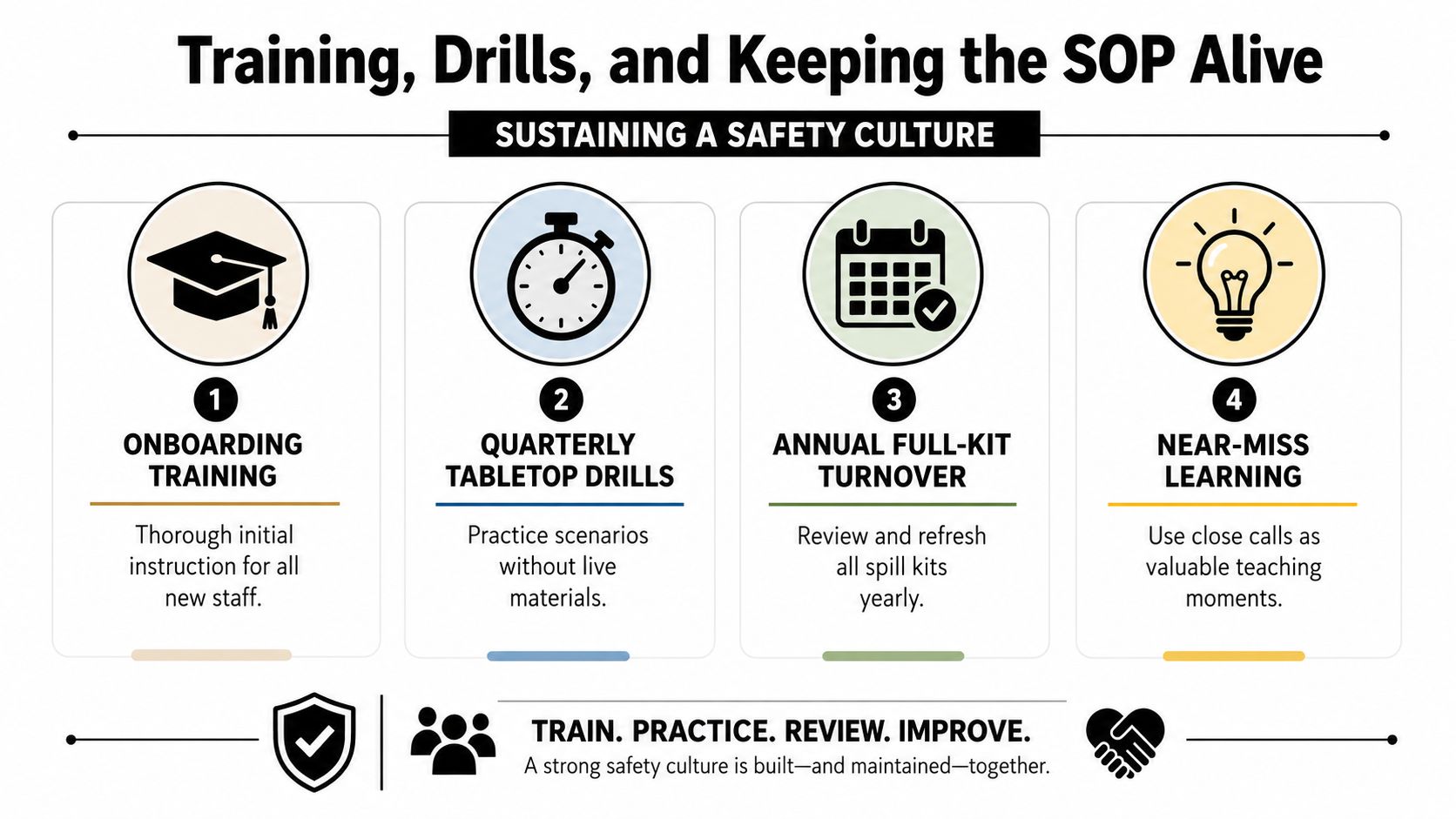
Onboarding should include the kit location, the alarm step, the PPE decision, and the waste container used for each material class. Tabletop drills work because they reveal bad assumptions without wasting live product, and annual full-kit turnover keeps expired absorbents from sitting in the cabinet like dead inventory.
A near-miss is a teaching asset, not a paperwork nuisance. If someone almost knocked a bottle into a drain line, that's the time to correct the layout, not after the next real spill. The point is to keep the response current enough that nobody is improvising with gloves that don't fit the liquid.
Practical rule: if staff have to ask where the kit is, the SOP is already stale.
Warning signs are simple. Absorbents that are past their shelf life, labels nobody recognizes, or a worker reaching for the wrong PPE all mean the system is drifting. The GMP mindset in this compliance guide fits here because spill control is part of process discipline, not an emergency side quest.
Gold Coast Terpenes supplies natural terpene blends, isolated compounds, and formulation tools that fit the world demands of cartridge and concentrate work. If you're building terpene-forward products and want a reliable supplier that understands flavor accuracy, consistency, and lab discipline, visit Gold Coast Terpenes and review the options that support your next formulation run.