
You're usually not trying to build a nostalgic flower description when a customer asks for Chocolate Thai. You're trying to make a cartridge that survives fill, shelf time, hardware variability, and repeat production without drifting into generic cocoa candy or harsh wood spice. That's where most Chocolate Thai bud for vape cartridges projects fail.
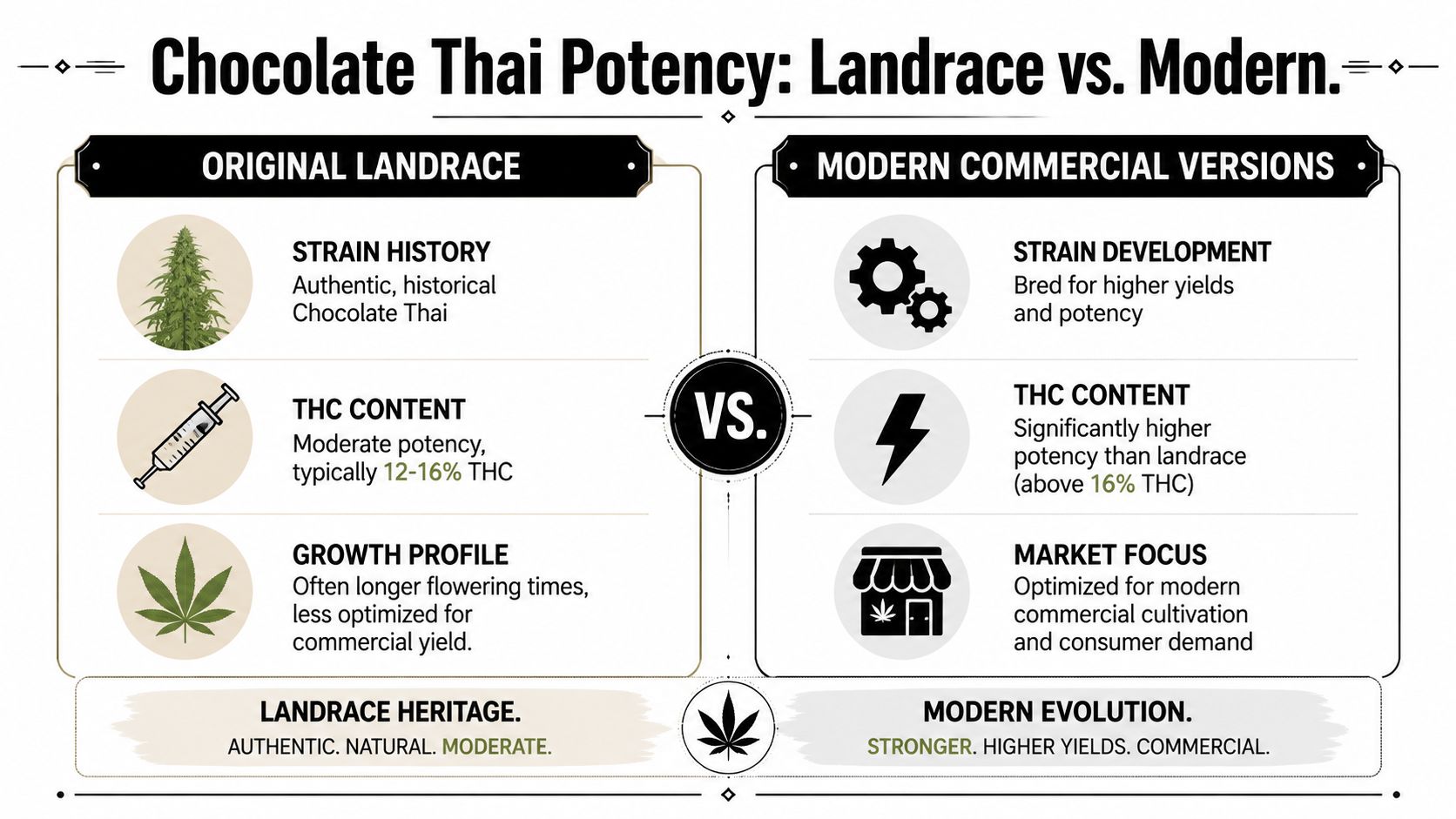
The difficulty starts with the target itself. Chocolate Thai is a legendary pure sativa landrace strain from Thailand that gained international prominence in the 1960s and 1970s. Unlike modern strains often exceeding 25% THC, its historical potency was moderate, with reported THC content between 12% and 16% according to Kind Green Buds' Chocolate Thai profile. If you ignore that context and formulate against a modern, louder interpretation, you often end up with the wrong product entirely.
A true commercial profile has to preserve restraint. The original character isn't dessert-sweet. It's dry, earthy, woody, peppered, and only selectively chocolate-like. In distillate, that means your terpene work has to create shape, not just flavor intensity.
The Challenge of Formulating a True Chocolate Thai Profile
The process often begins with the same mistaken brief: “make it taste like chocolate.” That shortcut creates a profile that reads more like a flavored vape than a strain-inspired terpene blend for distillate. The authentic direction is narrower and more demanding.
Chocolate Thai earned its reputation because the profile sat in tension. It carried dark, earthy depth without becoming muddy. It suggested cocoa and coffee without becoming sweet. It stayed bright enough for a daytime-style build without drifting into citrus-forward sativa territory. In cartridge formulation, those tensions are easy to flatten.
What usually goes wrong
Three mistakes show up repeatedly in bench samples:
- Overbuilding sweetness: Formulators chase the name and push the blend toward confectionery notes. The result loses the dry, woody edge that gives Chocolate Thai its identity.
- Ignoring the landrace baseline: A terpene blend tuned for a heavier modern extract won't necessarily express the same way in a milder target profile.
- Treating aroma as one layer: This profile needs separation. If everything lands in the same register, the cart tastes blunt and indistinct.
Bench observation: If the first inhale says “dessert,” you've probably missed Chocolate Thai.
The harder truth is that this profile doesn't reward exaggeration. It rewards control. A successful formulation keeps the cocoa impression in the background and lets the earthy, woody, and spicy structure carry the product.
Why this profile is commercially tricky
Chocolate Thai is one of those builds that sounds easy in a product meeting and gets complicated the moment you start testing in hardware. In a beaker, a blend may smell balanced. In a cartridge, heat compresses the profile. Subtle notes disappear first, and the remaining body can turn peppery or flat if the formula lacks enough internal contrast.
That's why replicating the flavor of Chocolate Thai bud for cannabis product formulation works better when you treat it as an organoleptic architecture problem, not a naming problem.
Deconstructing the Authentic Sensory and Terpene Profile
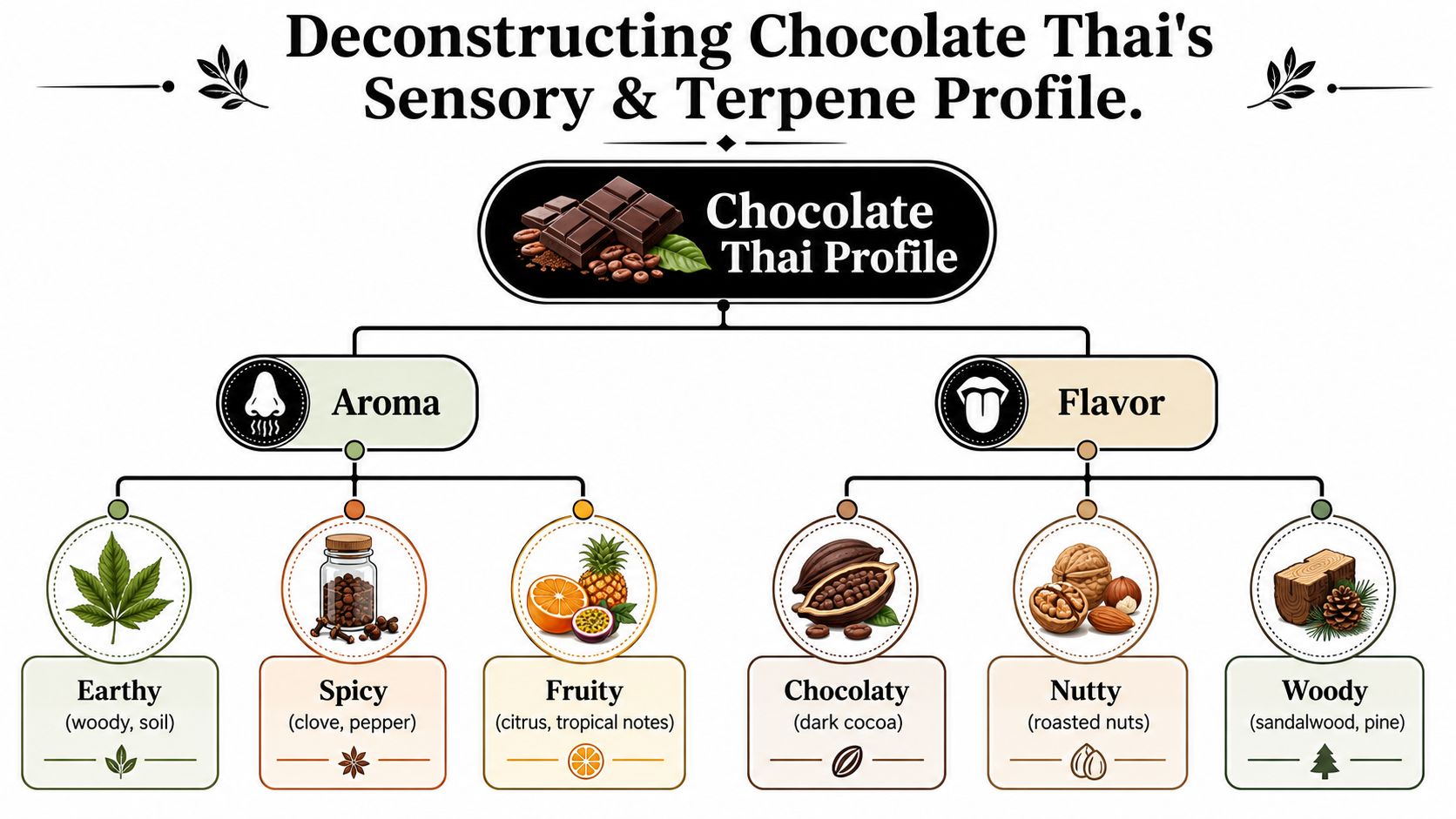
The cleanest way to formulate this profile is to break it into layers. Chocolate Thai doesn't present as a single-note aroma. It opens earthy, develops into woody-spiced body, and finishes with a darker cocoa-coffee suggestion rather than a literal candy chocolate note.
Base notes that hold the profile together
The floor of the profile is myrcene. The strain's terpene composition is dominated by myrcene, which analytical studies have shown can constitute up to 60% of the total terpene content in some samples, contributing to its powerful earthy base note. Secondary terpenes include caryophyllene and pinene, as noted in this Chocolate Thai terpene breakdown.
For formulators, that matters because myrcene isn't just an ingredient choice. It sets the gravity of the profile. Without enough of it, the formula turns thin and top-heavy. With too much, the blend can slump into a humid, overripe earthiness that muddies the finish.
Use myrcene as the anchor for:
- Earthy foundation: Soil, dry plant matter, and low-sweetness body
- Blend cohesion: It helps tie brighter and spicier components together
- Distillate compatibility: It can help the profile feel integrated rather than perched on top of the oil
A quick calibration reference helps when building from scratch. A good terpene flavor chart for formulation work is useful here because Chocolate Thai depends on how notes stack, not just which isolates appear.
Mid notes that create the classic cut
The middle of the profile is where most of the identity sits, with caryophyllene bringing pepper and dry spice, while pinene helps prevent the blend from feeling closed-in or swampy. The result shouldn't read pine-forward. Pinene is there to sharpen edges and lift the woody section, not to announce itself.
Chocolate Thai works best when the middle of the profile feels dry and structured, not creamy.
This is also where many teams accidentally erase the “Thai” character. If caryophyllene is too low, the blend tastes generic. If it's too high without support, the cartridge becomes scratchy and aggressive under heat.
Here's the practical note map I use:
| Layer | Primary role | Likely sensory read |
|---|---|---|
| Top | Lift and separation | Freshness, slight brightness, air |
| Mid | Character and definition | Pepper, wood, spice, structural dryness |
| Base | Depth and persistence | Earth, dark plant tone, low sweetness |
A visual walkthrough helps when training evaluators or aligning product and extraction teams:
Where the chocolate note actually comes from
The “chocolate” in Chocolate Thai usually isn't a pure cocoa note. It emerges from the interaction of earthy base material, woody spice, and a darker roasted impression. That's why adding sweetness rarely fixes a weak sample. It usually makes it less accurate.
For terpene profile for Chocolate Thai bud work, the right question isn't “how do I make this more chocolatey?” It's “how do I keep the roasted-dark impression visible without turning the profile sugary?”
Navigating Potency Discrepancies in Formulation
A lot of failed Chocolate Thai carts come from a bad assumption. Teams treat all source material labeled Chocolate Thai as if it represents one stable target. It doesn't.
Why potency changes the sensory result
One of the most useful formulation realities to keep in view is this: historical Chocolate Thai landrace potency sat at 12–16% THC, while modern hybridized versions run 18–24% THC, and that gap creates inconsistent product formulation because using the original profile in high-THC concentrates can risk over-stimulation, according to this analysis of Chocolate Thai potency discrepancies.
For a cartridge formulator, that's not just an effects discussion. It changes how the terpene blend reads in oil. Heavier modern concentrates can compress nuance. They can also make a profile built for a gentler expression feel too sharp, too busy, or too narrow in the mid-palate.
What this means in practice
If your distillate base is built around a modern, stronger cultivar interpretation, don't assume a heritage-style aromatic balance will survive intact. Usually it won't. You'll need to tune the blend so the defining notes stay audible after filling and under heat.
Use this decision logic:
- Historical-style target: Keep the profile restrained. Let earth, wood, and pepper carry most of the identity.
- Modern high-THC target: Add enough note separation to keep the formula from collapsing into one dense middle band.
- Hybrid commercial target: Decide early whether you're selling “classic Chocolate Thai” or “modern Chocolate Thai inspired.” Those are different products.
Practical rule: Match terpene architecture to the extract's behavior, not just the strain name on the batch record.
What doesn't work
What doesn't work is copying a flower description into a distillate program. It also doesn't work to respond to stronger base oil by making everything louder. More intensity often strips away the exact subtlety that made the profile worth replicating.
For formulating Chocolate Thai for vape cartridges, the better move is selective emphasis. Preserve dryness. Protect the woody-spice core. Keep the cocoa impression implied.
Formulation Guide for a Chocolate Thai Terpene Blend
A reliable formulation guide for Chocolate Thai for distillate starts with one principle: build the structure first, then tune the illusion of chocolate. If you reverse that order, the profile usually turns novelty-sweet.
Core compounds to prioritize
The classic cut depends heavily on the middle structure. For a strain-inspired vape blend, the profile must prominently feature beta-caryophyllene, sitting at 0.3–0.8% of dry flower, and humulene, at 0.1–0.4% of dry flower, to achieve the specific peppery, woody, and hoppy mid-notes that define the classic cocoa-forward cut, according to this guide to chocolate strain terpene construction.
Those dry flower reference points don't function as a direct cartridge recipe. They do tell you which compounds must remain dominant in the character layer if you want the result to read like Chocolate Thai instead of generic dark herb.
Example Formulation Ratios for Chocolate Thai Profile (5% Terpene Cut)
| Terpene Isolate | Aromatic Note | Suggested % of Blend | Function |
|---|---|---|---|
| Myrcene | Earthy, musky, dark base | 40% | Establishes body and foundational earthiness |
| Beta-Caryophyllene | Peppery, woody, spicy | 24% | Builds the dry spiced core and prevents candy sweetness |
| Humulene | Woody, hoppy, slightly bitter | 14% | Tightens the mid-palate and adds classic herbal dryness |
| Pinene | Fresh, woody lift | 10% | Opens the blend and stops the base from feeling heavy |
| Limonene | Bright accent, subtle lift | 7% | Adds top-note contrast so the profile doesn't taste dull |
| Bisabolol or minor softener | Gentle floral smoothing | 5% | Rounds rough edges without making the blend sweet |
This is a starting-point ratio table, not a final locked formula. The point is to create an evaluation sample with enough internal structure to test across multiple hardware types.
A mixing ratios calculator for terpene formulation helps keep this repeatable once you move from small bench work to production scaling.
How each part behaves in the blend
Myrcene and the base
Myrcene should carry the profile without swallowing it. If the cart tastes like generic damp herb, reduce myrcene before you reduce caryophyllene. The problem is often base congestion, not spice excess.
Caryophyllene and humulene as the identity pair
These two usually determine whether the formula reads true. Caryophyllene gives the peppered spine. Humulene adds woody bitterness and hoppy restraint. When they're balanced, the blend gets that dark, roasted suggestion people interpret as cocoa or coffee.
Don't chase cocoa directly. Build a dry wood-spice center and let the dark note emerge from it.
Pinene and limonene as control points
Pinene and limonene are support tools here. They aren't supposed to dominate. Their job is to stop the profile from becoming heavy, stale, or muddy in the cartridge.
A practical iteration sequence
Run trial blends in this order:
- Lock the earth layer first. Get the myrcene-led base where it feels grounded but not swampy.
- Add the caryophyllene-humulene frame. Then, the recognizable Chocolate Thai shape appears.
- Use pinene for air. Raise it slowly until the blend breathes.
- Use limonene sparingly. Too much and the profile drifts away from the target.
- Retest in hardware. A benchtop aroma read isn't enough.
If a sample feels flat, don't automatically add more total terpenes. First ask whether the note hierarchy is wrong.
Hardware and Diluent Choices for Cartridge Formulation
A technically sound blend can still fail in market samples if the cartridge setup strips away the profile. That happens all the time with subtle builds like Chocolate Thai.
Why hardware matters to this profile
Chocolate Thai doesn't rely on loud fruit top notes that survive almost any setting. It relies on balance between earth, wood, spice, and a darker finish. If the device runs too hot, top-note lift fades and the middle turns abrasive. If the wick and coil combination struggles with the oil, repeated dry-biased pulls can make the profile taste flatter than it is.
For this family of profile, I prefer hardware decisions that preserve separation rather than maximize impact. You want a cartridge that lets the opening, body, and finish remain distinct.
A practical primer on what's in a cart and how components affect output is worth reviewing before you finalize hardware around a strain-inspired blend.
Why unnecessary diluents usually make it worse
When teams can't get the flow they want, they often reach for extra thinning agents too quickly. That may solve a processing problem while creating a sensory one. The profile loses density, the finish shortens, and the strain character can feel detached from the oil.
For replicating flavor of Chocolate Thai bud for vape cartridges, cleaner formulation usually performs better. A terpene system that's designed for the oil should do the aromatic work and contribute to workable viscosity without forcing the product into an artificial texture.
Protecting the intended balance
The specific chemical interaction between myrcene and limonene is critical because this combination creates the documented balance between the strain's energizing cerebral effects and mild physical relaxation, according to Royal King Seeds' Chocolate Thai strain information. In product development terms, that means these compounds also deserve protection during hardware selection because if one burns off faster than the other, the profile shifts.
Use this as a cartridge screening checklist:
- Coil behavior: Choose hardware that doesn't scorch the top layer early in the fill life.
- Voltage discipline: Keep settings conservative enough to preserve nuance.
- Oil compatibility: Test for stable wicking across storage and repeated use.
- Sensory retention: Recheck flavor after heat cycling and shelf exposure.
A blend that only works in the lab vial isn't a finished formulation.
Matching Gold Coast Terpenes to Your Formulation
There are two reasonable commercial paths for a Chocolate Thai build. One is to start with a finished strain profile and validate it against your oil and hardware. The other is to begin with individual isolates and tune the blend around your exact target.
When a pre-built profile makes sense
If your production team values speed, lot-to-lot consistency, and easier sensory training, a finished profile is usually the more efficient route. It gives you a stable baseline for cartridge testing and shortens the number of bench rounds needed before pilot production.
That approach is especially useful when the business objective is to launch a recognizable SKU instead of building a one-off sensory study. It also helps when multiple departments need to evaluate the same target language.
When isolate-based tuning is the better path
Use isolates when you already know where your process bends the profile. For example, if your distillate mutes the top layer or your chosen cartridge emphasizes pepper and wood, building around myrcene, beta-caryophyllene, humulene, limonene, and pinene gives you more precise control.
That route takes longer, but it's often the right call for teams producing several adjacent SKUs and wanting a shared formulation logic across them.
A terpene sample pack for formulation trials is practical when you want to compare a pre-blended profile against your own isolate-tuned variant before committing to production purchasing.
The real commercial choice
The decision isn't “pre-blend versus custom” in the abstract. It's whether your operation benefits more from speed or from fine-grained control. Smaller brands and fast-moving launch calendars usually gain from a validated starting profile. Extraction teams with stable hardware and a strong internal sensory panel often gain more from custom tuning.
Final Quality Control and Formulation Takeaways
Chocolate Thai only works when you resist the obvious version of it. The easy interpretation is sweet cocoa. The accurate one is drier, darker, woodier, and more restrained.
Final bench checklist
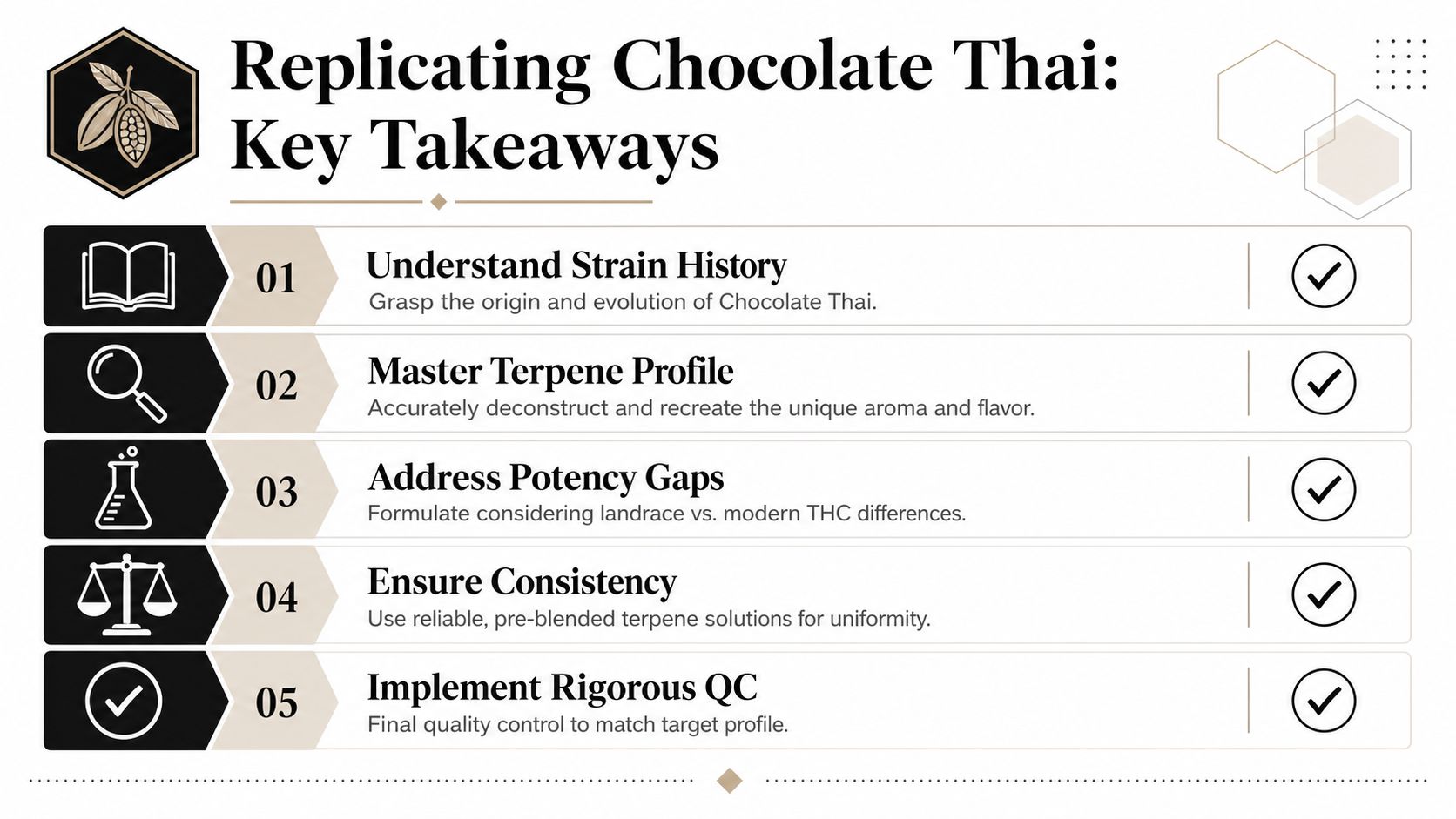
Before releasing a batch, check these points:
- Target definition: Decide whether you're building toward a historical landrace expression or a modern commercial interpretation.
- Note hierarchy: Confirm that earth sits at the base, wood-spice holds the center, and chocolate remains an impression rather than a flavor additive.
- Terpene structure: Make sure myrcene anchors the profile while caryophyllene and humulene shape the core.
- Hardware validation: Test the same oil across real cartridge conditions, not just open-container aroma.
- Sensory discipline: Reject samples that drift into sweetness, generic herb, or scorched pepper.
What separates accurate from average
The best Chocolate Thai bud for cannabis product formulation doesn't announce itself with volume. It reads clearly because each layer stays in place. The result feels composed, not decorated.
That's the difference between a cart that merely uses the name and one that earns it.
Gold Coast Terpenes gives formulators a practical way to execute that process with strain-specific terpene blends, isolated compounds, and formulation tools built for cartridges, concentrates, and distillate work. If you're developing a Chocolate Thai-inspired SKU, explore Gold Coast Terpenes for natural terpene profiles, isolate options, and technical resources that help turn bench concepts into repeatable products.