
You're standing at the oven with a tray that looked clean going in and now looks different in ways that matter. The wax has gone from bright and glossy to darker, flatter, and more set at the surface, and that change is usually the first real cue that conversion happened. For formulators, that visual shift isn't cosmetic, it's the fastest QC signal you get before the batch goes anywhere near a cartridge line or a blend tank.
Pulling a Tray from the Oven
The tray comes out, and the first thing you notice is that the material no longer looks like fresh concentrate. A decarbed wax sample is typically identified by a color shift from golden or amber toward a slightly darker, more opaque shade, plus a surface that looks less shiny and sometimes more glassy or set after heating. That's the moment when the batch stops looking like something that's still actively moving and starts looking like something that has crossed into a more stable state.
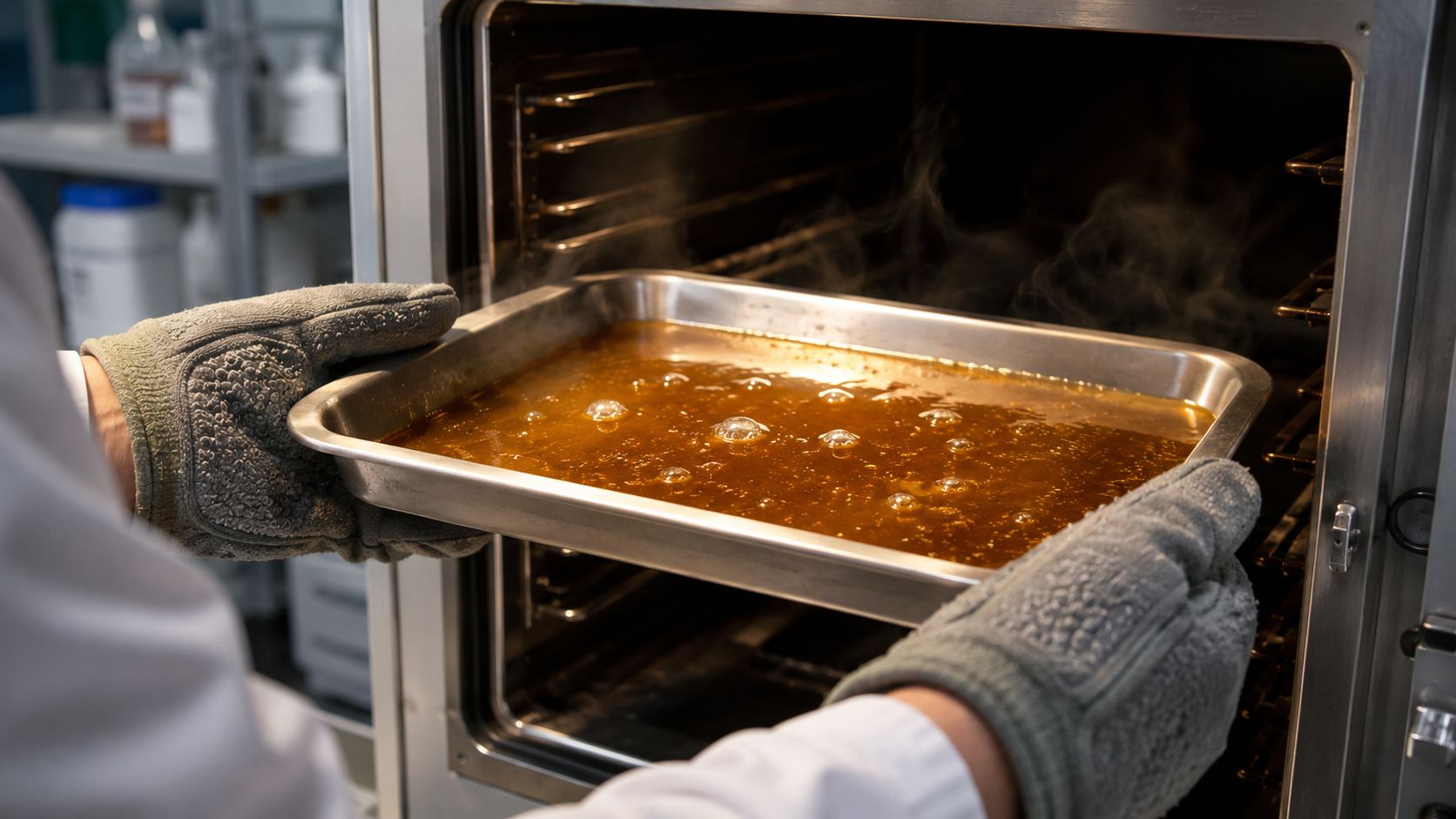
A technician learns fast that the surface tells a story before any meter does. In practical oven work, the material is finished when bubbling slows or stops, and one common oven method uses 230°F for 45 minutes as a working reference point as described in this decarb guide. That doesn't mean every batch behaves identically, but it does mean you can read the tray instead of guessing from the clock.
Practical rule: if the batch still looks lively and actively foaming, it isn't at a clean endpoint yet.
The other cue is smell. Fresh, bright top notes fade quickly, and what's left is usually heavier and flatter. That matters because the first decision after oven pull is whether the material is ready for a terpene correction, a distillate blend, or a hold for further verification.
The Visual and Olfactory Cues of Full Decarb
Pull a tray, let the surface settle for a moment, then read the batch before you touch the next step. A workable visual cue for decarbed concentrate is a darker amber-to-brown color rather than a bright, clear, or glassy look. One guide notes that fully decarbed wax often becomes darker and more brittle, while another describes properly decarbed material as shifting from green to golden-brown/light-brown and turning dry, crumbly, and less shiny Savory Saga's decarb overview.
What the surface should tell you
The surface usually gives up the wet gloss people associate with fresh wax. It stops looking reflective and fluid, then settles into a more set finish that can read almost glassy at first, followed by a drier, less elastic look as the heat finishes the job. That change matters on the bench because it shows the batch is no longer behaving like a raw concentrate with active gas release.
The color should keep you honest. Darker material is not automatically finished, and blackened or burnt wax points to unnecessary thermal stress and a likely hit to cannabinoids and terpenes, which is the trade-off called out in this guide on decarb color. The endpoint you want sits in the golden brown to deep amber range.
What the aroma should tell you
The nose should change with the tray. Bright citrus, pine, and other high notes become harder to pick out, while baked, earthy, and sometimes hay-like notes take over. That shift matters because the lighter volatiles have already moved, and it tells you what you may need to rebuild if the batch is headed into formulation.
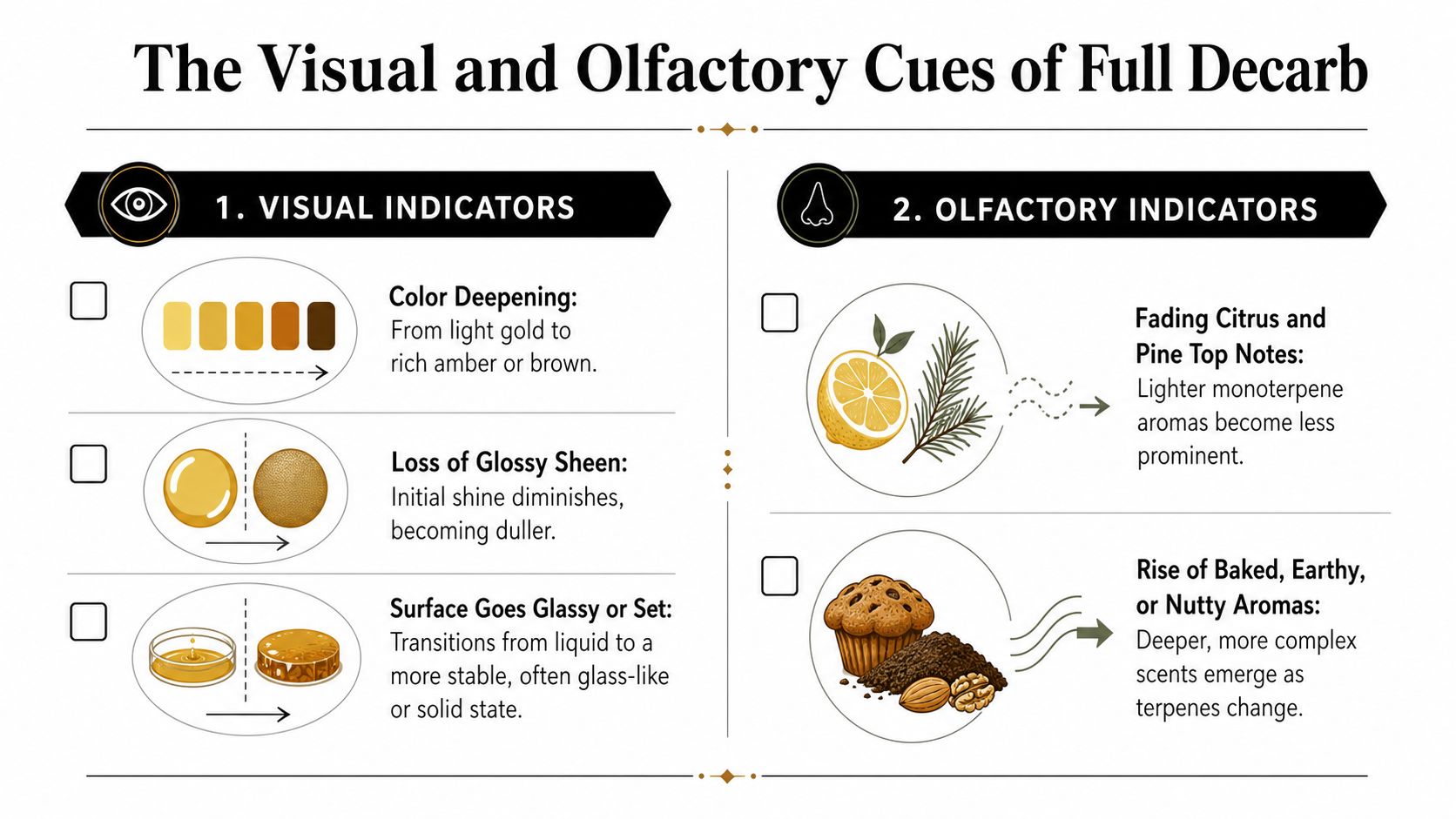
The practical read is simple. If the color deepens, the sheen fades, the bubbling slows, and the aroma flattens, the batch is moving toward a usable endpoint. If it keeps darkening after the bubbles are gone, the material has likely gone past the point where flavor and formulation quality stay intact.
Why Decarbed Wax Looks and Smells Different
The tray changes because the chemistry changes. During decarb, the acidic cannabinoid structure loses its carboxyl group, and that conversion changes how the material absorbs light, settles on the tray, and responds under heat. Once that shift is underway, the concentrate stops reading as the same glossy, active-looking mass you loaded into the oven.
What heat does to the aroma layer
Lighter monoterpenes move first. Heat at decarb temperatures drives off the compounds that give a profile its bright, high-note character, a process known as terpene degradation, so citrus and pine usually fade before deeper notes do. That is not a handling mistake by itself, it is part of what the oven is doing.
For cartridge work, that aroma loss is a real QC signal. Once the top notes fall away, you know more of the original flavor stack has been stripped, and that affects whether the batch needs remediation before blending.
Why the color keeps deepening
There is more than one pathway pushing the color darker. Heat and oxygen can change the matrix as conversion progresses, and secondary browning reactions can build a deeper tone once moisture and sugars interact under heat. The result is the familiar shift from gold or amber toward brown, plus a less reflective surface.
The appearance is useful because it tells you what kind of recovery work lies ahead. A batch that darkens cleanly and holds a set surface may still be workable, while a sample that keeps deepening after the bubbling slows has usually lost more of the terpene layer than you want in flavor-sensitive cartridge formulation.
Bottom line: every extra minute at temperature is a tradeoff between cannabinoid activation and terpene retention.
That tradeoff is the part formulators have to respect. Stop too early, and you may keep more aroma but leave the batch under-converted. Push the heat too far, and conversion may finish, but the profile can flatten enough that the final blend needs heavier remediation to taste right. For anyone building terpene profile for cannabis product formulation, that balance matters more than a clean-looking surface alone.
The endpoint that matters in production is a stable, set material with a predictable visual profile, not a blackened sample. A technician should read the tray as a record of how much of the original aromatic structure survived, because that determines how much rebuilding the cartridge or distillate stage will need later.
Decarbed vs Non-Decarbed Wax Side by Side
The easiest way to train your eye is to compare the two states directly. Non-decarbed wax still looks active, shiny, and more translucent, while decarbed wax tends to look darker, less glossy, and more stable on the surface. The difference shows up fast when you place them side by side under the same light.
| Characteristic | Non-Decarbed Wax | Decarbed Wax |
|---|---|---|
| Color | Brighter gold, amber, or lighter-toned material | Darker amber-to-brown, sometimes deep amber |
| Sheen | More glossy or reflective | Less shiny, more matte or set |
| Texture | Softer, more fluid, can look active | Drier, crumbly, or more brittle |
| Aroma | Sharper, fresher, more lifted | Flatter, baked, earthy, or less intense |
| Oven behavior | Bubbling still active | Bubbling slowed or stopped |
A partially decarbed sample sits in the middle and causes most of the mistakes. It may look darker but still hold a little shine, or it may smell flatter while still showing active bubbling when warmed. That's the batch to flag before it lands in a for distillate workflow, because mixed conversion usually translates into inconsistent blend behavior downstream.
The warm-tool test also helps. Non-decarbed material often looks like it wants to move or soften quickly, while fully decarbed wax tends to hold shape with more brittle behavior. That doesn't replace lab data, but it's a useful triage tool when you're sorting incoming lots or checking whether a prior shift stopped too early.
Field Checks and Lab Confirmation Methods
Bench checks are useful because they're immediate. A technician can inspect color, sheen, brittleness, and aroma in minutes, then decide whether the batch looks ready for transfer or needs more verification. Those checks are especially valuable when the lot is moving into a small pilot blend or a cartridge development run where you need fast routing decisions.
What you can tell by hand
A simple field workflow usually starts with three observations. First, look for the amber-to-brown shift and the loss of gloss. Second, note whether the wax has turned more set or brittle rather than fluid. Third, warm a small portion and watch for any remaining bubbling or foaming behavior. If the sample still bubbles strongly, it's not finished.
What the lab confirms
Instrumented testing gives you the actual cannabinoid and terpene picture. HPLC or GC-MS cannabinoid profiling can confirm conversion status, while terpenoid quantification shows how much aroma chemistry survived the heat. That matters when the batch is high value, because appearance alone can't tell you whether the endpoint is clean enough for label accuracy or flavor targets.
For a more formal verification step, third-party lab testing guidance is the right place to anchor your internal QA flow. Appearance can get you close, but it can't prove the batch is fully converted or tell you exactly how much of the aromatic system is left.
Use the bench to screen, then use the lab to close the loop.
That tiered approach keeps small craft runs efficient and keeps scaled manufacturing from relying on a guess. If the lot is going into a premium strain-inspired terpene blend, the extra confirmation is usually worth it.
What the Appearance Tells You About Cartridge and Distillate Work
The visual endpoint of decarb changes how you route the batch. A dark, brittle, aroma-flat sample usually needs terpene reintroduction before it can meet a flavor target in a cartridge. A lighter, under-converted sample can create the opposite problem, where the blend feels inconsistent from cartridge to cartridge because the base wasn't fully converted before filling.
For replicating flavor of a source profile, the tray tells you how much work the aroma system will need later. If the wax finished at a clean amber-brown with only moderate aroma loss, a narrower correction may be enough. If the batch went too dark and smells cooked or flat, the final blend often needs a broader top-, mid-, and base-note rebuild to restore a recognizable profile.
How formulators use that signal
- Dark, brittle, low-aroma wax usually routes to heavier terpene correction and tighter sensory QA.
- Partially converted wax needs verification before it's accepted into a distillate base.
- Cleaner amber material is often easier to balance because the remaining matrix is less damaged.
- Cooked or burnt material is a red flag, because you can't restore what the heat already removed.
That's where a for vape cartridges mindset matters. You're not just making the concentrate active, you're making it fill cleanly, taste coherent, and stay repeatable across runs. A strain-specific blend can be used to rebuild top notes, fill the middle, and support the finish, but the dose has to reflect how much aroma the decarb step already stripped away.
Gold Coast Terpenes fits here as one option for formulation work, since it supplies strain-specific profiles and isolated compounds that can be used when the native aroma no longer matches the target. The key is to let the decarb appearance guide the correction, not the other way around.
Remediation Moves and Safety Notes for the Bench
If the batch came out too dark or too flat, don't force it into the next step unchanged. Strategic terpene reintroduction can restore missing aroma and help rebalance viscosity, while blending with fresher distillate can soften an over-processed matrix. If the color or texture is borderline, controlled reheating or refining may be possible, but caution matters because the material is already close to the edge of thermal damage.
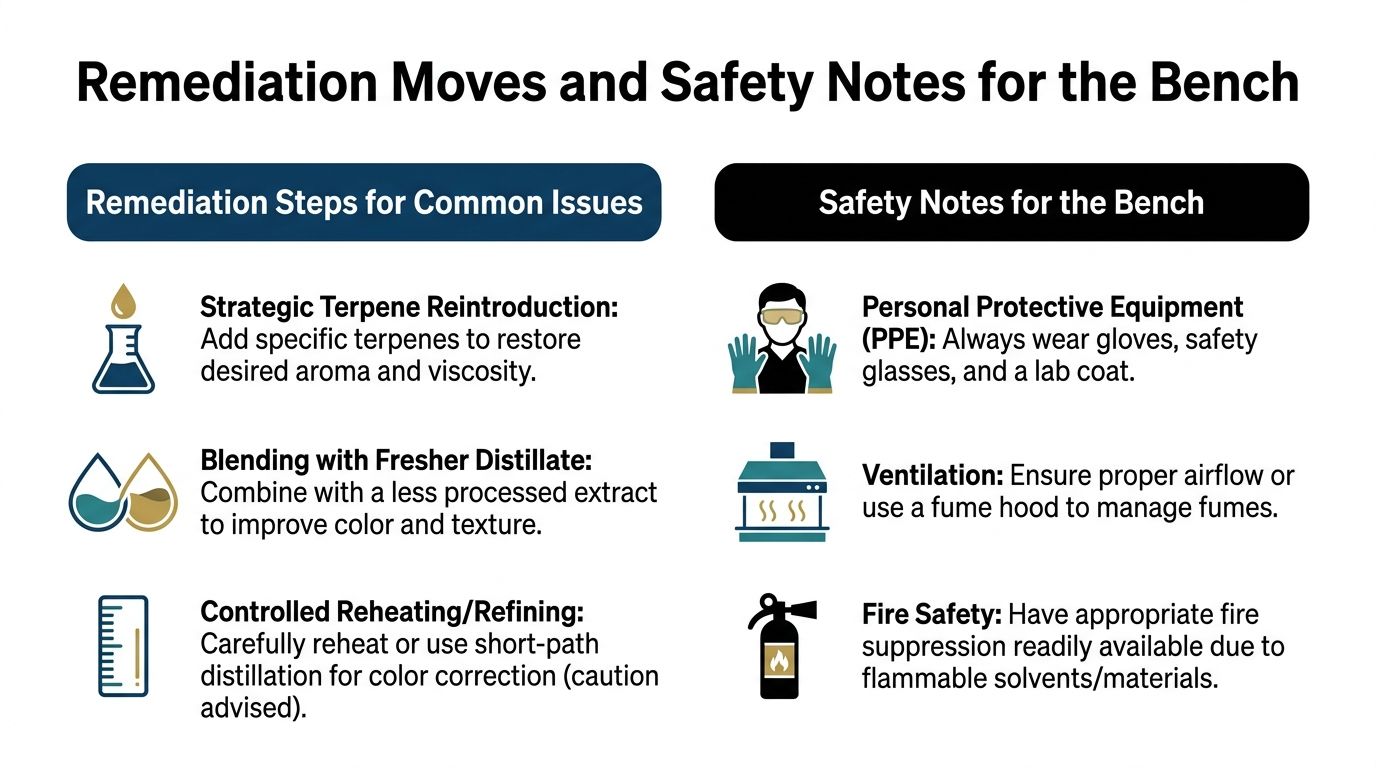
A mixing calculator helps here because reintroduction should be measured, not improvised. Keep the batch cool enough for safe handling, then add aroma back in controlled increments until the blend smells and behaves the way the product spec demands. If you're working across multiple lots, tighten the SOP so the same endpoint criteria and transfer window get used every time.
Bench safety that should stay on the worksheet
- Personal protective equipment: gloves, safety glasses, and a lab coat keep hot splatter and residue off skin and eyes.
- Ventilation: use a fume hood or proper airflow so volatile fumes don't build up around the bench.
- Hot-tool handling: treat decarbed material as a hot intermediate, not a finished good.
- Storage discipline: keep decarbed wax sealed and cool until it re-enters a blend.
- Fire readiness: keep appropriate fire suppression close by whenever heated material is on the bench.
That's the practical loop. Read the wax, decide whether it needs remediation, and only then move it into the final formulation step.
Gold Coast Terpenes provides strain-specific terpene blends, isolated compounds, and formulation resources for cartridge and concentrate work. If you're rebuilding flavor after decarb or tightening your endpoint strategy for a new batch, visit Gold Coast Terpenes and pull the right profile into your next formulation run.