
Most advice about the purest sativa strain starts in the wrong place. It treats the strain name as if it were a lab result, when the only things a formulator can control are cannabinoid load, terpene composition, and process variables. In cartridge work, that distinction matters more than the marketing label, because a “sativa” on paper can still smell flat, wick poorly, or read harsh if the chemistry isn't built around the finished product.
The older classification system was designed for taxonomy, not formulation. The terms sativa and indica began as 18th-century morphological labels, and modern breeding has blurred those categories through widespread hybridization, which is why pure forms are uncommon in today's market (PMC review on cannabis classification history). For product development, that means the more useful question isn't whether a batch is “pure enough” on a menu, it's whether the material carries the right top, mid, and base notes for the target flavor and user experience.
Why the Purest Sativa Strain Label Misleads Formulators
The phrase purest sativa strain sounds exact, but in commercial cannabis it rarely functions that way. A heritage name can point to lineage, yet it does not guarantee a stable sensory profile in distillate, and it does not guarantee that two batches will behave the same way in a cartridge. If the goal is repeatable flavor, the label is only the first filter.
What the label doesn't tell you
A review of cannabis classification history explains why this issue keeps resurfacing in formulation work. The botanical terms came from morphology, not modern chemistry, and decades of hybridization made pure forms uncommon (PMC review on cannabis classification history). The same body of research shows that late-20th-century accessions labeled “sativa” still vary widely in cannabinoid content, with literature-weighted average THC of 5.69% and values reported up to 14.5% in the cited research (PMC review on cannabis classification history).
For formulators, that variability is the core problem. A “sativa” label does not tell you whether the blend needs more terpinolene to open the top note, more myrcene to carry the middle, or a cleaner base to keep the finish from turning flat. Those are chemistry decisions, not branding decisions.
Practical rule: if the terpene panel does not support the target profile, the strain name will not rescue the cartridge.
What drives uplift in finished goods
The better proxy is the lab data. Independent strain guidance points to terpene composition and cannabinoid percentage as the measurable drivers of perceived character, which is the right lens for cannabis product formulation (Mission Dispensaries on pure sativa strain science). High-sativa cultivars often show terpene patterns rich in terpinolene, limonene, myrcene, pinene, and ocimene, and one market guide lists Durban Poison at 17–26% THC with dominant terpenes of terpinolene, myrcene, and ocimene (Mission Dispensaries on pure sativa strain science).
That matters because “uplifting” does not come from the word sativa. It comes from an aromatic architecture a formulator can rebuild, test, and refine. If you treat the label as a shortcut, you end up chasing nostalgia instead of repeatable flavor.
For formulation work, the useful reference is not the menu name alone. It is the chemistry in the jar and the behavior of the extract in the hardware. Terpene-rich material that looks promising on paper can still lose lift if the blend is overthinned, overheated, or built without regard for volatility.
Gold Coast Terpenes' guide to trichomes on weed is a practical reminder that the resin head is where the sensory story starts, but the cartridge only rewards what survives processing. That is the gap formulators have to close.
Morphological and Chemical Markers of Pure Sativa Cultivars
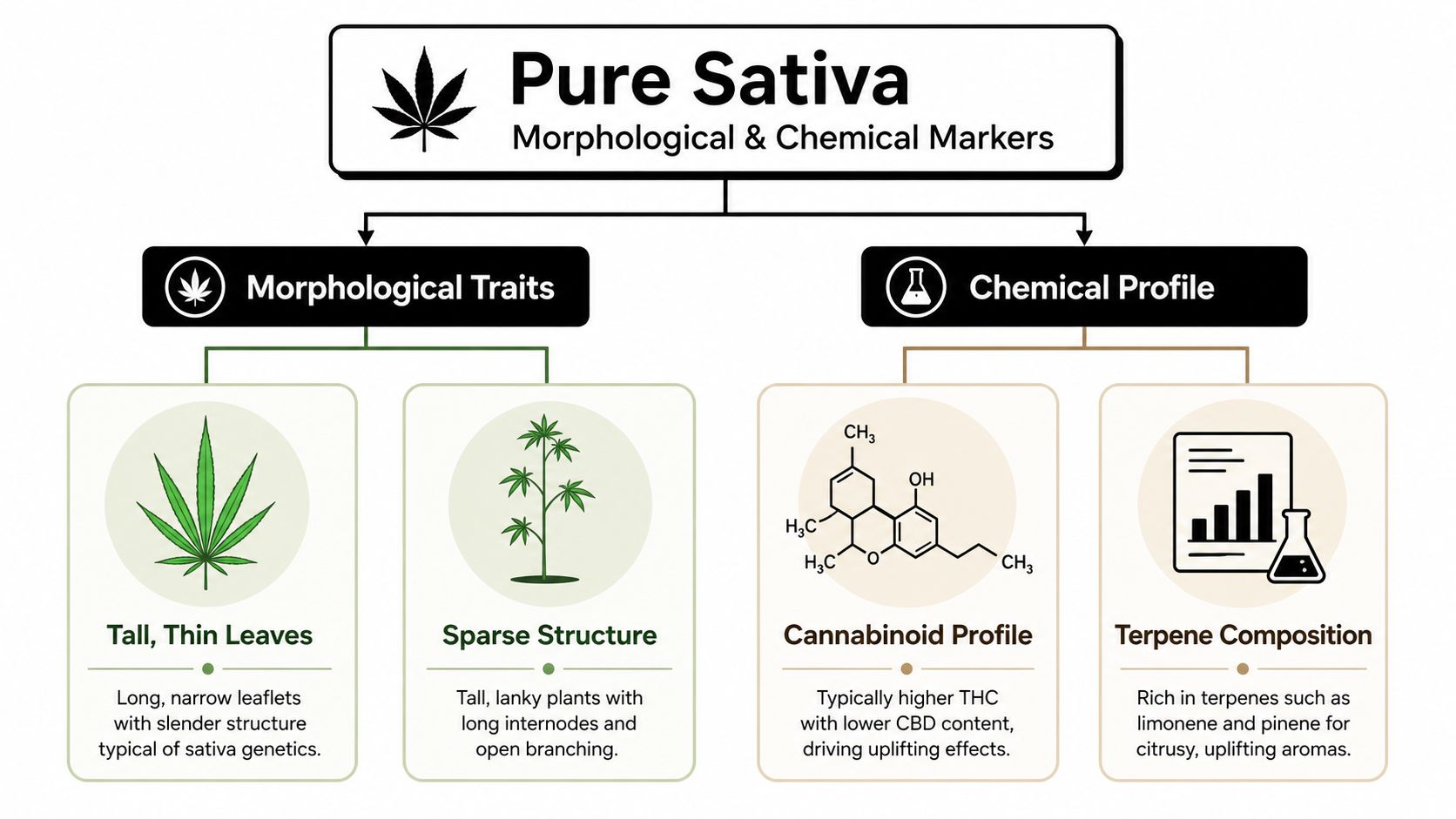
Pure sativa biomass shows its value before extraction starts. The plants are usually tall, narrow-leafed, and spaced out between nodes, with a looser flower structure than dense hybrid material. Those traits change how the crop dries, how much airflow it needs, and how much terpene character survives handling after harvest.
Why morphology still matters in extraction
Pure sativa cultivars are commonly described as having narrow leaflets, pronounced internodal stretch, and loose or airy inflorescence architecture. Those traits reduce moisture retention and lower mold pressure, which is one reason they are often considered better adapted to heat and humidity (Dutch Passion on pure sativa cannabis strains). That same architecture changes how the plant behaves in the dry room and in the lab. Airy flowers can dry more evenly, but they can also shed bright top notes quickly if post-harvest handling is careless. For a closer look at the resin structures involved, Gold Coast Terpenes' guide to trichomes on weed is a useful reference point.
Flowering time is the other marker that formulators should watch. High-quality pure sativas are often reported at 11–12 weeks or longer, and some accounts place the full cycle for seed-grown pure sativas at around six months (Dutch Passion on pure sativa cannabis strains, Herbies Head Shop on purest sativa strains). That long finish affects harvest timing, biomass maturity, and the terpene retention profile you get in the feedstock. The plant may look ready before the chemistry is where it needs to be.
The longer the plant stays in cycle, the more disciplined the harvest decision has to be. Pick too early and the profile can feel thin. Wait too long and the bright notes can flatten.
A useful historical anchor
The classic Haze line remains a practical reference for heritage purity claims. One source places its creation in Santa Cruz, California, in the early 1970s, when the Haze brothers crossed Mexican, Colombian, Thai, and Indian landraces to build an extreme sativa-dominant plant (Newsweed on Haze). Original Haze is described as a quasi-pure sativa, with flowering that can exceed 16 weeks, and it is often cited among the purest sativas ever selected.
For formulation work, that history matters because it gives a defensible sensory reference. The label alone is not enough. The useful target is a known family of tall, slow-finishing plants with a recognizable terpene trajectory and a long maturation window.
Heritage Sativa Strains and Their Documented Terpene Profiles
The most reliable starting point for a strain-inspired terpene blend is a heritage line with a documented origin and a recognizable sensory signature. Durban Poison is the clearest anchor because market-facing guides give both terpene percentages and flavor description, which makes it easier to map a cartridge formula back to a repeatable reference. The other landrace names still matter, but they work better as lineage cues than as exact sensory blueprints. For a broader strain reference set, see the Gold Coast Terpenes sativa strains archive.
| Strain | Origin | Dominant Terpenes | THC Range | Flavor Notes |
|---|---|---|---|---|
| Durban Poison | South African landrace | Terpinolene, myrcene, ocimene | 17–26% | Sweet, earthy, pine, anise |
| Colombian Gold | Colombia | Landrace terpene expression, not standardized in the cited data | Not specified in the verified data | Earthy-sweet character |
| Thai | Thailand | Landrace terpene expression, not standardized in the cited data | Not specified in the verified data | Spiced, citrus-herbal character |
| Malawi | Malawi | Landrace terpene expression, not standardized in the cited data | Not specified in the verified data | Complex herbal or fruity character |
| Acapulco Gold | Mexico | Landrace terpene expression, not standardized in the cited data | Not specified in the verified data | Classic heritage sativa character |
Durban Poison as a formulation reference
One source gives Durban Poison a THC range of 17–26% and dominant terpenes of terpinolene (0.6–1.1%), myrcene (0.4–0.7%), and ocimene (0.2–0.5%), with a flavor described as sweet, earthy, with pine and anise notes (Mood on best sativa strains). Those numbers are directly useful for vape cart work because they map cleanly to a top-note, mid-note, and lighter support structure.
That is also why Durban Poison shows up so often in replication work. It gives a formulator a measurable starting point instead of a vague promise of energy. If the finished distillate does not smell bright, airy, and slightly resinous, the blend is off even if the strain name is correct.
Why landrace ancestry is useful
Sources name Durban Poison, Panama Red, Thai, and Colombian Gold as examples of near-pure or heritage sativas, and one source identifies Durban Poison as a 100% pure sativa landrace example (Strng Seeds on the purest sativa strain). That ancestry matters because it gives formulators a defensible target frame for selecting dominant, supporting, and base terpenes.
A Thai-style profile usually needs more lift and less sweetness than a Colombian-style profile. A Malawi-inspired blend may carry a more assertive herbal edge. The point is to translate a landrace sensory identity into something that survives the cartridge fill.
Building a Sativa Terpene Blend from Isolates
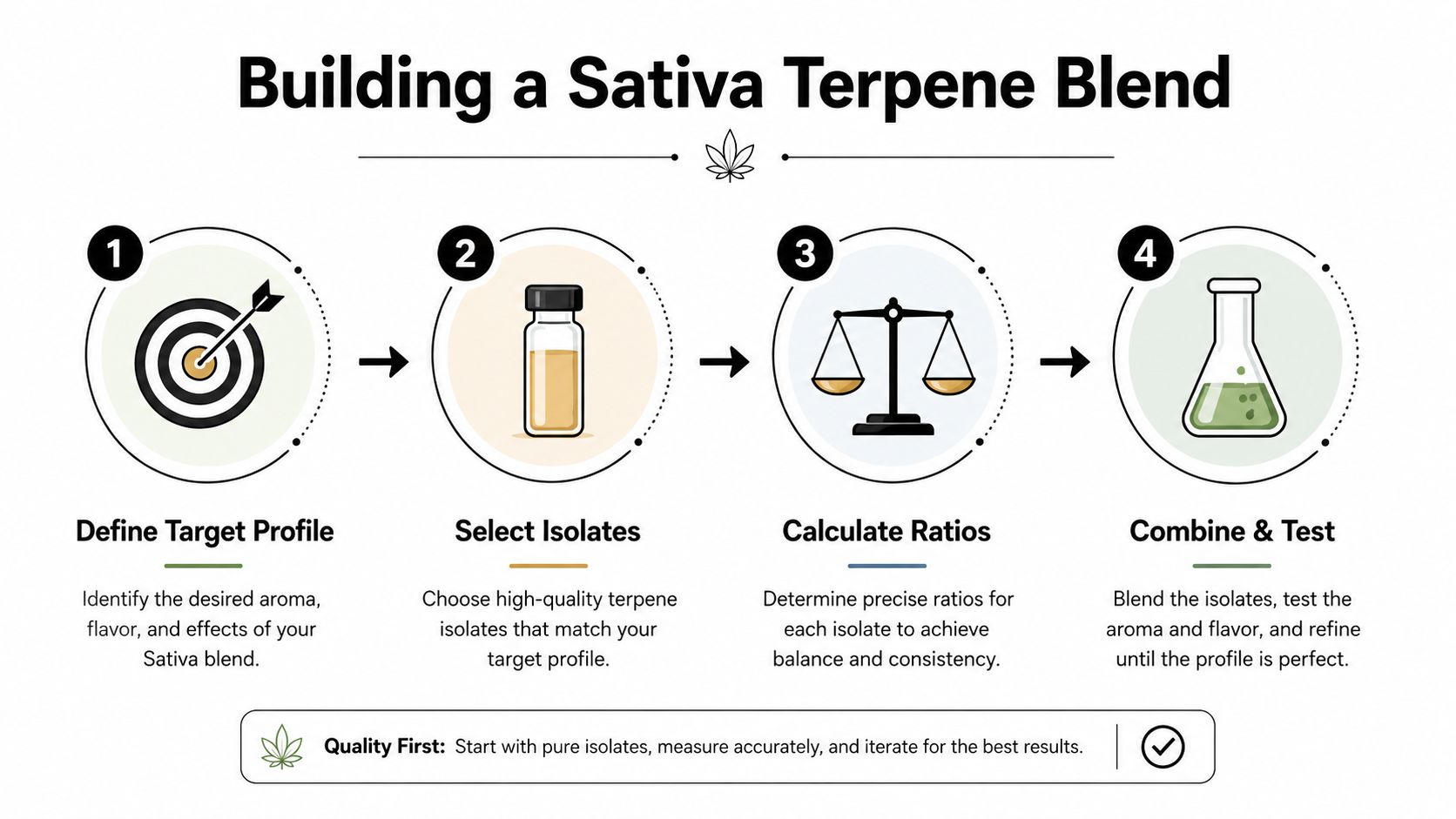
A reproducible formulation guide starts with the chemistry, not the strain name. Build the aroma in layers, because top notes shape the first impression, mid notes give the blend body, and base notes keep the finish present after the first few pulls. In cartridge work, that layering matters because the most volatile terpenes change behavior once they are diluted into distillate.
Start with the target sensory shape
A bright, sativa-leaning profile usually opens with terpinolene and limonene. The known Durban Poison profile gives terpinolene a strong role, which fits the way that cultivar reads as lifted and airy in finished oil. I treat terpinolene as the primary lift note, limonene as the brightness bridge, and myrcene as a controlled support note so the finish stays lively instead of weighted down.
A workable architecture is:
- Top note: terpinolene, limonene.
- Mid note: myrcene, pinene.
- Base note: a grounding terpene such as beta-caryophyllene, used to steady the finish.
That structure is a formulation habit, not a law of nature. It helps a blend read as clean and energetic instead of flat or muddy.
Use ratios that respect volatility
The main trap is building too much top note. Bright terpenes can look correct in the beaker and still disappear during mixing or filling if the process runs hot. A mixing ratios calculator helps convert a target profile into repeatable percentages instead of guessing by smell.
Field rule: if the first draft smells perfect in the beaker but dull in the cartridge, the top-note load was probably too high for the process.
Match the blend to the base oil
Distillate is unforgiving. It needs a clearer terpene structure than live resin because it does not bring its own native aroma matrix with it. Live resin can support a more complex blend, while a stripped distillate usually needs more deliberate rebuilding of top and mid notes. That is where ratio discipline pays off.
For a technical build, I work in three passes. First, establish the bright opening. Second, add enough mid note to keep the profile from reading thin. Third, anchor the blend so it still tastes coherent after heat and storage. If the cartridge is meant for faster-flowing hardware, the final mix also has to stay stable enough to wick cleanly without separation.
The process is easier to control if you work from isolates rather than a generic “sativa” blend. Isolates let you correct one layer at a time, which is the practical way to reverse-engineer a heritage profile with consistency.
A short process video can help teams standardize the workflow before scaling batches.
Reading Certificates of Analysis for Terpene Verification
A COA only helps if you know how to read the numbers in context. For terpene verification, the goal is not just to confirm that a product contains terpenes. The primary question is whether the profile matches the claimed landrace character and whether the batch is repeatable enough to support cartridge production.
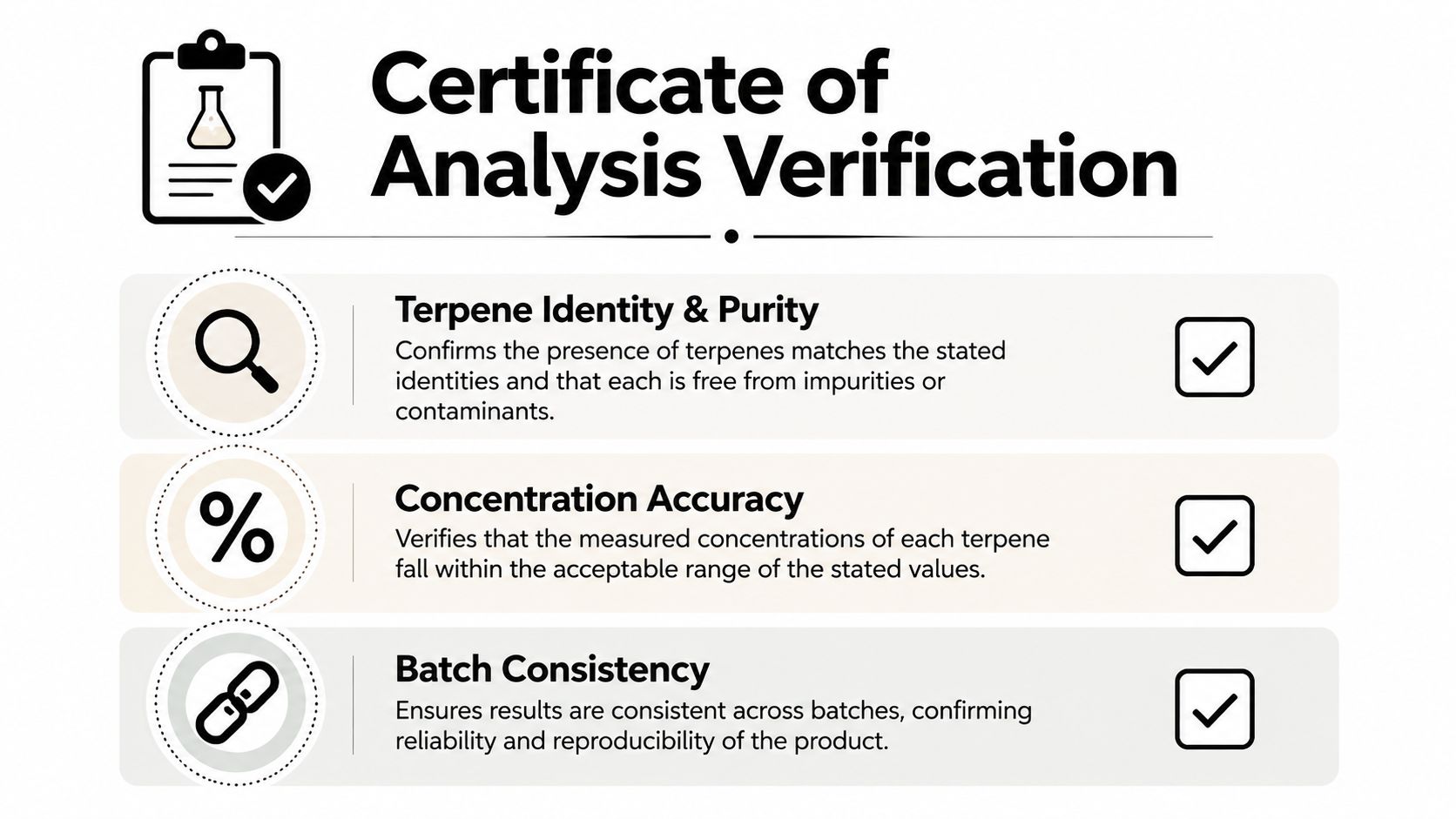
Start with the first three checks, then read the rest of the report against the sensory target. The terpene identity, concentration accuracy, and batch consistency tell you whether the input can support a believable sativa-style profile or only a loose approximation. A useful reference point is a clear COA certificate of analysis guide like this COA overview, because the same document can either support a formulation decision or hide problems if you only skim the totals.
The first three checks
The most important items are terpene identity, concentration accuracy, and batch consistency. A proper report should name the individual terpenes rather than hiding behind a vague “total terpenes” line, because a sativa-inspired blend depends on the relative balance of the major and minor components. Consistency across batches matters too, because a good first lot and a weak second lot create real production headaches.
A good verification pass looks like this:
- Terpene identity and purity. Confirm the named compounds match the target profile, and don't ignore missing support notes.
- Concentration accuracy. Compare the listed terpene makeup against the strain reference you're building toward.
- Batch consistency. Look for repeatability across lots before you commit to a production run.
What can go wrong on paper
The warning signs are usually easy to spot once you have reviewed enough reports. A profile that claims a heritage sativa identity but shows only one or two loud terpenes usually will not reproduce a real landrace aroma. Clean, rounded numbers can also be a red flag when they do not match the irregularity of plant chemistry.
The paper can also look better than the material will perform. A COA may list terpene presence, but it still leaves out how those compounds behave in a distillate base, how much top-note loss you can expect during handling, and whether the lot has the sensory structure needed for a cartridge fill. That is why a product page or supplier spec sheet is not enough on its own.
For verification work, I use the same sequence every time. Read the terpene list, compare it to a documented heritage profile, then ask whether the batch can survive the way you manufacture. If the report looks polished but does not explain the sensory result, it is not enough.
Residual solvent screening matters too, especially if the terpene input will touch a distillate base. You want clean input, stable input, and a report that gives your production team enough confidence to keep moving. If your supplier cannot show that, keep looking.
Scaling Sativa Formulations for Cartridge Production
Bench-top blends can fool people. A formula that smells exact in a small glass vial can change once it's heated, mixed into distillate, moved through transfer equipment, and filled into hardware. Scaling pure sativa profiles means thinking about loss, not just aroma design.
Heat changes the answer
Terpenes do not all tolerate process heat the same way. Bright top notes are usually the first to drift, which is why a formula that relies too hard on the most volatile compounds can come off thin after production. The fix isn't just adding more top note, it's building a blend that still reads correctly after it has gone through the line.
That's where viscosity and wicking come in. Ceramic and cotton coil cartridges need a base oil that flows cleanly without separating, and the terpene load has to support that flow instead of fighting it. If the blend is too aggressive, you can end up with harsh vapor or flavor fade that shows up late, after the product is already in market.
Stability should be part of the batch record
A practical production setup should include:
- Pre-fill test. Check how the blend behaves in the distillate base before it touches hardware.
- Post-fill hold. Let the filled units rest long enough to see whether flavor settles or separates.
- Shelf evaluation. Compare the first pull to later pulls for drift in the top and mid notes.
One option for teams building this kind of workflow is Gold Coast Terpenes, which supplies strain-specific terpene profiles and isolates for cartridge and formulation work. That kind of input is useful when you're trying to reproduce a heritage character without depending on raw flower as your sensory reference.
If a batch separates, don't just blame the hardware. Recheck the terpene load, the base viscosity, and the fill temperature in that order.
The commercial goal is simple. You want a blend that survives manufacturing, stores cleanly, and still tastes like the profile you intended. That requires repeatable ratios, not optimistic batching.
Formulation Scenarios and Practical Applications
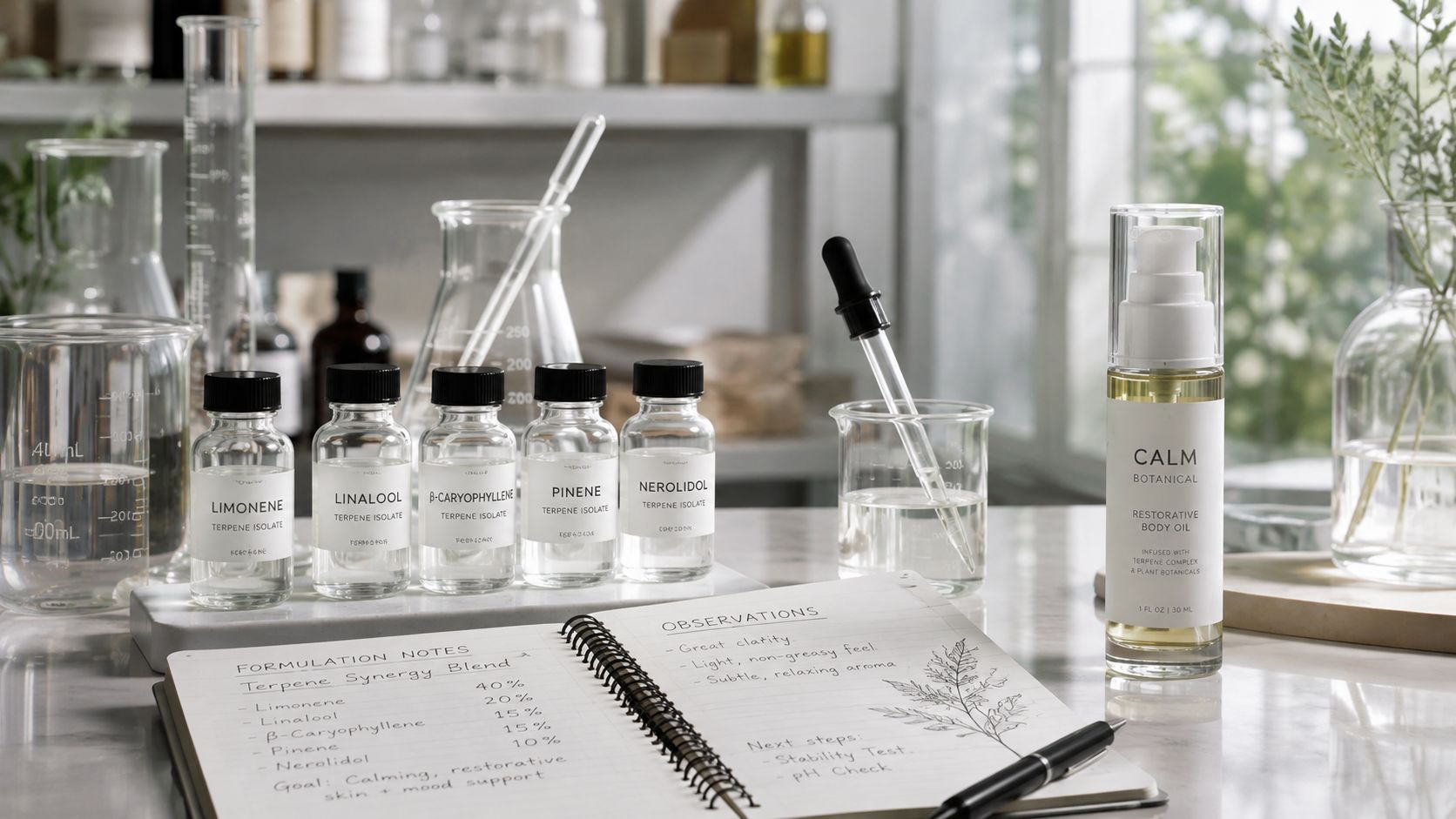
A Durban Poison-inspired cartridge starts with a bright opening and a clean finish. I'd build that with terpinolene leading, myrcene supporting, and enough lighter structural material to keep the profile from becoming sharp. The target is a cartridge that reads as sweet, earthy, and slightly piney, not a generic citrus blend wearing a sativa label.
Three real production scenarios
A focus-oriented house blend usually needs less strain specificity and more sensory control. In that case, I'd keep the top note bright, trim the sweetness, and let the mid note carry most of the body so the finish stays clean during repeated pulls. That format is easier to scale across multiple SKUs because it leans on chemistry instead of a single heritage name.
A Thai-style limited release calls for a different balance. Thai references generally want a spiced, citrus-herbal direction, so the job is to keep the profile lifted without making it taste like a generic lemon cartridge. That kind of build rewards careful COA review, because the closer the blend gets to a specific heritage target, the less margin you have for guesswork.
A Colombian Gold-inspired release usually sits somewhere else again. The profile should feel earthy-sweet and structured, with enough lift to stay in the sativa lane but enough body to avoid reading as brittle. That's the difference between strain history and commercial performance.
The repeatable workflow
For each of those scenarios, the sequence stays the same. Define the target profile, select isolates, calculate the ratio, then verify the result against the COA before scaling. If the aroma still misses the reference after that, the solution is usually in the balance of top and mid notes, not in adding more total terpene.
The purest sativa conversation is only useful when it changes how you formulate. The label matters less than the chemistry, and the chemistry only matters when it survives real production.
If you're building a cartridge program around authentic sativa sensory profiles, Gold Coast Terpenes can supply strain-specific terpene profiles, isolates, and formulation inputs that fit this kind of work. Visit Gold Coast Terpenes to review sativa-style options, compare terpene tools, and source components for your next replication project.