
A familiar request lands on the product desk. Sales wants a Jealousy cart. Branding wants it to smell like premium flower, not generic sweet gas. Operations wants it stable in distillate. Hardware testing comes back with a version that opens bright and citrusy, but the creamy backend disappears and the fuel note turns flat.
That's why the Jealousy OG strain matters to formulators. It isn't hard because it's famous. It's hard because its identity sits in tension. The profile has to read sweet and creamy on the inhale, then settle into something earthy, peppery, and solvent-like without becoming harsh. A lot of strain-inspired terpene blend work fails at exactly that handoff.
For brands building modern vape lines, Jealousy is commercially attractive because buyers already associate the name with a premium, contemporary cultivar. The challenge is that most public writeups stop at broad effect language and casual flavor notes. That doesn't help when you're trying to decide whether the blend is limonene-heavy, whether the caryophyllene needs support, or how much top-note sweetness survives atomization.
If you're in the middle of SKU development, the practical question isn't what Jealousy is. The practical question is how to translate a flower profile into a liquid profile that still reads as Jealousy once it hits a cartridge. That starts with understanding how experienced formulators approach strain selection through terpene profiles. The flower name points you in the right direction. The terpene architecture decides whether the finished oil feels accurate or disposable.
Introduction Why Every Brand Is Chasing Jealousy
Jealousy keeps showing up because it solves a market problem. It gives brands a name that already carries premium expectations, but it also offers a flavor identity that stands out from simpler fruit-forward or gas-only profiles. That combination is rare.
In formulation terms, Jealousy asks for restraint. If you push the candy side too far, the result reads like a generic dessert cart. If you lean too hard on fuel and spice, it loses the creamy lift that makes the profile recognizable. The target sits in the middle, and that middle is narrower than many teams expect.
The profile is desirable because it's layered
A lot of popular strain names are easy to imitate loosely. Jealousy isn't one of them. The profile depends on contrast.
- Front-end sweetness: You need a soft dessert impression, not syrup.
- Middle-body fruit and musk: Here, the blend starts to feel like flower instead of candy.
- Base-note gas: Without it, the profile won't hold up as a modern boutique hybrid.
Practical rule: If the first sensory note tells the whole story, the blend is underbuilt.
That's why Jealousy often ends up in multiple rounds of bench work. The first pass usually smells good in a bottle. The second pass is where you learn whether it performs like a vape profile.
The Genetic and Commercial Blueprint of Jealousy
Jealousy's commercial value starts with its lineage and how clearly the market recognized it. It's widely described as a cross of Gelato #41 and Sherbert Bx1, bred by Seed Junky Genetics, and that parentage already tells a formulator a lot about expected flavor direction. You should expect sweetness, cream, and fruit on one side, then a darker earthy and fuel-bearing structure underneath.

The strain also proved itself commercially very fast. Veriheal notes that Jealousy, bred by Seed Junky Genetics from Gelato #41 and Sherbet Bx1, was named Leafly's 2022 strain of the year, placed 2nd at the California High Times Cannabis Cup that same year, runs roughly 50% indica / 50% sativa, and is commonly reported in a 17%–30% THC range in its Jealousy strain information and effects overview.
What the genetics imply for formulators
That lineage matters because it creates a narrow sensory expectation. When a buyer sees Jealousy on a label, they don't expect pine-dominant freshness or sharp tropical acidity. They expect a cultivated dessert profile with weight behind it.
For product development, that means the blend has to do three jobs at once:
| Formulation target | What it should express | What happens if it misses |
|---|---|---|
| Sweet top | Cream, candy, soft citrus | Feels generic or flat |
| Hybrid middle | Fruity musk and rounded body | Loses flower realism |
| Gas finish | Pepper, earth, fuel persistence | Reads as candy instead of Jealousy |
Why Jealousy became a serious SKU name
Jealousy didn't become important just because it was potent. It became important because the market could identify it quickly. That kind of naming consistency matters in manufacturing. A profile with broad recognition is easier to merchandise across flower, concentrates, and vapor products when the sensory translation is done well.
The commercial risk isn't using the Jealousy name. The risk is using it on a profile that only captures the sweet half.
That's why formulation teams should treat Jealousy as a benchmark profile, not a novelty profile. It has enough market recognition to reward accuracy and enough complexity to expose weak blending.
Terpene Profile for Replicating the Flavor of Jealousy
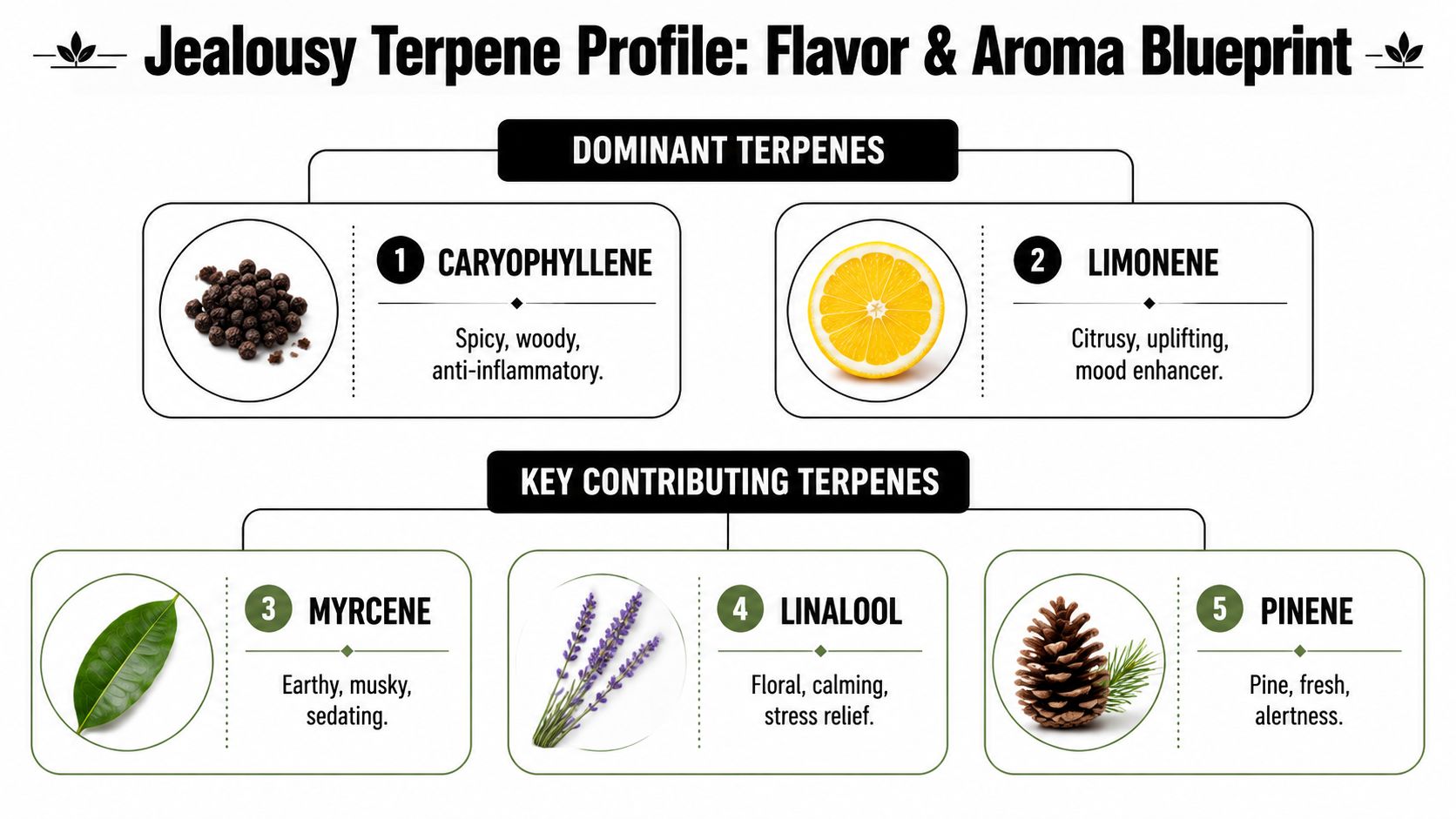
When formulators talk about the Jealousy OG strain, the useful question is not whether it smells sweet or gassy. It's which compounds carry those impressions and where they should sit in the blend. Jealousy is repeatedly described as a dessert-gas profile, and that term only becomes actionable when you break it into note structure.
Leafly describes Jealousy as a balanced hybrid created from Sherbert Bx1 and Gelato 41, often reported in the high-20% THC range, with caryophyllene as the dominant terpene and limonene plus myrcene also present in its Jealousy strain profile. That's the starting point for replication work.
Building the note pyramid
Jealousy's signature comes from a caryophyllene-led core, supported by limonene and myrcene. Ant Farm's product description is useful here because it ties those compounds directly to sensory function. It describes the strain as sweet, creamy, and fruity on the front end with citrus, earthy, funky, or diesel-like character underneath, and notes that caryophyllene drives the peppery/fuel layer while limonene and myrcene support citrus-fruit and soft musky character in the Jealousy OG profile.
For practical blending, think in layers:
- Top notes
- Limonene: carries citrus brightness and helps the sweet side feel lifted instead of dense.
- Mid notes
- Myrcene: adds body, fruit softness, and the slightly musky transition that keeps the profile from feeling thin.
- Base notes
- Caryophyllene: anchors pepper, wood, earth, and the gas-toned finish.
Jealousy terpene profile breakdown for formulation
| Terpene | Typical % in Profile | Aromatic Contribution | Note Classification |
|---|---|---|---|
| Caryophyllene | Dominant | Peppery, woody, fuel-like backbone | Base note |
| Limonene | Supporting | Citrus lift, sweet brightness | Top note |
| Myrcene | Supporting | Fruity, earthy, soft musky body | Mid note |
If you need a quick sensory reference while dialing those layers in, a terpene flavor chart for formulation work is useful because it keeps the conversation tied to note behavior instead of vague strain language.
What usually goes wrong
Most failed Jealousy blends miss in one of three ways.
Too much limonene
The profile opens attractively, but it reads like citrus candy with no authority underneath.
Too much caryophyllene
You get pepper and fuel, but the creamy dessert identity collapses and the finish can feel abrasive in vapor.
Not enough mid-body
The top and base exist, but they don't connect. That gap is where a blend starts smelling assembled instead of natural.
A good Jealousy blend shouldn't smell loud in only one direction. It should unfold in sequence.
That sequence matters more than intensity. Jealousy isn't defined by a single dominant smell. It's defined by how sweetness hands off to musk, then settles into gas.
From Flower to Formulation A Translation Guide
The main mistake in formulating Jealousy for vape cartridges is assuming the flower aroma can be copied directly into oil. It can't. A flower profile lives in a different sensory environment than a cartridge. Extraction changes what's left. Hardware changes what gets expressed first. Heat changes what the user perceives.
That's why strain reviews rarely help manufacturing teams. Strainpedia points out that most Jealousy content stops at consumer effects and doesn't provide a formulation framework, while the primary challenge is replicating its citrus-cream, gas-forward profile in liquid form and adjusting for batch variability plus sensory changes during vaporization in its Jealousy profile reference.
Vapor changes the balance
In the bottle, many blends smell more complete than they taste in a cart. That's especially true with Jealousy because the profile depends on a stable relationship between bright citrus, creamy sweetness, and heavier gas notes.
In actual cartridge use, lighter top notes often show first and heavier notes can feel delayed, muted, or shortened. That creates a common failure mode. The blend smells accurate in the lab jar but vapes like sweet citrus with a vague pepper finish.
Flower gives you a full aromatic cloud. Vapor gives you a compressed sensory window.
That means a strain-inspired terpene blend for distillate usually needs rebalancing rather than direct copying.
Why cure-style cues still matter
Even though this is a vape problem, flower handling still matters because the target profile comes from post-harvest expression, not just genetics. Teams that ignore cure-derived aroma cues often overbuild sweetness and underbuild funk.
A good refresher on how drying and curing influence terpene expression helps when you're trying to understand why a fresh-smelling blend still doesn't read like finished flower.
Practical translation moves
Use these as formulation habits, not rigid rules:
- Bias for persistence: Build enough base structure that the gas note survives hardware heat.
- Keep sweetness soft: Jealousy should suggest cream and candy, not confectionery syrup.
- Use the middle intentionally: The bridge between citrus and fuel is where realism lives.
- Test in hardware early: Don't wait until final fill to find out the profile front-loads too hard.
When a Jealousy blend works, it doesn't smell like a terpene experiment. It smells like a coherent cultivar translated into vapor.
Jealousy Strain-Inspired Terpene Blend Recipes
The best way to approach a Jealousy strain-inspired terpene blend for vape cartridges is to start with a structural target, not a fixed copy of a flower COA. Jealousy is consistently described as potent, and Blimburn notes average THC near 25% with around 1% CBG in one reference, while another report places THC up to 28% and flowering at 8–10 weeks in its Jealousy F1 overview. For formulators, that matters because the terpene system will sit on top of a strong cannabinoid base, so even small sensory shifts become obvious.
A practical starting framework
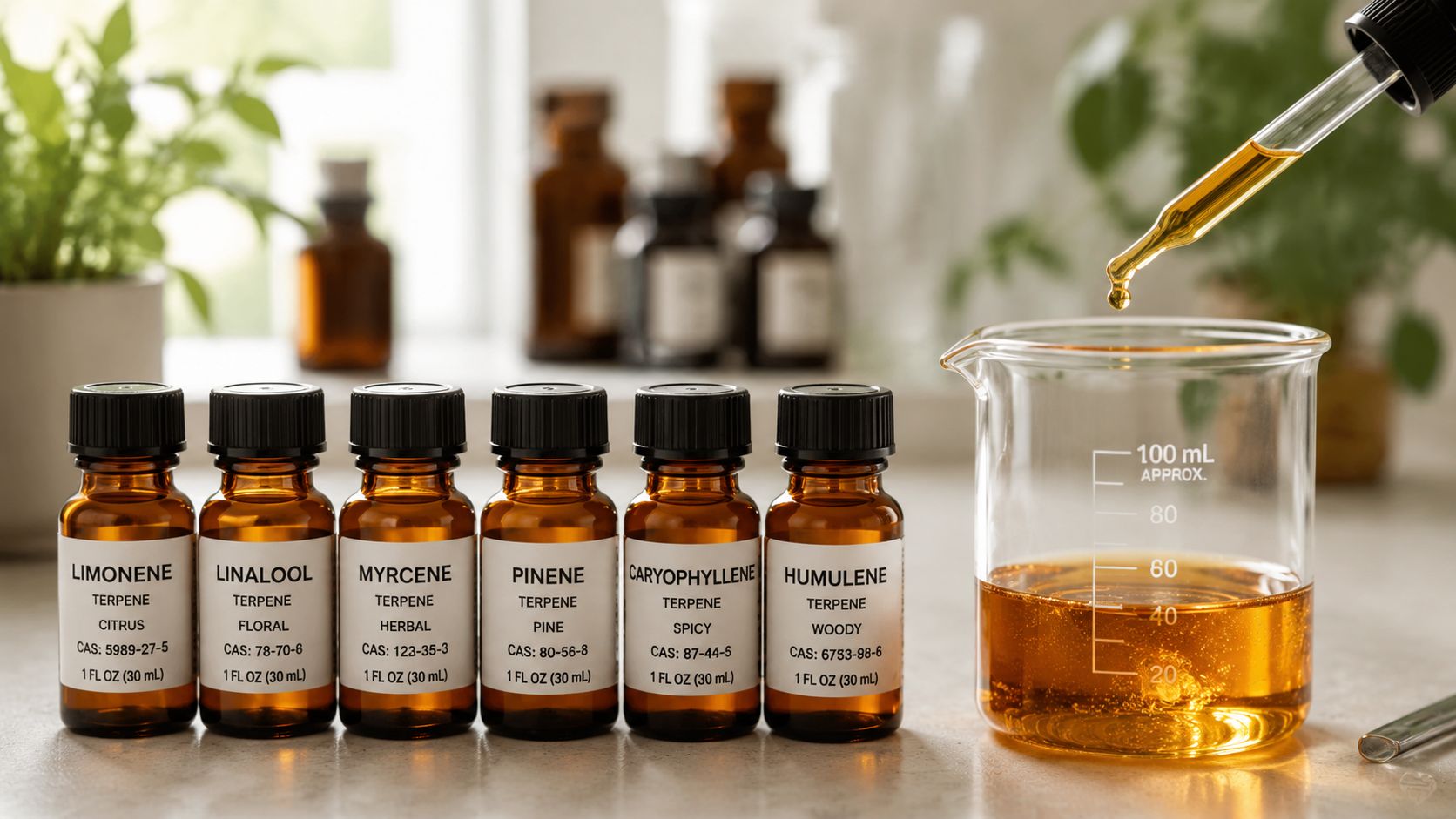
For cannabis product formulation, I'd build Jealousy around a caryophyllene-led base, then tune the top and middle for your hardware and oil texture.
A useful starting architecture looks like this:
- Caryophyllene-forward foundation: This should carry the peppery, earthy, fuel-bearing identity.
- Limonene for lift: Enough to signal citrus cream, not enough to push the blend into candy.
- Myrcene as connective tissue: This helps the profile feel rounded and flower-like.
- Optional support notes: Small additions from floral or fresh accents can help shape the cream side, but they should stay supportive.
That's not a finished recipe. It's a decision tree. If your first sample reads too bright, reduce the citrus emphasis before touching the base. If it tastes harsh, don't automatically cut caryophyllene first. Check whether the top note is too thin and exposing the spice.
Blend styles that usually work
Here are three practical Jealousy directions manufacturers can bench side by side.
Dessert-leaning Jealousy
Best when the brand wants a softer inhale. Keep the citrus creamy and restrained, then let the gas emerge late.
Balanced flagship profile
This is the closest fit for most brands. Sweet on entry, musky in the center, pepper-fuel on the finish.
Gas-forward Jealousy
Useful for concentrate-oriented lines. The risk is losing the name-recognition cues if the dessert side gets buried.
Later in development, hardware often decides which version survives.
A quick visual on cartridge blending workflow helps here:
Hardware and sourcing decisions
Ceramic systems usually preserve a profile like Jealousy better than older setups that flatten nuanced top notes. You still have to test for how quickly the first draw expresses citrus, and whether repeated pulls expose enough base character.
For sourcing, some teams will custom-build from isolates such as beta-caryophyllene and limonene, while others will start with a ready-made profile and adjust from there. One available option is the Gold Coast Terpenes Jealousy strain profile, alongside its isolate catalog for custom tweaking, if you need a faster bench starting point through Gold Coast Terpenes.
Don't choose between custom blending and premade profiles on ideology. Choose based on revision speed, batch goals, and how tight your launch window is.
Verifying Your Formulation for Consistency and Compliance
A Jealousy cart isn't finished when the pilot batch smells right. It's finished when it smells right again in the next batch, and the one after that. Consistency is what turns a successful bench blend into a real SKU.

What to verify after blending
You need more than a quick sensory pass. A professional QC process should confirm that the finished oil still matches the intended note balance after mixing, hold time, and cartridge filling.
Use a repeatable check sequence:
- Sensory review in bulk oil: Confirm that sweetness, body, and gas are all present before fill.
- Filled-cart evaluation: Test the actual delivery system, not just the beaker.
- Batch comparison: Keep an approved retain so the next lot has a real benchmark.
- Ingredient review: Verify every formulation component matches your internal safety and specification standards.
Compliance is part of formulation quality
For inhalable products, ingredient discipline matters as much as aroma accuracy. If you're building a terpene system for carts, the finished formula should align with your regulatory and internal safety requirements. That includes checking documentation for every input and making sure your process reflects current packaging and labeling obligations.
A working regulatory compliance checklist for terpene products is useful because it keeps production, QA, and brand teams aligned before release.
A profile can be accurate and still be a bad product if the documentation, inputs, or repeatability aren't under control.
For manufacturers, brand trust comes from repetition. If the first Jealousy release is rich and layered, but the second one is thin and citrus-heavy, customers won't call it batch variability. They'll call it inconsistency.
Conclusion Gaining a Competitive Edge with Authentic Profiles
The Jealousy OG strain rewards brands that do the hard part well. The easy version is labeling a cart with a trendy cultivar name and pushing a sweet gas profile into market. The harder version is building a vape that expresses the same creamy-citrus opening, musky middle, and pepper-fuel finish people expect from Jealousy.
That work pays off because accuracy is visible. Buyers may not describe the chemistry, but they can tell when a profile feels integrated and when it feels assembled. In a crowded vape category, that difference matters more than another generic dessert SKU.
The practical path is clear. Start with the terpene architecture, not the strain hype. Build the note pyramid intentionally. Adjust for vapor behavior instead of trusting bottle aroma. Then verify the result with repeatable QC so the profile stays stable across production.
Brands that treat strain replication as formulation work, not just flavoring, usually end up with stronger line extensions and fewer expensive revisions. Jealousy is a good test case because it exposes weak shortcuts quickly. If your team can translate Jealousy into a cart without losing its dessert-gas tension, you can apply that same discipline across the rest of a modern strain menu.
If you're developing a Jealousy-inspired SKU or comparing terpene profile options for carts and concentrates, Gold Coast Terpenes offers strain profiles, isolates, and formulation resources that can help shorten bench work and tighten sensory consistency.