
A lot of teams hit the same wall at the same point in production. The distillate looks clean, the potency is there, the hardware spec sheet seems fine, and the finished cart still underperforms. You get weak pulls, slow wicking, early coil scorching, or a customer complaint that the oil “looks great but doesn’t hit right.”
That problem usually starts with viscosity, not branding, not packaging, and not even potency.
If you're figuring out how to thin distillate for cartridges, the job isn't to make thick oil look more fluid. The job is to build a formulation that fills cleanly, stays homogeneous, wicks consistently, preserves the intended sensory profile, and survives real hardware in real distribution conditions. That takes more than adding a few drops of terpenes and hoping the cart behaves.
A professional process starts with matching the oil to the hardware, selecting the right terpene system, controlling temperature during mixing, and documenting every variable that affects repeatability. That is what separates a usable batch from a batch you can scale.
Why Viscosity Is Critical for Vape Cartridge Performance
Distillate cartridge performance is a fluid dynamics problem first. High-potency distillate is dense, slow-moving, and often stripped of the native terpenes that helped the original extract flow. According to TribeTokes' THCa vape cartridge guide, distillate THCa vape cartridges reach 85-99% potency and often lose natural terpene content down to 0-5%, which is why formulators commonly add 5-10% terpenes to restore usability. The same source says unthinned formulations can fail in up to 80% of autodraw tests.
That lines up with what most production teams see on the bench. Thick oil doesn't move into the wick fast enough. The coil heats before the oil replenishes. The customer experiences a dry, hot hit, then blames the cartridge.
What actually fails inside the cart
A cartridge doesn't care how good the COA looks if the oil can't feed the atomizer. In practice, viscosity controls:
- Wicking speed that determines whether the coil stays wet between draws
- Airflow behavior inside the reservoir and atomizer assembly
- Vapor consistency from first hit to end of fill
- Leak resistance once the cart warms in storage or transport
- Battery compatibility across button-activated and autodraw devices
When oil is too thick, the failure usually shows up as weak vapor, darkened oil around the coil, or early burnt flavor. When it’s too thin, you trade one problem for another and create seepage, flooding, or leaking through the center post.
Thick distillate rarely fails all at once. It usually fails one draw at a time.
The sweet spot is hardware-specific
There isn't one universal “good viscosity.” There is only a usable window for a specific oil in a specific cartridge design. Standard ceramic carts, especially common wick and aperture configurations, need the oil to move at a controlled rate. That means your formulation has to be built around the hardware you are shipping, not the hardware you tested once during R&D.
For commercial teams, this is why how to thin distillate for cartridges should be treated as an SOP issue, not a casual formulation adjustment. Viscosity affects customer retention, return rates, and consistency between lots.
A cart that works in the lab but stalls in the field usually wasn’t “almost right.” It was out of spec for the hardware from the start.
Choosing Your Diluent Terpenes vs Isolates vs Formulated Solutions
The thinning agent you choose determines more than flow. It affects flavor fidelity, perceived quality, legal positioning, and how much room you have before the oil starts feeling over-processed.
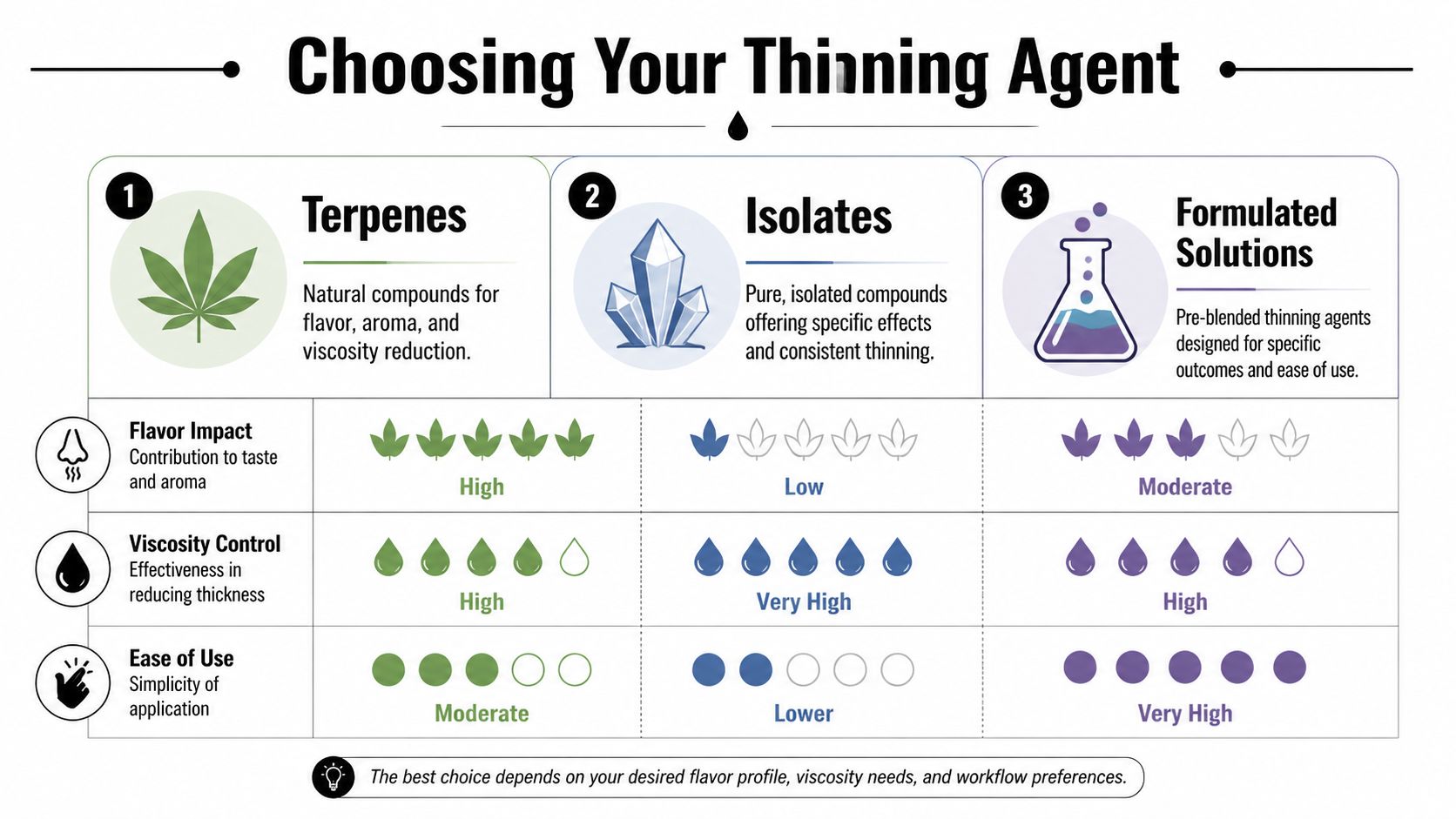
Terpene blends for usable viscosity and profile design
For most distillate cartridge programs, terpene blends are the practical default because they solve two formulation problems at once. They reduce viscosity and rebuild aroma.
Strain-inspired formulation is key. A blend built for replicating flavor of a known profile can give you top-note lift, mid-note body, and base-note persistence that plain distillate no longer has after refinement. In that framework:
- Top notes drive first aroma impression and usually provide the immediate brightness
- Mid notes shape the recognizable character of the profile
- Base notes hold the finish and keep the blend from tasting thin or sharp
For teams building a terpene profile for distillate, a complete blend usually performs better than trying to patch flavor together after the oil already feels flat.
Isolates for control, but not full profile replacement
Single-molecule isolates have a place in cartridge formulation. They’re useful when you need to tune a blend, push a directional note, or adjust how a profile opens in vapor. They are not a complete substitute for a finished terpene system in most production runs.
A good example is D-Limonene in formulation work. Used carefully, it can help brighten a profile and shift the opening impression. But isolates alone usually create a narrow sensory result. A cart may wick properly and still taste incomplete.
That matters if you're formulating for vape cartridges where repeat purchase depends on a recognizable flavor signature, not just adequate flow.
Formulated solutions and the cutting debate
The industry's biggest argument isn't whether to thin distillate. It's how much thinning still counts as making the oil usable instead of cutting it.
Future4200 discussions on thinning thresholds capture that divide clearly. Some practitioners argue that going above 5% means you're cutting the oil, while others report using 10% for customer cartridges. That debate matters because it reflects a real trade-off, not a philosophical one.
Here’s the practical version:
| Option | Best use | Main advantage | Main risk |
|---|---|---|---|
| Full terpene blends | Strain-inspired vape formulation | Balances flavor and viscosity | Too much can thin and mute the profile |
| Single isolates | Fine-tuning top, mid, or base notes | Precision control | One-dimensional flavor if overused |
| Non-terpene diluents | Limited special cases | Can change flow quickly | Greater quality and purity concerns |
What not to rely on
If your goal is premium cartridge performance, avoid treating generic cutters as a shortcut. The cleaner route is terpene-only thinning matched to oil viscosity and hardware requirements. Non-terpene diluents can make oil easier to fill, but they also move the product away from the sensory and quality position many brands want.
The right question isn't “what will thin this oil fastest.” It's “what will make this oil usable without making it feel diluted.”
For brands building a repeatable strain-inspired terpene blend for cannabis product formulation, that distinction is the whole game.
The Core Formulation Process Step-by-Step Mixing and Ratios
A batch can look perfect in the beaker and still fail in the cartridge. The usual causes are simple. Ratio drift, poor temperature control, uneven mixing, or a fill that traps air. Cartridge formulation has to be treated like process chemistry, not a flavoring step.
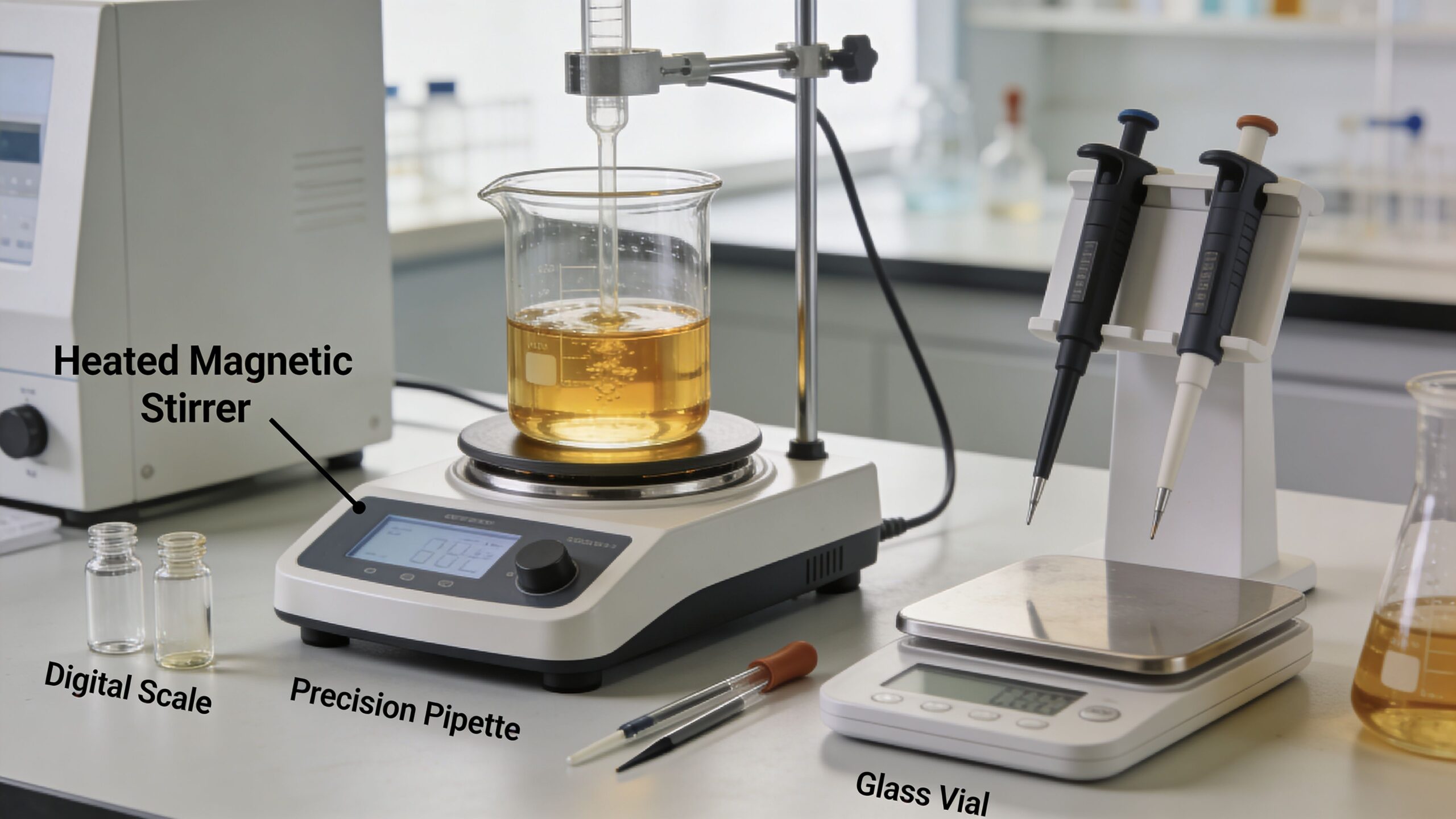
For standard 90%+ THC distillate, a common starting point is 7.5% terpene incorporation for cartridge flow. According to Gamut Packaging’s thinning guide, operators also need to watch mixing method, temperature ceiling, homogenization conditions, fill temperature, and hardware target range as part of one controlled system.
Start with a processable base
Good results start before the terpene addition.
Use clean, fully finished distillate. If the feedstock still carries instability from upstream work, the formulation step becomes unpredictable and the cartridge ends up showing the problem first. Warm the oil only enough to make it mobile, typically in the 60 to 80°C range, and keep enough headroom to protect volatile compounds during incorporation.
That temperature window gives you workable flow without turning the bench into a terpene loss exercise.
Set ratio bands before you mix
Teams get into trouble when the terpene percentage is decided at the hot plate. Set the band first, then weigh to that target.
A practical framework is:
- 10% for high-viscosity distillate above 95% purity
- 7.5% for standard distillate
- 5% for lower-viscosity oil below 90% purity
Those numbers are starting bands, not guarantees. I treat them as formulation lanes. The final decision still has to match the cartridge aperture, coil style, target flavor strength, and the way the oil behaves after cooling. If you want to standardize batch math across operators, use a mixing ratios calculator for terpene formulation instead of letting each technician build the equation from scratch.
Keep the math fixed across every batch
The calculation method matters as much as the percentage.
If a finished blend is set at 7.5% terpenes, calculate that 7.5% against the total finished batch weight every time. Do not switch between “percent of oil” in one record and “percent of finished blend” in another. That is how two operators can both claim they followed the SOP and still produce materially different oil.
Boring math is good manufacturing.
Incorporate under controlled shear
Hand stirring is fine for proving a concept. It is weak process control for production work. In practice, the blend needs enough shear to fully distribute the terpene fraction without whipping in excess air or overheating the vessel.
Use a homogenizer for 5 to 10 minutes at 500 to 1000 RPM, then verify that the blend stays uniform as it cools. A simple visual check right off the mixer is not enough. I want to see the oil hold together after the temperature drops, because that is closer to what the cartridge will experience during filling, storage, and first use.
A production workflow usually looks like this:
| Stage | Target condition | Why it matters |
|---|---|---|
| Oil warming | 60-80°C | Makes the distillate pourable |
| Blend incorporation | Controlled terpene ratio | Sets final viscosity and flavor |
| Homogenization | 5-10 minutes, 500-1000 RPM | Reduces separation risk |
| Warm fill | 40-50°C | Improves dispensing and reduces trapped bubbles |
A quick visual reference helps if you're training staff on bench setup and handling:
Confirm the blend against the hardware target
A cartridge formula is only correct if it works in the device it was built for. Bench appearance is not a release criterion.
Check viscosity at 25°C with the instrument and method your team uses for QC. For ceramic coil carts with 1.8 to 2.0 mm oil holes, Gamut Packaging’s guide cites a target range of 50 to 150 cP. That type of target is what separates repeatable formulation from guessing by eye.
This is also where serious producers protect brand consistency. If one batch is built to taste right and another is built to wick right, customers will feel the difference immediately. The point of a defined framework is to get both.
Fill warm, then let the cartridge settle
A stable bulk blend can still become a poor finished unit if the fill is sloppy. Keep the oil warm during filling, typically around 40 to 50°C, and give the filled carts time to release bubbles before final closure and packing.
That step affects more than appearance. Air pockets, fast cooling, and inconsistent fill behavior change how the first pulls perform. In production, I would rather spend extra time on controlled warm filling than explain a preventable return spike later.
Done correctly, the process is straightforward. Heat to a controlled working range, weigh to a defined ratio band, homogenize with purpose, verify against the hardware target, and fill under conditions that preserve the blend you just built.
Advanced Techniques for Professional Quality Control
A workable formulation isn’t the same as a production-ready formulation. Professional quality control starts after mixing, not before.
Match the hardware to the oil
Some cartridges tolerate thicker blends better than others. ICMag’s hardware-focused discussion notes that carts with preheated ceramic coils can handle straight distillate with just 1.5-5% terpenes, while standard wicks often produce 50% dry hits without proper thinning. The same source says skipping warm-filling at 50°C leads to clogged syringes in 90% of cases.
That tells you something important. Formulation and hardware selection should be developed together, not in separate departments.
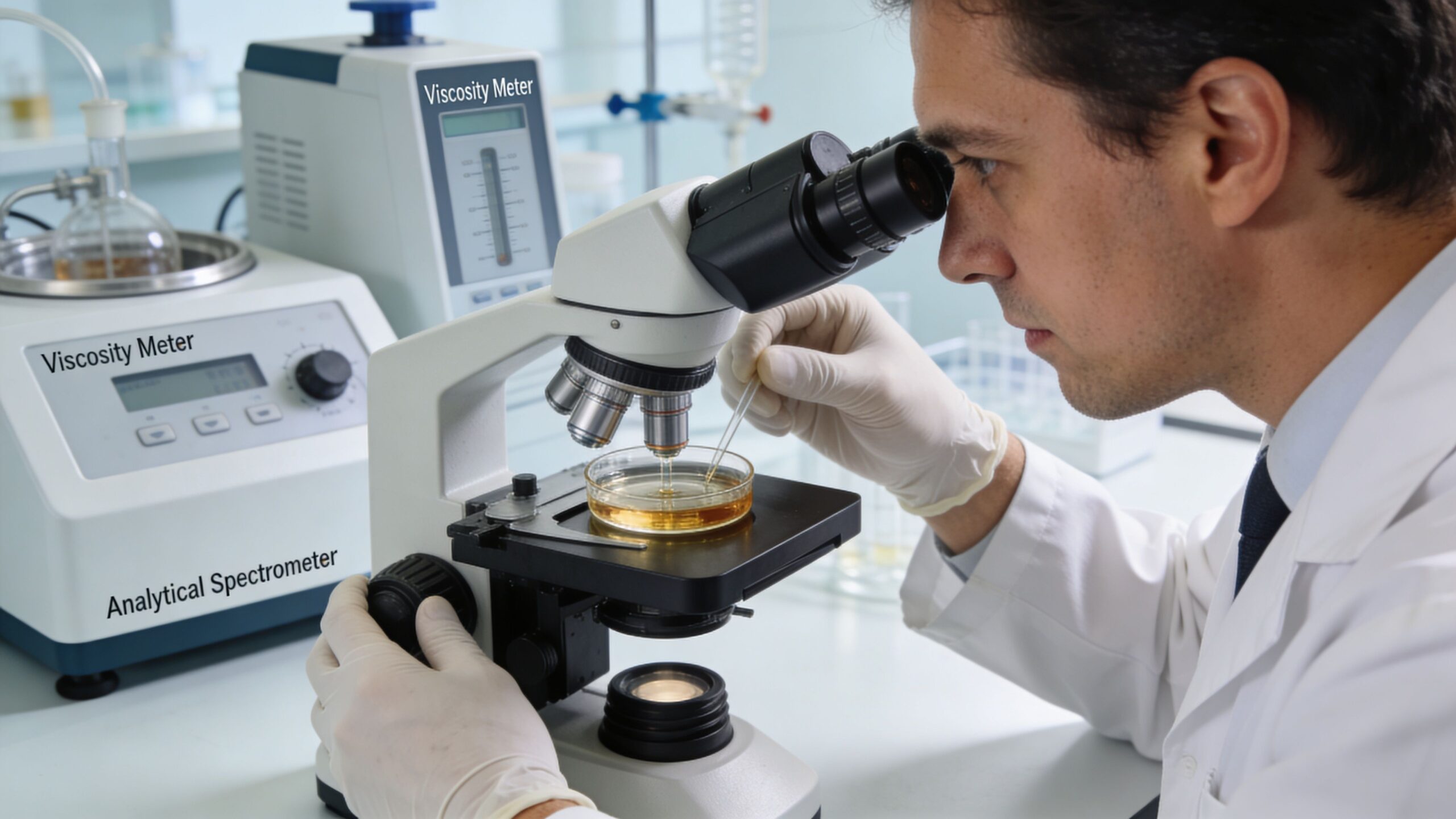
For QC, keep a hardware matrix that tracks:
- Cart model and aperture size
- Battery type, especially button-activated versus autodraw
- Target oil behavior during first pull and repeat pulls
- Storage response after settling and transport simulation
If your oil only works in one forgiving cartridge, you don't have a well-developed formulation yet.
Build a simple release protocol
You don't need an elaborate enterprise system to tighten quality control. You do need consistency.
A practical release workflow should include:
Visual clarity check
Look for haze, layering, suspended particulate, or color inconsistency after full cooling.Homogeneity review
Pull samples from more than one point in the vessel if you're batching at meaningful volume. The top of the kettle shouldn't taste different from the bottom.Warm-fill verification
Confirm the actual fill condition, not just the target setting on the heating device.Short dwell observation
Watch the first filled carts after they stand upright. Pooling, seepage, and bubble behavior tell you a lot.
Don’t skip post-fill handling
A lot of leaking and poor draw complaints begin after the mix leaves the beaker. Warm filling, upright rest, and controlled cooling matter because they affect how the oil seats into the atomizer.
If you’re working with standard ceramic hardware, pairing the formulation to 2.0mm apertures can help maintain more predictable wicking behavior when the viscosity window is properly matched. That kind of hardware-fit thinking prevents teams from constantly reformulating when the underlying issue is cartridge mismatch.
A stable oil can still become an unstable SKU if post-fill handling is sloppy.
Record what operators usually keep in their heads
Most repeatability problems come from undocumented judgment calls. One operator warms longer. Another fills a little cooler. A third mixes slower because the batch “looked fine.”
Write those variables down. Use a batch sheet that captures:
| QC point | What to record | Why |
|---|---|---|
| Oil condition before mixing | Visual and process status | Catches upstream variability |
| Actual mixing temperature | Observed range | Prevents thermal drift |
| Mixing method | Homogenizer or other method | Correlates with separation risk |
| Fill condition | Warm-fill confirmation | Affects dispense behavior |
| Hardware used | Cart and battery pairing | Connects formula to field performance |
One operational habit worth borrowing from any precise handling workflow is disciplined accessory and component management. A resource like this guide on using terp pearls isn’t about cartridges specifically, but it reflects the same principle. Controlled handling improves repeatability.
Professional QC isn’t glamorous. It’s repeatable observation tied to the exact conditions that produced the batch.
Troubleshooting Common Distillate Formulation Issues
Most cartridge problems show up in familiar patterns. Once you know the pattern, the fix is usually straightforward.
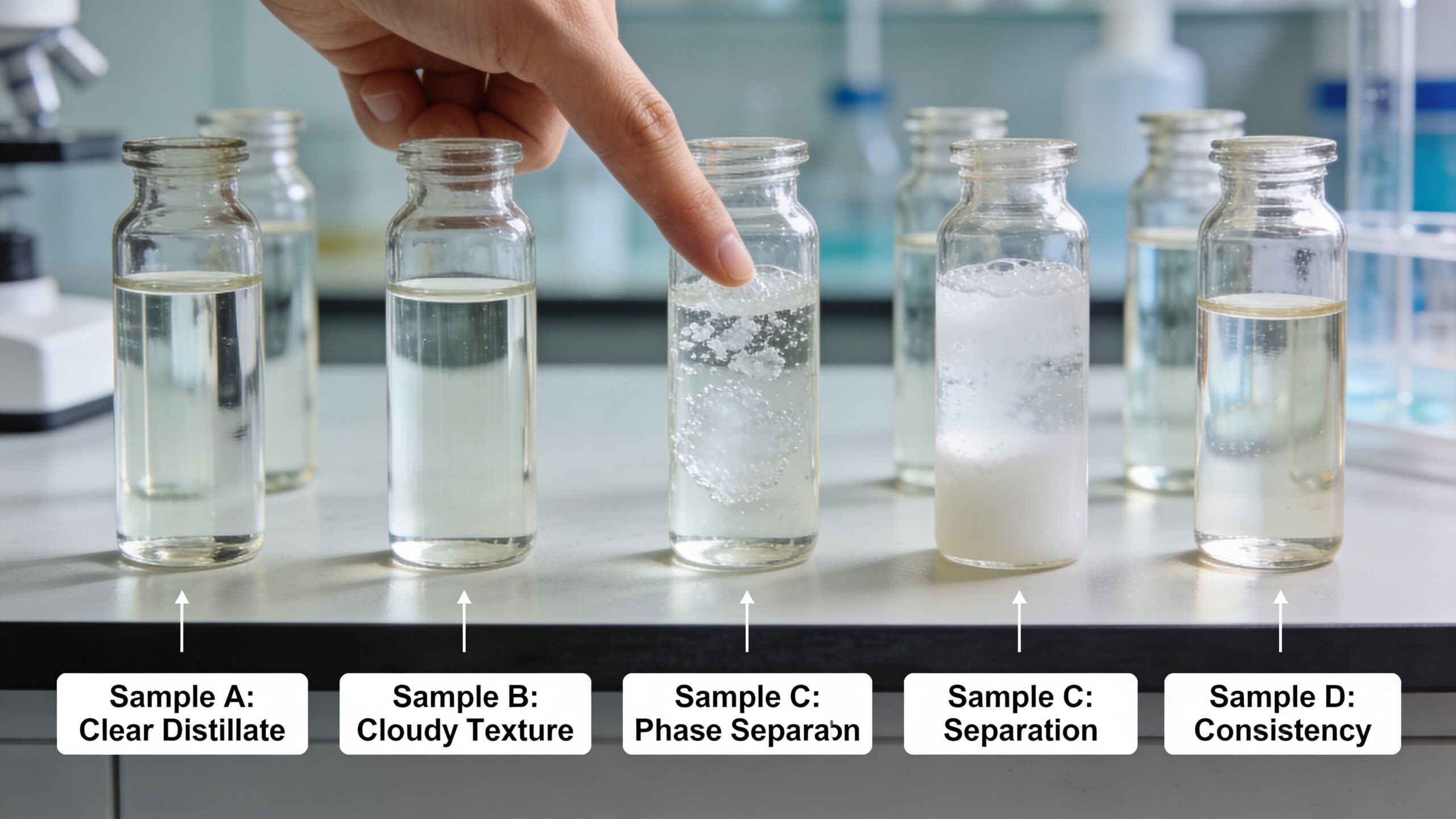
Terpene Belt Farms’ R&D guide reports that 7.5% terpenes produce a 95%+ success rate for consistent vapor, while using less than 5% can lead to a 60% failure rate from dry hits. The same source says going beyond 10% is a major cause of cartridge failure, with leak rates as high as 40%.
Separation after mixing
The batch looked uniform when warm. A day later, the oil appears stratified or inconsistent from cart to cart.
The usual cause is poor incorporation. Either the batch was hand-stirred, mixed too cold, or not given enough shear to hold the terpene fraction evenly through cooling.
Try this:
- Revisit your mixing method first
- Confirm the oil was fully workable before terpene addition
- Standardize homogenization instead of relying on visual judgment
Dry hits and weak vapor
This is the classic under-thinned batch. The oil may fill cleanly and still fail once it reaches the customer.
If you're below the practical terpene window for the viscosity class, the wick can't keep up. The first pulls may seem acceptable, then performance falls off.
A dry-hit complaint usually isn’t a mystery. It usually means the blend stayed too thick for the hardware.
Leaking and flooded atomizers
This is the opposite side of the same mistake. Teams chase easier flow and push the terpene load too far.
The immediate signs are seepage into the airway, oil around the mouthpiece seal, or carts that start strong but quickly lose draw quality. If the formulation goes beyond the useful thinning range, the cartridge becomes overfed.
Harsh or distorted flavor
Harshness usually points to one of three issues:
- Overheating during processing
- A terpene profile that doesn’t fit the oil
- Too much of a sharp top-note component without enough structure underneath
That’s where proper formulating for distillate matters. A cart can have enough aroma and still taste wrong because the blend wasn’t built with top, mid, and base note balance in mind.
If a cart tastes loud but not accurate, the problem is often the blend design, not the hardware.
Inconsistent first-use performance
If some carts hit immediately and others need repeated pulls to wake up, look at filling conditions and settling time. Air entrapment, uneven warm fill, and rushed capping can all produce that pattern.
When troubleshooting, resist the urge to change three things at once. Change one variable, document the result, and keep the rest of the SOP fixed. That’s how you find the actual failure point instead of creating a new one.
Safety and Regulatory Compliance in Formulations
A cartridge formula has to be usable, but it also has to be defensible. That means every input should have a reason to be there, and every supplier should be able to support what they sell with documentation.
For terpene-forward cartridge work, the safest path is simple. Use lab-verified terpenes, avoid unnecessary additives, and keep the formula as clean as possible. The verified data for this topic supports terpene-only thinning as the preferred route when the goal is to preserve flavor fidelity and avoid the quality compromises associated with PG, PEG, VG, or MCT.
Keep your ingredient deck narrow
A narrow formula is easier to document, easier to troubleshoot, and easier to explain to regulators, retail partners, and internal QA.
That means:
- Use verified terpene inputs with clear lot traceability
- Avoid filler ingredients that only exist to force flow
- Maintain batch records for ratio, temperature, hardware pairing, and operator handling
- Store safety documents where production and compliance teams can both access them
For manufacturers working across jurisdictions, legal review also matters because ingredient rules and product classifications differ. A resource like this terpene legality guide is useful as a starting point for understanding how terpene ingredients are generally positioned, though final compliance still depends on your market and product category.
Protect the staff and the batch
Even simple cartridge formulation work deserves basic lab discipline.
Use appropriate PPE. Mix in a ventilated area. Control heat carefully. Label vessels clearly. Don’t let open containers sit longer than necessary during blending and filling.
The quality side and the safety side are connected. Sloppy handling introduces contamination risk, process drift, and documentation gaps. None of that helps a brand trying to build a long-term cartridge line.
Compliance isn't a layer you add after formulation. It’s built into the formulation process from the first weighed ingredient.
Conclusion The Art and Science of Perfect Cartridges
A reliable cartridge isn't made by thinning oil until it moves. It’s made by controlling viscosity, flavor structure, hardware compatibility, and process discipline at the same time.
That’s why how to thin distillate for cartridges is really a formulation question. The right terpene load depends on the viscosity class of the oil, the cartridge design, and the sensory result you're trying to hit. Too little thinning and the cart starves. Too much and the hardware floods. Between those extremes is the range where the product performs reliably.
The strongest operators treat that range like a measurable target. They warm the oil correctly, use controlled mixing instead of guesswork, fill under repeatable conditions, and document what happened so the next batch behaves the same way. They also understand that terpene choice isn't just about getting the oil to wick. It's about whether the finished cart tastes intentional.
That’s the blend of art and science in cartridge formulation. You need the technical control to make the oil work, and the profile design discipline to make the product worth repeating.
If you're building or tightening a vape line, use the process above as a working SOP. Then refine it against your own hardware, environmental conditions, and flavor goals until every batch lands inside a narrow, repeatable window.
If you're developing cartridges that need accurate flavor rebuilding and consistent terpene incorporation, Gold Coast Terpenes offers strain-specific blends, isolates, and formulation tools that can support bench work through scale-up.