
A Gelato 41 flower certificate reports 2.6072% total terpenes, while another reports 1.7559%, a spread that makes the strain name a poor stand-in for a formulation target (Gelato 41 laboratory certificates). Gold Coast Terpenes supplies 100% natural terpene blends that are free of VG, PG, PEG, and MCT, and are SC Lab-tested.
For product developers, the key distinction is between a phenotype label and a batch-specific chemical profile. Gelato 41 can guide a sensory direction, but repeatable strain-inspired blends for distillate or vape cartridges need a reference certificate, measured ratios, and a finished-product check.
What Terpene Profile Does Gelato 41 Actually Have?
Gelato 41 doesn't have one fixed terpene profile. The name identifies a selected phenotype within the broader Gelato family, not a guaranteed recipe for every flower batch or derivative product. That matters when a brand needs to reproduce a flavor consistently rather than use a familiar strain name as shorthand.
The reports below show why formulators should work from a specific certificate of analysis (COA). The limonene figures also illustrate the importance of tracing each value to its actual report: separate certificates list 0.745% and 3.269% limonene, respectively, according to the Gelato 41 flower certificates and aroma report. Don't combine those values into one assumed target or use one without verifying its certificate and batch.
| Measured terpene and THC values in Gelato 41 reports | Total terpenes | Total THC | Limonene | Beta-caryophyllene |
|---|---|---|---|---|
| Flower certificate, first report | 1.7559% | 20.8916% | 0.745% | Not stated |
| Flower certificate, second report | 2.6072% | 22.5442% | 3.269% | Not stated |
| Gelato #41 lab report | 2.6072% (26.072 mg/g) | Not stated | 0.5705% | 0.8605% |
The flower certificates report different total terpene and THC values, and both report no detected total CBD. That makes these samples more useful as examples of batch variation than as a universal specification. The third row's terpene concentration converts directly from milligrams per gram to a percentage by weight; its report doesn't provide a total THC value in the figures used here.
A COA can tell you what a tested sample measured. On its own, it can't prove that another batch carrying the same strain name has the same profile, or that the reported chemical composition guarantees an identical sensory experience. For product formulation, use one identified batch certificate as the target, record the sample and lot details, and treat the strain name as a sensory starting point.
Formulation rule: Match the certificate, not the mythology attached to the label.
How Do You Build a Gelato 41 Terpene Blend?
Build from the terpene ratio in a reference certificate, then verify the finished oil against that target. A second Gelato #41 laboratory report lists beta-caryophyllene at 0.8605% and limonene at 0.5705%, alongside alpha-humulene, beta-myrcene, and linalool; caryophyllene is the dominant compound in that report (Gelato #41 laboratory report). A recipe made only from the strain name won't account for this lot's measured balance.
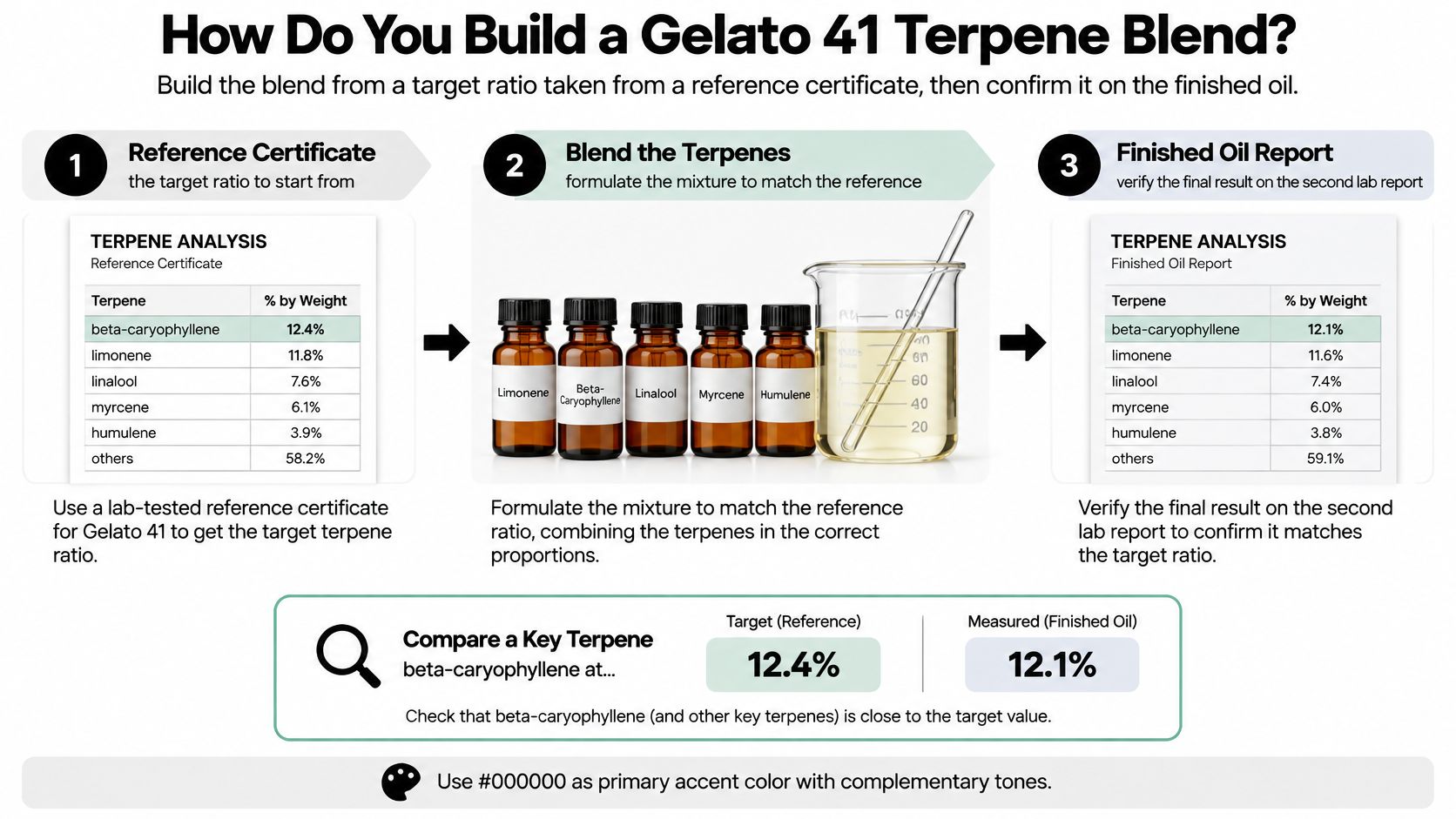
Choose the reference. Select the COA for the flower or extract you want to replicate, then record its total terpenes and the top five listed terpenes by percentage. The common slip is to use a COA from another lot because its strain label matches.
Set the target ratio. Keep the terpene order and proportions shown in that report. For the cited lab report, the core set is beta-caryophyllene, limonene, alpha-humulene, beta-myrcene, and linalool. Don't reorder compounds based on a generic strain description.
Convert percentages to batch weights. Calculate each terpene's share of the planned blend, then weigh it in grams with a suitable scale. Don't measure isolates by volume: different liquids can have different densities, so equal volumes don't necessarily mean equal weights.
Blend and check the arithmetic. Separate isolates such as limonene, myrcene, and beta-caryophyllene let formulators adjust the components individually. Use the terpene mixing calculator to check the math, and add compounds in measured increments rather than pouring everything together at once.
Dilute for the cartridge format. Set the terpene proportion against the carrier and product format you're developing. Don't assume a flower's aromatic intensity will transfer directly to an oil at a different dilution.
Test the finished oil. Compare the finished blend's analytical result with the target and adjust one terpene at a time. The frequent error is to judge a trial only by its aroma and skip the finished-oil check.
Set an acceptable tolerance before the run. A finished oil counts as matched when its measured target ratio is within that pre-established tolerance; record the formula, weights, and batch details so the next run can be reproduced.
Which Terpenes and Descriptors Set the Gelato 41 Target?
Build the target as a citrus-led top, a floral and herbal middle, and a warm, spiced base. The roles below offer a practical way to organize a blend; they're formulation categories, not proof that a named terpene guarantees a particular effect.
| Note roles in a Gelato 41 terpene target | Terpenes | Role in the Gelato 41 target |
|---|---|---|
| Top | Limonene, myrcene | Citrus lift and first impression |
| Mid | Linalool | Floral and herbal body of the flavor |
| Base | Beta-caryophyllene, alpha-humulene | Warm, spiced finish that persists through the draw |
Top notes tend to register early in a sensory assessment, while mid notes help form the flavor's body and base notes provide a more persistent impression. The cited Gelato #41 lab report places beta-caryophyllene at 0.8605%, so the base layer may be a major part of the target rather than a minor finishing touch.
Turn descriptors into testable targets
Start with a three-tier descriptor ladder. Primary notes are creamy sherbet and dessert; secondary notes are mint and fuel; accent notes can include lemon, cinnamon, lavender, hops, orange, and basil when they appear in the reference material. This separates the broad profile from details that may belong to a particular batch or sample.
Terpenes can help you map some accents to candidate components. Limonene is a sensible starting point when tuning a lemon or orange impression; linalool can be evaluated against a lavender note; beta-caryophyllene can be assessed for its contribution to spice. These are working formulation associations, not guarantees that one compound alone creates a complex descriptor. A perceived note can reflect the combined blend and the product matrix.
Use a sensory panel to compare the target and prototype under consistent conditions. Have panelists score each descriptor from 0 to 5, where the endpoints are absent and strongly present, and agree on an acceptable threshold before testing. If a descriptor falls below that threshold, adjust the most relevant candidate terpene in a small weighed step, then retest the complete blend.
Keep the panel focused on aroma and taste. Effect words don't describe flavor and shouldn't appear in sensory copy as if a terpene ratio establishes a pharmacological outcome. Separate flavor claims from any claims that need their own regulatory and evidentiary review.
How Does the Gelato 41 Profile Hold Up in Vape Cartridges?
Add terpenes after the oil has cooled, and formulate to measured ratios rather than expecting flower aroma to carry through processing. Winterized distillate won't automatically retain the flower's aromatic balance, so the developer has to establish the target in the finished oil.
Use three production checks:
- Add at the cooled stage. Keep volatile top-note components out of unnecessary heat during blending. Follow the process conditions validated for your oil and equipment.
- Protect the balance. Don't let bright top notes dominate because they're easy to detect in a concentrated blend. Check base and middle notes at the intended finished concentration.
- Taste at working dilution. A concentrate may smell different from a cartridge at use concentration. Run the sensory assessment on the final formulation, not only on the undiluted terpene mixture.
Gold Coast Terpenes blends are free of VG, PG, PEG, and MCT, which means those carrier additives aren't introducing another flavor layer in the blend. Its strains are highly concentrated and need proper dilution; use the guide to terpene roles in cartridge performance alongside a measured formulation rather than guessing at the final strength.
A matched profile is a sensory result as well as a ratio. Compare a sample cartridge with a flower reference under the same descriptor ladder and score the finished product at its final concentration. Keep compliance separate from flavor matching: each cartridge still needs to meet the requirements that apply in its market.
What Causes a Gelato 41 Blend to Drift, and How Do You Fix It?
The most common cause of drift is building to the strain name instead of a batch certificate. Start each correction with the reference COA, then change one variable at a time and record the result against the production batch.
| Gelato 41 blend symptoms, causes and corrections | Likely cause | Correction |
|---|---|---|
| Citrus lift dominates with no finish | Limonene above target and base notes light | Lower limonene share and raise beta-caryophyllene toward the reference ratio |
| Thin, sweet finish that fades quickly | Myrcene and caryophyllene under target | Add base-note terpene in small weighed steps and retest |
| Earthy or hops-heavy edge | Alpha-humulene above target | Reduce humulene and recheck the mid-note balance |
| Flavor changes from batch to batch | Recipe built from the strain name, not the certificate | Rebuild the target from the batch certificate of analysis |
| Spice and fuel read too strong | Caryophyllene share high | Cut caryophyllene and compare against the reference flower |
| Right on paper, off in the cartridge | Terpenes weighed by volume instead of grams | Weigh each isolate in grams and retest the finished oil |
A bright citrus lift without a lasting finish suggests that the blend's top-note share is out of balance with its base. Conversely, a thin sweetness that fades quickly calls for a measured check of the base-note components, not an automatic increase to every terpene in the mixture. Make one adjustment, retest, and log the new result.
An earthy or hops-heavy edge calls for a humulene check against the selected reference, while excess spice or fuel points to reviewing the caryophyllene share. If the flavor shifts between production runs, compare each formula with its own recorded batch target rather than trying to fix the difference by adding more of a familiar note.
Weighing by volume can shift the intended balance even when the recipe looks correct on paper. Record ingredient weights in grams, the reference certificate and batch, and the finished-oil result. A clean, 100% natural, THC-free terpene base from Gold Coast Terpenes removes carrier additives and THC from that base, but accurate weighing and retesting still determine whether the product matches.
Should a Gelato 41 Blend Use Botanical or Cannabis-Derived Terpenes?
A Gelato 41 name does not settle the source question. Because the label describes a phenotype target rather than a fixed recipe, choose inputs after the reference certificate sets the ratio and the finished-oil spec sets the carrier limits. Gold Coast Terpenes describes its blends as premium, 100% natural, THC-free, and free of VG, PG, PEG and MCT; that clears several carrier variables from the base, but it does not prove whether each terpene input is botanical, nature-identical or cannabis-derived.
- Botanical terpenes come from plant material other than cannabis.
- Nature-identical terpenes are produced to match the molecular structure of naturally occurring compounds.
- Cannabis-derived terpenes are recovered from cannabis biomass.
Treat those terms as sourcing and labeling categories, not as a shortcut to the target profile. A cannabis-derived input still has to match the certificate ratios; a botanical or nature-identical input still has to survive blending, storage and cartridge heat without drifting. The source label also changes package wording and regulator review, so confirm required terminology for each market before print.
When you compare suppliers, ask for:
- A batch-specific COA whose lot can be traced to the material you are buying.
- Source labeling that separates botanical, nature-identical and cannabis-derived inputs.
- An ingredient statement showing whether VG, PG, PEG or MCT are present.
- Cannabinoid results for any input recovered from cannabis.
- Bulk terms that fit the actual run.
A supplier that cannot tie a certificate to each lot cannot support repeatable Gelato 41 production. Use the botanical versus cannabis-derived terpene comparison to frame the sourcing call before packaging copy is locked.
Confirm the Batch Certificate Before You Order
Order only after you've confirmed the reference certificate and tested a blend against it. That decision prevents a strain-name match from being mistaken for a chemical match and reduces avoidable formula rework.
Check the COA contents. Confirm that it lists total terpenes and identifies the individual compounds by percentage. If the report doesn't provide the measurements needed for your target, it can't support a ratio-based replication.
Match the certificate to the right batch. Record the lot details for the flower or extract you're replicating. A familiar strain name on a label doesn't establish that its terpene values match your reference.
Make a small test blend. Weigh the target components, prepare a pilot, and compare it with the reference flower using the same sensory descriptors. Don't commit to a production run before the test meets your tolerance.
Choose the scope of the review. Gold Coast Terpenes offers 50+ strains across Indica, Sativa, and Hybrid categories, so a formulation team can compare profiles as part of its selection process.
Plan the order around the production line. Multiple strains can be ordered at once through the bulk ordering option. Wholesale pricing is available on strain orders totaling over 64oz, which can suit runs that need several profiles.
A batch-matched certificate gives the team a documented target for repeat testing and production. Use the certificate of analysis guide to assess the report, then finalize the blend calculations with the Terpenes 101 guide and Mixing Calculator on the Gold Coast Terpenes website. The decision rule is simple: order the terpene set only when the pilot matches the reference within your established tolerance.
Frequently Asked Questions About Gelato 41 Formulation
Does Gelato 41 have a fixed terpene profile?
No. Treat Gelato 41 as a phenotype label: flower certificates for batches sold under that name report different total terpene levels and different dominant compounds. Set the recipe from the certificate for your reference batch, then source components that let you hit those measured ratios.
Are botanical terpenes the same as cannabis-derived terpenes?
No. Gold Coast Terpenes describes its blends as 100% natural, so check the source labeling on each product's certificate and ingredient statement to confirm how a specific terpene was produced. The production source can matter for labeling even when two materials target a similar aroma.
Can you match Gelato 41 flavor without the flower?
Yes, if the reference certificate gives enough measured data to set a ratio and the pilot is judged against the same descriptors. Keep the sensory review structured: score aroma descriptors on a fixed scale, record panel comments, and reject blends that miss the target notes.
Do carrier additives change a terpene blend?
They can add a separate flavor layer and change the finished sensory impression, especially in cartridges. Gold Coast Terpenes blends are free of VG, PG, PEG, and MCT, which keeps the evaluation focused on the terpene ratio itself.
Does the strain name predict effects?
No. This guide addresses aroma and formulation, not medical effects, and effect claims should not be presented as flavor descriptors.
For a batch-matched Gelato 41 profile, Gold Coast Terpenes offers strain-specific blends, isolated compounds, and formulation resources for cartridges, concentrates, and product development. Compare your reference COA, build a measured pilot, and visit Gold Coast Terpenes to explore the tools and terpene options for your next formulation.