
Terpinolene is the dominant terpene in Durban Poison, but its measured level can range from about 1.0% to 15.4% depending on the cut and sample. That means a Durban Poison formulation can be chemically recognizable in one batch and noticeably different in another.
Gold Coast Terpenes makes 100% botanically derived terpene blends, not cannabis-derived blends, so a formulator can work from a repeatable botanical starting point while building a Durban Poison-inspired profile. For vape cartridge manufacturers, extractors, and cannabis product teams, the key issue isn't just identifying terpinolene. It's deciding which Durban Poison chemotype the finished product should represent, then testing the blend tightly enough to preserve that identity at scale.
Understanding Durban Poison Terpene Variability
Durban Poison terpenes aren't a fixed chemical equation. They're a variable profile in which terpinolene dominance can shift sharply with phenotype, cut, environment, harvest timing, and product format. Treating the cultivar name as a single chemical data point is one of the fastest ways to create a flavor mismatch.
Durban Poison is widely treated as a South African landrace-derived cultivar that was stabilized for broader cultivation in the late 1970s. That history helps explain why the name has circulated through different growing environments and production systems while retaining a recognizable aromatic family. It also explains why commercial samples don't always produce the same terpene ranking.
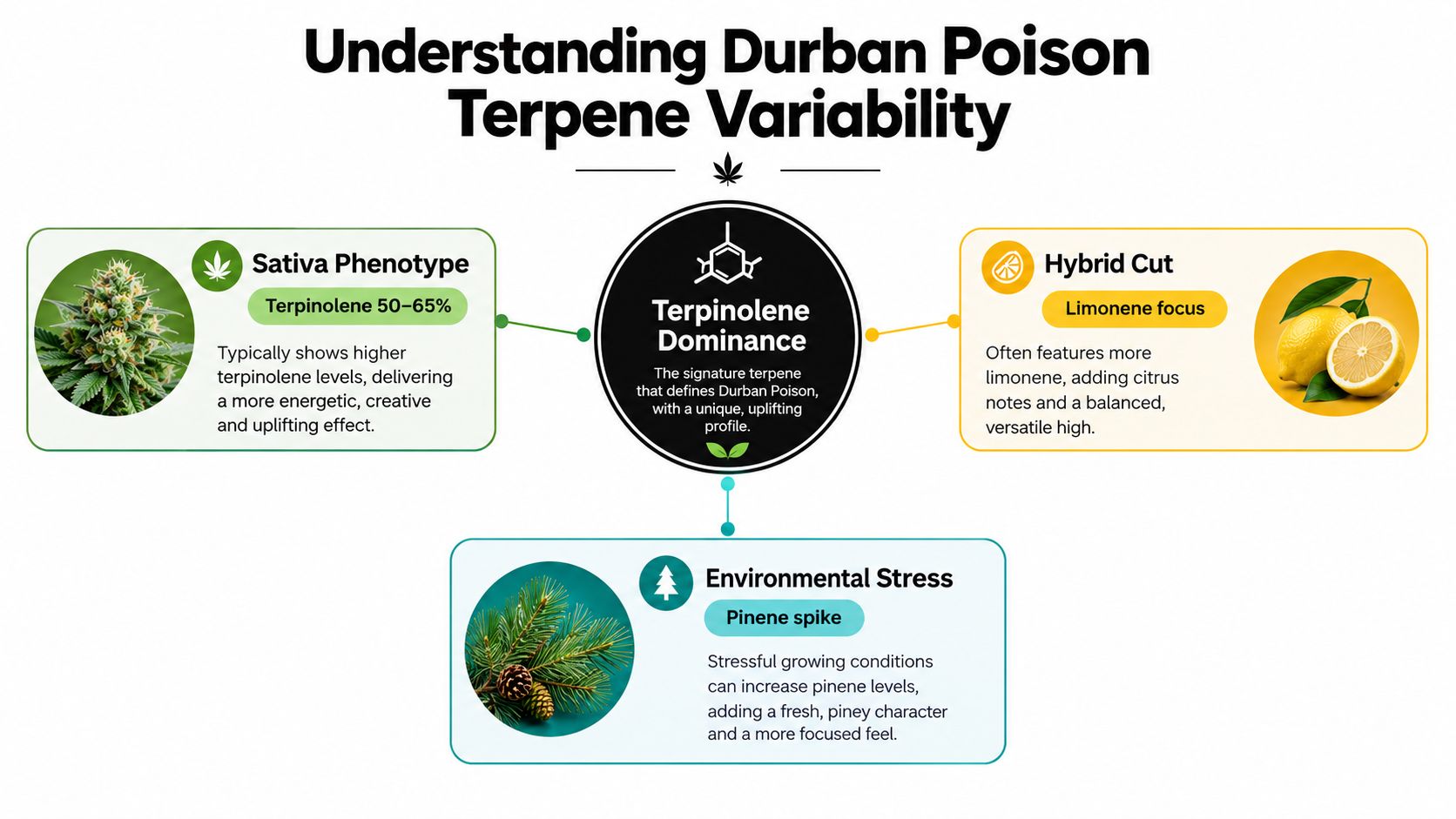
The published range matters more than the label
Lab-focused sources describe terpinolene as the dominant compound at about 1.0% in one 2026 review, 1.14% in a database sample, and 1.80% in a 2026 vape formulation. Those same reports generally place ocimene, myrcene, limonene, and caryophyllene below 1.0% each in the cited examples (lab-focused Durban Poison profile).
A separate cut has been reported with 15.4% terpinolene, 5% beta-ocimene, and nearly 3% myrcene (strain-specific terpene analysis). That isn't a contradiction to the lower laboratory results. It shows that the market uses one name for multiple chemical expressions.
One concentrate certificate reported total terpenes at 2.0248%, led by myrcene at 0.532%, alpha-terpinolene at 0.4938%, limonene at 0.3525%, beta-caryophyllene at 0.3481%, and alpha-pinene at 0.1109% (Durban Poison terpene data and certificate discussion). The concentrate's extraction method and format also matter. A flower profile, a distillate blend, and a vape formulation shouldn't be treated as interchangeable measurements.
Practical rule: Define the target as a chemotype and sensory brief, not just as “Durban Poison.”
That approach prevents a common formulation error. A developer may purchase a botanical blend built around a high-terpinolene narrative, then compare it with a myrcene-forward extract and conclude that one of the materials is wrong. Both can be plausible representations of a long-circulating cultivar. The correct question is which profile the SKU needs to reproduce.
For a strain-specific starting point, compare the available Durban Poison terpene profile against the COA and sensory target for the oil you're trying to match. The name gives you a direction. It doesn't provide the finished formula.
Sensory Profiles Driven by Terpinolene and Myrcene
Terpinolene supplies the bright pine, floral, and citrus lift associated with classic Durban Poison, while myrcene adds a heavier earthy body that can soften the sharper top notes. The ratio between them often matters more to sensory accuracy than total terpene load alone.
Independent summaries describe Durban Poison as sweet, herbal, and anise-forward, with terpinolene commonly representing 20–60% of total terpene content and measuring about 0.3–1.2% by dry weight when total terpenes sit in the 1.0–2.5% range (Durban Poison CBD terpene guide). These figures are useful as a reference window, not a universal specification.
Reading the profile as fragrance architecture
For formulation work, it helps to divide the profile into sensory layers:
- Top notes: Terpinolene creates the initial fresh impression, with pine, floral, citrus, and a lightly sweet aromatic lift. Ocimene can extend that airier quality and keep the opening from feeling too linear.
- Mid notes: Limonene supports brightness and contributes citrus structure. Depending on the source material, myrcene may also sit prominently enough to move from the base into the middle of the profile.
- Base notes: Myrcene gives the blend a fuller earthy body. Beta-caryophyllene can add a dry, peppery, woody finish, while alpha-pinene can reinforce the pine character when used carefully.
A terpinolene-first profile can feel open, crisp, and aromatic. Shift the balance toward myrcene and the same formulation becomes denser, earthier, and less sharply lifted. Shift it toward caryophyllene and the result can become more herbal and spicy, even if the total terpene concentration remains similar.
That distinction matters for a vape cartridge because heat exposes imbalance quickly. Too much bright monoterpene character can read as thin, solvent-like, or perfumey. Too much heavy supporting material can suppress the clean pine-anise signature that makes the profile recognizable.
Sensory matching requires a reference sample
Don't evaluate a Durban Poison blend only from a GC report. Use a reference oil or flower aroma, document the first impression and drydown, then compare the blend after it has rested in the intended formulation matrix. The same isolate balance can present differently in distillate, winterized oil, or another carrier system.
Terpinolene formulation information can help teams understand the role of the lead compound, but the commercial target should remain sensory and analytical at the same time. Terpinolene tells you what to prioritize. It doesn't tell you how much of every supporting compound belongs in your specific cartridge.
Formulating Durban Poison Terpene Blends for Distillate
For a Durban Poison-inspired distillate, start with a terpinolene-led top note, support it with ocimene and limonene, then use myrcene, caryophyllene, and pinene to control body and finish. Build the blend as a sensory architecture rather than copying a single certificate without considering the final oil format.
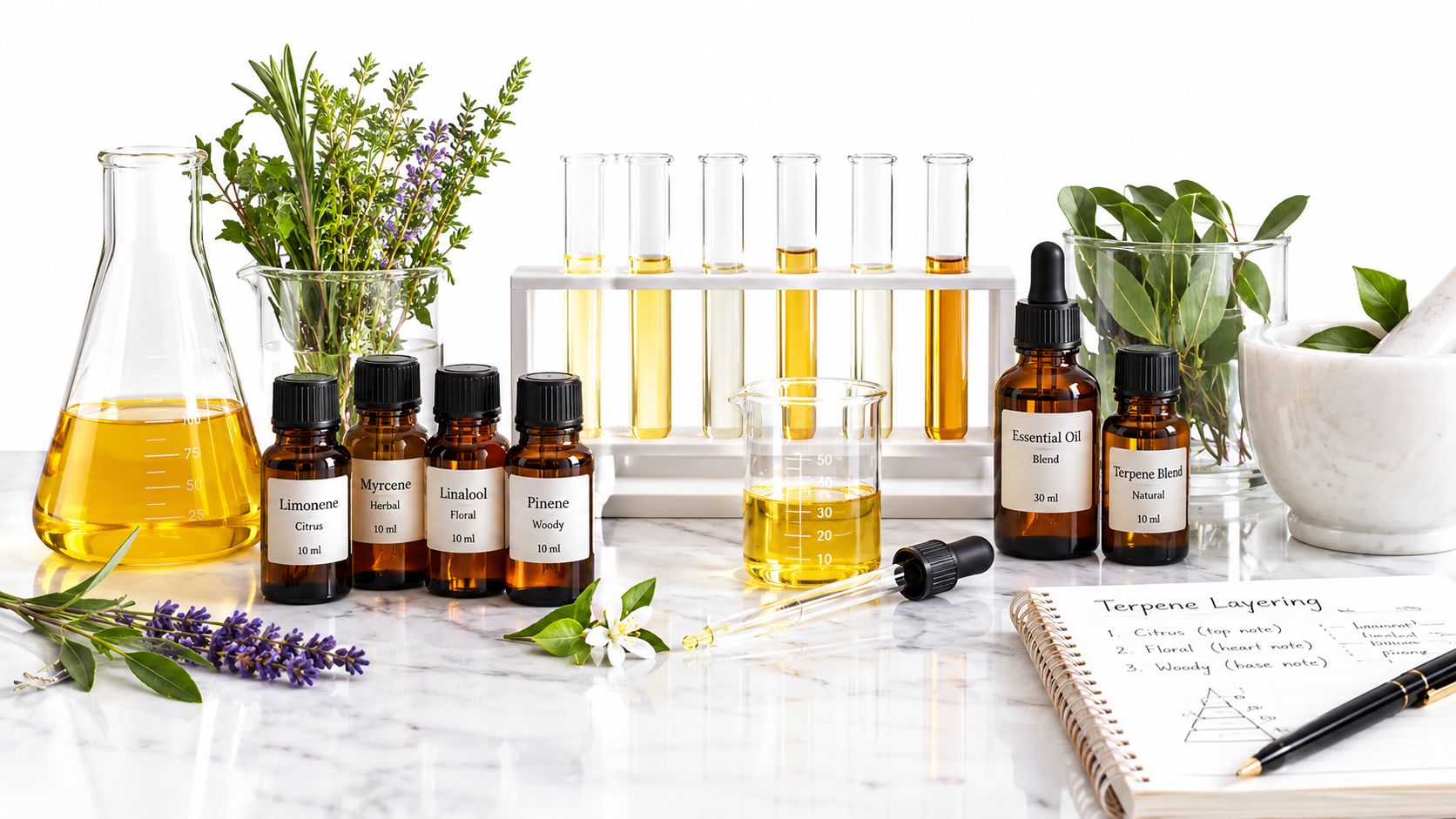
Build the concentrate in layers
A practical workflow begins with a small aromatic concentrate made from documented botanical isolates or a strain-inspired base. Keep the first version simple:
- Establish the top note with terpinolene. This is the identity anchor for the common Durban Poison profile. Start from the intended sensory intensity, not from the assumption that the highest available terpinolene result is the correct target.
- Add ocimene for lift and openness. Ocimene can make the top feel more expansive, but excessive use may pull the blend away from the sweet herbal character and toward a sharper, more volatile impression.
- Use limonene to shape citrus clarity. Limonene should support the citrus edge rather than replace the pine-anise structure.
- Bring in myrcene for body. Myrcene can prevent the blend from feeling hollow, but a myrcene-heavy version will no longer resemble the cleanest terpinolene-forward cuts.
- Finish with caryophyllene and pinene only as needed. These compounds can add spice, wood, and pine, but they should reinforce the reference rather than dominate it.
A useful published formulation reference lists terpinolene at 1.26%, ocimene at 0.57%, beta-myrcene at 0.53%, beta-caryophyllene at 0.44%, limonene at 0.44%, and beta-pinene at 0.25% (compiled Durban Poison terpene profile). Those values describe a reference profile, not a mandatory recipe for every distillate.
Do not add the full aromatic concentrate to production oil immediately. First evaluate the concentrate on its own, then make controlled additions to a representative distillate base. Record aroma at blending, after rest, and after cartridge filling. The target is a stable sensory result in the finished hardware, not an attractive isolate ratio on paper.
Elevated Strains can serve as an example of a cataloged strain-inspired flavor approach, but it shouldn't be treated as a substitute for a Durban Poison-specific reference or COA.
The following video can provide additional visual context for terpene handling and formulation work:
Control the finished oil, not just the blend
Distillate often has a neutral sensory background, which makes terpene errors more exposed. A blend that smells balanced in a vial may become harsh, flat, or overly sweet after dilution. Check viscosity, aerosol performance, hardware compatibility, and leakage behavior under the conditions used for the finished cartridge.
The formulation record should identify the source, lot, date, intended chemotype, target sensory description, and analytical acceptance criteria. Keep botanical and cannabis-derived materials separate in the documentation. Labeling and compliance review should cover the actual source and ingredient declarations for the market where the product will be sold.
Botanical versus Cannabis-Derived Terpene Sourcing
Botanical terpenes usually offer tighter supply consistency and simpler operational planning, while cannabis-derived terpenes can provide a more native extract character with added regulatory and sourcing complexity. Neither source is automatically more accurate for every Durban Poison cartridge.
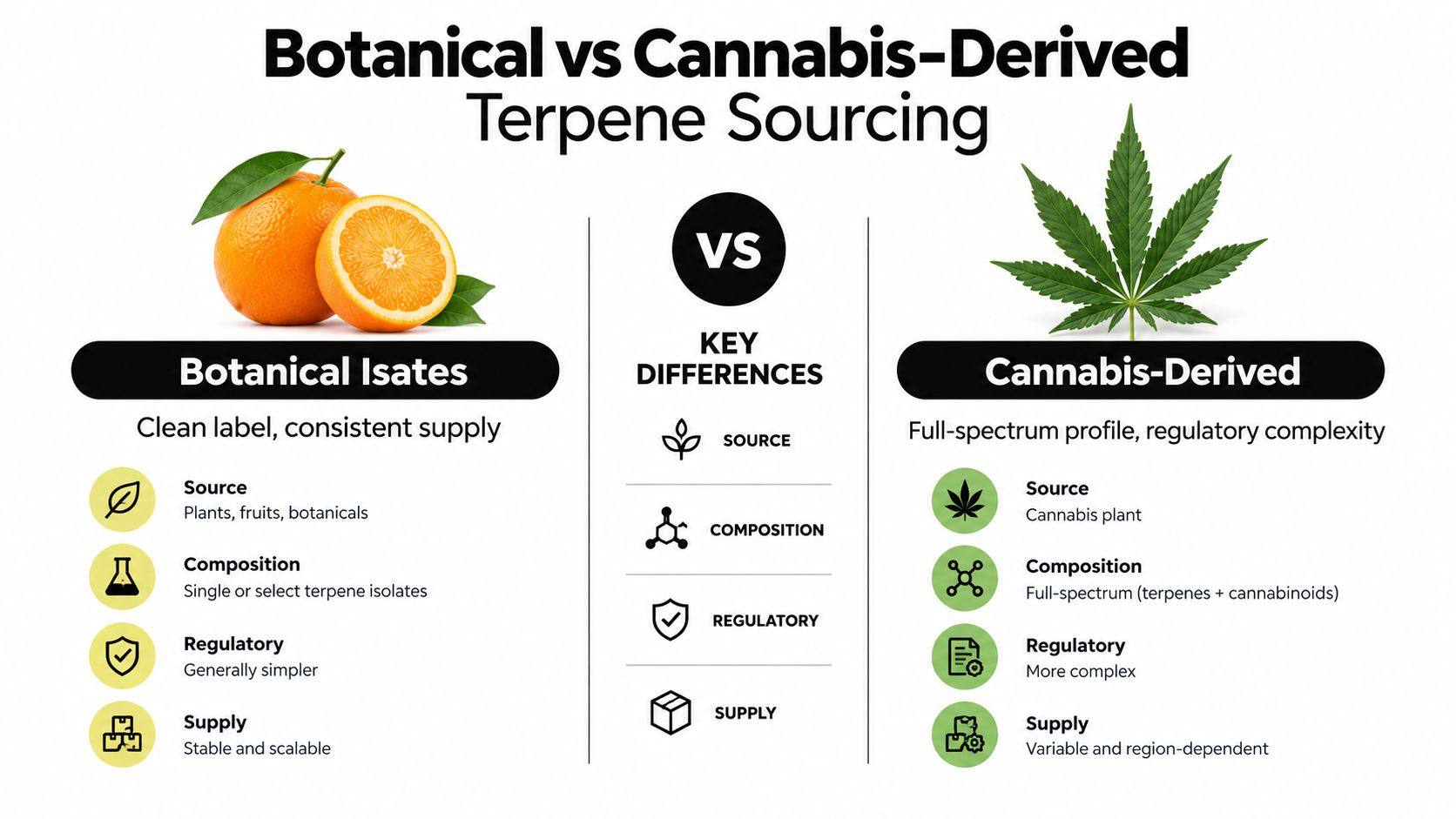
Botanical isolates let a formulator build the profile compound by compound. That makes it easier to correct a myrcene-heavy lot, increase the pine lift, or standardize a terpinolene-forward target across production runs. It also makes the source easier to describe in a technical file when the blend is intended for multiple markets.
Cannabis-derived terpenes may carry a more complex extract character, but the source material can vary with cultivar, cultivation conditions, extraction method, and lot. For a landrace-associated cultivar with documented chemotype variation, that variability can be valuable for an authenticity-led product, or it can become a problem when every cartridge must taste the same.
Compare the sourcing decision directly
| Formulation consideration | Botanical source | Cannabis-derived source |
|---|---|---|
| Consistency | Easier to adjust and reproduce through defined isolates and blend ratios | Can vary with plant material and extraction lot |
| Sensory character | Can reproduce the core terpinolene, myrcene, ocimene, limonene, and spice structure | May retain additional extract character beyond the planned terpene stack |
| Compliance work | Still requires ingredient, inhalation, and market review | Requires source and jurisdiction review alongside normal product compliance |
| Scale planning | Often simpler for repeatable multi-market production | May suit a narrower, source-authentic product strategy |
Gold Coast Terpenes states that its blends are 100% botanically derived, lab-verified, THC-free, and free of VG, PG, PEG, and MCT (Gold Coast Terpenes sourcing information). Those details can matter to vape brands that need a defined ingredient profile, but every manufacturer still needs its own regulatory and safety review.
The practical choice is to match source to brand promise. If the promise is a repeatable Durban Poison-inspired flavor for a standardized cartridge line, botanical blending may provide better control. If the promise is a particular extract's native character, cannabis-derived material may be worth evaluating, provided the team can document and manage its variability.
The botanical versus cannabis-derived terpene guide is useful when procurement, compliance, and sensory teams need to make that decision together.
Testing and Quality Control for Consistent Batches
COA-level verification is essential because the Durban Poison name doesn't guarantee a terpinolene-first result. A production team should approve the chemistry and the sensory profile separately, then use both records to release or reject incoming material.
Multiple sources report batch-to-batch variation, including lots where myrcene dominates and lots where terpinolene appears alongside strong beta-ocimene, alpha-pinene, and limonene fractions (documented Durban Poison cut variation). That makes supplier paperwork more than a purchasing formality. It determines whether the incoming material matches the formulation brief.
Read the COA as a profile, not a headline
A total terpene figure can't tell you whether the aroma will be bright, earthy, spicy, or pine-forward. Review the individual analytes and rank them against the approved target:
- Lead compound: Confirm whether terpinolene leads, or whether myrcene has taken first position.
- Top-note support: Check ocimene, limonene, and alpha-pinene for the balance expected by the sensory brief.
- Body and finish: Review myrcene and beta-caryophyllene so a heavier lot doesn't enter a light, bright cartridge without correction.
- Product format: Confirm whether the report describes flower, concentrate, isolate, or a finished formulation. Those results aren't automatically comparable.
- Lot identity: Match the COA to the exact material received, not merely to a supplier's general product page.
Ask for strain-specific analytics when the supplier uses a cultivar name as the product identity. A generic terpene panel may confirm the presence of familiar compounds while missing the reason one lot smells materially different from another.
Pair analytical release with sensory release
A COA can approve chemistry, but a trained internal panel or documented sensory check can catch oxidation, contamination, unexpected harshness, or a ratio shift that doesn't look dramatic numerically. Keep a retained reference of the approved blend and compare new lots under consistent conditions.
Quality control and terpene testing resources can support the documentation process, but the manufacturer remains responsible for its own specifications, inhalation review, labeling, and release decisions.
Release standard: If the lot passes the numbers but fails the approved aroma, investigate the discrepancy instead of blending around it blindly.
Strain-Inspired Terpene Blends for Vape Cartridges
A strain-inspired blend is often more practical than building Durban Poison from isolated compounds for every production run. The reason is control. A qualified pre-formulated blend can preserve the intended relationship between terpinolene, myrcene, ocimene, limonene, and supporting compounds while reducing repeated bench work.
Custom isolation is valuable when a brand is developing a precise house chemotype or correcting a known incoming oil. It becomes inefficient when a team needs the same commercial SKU across repeated batches and different operators. Small weighing errors, inconsistent mixing order, and different rest times can all move the sensory result away from the approved reference.
When a pre-formulated blend works
A specialized blend is a strong fit when the product brief calls for:
- A repeatable strain-inspired profile: The team wants the recognizable pine, citrus, floral, herbal, and anise direction without claiming that every source flower has identical chemistry.
- Faster prototyping: Developers can compare a prepared profile against distillate before investing time in a full isolate matrix.
- Simpler purchasing: Procurement can qualify one defined blend and its documentation rather than managing numerous individual isolates.
- Controlled correction: A formulator can still use selected isolates to adjust body, brightness, or finish after the base blend is evaluated.
Gold Coast Terpenes provides strain-specific profiles and isolated compounds for cartridge and concentrate formulation, including botanical materials that can be used as a starting point for this kind of workflow. Its product documentation should be reviewed alongside the manufacturer's own COA requirements, inhalation standards, and labeling process.
A generic “sativa” or citrus blend is less useful for this application. It may deliver brightness, but it won't necessarily preserve the terpinolene-first structure or the sweet herbal balance associated with Durban Poison. The right blend should be judged against a defined reference, not against a broad category label.
Implementing Durban Poison Formulations at Scale
A scalable Durban Poison program starts with a defined chemotype, uses a documented sourcing path, and releases every production lot against both analytical and sensory criteria. The formulation should be built to manage variation rather than pretend that variation doesn't exist.
Start by writing the product brief in sensory terms. Specify whether the target is bright and terpinolene-forward, rounded and myrcene-supported, or closer to a particular tested extract. Include the intended vape hardware, oil type, label language, and market requirements before selecting the terpene source.
A production roadmap
- Select the reference. Use a retained flower, concentrate, or approved strain-inspired blend that represents the intended aroma. Record the source and its analytical profile.
- Choose the sourcing strategy. Botanical materials can support repeatable construction from isolates. Cannabis-derived materials may be appropriate when extract character is central to the product promise.
- Build the bench blend. Establish terpinolene as the primary aromatic direction, then tune ocimene, limonene, myrcene, caryophyllene, and pinene around the reference. Don't chase a maximum terpene number.
- Evaluate in the actual matrix. Test the blend in the specific distillate or oil and hardware. Vial aroma alone can't predict the finished cartridge.
- Lock the specification. Define acceptable analyte ranges, sensory descriptors, lot documentation, and the process for correcting a compliant but off-profile material.
- Qualify supplier records. Review COAs, source statements, ingredient information, safety documents, and any applicable minimum order requirements before production purchasing.
- Release by evidence. Keep analytical results, blend records, sensory observations, and retained samples together for each lot.
Gold Coast Terpenes is one sourcing option for manufacturers looking for botanically derived, THC-free terpene blends and strain-specific profiles. Its stated formulation materials are free of VG, PG, PEG, and MCT, which gives product teams a defined starting point for compatibility and labeling review, but it doesn't remove the need for finished-product testing.
FAQ
What is the dominant terpene in Durban Poison?
Terpinolene is the commonly reported dominant terpene, but its level varies substantially between cuts and products. Gold Coast Terpenes can provide a botanical starting point, while the manufacturer should verify the selected profile with a COA and sensory reference.
How should a formulator replicate the Durban Poison flavor for vape cartridges?
Build around terpinolene, then balance ocimene and limonene for lift and myrcene, caryophyllene, and pinene for body and finish. Test the blend in the actual distillate and cartridge hardware because a vial evaluation won't fully predict the finished aroma.
Are botanical terpenes better than cannabis-derived terpenes?
Neither source is automatically better. Botanical terpenes generally make it easier to standardize a strain-inspired profile, while cannabis-derived materials may offer a more extract-specific character with additional sourcing and compliance considerations.
What should a Durban Poison terpene COA show?
It should identify the individual terpene distribution, the exact lot, the material format, and the testing method. Look specifically for whether terpinolene leads, whether myrcene has become dominant, and whether supporting compounds match the approved sensory target.
Can Gold Coast Terpenes supply cannabis-derived Durban Poison terpenes?
Gold Coast Terpenes states that its terpene blends are botanically derived rather than cannabis-derived. That makes its materials relevant to botanical strain-inspired formulation, not a substitute for a cannabis-derived extract when a brand requires that specific source identity.
How do manufacturers manage Durban Poison batch variation?
They define the desired chemotype, qualify incoming lots, compare COAs with retained references, and approve the finished blend analytically and sensorially. A strain name alone shouldn't be used as the release specification.
Gold Coast Terpenes offers botanically derived strain profiles and isolated compounds that can help teams build and standardize a Durban Poison-inspired formulation for distillate and vape cartridges. Review the available Gold Coast Terpenes materials, then request the documentation and samples needed to match your target chemotype before scaling production.