
A lot of teams hit the same wall with blueberry. The aroma reads right in the bottle, then turns flat in distillate, too candy-like in vapor, or inconsistent from batch to batch. That usually isn't a sourcing problem alone. It's a formulation problem.
Blueberry only looks simple from the outside. In practice, the blueberry terpene profile sits at the intersection of classic strain replication and real fruit flavor design. If you're building products for carts, concentrates, or strain-inspired add-backs, you need to decide early whether you're chasing the familiar cannabis expression, the fresh fruit expression, or a hybrid of both.
Why Mastering the Blueberry Profile Matters for Formulation
Blueberry sells on recognition, but products only keep moving when they stay recognizable after filling, storage, and use. That's where many formulations fail. A blend can smell sweet and berry-forward in a raw sample, yet lose its identity once it's diluted into oil, exposed to heat, and paired with actual hardware.
For formulators, that makes blueberry less about trend-chasing and more about repeatability. If your first production lot leans earthy and the second leans floral, the customer reads that as inconsistency, even when both are technically usable. Brand owners notice it quickly. So do extraction teams trying to match one SKU across multiple batches of distillate.
Why the profile breaks so easily
Blueberry has a narrow sensory lane. Push too hard toward myrcene-heavy depth and the blend can drift into generic musky fruit. Push too hard toward bright fruit volatiles and the result starts reading like candy, syrup, or mixed berry instead of blueberry.
Three practical issues usually cause the miss:
- Overbuilt base notes: Heavy earthy material creates a darker profile than the label promises.
- Weak top-note support: Without enough lift, the berry character collapses in vapor.
- Poor batch control: Slight shifts in isolate quality or mixing order show up clearly in this profile.
Practical rule: Blueberry isn't forgiving. Small ratio errors are easy to smell.
Why this matters commercially
A well-built blueberry profile gives you more than flavor. It gives you a stable reference point for line extensions. Once the core profile is locked, you can make a calmer version, a brighter fruit version, or a sharper tart version without losing the brand signature.
That's also why strain-inspired work should start from chemistry, not from naming. “Blueberry” on a menu or package doesn't tell you enough to formulate. You need a target sensory outcome and a disciplined structure for top, mid, and base notes.
For commercial teams, that becomes a competitive advantage. The lab can reproduce it. The filling line can run it. The customer can come back to the same SKU and get the same impression again. In this category, that kind of trust is built one accurate batch at a time.
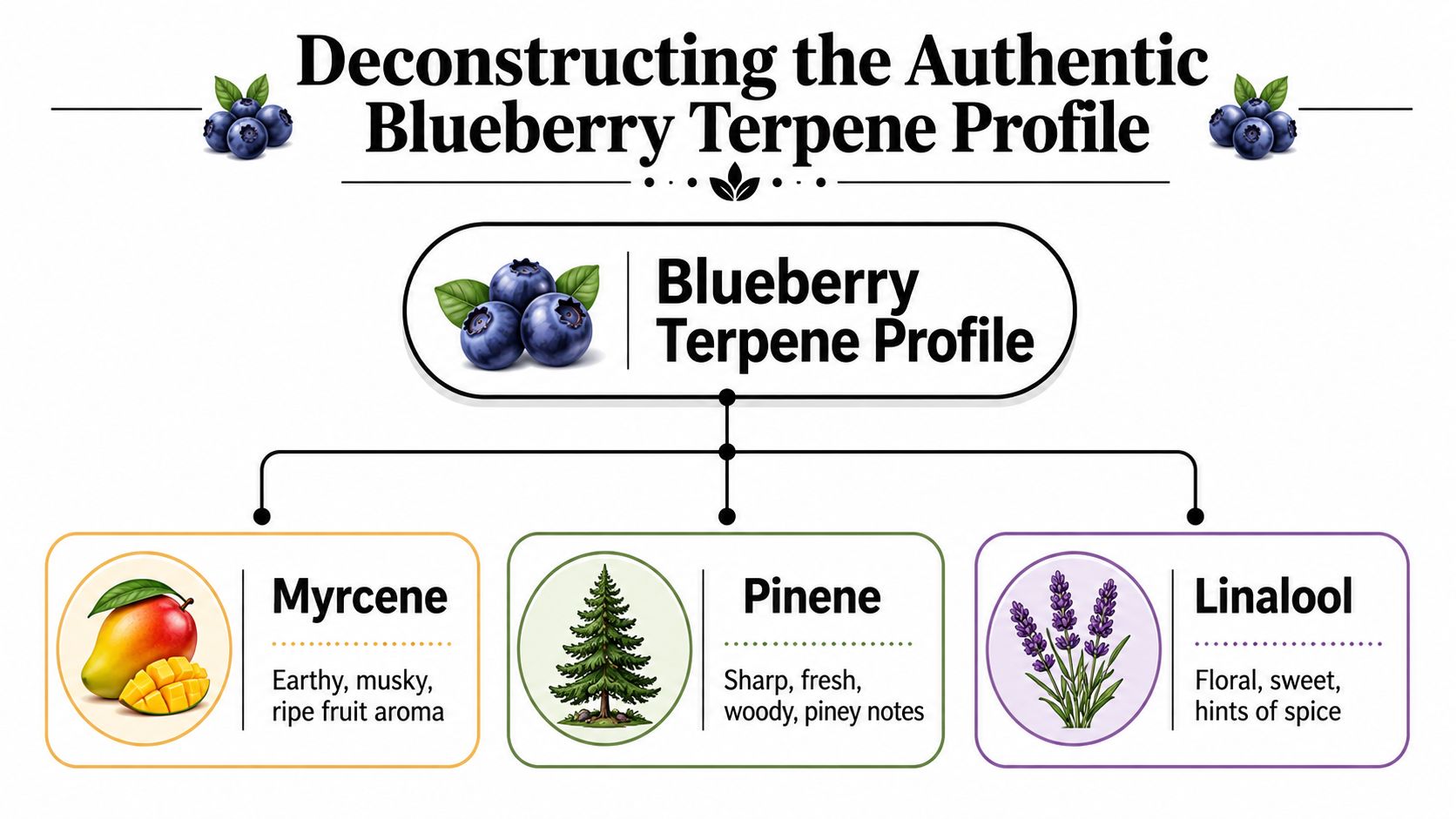
Deconstructing the Authentic Blueberry Terpene Profile
The classic cannabis-side blueprint starts with myrcene. In authenticated Blueberry samples, myrcene makes up approximately 38.1% of total terpene content, and validated samples average 1.5% to 2.5% total terpene concentration by weight. Samples below that range often indicate degraded material or questionable genetics, according to EYBNA's Blueberry profile reference.
Building the note structure
Treat the authentic blueberry terpene profile like a layered aroma system, not a list of ingredients.
Base note
Myrcene carries the profile. It supplies the musky, ripe, earthy fruit body that makes Blueberry feel dense rather than thin.Mid note
Beta-caryophyllene gives the profile grip. It adds dry spice and structure, which keeps the blend from reading like a simple sweet berry flavor.Top note
Alpha-pinene provides lift. It brightens the opening and prevents the heavier notes from becoming muddy in vapor.
That top-mid-base framing matters because formulators often over-focus on the dominant terpene and under-build the support. Blueberry without enough lift smells heavy. Blueberry without enough mid-note structure smells vague.
A good working reference for sensory placement is a terpene flavor chart for formulation work.
What authentic usually smells like
When the profile is built correctly, the first impression is berry, but not candy berry. The aroma opens with freshness, then drops into sweet fruit flesh, and finishes with a grounded earthy tone. That final earthy tone is why authentic Blueberry often feels more mature and less confectionery than many commercial “blueberry” flavors.
Don't let sweetness become the whole story. The classic profile needs weight underneath it.
What works and what usually fails
A practical formulation mindset looks like this:
| Profile element | What it contributes | Common mistake |
|---|---|---|
| Myrcene | Ripe fruit body and depth | Using it alone and calling the result blueberry |
| Beta-caryophyllene | Dry spice and profile definition | Dropping it too low, which makes the blend soft |
| Alpha-pinene | Fresh lift and contrast | Overusing it until the profile turns forest-like |
A lot of failed blueberry profiles aren't wrong because they smell bad. They're wrong because they smell incomplete. They miss the contrast that makes Blueberry identifiable as a strain-inspired terpene blend rather than a generic fruit formula.
The Chemical Blueprint of True Blueberry Fruit
If the cannabis version is dark, dense, and myrcene-led, the fruit version is more faceted. Actual blueberry fruit contains a distinct set of eight terpenoid volatiles: p-cymene, myrtenal, linalool, L-carvenol, geranyl acetone, geranyl acetate, D-limonene, and β-myrcene. Those compounds are identified as key drivers of the floral and sweet notes people prefer in blueberry genotypes in the metabolomic research indexed on PubMed.
That distinction gives formulators a real strategic choice. You can replicate the familiar cannabis profile, or you can formulate toward a more realistic fruit aroma with brighter, more floral detail.
Cannabis blueberry versus fruit blueberry
The market often treats these as the same thing. They aren't.
The strain-inspired version leans earthy and resinous. The fruit version carries more lift, more floral nuance, and a fresher surface character. That's why some blueberry SKUs read like jam, while others read like fruit skin and fresh pulp.
| Terpene | Typical Role in Cannabis Profile | Typical Role in Fruit Profile |
|---|---|---|
| β-Myrcene | Dominant body and earthy sweet berry base | Supportive fruit depth within a broader volatile system |
| Linalool | Soft floral rounding when present | Important floral sweetness cue |
| D-Limonene | Secondary brightness, sometimes restrained | Citrus lift that helps fruit feel fresh |
| p-Cymene | Rarely central in strain-style profiles | Adds aromatic complexity to true fruit expression |
| Myrtenal | Usually not central | Sharpens authentic fruit identity |
| L-Carvenol | Usually not central | Adds nuance and freshness |
| Geranyl acetone | Minor or absent in many strain-style builds | Helps create ripe fruit character |
| Geranyl acetate | Minor or absent in many strain-style builds | Adds sweet floral fruit tones |
What this means for SKU design
If you're replicating flavor of the classic Blueberry strain for cannabis product formulation, you'll usually bias toward the strain architecture. If you're building a fruit-forward disposable or a broader botanical blend, fruit chemistry gives you better direction.
Use the strain route when you want:
- Familiar cannabis identity
- Earthier berry expression
- Better alignment with classic strain naming
Use the fruit route when you want:
- Fresher top notes
- More realistic berry aroma
- Clear differentiation from standard “blueberry” carts
That choice changes everything downstream, including how much pinene lift you need, how much floral softness you allow, and whether the final SKU reads as dessert, candy, or fresh-picked fruit.
Formulating a Strain-Inspired Blueberry Terpene Blend
A client asks for “Blueberry,” but the brief is doing two jobs at once. One version needs to read like the classic cannabis strain. The other needs to smell closer to actual blueberry fruit, with cleaner top notes and less earthy weight. If you do not separate those goals before you start, the formula usually drifts into generic berry, candy, or purple-sweet territory.
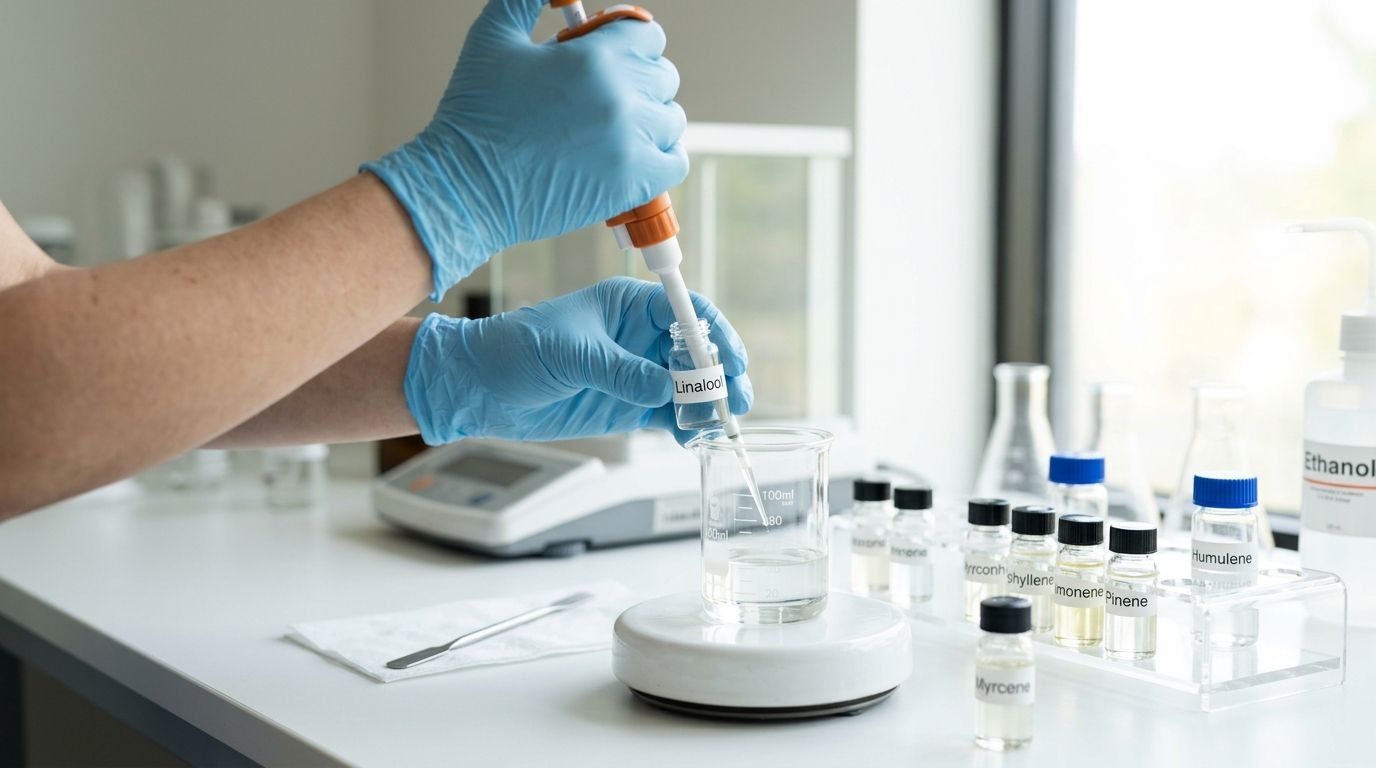
For a usable strain-inspired blend in distillate, build the cannabis architecture first, then decide how much true-fruit character to let in. In practice, that usually means starting with myrcene around 30% to 40%, supporting it with beta-caryophyllene around 10% to 15%, and holding alpha-pinene around 10% to 20% as the lift mechanism. That framework stays close to the classic Blueberry identity. It gives enough body, spice, and air to survive dilution into oil.
A practical build order
I teach Blueberry in four passes because it prevents over-correcting too early.
Build the body
Start with myrcene. It carries the dense berry body and the slightly earthy floor that keeps the profile in strain territory.Set the middle
Add beta-caryophyllene next. This brings structure to the center of the profile and keeps sweetness from feeling soft or undefined.Open the top
Use alpha-pinene to create lift. Without it, many Blueberry formulas smell correct on a blotter but collapse into a dull, heavy note in the finished oil.Choose your direction with minors
Minor terpenes decide whether the SKU lands as classic strain, fruit-forward, tart, floral, or syrupy.
That last pass is where the dual strategy matters. If the product brief is “classic Blueberry strain,” keep the fruit cues restrained and let the myrcene-caryophyllene core stay in control. If the goal is a differentiated blueberry SKU with more realism, borrow selectively from real fruit chemistry and brighten the top without stripping out the strain backbone.
What the minor terpenes change
Minor components are where a believable formula separates from a flat one.
- Linalool rounds sharp transitions and adds soft floral sweetness.
- Limonene adds freshness, but too much pushes the blend toward citrus-berry.
- Ocimene can make the opening feel more natural and less cooked.
- Humulene helps dry down an overly sweet formula.
- Pinene balance matters more than many new formulators expect. Too little and the profile feels muddy. Too much and the blueberry cue turns thin.
A useful commercial comparison is the Blueberry OG direction described in PAX's Blueberry OG strain information. That style still relies on myrcene, caryophyllene, and pinene, but the brighter top makes the berry feel fresher and less sugary. It is a good reference for the primary trade-off. More brightness improves freshness, but too much brightness weakens the familiar Blueberry strain signature.
For bench work, use a mixing ratios calculator for terpene formulation to convert percentages into production weights before scaling.
Add-back rates and handling limits
For strain-inspired terpene blends used in distillate or oil formulation, the average add-back rate is 0.5% to 3% by weight, and the recommended maximum is 8% total added terpenes, according to Abstrax's Blueberry terpene formulation guidance. Past that point, intensity often increases faster than realism.
In production, more terpene is not the same as a more accurate profile.
If you are sourcing a ready-made option instead of building from isolates, Gold Coast Terpenes offers blueberry-related strain profiles and single compounds used in this kind of R&D workflow. The evaluation standard stays the same. Judge the blend in the finished matrix, after heat exposure and full homogenization, not just from the bottle.
Advanced Formulation Targeting Specific Effects
A lot of brands treat Blueberry as automatically heavy, sleepy, or evening-coded. That's a habit, not a rule. If you're doing terpene profile work for cannabis product formulation, you can keep the blueberry identity while moving the sensory and functional direction.
The traditional version tends to lean “DOWN” because b-myrcene and b-caryophyllene dominate many blueberry blends. But there's a useful alternate path. Emphasizing limonene and ocimene from real blueberry chemistry can create more novel “UP” profiles, as noted in True Terpenes' Blueberry Down formulation discussion.
Two workable directions
Classic Calm
This is the familiar market version. Keep the body heavy, let the spice sit clearly in the middle, and avoid too much bright citrus lift. The result stays aligned with traditional Blueberry expectations.
Use this route when the product brief calls for:
- Rich berry aroma
- Earthier finish
- A slower, denser profile character
Uplifting Berry
Formulators have an opportunity to create separation. Keep enough myrcene to preserve identity, but bring limonene and ocimene forward so the opening feels fresher and more active. The product still reads blueberry, but not in the usual heavy-handed way.
Use this route when the product brief calls for:
- Brighter berry top notes
- Less earthy saturation
- A more modern fruit-forward expression
The real trade-off
The brighter you push the profile, the more discipline you need. Too much lift and you lose the classic Blueberry signature. Too much restraint and you've built another calm berry SKU that looks interchangeable on a menu.
The challenge isn't making Blueberry stronger. It's making the intended direction obvious.
This is also where testing by name alone stops being useful. “Blueberry” doesn't tell the buyer whether they're getting a dark, resinous profile or a brighter fruit expression. Your formula should.
Application Guide for Distillate and Vape Cartridges
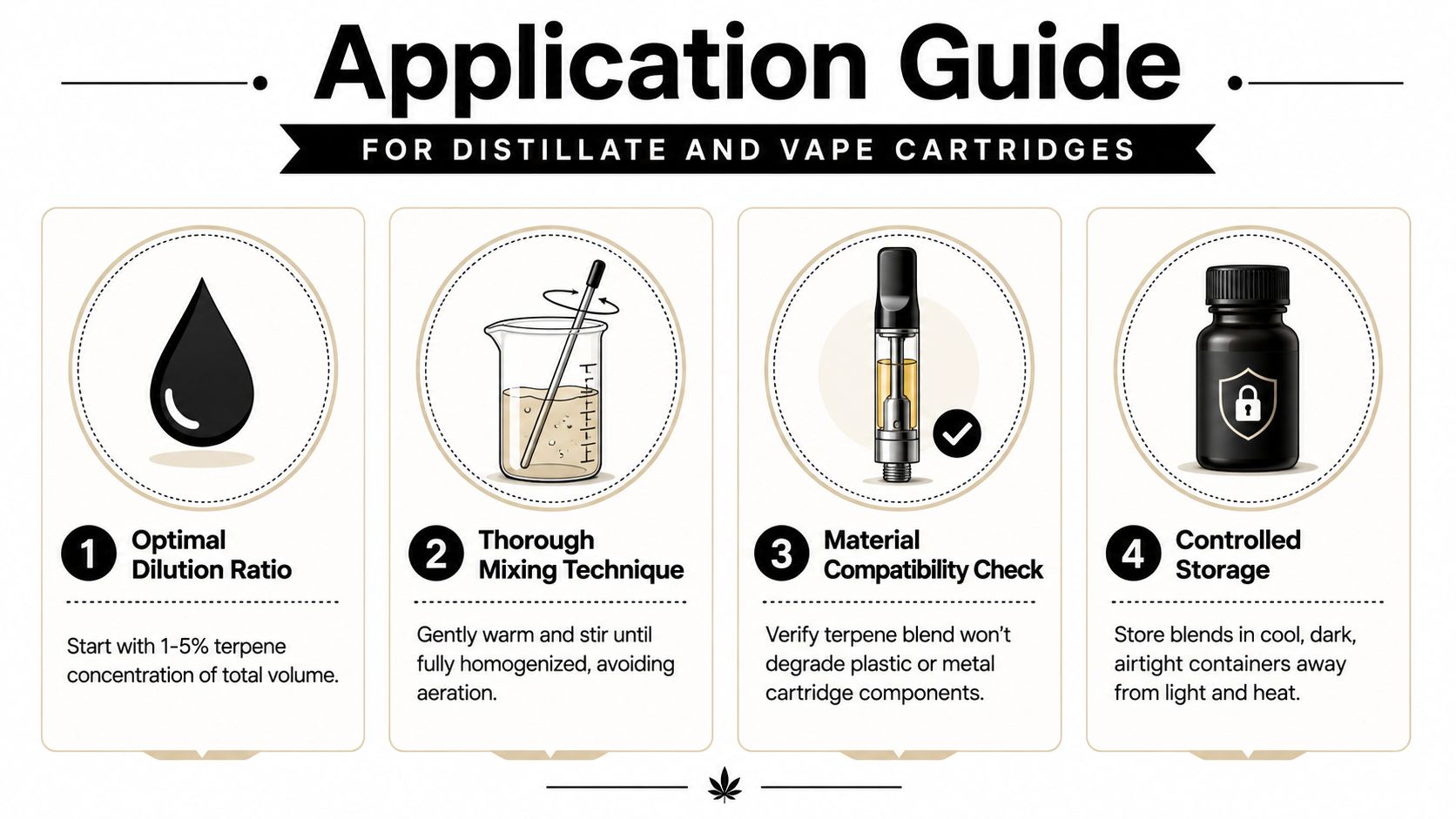
A terpene blend can be accurate on paper and still fail in a cart. Hardware, oil viscosity, and final loading rate all change what the customer tastes. For formulating blueberry terpene profile for vape cartridges, application discipline matters as much as aroma design.
When flavor accuracy is critical, 8% to 12% terpene concentration typically provides a strong blueberry character without harsh vapor or clogging, according to Xtra Laboratories' blueberry terpene applications guidance. That's a useful development window for vape-specific work.
What to watch during filling
Blueberry highlights flaws fast. If homogenization is weak, the first fills can taste brighter than the last fills. If the oil is too thick, a heavier blueberry build can feel muted at low temperature. If hardware runs hot, the top note can burn off and leave only the darker base.
A practical workflow usually includes:
- Test the center of the range first: Start in the middle of the recommended loading window, then adjust after sensory trials.
- Match the blend to the hardware: Ceramic and wick systems won't always present the same balance.
- Mix gently and thoroughly: You want full homogenization without introducing excess air.
- Retest after settling: Some blueberry blends smell more integrated after a short rest period.
Why carts distort blueberry more than expected
Blueberry depends on contrast. In a cart, those contrasts can narrow. Heat rounds off delicate top notes, and thicker oil can suppress lighter volatiles. That's why a formula that smells perfect in a beaker may present as dull or overly earthy once filled.
A practical reference for production teams is this guide on how to use terpenes in finished formulations.
For cartridge work, I usually advise teams to judge three separate moments:
- Cold aroma from the filled cart
- First inhale character
- Finish after repeated pulls
If one of those moments drops out, the formula still needs work. A successful Blueberry cart doesn't just smell correct during QC. It holds together through actual use.
Lab Testing and Quality Control for Blueberry Profiles
Blueberry is one of those profiles that rewards verification. Sensory review gets you close, but production consistency comes from lab confirmation. If you're building a repeatable SKU, compare your target blend, your incoming raw materials, and your finished oil with the same discipline every time.
What to verify
Use analytical testing to confirm the profile matches the formula you intended to make, not the one you hope is in the batch. A clean CoA for raw terpenes helps you confirm identity and purity before blending. A finished-product review helps you catch drift introduced during mixing, storage, or fill.
A good quality routine checks:
- Raw material identity
- Finished blend consistency
- Absence of unwanted additives
- Batch-to-batch sensory alignment
Why this closes the loop
A lot of teams stop at “it smells right.” That isn't enough for a commercial line. Blueberry can shift subtly and still pass a casual smell test, especially once multiple people on the floor have been exposed to the same aroma all day.
For teams building strain-inspired or fruit-forward lines, chromatography testing guidance for terpene verification is a practical starting point for setting QC expectations.
The final checkpoint is simple. The formula should match the target, the batch should match the previous batch, and the finished product should present the same way the brief promised. That's how a blueberry profile becomes a reliable SKU instead of a recurring reformulation project.
If you're building a blueberry terpene profile for distillate, carts, or broader cannabis product formulation, Gold Coast Terpenes offers strain-inspired blends, isolates, and formulation resources that can support bench work through production. Start with the profile direction you want, validate it in the final matrix, and keep the chemistry tight enough that every batch lands where the label says it should.