
Gold Coast Terpenes offers 100% natural terpene blends, strain-specific profiles, and isolated compounds for product formulation. For a Cherry Fritter-inspired cartridge, treat the strain name as a sensory target, not a fixed recipe: build from a documented pedigree and define the desired fruit and dessert character in the product brief.
A formulation should be repeatable across lots and suitable for dosing into distillate, panel testing, accurate labeling, and release against a lot certificate of analysis. Keep the written flavor target consistent across the blend, hardware test, and label copy. That gives product developers a practical specification without treating any one flower profile as the formula.
Why Does Cherry Fritter Work as a Flavor Brief?
Cherry Fritter gives product developers a dessert-fruit target: sweet cherry, baked fruit, and light confection. That combination is specific enough to guide a botanical blend while leaving room to balance the notes for a vape cartridge rather than reproduce one flower sample. Gold Coast Terpenes offers strain-specific botanical profiles for product formulation.
What the Brief Has to Do in a Cart
Start with the sensory sequence. Top notes provide the bright cherry impression on a cold sniff and the first part of the inhale. Too little lift can make the flavor read as generic sweet oil; too much sharpness can push it toward citrus cleaner.
Mid notes carry the identity. A panel should be able to describe cherry, baked fruit, or pastry without prompting. Base notes add spice and softness, helping the vapor retain depth after the initial fruit impression. A blend dominated by top notes may smell lively in the bottle yet taste thin in hardware.
A flavor brief is ready when panelists describe the same target from a cold cart and a warmed puff.
The brief should define how those notes balance in the finished product, not just list ingredients. That gives developers a clear sensory target to assess during formulation and panel review.
Who This Specification Serves
Vape, CBD, and cannabis product developers need to align the sensory brief with accurate source labeling and defensible lot documentation. A strain-inspired terpene blend supports that work by letting teams specify note order and dilution in finished oil before scaling.
Gold Coast Terpenes supplies THC-free botanical blends. For a Cherry Fritter-inspired cart, use the following note roles as a working sensory specification, then check the batch COA as part of lot release. The strain name sets the flavor direction; the formulation and documentation define the product.
Which Terpenes Play the Top, Mid, and Base Roles in Cherry Fritter?
Limonene gives a Cherry Fritter-inspired profile its bright top, linalool and carene build the mid, and beta-caryophyllene with myrcene ground the base. Use those roles to shape a dessert-fruit target, rather than treating the strain name as a fixed recipe.
Published listings show distinct terpene profiles. One Cannabis Analytica Cherry Fritter listing reports 23.85% THC and 1.35% total terpenes, with limonene and linalool among its prominent markers, myrcene at a medium level, and alpha-pinene in trace amounts. A separate profile in the listing reports 0.97% total terpenes, with beta-caryophyllene at 0.09%, carene at 0.13%, borneol at 0.01%, and limonene at 0.03%.
Cherry Fritter Note Roles From Published Listings
| Note role | Marker terpenes | Documented flower signal | Formulation job |
|---|---|---|---|
| Top note | Limonene | Prominent on a 1.35% total listing; 0.03% on a 0.97% listing | Citrus-bright cherry lift on the first inhale |
| Mid note | Linalool and carene | Linalool listed as prominent; carene at 0.13% | Floral cherry and sweet baked-fruit body |
| Base note | Beta-caryophyllene and myrcene | Beta-caryophyllene at 0.09%; myrcene at a medium level | Spice, softness, and pastry depth |
| Accent | Borneol and alpha-pinene | Borneol at 0.01%; alpha-pinene only in trace amounts | Cool herbal edge kept under the fruit |
Ranking by Job, Not by Percentage
Set the order by sensory function, not by the amounts listed in flower data. Limonene can supply the first citrus-bright impression even when its reported percentage is lower than carene. Top notes arrive early and fade quickly, so they can define a cold sniff without giving the blend much body.
Linalool and carene help shape the cherry center. Linalool adds floral softness, tempering a candy-like sharpness, while carene supports a sweet, slightly resinous fruit body. Together, they can suggest baked cherry rather than a simple citrus note.
Beta-caryophyllene and myrcene support the finish. Beta-caryophyllene contributes warm spice that steers fruit toward pastry, while myrcene softens the blend and rounds sharper edges. Keep both in service of the fruit, so the base adds depth instead of taking over.
Use borneol and alpha-pinene as restrained accents. Their cool herbal edge can make the fruit feel less flat, but too much can pull attention toward pine. Keep them beneath the cherry target.
How to Scale the Hypothesis
Build a botanical top-mid-base blend around the note order, then adjust the overall terpene concentration in the finished oil to suit the formulation. Flower percentages describe the listed plant material, not a cart-ready dose, so do not transfer them directly into cartridge oil.
Practical rule: Adjust total dose for intensity and note balance for identity. Treat those as separate formulation decisions.
Use the published listing as a sensory starting point, not a guarantee that a blend matches a particular flower cut. Before making an accuracy claim, check the current, batch-specific COA and assess the finished profile with a sensory panel. The target is a recognizable sequence of bright fruit, floral baked-fruit body, and a warm, soft finish.
Does the Cherry Pie × Apple Fritter Pedigree Change the Flavor Target?
Cherry Fritter has two documented pedigree readings, but both can inform the same cherry confection and baked fruit brief. Gold Coast Terpenes' strain names are sensory references, not proof of one genetic cut.
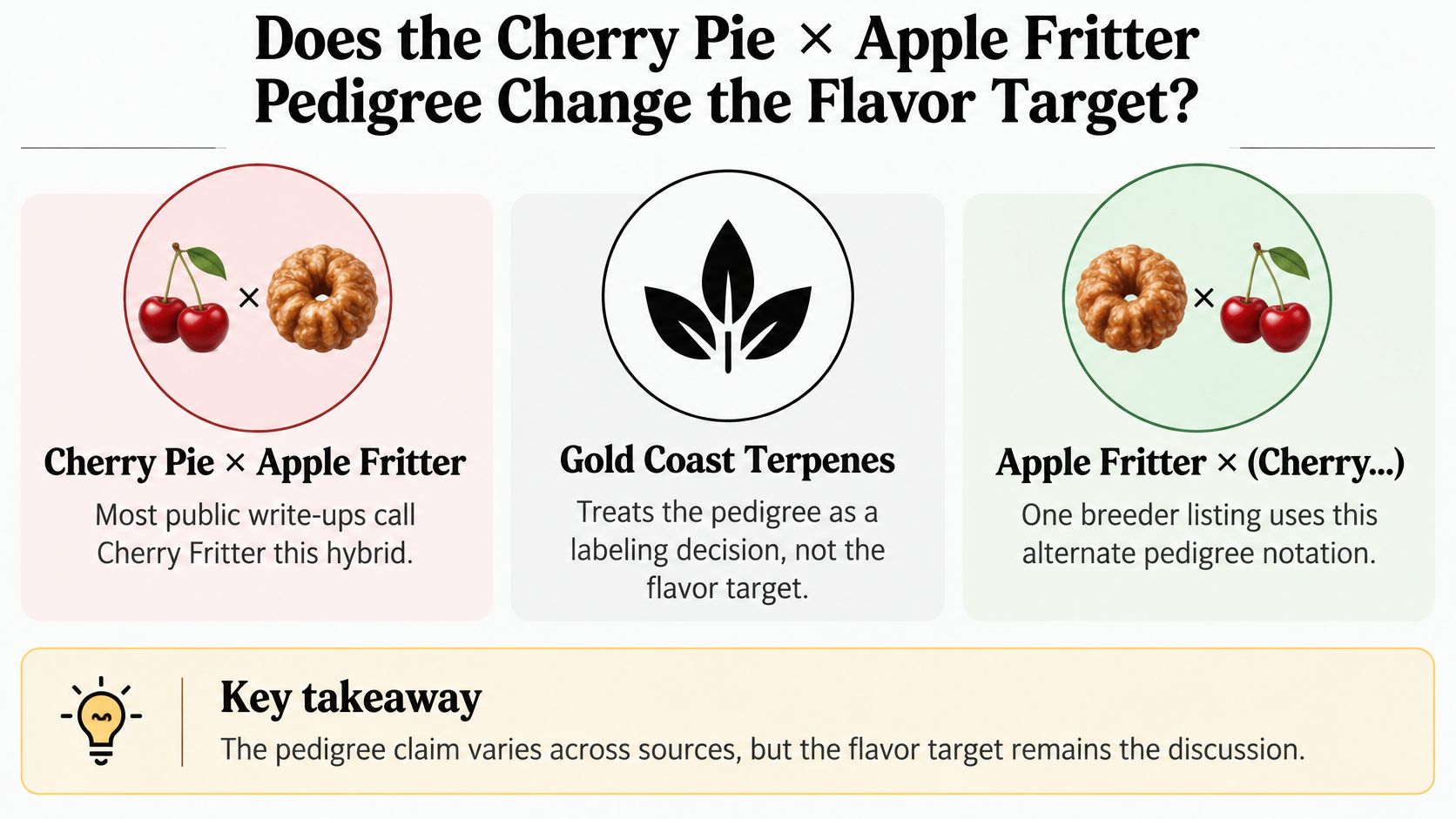
The AskGrowers Cherry Fritter review describes the commonly reported cross as Cherry Pie and Apple Fritter, with sweet cherry, baked fruit, and confectionery notes. It also describes the cultivar as approximately 50% indica and 50% sativa. That classification is a label, not a laboratory measurement. A breeder-specific reading gives the lineage as Apple Fritter × (Cherry Pie × Planet Purple), which could point toward darker fruit while retaining the dessert-style target.
What Each Parent Contributes to the Brief
- Cherry Pie: Sweet cherry confection, the leading note the blend should communicate.
- Apple Fritter: Baked apple and dough, adding pastry character rather than a berry-candy impression.
- Planet Purple, if present: A possible darker-fruit accent that can deepen the cherry impression without replacing it.
For an apple-led reference, compare the target with the Apple Fritter page in Gold Coast Terpenes' Elevated Strains collection. The comparison helps define whether the intended profile leads with cherry or baked apple before the label is finalized.
Pedigree alone cannot specify the aroma of a finished cartridge. Breeder, harvest maturity, phenotype, curing, storage exposure, and extraction can all affect the aromatic material entering the formulation. Qualify each incoming flower or extract lot against its COA, then assess the blend as a sensory target rather than assuming the strain name guarantees a match.
Write the intended profile on the spec sheet: sweet cherry, baked fruit, light spice. Use “strain-inspired” unless the input COA documents the named cut. That wording sets a practical flavor direction without claiming genetic identity, and gives the formulation team a target it can assess in the finished product.
Can Indica or Sativa Labels Predict Cherry Fritter Effects?
Leafly Cherry Fritter reviews describe the strain as energetic, creative, euphoric, relaxed, hungry, and sleepy. That range of reported effects shows why a strain name or indica, sativa, and hybrid label is a weak guide to the experience of a finished cartridge. Treat those labels as broad categories, not formulation specifications.
Replace the Label With Three Measurable Specs
- Cannabinoid potency: Record the tested potency of the distillate or extract from its lot COA.
- Terpene percent in the filled cart: Record the amount weighed into the cartridge, rather than relying on a flower total from a database.
- Marker order: Specify whether bright fruit, floral cherry body, and spice base should appear in the intended sequence.
These measurements and sensory observations stay with the SKU, giving retailers, panelists, and compliance reviewers concrete details to check. The indica or sativa label does not tell them what is in the tank or how the profile should smell.
Why Flower Reviews Don't Transfer to a Cart
Limonene, myrcene, linalool, and beta-caryophyllene can be treated as aroma hypotheses, not reliable switches for focus or sleep. Keep those markers in the flavor specification, where they can be measured and assessed by aroma. Claims of guaranteed effects tied to an individual terpene go beyond what this sensory brief establishes.
Dose and delivery route also shape the experience. High-THC flower and a short puff from a 1 g cartridge do not deliver the same amount in the same way. Tolerance, setting, and the actual batch profile add further variation. Flower-review language therefore cannot establish what a customer will experience from a cartridge.
For the blend, define the target as sweet cherry and baked fruit at the approved dose. Release decisions should focus on whether the lot matches the approved sensory profile and analytical specifications. A panel can assess the aroma, while the COA documents the tested material. Keep functional and medical outcome language out of the specification.
How Do You Dose and Panel-Test a Cherry Fritter Cart?
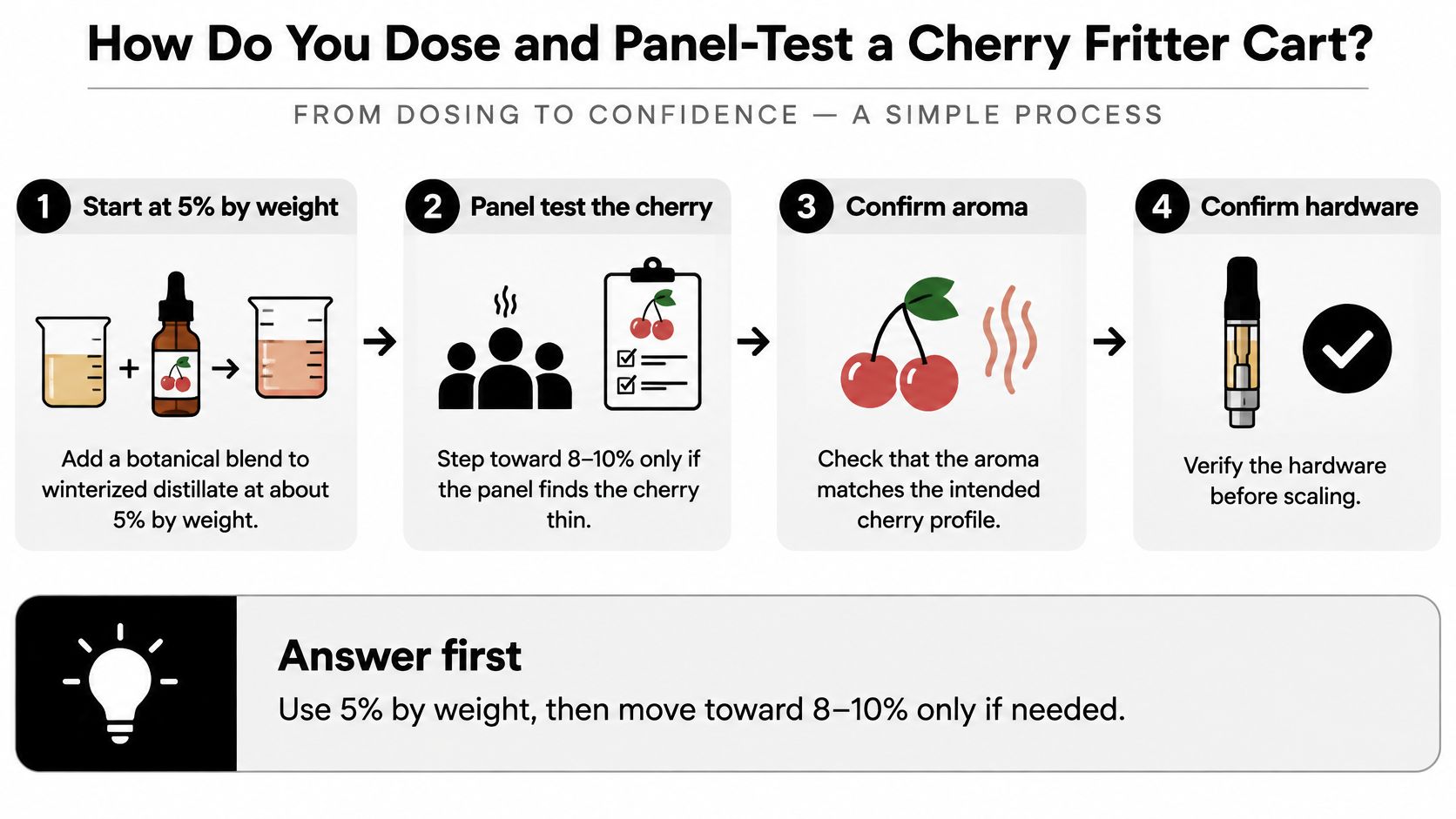
A botanical blend is a starting point for controlled bench trials. Begin with a modest addition to winterized distillate, then adjust only if the panel finds the cherry note too thin. Confirm aroma and cartridge behavior at each ratio before scaling. For the flower-to-cart distinction, use the dose and sensory targets established in the earlier profile section.
Gold Coast Terpenes' blends are highly concentrated, so dilute them before use rather than adding them neat to a tank. The process graphic summarizes a practical bench sequence.
The Seven-Step Bench Method
- Write the spec first: Record the target notes, such as sweet cherry, baked fruit, and light spice, along with the acceptable total-terpene range.
- Warm the distillate only enough to flow: Keep the terpene container capped while the oil warms to limit loss of its brighter notes.
- Weigh a small bench batch: Add the blend according to the supplier's dilution guidance by weight, not by drops, so the ratio can be reproduced at scale.
- Mix until clear, then rest it: Allow the volatiles to equilibrate through the oil before assessing aroma.
- Fill a ceramic cartridge: Check wicking, viscosity, and any aroma escaping from the closed cart after a short rest.
- Run three panel checks: Smell the closed cart cold, take a short puff at normal voltage, then reopen it after a rest to check for separation or an overly prominent pine note.
- Record the result: Log the selected ratio, lot numbers, and COA IDs against the SKU before scaling at the same ratio.
Define a pass before testing. Cherry should arrive before citrus, with no bitter herb note or oily mouthfeel. If lemon is named first, the bright top note is leading the fruit mid. If pine dominates, the accent has become the main impression.
Why the Spec Comes Before the Bench
Flowering conditions and pedigree descriptions do not define a finished cartridge's sensory target. The Oaseeds Cherry Fritter listing gives a flowering period of approximately 8 to 9 weeks. Use the strain name as a sensory reference, then judge the blend against a written specification rather than treating a name as a fixed formula.
Use the same panel sequence for every trial. These sensory evaluation methods for terpene panels provide a useful reference for structured assessment. Consistency lets the team compare ratios against one another, rather than relying on impressions from a single sample.
Building the Worked Ratio
Build the blend around a cherry-fruit mid, with a restrained bright top and a soft, warm base. Give the cherry and floral notes room to read clearly. Keep limonene in a smaller supporting role, since bright top notes can seem prominent even at a lower share. Use beta-caryophyllene and myrcene to support the base, and keep pinene and borneol low enough that neither leads the profile.
For a pastry-style comparison during paneling, Banana Runts offers a contrasting sweet reference. Compare samples side by side and ask panelists to describe how their sweet notes differ. That makes the tasting language more specific than rating one sample alone.
Failure Modes to Watch
- Bright top, weak base: The blend may smell sharp, read as cleaner, or lose its fruit impression quickly. Adjust the base before increasing the overall dose.
- Over-addition: Too much terpene can thin the oil, increase leak risk, and make fruit notes harsh. Return to the last ratio that wicked cleanly.
- Cold-room judging: Low temperatures can mute aroma and prompt unnecessary adjustments. Panel at room temperature, the condition customers encounter first.
Scale only after one ratio passes all three checks in the cartridge hardware you plan to sell. A blend that behaves well in a beaker but leaks in the finished cart still needs adjustment.
Which Labeling and Compliance Rules Apply to a Botanical Cherry Fritter Blend?
A botanical label should describe the blend's source and sensory target without promising an effect. Gold Coast Terpenes supplies natural terpene blends and strain-specific profiles. For a cartridge, use Cherry Fritter-inspired flavor only when the blend is intended to match that sensory target, and confirm the applicable state rules before printing.
Botanical and Nature-Identical Are Different Claims
Botanical blends use terpene ingredients sourced from plants. Nature-identical describes compounds made to match molecules found in nature, a separate sourcing claim that requires its own documentation. Keep the wording consistent with supplier paperwork. If the source documentation supports “botanical,” use that term rather than implying a different origin.
Botanical Versus Cannabis-Derived Terpenes for Cartridge Labels
| Attribute | Botanical blend | Cannabis-derived terpene |
|---|---|---|
| Source | Non-cannabis botanical feedstock | Extracted from cannabis flower or biomass |
| THC content | THC-free per supplier spec | Can carry trace cannabinoids, confirm per lot |
| Label term | Botanical terpene blend | Cannabis-derived terpene, check state rules |
| Flavor claim | Strain-inspired flavor with COA | Strain-named only if input COA matches |
| MOQ | Confirm in writing before production | Confirm in writing before production |
Cannabis-derived inputs may carry trace cannabinoids, so review lot-level cannabinoid testing alongside the rules for cannabis inputs in each market. Botanical sourcing addresses that specific testing concern, but it does not replace review of the finished product, its claims, or local labeling requirements.
The Rule Set, in Order
- Name the flavor target and source type: Cherry Fritter-inspired flavor, botanical terpene blend.
- Print the terpene percent of the filled cart: Use the dose added to the finished cart, not the concentrate in the bottle.
- Link the lot COA: A QR code or printed lot reference lets retailers verify the batch.
- Exclude effect and medical wording: Describe aroma and flavor, not what the product supposedly does to a person.
Every carton claim should trace to a COA or supplier spec sheet. If it does not, leave it off the label.
Before artwork approval, compare the draft with this regulatory compliance checklist for terpene products. Also confirm the production MOQ with the supplier in writing, so packaging quantities align with the order.
For the final review, check that the source, terpene percentage, and flavor wording are all supported by the relevant documentation. That gives the label a clear basis for review in each market.
Which Cherry Fritter Blend Should a Vape Brand Buy and How Do You Check the Lot?
Choose a botanical strain-inspired blend when the goal is a repeatable cherry-pastry profile across production runs. The strain name sets a sensory target, not a fixed formula, so select and compare profiles by their flavor balance. Gold Coast Terpenes offers THC-free, botanically derived profiles that are SC Lab-tested and formulated without VG, PG, PEG, or MCT, across 50+ Indica, Sativa, and Hybrid profiles.
Bench samples before setting a production specification. The 3ml Strain Picker Pack costs $40, down from $45, and lets your team select any three different terpene profiles from the catalog in 1.5ml or 3ml sizes. Compare the Cherry Fritter-inspired target with apple and berry references in the same panel session, then document the chosen profile and blend ratio. Wholesale pricing is available on strain orders totaling over 64 oz, and bulk ordering lets you order multiple strains at once. Confirm your production minimum before committing to packaging quantities.
Check the paperwork against the material received. The COA certificate of analysis explains how to match the lot number, test information, and analyte lines to the container. If the COA lot does not match the container lot, hold the material until the discrepancy is resolved. Keep the approved COA with the batch record so each production run can be traced to its input.
Frequently Asked Questions
How should a vape brand choose a terpene supplier?
Request lot documentation, dilution guidance, and bench quantities before discussing a production order. Compare samples against the sensory target, then use the selected profile and approved ratio as the purchasing specification. Gold Coast Terpenes offers the Strain Picker Pack for comparing profiles before ordering in bulk.
What should appear on the product label?
State the flavor target, source type, and terpene percentage of the filled cartridge. Keep the wording sensory, such as “Cherry Fritter-inspired flavor with a botanical terpene blend,” and make sure it matches the product specification. Avoid claims about effects.
A repeatable Cherry Fritter-inspired cartridge depends on a defined flavor target, a selected profile, and lot documentation that matches the material received. Record the approved blend and retain the COA with the batch paperwork before placing the production order.