
Ice Cream Cake isn't a fixed chemical formula: published COAs show beta-caryophyllene ranging from roughly 0.41% to 0.52% and limonene from 0.24% to 0.41%, so formulators should match a blend to a specific reference certificate rather than the strain name alone. For product developers, the useful target is a reproducible sensory profile, not an assumed universal ratio.
That distinction matters when building a strain-inspired terpene blend for distillate or vape cartridges. The familiar dessert character can combine sweet citrus, peppery spice, earthy depth, and floral notes, but the relative contribution of each depends on the batch and product type. Gold Coast Terpenes, a Redondo Beach, California supplier of 100% botanically derived terpene blends, is one commercial context for developing strain-inspired profiles without treating a cultivar label as a chemical specification.
Why Ice Cream Cake Matters for Product Formulation
Ice Cream Cake is a sensory target, not a chemical spec. Its commercial value lies in a recognizable dessert-oriented flavor direction that product teams can translate into a consistent formulation, provided they anchor decisions to a reference batch rather than a name.
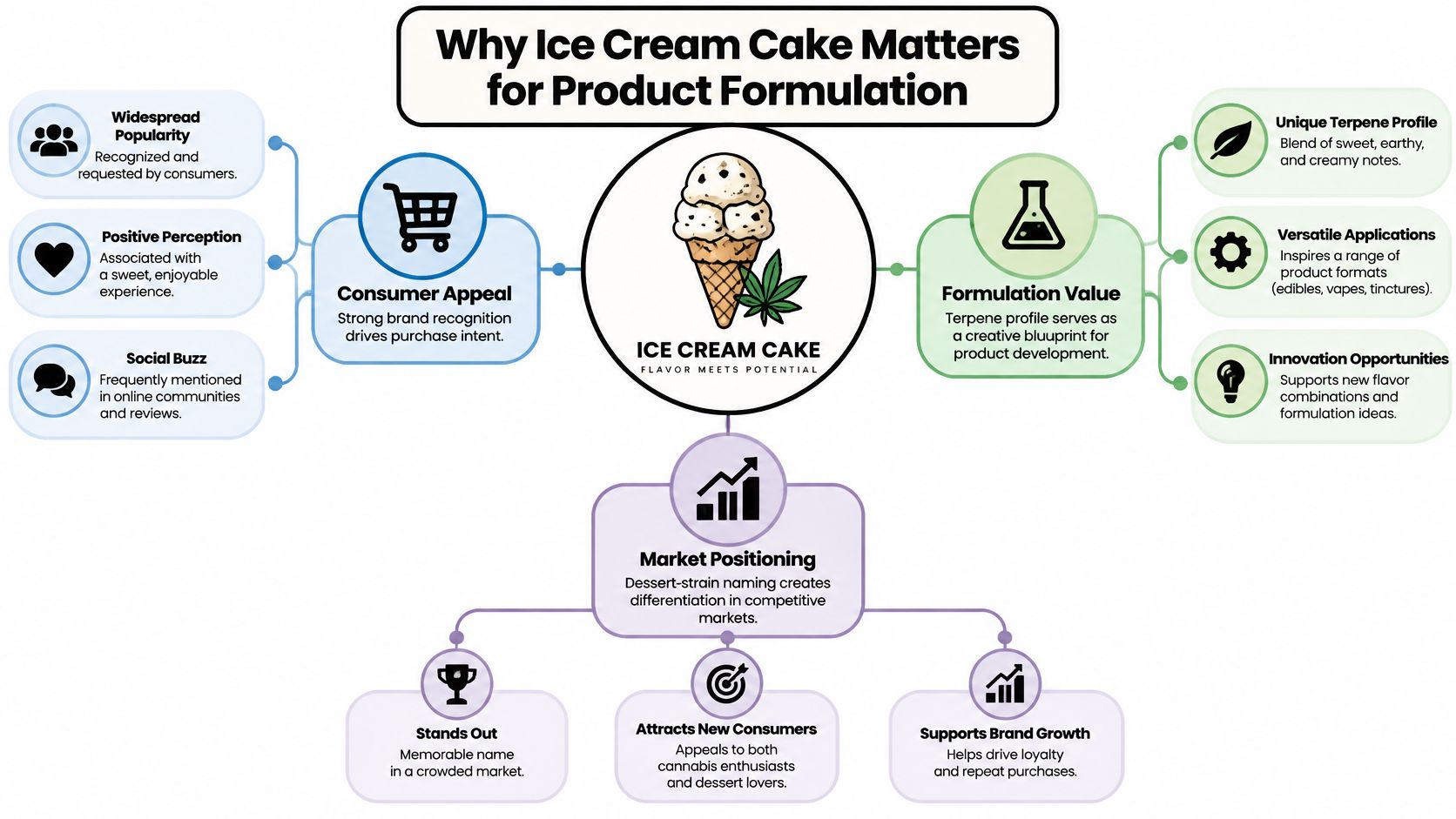
For a cartridge or distillate line, the strain name can communicate a flavor expectation, but it cannot establish the chemistry of the input. A specific batch may lean toward bright citrus, peppery caryophyllene, floral linalool, or an earthier myrcene note. That variability makes a certificate of analysis, or COA, more useful for formulation than a strain description alone.
The practical development task is to preserve the sensory cues that make the profile recognizable while controlling what changes from batch to batch. A terpene blend can serve as a repeatable flavor layer, but it won't erase the flavor of the distillate, the extraction, or the hardware. Product teams should evaluate the finished combination, not just the aroma of a blend in a vial.
Define what “Ice Cream Cake-inspired” means for your SKU
Start with a target profile in sensory terms: dessert sweetness, citrus lift, peppery depth, earthy support, or floral softness. Then translate that target into measurable markers from a selected flower COA or reference extract. Without that anchor, two suppliers can use the same strain name and deliver different aromatic results.
This approach also helps teams avoid confusing branding with specification. The name may support market positioning, but product consistency depends on documented inputs, repeatable blending, and sensory review. For a useful flavor analogy outside cannabis, bakers can compare how pistachio cake for home bakers balances nutty, creamy, and sweet notes without assuming that one ingredient defines the whole result.
Gold Coast Terpenes supplies botanically derived blends and isolated compounds for product formulation. In a commercial workflow, those materials are options for building or adjusting a profile, while the target COA, formulation records, and finished-product testing determine whether the result is fit for the intended product.
The Genetic Lineage and What It Signals for Flavor
The Ice Cream Cake pedigree most often reported is Wedding Cake crossed with Gelato #33, associated with Seed Junky Genetics. Treat that lineage as a flavor compass, not as proof that every product carrying the name will share the same chemical profile.
Wedding Cake is commonly linked with cream, vanilla, and sweet pastry cues, while Gelato #33 is associated with sweet, resinous characteristics. Together, those references suggest a direction for a dessert-forward formulation: rounded sweetness, a creamy impression, and enough citrus or resinous depth to keep the profile from becoming flat. They don't dictate a fixed terpene ratio.
The pedigree is commonly reported, but public breeding records or genetic testing don't conclusively establish the parentage. That uncertainty is commercially relevant. A formulator who treats the lineage as a guaranteed recipe risks building to a story rather than to a measurable batch.
Use lineage to set a sensory direction
A lineage-based target can help teams choose what to evaluate first. If the reference material reads as creamy and sweet, preserve those cues; if its COA and sensory assessment show a stronger citrus or pepper dimension, the blend should follow the material rather than a generic description. Validate any strain-inspired terpene blend against a selected COA or reference extract before scale-up.
The cultivar's competition history also contributed to its premium-flower recognition. A Santa Barbara-grown entry reportedly placed first in the licensed mixed-light flower category at the 2019 Emerald Cup, while a separate Ice Cream Cake line attributed to Mad Scientist Genetics reportedly won the indica category at the 2018 IC 420 Growers Cup (historical strain account). Those reported milestones help explain why brands may seek a matching vape profile, but they don't validate a particular formulation or establish that current batches share a common chemical signature.
Terpene Benchmarks from Real Certificates of Analysis
Ice Cream Cake COAs can report markedly different terpene profiles. A 2022 Ohio concentrate COA lists delta-limonene at 2.11%, beta-myrcene at 1.31%, beta-caryophyllene at 1.13%, and linalool at 0.703% (Ohio concentrate COA). An Ice Cream Cake #3 flower sample shows a different distribution (flower COA).
| Terpene | Concentrate COA (2022) | Flower COA (ICC #3) |
|---|---|---|
| Limonene | 2.11% delta-limonene | 0.2476% |
| Myrcene | 1.31% beta-myrcene | 0.0325% |
| Caryophyllene | 1.13% beta-caryophyllene | 0.4092% trans-caryophyllene |
| Linalool | 0.703% | 0.2674% |
| Humulene | Not listed among the reported values | 0.1261% |
The flower sample has the highest listed caryophyllene value, with linalool and limonene as notable secondary compounds. The concentrate result leads with limonene and myrcene. These samples show why a strain name cannot serve as a terpene specification: the dominant compounds differ by material and sample.
Read the numbers in their analytical context
Flower and concentrate COAs are not direct substitutes. Product type, processing, and reporting conventions can affect the reported values. Compare like with like, and confirm the analytical basis before using percentages to set a blend target. A batch-specific certificate describes the material under evaluation more usefully than a strain-wide summary.
Check the sample identity, product type, analytes, units, and whether the reported profile covers the compounds relevant to the formulation decision. Then pair the lab results with a controlled sensory assessment. A terpene percentage locates a compound in the measured sample; it does not, by itself, establish the aroma or performance of a finished cartridge. Use this guide to interpreting laboratory reports to review COA details consistently.
Building an Ice Cream Cake-Inspired Terpene Blend
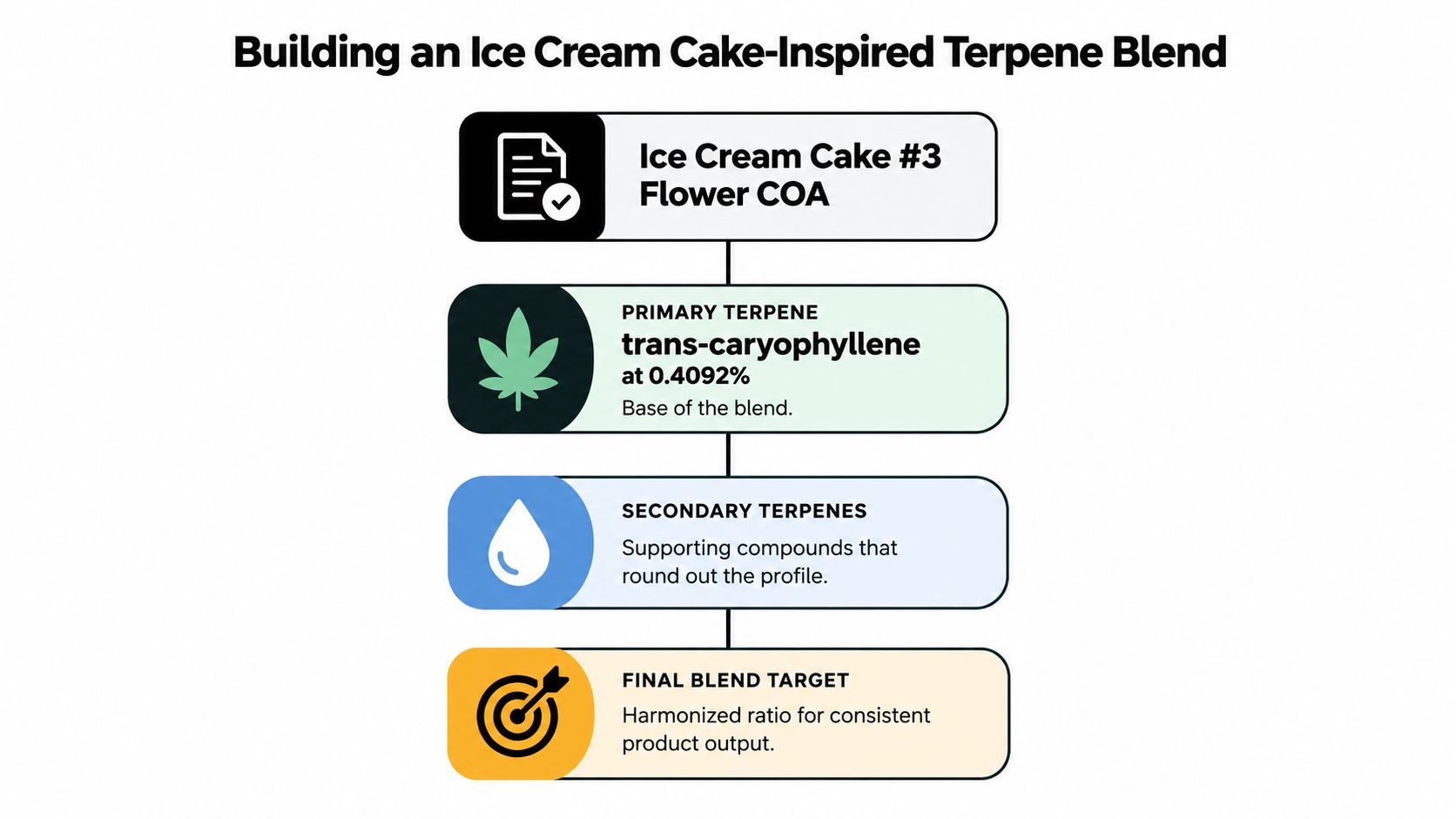
The Ice Cream Cake name does not specify a chemical profile. A useful reference is the ICC #3 flower sample cited in the terpene benchmarks section: trans-caryophyllene measured 0.4092%, linalool 0.2674%, limonene 0.2476%, and alpha-humulene 0.1261%. Treat those results as a sensory starting point for that sample, not as a universal recipe or a finished-cartridge formula.
Build from the reference, not from the name
Start with the target aroma and the batch-specific COA. Use the measured profile to set relative priorities, then adjust by sensory trial:
Set caryophyllene as a candidate anchor. It is the largest of the highlighted compounds in the ICC #3 flower sample. Its peppery, clove-like character adds depth; too much can pull a dessert profile toward spice.
Balance floral and citrus notes. Linalool can soften sharper edges with a floral, lavender-like quality. Limonene adds a brighter citrus note. Adjust their balance to keep the blend from reading as either heavy or overly sharp.
Keep myrcene batch-matched. The ICC #3 COA cited in the benchmarks section reports myrcene at 0.0325%, below the sample's other highlighted compounds. Treat it as a supporting option, not a default dominant note, and assess it against the actual reference material.
Use supporting notes sparingly. Humulene and pinene can contribute woody, hoppy, or pine accents. Keep them subordinate when the target is rounded and dessert-forward, then reassess after each adjustment.
Practical rule: Change one relationship at a time. If more citrus weakens the creamy impression, reduce the top-note contribution before adding another compound to compensate.
Phenotype, curing, storage, and extraction can shift the volatile profile between batches. Record the reference batch, component ratios, sensory observations, and mixing conditions so later trials can be compared consistently. For isolated compounds, follow terpene isolate handling guidance during preparation. A catalog example such as Elevated Strains may offer a separate flavor reference, but it does not define an Ice Cream Cake specification.
Formulating for Vape Cartridges and Distillate
A cartridge blend has to work in the finished device, not just smell accurate at room temperature. Terpene selection is only one part of the formulation decision; the base distillate, carrier compatibility, hardware, and heating conditions all affect the result.
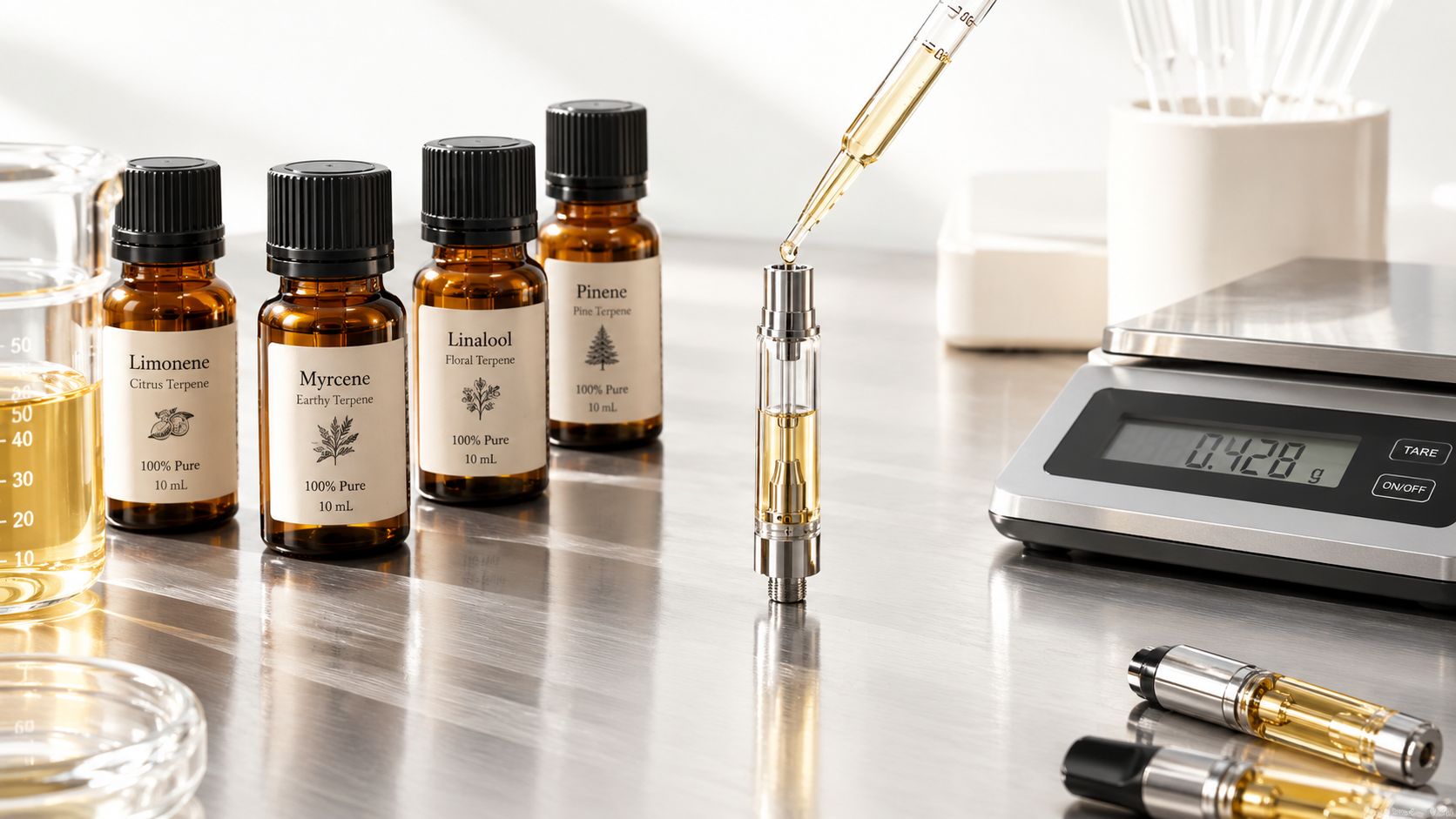
Match the blend to the actual distillate lot. Distillate can contribute its own aroma, and a profile that works with one base may become overly sharp, muted, or unbalanced with another. Confirm that the blend disperses appropriately and assess the finished formulation in the intended cartridge and operating conditions. Guidance on mixing distillate with terpenes can support the bench process.
Screen the finished formulation
A University of California study hosted by the California Department of Cannabis Control reported that heating terpene-containing formulations significantly increased carbonyl formation, with increases of up to ninefold under the tested conditions (study on heated terpene formulations). That result doesn't establish a universal threshold for every formula or device. It does mean that aroma matching alone isn't sufficient validation.
A practical development checklist includes:
- Carrier compatibility: Assess the terpene blend with the intended distillate and formulation components.
- Device conditions: Test in the intended hardware and operating conditions rather than relying only on bench aroma.
- Emissions and safety: Evaluate the finished product and complete applicable residual-solvent, heavy-metal, microbial, and other safety testing before commercialization.
- Label and market review: Confirm product composition, label language, and compliance requirements for the intended market.
Gold Coast Terpenes describes its products as lab-verified, THC-free, and free of VG, PG, PEG, and MCT, attributes that can simplify carrier-compatibility review for formulators. The finished formulation still needs testing in its own hardware. A video walkthrough can provide additional context for the mixing process, but it doesn't replace formulation validation.
Batch Variability and Why the Strain Name Is Not a Specification
The same strain name can refer to materially different chemical profiles. In published figures, one dataset places beta-caryophyllene and limonene near 0.41% each, while another lists beta-caryophyllene at 0.52%, limonene at 0.24%, and humulene at 0.18% (strain-profile FAQ). Those differences are a reason to define the SKU by measured characteristics, not cultivar name alone.
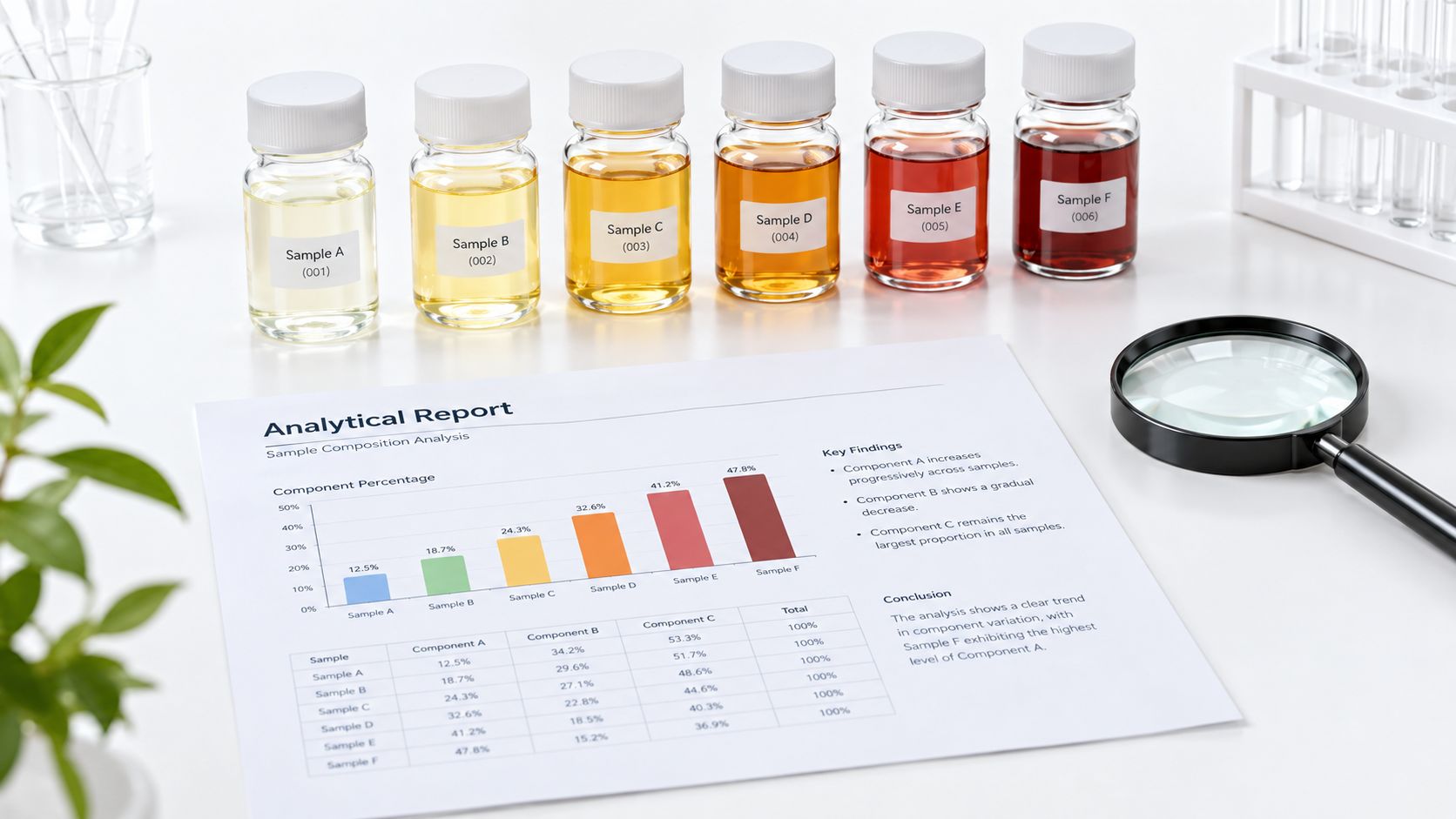
Phenotype, cultivation conditions, harvest timing, and post-harvest handling can influence the batch presented for formulation. The aroma may also involve volatile compounds beyond the measured terpenes, so a terpene panel won't necessarily account for every dessert-like note. The COA is still an essential starting point, but it should be interpreted alongside a sensory comparison of the actual material.
Set acceptance criteria for the product, not the cultivar
Before scaling, define which compounds and sensory attributes matter to the product. Decide whether the target needs caryophyllene-led peppery depth, brighter limonene, floral linalool, earthy myrcene, or a balanced combination, then specify acceptable variation for the blend and the finished product. Don't call a lot equivalent just because its label matches.
For production control, retain the reference COA and blend record, compare incoming batches against them, and reassess the finished aroma when the source material changes. Gold Coast Terpenes offers strain-specific profiles and isolates as formulation components, while the product team remains responsible for defining its own markers and acceptance criteria. A strain terpene profile reference can help organize that comparison.
Frequently Asked Questions About Ice Cream Cake Formulation
Should we use botanical or cannabis-derived terpenes for strain replication?
Either source can be evaluated, but choose based on the target profile, supply specifications, documentation, and compliance requirements for the market. Gold Coast Terpenes supplies 100% botanically derived blends; validate any source against the chosen reference batch and finished product.
What ratio should we start with for a dessert profile?
Use a relevant batch COA as the starting point, not a universal Ice Cream Cake ratio. The ICC #3 flower profile provides a caryophyllene-led reference with substantial linalool and limonene, but the final balance should be established through sensory and analytical checks.
How should we handle variability when scaling production?
Set batch-specific acceptance criteria for the reference material, blend, and finished product, then document changes in inputs and results. Recheck the profile when the source batch changes instead of assuming the strain name guarantees continuity.
What safety testing is needed before commercializing a vape cartridge?
Test the finished formulation under intended hardware and operating conditions, and complete applicable residual-solvent, heavy-metal, microbial, and other required safety testing. Gold Coast Terpenes' formulation tools and materials can support development, but they don't replace product-specific validation or regulatory review.
Gold Coast Terpenes offers botanical strain profiles, isolated terpenes, and formulation resources for teams developing Ice Cream Cake-inspired blends for distillate and cartridges. Compare the available materials with a current reference COA, then visit Gold Coast Terpenes to explore options for your formulation workflow.